Key Takeaways & Executive Findings
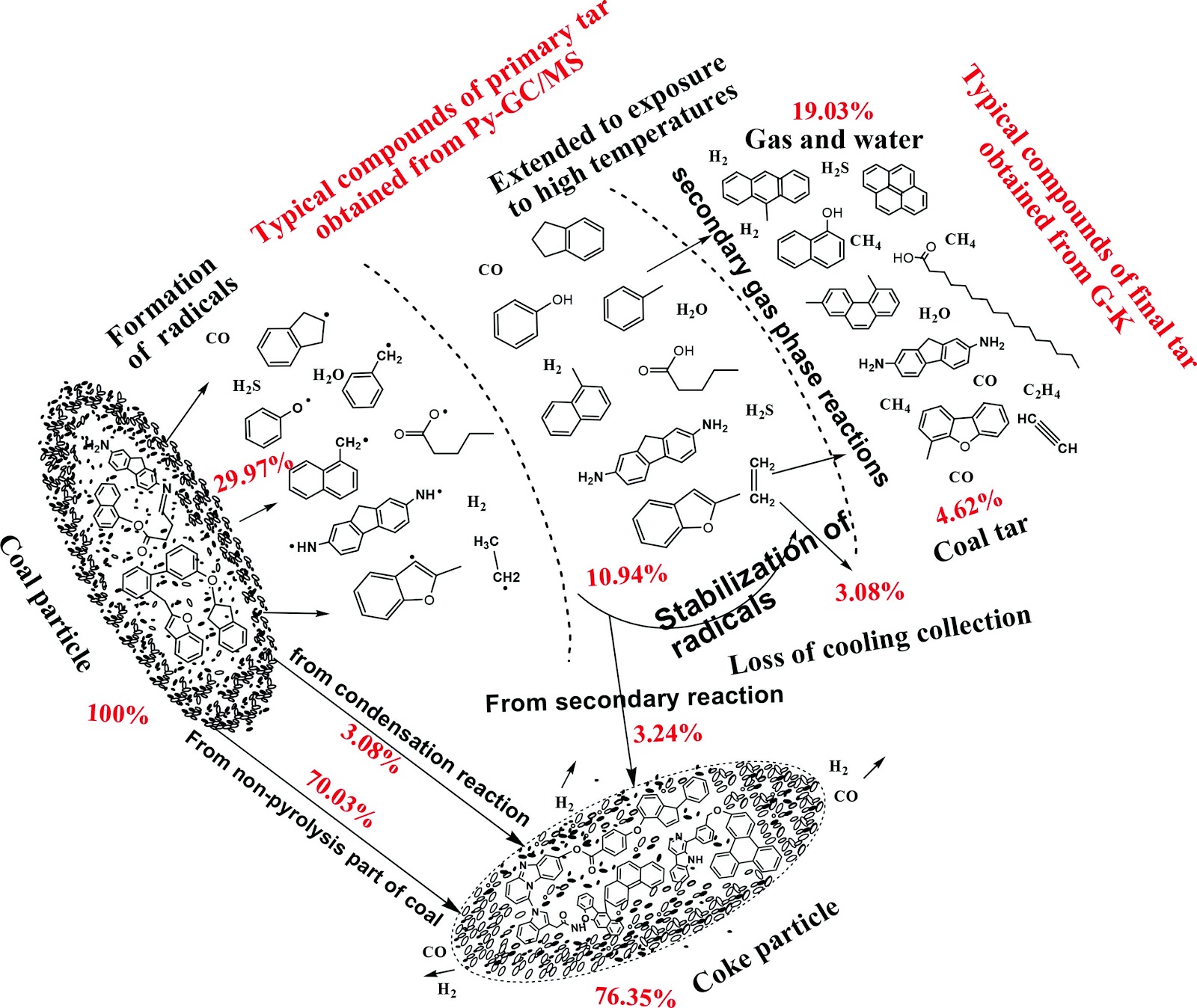
- •• Combining TG, Py-GC/MS, and Gray-King assay reveals distinct coke yield trends: G-K > TG > Py, with secondary reactions contributing significantly to G-K coke yield. • Fast pyrolysis exhibits stronger coal molecular fracture, yielding more oxygenated compounds, mono-ring aromatics, and aliphatics, with phenolics increasing from 15.49% to 35.17%. • Multi-ring aromatics decrease dramatically from 23.13% to 2.36% in fast pyrolysis, indicating enhanced cracking of heavy aromatic structures. • Secondary reactions in slow pyrolysis (G-K) include alkane/ester cleavage, condensation of mono-ring aromatics with alkenes, ring opening, isomerization, and hydrogenation, informing reactor design for tar upgrading.
Abstract
The pyrolysis process of Shendong coal (SD) was first studied by combining the characteristics of thermal gravimetric (TG), pyrolysis-gas chromatography/mass spectrometry (Py-GC/MS) and Gray-King assay (G-K). The results show that the order of coke yields is G-K (76.35% (mass))>TG (73.11% (mass))>Py (70.03% (mass)). G-K coke yield caused by condensation reaction and secondary reaction accounts for 3.08% (mass) and 3.24% (mass), respectively. Compared with slow pyrolysis, fast pyrolysis has stronger fracture ability to coal molecules and can obtain more O-compounds, mono-ring aromatics and aliphatics. Especially, the content of phenolics increases significantly from 15.49% to 35.17%, but the content of multi-ring aromatics decreases from 23.13% to 2.36%. By comparing the compositions of Py primary tar and G-K final tar, it is found that secondary reactions occurred during G-K pyrolysis process include the cleavage of alkane and esters, condensation of mono-ring aromatics with low carbon alkene, ring opening, isomerization of tri-ring aromatics, hydrogenation of aromatics and acids.
1. Introduction
Coal is a preferred energy source in China and will remain a key role in China's energy sources [1]. Coal pyrolysis is the initial phase of coal conversion processes and has an important impact on the subsequent phases [2,3]. Usually, coal pyrolysis is classified according to the final temperature and the heating rate. Low temperature pyrolysis has many advantages, such as mild reaction conditions, simple process, low production cost, less investment and atmospheric pressure production, which can meet with the demand for energy saving and is deemed as an economical coal conversion process [4,5]. Slow pyrolysis is a relatively successful technology compared with fast pyrolysis [6]. But there are still many problems in slow pyrolysis, such as poor quality coal tar, only using lump coal, oil-dust separation difficulty, high cost of tar processing, pipeline blockage, and difficulty in wastewater treatment [7]. None of fast pyrolysis technologies were commercialized up to now. Therefore, understanding coal pyrolysis process and the difference between fast pyrolysis and slow pyrolysis are of great significance for coal conversion and utilization.
A lot of research has been done on coal pyrolysis and it has been found that many factors including coal rank, particle size, temperature, heating rate, atmosphere and reactor have significant effects on coal pyrolysis characteristics [8,9]. In slow pyrolysis process, coal macromolecular structure will gradually condense and become more stable. So for the same coal, as the heating rate increases, the coal conversion rate increases [10]. The presence of a purging gas can greatly avoid secondary reactions and is also dependent on the apparatus of choice [11]. Tian et al. [12] found that coke yields gradually increase with the decrease of heating rate by thermal gravimetric (TG) and Qiao et al. [13] reached the same conclusion. Liu et al. [14] pointed out that temperature increase is the smallest for volatiles generated in small fixed-bed reactors with a purging gas and extending residence time of volatiles at high temperature promotes conversion of tar to coke. Hayashi et al. [15] used Curie-point reactor and fixed-bed reactor to study fast and slow pyrolysis, respectively. He found that secondary reactions of volatiles are sufficiently suppressed in Curie-point reactor and the yield of pyrolysis gas remained unchanged or changed slightly with the increase of heating rate. Xu et al. [16] conducted pyrolysis tests in an improved fixed bed reactor and used Gray-King assay (G-K) as a comparison, found that the tar yield in the fixed bed reactor is higher than that of G-K. Liu et al. [17] pointed out
Loading authentic research manuscript (Pages 1–5)...
Xiaoping Su, Zhao Wang, Ning Li, Longjian Li, Ping Zhang, Ming Sun, Xiaoxun Ma (2024). Study on coal pyrolysis characteristics by combining different pyrolysis reactors. Chinese Journal of Chemical Engineering. https://doi.org/10.1016/j_cjche_144878035
Research & Educational Purpose Only:The translations, structured abstracts, analytical annotations, and data reports provided by SinoTechIntel are intended exclusively for academic research, internal corporate R&D, and educational benchmarking. They do not constitute formal engineering, chemical safety, legal, or professional advice.
Copyright & Intellectual Property Notice: Original copyright of the underlying source articles and experimental data remains with the respective authors, institutions, and original publishing journals. SinoTechIntel claims intellectual property only over its proprietary translations, analytical syntheses, and AEO structured enhancements in accordance with international fair use and academic citation principles.
Frequently Asked Questions
What is the main objective of this study?
The study aims to investigate the pyrolysis characteristics of Shendong coal by combining different pyrolysis reactors (TG, Py-GC/MS, and Gray-King assay) to understand the differences between fast and slow pyrolysis and the role of secondary reactions.
How do coke yields compare among the three pyrolysis methods?
The order of coke yields is G-K (76.35% mass) > TG (73.11% mass) > Py (70.03% mass), indicating that slow pyrolysis (G-K) produces more coke due to secondary reactions and condensation.
What are the key differences between fast and slow pyrolysis in terms of product composition?
Fast pyrolysis yields more oxygenated compounds, mono-ring aromatics, and aliphatics, with phenolics increasing from 15.49% to 35.17%, while multi-ring aromatics decrease from 23.13% to 2.36%, indicating stronger cracking ability.
What secondary reactions occur during Gray-King pyrolysis?
Secondary reactions include cleavage of alkanes and esters, condensation of mono-ring aromatics with low carbon alkenes, ring opening, isomerization of tri-ring aromatics, and hydrogenation of aromatics and acids.
Why is this study significant for coal conversion technology?
Understanding the differences between fast and slow pyrolysis and the impact of secondary reactions helps optimize reactor design and operating conditions to improve tar yield and quality, addressing challenges in commercial coal pyrolysis.
Related Technical Papers & Translations
Design and optimization of a high-efficiency distillation process for cellulosic fuel ethanol integrated with thermal coupling and molecular sieve adsorption
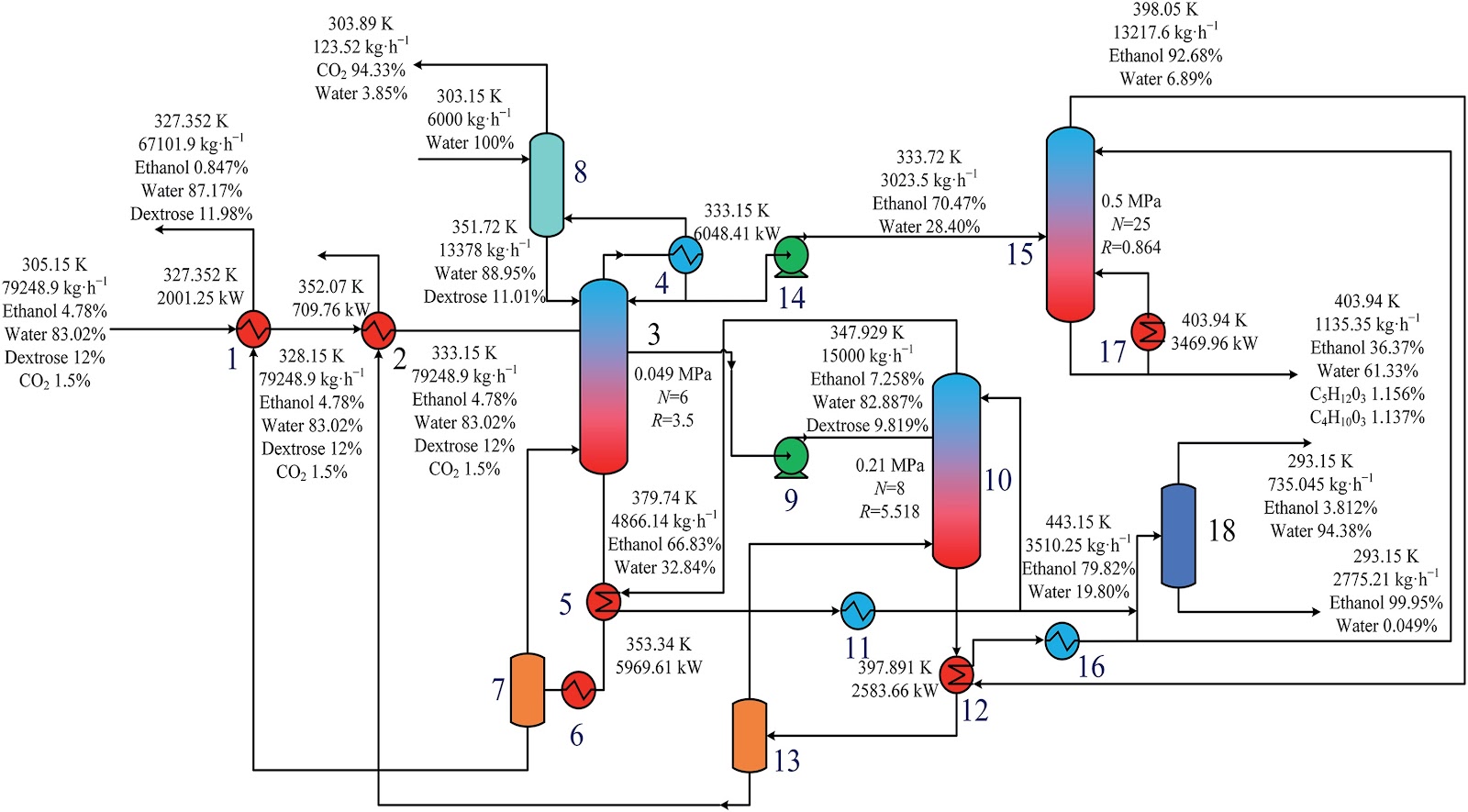
To address the challenges of high energy consumption and prominent costs in the traditional three-columns distillation process for cellulosic fuel ethanol, a distillation—molecular sieve coupling separation process is proposed. This process integrates a three-column (crude distillation column, first distillation column, second distillation column) system with a 3A molecular sieve adsorption deep dehydration unit. A thermal coupling network is constructed via differential pressure design (steam from medium/high-pressure columns as mutual heat sources, reboiler liquid waste heat for feed preheating), and molecular sieve adsorption conditions are optimized. The study first performs a thermodynamic consistency test on the ethanol—water system, determines optimal non-random two-liquid (NRTL) model binary interaction parameters via experimental data regression for Aspen Plus simulation. Aiming at minimum total annual cost (TAC), Aspen Plus is used to optimize process parameters (theoretical tray number, feed location, reflux ratio, side-draw position, etc.). Economic analysis shows this process reduces CO2 emission costs by 27.56%, TAC by 15.58% (to 5.123 × 10⁶ USD·a-1), and increases ethanol purity to >99.6%, providing an effective solution for green, efficient separation.
A cohesion loss model for determining residual strength of deep bedded sandstone
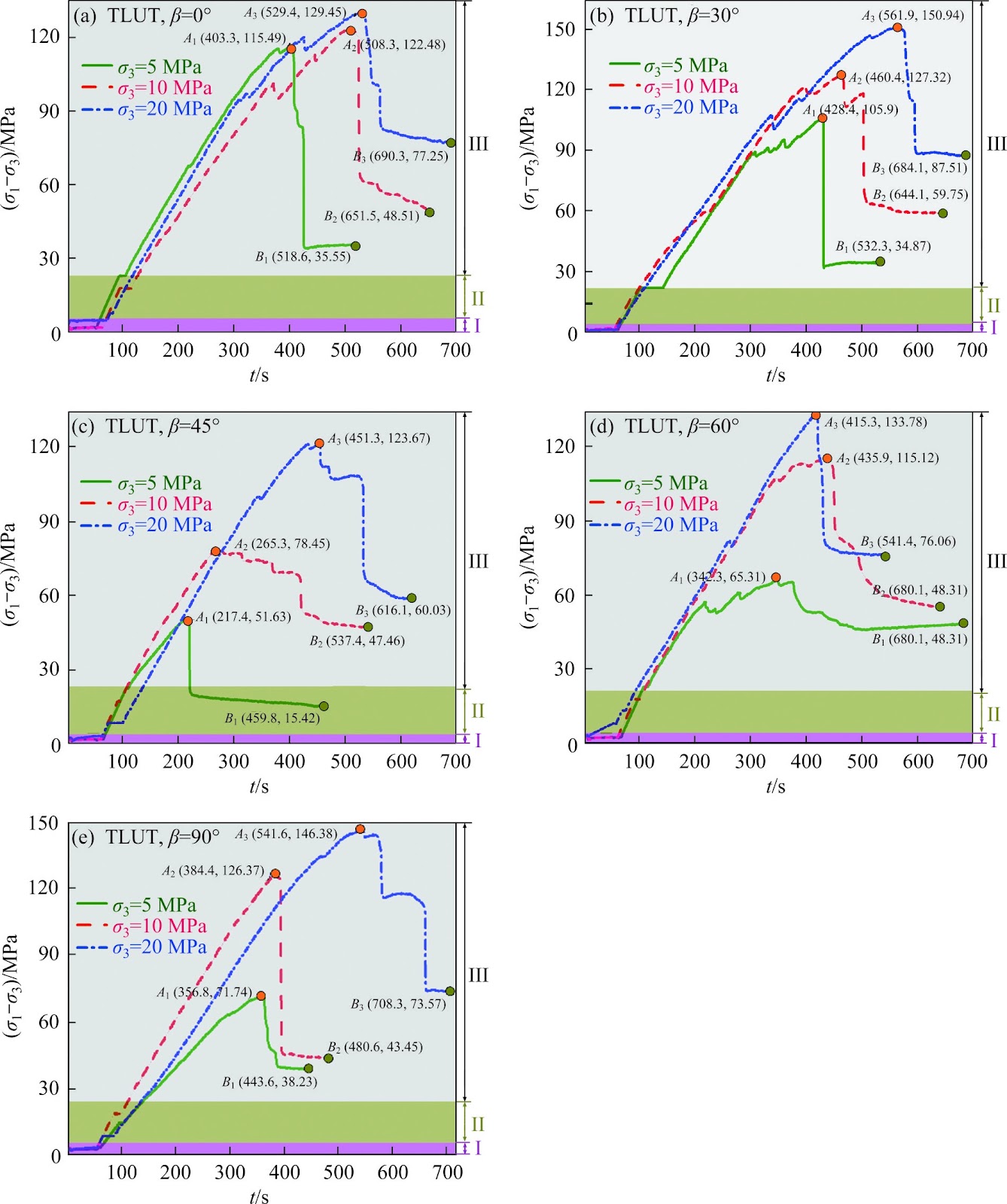
Rock residual strength, as an important input parameter, plays an indispensable role in proposing the reasonable and scientific scheme about stope design, underground tunnel excavation and stability evaluation of deep chambers. Therefore, previous residual strength models of rocks established were reviewed. And corresponding related problems were stated. Subsequently, starting from the effects of bedding and whole life-cycle evolution process, series of triaxial mechanical tests of deep bedded s
Federated model with contrastive learning and adaptive control variates for human activity recognition
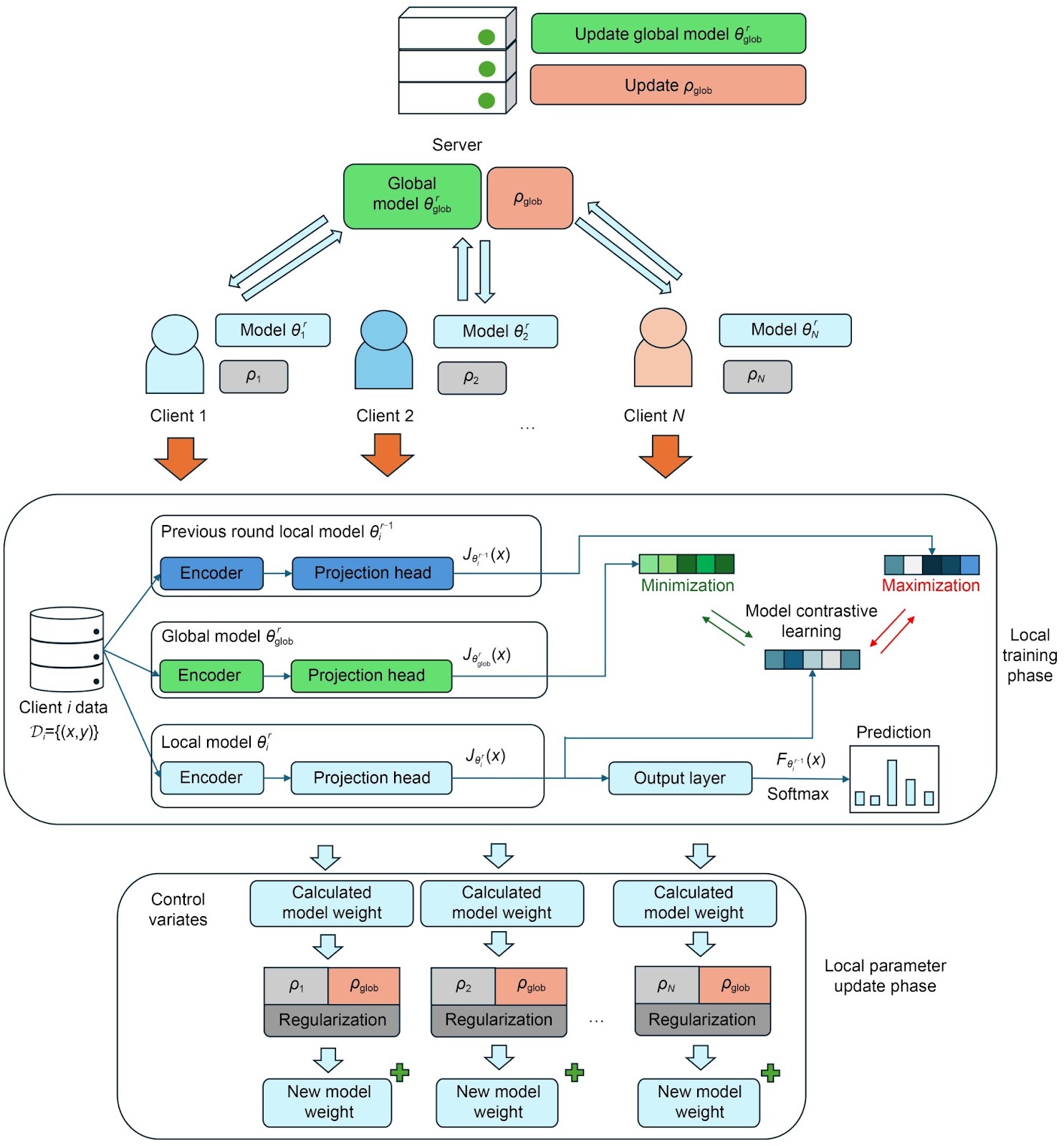
Recent attention to privacy issues demands a communication-safe method for training human activity recognition (HAR) models on client activity data. Federated learning (FL) has become a compelling technique to facilitate model training between the server and clients while preserving data privacy. However, classical FL methods often assume independent and identically distributed (IID) data among clients. This assumption does not hold true in practical scenarios. Human activity in real-world scena