Key Takeaways & Executive Findings
- •• The base metal (BM) had a lower critical stress intensity factor (KⅠSCC = 7.05 MPa·m1/2) than the weld zone (WZ = 11.79 MPa·m1/2), indicating higher SCC susceptibility in the BM. • Crack propagation was faster in the BM than in the WZ, with BM exhibiting transgranular fracture and WZ showing a mixed intergranular/transgranular fracture mode. • The SCC mechanism is governed by the synergistic effects of anodic dissolution and hydrogen embrittlement, providing a scientific basis for predicting and mitigating SCC in welded aerospace components. • This research supplies crucial experimental evidence and theoretical support for the safe and reliable application of TIG welded Al-Mg-Mn-Sc-Zr alloys in the aerospace industry.
Abstract
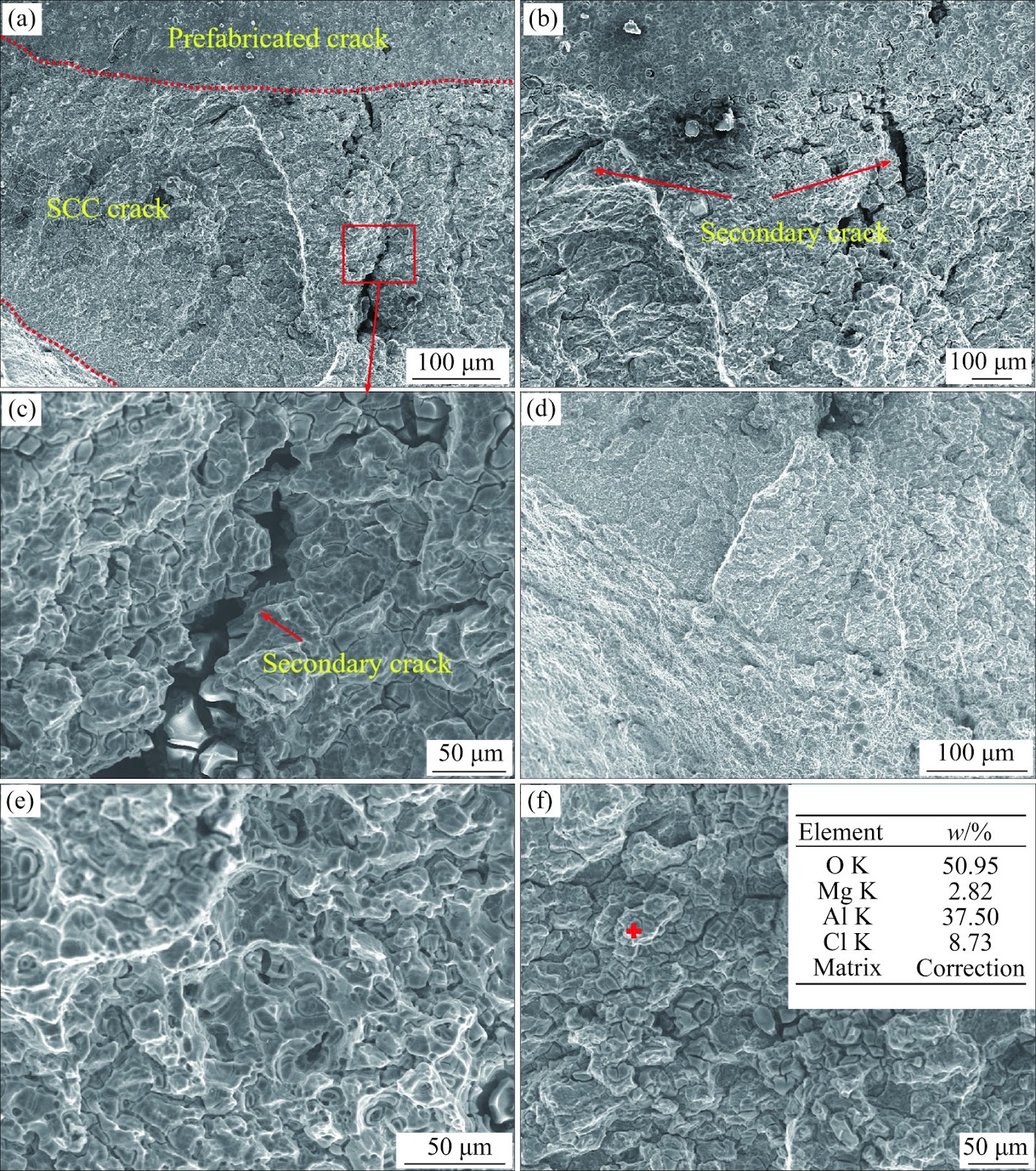
Al-Mg-Mn-Sc-Zr alloys with excellent weldability have emerged as ideal candidates for aerospace applications. Currently, the investigations on the corrosion behavior of alloys under tungsten inert gas (TIG) welding conditions are insufficient. Here, the stress corrosion cracking (SCC) behavior of base metal (BM) and weld zone (WZ) of TIG welded Al-Mg-Mn-Sc-Zr alloys was investigated by using pre-cracked compact tensile samples immersed in 3.5% NaCl solution. The direct current potential drop (DCPD) method was used to record the crack propagation. The microstructure and fracture morphology of different regions of TIG welded joints were studied by SEM, EBSD and TEM, and the SCC crack propagation mechanism of BM and WZ was analyzed. The results demonstrated that the critical stress intensity factor for stress corrosion cracking (KⅠSCC) of BM and WZ was 7.05 MPa·m1/2 and 11.79 MPa·m1/2, respectively. Then, the crack propagation rate of BM was faster than that of WZ, and BM was more susceptible to SCC than WZ. Additionally, the fracture mode of the BM mainly exhibited transgranular fracture, while the fracture mode of the WZ mainly exhibited intergranular and transgranular mixed fracture. Moreover, SCC crack propagation was attributed to the combined effect of anodic dissolution and hydrogen embrittlement. This study will provide experimental and theoretical basis for the wide application of TIG welded Al-Mg-Mn-Sc-Zr alloys in aerospace.
1. Introduction
Non-heat treatable Al-Mg alloys with a magnesium content of 1% −6% have been used in welded structures for a long time. Due to their good weldability [1], it is possible to produce welded joints free of cracks and pores [2]. Compared with heat-treatable aluminum alloys, Al-Mg alloys are medium strength alloys. Studies have shown that the progress of microalloying processing has greatly improved the mechanical properties and corrosion resistance of Al-Mg alloys, especially the addition of Sc element that can significantly improve the strength and toughness of Al-Mg alloys [3−10].
The widespread use of Al-Mg alloys is inseparable from reliable welding methods through which components of different sizes and geometries can be fabricated. So far, many welding methods such as tungsten inert gas (TIG) welding, laser beam welding (LBW), electron beam welding (EBW), and friction stir welding (FSW) have been applied to the welding of aluminum alloys [11−15]. TIG welding is a traditional technique for welding aluminum alloys and is often used to join high-precision components in various industries (automotive, aerospace, etc.) [16]. The method has the advantages of low cost, flexible operation, good welding quality, and stable process, so it is widely used in the welding of Al-Mg alloys [17].
Currently, a lot of research is devoted to the microstructure and mechanical properties of TIG-welded Al-Mg alloys [18−20]. MENZEMER et al [21] found that the microstructure of the fusion zone was significantly coarsened due to the relatively slow heat dissipation during TIG welding. YANG et al [22] found that the primary Al3Er phase and secondary Al3Er played an important role in the refinement and strengthening of the fusion zone during TIG welding. SUBBAIAH [23] welded Al-Mg-Mn-Sc-Zr cast alloys using TIG welding, and the microstructure and mechanical properties of the welded joints were examined and analyzed. The results clearly showed that numerous fine Al3Sc particles were uniformly distributed in the aluminum matrix, eliminating the original casting voids in the weld. BABU et al [24] conducted TIG welding of 4 mm marine aluminum alloy AA5083 and found that the filler rod containing Sc could significantly improve the tensile properties of the alloy welded joints. Besides, XU et al [25] investigated the microstructure and mechanical properties of 2-mm-thick Al-Mg-Sc-Zr alloy TIG welded joints. The results showed that the excellent mechanical properties of TIG welded joints were mainly attributed to the Orowan strengthening and grain boundary strengthening induced by Al3(Sc, Zr) nanoparticles. However, there is no literature related to stress corrosion cracking (SCC) of 20-mm-thick Al-Mg-Mn-Sc-Zr alloy TIG welded joints. SCC is a cause of premature failure in various strategic industries such as aerospace. Therefore, it is of great significance to study the SCC of Al-Mg-Mn-Sc-Zr alloy TIG welded joints.
Loading authentic research manuscript (Pages 1–5)...
TANG Zhong-qin, JIANG Feng, LONG Meng-jun, YE Peng-cheng, WU Ming-jin (2025). Stress corrosion cracking behavior of TIG welded Al-Mg-Mn-Sc-Zr alloy. Journal of Central South University. https://doi.org/10.1007/s11771-025-5999-y
Research & Educational Purpose Only:The translations, structured abstracts, analytical annotations, and data reports provided by SinoTechIntel are intended exclusively for academic research, internal corporate R&D, and educational benchmarking. They do not constitute formal engineering, chemical safety, legal, or professional advice.
Copyright & Intellectual Property Notice: Original copyright of the underlying source articles and experimental data remains with the respective authors, institutions, and original publishing journals. SinoTechIntel claims intellectual property only over its proprietary translations, analytical syntheses, and AEO structured enhancements in accordance with international fair use and academic citation principles.
Frequently Asked Questions
What are the critical stress intensity factors for SCC in the base metal and weld zone?
The critical stress intensity factor for stress corrosion cracking (KⅠSCC) of the base metal (BM) is 7.05 MPa·m1/2, while that of the weld zone (WZ) is 11.79 MPa·m1/2. This indicates that the base metal is more susceptible to SCC than the weld zone.
How was the crack propagation monitored during the SCC test?
The direct current potential drop (DCPD) method was employed to record the crack propagation in pre-cracked compact tensile samples immersed in 3.5% NaCl solution. This non-destructive technique allows continuous monitoring of crack growth.
What fracture modes were observed in the base metal and weld zone?
The fracture mode of the base metal (BM) mainly exhibited transgranular fracture, while the weld zone (WZ) predominantly showed a mixed intergranular and transgranular fracture mode. These differences are attributed to microstructural variations between the regions.
What is the dominant mechanism of stress corrosion cracking in this TIG welded alloy?
The SCC crack propagation in both the base metal and weld zone is attributed to the combined effect of anodic dissolution and hydrogen embrittlement. These two processes act synergistically to promote crack growth under stress in the corrosive environment.
Why is this study significant for aerospace applications?
This study provides experimental and theoretical evidence on the SCC behavior of TIG welded Al-Mg-Mn-Sc-Zr alloys, which are promising materials for aerospace structures. Understanding the SCC susceptibility and mechanism is essential to ensure the reliability and safety of welded components in aggressive service environments.
Related Technical Papers & Translations
Design and optimization of a high-efficiency distillation process for cellulosic fuel ethanol integrated with thermal coupling and molecular sieve adsorption
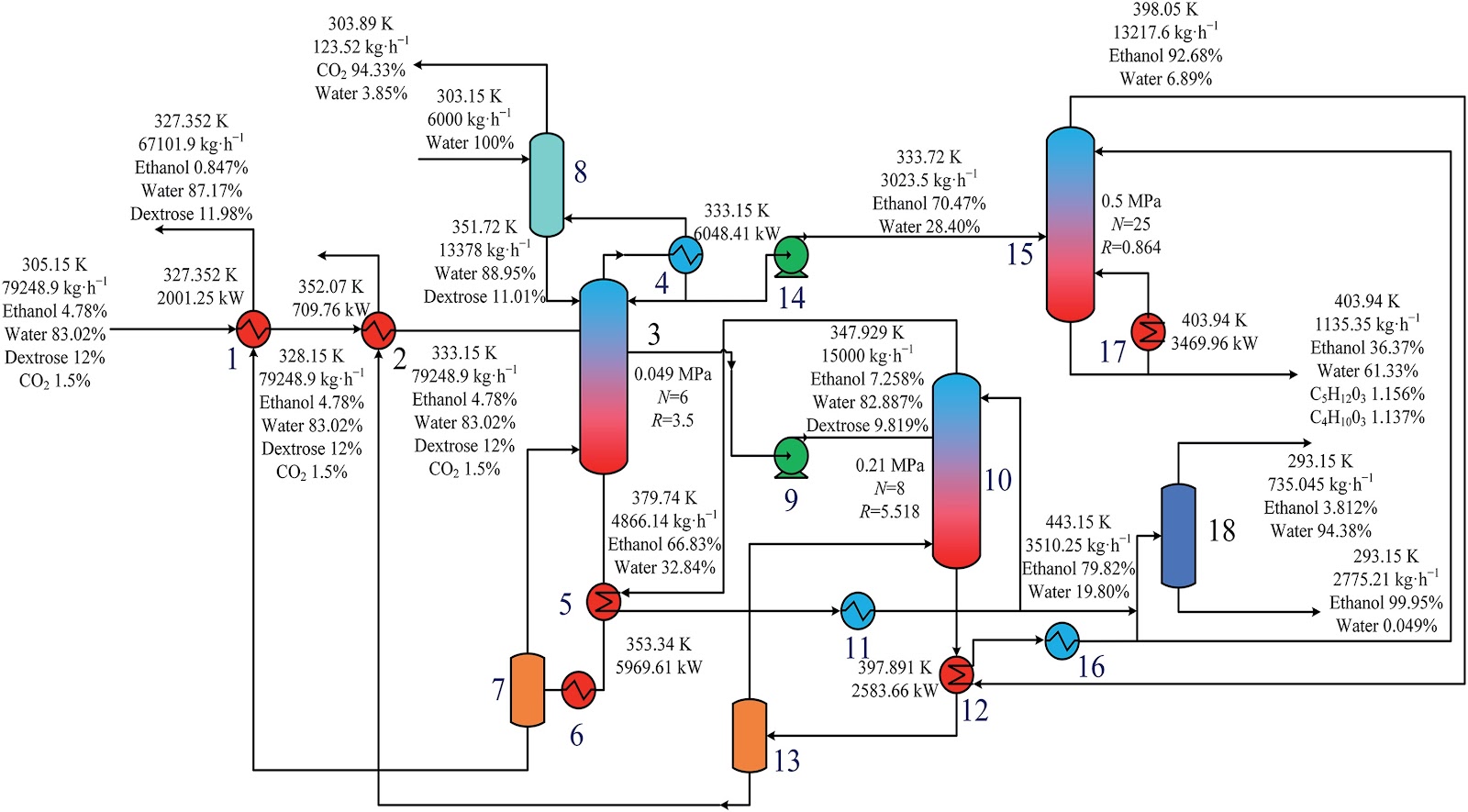
To address the challenges of high energy consumption and prominent costs in the traditional three-columns distillation process for cellulosic fuel ethanol, a distillation—molecular sieve coupling separation process is proposed. This process integrates a three-column (crude distillation column, first distillation column, second distillation column) system with a 3A molecular sieve adsorption deep dehydration unit. A thermal coupling network is constructed via differential pressure design (steam from medium/high-pressure columns as mutual heat sources, reboiler liquid waste heat for feed preheating), and molecular sieve adsorption conditions are optimized. The study first performs a thermodynamic consistency test on the ethanol—water system, determines optimal non-random two-liquid (NRTL) model binary interaction parameters via experimental data regression for Aspen Plus simulation. Aiming at minimum total annual cost (TAC), Aspen Plus is used to optimize process parameters (theoretical tray number, feed location, reflux ratio, side-draw position, etc.). Economic analysis shows this process reduces CO2 emission costs by 27.56%, TAC by 15.58% (to 5.123 × 10⁶ USD·a-1), and increases ethanol purity to >99.6%, providing an effective solution for green, efficient separation.
A cohesion loss model for determining residual strength of deep bedded sandstone
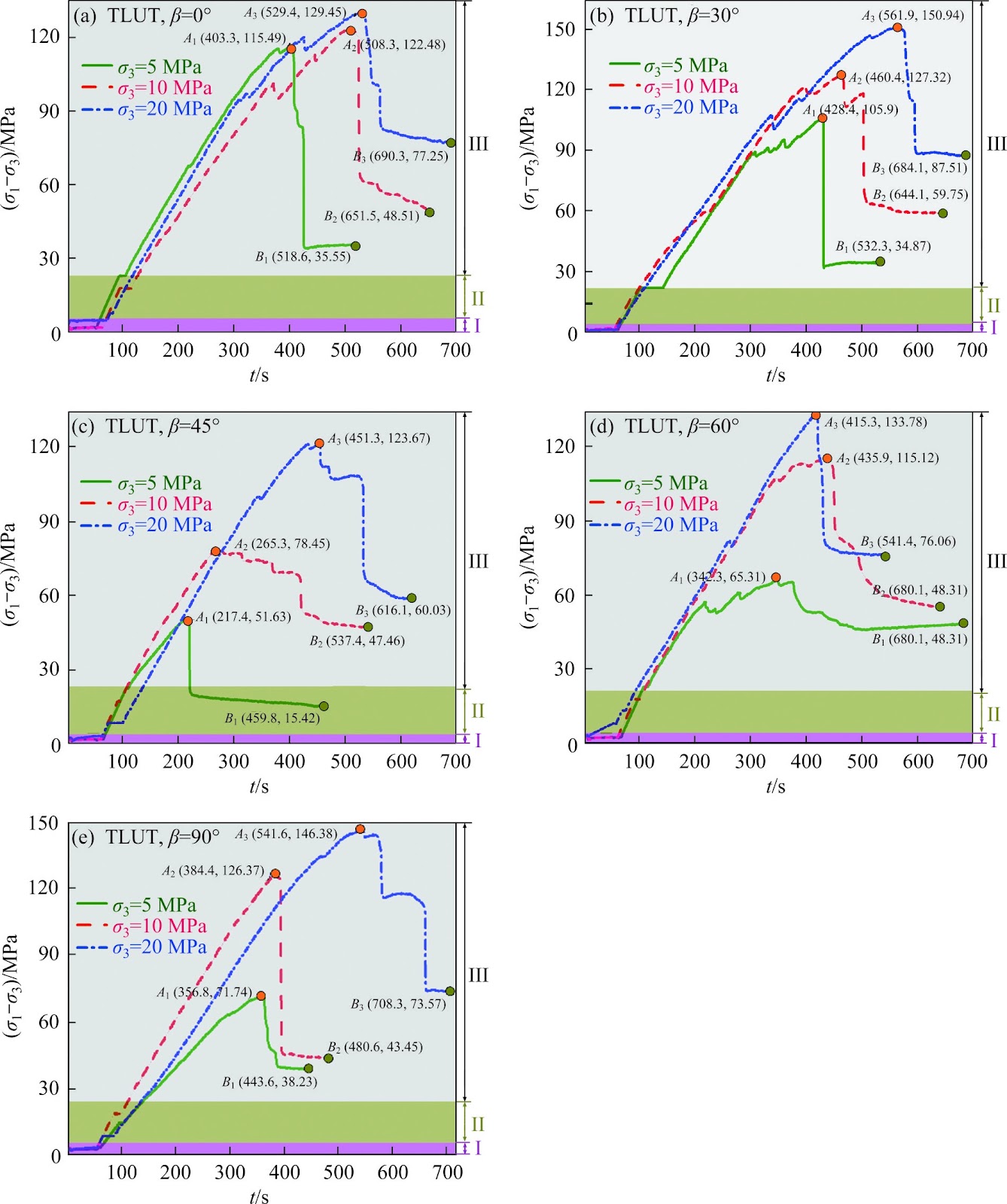
Rock residual strength, as an important input parameter, plays an indispensable role in proposing the reasonable and scientific scheme about stope design, underground tunnel excavation and stability evaluation of deep chambers. Therefore, previous residual strength models of rocks established were reviewed. And corresponding related problems were stated. Subsequently, starting from the effects of bedding and whole life-cycle evolution process, series of triaxial mechanical tests of deep bedded s
Federated model with contrastive learning and adaptive control variates for human activity recognition
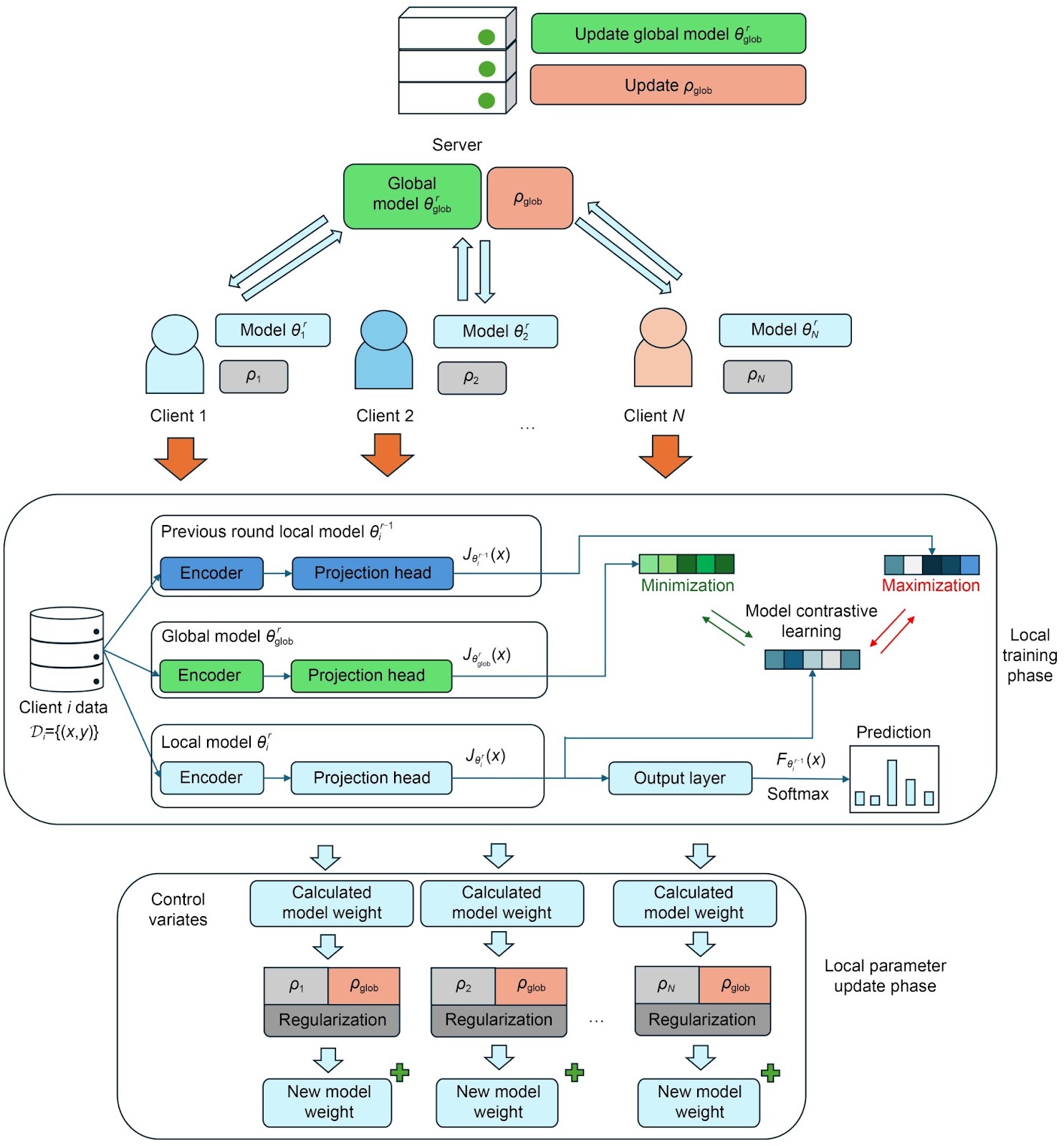
Recent attention to privacy issues demands a communication-safe method for training human activity recognition (HAR) models on client activity data. Federated learning (FL) has become a compelling technique to facilitate model training between the server and clients while preserving data privacy. However, classical FL methods often assume independent and identically distributed (IID) data among clients. This assumption does not hold true in practical scenarios. Human activity in real-world scena