Key Takeaways & Executive Findings
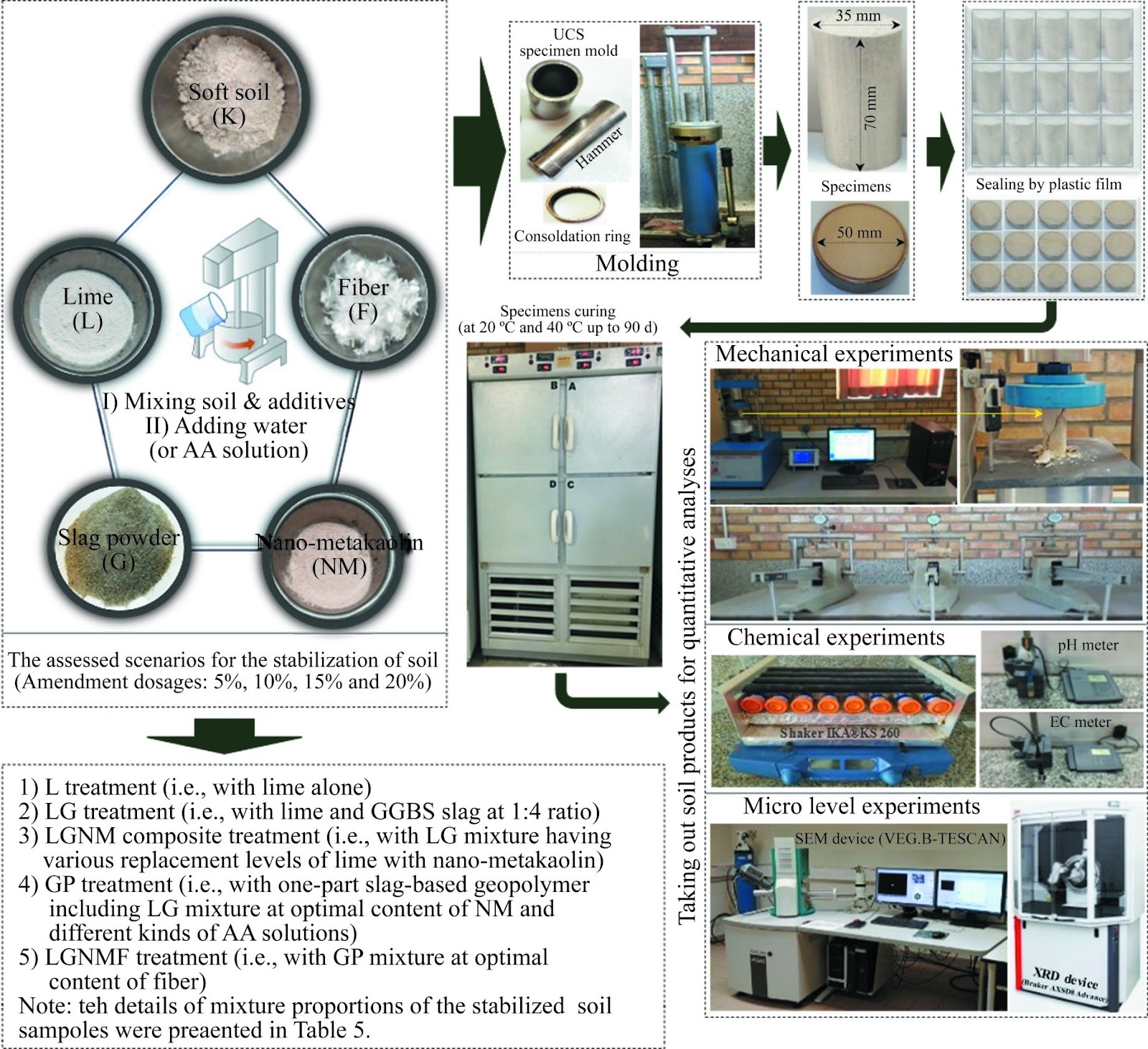
- •• Nano-metakaolin (20% replacement) in slag-based geopolymer increases soil strength ~21 times and reduces compression index by ~70%. • Higher curing temperature enhances polymerization kinetics, leading to ~2 times improvement in soil solidification. • Fiber reinforcement boosts energy absorption capacity ≥10 times and improves residual strength, overcoming brittleness of NM-stabilized soil. • Combined LGNMF treatment offers broader economic, technical, and environmental benefits, promoting ductility of geopolymer-stabilized soil.
Abstract
This study was designed to enhance the soft clayey soil treatment effects using an innovative mechanochemically activated geopolymer (GP) through the optimized inclusion of nano-metakaolin (NM) and polypropylene fiber. The study also investigated the possible improvements in the binding ability of GP stabilization under different curing regimes. To this end, binders including lime alone, LG (slag-based geopolymer), LGNM (nano-modified LG with NM) and LGNMF (LGNM/fiber) mixture were separately added to soft soil samples. The fabricated composites were then subjected to a set of macro and micro level tests. The results indicated that, adding LG binary with a 20% NM replacement can lead to a significant increase (by nearly 21 times) in soil strength and a remarkable decline (about 70%) in the compression index. In fact, NM can play a great role in accelerating the rate of hydration reactions and forming a densely packed fabric, which staggeringly improve the soil hydromechanical attributes. It was also observed that raising the curing temperature will effectively augment the polymerization kinetics, leading to a substantial increase (~2 times) in the soil solidification process. However, the stabilized composites containing NM may reveal a brittle nature under more intense stress. Such a potential drawback seems to be resolved by the integration of fibers within the matrix. LGNM combined with fiber would boost (≥10 times) the energy absorption capacity of the soil, notably enhancing its residual strength. Overall, LGNMF may not only feature a broader range of benefits (inc. economic, technical, environmental) compared to traditional binders but also promote the ductility of the GP materials.
1. Introduction
Soft and weak clayey soils may exhibit very high compressibility and low shear strength, and thus are often unsuitable for geotechnical structures and/or geo-environmental projects [1–3]. To address the limitations of problematic soils, one initial approach is to replace them with suitable materials. However, this solution may present its own economic and environmental challenges.
Chemical stabilization is one of the popular methods introduced many years ago in order to stabilize problematic soil. In this case, adding binders can improve the interfacial bonds among the soil particles by creating cementitious compounds, thereby boosting both strength and compressibility of the soil [4]. Conventional binders (inc. cement and lime) have been widely utilized to address the challenges associated with soft clayey soils, even if these materials may show limited efficiency in certain conditions such as at the presence of high sulfate dosages and/or in cold environments [5, 6]. Moreover, the production of cement and lime is generally associated with adverse environmental impacts (e.g., CO2 emissions) and high energy consumption. Thus, in recent years, numerous studies have been performed to develop alternative amendments to reduce production costs, energy consumption and environment impacts while enhancing the geotechnical properties of the stabilized soils [3, 7, 8].
Nowadays, the use of nano-scale materials (e.g., nano-zeolite, nano-SiO2, nano-CaCO3, nano-metakaolin, etc.) as partial replacements for traditional binders has attracted increasing interest in the field of soil modification. This is owing to remarkable pozzolanic activity and high pore-filling properties of these nano-materials, which can not only improve the mechanical and especially durability attributes of composites but also reduce the global demand for cement, thereby decreasing greenhouse gas emissions [6, 9]. While the utilization of nano-zeolite and nano-SiO2 has recently attracted the attention of researchers [10, 11], the relatively high production costs of these ultra-fine pozzolanas may limit their application and promotion in soil modification; however, among the proposed nano-materials, the cost of nano-metakaolin (NM) production is often lower [12]. Additionally, NM is more unstable, making it react faster when incorporated into the cementitious matrix [13]. Furthermore, as PEREZ-CORTES and ESCALANTE-GARCIA [14] reported, while the NM-based geopolymer (GP) containing 100% NM is better than cement, as to CO2 emissions only, the produced GP with NM<70% outperforms the cement-based materials in various indicators including environmental...
Loading authentic research manuscript (Pages 1–5)...
KHOSRAVI Hassan, GOODARZI Amir Reza, LAJEVARDI Seyed Hamid (2025). Simultaneous influences of nanomaterial and fiber reinforcement on enhancing the mechanical performance of geopolymerstabilized soft clayey soils. Journal of Central South University. https://doi.org/10.1007/s11771-025-5876-8
Research & Educational Purpose Only:The translations, structured abstracts, analytical annotations, and data reports provided by SinoTechIntel are intended exclusively for academic research, internal corporate R&D, and educational benchmarking. They do not constitute formal engineering, chemical safety, legal, or professional advice.
Copyright & Intellectual Property Notice: Original copyright of the underlying source articles and experimental data remains with the respective authors, institutions, and original publishing journals. SinoTechIntel claims intellectual property only over its proprietary translations, analytical syntheses, and AEO structured enhancements in accordance with international fair use and academic citation principles.
Frequently Asked Questions
What are the main benefits of using nano-metakaolin in geopolymer-stabilized soft clayey soils?
Adding nano-metakaolin (NM) as a partial replacement (20%) in slag-based geopolymer significantly increases soil strength by nearly 21 times and reduces the compression index by about 70%, while accelerating hydration reactions and forming a denser soil fabric.
How does fiber reinforcement improve the mechanical performance of geopolymer-stabilized soil?
Fiber reinforcement, particularly polypropylene fiber, enhances the energy absorption capacity by at least 10 times and significantly improves residual strength, effectively overcoming the brittle nature of NM-modified geopolymer composites.
What is the influence of curing temperature on geopolymer stabilization?
Raising the curing temperature augments polymerization kinetics, leading to a substantial increase (~2 times) in the soil solidification process, thus improving the overall mechanical performance.
Why is the combined LGNMF treatment considered beneficial compared to traditional binders?
LGNMF (lime + slag-based geopolymer + nano-metakaolin + fiber) offers broader economic, technical, and environmental benefits, including promoting ductility, enhancing strength and compressibility, and reducing reliance on conventional cement and lime.
What was the aim of this study?
The study aimed to enhance soft clayey soil treatment using an innovative mechanochemically activated geopolymer with optimized inclusion of nano-metakaolin and polypropylene fiber, and to investigate improvements under different curing regimes.
Related Technical Papers & Translations
Design and optimization of a high-efficiency distillation process for cellulosic fuel ethanol integrated with thermal coupling and molecular sieve adsorption
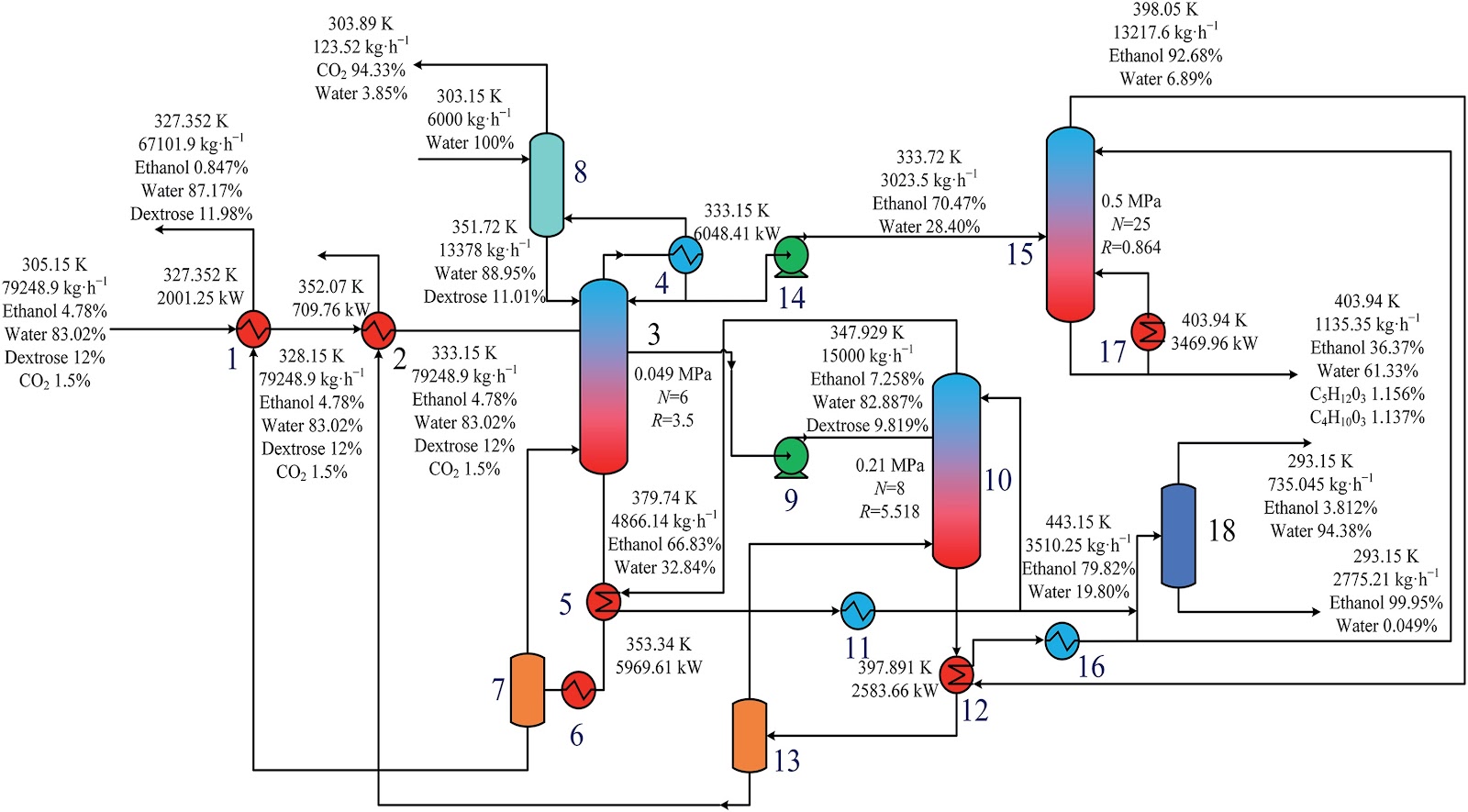
To address the challenges of high energy consumption and prominent costs in the traditional three-columns distillation process for cellulosic fuel ethanol, a distillation—molecular sieve coupling separation process is proposed. This process integrates a three-column (crude distillation column, first distillation column, second distillation column) system with a 3A molecular sieve adsorption deep dehydration unit. A thermal coupling network is constructed via differential pressure design (steam from medium/high-pressure columns as mutual heat sources, reboiler liquid waste heat for feed preheating), and molecular sieve adsorption conditions are optimized. The study first performs a thermodynamic consistency test on the ethanol—water system, determines optimal non-random two-liquid (NRTL) model binary interaction parameters via experimental data regression for Aspen Plus simulation. Aiming at minimum total annual cost (TAC), Aspen Plus is used to optimize process parameters (theoretical tray number, feed location, reflux ratio, side-draw position, etc.). Economic analysis shows this process reduces CO2 emission costs by 27.56%, TAC by 15.58% (to 5.123 × 10⁶ USD·a-1), and increases ethanol purity to >99.6%, providing an effective solution for green, efficient separation.
A cohesion loss model for determining residual strength of deep bedded sandstone
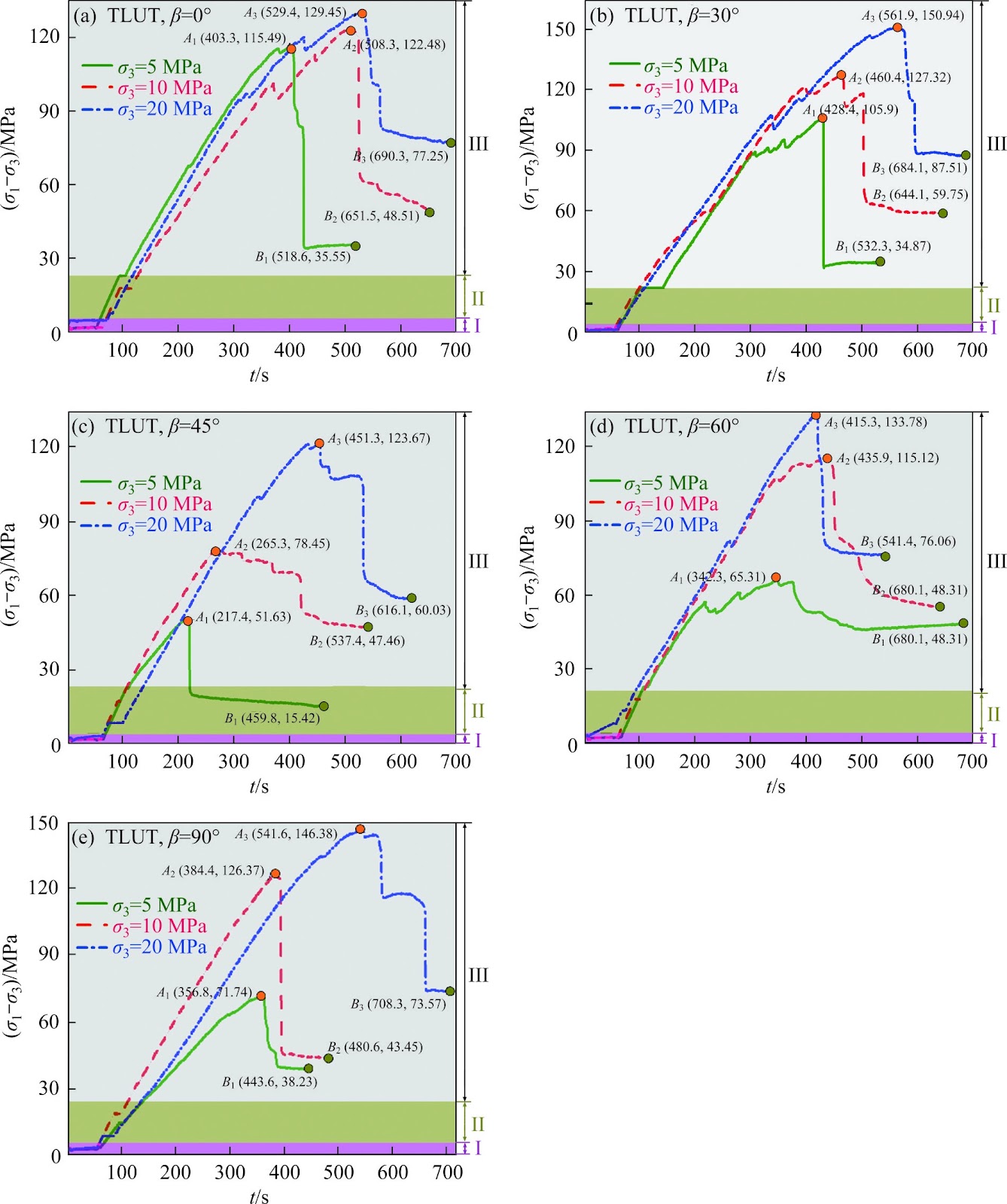
Rock residual strength, as an important input parameter, plays an indispensable role in proposing the reasonable and scientific scheme about stope design, underground tunnel excavation and stability evaluation of deep chambers. Therefore, previous residual strength models of rocks established were reviewed. And corresponding related problems were stated. Subsequently, starting from the effects of bedding and whole life-cycle evolution process, series of triaxial mechanical tests of deep bedded s
Federated model with contrastive learning and adaptive control variates for human activity recognition
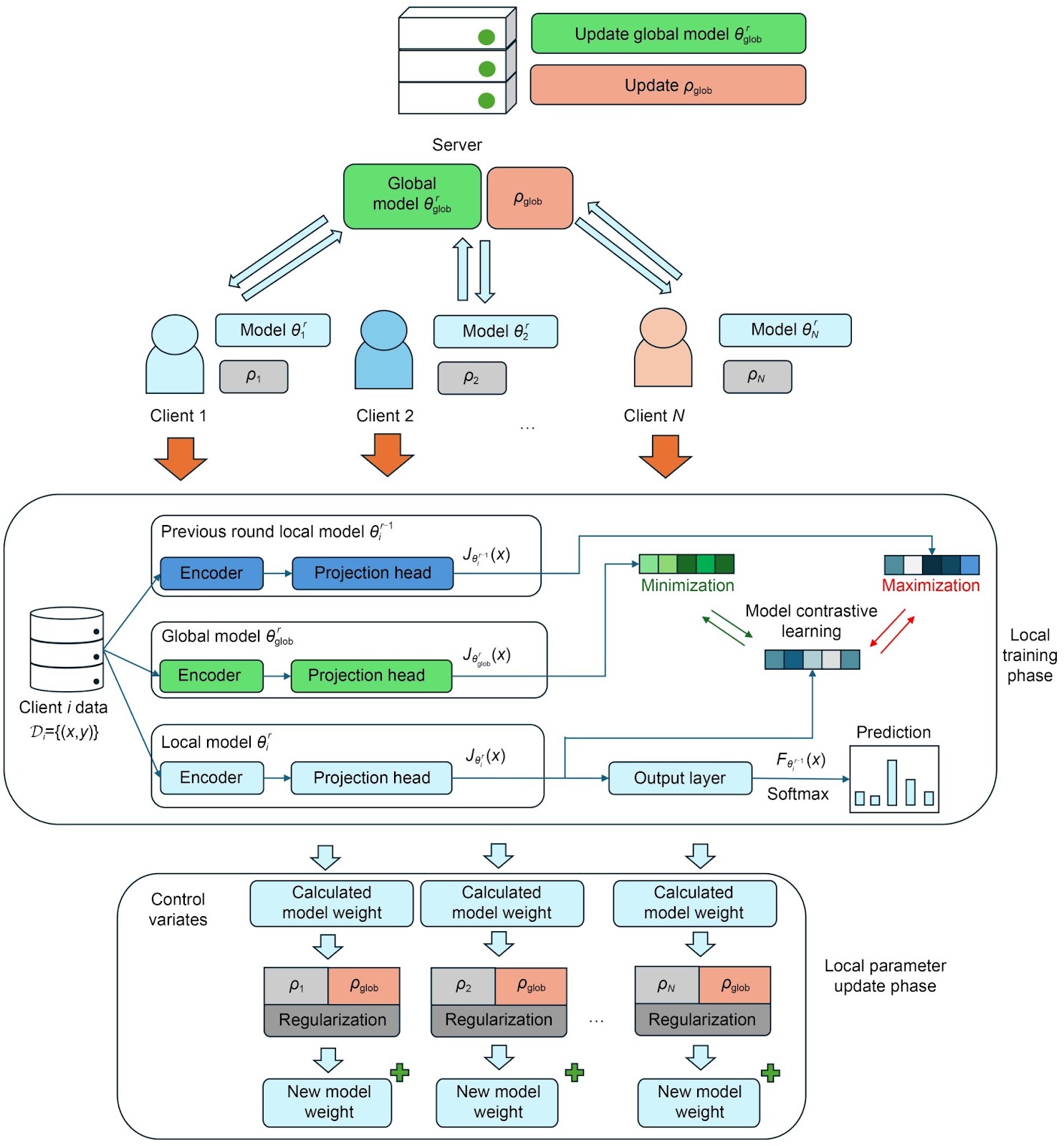
Recent attention to privacy issues demands a communication-safe method for training human activity recognition (HAR) models on client activity data. Federated learning (FL) has become a compelling technique to facilitate model training between the server and clients while preserving data privacy. However, classical FL methods often assume independent and identically distributed (IID) data among clients. This assumption does not hold true in practical scenarios. Human activity in real-world scena