Key Takeaways & Executive Findings
- •• A novel combined static and dynamic adsorption process using chelating resin effectively removes copper from nickel electrolysis anode solution. • Optimal conditions for pH, adsorption time, temperature, resin dosage, particle size, and stirring speed were systematically determined. • The process achieved a final copper concentration of 3 mg/L with undetectable nickel, meeting industrial purification standards. • Ion-exchange technology provides an environmentally friendly supplement to conventional precipitation and solvent extraction methods.
Abstract
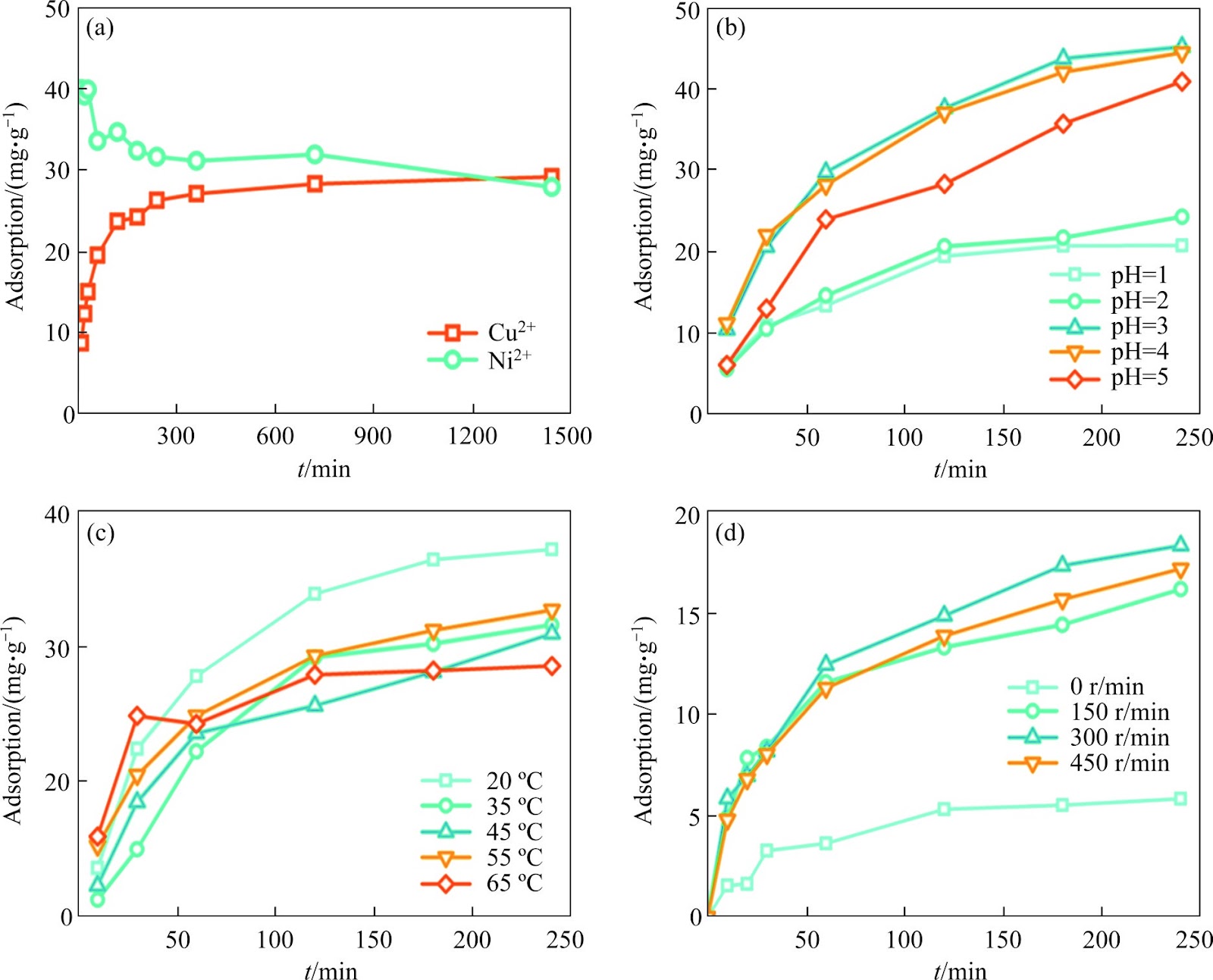
Removing copper from nickel electrolysis anode solution has been a major keypoint in the nickel metallurgy industry. In this study, we proposed a novel process flow to promote removing copper from nickel electrolysis anode solution. A simulated nickel anode solution was designed, and static and dynamic adsorption experiments were conducted to determine the best of solution pH, adsorption time and temperature, resin dosage and particle size, and stirring speed. The optimal conditions were explored for copper removal from nickel electrolysis anode solution. Based on the optimal experimental conditions and the relevant experimental data, a novel process for copper removal from nickel electrolysis anodes was designed and verified. This novel process of copper removal from nickel electrolysis anodes was confirmed with nickel anolyte solution with nickel 50−60 g/L and copper 0.5 g/L. After finishing the novel process of copper removal, the nickel in the purified nickel anolyte became undetectable and copper concentration was 3 mg/L, the novel process of resin adsorption to remove copper from nickel anode solution through static and dynamic adsorptions has an efficacious copper removal. It is a beneficial supplement to traditional methods.
1. Introduction
Removing copper from nickel electrolysis anode solution has been a challenge in the nickel metallurgy industry, which requires a copper concentration of less than 4.72×10⁻⁵ mol/L in the solution after copper removal, also the mass ratio of copper to nickel in copper slag needs to be greater than or equal to 15 [1−3]. In order to achieve this goal, a large number of metallurgical workers have conducted extensive long-term research work and proposed various methods for copper removal, including electrochemical method, chemical precipitation, solvent extraction, and ion exchange methods, but the drawbacks have not been overcome [4, 5]. Among them, electrochemical method can efficiently remove high content of copper in nickel anode solution, but it is not effective for trace amounts of copper. The mainstream method is chemical precipitation [6−8], but this method takes away a large amount of nickel during the removal of copper. Solvent extraction achieves a balance between the above two aspects [9], but due to the toxicity of solvents, they are not environmentally friendly.
Ion exchange resin is an artificially synthesized polymer material containing functional groups. The essence of ion exchange method is a reaction between exchangeable ions on the resin and metal ions in solution [10]. There are three main types of resins: anion exchange, cation exchange, and chelating resins [11]. Anion exchange resin forms complex anions with Cu2+ when Cl− concentration of the solution is greater than 1.5 mol/L, while Ni2+ does not form anionic complexes when the concentration of Cl− is between 0.1 and 12 mol/L [10, 12]. By adjusting the concentration of chloride ions, Cu2+ is separated from nickel anode solution using an anion exchange resin [13, 14]. However, this method requires a large amount of hydrochloric acid and has high recovery and separation costs, making it unsuitable for industrial production [15, 16]. Cation exchange resin is a type of resin that adsorbs metal ions in the form of ion bonds by functional groups in the resin [17]. The charge number of metal ions affects the adsorption force, and the formation of hydrated ions affects the adsorption distance [18]. The selectivity coefficient of cation exchange resin for heavy metal ions decreases with the increase of its hydration radius and charge number [19]. Therefore, cation exchange resin has a good separation effect on metal ions with high valence differences and small hydration radius, such as Cr3+ and Pb2+, but has weak selectivity for metal ions with the same valence state. Since Ni2+ and Cu2+ are both divalent and have no valence difference, cation exchange resins are usually not used for the separation of nickel and copper. Chelating resins can form stable complexes with heavy metal ions and are widely used in wastewater treatment [20]. Chelating resins have greater selectivity to nickel and copper, and their regeneration
Loading authentic research manuscript (Pages 1–5)...
TANG Xiao-wei, ZHAO Zhong-wei (2025). Simulated solution condition experiment and process design for copper deep removal from nickel anodes based on ion-exchange. Journal of Central South University. https://doi.org/10.1007/s11771-024-5655-y
Research & Educational Purpose Only:The translations, structured abstracts, analytical annotations, and data reports provided by SinoTechIntel are intended exclusively for academic research, internal corporate R&D, and educational benchmarking. They do not constitute formal engineering, chemical safety, legal, or professional advice.
Copyright & Intellectual Property Notice: Original copyright of the underlying source articles and experimental data remains with the respective authors, institutions, and original publishing journals. SinoTechIntel claims intellectual property only over its proprietary translations, analytical syntheses, and AEO structured enhancements in accordance with international fair use and academic citation principles.
Frequently Asked Questions
What is the main objective of this study?
The main objective is to develop a novel ion-exchange-based process for deep removal of copper from nickel electrolysis anode solution, overcoming limitations of traditional methods.
What are the optimal conditions identified in the paper?
The study determined optimal solution pH, adsorption time, temperature, resin dosage, particle size, and stirring speed through static and dynamic adsorption experiments.
How effective is the proposed process?
The process reduced copper concentration to 3 mg/L and made nickel undetectable in the purified anolyte, demonstrating high efficacy for industrial application.
Why is chelating resin preferred over other resin types?
Chelating resins form stable complexes with heavy metals and exhibit high selectivity for Cu2+ over Ni2+, unlike cation exchange resins which cannot effectively separate same-valence ions.
How does this method compare to traditional copper removal methods?
It avoids the drawbacks of electrochemical, chemical precipitation, and solvent extraction methods, such as inefficiency at trace levels, nickel loss, and solvent toxicity, offering an environmentally friendly supplement.
Related Technical Papers & Translations
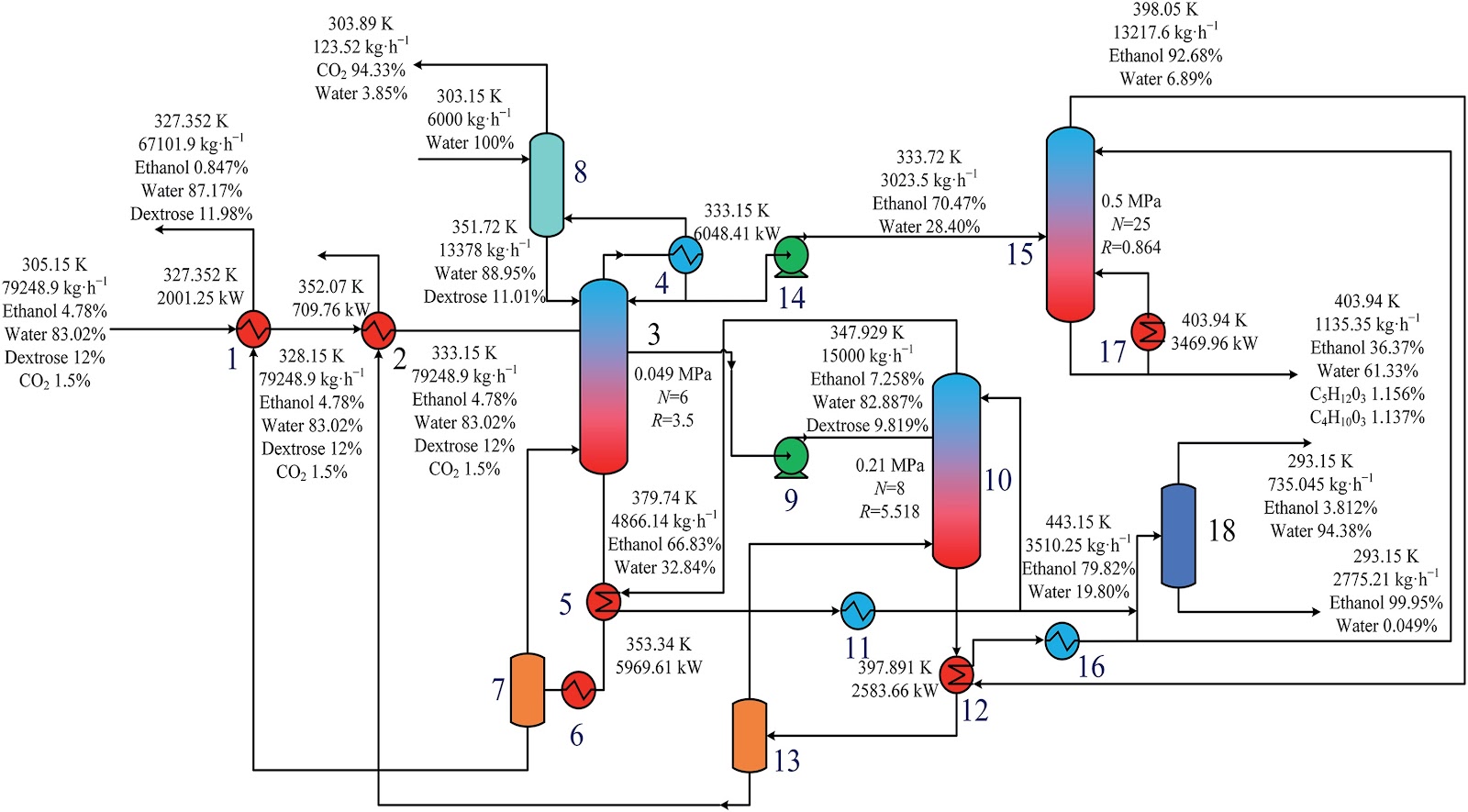
Design and optimization of a high-efficiency distillation process for cellulosic fuel ethanol integrated with thermal coupling and molecular sieve adsorption
To address the challenges of high energy consumption and prominent costs in the traditional three-columns distillation process for cellulosic fuel ethanol, a distillation—molecular sieve coupling separation process is proposed. This process integrates a three-column (crude distillation column, first distillation column, second distillation column) system with a 3A molecular sieve adsorption deep dehydration unit. A thermal coupling network is constructed via differential pressure design (steam from medium/high-pressure columns as mutual heat sources, reboiler liquid waste heat for feed preheating), and molecular sieve adsorption conditions are optimized. The study first performs a thermodynamic consistency test on the ethanol—water system, determines optimal non-random two-liquid (NRTL) model binary interaction parameters via experimental data regression for Aspen Plus simulation. Aiming at minimum total annual cost (TAC), Aspen Plus is used to optimize process parameters (theoretical tray number, feed location, reflux ratio, side-draw position, etc.). Economic analysis shows this process reduces CO2 emission costs by 27.56%, TAC by 15.58% (to 5.123 × 10⁶ USD·a-1), and increases ethanol purity to >99.6%, providing an effective solution for green, efficient separation.
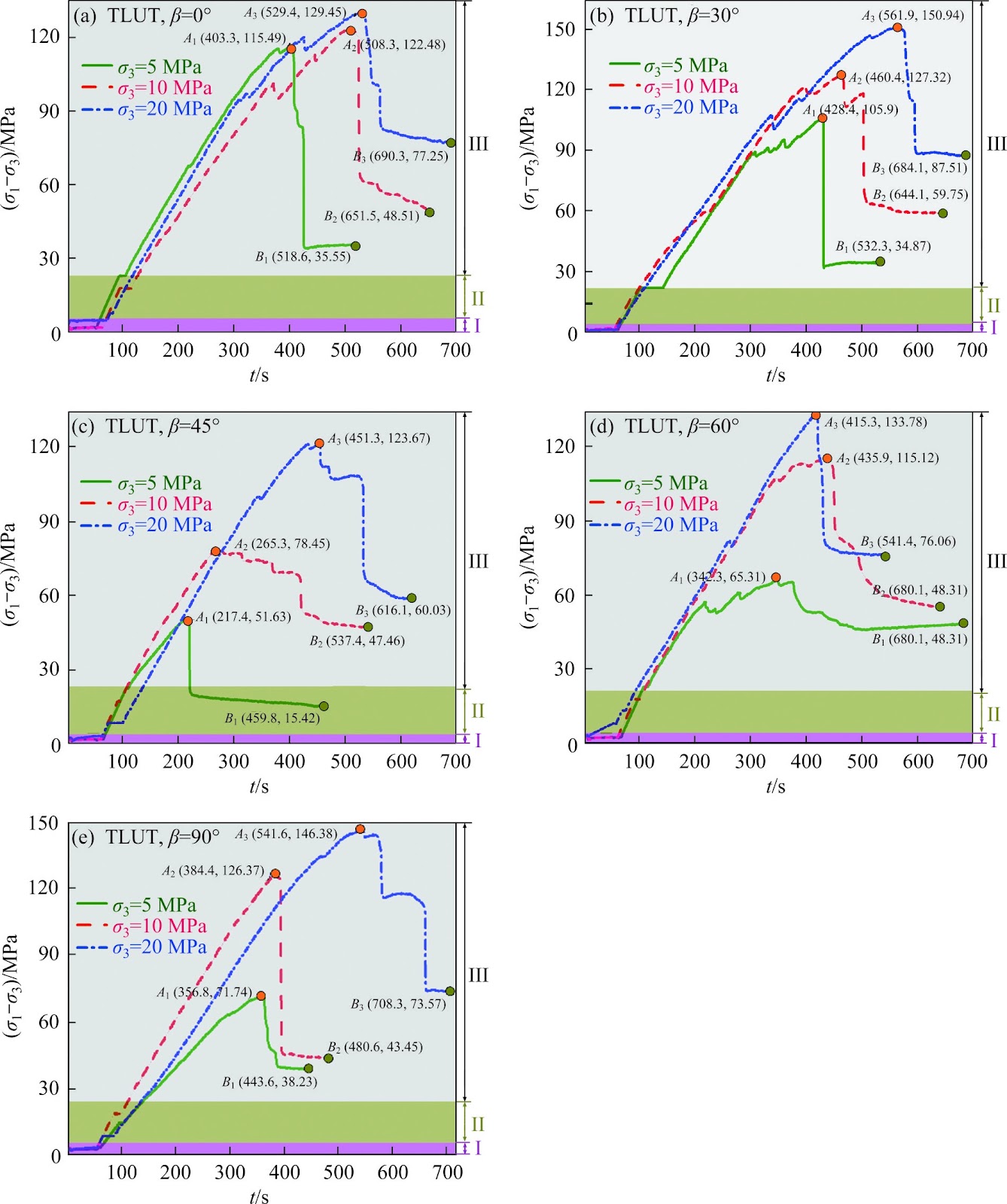
A cohesion loss model for determining residual strength of deep bedded sandstone
Rock residual strength, as an important input parameter, plays an indispensable role in proposing the reasonable and scientific scheme about stope design, underground tunnel excavation and stability evaluation of deep chambers. Therefore, previous residual strength models of rocks established were reviewed. And corresponding related problems were stated. Subsequently, starting from the effects of bedding and whole life-cycle evolution process, series of triaxial mechanical tests of deep bedded s
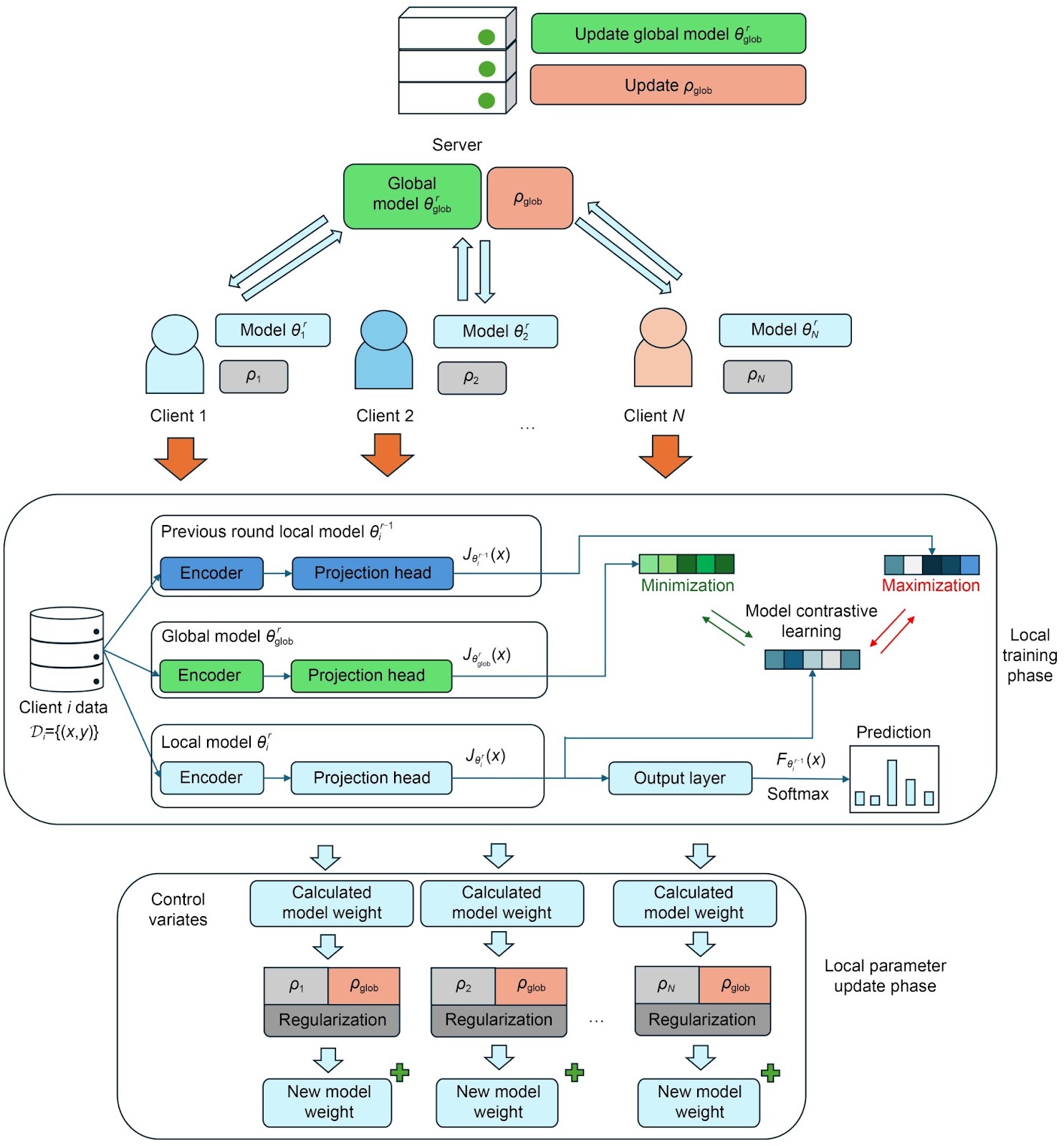
Federated model with contrastive learning and adaptive control variates for human activity recognition
Recent attention to privacy issues demands a communication-safe method for training human activity recognition (HAR) models on client activity data. Federated learning (FL) has become a compelling technique to facilitate model training between the server and clients while preserving data privacy. However, classical FL methods often assume independent and identically distributed (IID) data among clients. This assumption does not hold true in practical scenarios. Human activity in real-world scena