Key Takeaways & Executive Findings
- •• The hybrid CNN–LSTM reduces short-term voltage prediction RMSE by 49% compared to a standalone LSTM baseline. • A sliding window of 40 hours is optimal for recursive long-horizon lifetime forecasting, keeping RUL error within ±5 hours. • Model robustness is strong: with >500 hours of training data, RMSE variation remains below 0.001 V. • The methodological framework provides practical, data-driven guidance for configuring CNN–LSTM PEMFC prognostics and can extend to dynamic-load scenarios.
Abstract
For proton exchange membrane fuel cell (PEMFC) prognostics, deploying deep learning models in real applications depends not only on the network architecture but also on carefully chosen hyperparameters and training strategies. Hybrid Convolutional Neural Network–Long Short-Term Memory (CNN–LSTM) models can attain high predictive accuracy, yet their sensitivity to practical implementation choices has not been systematically quantified. This work addresses that gap by performing a methodological assessment of a representative CNN–LSTM framework rather than proposing a new architecture. Using the static-load IEEE PHM 2014 FC1 dataset as a controlled benchmark, we examine how two key factors—sliding window length and training data partitioning—jointly affect short-term accuracy and long-term forecast stability. Our results show that the hybrid CNN–LSTM reduces the root mean square error (RMSE) of short-term voltage prediction by 49% compared with a standalone LSTM baseline. For recursive long-horizon lifetime forecasting, a moderately sized sliding window of 40 h is identified as optimal, keeping the remaining useful life prediction error within ±5 h. In addition, the model exhibits strong robustness with respect to training set size: once more than 500 h of data are used for training, the variation in RMSE remains below 0.001 V. By confining the analysis to a static-load test case, we isolate the influence of these implementation parameters and provide practical, data-driven guidance for configuring CNN–LSTM-based prognostic models in PEMFC health management. The proposed validation methodology can be extended in future work to dynamic-load scenarios.
1. Introduction
The growing concerns over greenhouse gas emissions and fossil fuel depletion have accelerated the search for clean, efficient, and sustainable energy solutions [1–2]. In parallel, substantial progress has been made in broader energy conversion and storage technologies (e.g., electrocatalysis and advanced functional materials), which underpin low-carbon energy systems [3–6]. Proton exchange membrane fuel cells (PEMFCs), a key hydrogen-based technology, offer high efficiency, low operating temperatures, rapid response times, and zero emissions, making them a promising option for transportation, stationary power generation, and portable electronic applications. However, the widespread adoption of PEMFCs is hindered not by fundamental technological limitation, but primarily by challenges related to performance degradation, high system costs, and, crucially, limited durability [7].
The membrane electrode assembly (MEA), comprising the proton exchange membrane, catalyst layer, and gas diffusion layer, is prone to degradation during operation, leading to a decline in efficiency and lifespan. Primary degradation mechanisms include chemical breakdown, mechanical wear, thermal stress, and contamination. Chemical breakdown, as detailed by Choi et al. [8] focusing on membrane design and Kamiya et al. [9] on proton transfer mechanisms, presents fundamental material challenges, while Kreuer [10] highlights the overall complexity of proton conduction. Seo et al. [11] and Tang et al. [12] investigated physical MEA degradation; however, their focus remained on specific operational stresses (on/off cycles and membrane degradation, respectively) rather than comprehensive predictive modeling. Virkar and Zhou [13] developed a kinetic model for catalyst degradation, offering valuable mechanistic insights, but lacking the adaptability of data-driven approaches for real-world, dynamic conditions. Catalyst degradation also involves Pt particle aggregation [13], migration [14], and detachment [15], reducing the active surface area and contributing to performance decline.
Effective lifetime prediction is essential for optimizing maintenance strategies, improving system reliability, and enhancing commercial viability. Prognostics and health management (PHM) technology [16] offers the potential for extending PEMFC service life and enabling systematic maintenance [17–18]. While PHM encompasses both fault diagnosis and remaining useful life (RUL) prediction, this work focuses specifically on the latter, recognizing its critical role in proactive maintenance planning and resource allocation [19]. Accurate RUL prediction allows for early detection of degradation, enabling preventative measures and optimizing fuel cell replacement schedules.
Loading authentic research manuscript (Pages 1–5)...
Qin Lin, Liang Hu, Wenmiao Liu, Xiaomin Tang, Yuhao Wang, Zhibin Yang (2025). Sensitivity analysis of a CNN–LSTM prognostic framework for proton exchange membrane fuel cells: Effects of sliding window size and training data allocation. Journal of Mineral Metallurgy and Materials Science. https://doi.org/10.1007/s12613-026-3395-8
Research & Educational Purpose Only:The translations, structured abstracts, analytical annotations, and data reports provided by SinoTechIntel are intended exclusively for academic research, internal corporate R&D, and educational benchmarking. They do not constitute formal engineering, chemical safety, legal, or professional advice.
Copyright & Intellectual Property Notice: Original copyright of the underlying source articles and experimental data remains with the respective authors, institutions, and original publishing journals. SinoTechIntel claims intellectual property only over its proprietary translations, analytical syntheses, and AEO structured enhancements in accordance with international fair use and academic citation principles.
Frequently Asked Questions
What is the optimal sliding window size for CNN-LSTM PEMFC prognosis?
The study identifies a moderately sized sliding window of 40 hours as optimal for recursive long-horizon lifetime forecasting, keeping RUL prediction error within ±5 hours.
How does the CNN-LSTM hybrid compare to a standalone LSTM?
The hybrid CNN-LSTM reduces root mean square error (RMSE) of short-term voltage prediction by 49% compared to a standalone LSTM baseline.
What training data size is sufficient for robust predictions?
The model shows strong robustness to training set size; with more than 500 hours of training data, the variation in RMSE remains below 0.001 V.
What dataset was used in this study?
The study used the static-load IEEE PHM 2014 FC1 dataset as a controlled benchmark.
Can the methodology be extended to dynamic-load scenarios?
Yes, the proposed validation methodology can be extended in future work to dynamic-load scenarios.
Related Technical Papers & Translations
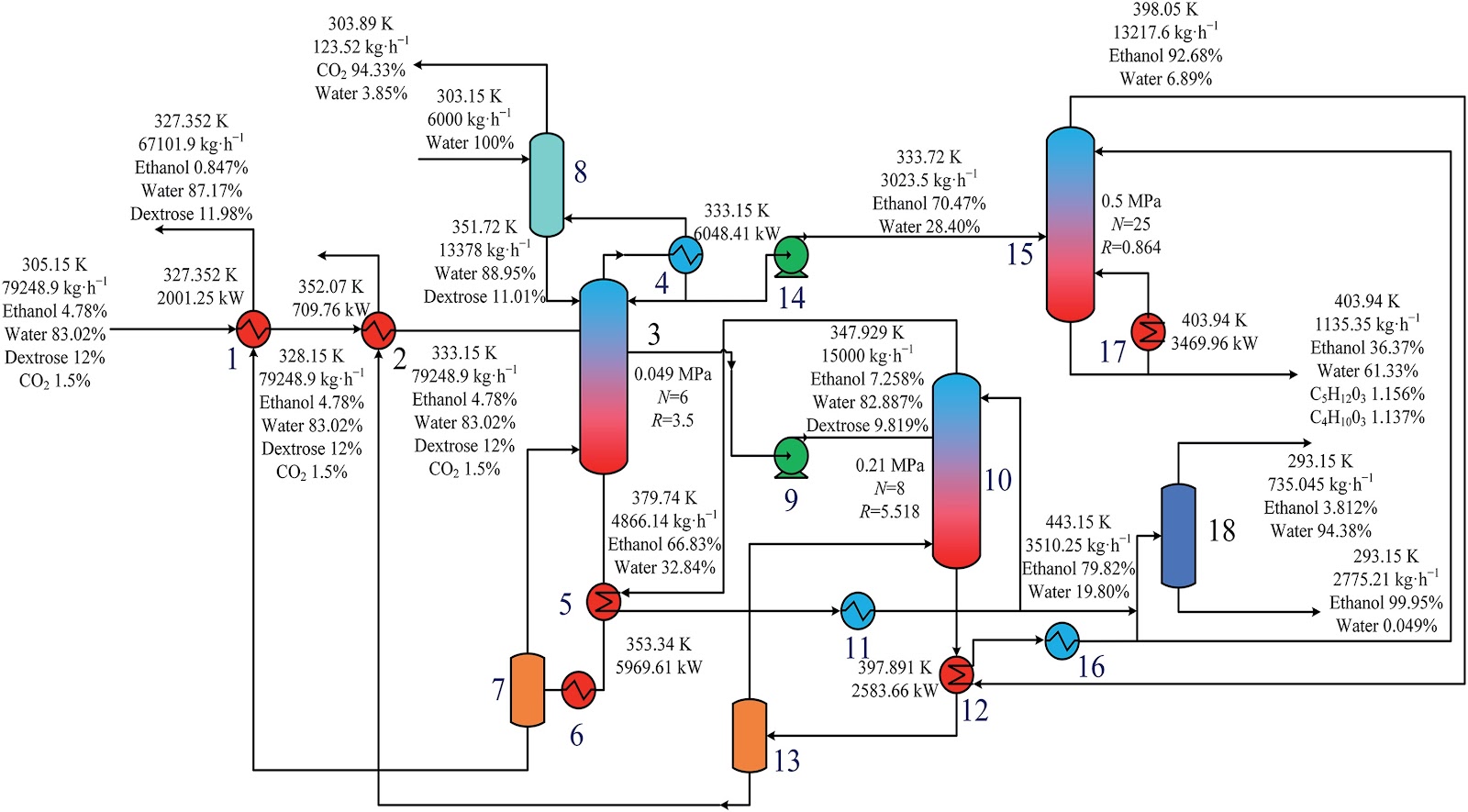
Design and optimization of a high-efficiency distillation process for cellulosic fuel ethanol integrated with thermal coupling and molecular sieve adsorption
To address the challenges of high energy consumption and prominent costs in the traditional three-columns distillation process for cellulosic fuel ethanol, a distillation—molecular sieve coupling separation process is proposed. This process integrates a three-column (crude distillation column, first distillation column, second distillation column) system with a 3A molecular sieve adsorption deep dehydration unit. A thermal coupling network is constructed via differential pressure design (steam from medium/high-pressure columns as mutual heat sources, reboiler liquid waste heat for feed preheating), and molecular sieve adsorption conditions are optimized. The study first performs a thermodynamic consistency test on the ethanol—water system, determines optimal non-random two-liquid (NRTL) model binary interaction parameters via experimental data regression for Aspen Plus simulation. Aiming at minimum total annual cost (TAC), Aspen Plus is used to optimize process parameters (theoretical tray number, feed location, reflux ratio, side-draw position, etc.). Economic analysis shows this process reduces CO2 emission costs by 27.56%, TAC by 15.58% (to 5.123 × 10⁶ USD·a-1), and increases ethanol purity to >99.6%, providing an effective solution for green, efficient separation.
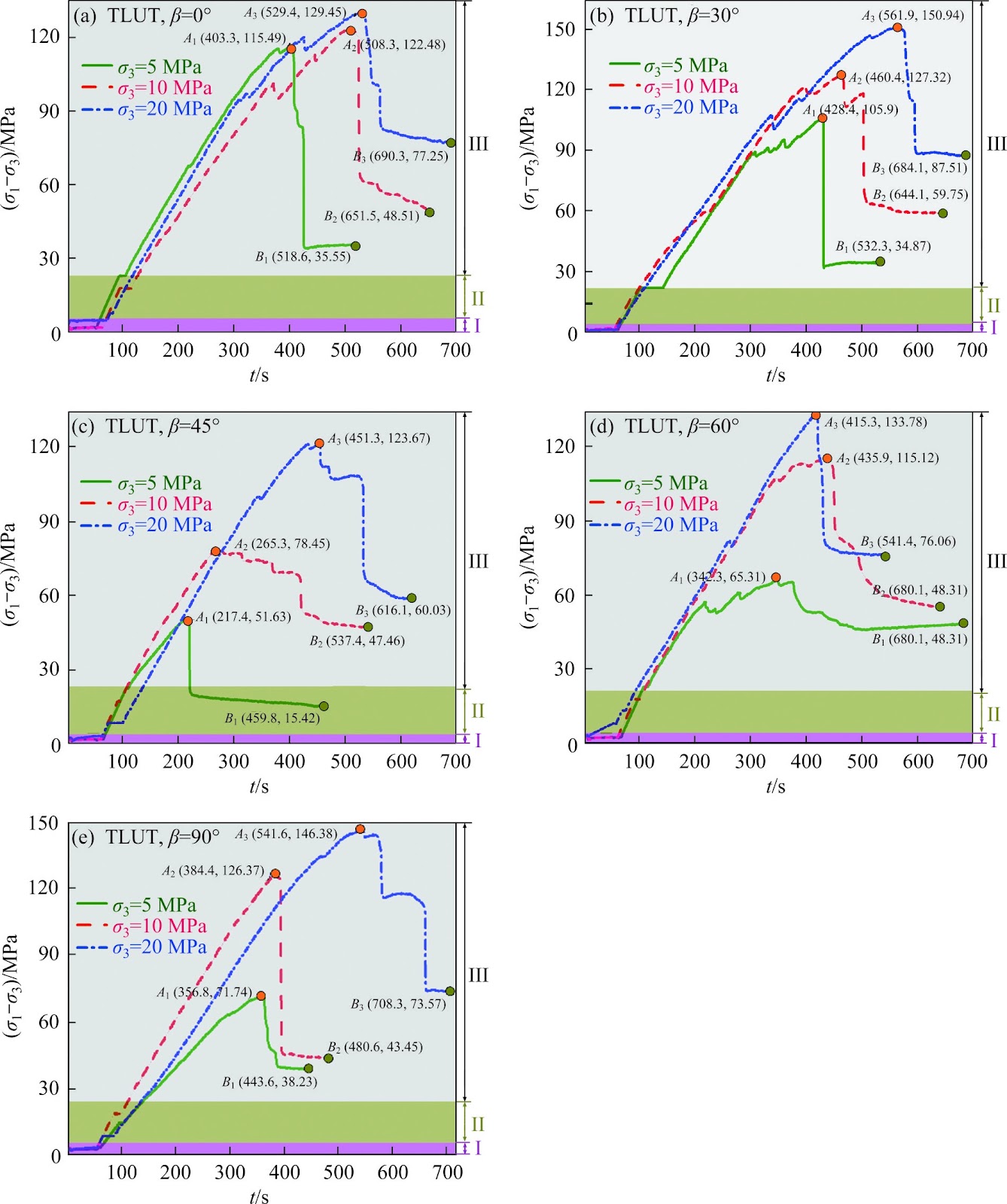
A cohesion loss model for determining residual strength of deep bedded sandstone
Rock residual strength, as an important input parameter, plays an indispensable role in proposing the reasonable and scientific scheme about stope design, underground tunnel excavation and stability evaluation of deep chambers. Therefore, previous residual strength models of rocks established were reviewed. And corresponding related problems were stated. Subsequently, starting from the effects of bedding and whole life-cycle evolution process, series of triaxial mechanical tests of deep bedded s
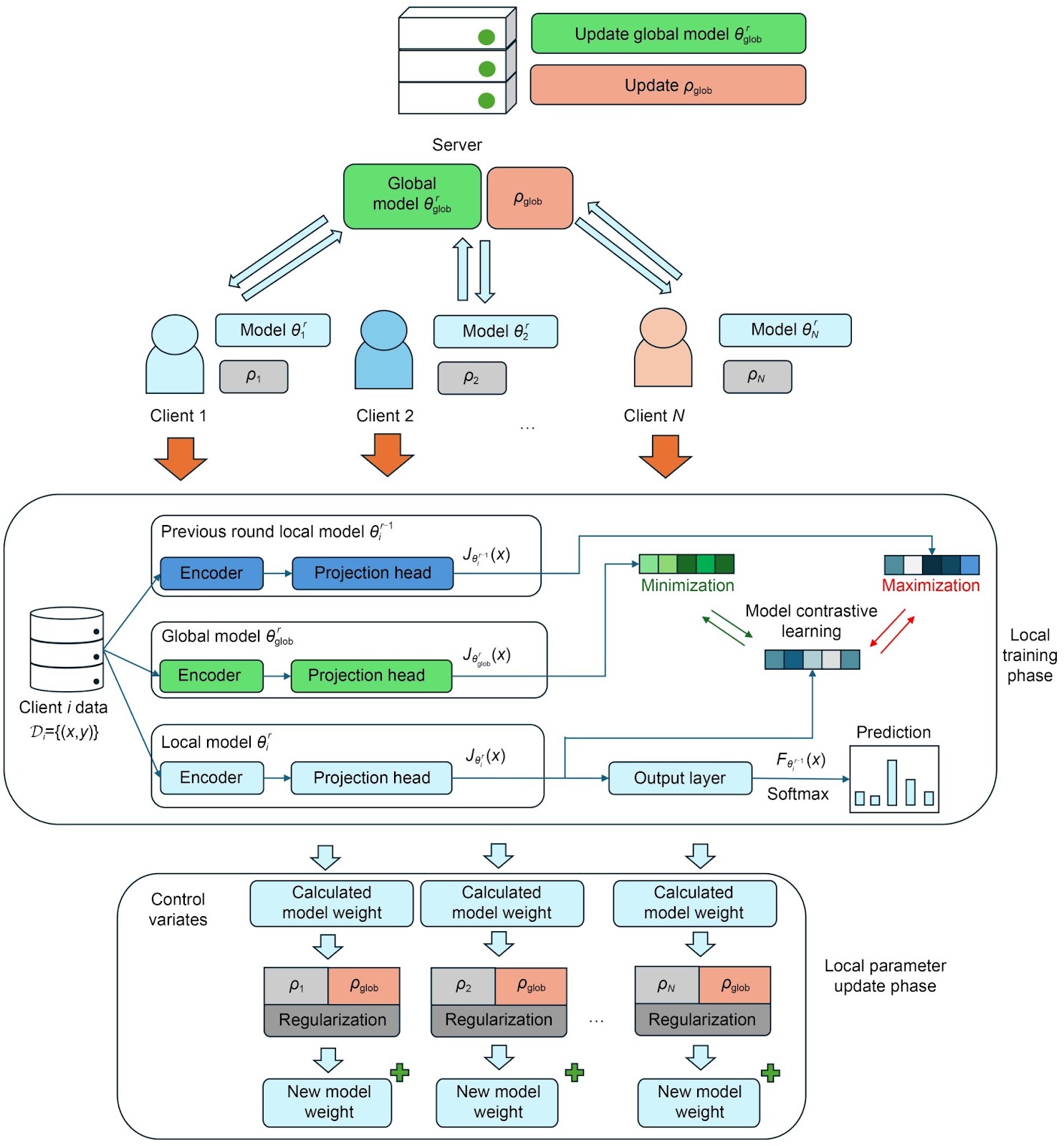
Federated model with contrastive learning and adaptive control variates for human activity recognition
Recent attention to privacy issues demands a communication-safe method for training human activity recognition (HAR) models on client activity data. Federated learning (FL) has become a compelling technique to facilitate model training between the server and clients while preserving data privacy. However, classical FL methods often assume independent and identically distributed (IID) data among clients. This assumption does not hold true in practical scenarios. Human activity in real-world scena