Key Takeaways & Executive Findings
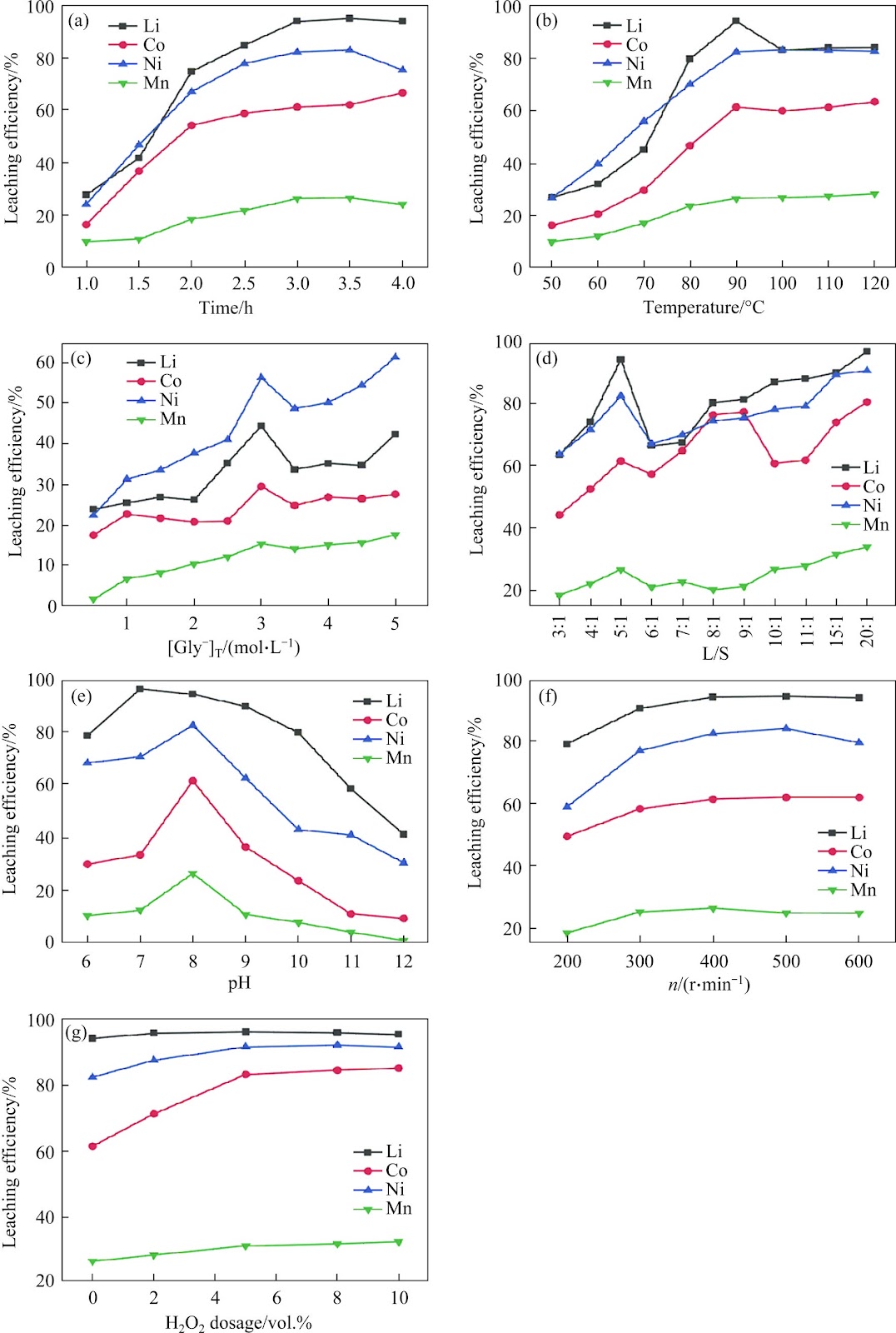
- •• Selective leaching of Li, Co, Ni, and Mn from spent LIBs is achieved in an alkaline glycinate system, with recoveries of 96.31%, 83.18%, 91.56%, and 31.16%, respectively, while Ca, Al, Fe, and Cu remain nearly insoluble. • The process uses environmentally friendly glycine as a complexing agent, enabling high metal recovery without strong acids and reducing toxic waste. • Kinetic analysis reveals activation energies of 45–61 kJ/mol for Li, Co, Ni, and Mn, indicating that leaching is controlled by chemical reactions, not diffusion. • This selective leaching approach simplifies downstream metal separation and enhances the sustainability of spent lithium-ion battery recycling. • Optimal conditions include 3 mol/L glycine at pH 8, L/S ratio 5 mL/g, 5 vol.% H2O2, 90 °C, and 400 r/min for 3 h.
Abstract
In view of the difference in coordination capacity of the glycine ion (Gly−), a selective leaching process for treating with spent lithium-ion batteries (LIBs) in the alkaline glycinate system was proposed. The effects of retention time, leaching temperature, concentration of glycine ligand, liquid-solid ratio (L/S), pH, stirring speed, and H2O2 dosage on the leaching efficiency of valuable metals and the dissolution of impurities were investigated. When the spent LIBs were leached in 3 mol/L glycine aqueous solution with pH of 8, L/S of 5 mL:1 g and H2O2 dosage of 5 vol.% at 90 ℃ and stirring speed of 400 r/min for 3 h, lithium, cobalt, nickel, and manganese recoveries were 96.31%, 83.18%, 91.56%, and 31.16%, respectively, but Ca, Al, Fe, and Cu were almost insoluble. Meanwhile, the kinetic study showed that the activation energies for the leaching of Li, Co, Ni, and Mn were all in the range of 45−61 kJ/mol. The results indicate that the leaching process is all controlled by chemical reactions.
1. Introduction
Lithium-ion batteries are being used increasingly due to their exceptional performance, which is one of the main reasons for the growth of lithium-ion batteries [1]. Lithium-ion battery vehicle sales reportedly exceed 10% of global vehicle sales. The market size for lithium batteries is expected to rise at a conforming compound annual growth rate (CAGR) of 14.6% to reach approximately $92 billion in 2026 [2, 3]. Additionally, the massive use of lithium batteries will lead to an increasing number of spent lithium-ion batteries (LIBs). Large quantities of valuable metals, such as lithium, cobalt, nickel, and manganese, can be found in these spent LIBs. If these metals are not recycled, they will cause serious waste of resources and environmental pollution [4, 5].
Researchers have extensively researched extracting metals such as Li, Co, Ni, and Mn from spent LIBs. Pyrometallurgical and hydrometallurgical processes are the most established and commonly used processes [6]. Traditional pyrometallurgy involves roasting spent lithium batteries at high temperatures under a reducing atmosphere, similar to natural ores. Typical reducing agents include carbon [7 −9] and some highly reducing active metals, such as aluminum and iron [10, 11]. Also, reducing gases, such as the hydrogen reduction method [12] or the methane reduction method [13], can be used. The convenience and high efficiency of pyrometallurgy have made it widely used. Hydrometallurgical techniques are favored over pyrometallurgy for several factors. Pyrometallurgy requires high energy consumption, high equipment requirements, emits harmful gases, and recovers high levels of metal impurities. On the other hand, hydrometallurgy has high recovery efficiency, low energy consumption, high product purity, and low levels of harmful gases [14, 15].
Hydrometallurgy is usually divided into acid leaching [15], alkaline leaching [16], and microbial leaching [17, 18]. There are two types of acids, organic and inorganic acids. Typically, inorganic acids are H2SO4 [19], HCl [20, 21], HNO3 [22], and so forth. Inorganic acids are highly efficient in leaching, but they produce harmful by-products. In contrast, organic acids, including citric [23, 24], ascorbic [25], malonic acids [26], D, L-malic acid [27], and oxalic acid [28, 29], are more friendly to the environment. Several reducing agents are often used in the leaching process to disrupt the solid crystal structure of highly valent metals and to make the liquid-solid phase reaction more complete [30]. Reducing agents typically include, but are not limited to, hydrogen peroxide [31], glucose [32], and sodium sulfite [16]. However, this aforementioned indiscriminate leaching behavior for metals can lead to an overly complex composition of metal ions in an acid solution, which causes difficulties in separating valuable metals in the subsequent solution and potentially hazardous emissions of heavy metals, weakening its application prospects [33].
Loading authentic research manuscript (Pages 1–5)...
DOU Ai-chun, FAN Yu-qian, KONG Xiao, CHEN Yao-dong, QIAN Ji-kai, LIU Yun-jian, SU Ming-ru, ZHOU Yu, ZHAO Xiao-chao (2025). Selective leaching of valuable metal from spent lithium-ion batteries in the alkaline glycinate system. Journal of Central South University. https://doi.org/10.1007/s11771-025-5951-1
Research & Educational Purpose Only:The translations, structured abstracts, analytical annotations, and data reports provided by SinoTechIntel are intended exclusively for academic research, internal corporate R&D, and educational benchmarking. They do not constitute formal engineering, chemical safety, legal, or professional advice.
Copyright & Intellectual Property Notice: Original copyright of the underlying source articles and experimental data remains with the respective authors, institutions, and original publishing journals. SinoTechIntel claims intellectual property only over its proprietary translations, analytical syntheses, and AEO structured enhancements in accordance with international fair use and academic citation principles.
Frequently Asked Questions
What is the alkaline glycinate system for lithium-ion battery recycling?
It is a selective leaching process that uses glycine ions (Gly−) in an alkaline medium to selectively dissolve valuable metals (Li, Co, Ni, Mn) from spent lithium-ion batteries, while leaving impurities like Ca, Al, Fe, and Cu in the solid residue. This relies on the difference in coordination capacity of glycine with various metal ions.
What are the optimal conditions for leaching valuable metals from spent LIBs using alkaline glycinate?
The optimal conditions reported are 3 mol/L glycine aqueous solution with pH 8, liquid-solid ratio of 5 mL:1 g, H2O2 dosage of 5 vol.%, temperature 90 °C, stirring speed 400 r/min, and retention time 3 h. Under these conditions, recoveries were 96.31% for Li, 83.18% for Co, 91.56% for Ni, and 31.16% for Mn.
Why is selective leaching preferred over traditional acid leaching for spent LIBs?
Traditional acid leaching dissolves all metals indiscriminately, resulting in complex metal ion mixtures that are difficult to separate downstream and may generate hazardous emissions. Selective leaching, as with alkaline glycinate, recovers target metals while minimizing impurity dissolution, simplifying subsequent separation and improving environmental sustainability.
What is the role of H2O2 in the alkaline glycinate leaching process?
H2O2 acts as a reducing agent that helps disrupt the solid crystal structure of high-valence metals, facilitating the liquid-solid phase reaction and improving leaching efficiency. In this study, a dosage of 5 vol.% was used to achieve high recoveries of Li, Co, Ni, and Mn.
What do the kinetic results indicate about the leaching mechanism?
The activation energies for the leaching of Li, Co, Ni, and Mn were found to be in the range of 45–61 kJ/mol. This indicates that the leaching process is controlled by chemical reactions rather than diffusion, which is important for optimizing reactor design and scale-up.
Related Technical Papers & Translations
Design and optimization of a high-efficiency distillation process for cellulosic fuel ethanol integrated with thermal coupling and molecular sieve adsorption
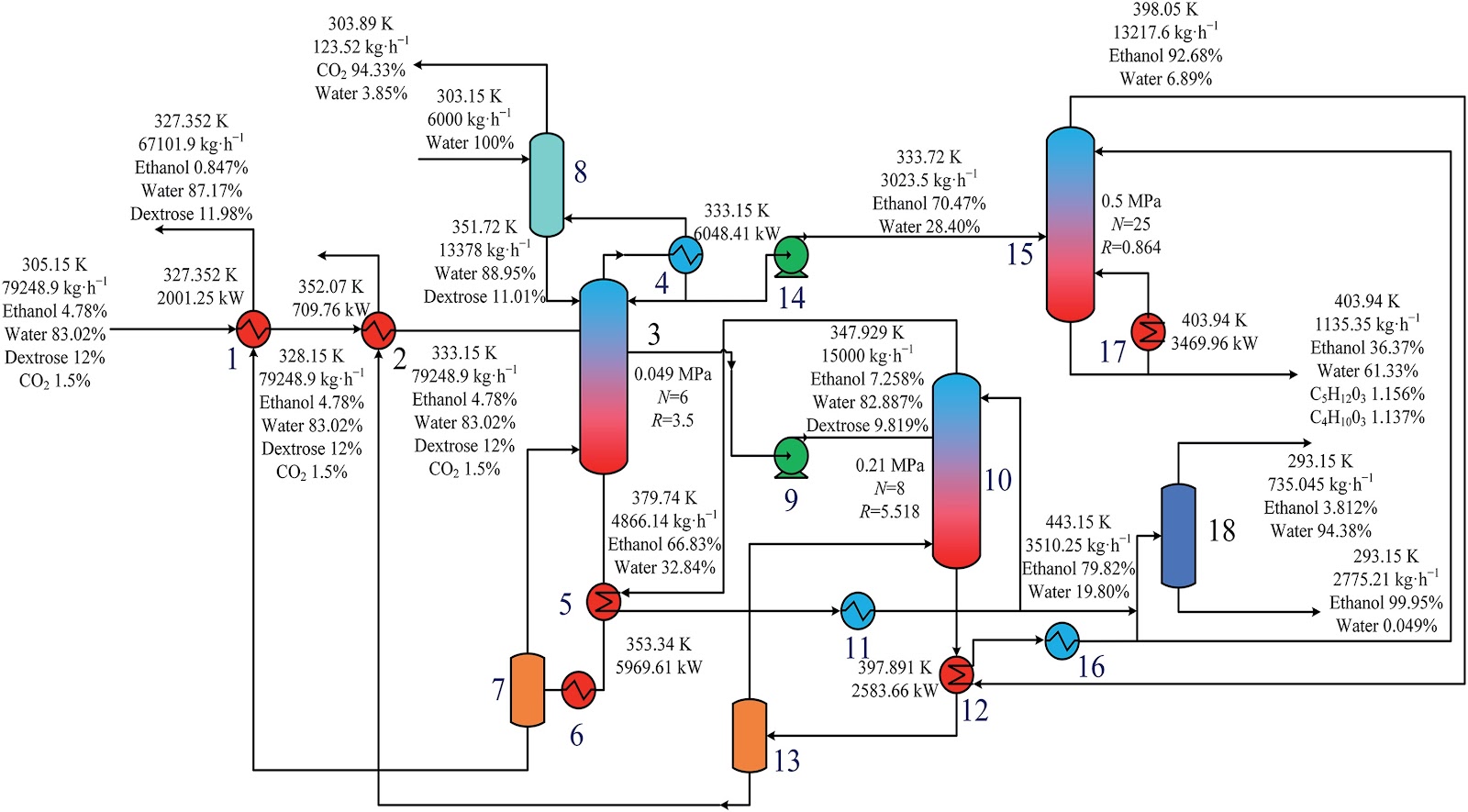
To address the challenges of high energy consumption and prominent costs in the traditional three-columns distillation process for cellulosic fuel ethanol, a distillation—molecular sieve coupling separation process is proposed. This process integrates a three-column (crude distillation column, first distillation column, second distillation column) system with a 3A molecular sieve adsorption deep dehydration unit. A thermal coupling network is constructed via differential pressure design (steam from medium/high-pressure columns as mutual heat sources, reboiler liquid waste heat for feed preheating), and molecular sieve adsorption conditions are optimized. The study first performs a thermodynamic consistency test on the ethanol—water system, determines optimal non-random two-liquid (NRTL) model binary interaction parameters via experimental data regression for Aspen Plus simulation. Aiming at minimum total annual cost (TAC), Aspen Plus is used to optimize process parameters (theoretical tray number, feed location, reflux ratio, side-draw position, etc.). Economic analysis shows this process reduces CO2 emission costs by 27.56%, TAC by 15.58% (to 5.123 × 10⁶ USD·a-1), and increases ethanol purity to >99.6%, providing an effective solution for green, efficient separation.
A cohesion loss model for determining residual strength of deep bedded sandstone
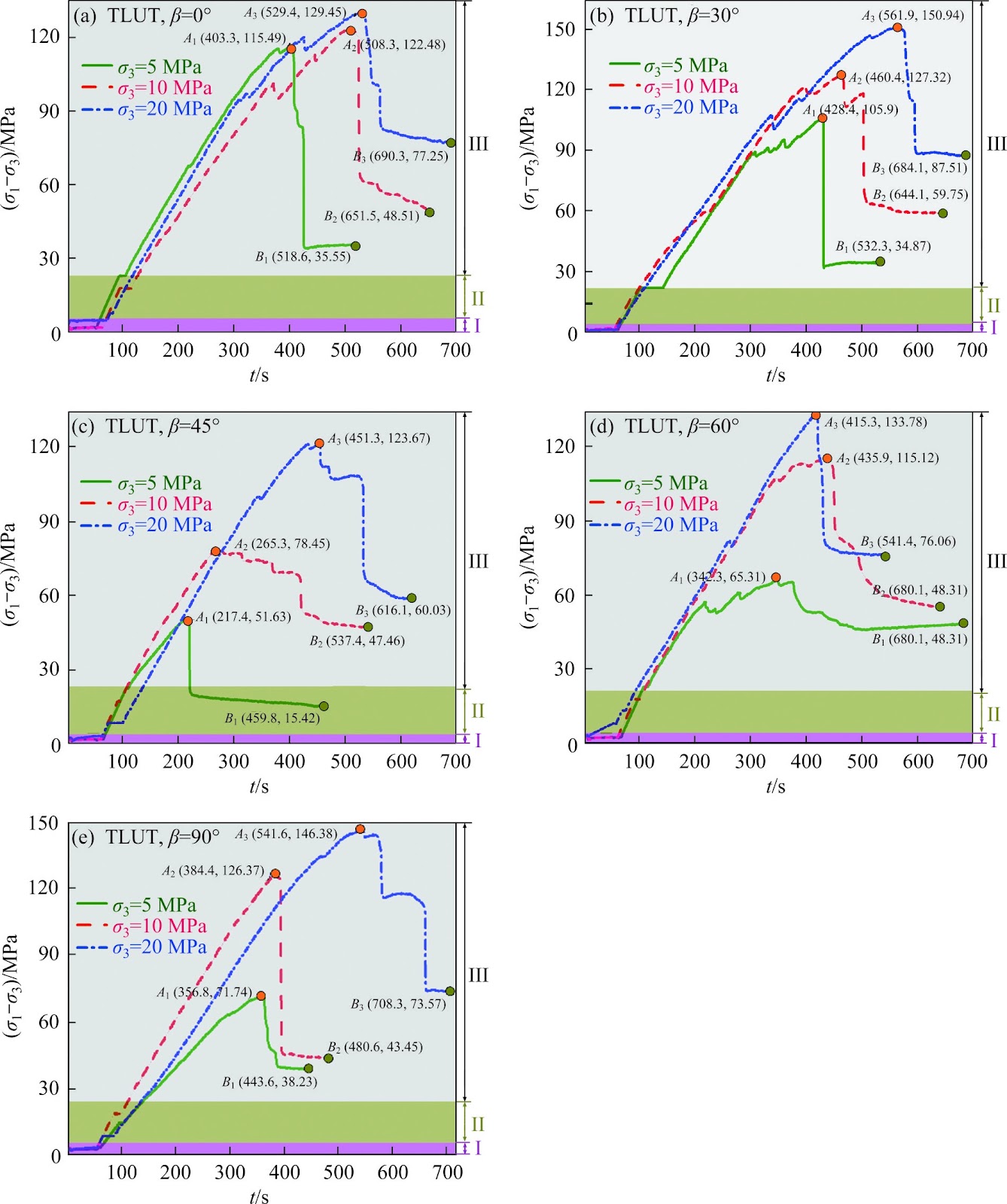
Rock residual strength, as an important input parameter, plays an indispensable role in proposing the reasonable and scientific scheme about stope design, underground tunnel excavation and stability evaluation of deep chambers. Therefore, previous residual strength models of rocks established were reviewed. And corresponding related problems were stated. Subsequently, starting from the effects of bedding and whole life-cycle evolution process, series of triaxial mechanical tests of deep bedded s
Federated model with contrastive learning and adaptive control variates for human activity recognition
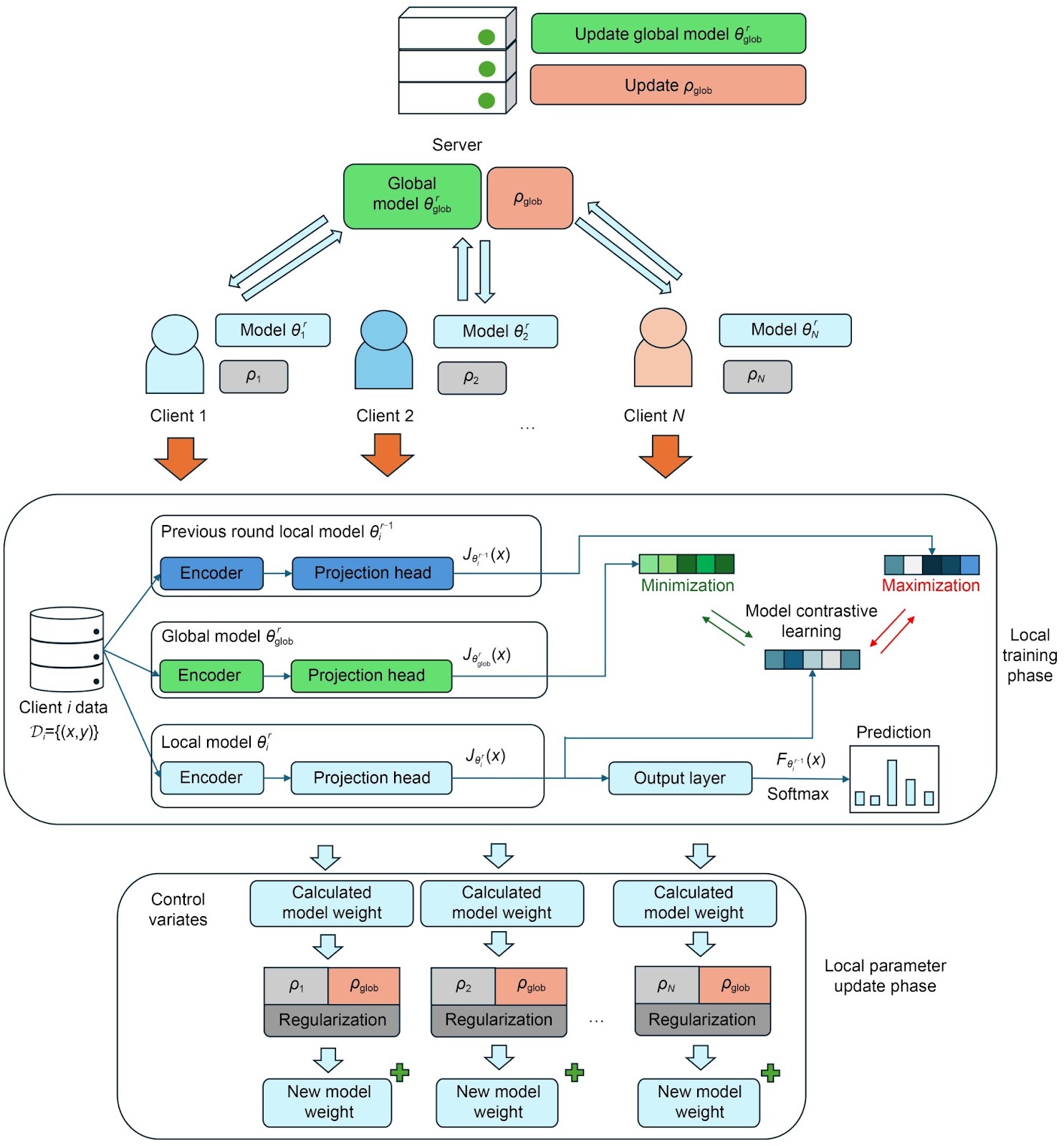
Recent attention to privacy issues demands a communication-safe method for training human activity recognition (HAR) models on client activity data. Federated learning (FL) has become a compelling technique to facilitate model training between the server and clients while preserving data privacy. However, classical FL methods often assume independent and identically distributed (IID) data among clients. This assumption does not hold true in practical scenarios. Human activity in real-world scena