
Key Takeaways & Executive Findings
- •• A scale-up rotary kiln process achieved a boron leaching efficiency of 70.23%, an iron grade of 94.12wt%, and a recovery of 93.35% from boron–iron mixed concentrate. • The integrated process combines reductive soda-ash roasting, wet-grinding, magnetic separation, and fractional crystallization to produce reduced iron powder suitable for short-process steelmaking. • High-purity boric acid (>99wt%) with regular morphology was prepared from boron-rich liquor by adjusting pH with sulfuric acid, and the solution chemistry was clarified. • Scale-up validation in a rotary kiln addresses lab-scale limitations by replicating industrial dynamic thermal fields and mass/heat transfer conditions, confirming industrial feasibility.
Abstract
Ludwigite ore is a strategic mineral resource unique to China. Its efficient and comprehensive utilization is of paramount importance for ensuring the healthy and sustainable development of China’s industry and national defense security. This study presents and validates a scale-up integrated process for separating boron and iron from boron–iron mixed concentrate (BIMC) and producing reduced iron powder and high-purity boric acid. The process involves reductive soda-ash roasting in a rotary kiln, followed by wet-grinding, magnetic separation, and fractional crystallization. Under optimized parameters, the process achieved a boron leaching efficiency of 70.23%, an iron grade in the magnetic concentrate of 94.12wt%, and a corresponding recovery of 93.35%. The recovered reduced iron powder can be used as feed for short-process steelmaking. The boron-rich liquor was then used to prepare high-purity boric acid (>99wt%) with a regular morphology by adjusting the pH with sulfuric acid, and the corresponding aqueous chemical behaviors were investigated. This integrated process offers a promising approach for the efficient and environmentally friendly utilization of boron–iron complex ore.
1. Introduction
The Liaoning Fengcheng Wenguangou boron–iron mine (named as ludwigite ore), with a known reserve of 283 million tons, accounts for 58% of China’s total known solid boron reserve. This mine contains a variety of minerals, including boron, magnesium, and iron, primarily in the form of szaibelyite, serpentine, and magnetite. The efficient and comprehensive utilization of the ludwigite ore has been a key focus due to its abundant boron and iron reserves, despite its low grade and complex mineral composition [1–4].
Current physical separation methods for beneficiating ludwigite ore yield both boron concentrate and boron-containing iron concentrate, which are used for borax production and ironmaking, respectively. The CO2-soda method employed to produce borax from boron concentrate generates a significant amount of alkali-containing waste (boron mud), which is currently non-recyclable and classified as hazardous waste, posing a significant environmental concern [5–8]. Furthermore, the sintering–blast furnace method used for ironmaking of the boron-containing iron concentrate results in low value-added utilization of the boron component [9–10].
To address these challenges, a multi-step process involving reductive soda-ash roasting, grind–leaching and magnetic separation was previously proposed [11–12]. This method demonstrated improved recoveries of boron and iron, enabling the comprehensive utilization of valuable components. Approximately 70wt% of the boron was extracted into the liquor, and 95wt% of the metallic iron powder was recycled by magnetic separation. The non-magnetic tailings were further leached at 453 K to recycle the residual boron and sodium, and the leached residue (magnesia-rich residue) can be used to prepare magnesia-based refractory materials, realizing the comprehensive utilization of valuable components [13].
Loading authentic research manuscript (Pages 1–5)...
Jinxiang You, Xin Zhang, Mingjun Rao, Jun Luo, Zhiwei Peng, Guanghui Li (2025). Scale-up validation of an integrated process for boron/iron separation and boric acid preparation from ludwigite ore. Journal of Mineral Metallurgy and Materials Science. https://doi.org/10.1007/s12613-025-3238-z
Research & Educational Purpose Only:The translations, structured abstracts, analytical annotations, and data reports provided by SinoTechIntel are intended exclusively for academic research, internal corporate R&D, and educational benchmarking. They do not constitute formal engineering, chemical safety, legal, or professional advice.
Copyright & Intellectual Property Notice: Original copyright of the underlying source articles and experimental data remains with the respective authors, institutions, and original publishing journals. SinoTechIntel claims intellectual property only over its proprietary translations, analytical syntheses, and AEO structured enhancements in accordance with international fair use and academic citation principles.
Frequently Asked Questions
What is ludwigite ore and why is it important?
Ludwigite ore is a strategic boron–iron mineral resource unique to China. The Liaoning Fengcheng Wenguangou deposit has a known reserve of 283 million tons, accounting for 58% of China's total known solid boron reserve. It contains boron, magnesium, and iron primarily as szaibelyite, serpentine, and magnetite, making its comprehensive utilization important for industry and national defense.
What are the main steps in the proposed integrated process?
The integrated process involves reductive soda-ash roasting in a rotary kiln, followed by wet-grinding, magnetic separation, and fractional crystallization. These steps enable simultaneous separation of boron and iron, yielding reduced iron powder and high-purity boric acid.
What were the key performance results at scale-up?
Under optimized parameters, the scale-up process achieved a boron leaching efficiency of 70.23%, an iron grade in the magnetic concentrate of 94.12wt%, and a corresponding iron recovery of 93.35%. The recovered reduced iron powder is suitable as feed for short-process steelmaking, and the boric acid product exceeded 99wt% purity.
How is high-purity boric acid prepared from the boron-rich liquor?
Boron-rich liquor obtained after magnetic separation is treated by adjusting the pH with sulfuric acid, followed by fractional crystallization. This yields boric acid with a regular morphology and purity greater than 99wt%, while the aqueous chemical behaviors during precipitation were also investigated.
Why is scale-up validation in a rotary kiln necessary?
Laboratory-scale reductive roasting in a muffle furnace uses static heating, which cannot replicate the dynamic thermal field and mass/heat transfer conditions of industrial production. Scale-up experiments in a rotary kiln validate the industrial feasibility of the process and provide critical parameters for industrial-scale design.
Related Technical Papers & Translations
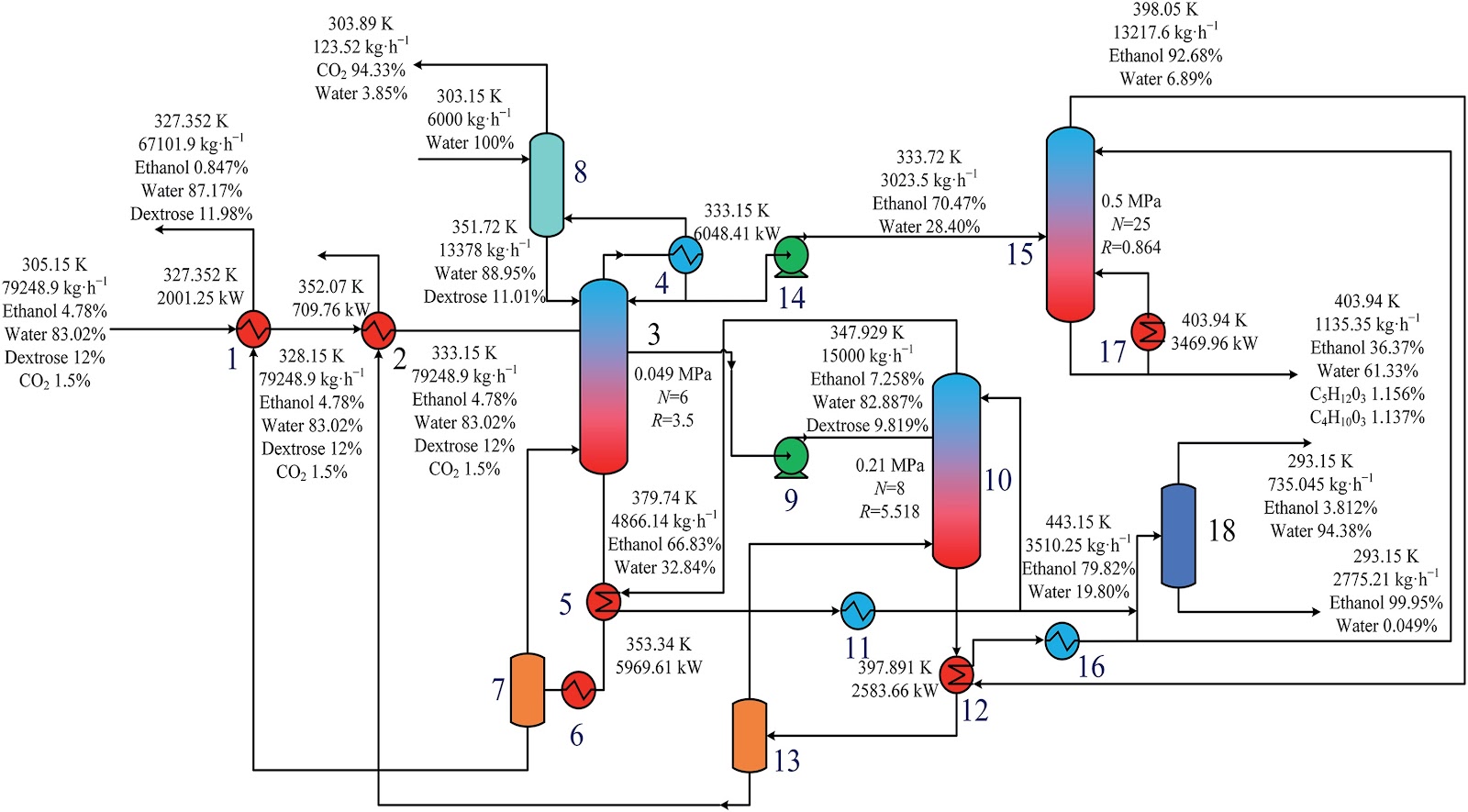
Design and optimization of a high-efficiency distillation process for cellulosic fuel ethanol integrated with thermal coupling and molecular sieve adsorption
To address the challenges of high energy consumption and prominent costs in the traditional three-columns distillation process for cellulosic fuel ethanol, a distillation—molecular sieve coupling separation process is proposed. This process integrates a three-column (crude distillation column, first distillation column, second distillation column) system with a 3A molecular sieve adsorption deep dehydration unit. A thermal coupling network is constructed via differential pressure design (steam from medium/high-pressure columns as mutual heat sources, reboiler liquid waste heat for feed preheating), and molecular sieve adsorption conditions are optimized. The study first performs a thermodynamic consistency test on the ethanol—water system, determines optimal non-random two-liquid (NRTL) model binary interaction parameters via experimental data regression for Aspen Plus simulation. Aiming at minimum total annual cost (TAC), Aspen Plus is used to optimize process parameters (theoretical tray number, feed location, reflux ratio, side-draw position, etc.). Economic analysis shows this process reduces CO2 emission costs by 27.56%, TAC by 15.58% (to 5.123 × 10⁶ USD·a-1), and increases ethanol purity to >99.6%, providing an effective solution for green, efficient separation.
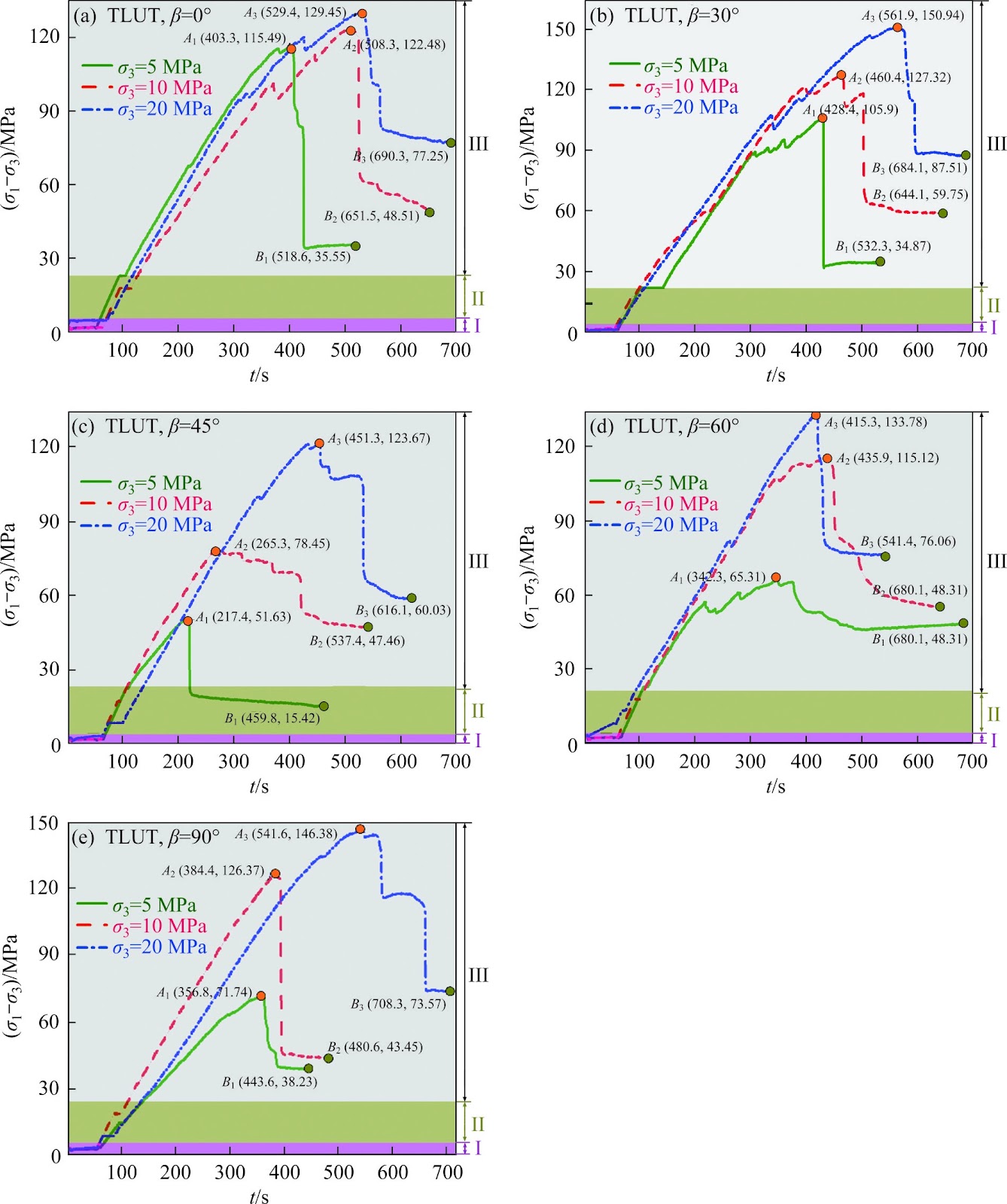
A cohesion loss model for determining residual strength of deep bedded sandstone
Rock residual strength, as an important input parameter, plays an indispensable role in proposing the reasonable and scientific scheme about stope design, underground tunnel excavation and stability evaluation of deep chambers. Therefore, previous residual strength models of rocks established were reviewed. And corresponding related problems were stated. Subsequently, starting from the effects of bedding and whole life-cycle evolution process, series of triaxial mechanical tests of deep bedded s
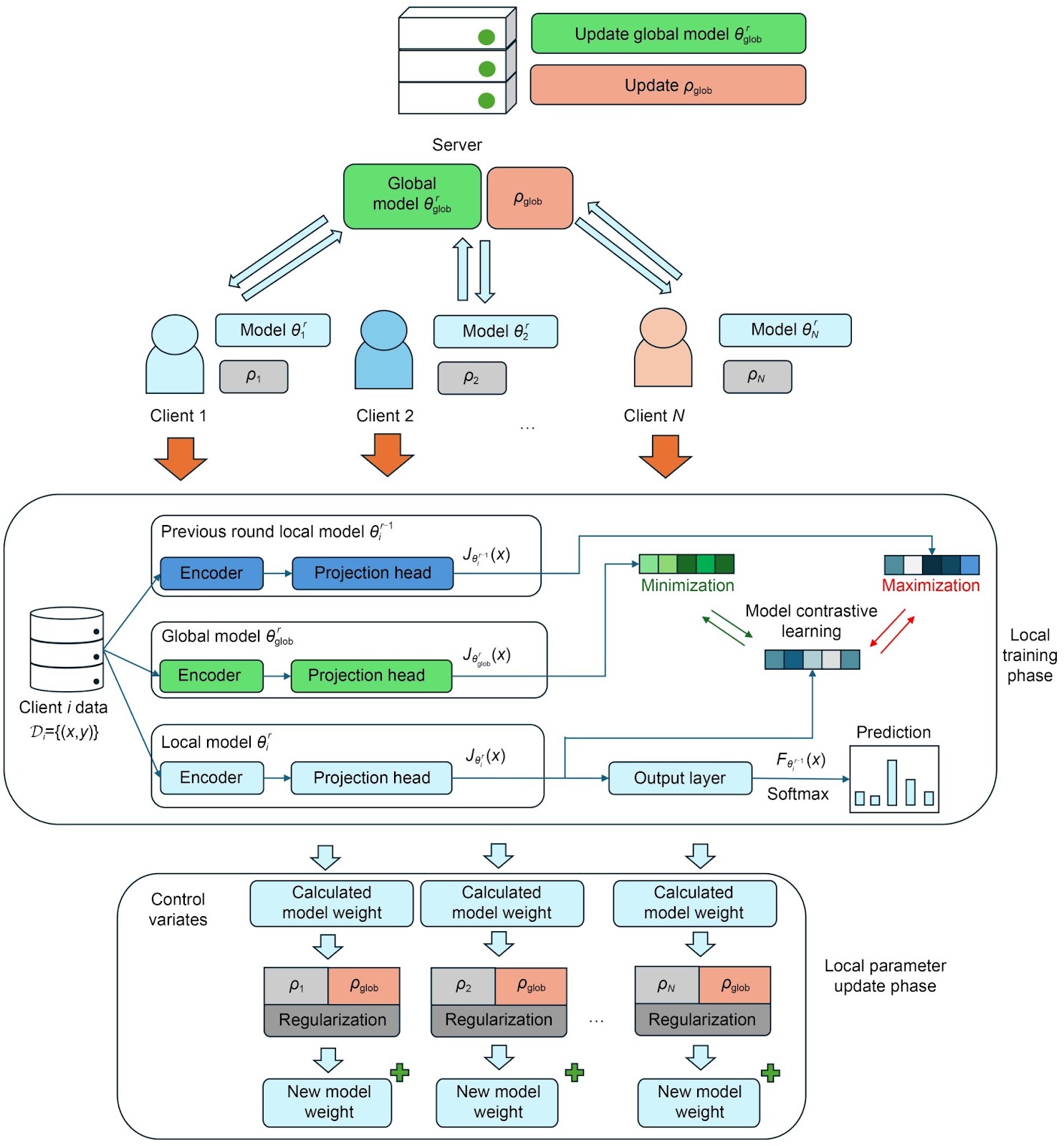
Federated model with contrastive learning and adaptive control variates for human activity recognition
Recent attention to privacy issues demands a communication-safe method for training human activity recognition (HAR) models on client activity data. Federated learning (FL) has become a compelling technique to facilitate model training between the server and clients while preserving data privacy. However, classical FL methods often assume independent and identically distributed (IID) data among clients. This assumption does not hold true in practical scenarios. Human activity in real-world scena