Key Takeaways & Executive Findings
- •• The dual-functionalized Nb2CTx/SnS2 composite with amine and carboxyl groups enables highly selective and stable room-temperature NH3 detection. • The sensor achieves a low detection threshold of 10 ppm with rapid response (32 s) and recovery (78 s) at 100 ppm NH3 under ambient conditions. • Incorporation of amine and carboxyl groups enhances structural integrity and selectivity under harsh conditions, including high humidity, temperature fluctuations, and interfering gases. • The sensor shows exceptional selectivity for NH3 against formaldehyde, acetone, ethanol, trimethylamine, and CO2, supporting real-world environmental monitoring and medical diagnosis.
Abstract
The detection of ammonia (NH3) is essential for environmental monitoring, industrial safety, and medical diagnosis. However, fluctuating environmental conditions and the limited stability of conventional sensing materials make it difficult to achieve highly selective, highly sensitive, and reliable NH3 sensing at room temperature. To improve NH3 selectivity, we investigated a dual-functionalized Nb2CTx/SnS2 composite containing both amine and carboxyl groups. Combining the superior NH3 adsorption capability of SnS2 with the outstanding electrical conductivity and surface reactivity of the Nb2CTx MXene produces a composite that can be used as a highly sensitive and selective chemiresistive sensor. Experimental results revealed that this sensor had a low detection threshold of 10 ppm, along with fast response (32 s) and recovery (78 s) times at 100 ppm of NH3 under ambient conditions. Moreover, under harsh environmental conditions such as exposure to interfering gases, high humidity, and temperature fluctuations, the incorporation of the amine and carboxyl groups significantly enhanced the structural integrity and selectivity of the sensor. In real-world applications, this sensor could exhibit exceptional selectivity for NH3 against common interfering gases like formaldehyde, acetone, ethanol, trimethylamine, and CO2. Overall, these results highlight that this material could be used to develop a high-performance NH3 sensor with promising sensing characteristics under a wide range of environmental conditions.
1. Introduction
With the rapid growth of modern society, toxic and harmful gases are being released into the atmosphere, posing serious health and environmental threats. Consequently, the environmental pollution caused by toxic gases has become a major global concern [1]. Among these gases, ammonia (NH3) is a pungent, hazardous compound. Although it plays vital roles in natural and industrial processes, excessive emissions, mainly from industrial activities, raise health concerns. In addition to eye irritation and respiratory issues, exposure to NH3 at concentrations above 25 ppm can result in death or damage to the central nervous system [2–3]. Therefore, the ability to detect even small amounts of ammonia gas has gained significant attention in the biomedical field. NH3 gas sensors that operate at room temperature, with low detection limits, rapid responses, and high selectivity can detect harmful gases in the atmosphere and aid in early disease detection [4–6]. However, high humidity, high temperature, and poor selectivity pose major challenges for reliable gas detection. These issues arise in complex environments where the relative humidity (RH) exceeds 80% and dozens of interfering gases are present.
Chemiresistive sensors are widely used to detect harmful gases owing to their sensitivity, quick response time, and ease of use. A large operating temperature above 200 °C is typically required for NH3 detection because of the properties of the sensing materials (e.g., metallic oxides). MoS2/MoO3-based and MoO3/MoS2/rGO-based composite materials have been developed [7] (rGO—reduced graphene oxide), which require operations at 400 °C and 200 °C, respectively. Although these temperatures are necessary for energy activation, they pose safety risks and do not satisfy the power consumption or convenience demands of many applications. Therefore, the development of sensing materials that can detect NH3 at room temperature is crucial to meet the market needs and reduce the impact on society.
Recent research into two-dimensional (2D) materials has expanded to include graphene [8], MXenes [9], and transition metal dichalcogenides (TMDs) [10]. MXenes are 2D layered transition metal carbides or nitrides with the general formula Mn+1XnTx (n = 1, 2, or 3), where M is a transition metal, X is carbon or nitrogen, and Tx represents the surface functional groups (OH, O, and F) [11–12]. Recently, 2D layered MXenes have been studied for gas-sensing applications owing to their tunable physical and electronic properties. Density functional theory (DFT) calculations have also confirmed that MXenes such as Ti3C2Tx could be used to sense NH3 at room temperature [13–14]. Pure MXenes have low sensitivities and high detection limits for ammonia gas. However, when combined with other materials, such as TMDs, the composite exhibits a much stronger response and lower limit of detection, making it a promising candidate for high-performance room-temperature NH3 sensing.
Loading authentic research manuscript (Pages 1–5)...
Waqas Saeed, Liaqat Rasheed, Ye Tian, Irshad Ahmad Mir, Baoji Miao, Shakeel Ahmed, Amina Zulfiqar, Xing Chen, Amna Manzoor (2025). Room-temperature ammonia sensing via Nb2CTₓ/SnS2 nanocomposite sensor with enhanced selectivity. Journal of Mineral Metallurgy and Materials Science. https://doi.org/10.1007/s12613-025-3298-0
Research & Educational Purpose Only:The translations, structured abstracts, analytical annotations, and data reports provided by SinoTechIntel are intended exclusively for academic research, internal corporate R&D, and educational benchmarking. They do not constitute formal engineering, chemical safety, legal, or professional advice.
Copyright & Intellectual Property Notice: Original copyright of the underlying source articles and experimental data remains with the respective authors, institutions, and original publishing journals. SinoTechIntel claims intellectual property only over its proprietary translations, analytical syntheses, and AEO structured enhancements in accordance with international fair use and academic citation principles.
Frequently Asked Questions
What is the detection limit of the Nb2CTx/SnS2 ammonia sensor?
The sensor exhibits a low detection threshold of 10 ppm for ammonia under ambient conditions.
What are the response and recovery times of the sensor?
At 100 ppm of NH3, the sensor shows a fast response time of 32 s and a recovery time of 78 s at room temperature.
Why is the Nb2CTx/SnS2 composite used for ammonia sensing?
The combination of SnS2's high NH3 adsorption capability with the excellent electrical conductivity and surface reactivity of Nb2CTx MXene produces a highly sensitive and selective chemiresistive sensor. The addition of amine and carboxyl groups further enhances structural integrity and selectivity under harsh conditions.
Which interfering gases does the sensor selectively detect NH3 against?
The sensor demonstrates exceptional selectivity for ammonia against common interfering gases including formaldehyde, acetone, ethanol, trimethylamine, and CO2.
How does the sensor perform under high humidity and temperature fluctuations?
The dual-functionalized sensor maintains its structural integrity and selectivity even under harsh environmental conditions such as high humidity (RH > 80%) and temperature fluctuations, making it suitable for real-world environmental monitoring and medical diagnosis.
Related Technical Papers & Translations
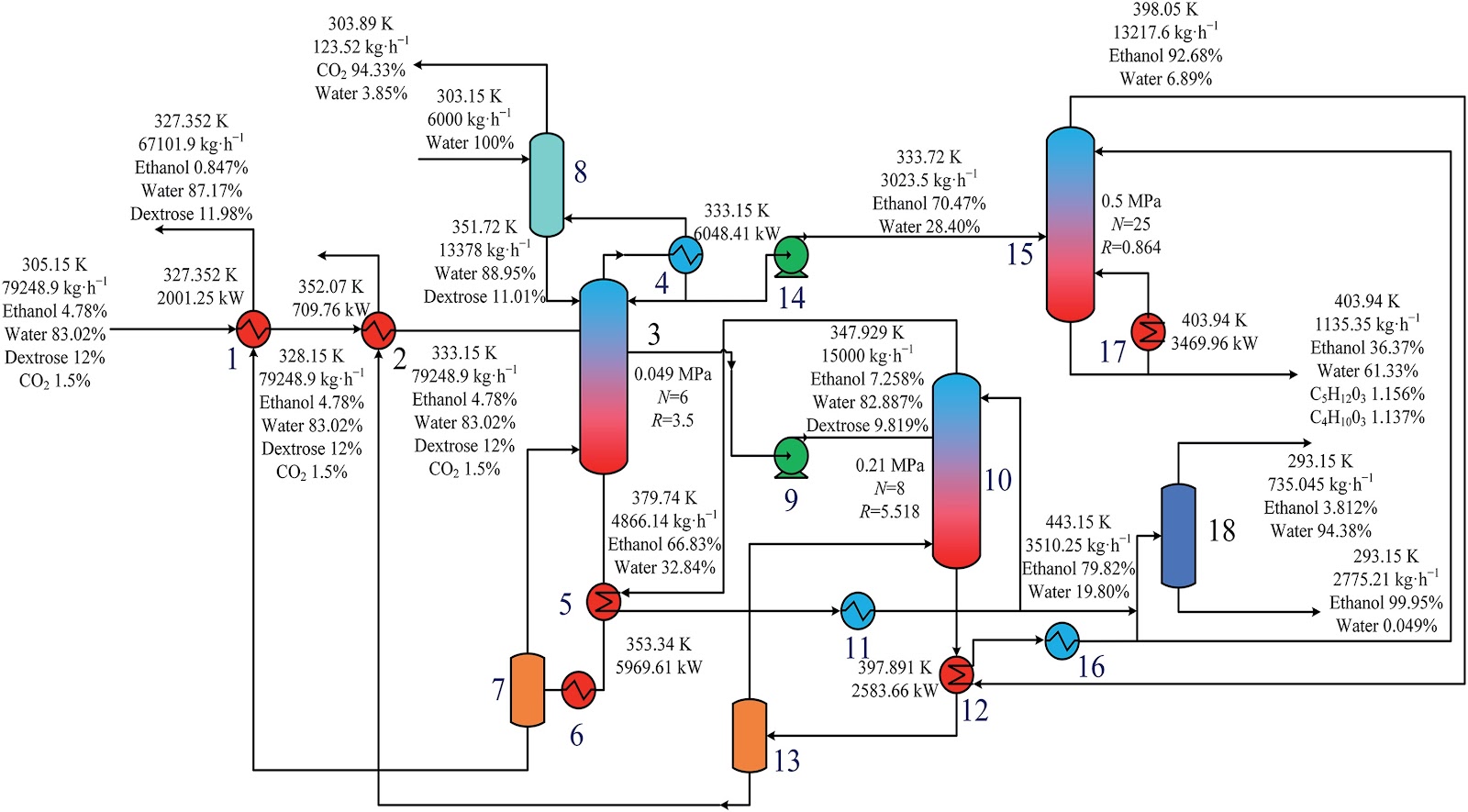
Design and optimization of a high-efficiency distillation process for cellulosic fuel ethanol integrated with thermal coupling and molecular sieve adsorption
To address the challenges of high energy consumption and prominent costs in the traditional three-columns distillation process for cellulosic fuel ethanol, a distillation—molecular sieve coupling separation process is proposed. This process integrates a three-column (crude distillation column, first distillation column, second distillation column) system with a 3A molecular sieve adsorption deep dehydration unit. A thermal coupling network is constructed via differential pressure design (steam from medium/high-pressure columns as mutual heat sources, reboiler liquid waste heat for feed preheating), and molecular sieve adsorption conditions are optimized. The study first performs a thermodynamic consistency test on the ethanol—water system, determines optimal non-random two-liquid (NRTL) model binary interaction parameters via experimental data regression for Aspen Plus simulation. Aiming at minimum total annual cost (TAC), Aspen Plus is used to optimize process parameters (theoretical tray number, feed location, reflux ratio, side-draw position, etc.). Economic analysis shows this process reduces CO2 emission costs by 27.56%, TAC by 15.58% (to 5.123 × 10⁶ USD·a-1), and increases ethanol purity to >99.6%, providing an effective solution for green, efficient separation.
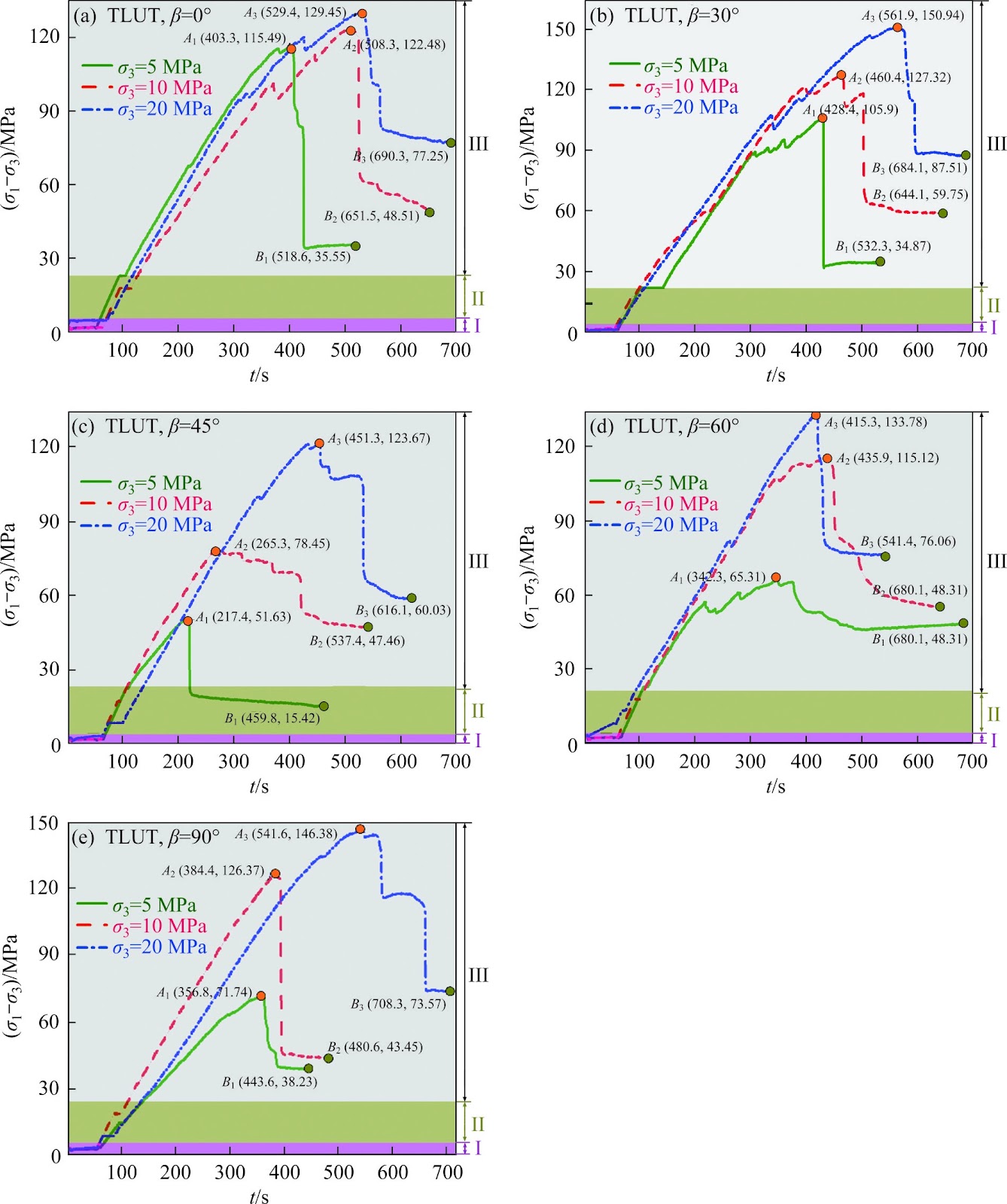
A cohesion loss model for determining residual strength of deep bedded sandstone
Rock residual strength, as an important input parameter, plays an indispensable role in proposing the reasonable and scientific scheme about stope design, underground tunnel excavation and stability evaluation of deep chambers. Therefore, previous residual strength models of rocks established were reviewed. And corresponding related problems were stated. Subsequently, starting from the effects of bedding and whole life-cycle evolution process, series of triaxial mechanical tests of deep bedded s
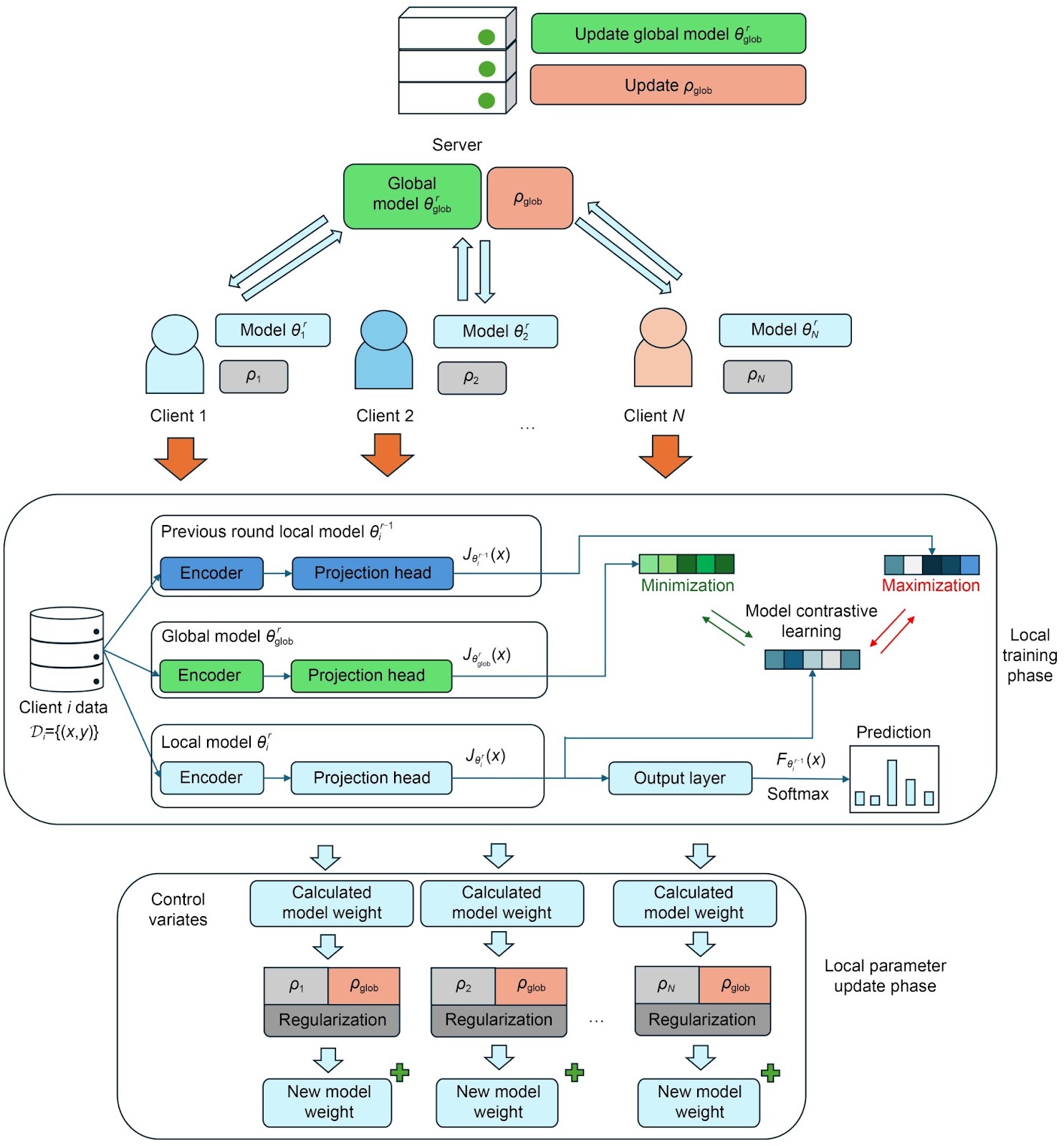
Federated model with contrastive learning and adaptive control variates for human activity recognition
Recent attention to privacy issues demands a communication-safe method for training human activity recognition (HAR) models on client activity data. Federated learning (FL) has become a compelling technique to facilitate model training between the server and clients while preserving data privacy. However, classical FL methods often assume independent and identically distributed (IID) data among clients. This assumption does not hold true in practical scenarios. Human activity in real-world scena