
Key Takeaways & Executive Findings
- •• Ni(Al,Mn) and Cu multicomponent nanoparticle co-precipitation critically governs the strength and low-temperature toughness of heat-affected zones in high-strength low-carbon steels. • At 30 kJ·cm−1 heat input, the intercritical HAZ shows dense Ni(Al,Mn) reprecipitation and Cu coarsening, retaining high strength but reducing impact toughness to 142 J. • The fine-grained HAZ achieves superior impact toughness (196 J) through a refined ferritic–bainite matrix and fine precipitates, while the coarse-grained HAZ reaches 186 J via re-precipitated nanoparticles mitigating grain coarsening. • Toughening arises from the synergistic actions of the matrix, precipitates, and deformation twins, providing a mechanistic framework to optimize welding parameters for tailored applications.
Abstract
This study investigates the microstructure and co-precipitation behavior of multicomponent (Ni(Al,Mn) and Cu) nanoparticles in the weld heat-affected zones of high-strength low-carbon steel. Through thermal simulations, the intercritical, fine-grained, and coarse-grained heat-affected zones were systematically characterized to elucidate the interplay between the microstructure, precipitation, and mechanical properties. At a heat input of 30 kJ·cm−1, Ni(Al,Mn) nanoparticles dissolve in the intercritical heat-affected zone, followed by dense reprecipitation coupled with significant coarsening of Cu particles during cooling, thereby retaining high strength but reducing impact toughness to (142 ± 10) J (compared to (205 ± 8) J of the base metal). The fine-grained heat-affected zone, under the same heat input, exhibits a refined ferritic–bainite matrix with a few fine Ni(Al,Mn) and slightly coarsened Cu particles, thus enhancing plastic deformation capacity and resulting in superior impact toughness of (196 ± 7) J. Despite complete dissolution of original precipitates at peak temperatures in the coarse-grained heat-affected zone, re-precipitated nanoparticles provide effective strengthening effect, compensating for grain coarsening and dislocation recovery and resulting in an impressive impact toughness of (186 ± 6) J. The toughening mechanism is primarily attributed to the synergistic actions of the matrix, precipitates, and deformation twins. These findings provide mechanistic and quantitative insights for developing processing–microstructure–property relationships in different welding heat-affected zones, and this framework can be further utilized to optimize welding parameters for tailored applications.
1. Introduction
In recent years, high-strength low-carbon (HSLC) steels have become the preferred structural materials for shipbuilding and construction machinery because of their ultrahigh strength, good toughness, and excellent weldability [1–3]. The reduced carbon content in high-strength steels enhances weldability and mitigates the risk of post-weld cold cracking, despite the inevitable decrease in strength [2,4]. To achieve an optimal balance between weldability and mechanical strength, HSLC steels typically employ nanoprecipitation strengthening, where the coprecipitation of Cu-rich clusters and NiAl-type nanoparticles compensates for the strength loss induced by the decreasing carbon content [5–6]. In general, the synergistic precipitation of multiple nanoparticle types yields stronger strengthening effects than single-type precipitation because of the enhanced strain fields and dislocation interactions [4,7]. Fundamentally, precipitation strengthening is governed by the morphology, size, number density, and spatial distribution characteristics of the precipitates, all of which are controlled by thermal effects [8–9].
Welding is the most critical process in the industrial-scale manufacturing of low-carbon steels. After a typical weld thermal cycle, the heat-affected zone (HAZ) exhibits three characteristic subregions with progressively decreasing peak temperatures from the fusion boundary: the coarse-grained HAZ (CGHAZ, 1100–1490°C), fine-grained HAZ (FGHAZ, Ac3–1100°C), and intercritical HAZ (ICHAZ, Ac1–Ac3), where Ac1 and Ac3 are the onset and completion temperatures of austenite transformation on heating [10]. The inherent characteristics of welding—including rapid heating rates, high peak temperatures, short high-temperature durations, and non-uniform cooling rates—render the HAZ (especially the CGHAZ) a mechanically weak region in steel structures [11–13]. Specifically, the HAZ undergoes significant microstructural transformations during the welding-induced thermal cycle, involving precipitate coarsening/dissolution during continuous heating and reprecipitation during cooling. Thus, the thermal stability of nanoprecipitates has emerged as a critical bottleneck limiting the application of HSLC steels [14].
Loading authentic research manuscript (Pages 1–5)...
Tingwei Yin, Yongfeng Shen, Nan Jia, Xin Sun, Wenying Xue (2025). Role of multicomponent nanoprecipitates on strength and low-temperature toughness of simulated heat-affected zone (HAZ) in high-strength low-carbon steel. Journal of Mineral Metallurgy and Materials Science. https://doi.org/10.1007/s12613-025-3245-0
Research & Educational Purpose Only:The translations, structured abstracts, analytical annotations, and data reports provided by SinoTechIntel are intended exclusively for academic research, internal corporate R&D, and educational benchmarking. They do not constitute formal engineering, chemical safety, legal, or professional advice.
Copyright & Intellectual Property Notice: Original copyright of the underlying source articles and experimental data remains with the respective authors, institutions, and original publishing journals. SinoTechIntel claims intellectual property only over its proprietary translations, analytical syntheses, and AEO structured enhancements in accordance with international fair use and academic citation principles.
Frequently Asked Questions
What is the role of multicomponent nanoprecipitates in high-strength low-carbon steel heat-affected zones?
Multicomponent nanoprecipitates, such as Ni(Al,Mn) and Cu nanoparticles, co-precipitate to provide effective strengthening in HSLC steels. Their behavior during welding thermal cycles—dissolution, coarsening, and reprecipitation—controls the strength and low-temperature toughness of the HAZ subregions.
How does heat input affect the microstructure and toughness of different HAZ subregions?
At a heat input of 30 kJ·cm−1, the intercritical HAZ undergoes Ni(Al,Mn) dissolution and Cu coarsening, retaining strength but reducing impact toughness to 142 J. The fine-grained HAZ retains a refined ferritic–bainite matrix with fine precipitates, giving the best toughness of 196 J. The coarse-grained HAZ achieves 186 J through reprecipitation despite initial dissolution.
Which HAZ subregion exhibits the best impact toughness and why?
The fine-grained heat-affected zone (FGHAZ) exhibits the best impact toughness of 196 J, attributed to its refined ferritic–bainite matrix and finely distributed Ni(Al,Mn) and Cu precipitates, which enhance plastic deformation capacity.
What mechanisms are responsible for toughening in the heat-affected zone?
The toughening mechanism results from the synergistic actions of the matrix, precipitates, and deformation twins. An optimized matrix microstructure, combined with fine nanoparticles, promotes deformation accommodation and suppresses brittle fracture.
How can these findings optimize welding parameters for HSLC steels?
The processing–microstructure–property relationships established for each HAZ subregion provide quantitative guidance to select heat inputs and thermal cycles, enabling tailored microstructures that maximize both strength and low-temperature toughness in welded joints.
Related Technical Papers & Translations
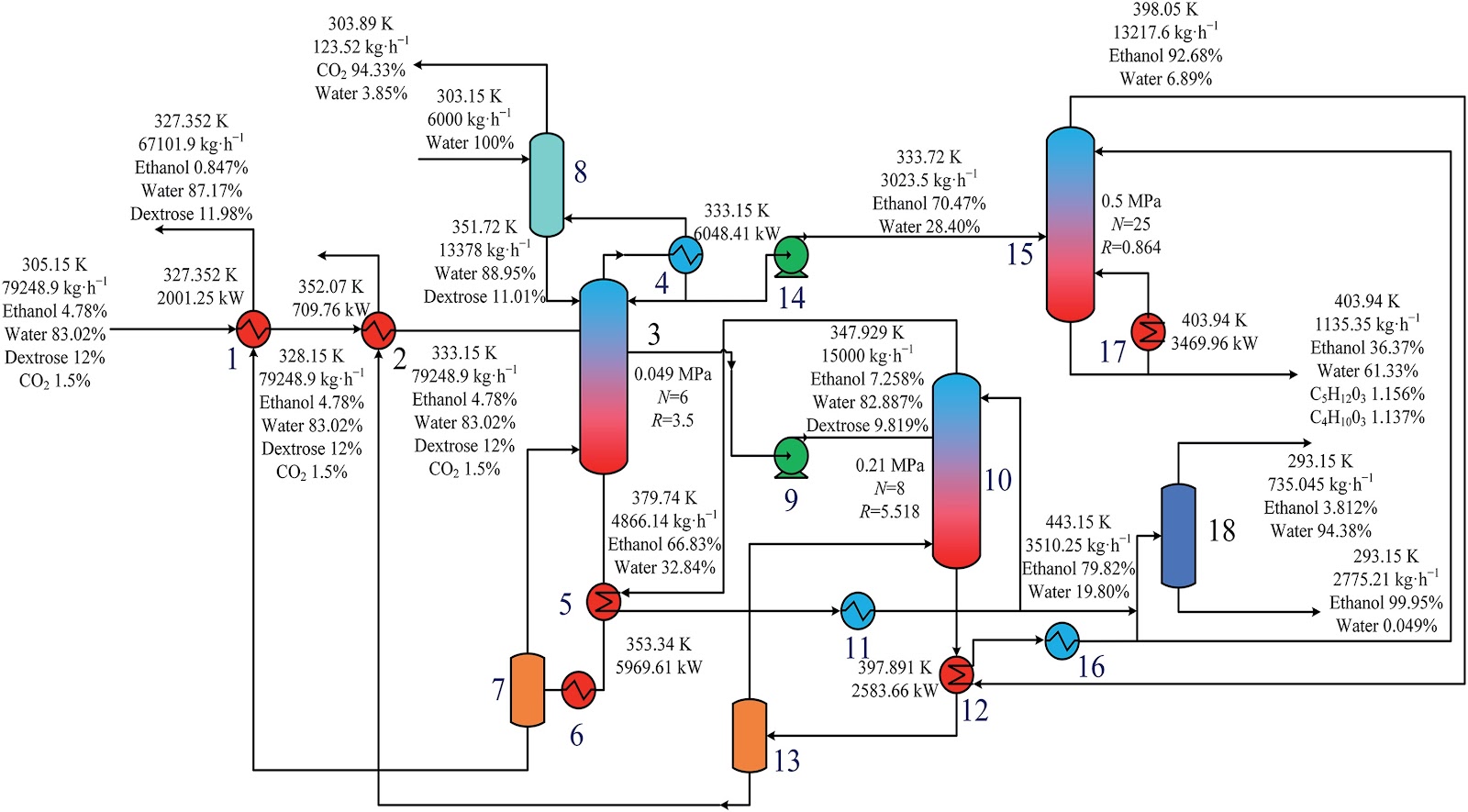
Design and optimization of a high-efficiency distillation process for cellulosic fuel ethanol integrated with thermal coupling and molecular sieve adsorption
To address the challenges of high energy consumption and prominent costs in the traditional three-columns distillation process for cellulosic fuel ethanol, a distillation—molecular sieve coupling separation process is proposed. This process integrates a three-column (crude distillation column, first distillation column, second distillation column) system with a 3A molecular sieve adsorption deep dehydration unit. A thermal coupling network is constructed via differential pressure design (steam from medium/high-pressure columns as mutual heat sources, reboiler liquid waste heat for feed preheating), and molecular sieve adsorption conditions are optimized. The study first performs a thermodynamic consistency test on the ethanol—water system, determines optimal non-random two-liquid (NRTL) model binary interaction parameters via experimental data regression for Aspen Plus simulation. Aiming at minimum total annual cost (TAC), Aspen Plus is used to optimize process parameters (theoretical tray number, feed location, reflux ratio, side-draw position, etc.). Economic analysis shows this process reduces CO2 emission costs by 27.56%, TAC by 15.58% (to 5.123 × 10⁶ USD·a-1), and increases ethanol purity to >99.6%, providing an effective solution for green, efficient separation.
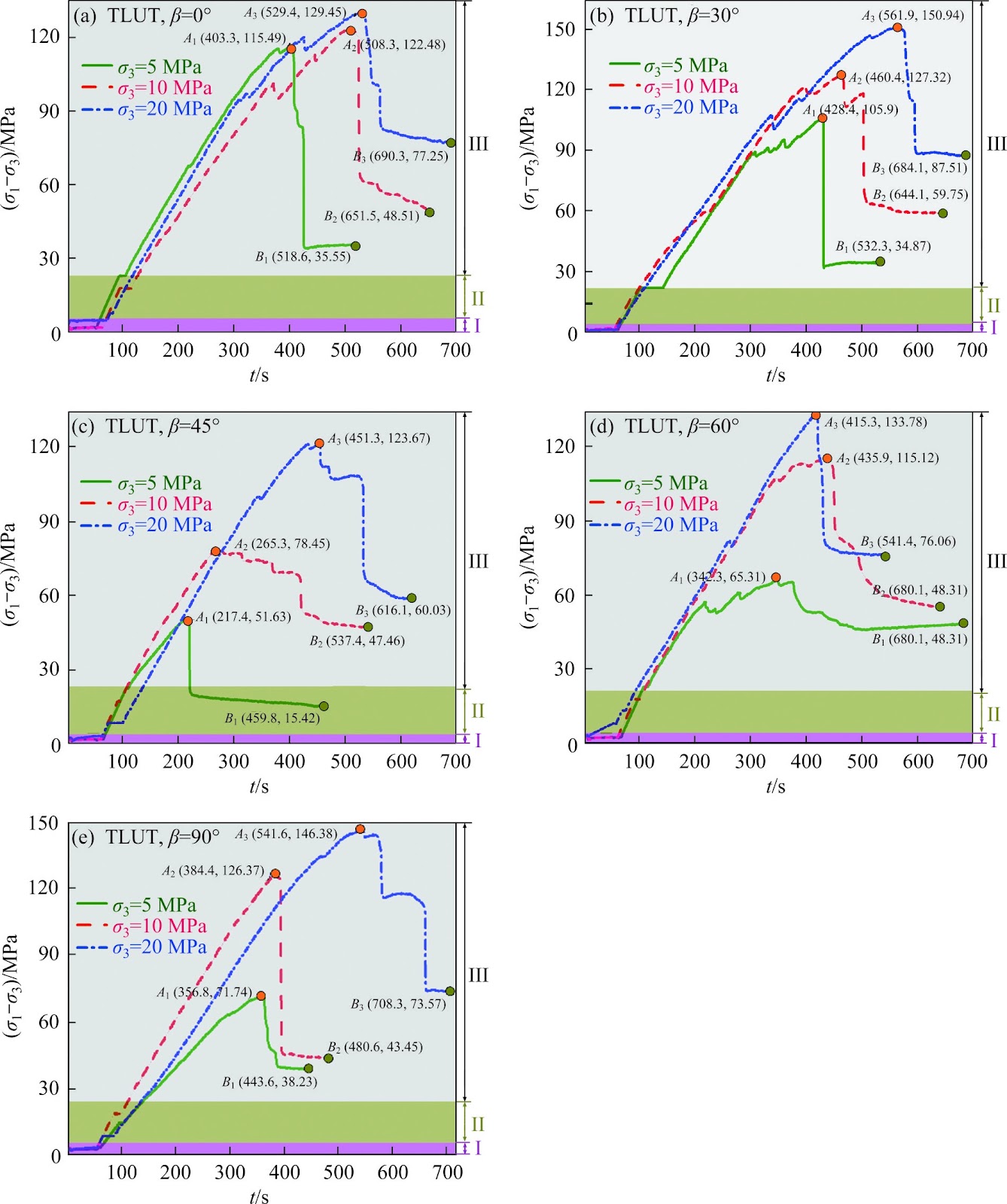
A cohesion loss model for determining residual strength of deep bedded sandstone
Rock residual strength, as an important input parameter, plays an indispensable role in proposing the reasonable and scientific scheme about stope design, underground tunnel excavation and stability evaluation of deep chambers. Therefore, previous residual strength models of rocks established were reviewed. And corresponding related problems were stated. Subsequently, starting from the effects of bedding and whole life-cycle evolution process, series of triaxial mechanical tests of deep bedded s
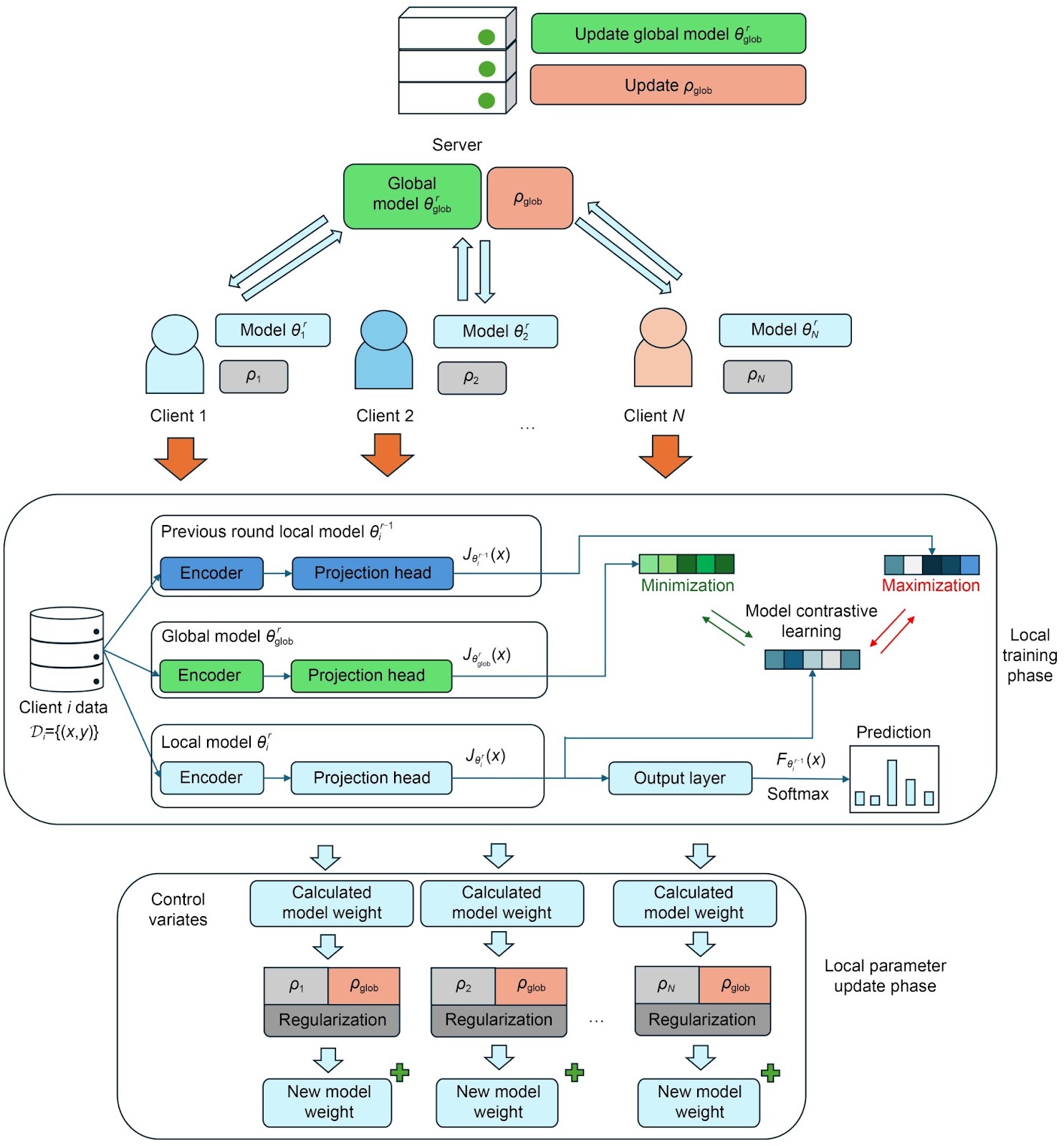
Federated model with contrastive learning and adaptive control variates for human activity recognition
Recent attention to privacy issues demands a communication-safe method for training human activity recognition (HAR) models on client activity data. Federated learning (FL) has become a compelling technique to facilitate model training between the server and clients while preserving data privacy. However, classical FL methods often assume independent and identically distributed (IID) data among clients. This assumption does not hold true in practical scenarios. Human activity in real-world scena