Key Takeaways & Executive Findings
- •• A pseudo-transient reactive distillation model incorporating tray hydraulics and liquid hold-up in both downcomers and trays was developed for rigorous simulation and optimization. • Ignoring downcomer liquid hold-up leads to significant errors in column diameter, weir height, and number of stages, potentially causing hydraulic infeasibility. • The proposed model enables simultaneous optimization of operating and structural variables for industrial RD columns, demonstrated on ethylene glycol and methyl acetate systems. • The study provides a systematic design framework that ensures hydraulic feasibility and economic optimality in reactive distillation processes.
Abstract
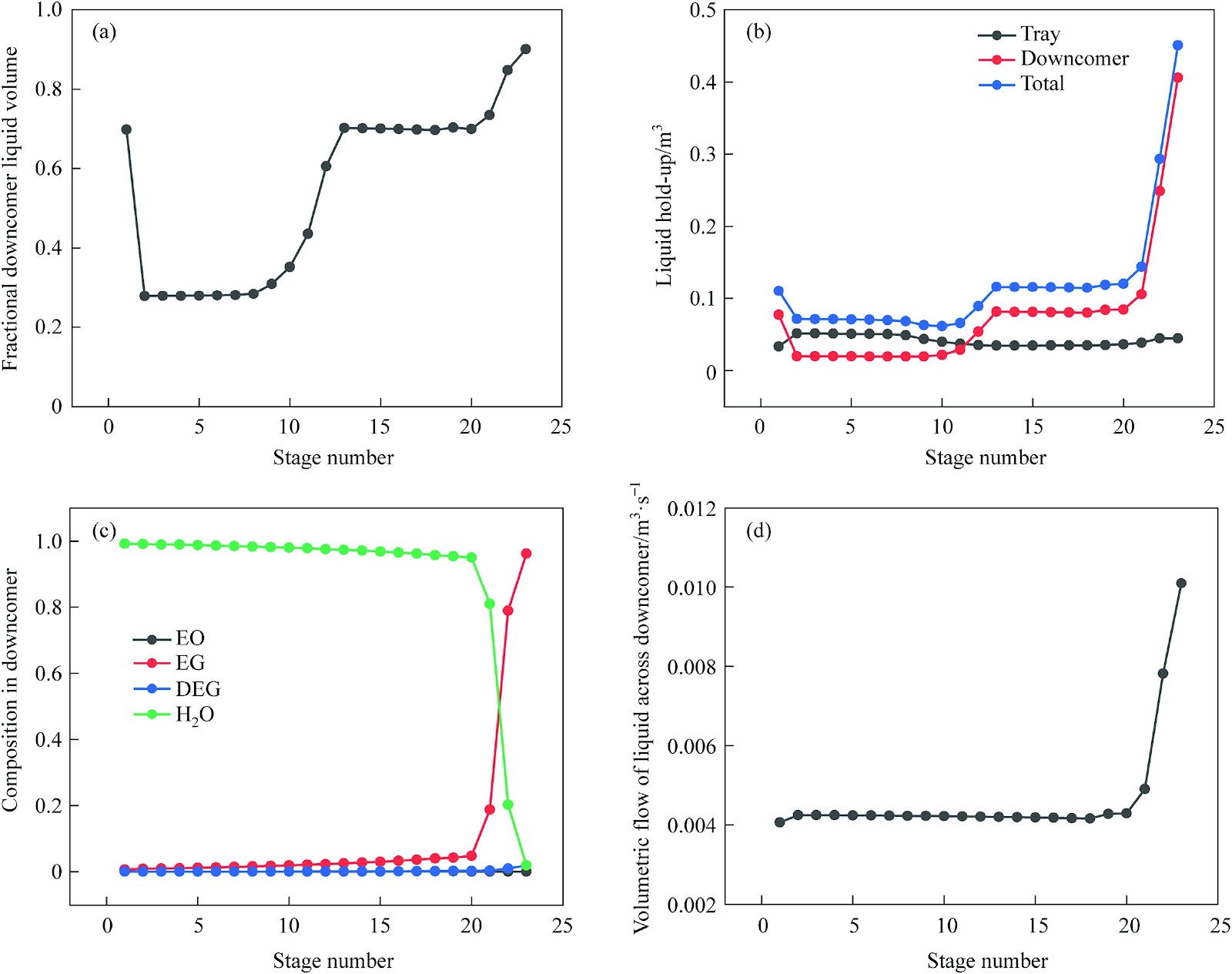
The liquid hold-up in a reactive distillation (RD) column not only has a significant impact on the extent of reactions, but also affects the pressure drop and hydraulic conditions in the column. Therefore, the liquid hold-up would be a critical design factor for RD columns. However, the existing design methods for RD columns typically neglect the influence of considerable amount of liquid hold-up in downcomers owing to the difficulties of solving a large-scale nonlinear model system by considering downcomer hydraulics, resulting in significant deviations from actual situation and even operation infeasibility of the designed column. In this paper, a pseudo-transient (PT) RD model based on equilibrium model considering tray hydraulics was established for rigorous simulation and optimization of RD plate columns considering the liquid hold-up both in downcomers and column trays, and a steady-state optimization algorithm assisted by the PT model was adopted to robustly solve the optimization problem. The optimization results of either ethylene glycol RD or methyl acetate RD demonstrated that assuming all the liquid hold-up of a stage belonged to the tray will cause significant deviations in the column diameter, weir height, and the number of stages, which leads to not meeting the separation requirements and even operation hydraulic infeasibility. The rigorous model proposed in this study which considers the liquid hold-up both on trays and in downcomers as well as hydraulic constraints can be applied to systematically design industrial RD plate columns to simultaneously obtain optimal operating variables and equipment structure variables.
1. Introduction
Reactive distillation (RD) technology is one of the best success stories of the application of process intensification technology in chemical industry, which takes advantage of the synergies of the combination of reaction and separation to reduce energy requirements and capital cost, along with improving the sustainability of the distillation process [1,2]. Owing to the outstanding advantages and potential, the RD has attracted increasing attention from researchers in the field of chemical process intensification since the early 1920s [3]. Although the optimal design of RD columns based on rigorous model is necessary to yield optimal operating conditions with economic benefits, this is very difficult due to the large-scale nonlinear model equations that must be solved. In addition, because the RD is simultaneously affected by thermodynamic equilibrium and reaction kinetic or reaction equilibrium, the hydraulic condition in the RD column is crucial to achieve high reaction conversion and efficient separation. For example, the liquid hold-up at each column tray, which refers to certain of reaction volume, affects the extent of reactions, also significantly affects the pressure drop of the column tray, which thus affects the pressure and temperature distribution in the column, and subsequently affects the reaction kinetics or reaction equilibrium conditions and the phase equilibrium of components. Therefore, if these additional equations describing the real liquid hold-up and tray hydraulics are added to the RD model system, the scale and nonlinearity of the RD model will be further increased, and it will be more difficult to simultaneously optimize the operating variables and the structural variables of RD columns.
With the deepening understanding of RD, people have realized that the reasonable reaction volume is crucial to the optimal design and feasible operating of RD columns. Traditional design methods [4e7] for RD columns usually pre-specify the reaction volume (for liquid-phase reactions, this is usually the liquid hold-up on trays) of each stage according to the reaction kinetic conditions followed by repeatedly checking the hydraulics conditions in the column and adjusting the pre-specified volume setting to ensure the operation of the column is hydraulically feasible. Huss et al. [4] explored a hierarchy of methods and models for the design and simulation of the methyl acetate RD column by fixing t
Loading authentic research manuscript (Pages 1–5)...
Yuchang Du, Yiqing Luo, Peilin Yang, Shengkun Jia, Xigang Yuan (2024). Rigorous design and economic optimization of reactive distillation column considering real liquid hold-up and hydraulic conditions of industrial device. Chinese Journal of Chemical Engineering. https://doi.org/10.1016/j_cjche_1448
Research & Educational Purpose Only:The translations, structured abstracts, analytical annotations, and data reports provided by SinoTechIntel are intended exclusively for academic research, internal corporate R&D, and educational benchmarking. They do not constitute formal engineering, chemical safety, legal, or professional advice.
Copyright & Intellectual Property Notice: Original copyright of the underlying source articles and experimental data remains with the respective authors, institutions, and original publishing journals. SinoTechIntel claims intellectual property only over its proprietary translations, analytical syntheses, and AEO structured enhancements in accordance with international fair use and academic citation principles.
Frequently Asked Questions
What is the main contribution of this paper?
The paper presents a rigorous pseudo-transient reactive distillation model that accounts for liquid hold-up in both downcomers and trays, along with hydraulic constraints, enabling more accurate design and economic optimization of industrial RD columns.
Why is considering downcomer liquid hold-up important?
Downcomer liquid hold-up significantly affects pressure drop and hydraulic conditions, which in turn influence reaction extent and separation efficiency. Neglecting it can lead to design errors and operational infeasibility.
What systems were used to validate the model?
The model was validated on ethylene glycol and methyl acetate reactive distillation systems, demonstrating significant deviations when downcomer hold-up was ignored.
How does the pseudo-transient approach help?
The pseudo-transient method helps in robustly solving the large-scale nonlinear model system, facilitating simultaneous optimization of operating and structural variables.
What are the practical implications of this research?
The proposed model provides a systematic framework for designing industrial RD plate columns that are hydraulically feasible and economically optimal, reducing the risk of operational failures.
Related Technical Papers & Translations
Design and optimization of a high-efficiency distillation process for cellulosic fuel ethanol integrated with thermal coupling and molecular sieve adsorption
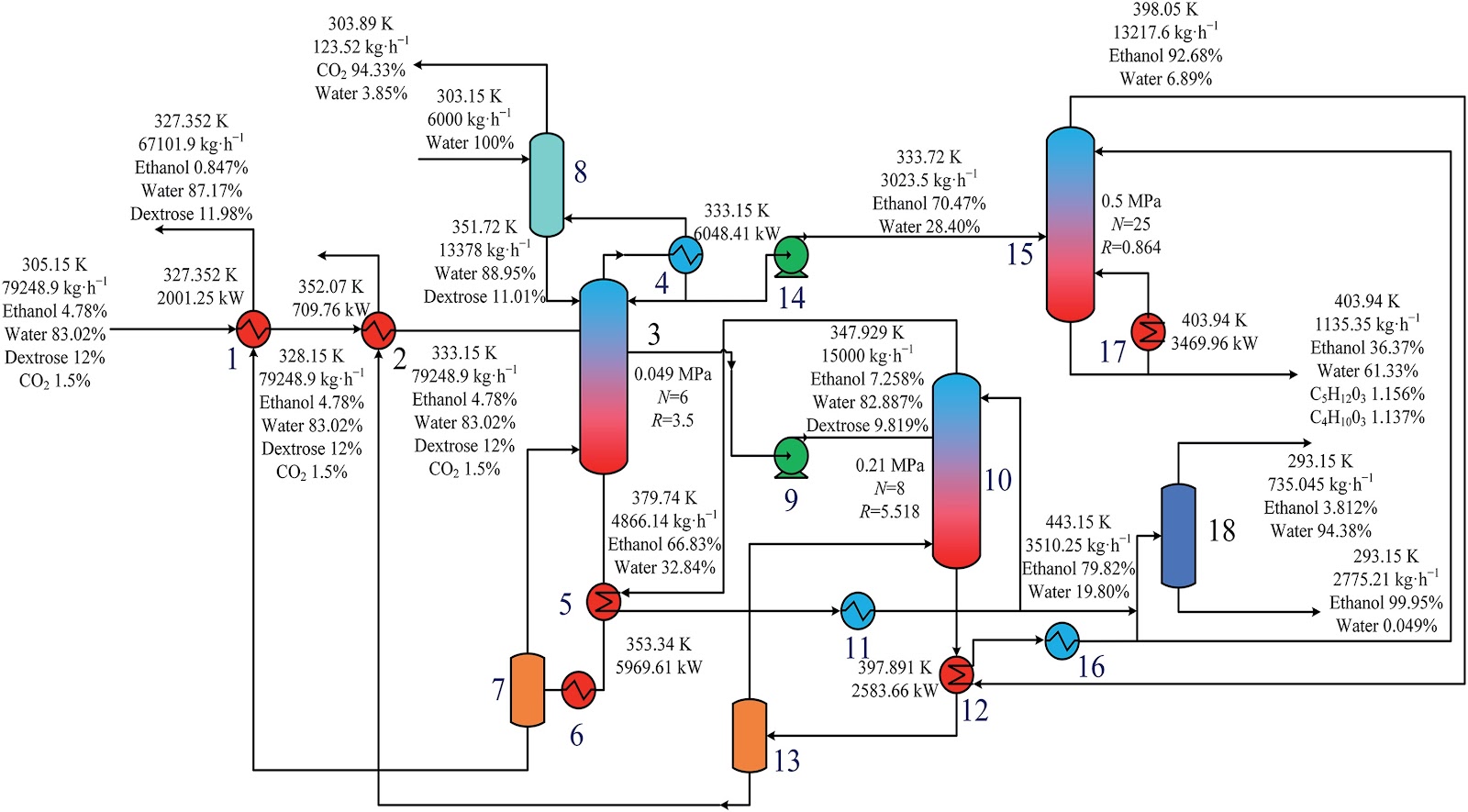
To address the challenges of high energy consumption and prominent costs in the traditional three-columns distillation process for cellulosic fuel ethanol, a distillation—molecular sieve coupling separation process is proposed. This process integrates a three-column (crude distillation column, first distillation column, second distillation column) system with a 3A molecular sieve adsorption deep dehydration unit. A thermal coupling network is constructed via differential pressure design (steam from medium/high-pressure columns as mutual heat sources, reboiler liquid waste heat for feed preheating), and molecular sieve adsorption conditions are optimized. The study first performs a thermodynamic consistency test on the ethanol—water system, determines optimal non-random two-liquid (NRTL) model binary interaction parameters via experimental data regression for Aspen Plus simulation. Aiming at minimum total annual cost (TAC), Aspen Plus is used to optimize process parameters (theoretical tray number, feed location, reflux ratio, side-draw position, etc.). Economic analysis shows this process reduces CO2 emission costs by 27.56%, TAC by 15.58% (to 5.123 × 10⁶ USD·a-1), and increases ethanol purity to >99.6%, providing an effective solution for green, efficient separation.
A cohesion loss model for determining residual strength of deep bedded sandstone
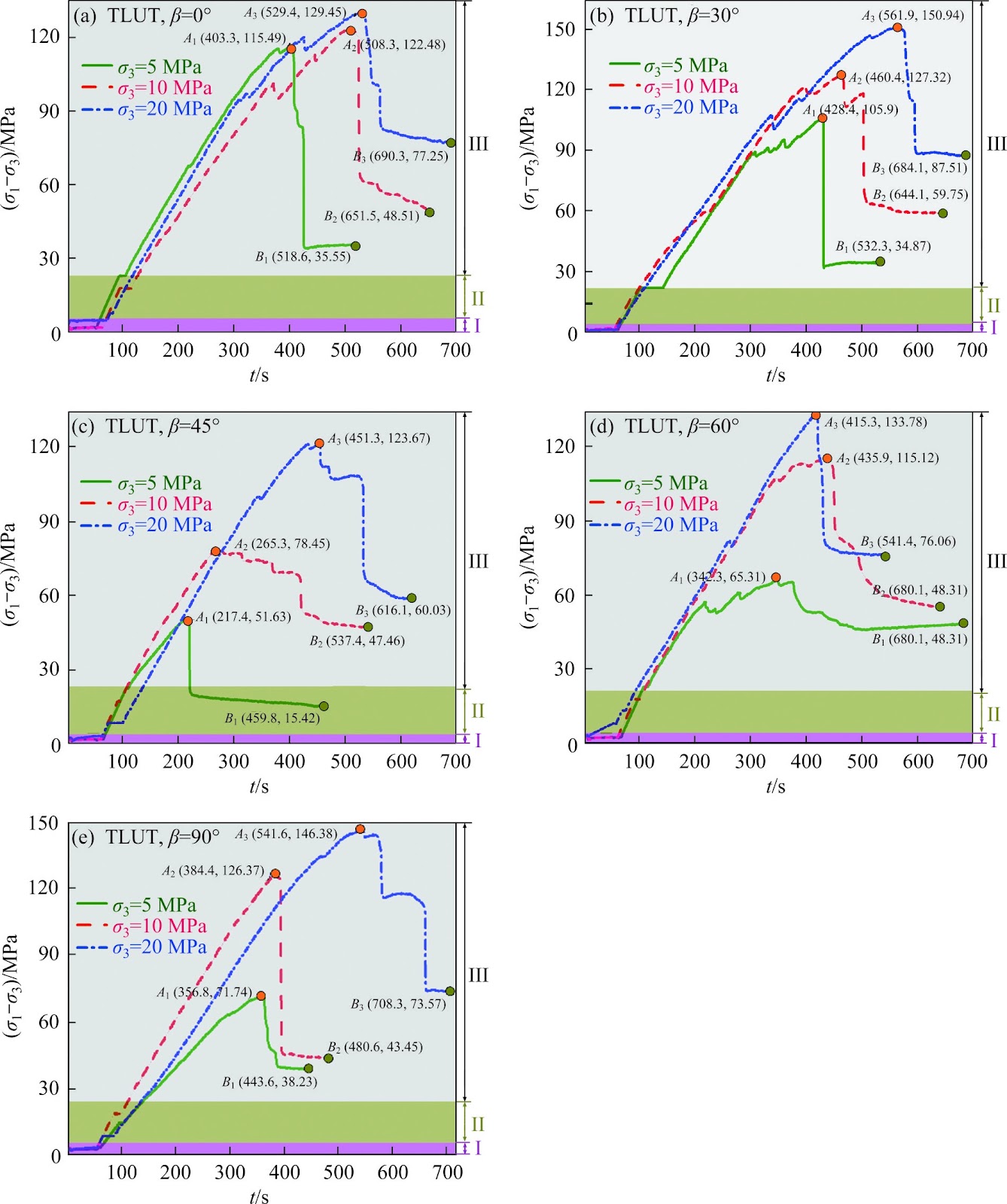
Rock residual strength, as an important input parameter, plays an indispensable role in proposing the reasonable and scientific scheme about stope design, underground tunnel excavation and stability evaluation of deep chambers. Therefore, previous residual strength models of rocks established were reviewed. And corresponding related problems were stated. Subsequently, starting from the effects of bedding and whole life-cycle evolution process, series of triaxial mechanical tests of deep bedded s
Federated model with contrastive learning and adaptive control variates for human activity recognition
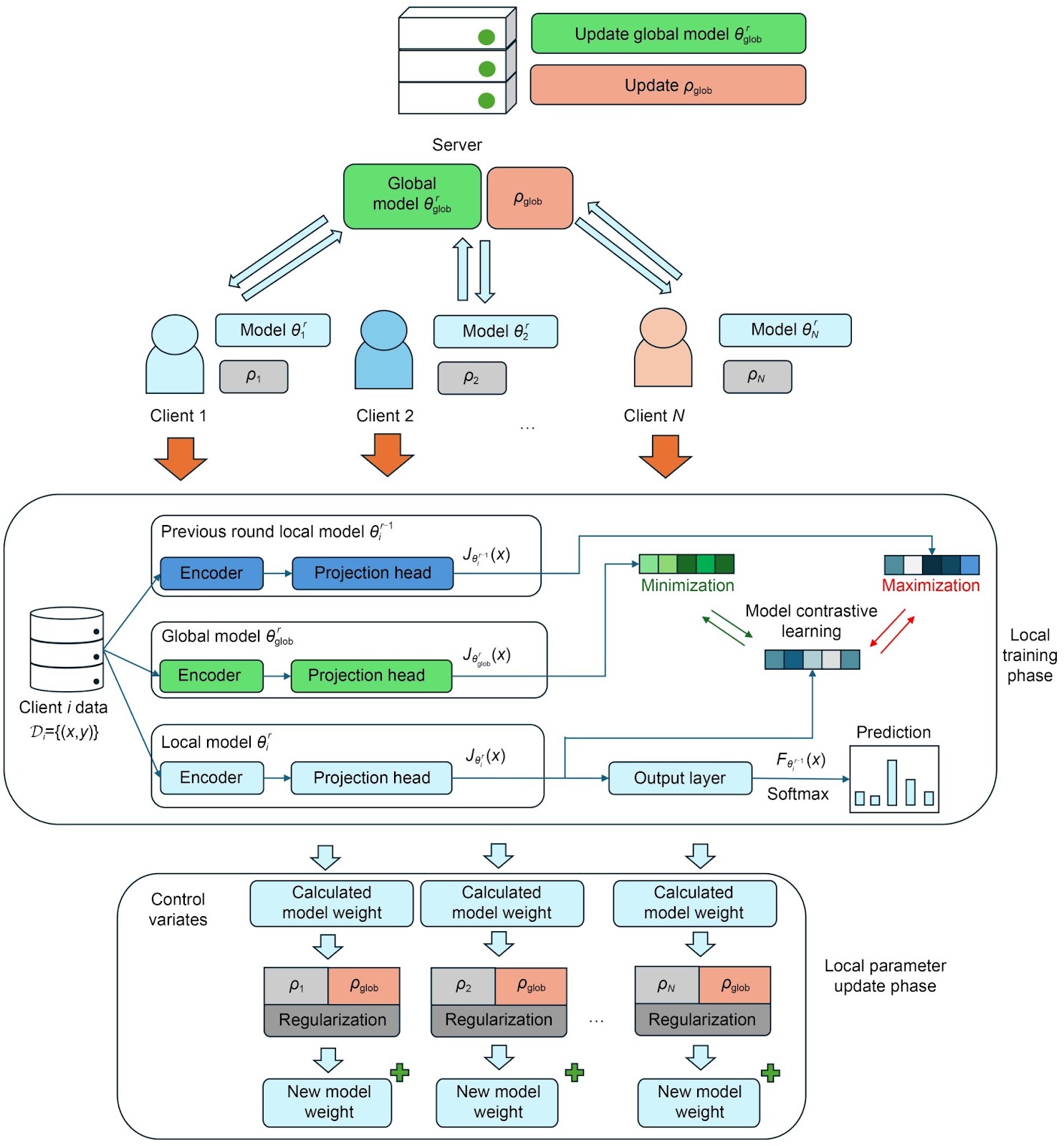
Recent attention to privacy issues demands a communication-safe method for training human activity recognition (HAR) models on client activity data. Federated learning (FL) has become a compelling technique to facilitate model training between the server and clients while preserving data privacy. However, classical FL methods often assume independent and identically distributed (IID) data among clients. This assumption does not hold true in practical scenarios. Human activity in real-world scena