Key Takeaways & Executive Findings
- •• The solidified Alloy 625 Plus ingot exhibits a typical dendritic microstructure with significant segregation of Ti, Nb, and Mo, leading to precipitate formation in interdendritic regions. • Homogenization effectively reduces element segregation; diffusion constants (D0) and activation energies (Q) for Ti, Nb, and Mo were quantified, enabling predictive diffusion equations. • A homogenization treatment at 1220 °C for 8 h yields low deformation resistance, high recrystallization degree, and optimal deformation coordination, making it a rational single-stage process. • The study provides a scientific basis for optimizing homogenization and hot working of Alloy 625 Plus, enhancing its mechanical properties and corrosion resistance for demanding energy and aerospace applications.
Abstract
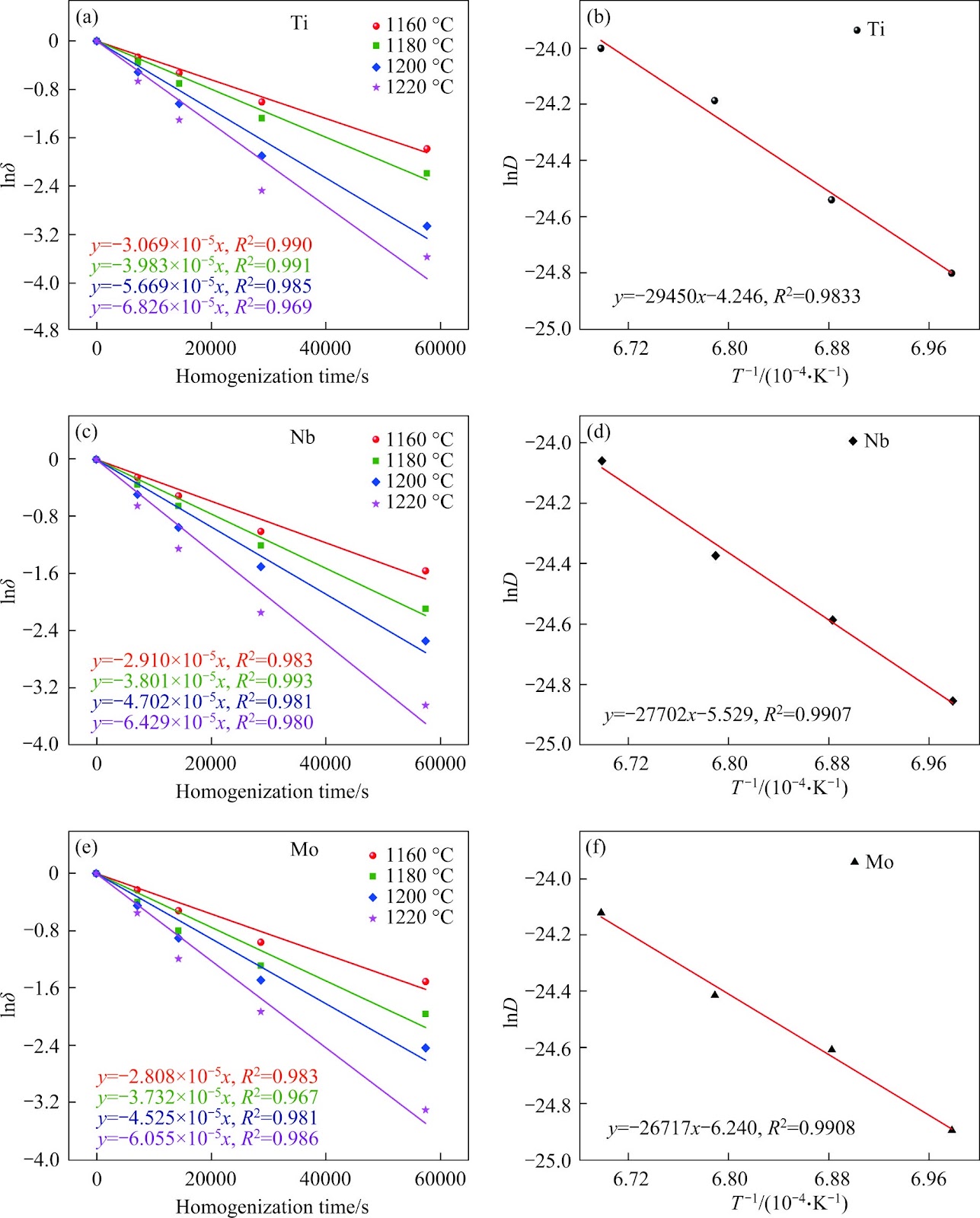
Based on microstructure analysis, diffusion theory, and hot deformation experiments, the solidification microstructure and element segregation of the Alloy 625 Plus ingot, the diffusion kinetics of Ti, Nb, and Mo during homogenization and the hot deformation behavior of the homogenized ingot were investigated in this study. The results indicate that: (1) the solidified ingot exhibits a typical dendritic microstructure, and significant element segregation occurs, leading to the presence of Ti, Nb, and Mo-rich precipitates in the interdendritic region; (2) Following homogenization, the degree of element segregation in the ingot is significantly reduced. The diffusion coefficients (D) of Ti, Nb, and Mo under various homogenization conditions were calculated. Subsequently, the diffusion constants (D0) and activation energies (Q) of Ti, Nb, and Mo were obtained to be 0.01432, 0.00397 and 0.00195 cm²/s and 244.851, 230.312, and 222.125 kJ/mol, respectively. Finally, the diffusion kinetics formulas for Ti, Nb, and Mo in Alloy 625 Plus were established. After homogenization at 1220 ℃ for 8 h, the alloy exhibits low deformation resistance, a high degree of recrystallization, and optimal deformation coordination ability. Therefore, this represents a rational single-stage homogenization process.
1. Introduction
Nickel-based superalloys have been extensively utilized in aerospace, nuclear energy, petrochemical industry, and ocean engineering owing to their outstanding high-temperature strength and corrosion resistance [1−4]. However, with the advancement of society, science, and technology, the demand for high-end equipment in various fields is growing increasingly urgent, particularly in energy sectors such as nuclear power and the petrochemical industry. Consequently, the requirements for high-performance materials are becoming more stringent. Alloy 625 Plus is a precipitate-hardening nickel-based alloy that combines the exceptional corrosion resistance of Alloy 625 with the benefits of Alloy 718, which can be strengthened through aging processes. Consequently, it achieves high strength through aging without requiring pre-hot or pre-cold working, while possessing corrosion resistance comparable to that of Alloy 625 [5]. This addresses the challenges posed by the limited strength of Alloy 625 and the insufficient corrosion resistance of Alloy 718 in severe corrosive environments [6−8]. In comparison with conventional Alloy 625 and Alloy 718, the elemental adjustments in the Alloy 625 Plus are intended to expedite the precipitation of the γ'' phase during the short-term aging process, leading to age hardening and the acquisition of exceptional mechanical properties. The most significant modifications include an increase in titanium (Ti) content and a decrease in carbon (C) content. The elevated Ti content is crucial for promoting the precipitation of the γ'' phase during aging, whereas the reduced C content is essential to prevent the formation of primary carbonitrides (Nb, Ti) (C, N), thereby mitigating the risk of cracking due to stress concentration during hot working. The properties of Alloy 625 Plus render it suitable for high-strength components in severe corrosive environments, including deep wells containing sulfur gas, light water reactors, chemical industry, and deep-sea pipelines.
However, due to the redistribution of solute elements at the solidification front during the solidification process of highly alloyed nickel-based alloys, significant element segregation occurs between dendrite arms and interdendritic regions, particularly for elements such as Nb, Mo, and Ti, which readily segregate. This leads to an uneven composition of the alloy ingot and the formation of unexpected harmful phases [9−11]. Furthermore, the transition zone between dendrite arms and interdendritic regions, as well as the interface between the segregated phase and matrix, is susceptible to cracking during deformation, thereby deteriorating the hot workability of materials [12]. Fortunately, high-temperature homogenization is a highly effective method for resolving the issue of element segregation and harmful precipitate formation.
Loading authentic research manuscript (Pages 1–5)...
DU Shu-yang, DONG Yan-wu, JIANG Zhou-hua, MEDOVAR Lev, STOVPCHENKO Ganna (2025). Revealing laws of element diffusion and hot deformation characteristics during homogenization process of Alloy 625 Plus. Journal of Central South University. https://doi.org/10.1007/s11771-025-6010-7
Research & Educational Purpose Only:The translations, structured abstracts, analytical annotations, and data reports provided by SinoTechIntel are intended exclusively for academic research, internal corporate R&D, and educational benchmarking. They do not constitute formal engineering, chemical safety, legal, or professional advice.
Copyright & Intellectual Property Notice: Original copyright of the underlying source articles and experimental data remains with the respective authors, institutions, and original publishing journals. SinoTechIntel claims intellectual property only over its proprietary translations, analytical syntheses, and AEO structured enhancements in accordance with international fair use and academic citation principles.
Frequently Asked Questions
What is Alloy 625 Plus used for?
Alloy 625 Plus is a precipitate-hardening nickel-based alloy combining the corrosion resistance of Alloy 625 with the strength of Alloy 718. It is used in high-strength components in severe corrosive environments such as deep wells containing sulfur gas, light water reactors, chemical industry, and deep-sea pipelines.
What homogenization treatment is recommended for Alloy 625 Plus?
The study recommends a single-stage homogenization at 1220 °C for 8 h, which results in low deformation resistance, high recrystallization degree, and optimal deformation coordination.
What is the diffusion activation energy for molybdenum in Alloy 625 Plus?
The diffusion activation energy (Q) for Mo is 222.125 kJ/mol, while for Ti and Nb it is 244.851 kJ/mol and 230.312 kJ/mol, respectively.
Why is homogenization necessary for Alloy 625 Plus ingots?
Homogenization reduces element segregation of Ti, Nb, and Mo in the dendritic microstructure, preventing harmful precipitates and improving hot workability.
How does homogenization affect the hot deformation behavior of Alloy 625 Plus?
Homogenization at 1220 °C for 8 h reduces deformation resistance and promotes recrystallization, leading to optimal deformation coordination ability.
Related Technical Papers & Translations
Design and optimization of a high-efficiency distillation process for cellulosic fuel ethanol integrated with thermal coupling and molecular sieve adsorption
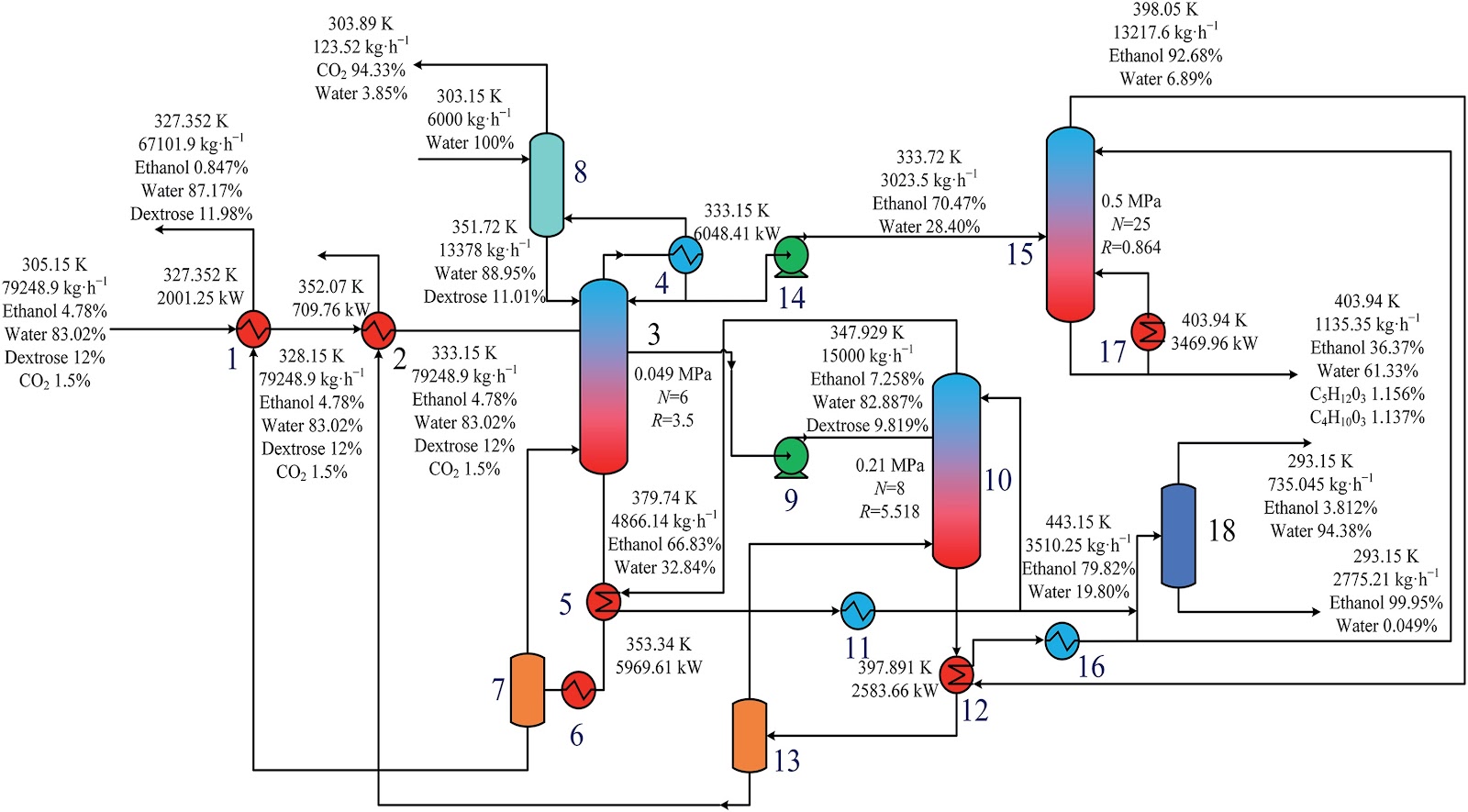
To address the challenges of high energy consumption and prominent costs in the traditional three-columns distillation process for cellulosic fuel ethanol, a distillation—molecular sieve coupling separation process is proposed. This process integrates a three-column (crude distillation column, first distillation column, second distillation column) system with a 3A molecular sieve adsorption deep dehydration unit. A thermal coupling network is constructed via differential pressure design (steam from medium/high-pressure columns as mutual heat sources, reboiler liquid waste heat for feed preheating), and molecular sieve adsorption conditions are optimized. The study first performs a thermodynamic consistency test on the ethanol—water system, determines optimal non-random two-liquid (NRTL) model binary interaction parameters via experimental data regression for Aspen Plus simulation. Aiming at minimum total annual cost (TAC), Aspen Plus is used to optimize process parameters (theoretical tray number, feed location, reflux ratio, side-draw position, etc.). Economic analysis shows this process reduces CO2 emission costs by 27.56%, TAC by 15.58% (to 5.123 × 10⁶ USD·a-1), and increases ethanol purity to >99.6%, providing an effective solution for green, efficient separation.
A cohesion loss model for determining residual strength of deep bedded sandstone
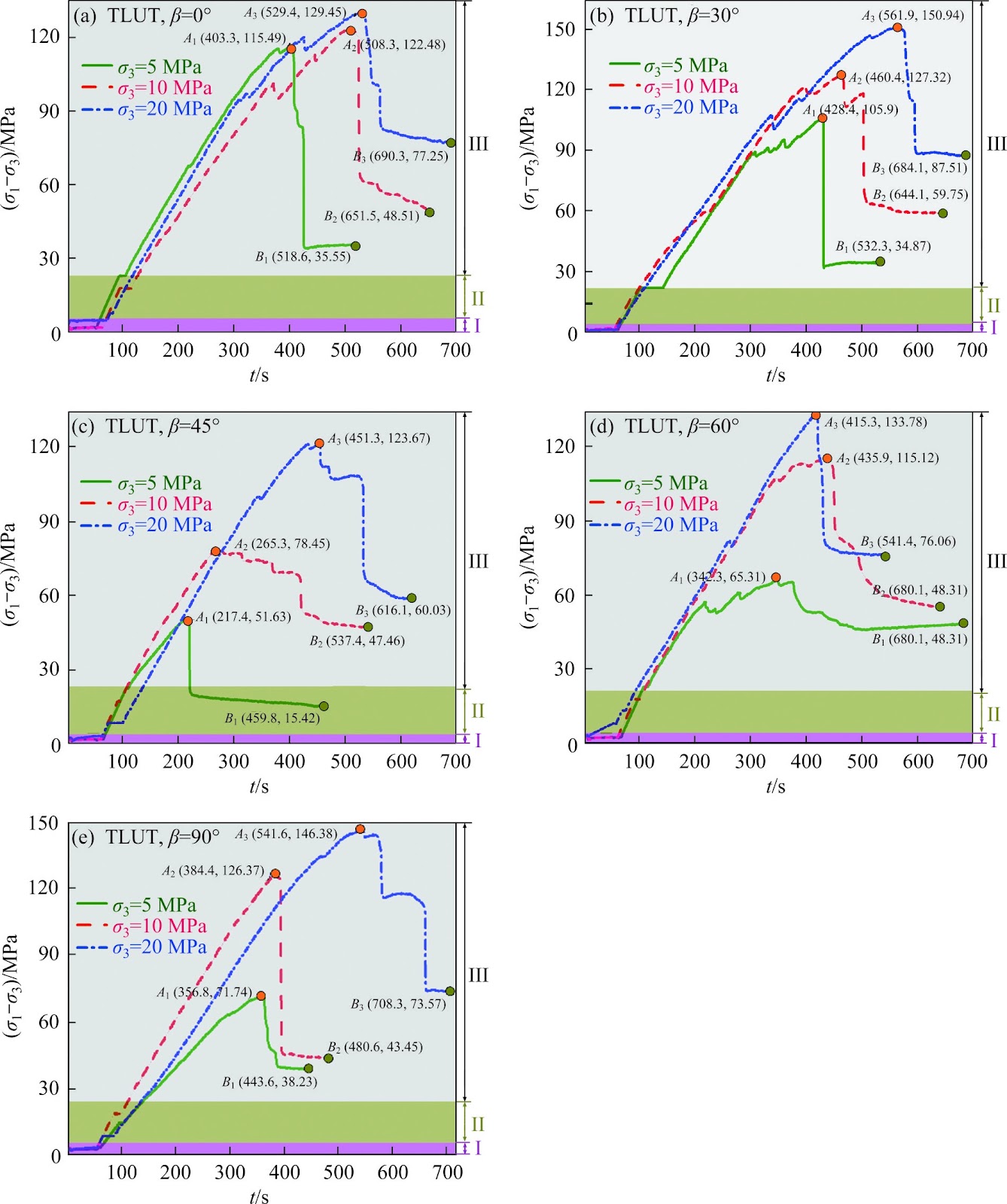
Rock residual strength, as an important input parameter, plays an indispensable role in proposing the reasonable and scientific scheme about stope design, underground tunnel excavation and stability evaluation of deep chambers. Therefore, previous residual strength models of rocks established were reviewed. And corresponding related problems were stated. Subsequently, starting from the effects of bedding and whole life-cycle evolution process, series of triaxial mechanical tests of deep bedded s
Federated model with contrastive learning and adaptive control variates for human activity recognition
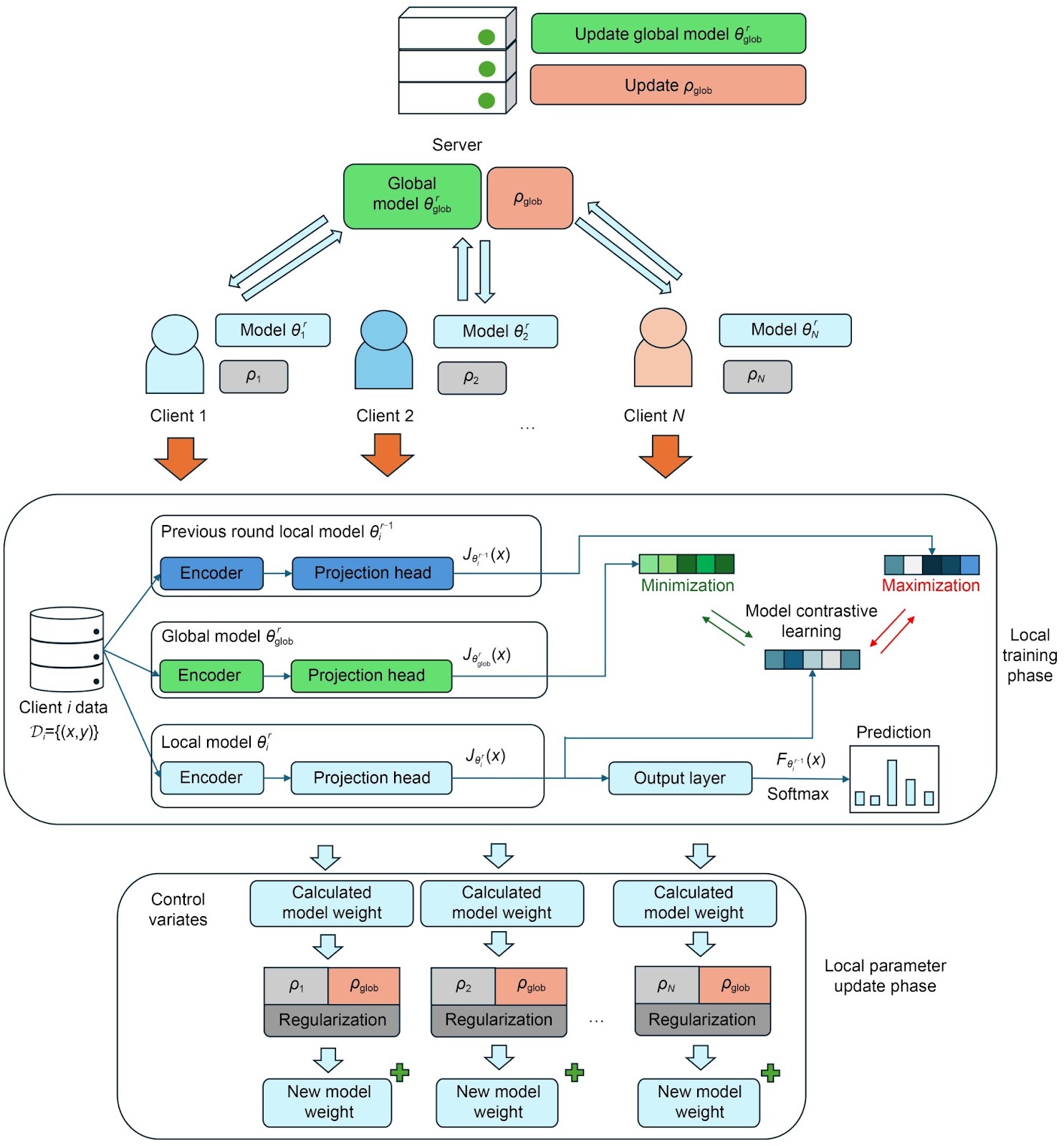
Recent attention to privacy issues demands a communication-safe method for training human activity recognition (HAR) models on client activity data. Federated learning (FL) has become a compelling technique to facilitate model training between the server and clients while preserving data privacy. However, classical FL methods often assume independent and identically distributed (IID) data among clients. This assumption does not hold true in practical scenarios. Human activity in real-world scena