Key Takeaways & Executive Findings
- •• True triaxial cyclic loading simulates mining stress, revealing distinct damage evolution in sandstone with σ1 cycling primarily affecting axial strain and σ2 cycling governing intermediate principal strain. • Elastic modulus of sandstone decreases exponentially and Poisson's ratio increases linearly with increasing cyclic load amplitude, indicating progressive stiffness degradation. • Acoustic emission b-value trends and rise angle-average frequency analysis effectively identify failure mode transitions from tensile to shear with increased intermediate principal stress. • The constitutive model based on AE cumulative ringing count accurately predicts sandstone damage behavior, with damage variable decreasing with σ2 during σ1 cycling but first decreasing then increasing with σ3 during σ2 cycling.
Abstract
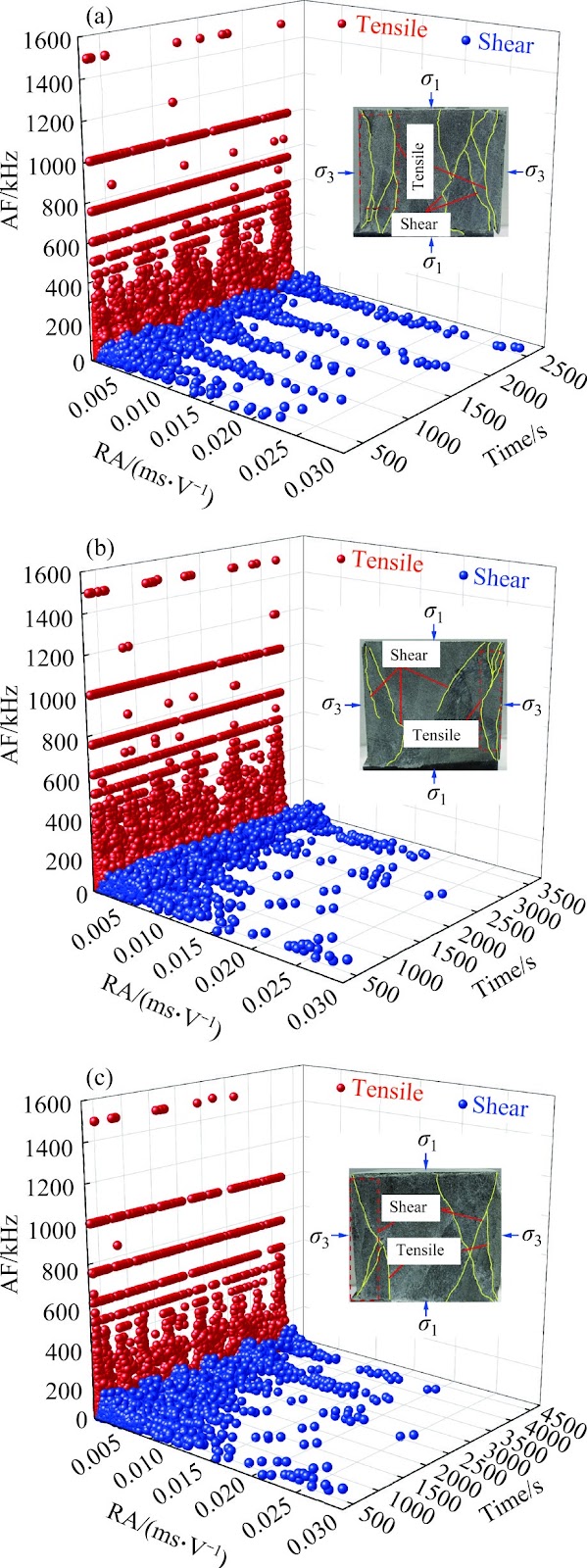
Aiming at the problem of deep surrounding rock instability induced by roadway excavation or mining disturbance, the true triaxial loading system was used to conduct graded cyclic maximum principal stress σ1 and intermediate principal stress σ2 tests on sandstone to simulate the effect of mining stress in actual underground engineering. The influences of each principal stress cycle on the mechanical properties, acoustic emission (AE) characteristics, and fracture characteristics of sandstone were analyzed. The damage characteristics of sandstone under true triaxial cyclic loading were studied. Furthermore, the damage constitutive model of rock mass under true triaxial cyclic loading was established based on AE cumulative ringing count. The quantitative investigation was conducted on cumulative-damage changes in circulating sandstone, which elucidated the mechanism of damage deterioration in sandstone subjected to true triaxial cyclic loading. The results show that the influence of the graded cycle σ1 on limit maximum principal strain ε1max and limit minimum principal strain ε3max was significantly greater than that of the limit intermediate principal strain ε2max. Graded cycle σ2 had a greater impact on ε2max and a smaller impact on ε3max. The elasticity modulus of sandstone decreased exponentially with the increased cyclic load amplitude, while the Poisson ratio increased linearly. b of AE showed a trend of increasing, decreasing, slightly fluctuating, and finally decreasing during cycling σ1. b showed a trend of slight fluctuation, large fluctuation, and finally increase during cycling σ2. Sandstone specimens experienced mainly tensile failure, tensile-shear composite failure, and mainly shear failure with increased initial σ2 or σ3. This was determined by analyzing the rise angle-average frequency of the AE parameter, corresponding to the rock specimens from splitting failure to shear failure. Besides, the mechanical damage behavior of sandstone under true triaxial cyclic loading could be well described by the established constitutive model. At the same time, it was found that the sandstone damage variable decreased with increased σ2 during cycling σ1. The damage variable decreased first and then increased with increased σ3 during cycling σ2.
1. Introduction
Rock mass is often in the working environments of cyclic loading and unloading in engineering activities such as deep underground mining, tunnel drilling, blasting vibration, adjacent layer mining, or roadway excavation. The work causes periodic disturbances to surrounding rocks, which seriously affects the stability of the project itself [1−4]. The rock mass of the mine often has the obvious triaxial unequal pressure, i.e., the true triaxial stress state (σ1>σ2>σ3), due to geological structure, geological movement, and artificial excavation [5]. Sandstone is surface sedimentary rocks widely distributed in many areas. The mechanical and acoustic emission (AE) damage characteristics of sandstone are studied under true triaxial cyclic disturbances. Thus, the damage and deterioration mechanism of sandstone under the true triaxial cyclic disturbance can be further revealed, which is of great significance to the stability of deep underground engineering and the prevention of dynamic disasters in rock mass.
Researchers have studied rock mechanics under the uniaxial and pseudo-triaxial cyclic loading and unloading
Loading authentic research manuscript (Pages 1–5)...
LI Ying-ming, FAN Chao-tao, DONG Chun-liang, ZHAO Guang-ming, MENG Xiang-rui, WANG Xiang-jun, SHI Wen-qiu, WU Xin-wen, GAO Jiang-huai (2025). Research on damage characteristics and constitutive model of rock mass under true triaxial cyclic loading based on acoustic emission. Journal of Central South University. https://doi.org/10.1007/s11771-025-5968-5
Research & Educational Purpose Only:The translations, structured abstracts, analytical annotations, and data reports provided by SinoTechIntel are intended exclusively for academic research, internal corporate R&D, and educational benchmarking. They do not constitute formal engineering, chemical safety, legal, or professional advice.
Copyright & Intellectual Property Notice: Original copyright of the underlying source articles and experimental data remains with the respective authors, institutions, and original publishing journals. SinoTechIntel claims intellectual property only over its proprietary translations, analytical syntheses, and AEO structured enhancements in accordance with international fair use and academic citation principles.
Frequently Asked Questions
What is the purpose of the study?
The study aims to investigate the damage characteristics and failure mechanisms of rock mass under true triaxial cyclic loading, which simulates mining disturbances in deep underground engineering, using acoustic emission technology and constitutive modeling.
How was the experiment conducted?
Sandstone specimens were subjected to graded cyclic maximum principal stress (σ1) and intermediate principal stress (σ2) tests using a true triaxial loading system, with acoustic emission monitoring throughout to analyze mechanical and fracture behavior.
What are the key findings regarding mechanical properties?
The elastic modulus of sandstone decreased exponentially while Poisson's ratio increased linearly with increasing cyclic load amplitude. The influence of σ1 cycling was more significant on limit strains compared to σ2 cycling.
How does acoustic emission help in damage assessment?
Acoustic emission parameters, particularly the b-value and rise angle-average frequency, were used to identify failure modes (tensile, shear, or composite) and track damage evolution, which informed the constitutive model.
What is the engineering significance of the constitutive model?
The established damage constitutive model based on AE cumulative ringing count accurately describes the mechanical damage behavior of sandstone under true triaxial cyclic loading, providing a tool for predicting rock mass stability and preventing dynamic disasters in deep mining.
Related Technical Papers & Translations
Design and optimization of a high-efficiency distillation process for cellulosic fuel ethanol integrated with thermal coupling and molecular sieve adsorption
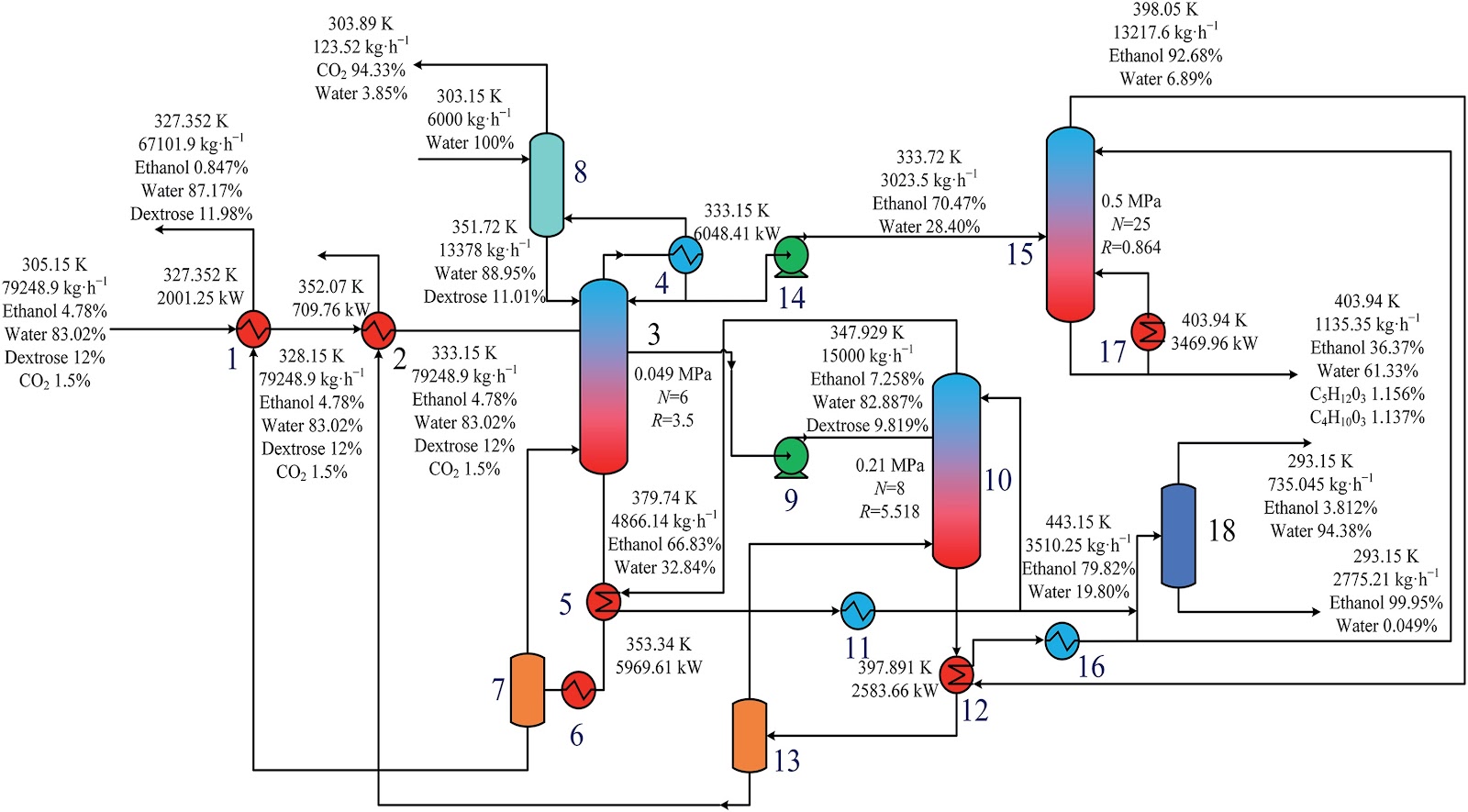
To address the challenges of high energy consumption and prominent costs in the traditional three-columns distillation process for cellulosic fuel ethanol, a distillation—molecular sieve coupling separation process is proposed. This process integrates a three-column (crude distillation column, first distillation column, second distillation column) system with a 3A molecular sieve adsorption deep dehydration unit. A thermal coupling network is constructed via differential pressure design (steam from medium/high-pressure columns as mutual heat sources, reboiler liquid waste heat for feed preheating), and molecular sieve adsorption conditions are optimized. The study first performs a thermodynamic consistency test on the ethanol—water system, determines optimal non-random two-liquid (NRTL) model binary interaction parameters via experimental data regression for Aspen Plus simulation. Aiming at minimum total annual cost (TAC), Aspen Plus is used to optimize process parameters (theoretical tray number, feed location, reflux ratio, side-draw position, etc.). Economic analysis shows this process reduces CO2 emission costs by 27.56%, TAC by 15.58% (to 5.123 × 10⁶ USD·a-1), and increases ethanol purity to >99.6%, providing an effective solution for green, efficient separation.
A cohesion loss model for determining residual strength of deep bedded sandstone
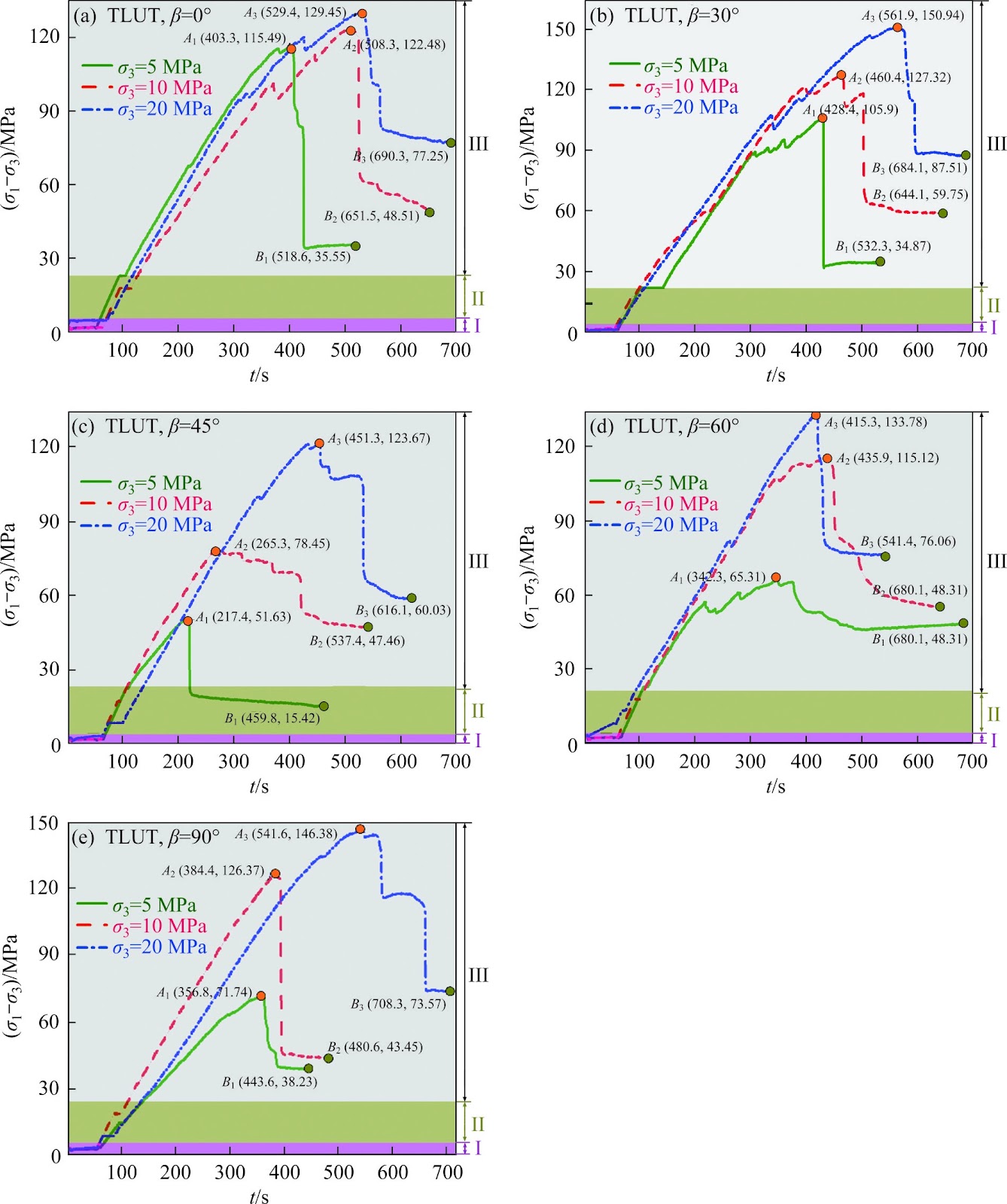
Rock residual strength, as an important input parameter, plays an indispensable role in proposing the reasonable and scientific scheme about stope design, underground tunnel excavation and stability evaluation of deep chambers. Therefore, previous residual strength models of rocks established were reviewed. And corresponding related problems were stated. Subsequently, starting from the effects of bedding and whole life-cycle evolution process, series of triaxial mechanical tests of deep bedded s
Federated model with contrastive learning and adaptive control variates for human activity recognition
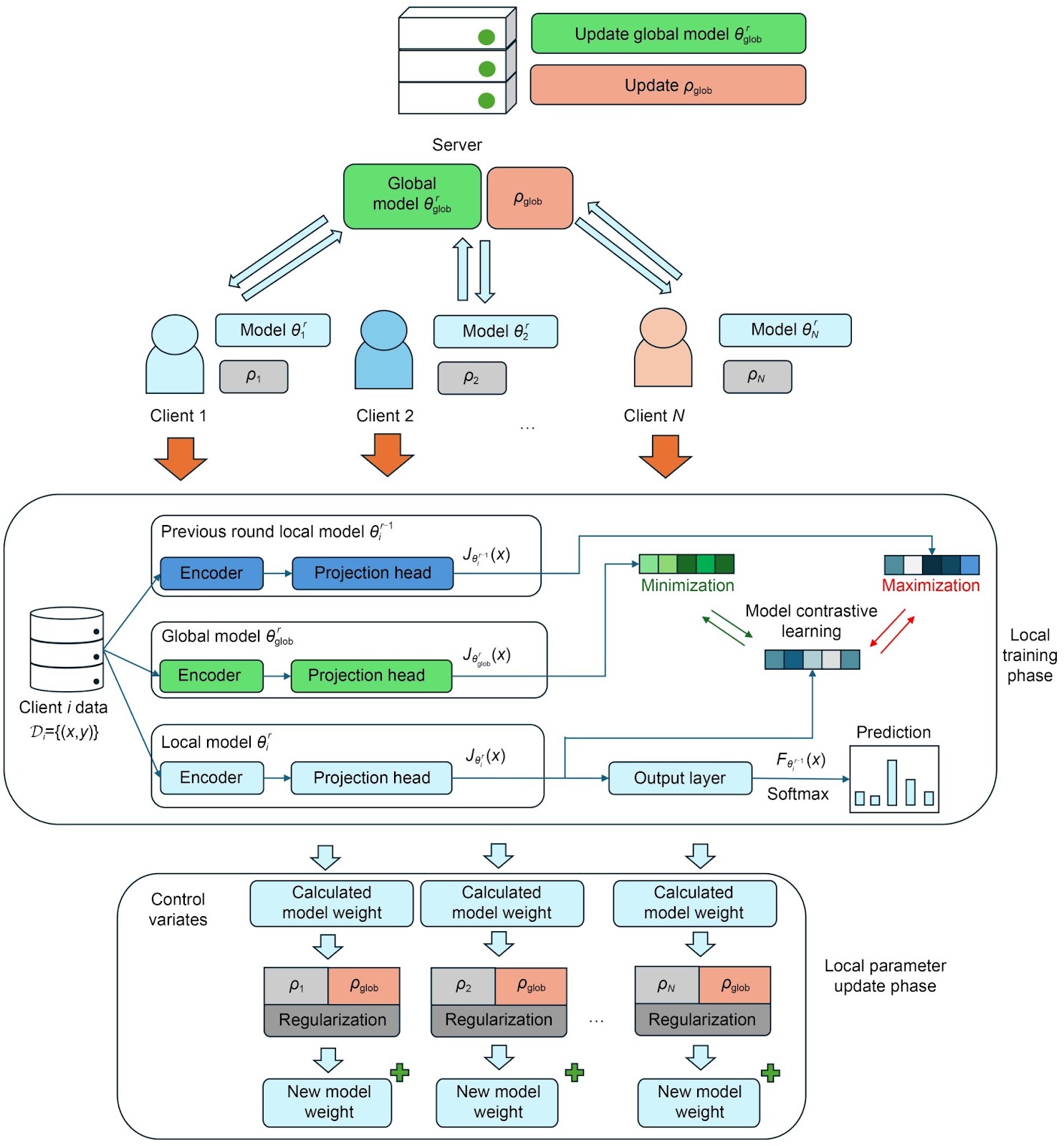
Recent attention to privacy issues demands a communication-safe method for training human activity recognition (HAR) models on client activity data. Federated learning (FL) has become a compelling technique to facilitate model training between the server and clients while preserving data privacy. However, classical FL methods often assume independent and identically distributed (IID) data among clients. This assumption does not hold true in practical scenarios. Human activity in real-world scena