Key Takeaways & Executive Findings
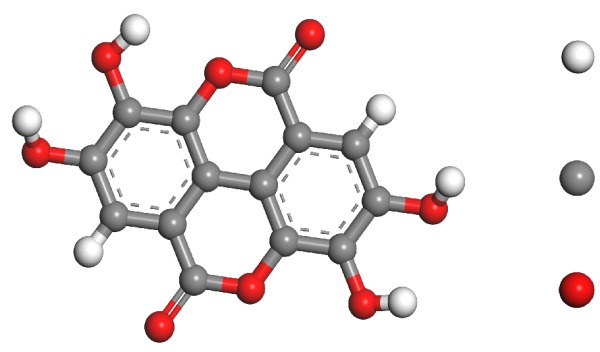
- •• Ellagic acid selectively depresses galena while leaving chalcopyrite highly floatable, achieving a Cu recovery of 95.67% with minimal Pb contamination. • The separation mechanism involves deprotonated phenolic hydroxyl groups of EA binding to Pb sites on galena, increasing hydrophilicity and blocking xanthate adsorption. • EA is an environmentally friendly alternative to toxic inorganic depressants such as dichromate, with strong potential for industrial Cu–Pb separation. • These findings provide mechanistic insights and practical conditions for improving safety and economic efficiency in copper smelting processes.
Abstract
This study explores the selective application of an environmentally friendly organic inhibitor, ellagic acid (EA), in the flotation separation of galena from chalcopyrite. Single-mineral flotation experiments revealed that the galena flotation recovery significantly decreased from approximately 95% to 6.16% following the addition of EA, whereas chalcopyrite maintained a high recovery of approximately 95%. In artificial mixed-ore flotation, effective separation was achieved under optimized conditions. This yielded a Cu concentrate with a Cu grade of 29.73% and recovery of 95.67%, and a Pb grade of 8.39% with a recovery of 8.62%, resulting in a separation index of 15.30. Comprehensive analyses were conducted using various techniques including X-ray photoelectron spectroscopy, density functional theory calculations, zeta potential measurements, time-of-flight secondary ion mass spectrometry, xanthate adsorption capacity measurements, and contact angle measurements. These analyses suggested that selective EA adsorption on the galena surface is the key mechanism underlying the separation. Under alkaline conditions, the deprotonated phenolic hydroxyl groups in EA preferentially interact with Pb sites on galena, increasing the surface hydrophilicity via the formation of –OH groups, oxides, and sulfur oxides. These interactions effectively occupied the active sites on the galena surface, inhibiting xanthate adsorption. However, EA exhibited minimal influence on the surface chemistry of chalcopyrite and its interaction with collectors, thereby enhancing the wettability difference between the two minerals. These results demonstrated the feasibility of effectively separating these minerals using the proposed approach.
1. Introduction
Cu and Pb are critical elements for national infrastructure and economic development. These metals have primarily been acquired through the smelting of sulfide ores [1–2]. Cu is mainly sourced from chalcopyrite, whereas Pb predominantly occurs in galena [3–4]. Notably, chalcopyrite and galena are frequently associated. Furthermore, during Cu smelting in blast furnaces, high Pb levels can be obtained from Pb oxides or other compounds that adsorb onto sintered ore or pellets, thereby reducing the sintering temperature. Under oxygen-rich, high-temperature conditions, elemental Pb is oxidized to form Pb oxide particles, which can enter soot, dust, and slag. Pb vapor also pollutes the prefurnace environment and poses health risks to workers [5]. Therefore, reducing the Pb content in Cu concentrates is essential for safe and efficient smelting. Flotation has emerged as a relatively effective technique for the separation of Cu–Pb minerals [6]. This process reduces the mutual contamination between Cu and Pb minerals, thereby minimizing hazards during the Pb–Cu smelting phase. Additionally, effective flotation-based separation of chalcopyrite from galena not only enhances the process safety but also increases the overall economic feasibility of Cu smelting.
In the flotation recovery process, untreated galena and chalcopyrite exhibit similar floatability, complicating their separation [7]. To enhance the wettability differences between these minerals, it is crucial to select appropriate inhibitors or highly selective collectors [8]. Among these, inhibitors are more commonly used than collectors [9]. Traditional Cu–Pb flotation separation methods utilize inorganic inhibitors such as dichromate, sulfites, phosphates, and silicates to effectively suppress galena [10–12]. These inhibitors are known for their high selectivity and effectiveness for the separation of Cu and Pb sulfide ores. However, they have notable drawbacks. For example, potassium dichromate is environmentally hazardous, and its interaction with minerals can be slow [13–14]. Other inhibitors may require stringent flotation conditions, which can compromise process reliability. Consequently, developing highly selective and eco-friendly organic inhibitors is a key research area for achieving Cu–Pb separation [15].
Historically, mineral processing researchers have sought effective depressants to separate chalcopyrite from galena. Theoretical studies have identified common organic inhibitors such as lignin, dextrin, carboxymethyl cellulose, and alginate gum as potential inhibitors in Cu–Pb flotation separation [16–17]. Typically, these depressants contain hydroxyl and carboxyl functional groups that interact with Pb ions to form hydrophilic complexes, thereby hindering the adsorption of subsequent collectors. This reduces the floatability of the galena surface, thereby enabling the separation of the two minerals. Additionally, galena depressants have been developed by either modif...
Loading authentic research manuscript (Pages 1–5)...
Rong Peng, Liang Wang, Hao Lai, Jinpeng Cai, Peilun Shen, Dianwen Liu (2025). Recovery of chalcopyrite from galena using ellagic acid as a lead-selective and environmentally friendly inhibitor: Experimental and mechanistic insights. Journal of Mineral Metallurgy and Materials Science. https://doi.org/10.1007/s12613-025-3222-7
Research & Educational Purpose Only:The translations, structured abstracts, analytical annotations, and data reports provided by SinoTechIntel are intended exclusively for academic research, internal corporate R&D, and educational benchmarking. They do not constitute formal engineering, chemical safety, legal, or professional advice.
Copyright & Intellectual Property Notice: Original copyright of the underlying source articles and experimental data remains with the respective authors, institutions, and original publishing journals. SinoTechIntel claims intellectual property only over its proprietary translations, analytical syntheses, and AEO structured enhancements in accordance with international fair use and academic citation principles.
Frequently Asked Questions
What is the role of ellagic acid in flotation separation?
Ellagic acid acts as a selective and environmentally friendly depressant for galena, allowing chalcopyrite to remain floatable while galena is suppressed, thus enabling effective Cu-Pb separation.
How does ellagic acid selectively depress galena?
In alkaline conditions, the deprotonated phenolic hydroxyl groups of ellagic acid preferentially interact with Pb sites on the galena surface, forming hydrophilic species that block xanthate collector adsorption, thereby reducing galena floatability.
What were the results of the artificial mixed-ore flotation tests?
Under optimized conditions, the process produced a Cu concentrate with a grade of 29.73% Cu and a recovery of 95.67%, while Pb grade was reduced to 8.39% with a low recovery of 8.62%, achieving a separation index of 15.30.
Why is the separation of chalcopyrite and galena important?
Chalcopyrite and galena are frequently associated in sulfide ores. Reducing Pb content in Cu concentrates is necessary to avoid smelting problems, health hazards, and economic losses, making efficient separation critical for safe and cost-effective copper production.
How does ellagic acid compare to traditional inorganic depressants?
Unlike hazardous inorganic depressants such as potassium dichromate, ellagic acid is eco-friendly, highly selective for galena, and effective under less stringent conditions, offering a safer and more sustainable alternative for Cu-Pb flotation separation.
Related Technical Papers & Translations

Design and optimization of a high-efficiency distillation process for cellulosic fuel ethanol integrated with thermal coupling and molecular sieve adsorption
To address the challenges of high energy consumption and prominent costs in the traditional three-columns distillation process for cellulosic fuel ethanol, a distillation—molecular sieve coupling separation process is proposed. This process integrates a three-column (crude distillation column, first distillation column, second distillation column) system with a 3A molecular sieve adsorption deep dehydration unit. A thermal coupling network is constructed via differential pressure design (steam from medium/high-pressure columns as mutual heat sources, reboiler liquid waste heat for feed preheating), and molecular sieve adsorption conditions are optimized. The study first performs a thermodynamic consistency test on the ethanol—water system, determines optimal non-random two-liquid (NRTL) model binary interaction parameters via experimental data regression for Aspen Plus simulation. Aiming at minimum total annual cost (TAC), Aspen Plus is used to optimize process parameters (theoretical tray number, feed location, reflux ratio, side-draw position, etc.). Economic analysis shows this process reduces CO2 emission costs by 27.56%, TAC by 15.58% (to 5.123 × 10⁶ USD·a-1), and increases ethanol purity to >99.6%, providing an effective solution for green, efficient separation.

A cohesion loss model for determining residual strength of deep bedded sandstone
Rock residual strength, as an important input parameter, plays an indispensable role in proposing the reasonable and scientific scheme about stope design, underground tunnel excavation and stability evaluation of deep chambers. Therefore, previous residual strength models of rocks established were reviewed. And corresponding related problems were stated. Subsequently, starting from the effects of bedding and whole life-cycle evolution process, series of triaxial mechanical tests of deep bedded s

Federated model with contrastive learning and adaptive control variates for human activity recognition
Recent attention to privacy issues demands a communication-safe method for training human activity recognition (HAR) models on client activity data. Federated learning (FL) has become a compelling technique to facilitate model training between the server and clients while preserving data privacy. However, classical FL methods often assume independent and identically distributed (IID) data among clients. This assumption does not hold true in practical scenarios. Human activity in real-world scena