Key Takeaways & Executive Findings
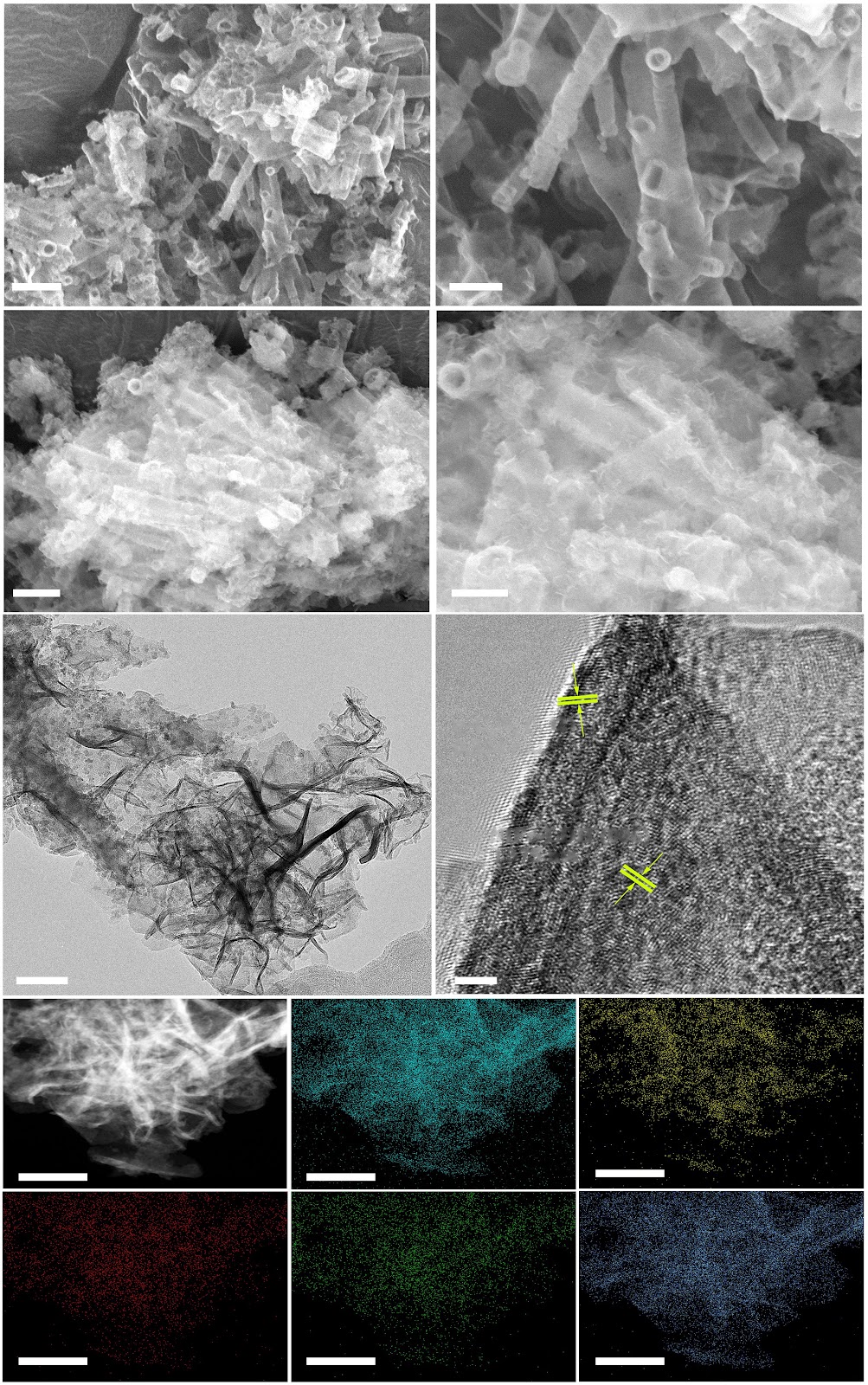
- •• A novel tubular g-C3N4@NiFe-LDH nanocomposite was synthesized via solvothermal and pyrolysis methods, exhibiting a well-defined tubular morphology (~3 μm length, ~200 nm diameter) for enhanced dispersion and interfacial contact. • Doping LiAlH4 with 7wt% g-C3N4@NiFe-LDH dramatically improves dehydrogenation kinetics: the onset temperature is lowered to 79.2°C, releasing 6.8wt% hydrogen in two steps. • Kissinger analysis shows that the apparent activation energies for the two dehydrogenation steps are reduced by 43.0% and 54.8%, respectively, indicating significantly enhanced kinetics. • The synergistic effect between the g-C3N4 support and NiFe-LDH, along with potential in-situ formation of active interfacial species, is proposed as the mechanism for the catalytic enhancement.
Abstract
LiAlH4 is hindered for practical hydrogen storage by its high decomposition temperatures, slow kinetics, and poor reversibility. To address the kinetic issues, this study introduces a tubular g-C3N4-supported NiFe-layered double hydroxide (g-C3N4@NiFe-LDH) nanocomposite as a catalytic dopant for LiAlH4. The composite, synthesized via solvothermal and pyrolysis methods, features a well-defined tubular morphology (~3 μm in length, ~200 nm in diameter), which facilitates its homogeneous dispersion and intimate interfacial contact with LiAlH4 during ball milling. Doping with 7wt% of this catalyst dramatically enhances the dehydrogenation kinetics of LiAlH4. The onset dehydrogenation temperature is lowered to 79.2°C, and 6.8wt% of hydrogen is released in two steps. Kissinger analysis reveals that the apparent activation energies for these steps are reduced by 43.0% and 54.8%, respectively, demonstrating significantly improved dehydrogenation kinetics. Mechanistic studies suggest that the synergistic effect between the g-C3N4 support and NiFe-LDH, along with the potential in-situ formation of active interfacial species during dehydrogenation, contributes to this improvement.
1. Introduction
Amid global industrialization and population growth, environmental pollution and increasing oil consumption present pressing challenges [1–2]. Hydrogen energy has emerged as a promising clean alternative due to its high energy density, abundance, and eco-friendliness [3–5]. Among candidate materials, lithium aluminum hydride (LiAlH4) exhibits a high theoretical hydrogen capacity (10.5wt%) and a relatively low desorption temperature [6–7]. However, its practical implementation is limited by slow hydrogen release kinetics and poor cycling stability. To overcome these drawbacks, strategies such as catalytic doping, nanosizing, and composite destabilization with other materials are being actively pursued [8–9].
The findings revealed that only TiCl3 successfully facilitated the hydrogenation of LiH and Al to form LiAlH4 [10–11]. Additionally, TiCl3-doped LiAlH4 produced by hydrogenation began releasing hydrogen at 80°C and maintained a hydrogen content of 6.4wt% after three cycles. LiAlH4 decomposes completely through the following three-step reactions, as shown in Eqs. (1)–(3) [12]. Since the third step occurs at a high temperature of 370°C, which is too high for fuel cell applications, most research has focused on the first two reactions: 3LiAlH4 →Li3AlH6 +2Al + 3H2 ↑ (187−218°C, 5.3wt%) (1); Li3AlH6 →3LiH+Al + 3/2H2 ↑ (228−282°C, 2.6wt%) (2); LiH →Li+1/2H2 ↑ (370−483°C, 2.6wt%) (3).
Although LiAlH4 offers several advantages, its hydrogen desorption kinetics and reversibility remain insufficient for practical applications. To improve the hydrogen storage performance of LiAlH4, several strategies have been explored, including nanostructuring, catalytic doping, and forming composites with other hydrides. Among these approaches, ball milling is widely adopted as a practical method for creating nanostructures. This mechanical process significantly reduces the particle size, enhances the surface area, and generates a high density of structural defects both on the surface and within the material. These changes collectively contribute to improved kinetics and more efficient hydrogen desorption. Wei et al. [13] investigated the thermal stability of both pure and ball-milled LiAlH4. Their findings revealed that ball milling significantly lowers the two-step hydrogen desorption temperatures of LiAlH4. This improvement is primarily due to the reduced particle size, which shortens the hydrogen diffusion path and decreases the thermodynamic properties, thereby lowering the hydrogen desorption temperature and activation energy. Additionally, during ball milling, the mechanical impact of the milling balls on LiAlH4 particles generates localized high temperatures and pressures, causing partial decomposition of LiAlH4 into Li3AlH6 and Al phases. Compared to other modification methods, introducing nanodopants is the most effective and commonly used approach [14]. By combining nanodopants with LiAlH4 through ball milling, both
Loading authentic research manuscript (Pages 1–5)...
Riguang Cheng, Zhaoyu Liu, Hengxin Zhang, Pantrangi Manasa, Hongge Pan, Fen Xu, Lixian Sun, Federico Rosei, and Yan Wang (2025). Pyrolytic/solvothermal synthesis of tubular g-C3N4@NiFe-layered double hydroxide for catalytic enhancement of hydrogen storage in LiAlH4. Journal of Mineral Metallurgy and Materials Science. https://doi.org/10.1007/s12613-026-3400-2
Research & Educational Purpose Only:The translations, structured abstracts, analytical annotations, and data reports provided by SinoTechIntel are intended exclusively for academic research, internal corporate R&D, and educational benchmarking. They do not constitute formal engineering, chemical safety, legal, or professional advice.
Copyright & Intellectual Property Notice: Original copyright of the underlying source articles and experimental data remains with the respective authors, institutions, and original publishing journals. SinoTechIntel claims intellectual property only over its proprietary translations, analytical syntheses, and AEO structured enhancements in accordance with international fair use and academic citation principles.
Frequently Asked Questions
What is the main problem with LiAlH4 for hydrogen storage?
LiAlH4 is hindered by high decomposition temperatures, slow kinetics, and poor reversibility, which limit its practical application despite its high theoretical hydrogen capacity of 10.5wt%.
How does the g-C3N4@NiFe-LDH nanocomposite improve the dehydrogenation of LiAlH4?
Doping LiAlH4 with 7wt% of the tubular g-C3N4@NiFe-LDH nanocomposite lowers the onset dehydrogenation temperature to 79.2°C and releases 6.8wt% hydrogen in two steps, significantly enhancing the kinetics.
What synthesis method was used to prepare the g-C3N4@NiFe-LDH nanocomposite?
The nanocomposite was synthesized via solvothermal and pyrolysis methods, resulting in a well-defined tubular morphology about 3 μm in length and 200 nm in diameter.
What are the key findings from Kissinger analysis in this study?
Kissinger analysis revealed that the apparent activation energies for the two dehydrogenation steps of LiAlH4 are reduced by 43.0% and 54.8%, respectively, confirming significantly improved dehydrogenation kinetics.
What is the proposed catalytic mechanism for the enhanced hydrogen storage?
The enhancement is attributed to the synergistic effect between the g-C3N4 support and NiFe-LDH, along with the potential in-situ formation of active interfacial species during dehydrogenation.
Related Technical Papers & Translations
Design and optimization of a high-efficiency distillation process for cellulosic fuel ethanol integrated with thermal coupling and molecular sieve adsorption
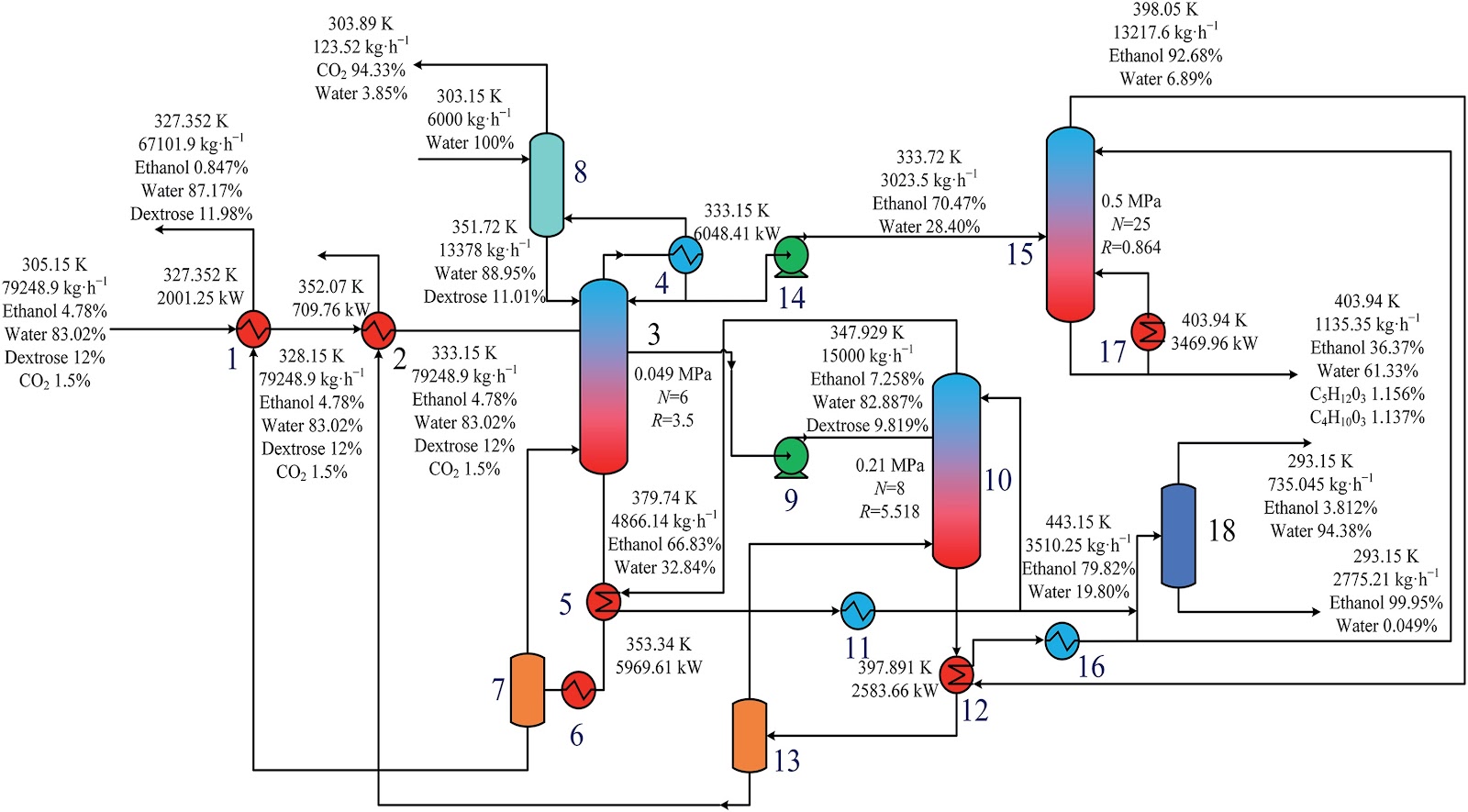
To address the challenges of high energy consumption and prominent costs in the traditional three-columns distillation process for cellulosic fuel ethanol, a distillation—molecular sieve coupling separation process is proposed. This process integrates a three-column (crude distillation column, first distillation column, second distillation column) system with a 3A molecular sieve adsorption deep dehydration unit. A thermal coupling network is constructed via differential pressure design (steam from medium/high-pressure columns as mutual heat sources, reboiler liquid waste heat for feed preheating), and molecular sieve adsorption conditions are optimized. The study first performs a thermodynamic consistency test on the ethanol—water system, determines optimal non-random two-liquid (NRTL) model binary interaction parameters via experimental data regression for Aspen Plus simulation. Aiming at minimum total annual cost (TAC), Aspen Plus is used to optimize process parameters (theoretical tray number, feed location, reflux ratio, side-draw position, etc.). Economic analysis shows this process reduces CO2 emission costs by 27.56%, TAC by 15.58% (to 5.123 × 10⁶ USD·a-1), and increases ethanol purity to >99.6%, providing an effective solution for green, efficient separation.
A cohesion loss model for determining residual strength of deep bedded sandstone
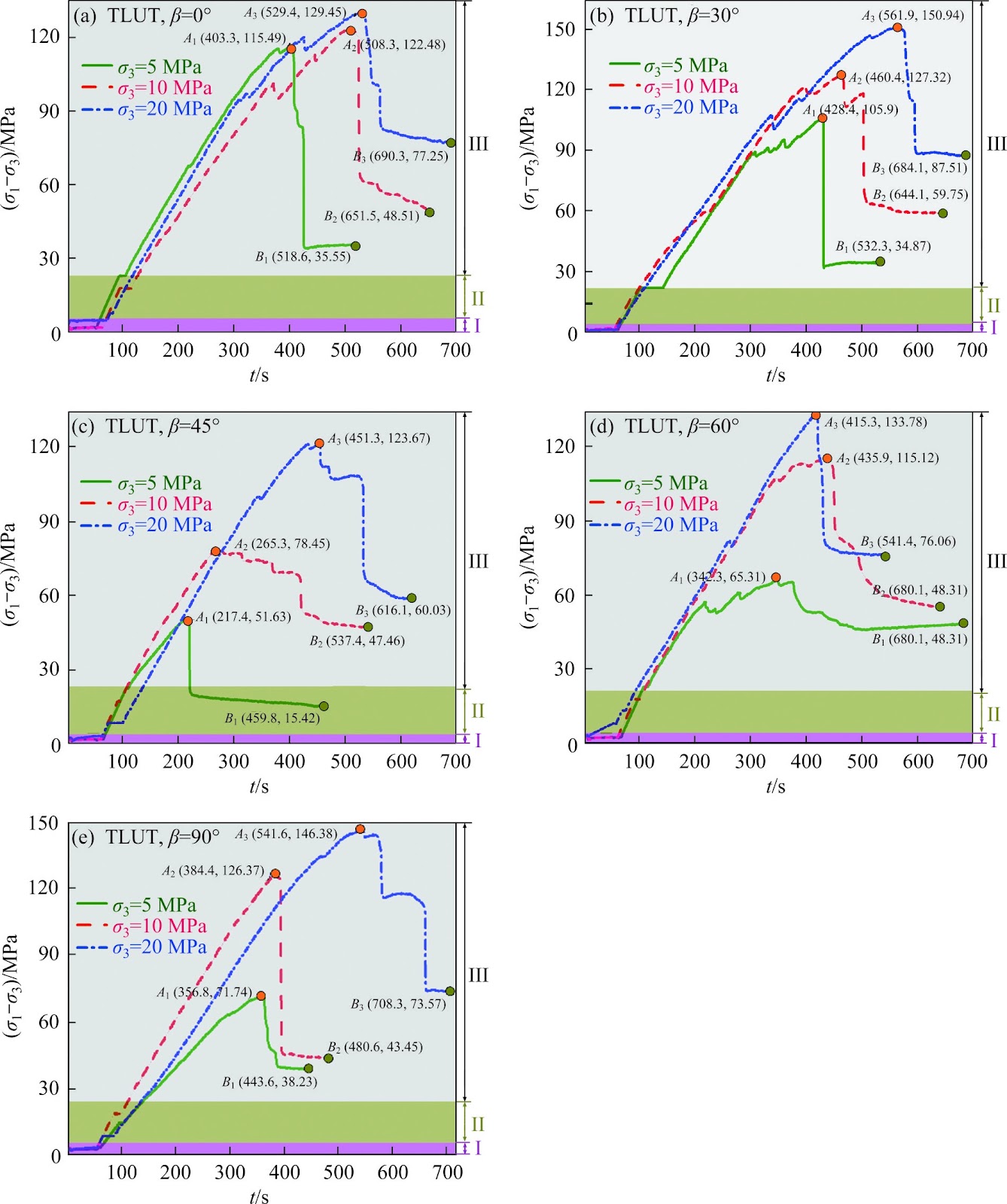
Rock residual strength, as an important input parameter, plays an indispensable role in proposing the reasonable and scientific scheme about stope design, underground tunnel excavation and stability evaluation of deep chambers. Therefore, previous residual strength models of rocks established were reviewed. And corresponding related problems were stated. Subsequently, starting from the effects of bedding and whole life-cycle evolution process, series of triaxial mechanical tests of deep bedded s
Federated model with contrastive learning and adaptive control variates for human activity recognition
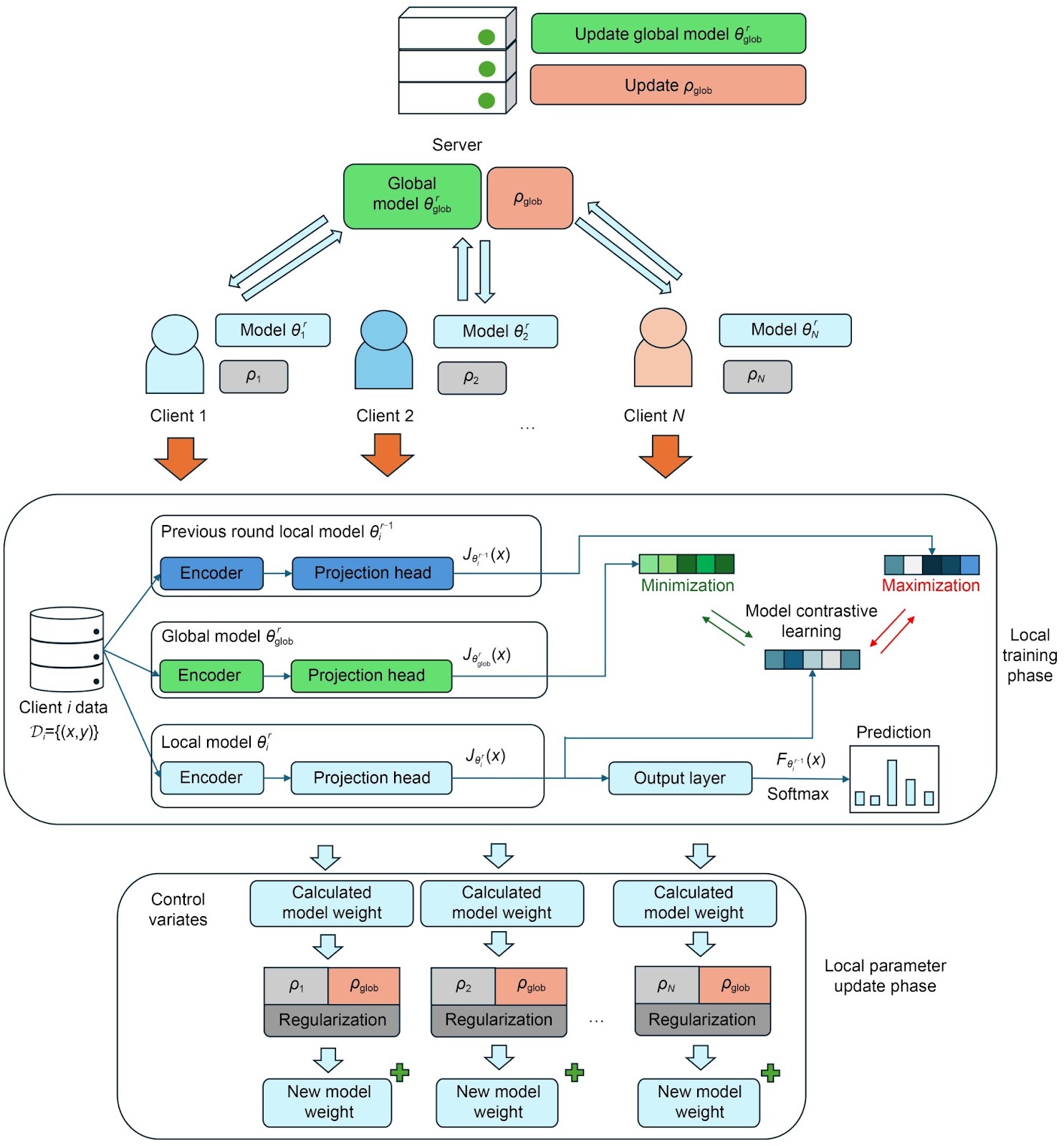
Recent attention to privacy issues demands a communication-safe method for training human activity recognition (HAR) models on client activity data. Federated learning (FL) has become a compelling technique to facilitate model training between the server and clients while preserving data privacy. However, classical FL methods often assume independent and identically distributed (IID) data among clients. This assumption does not hold true in practical scenarios. Human activity in real-world scena