Key Takeaways & Executive Findings
- •• HPMA selectively depresses calcite recovery from 91.64% to 18.61% at pH 7 and 10 mg·L−1 dosage, while preserving scheelite floatability. • FTIR and XPS confirm preferential chemisorption of HPMA carboxyl groups at calcite Ca sites, effectively blocking NaOL adsorption. • DFT simulations show HPMA binds far more strongly to calcite (104) (−1166.441 kJ·mol−1) than to scheelite (112) (335.180 kJ·mol−1), driving selective separation. • Mulliken population analysis reveals polar covalent Ca–O bonds at the calcite–HPMA interface, enabling targeted passivation and differential surface reactivity for efficient scheelite recovery.
Abstract
Tungsten, a strategic non-ferrous metal critical for advanced industrial applications, predominantly exists as underutilized scheelite resources characterized by fine-grained intergrowths with calcite that are challenging to separate. This study deciphers the atomic-scale mechanism underlying the selective flotation separation of scheelite from calcite mediated by hydrolyzed polymaleic anhydride (HPMA), a novel environmentally benign reagent, through integrated experimental characterization and computational simulations. Micro-flotation assays quantitatively demonstrated HPMA’s exceptional selectivity, suppressing calcite recovery from 91.64% to 18.61% at pH 7 (10 mg·L−1 dosage) while preserving scheelite floatability. Fourier transform infrared spectroscopy revealed HPMA preferentially adsorbs on calcite, efficiently hindering sodium oleate (NaOL) attachment, whereas NaOL selectively binds to scheelite. X-ray photoelectron spectroscopy analysis confirmed carboxyl (–COO−) group chemisorption at calcite’s Ca sites, evidenced by a 0.26 eV negative shift in Ca 2p3/2 binding energy and new Ca–O bond formation. Density functional theory (DFT) simulations quantified adsorption energetics: HPMA exhibited stronger affinity for calcite (104) surfaces (−1166.441 kJ·mol−1) versus scheelite (112) (335.180 kJ·mol−1). Mulliken bond population analysis quantified interfacial bonding nature. The calcite–HPMA interface formed polar covalent bonds (populations 0.23–0.28), contrasting with NaOL’s ionic interactions (population 0.13) on scheelite. This covalent advantage enables HPMA to preferentially passivate calcite surfaces, suppressing NaOL co-adsorption and facilitating selective scheelite recovery through differential surface reactivity modulation.
1. Introduction
Tungsten, a strategic non-ferrous metal, finds critical applications in advanced technologies ranging from ballistic components and rocket propulsion systems to precision cutting tools and aerospace alloys [1–2]. China dominates global tungsten reserves with 5.2 million metric tons, exceeding the cumulative reserves of 30 tungsten-producing nations by over 300%, while maintaining dominant global production and export volumes [3–4].
Tungsten primarily occurs as scheelite (CaWO4) and wolframite (FeWO4) in nature [5]. With commercially viable wolframite deposits largely depleted, efficient exploitation of scheelite resources has become imperative. However, skarn-type scheelite deposits exhibit low-grade, fine-grained characteristics and complex impurity associations, posing substantial challenges for beneficiation [6]. Scheelite commonly coexists with calcite in fine-grained intergrowth patterns, further complicated by their near-identical surface charge characteristics and shared calcium cation (Ca2+) centers in crystal structures [7]. This structural similarity induces competitive chemisorption of reagents during flotation, leading to elevated reagent consumption and reduced concentrate grades. Additionally, as semi-soluble salt minerals, scheelite and calcite demonstrate heightened solubility in aqueous solutions, promoting interfacial ion exchange that enhances surface property convergence [8–9]. Such physicochemical synergism significantly impedes selective separation efficiency.
The efficacy of flotation separation hinges on the selective adsorption of reagents governed by mineral surface properties and molecular structure compatibility [10]. Initial scheelite beneficiation employed conventional collectors including fatty acids, phosphoric acid derivatives, and chelating agents [7,11–12]. Contemporary studies reveal that sole collector application yields suboptimal scheelite recovery, necessitating synergistic inhibitor integration to minimize reagent consumption and enhance system stability [13–14]. Phosphate-based depressants exhibit unique calcium mineral selectivity through surface adsorption and secondary product formation. Chen et al. [15] demonstrated sodium phytate (SP)-mediated scheelite–calcite separation using sodium oleate (NaOL) collector, where SP preferentially depressed calcite via zeta potential modulation (−Δζ = 12.3 mV, Δζ represents the potential difference between the sliding surface of the particle and the bulk solution of the dispersing medium.) through chelated Ca2+ complexation, while maintaining scheelite surface activity (Δζ < 2 mV), achieving 91.2% WO3 recovery. Among the organic inhibitors, carboxymethyl cellulose (CMC) belongs to a class of common organic polymers, which originates from negatively charged polysaccharides converted from plant cellulose. Wang et al. [16] reported negligible inhibition of NaOL adsorption on scheelite (<5% coverage reduction) versus 78% suppression on calcite.
Loading authentic research manuscript (Pages 1–5)...
Qing Shi, Binbin Li, Guofan Zang (2025). Probing the interfacial role of hydrolysed polymaleic anhydride for efficient target adsorption in scheelite–calcite flotation system: Experimental application and atomic-scale mechanisms. Journal of Mineral Metallurgy and Materials Science. https://doi.org/10.1007/s12613-025-3207-6
Research & Educational Purpose Only:The translations, structured abstracts, analytical annotations, and data reports provided by SinoTechIntel are intended exclusively for academic research, internal corporate R&D, and educational benchmarking. They do not constitute formal engineering, chemical safety, legal, or professional advice.
Copyright & Intellectual Property Notice: Original copyright of the underlying source articles and experimental data remains with the respective authors, institutions, and original publishing journals. SinoTechIntel claims intellectual property only over its proprietary translations, analytical syntheses, and AEO structured enhancements in accordance with international fair use and academic citation principles.
Frequently Asked Questions
What is the role of HPMA in scheelite-calcite flotation separation?
HPMA (hydrolyzed polymaleic anhydride) acts as a highly selective depressant for calcite in scheelite flotation. It strongly adsorbs on calcite surfaces, blocking the attachment of sodium oleate (NaOL) collector, while leaving scheelite surfaces active, thus enabling efficient separation.
How does HPMA selectively depress calcite?
HPMA chemisorbs onto calcite via its carboxyl (–COO−) groups at Ca sites, forming strong polar covalent bonds. This preferential adsorption passivates the calcite surface, preventing NaOL co-adsorption and significantly reducing calcite floatability.
What experimental techniques were used in this study?
The study integrated micro-flotation assays, Fourier transform infrared spectroscopy (FTIR), X-ray photoelectron spectroscopy (XPS), and density functional theory (DFT) simulations to investigate the adsorption mechanisms and interfacial bonding.
What are the DFT adsorption energies for HPMA on calcite vs scheelite?
DFT calculations showed that HPMA adsorbs much more strongly on calcite (104) with an adsorption energy of −1166.441 kJ·mol−1, compared to 335.180 kJ·mol−1 on scheelite (112), explaining its selective depressive effect.
Why is scheelite flotation separation challenging?
Scheelite and calcite share similar surface charges, calcium active sites, and both are semi-soluble salt minerals. This leads to competitive reagent adsorption, high reagent consumption, and poor concentrate grades, making selective separation difficult.
Related Technical Papers & Translations
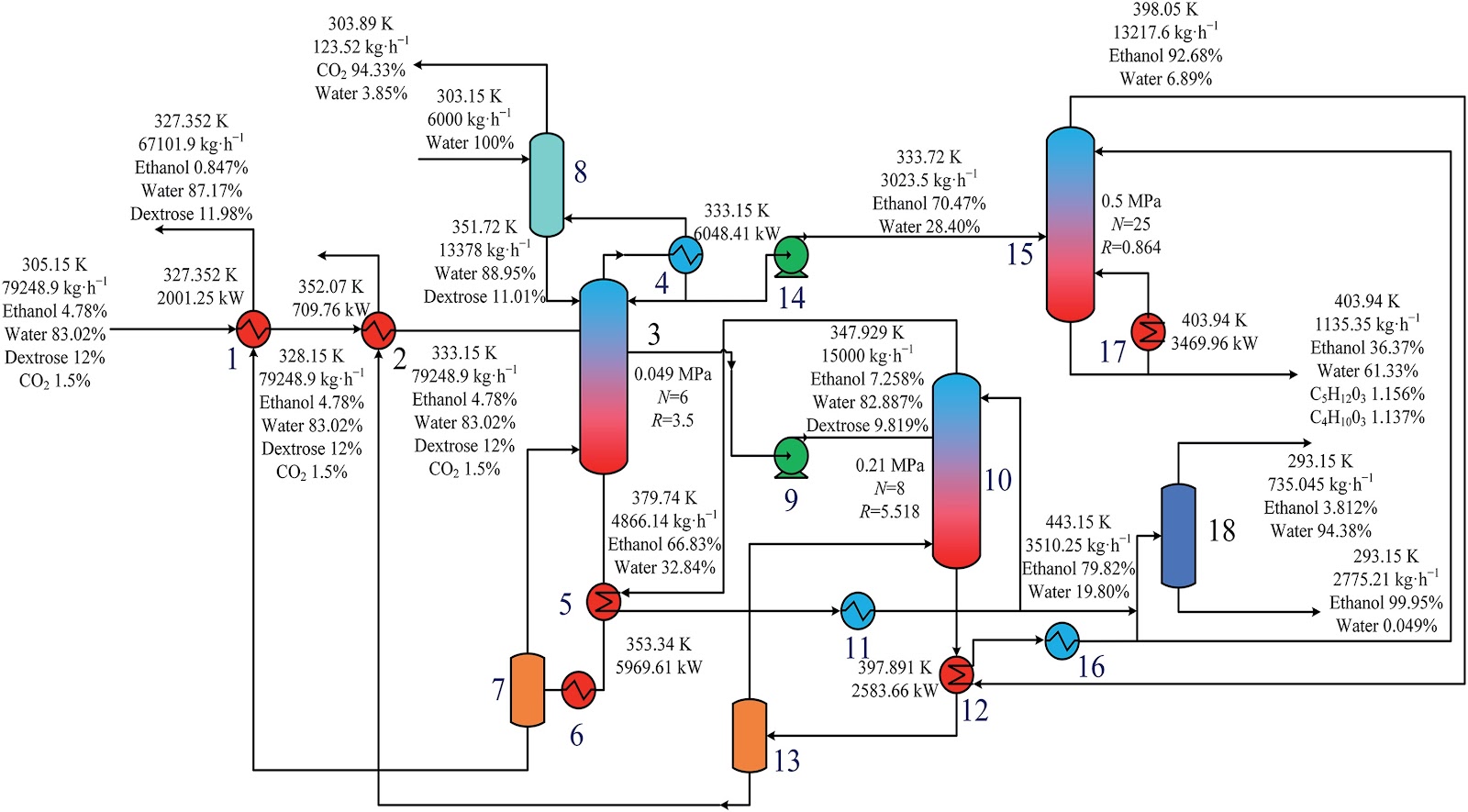
Design and optimization of a high-efficiency distillation process for cellulosic fuel ethanol integrated with thermal coupling and molecular sieve adsorption
To address the challenges of high energy consumption and prominent costs in the traditional three-columns distillation process for cellulosic fuel ethanol, a distillation—molecular sieve coupling separation process is proposed. This process integrates a three-column (crude distillation column, first distillation column, second distillation column) system with a 3A molecular sieve adsorption deep dehydration unit. A thermal coupling network is constructed via differential pressure design (steam from medium/high-pressure columns as mutual heat sources, reboiler liquid waste heat for feed preheating), and molecular sieve adsorption conditions are optimized. The study first performs a thermodynamic consistency test on the ethanol—water system, determines optimal non-random two-liquid (NRTL) model binary interaction parameters via experimental data regression for Aspen Plus simulation. Aiming at minimum total annual cost (TAC), Aspen Plus is used to optimize process parameters (theoretical tray number, feed location, reflux ratio, side-draw position, etc.). Economic analysis shows this process reduces CO2 emission costs by 27.56%, TAC by 15.58% (to 5.123 × 10⁶ USD·a-1), and increases ethanol purity to >99.6%, providing an effective solution for green, efficient separation.
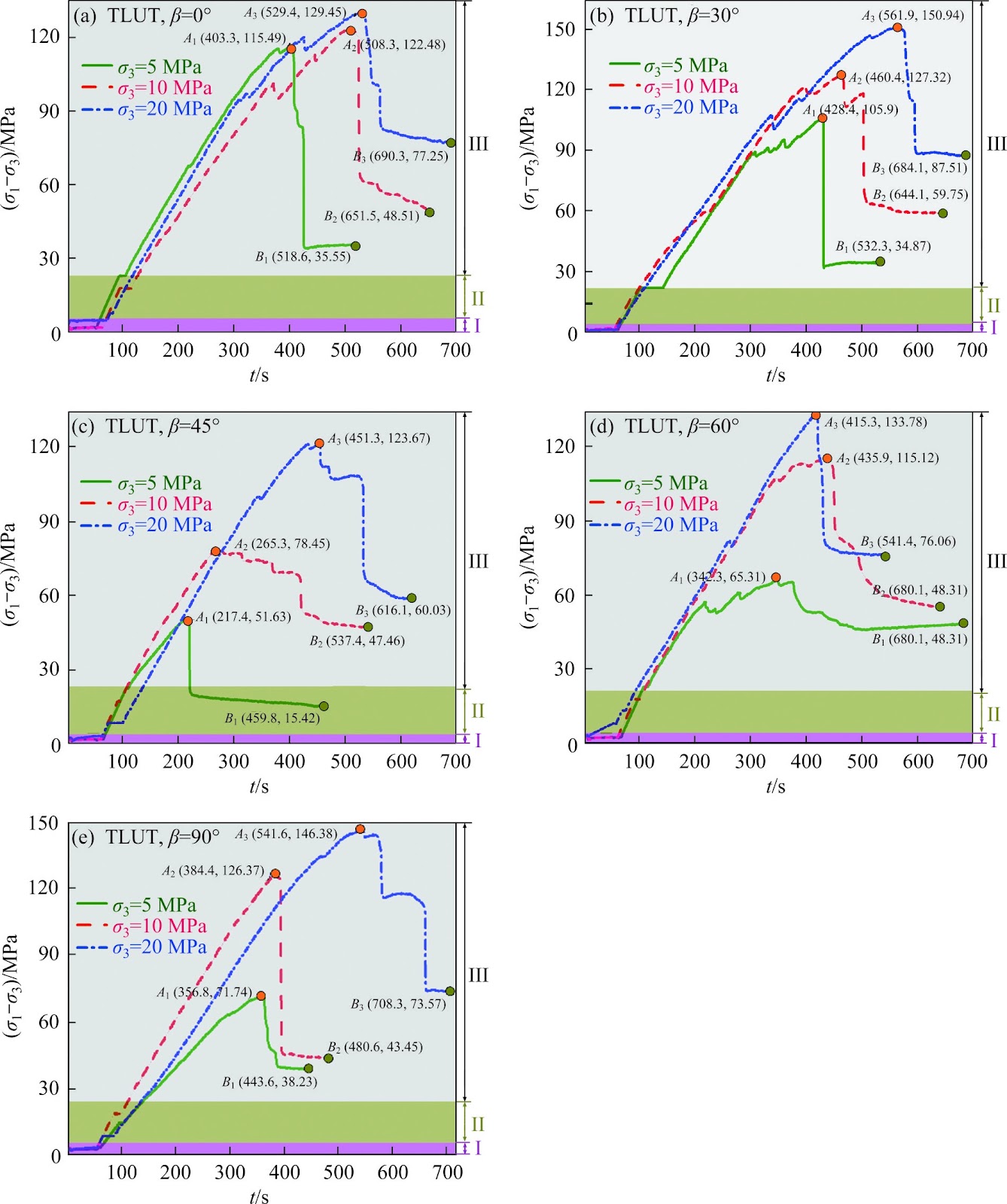
A cohesion loss model for determining residual strength of deep bedded sandstone
Rock residual strength, as an important input parameter, plays an indispensable role in proposing the reasonable and scientific scheme about stope design, underground tunnel excavation and stability evaluation of deep chambers. Therefore, previous residual strength models of rocks established were reviewed. And corresponding related problems were stated. Subsequently, starting from the effects of bedding and whole life-cycle evolution process, series of triaxial mechanical tests of deep bedded s
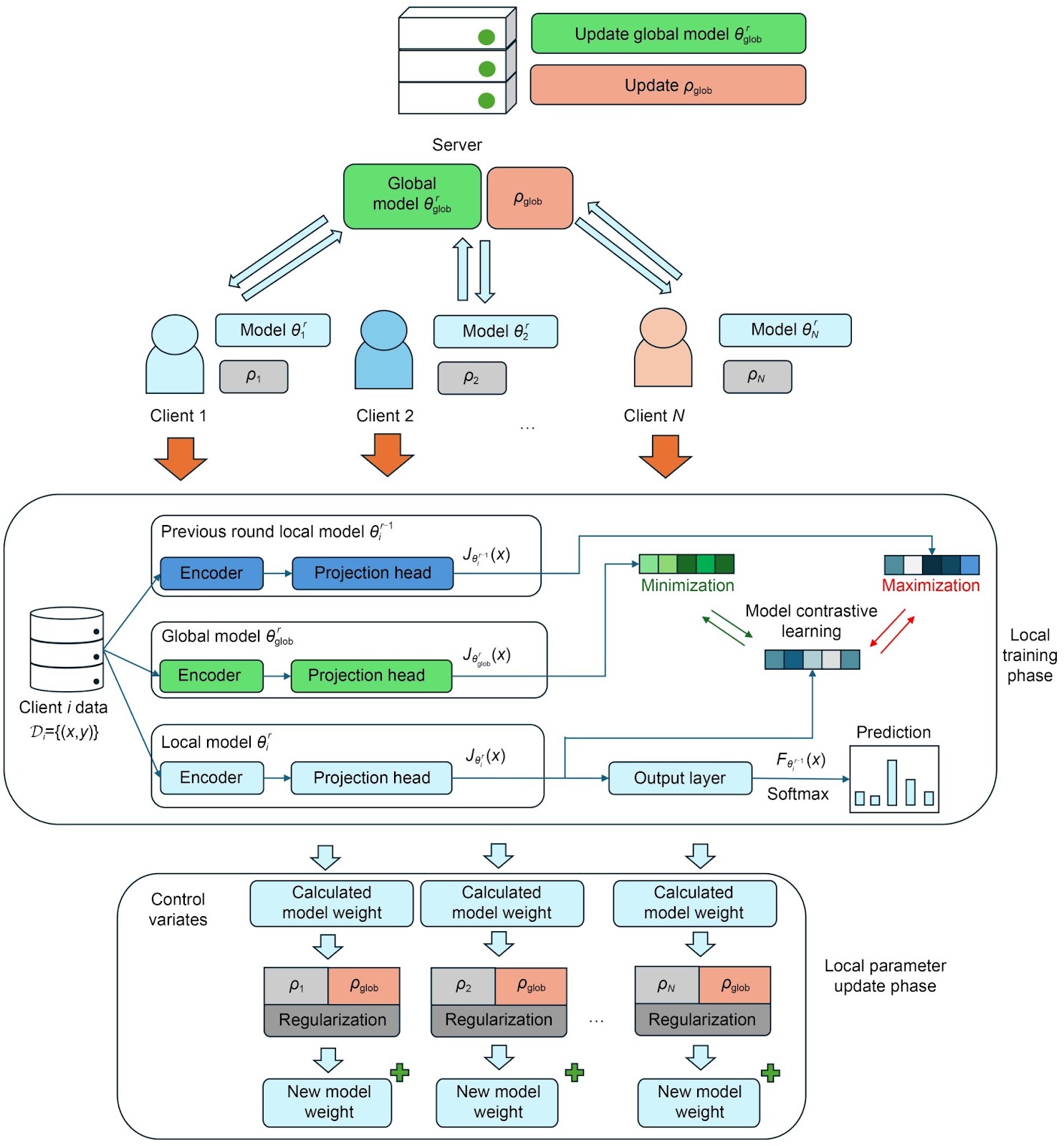
Federated model with contrastive learning and adaptive control variates for human activity recognition
Recent attention to privacy issues demands a communication-safe method for training human activity recognition (HAR) models on client activity data. Federated learning (FL) has become a compelling technique to facilitate model training between the server and clients while preserving data privacy. However, classical FL methods often assume independent and identically distributed (IID) data among clients. This assumption does not hold true in practical scenarios. Human activity in real-world scena