Key Takeaways & Executive Findings
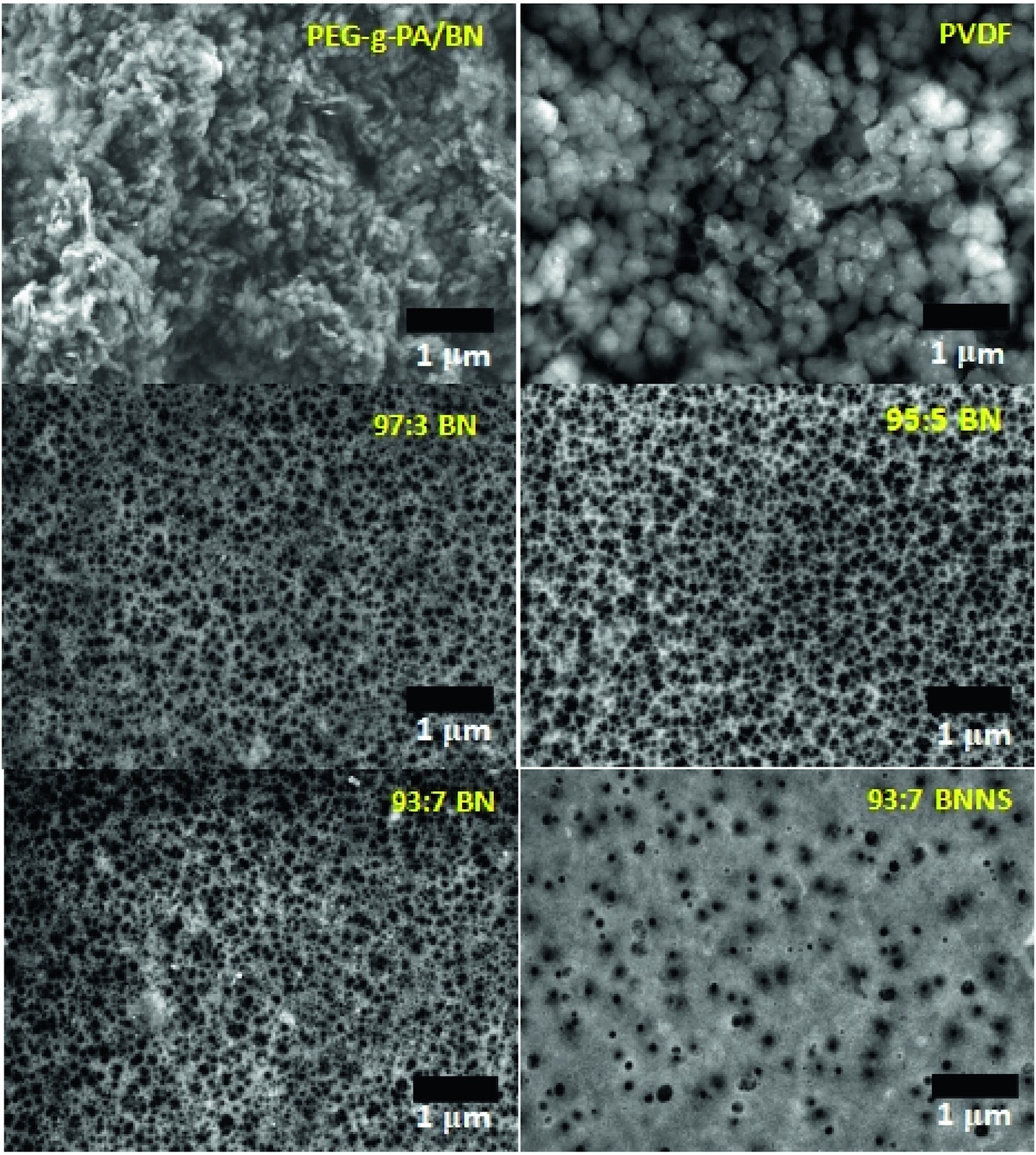
- •• Novel adsorptive membranes were fabricated by incorporating PEG-grafted phosphoric acid-modified boron nitride (PEG-g-PA/BN) into PVDF via melt blending and phase inversion, achieving enhanced arsenic removal. • The 93:7 BN membrane exhibited the highest arsenic adsorption capacity, attributed to complexation between arsenic ions and PA/BN within the PVDF matrix. • Increasing PEG-g-PA/BN content reduced water flux and porosity but improved anti-fouling resistance and solute rejection, balancing permeability and adsorption performance. • The study demonstrates a scalable method for producing functionalized boron nitride-based adsorptive membranes for efficient heavy metal removal in wastewater treatment.
Abstract
Incorporating nanomaterials into membranes will enhance wastewater treatment efficiency with their unique characteristics, such as higher permeability, thermal stability, surface roughness, hydrophilicity, and fouling control. In this study, the surface-modified boron nitride with phosphoric acid 2-hydroxyethyl methacrylate ester (PA/BN) was grafted with polyethylene glycol (PEG) via conventional grafting. The PEG grafted PA/BN (PEG-g-PA/BN) melt blended with polyvinylidene fluoride (PVDF) resin by using an internal mixer at different mass percentages (100% PVDF (PVDF), 3% PEG-g-PA/BN + 97% PVDF (97:3 BN), 5% PEG-g-PA/BN + 95% PVDF (95:5 BN), 7% PEG-g-PA/BN + 93% PVDF (93:7 BN), and 7% PEG-g-PA/BNNS + 93% PVDF (93:7 BNNS). Phase inversion technique was used to cast the blended mixture into a thin membrane. The prepared membranes were analyzed with different characterization techniques to determine chemical composition, crystallinity, morphology, and thermal properties. The prepared composite membrane was evaluated in terms of water permeability, anti-fouling resistance, and solute rejection efficiency with deionized water, bovine serum albumin, and arsenic solution as well. PVDF membranes show high water flux and porosity. The water flux and porosity of the blends decrease as the percentage of PEG-g-PA/BN increases. However, the highest removal capacity for arsenic was observed at 93:7 BN. The adsorption of arsenic ions takes place via complexation with PA/BN in the PVDF matrix. This was confirmed with field emission scanning electron microscopy-energy-dispersive X-ray analysis and X-ray photoelectron spectroscopy analyses.
1. Introduction
Membrane separation is widely used in industrial processes due to its simplicity, high performance, and sustainability. In recent years, membrane technology has drastically improved the efficiency of removing and filtering a wide range of pollutants, including organic matter and heavy metals [1]. Multiple membrane technologies including microfiltration, ultrafiltration, nanofiltration, and reverse osmosis are explicitly employed to remove heavy metals from aqueous solutions that exhibit different separation capabilities. Increasing numbers of studies have been reported on the efficiency of metal removal by preparation of adsorptive membrane via incorporation of adsorbents onto the membrane matrix [2,3]. The development of adsorptive membranes has received significant attention due to their low operating pressure, reusability, regeneration capability, high removal capacity, and flux [4].
An adsorption membrane combines both adsorption and filtration in a single step, which appears very promising. An adsorptive membrane performs both adsorption and filtration functions. In general, the membrane relies on an adsorption process that involves mass transfer by interacting with solid surfaces chemically and physically [5]. In essence, adsorption membrane has a greater affinity for ions and molecules which captures them via chelating or complexation. Typically, adsorptive membranes have pore sizes ranging from nanofiltration to microfiltration [6]. Polymer membranes are ideal for microfiltration, ultrafiltration, and nanofiltration due to their cost efficiency and simplicity. Unfortunately, polymer membranes exhibit poor affinity for metal ions and other organic pollutants. In order to achieve efficient adsorptive membranes, inorganic and organic adsorbent materials are purposefully incorporated into polymeric membranes [7]. However, inorganic materials are highly favorable as adsorbent materials due to its fast kinetic, high adsorptive capacity, and impressive physical properties. Therefore, incorporation of nanomaterials in adsorptive membranes has garnered enormous attention in recent years [8,9].
Loading authentic research manuscript (Pages 1–5)...
S. Selambakkannu, N.L. Ishak, N.M. Fauzi, N. Ismail, Z.A. Karim (2024). Preparation of an adsorptive membrane of polyvinylidene fluoride incorporated functionalized boron nitride nanosheets for arsenic removal. Chinese Journal of Chemical Engineering. https://doi.org/10.1016/j_cjche_1448
Research & Educational Purpose Only:The translations, structured abstracts, analytical annotations, and data reports provided by SinoTechIntel are intended exclusively for academic research, internal corporate R&D, and educational benchmarking. They do not constitute formal engineering, chemical safety, legal, or professional advice.
Copyright & Intellectual Property Notice: Original copyright of the underlying source articles and experimental data remains with the respective authors, institutions, and original publishing journals. SinoTechIntel claims intellectual property only over its proprietary translations, analytical syntheses, and AEO structured enhancements in accordance with international fair use and academic citation principles.
Frequently Asked Questions
What is the main objective of this study?
The main objective is to prepare an adsorptive membrane by incorporating functionalized boron nitride nanosheets into polyvinylidene fluoride (PVDF) for efficient arsenic removal from water.
How was the adsorptive membrane fabricated?
The membrane was fabricated by melt blending PEG-grafted phosphoric acid-modified boron nitride (PEG-g-PA/BN) with PVDF resin at various mass percentages, followed by phase inversion casting to form thin membranes.
What were the key findings regarding arsenic removal?
The membrane with 7% PEG-g-PA/BN (93:7 BN) exhibited the highest arsenic removal capacity, attributed to complexation between arsenic ions and the PA/BN functional groups within the PVDF matrix.
How did the addition of PEG-g-PA/BN affect membrane properties?
Increasing PEG-g-PA/BN content decreased water flux and porosity but improved anti-fouling resistance and solute rejection, indicating a trade-off between permeability and adsorption performance.
What characterization techniques were used to analyze the membranes?
The membranes were characterized using techniques such as field emission scanning electron microscopy-energy-dispersive X-ray analysis (FESEM-EDX) and X-ray photoelectron spectroscopy (XPS) to confirm chemical composition and arsenic adsorption mechanism.
Related Technical Papers & Translations
Design and optimization of a high-efficiency distillation process for cellulosic fuel ethanol integrated with thermal coupling and molecular sieve adsorption
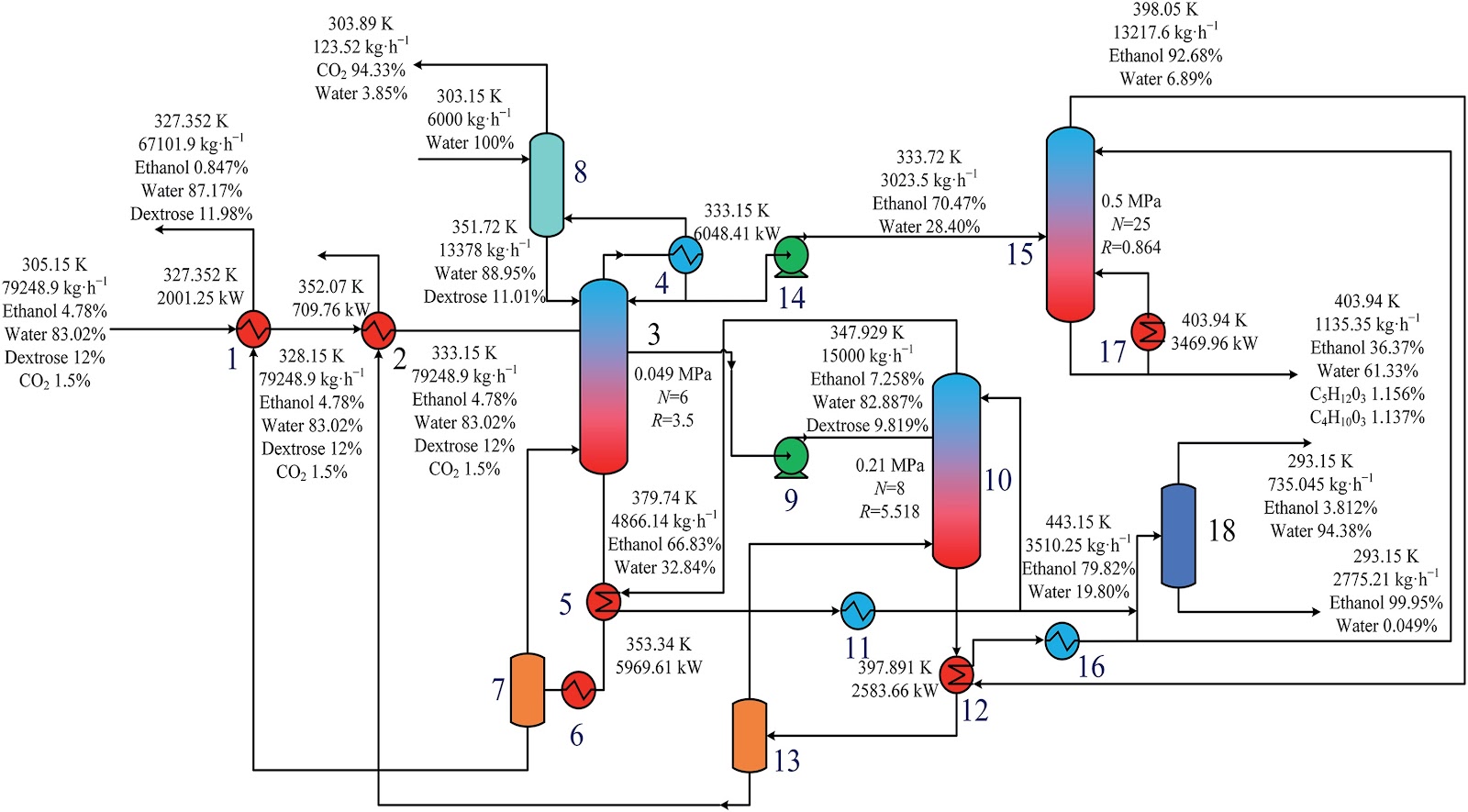
To address the challenges of high energy consumption and prominent costs in the traditional three-columns distillation process for cellulosic fuel ethanol, a distillation—molecular sieve coupling separation process is proposed. This process integrates a three-column (crude distillation column, first distillation column, second distillation column) system with a 3A molecular sieve adsorption deep dehydration unit. A thermal coupling network is constructed via differential pressure design (steam from medium/high-pressure columns as mutual heat sources, reboiler liquid waste heat for feed preheating), and molecular sieve adsorption conditions are optimized. The study first performs a thermodynamic consistency test on the ethanol—water system, determines optimal non-random two-liquid (NRTL) model binary interaction parameters via experimental data regression for Aspen Plus simulation. Aiming at minimum total annual cost (TAC), Aspen Plus is used to optimize process parameters (theoretical tray number, feed location, reflux ratio, side-draw position, etc.). Economic analysis shows this process reduces CO2 emission costs by 27.56%, TAC by 15.58% (to 5.123 × 10⁶ USD·a-1), and increases ethanol purity to >99.6%, providing an effective solution for green, efficient separation.
A cohesion loss model for determining residual strength of deep bedded sandstone
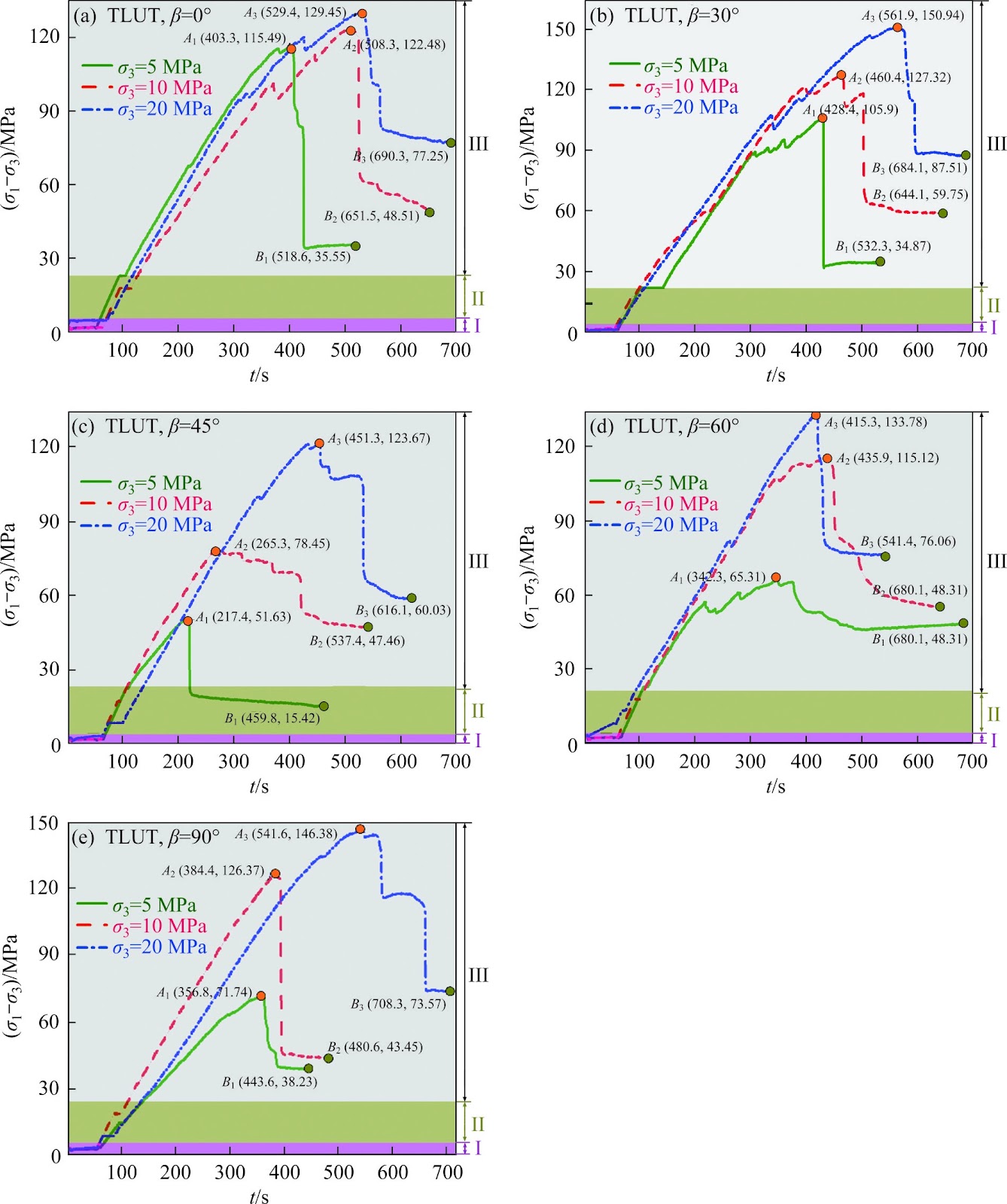
Rock residual strength, as an important input parameter, plays an indispensable role in proposing the reasonable and scientific scheme about stope design, underground tunnel excavation and stability evaluation of deep chambers. Therefore, previous residual strength models of rocks established were reviewed. And corresponding related problems were stated. Subsequently, starting from the effects of bedding and whole life-cycle evolution process, series of triaxial mechanical tests of deep bedded s
Federated model with contrastive learning and adaptive control variates for human activity recognition
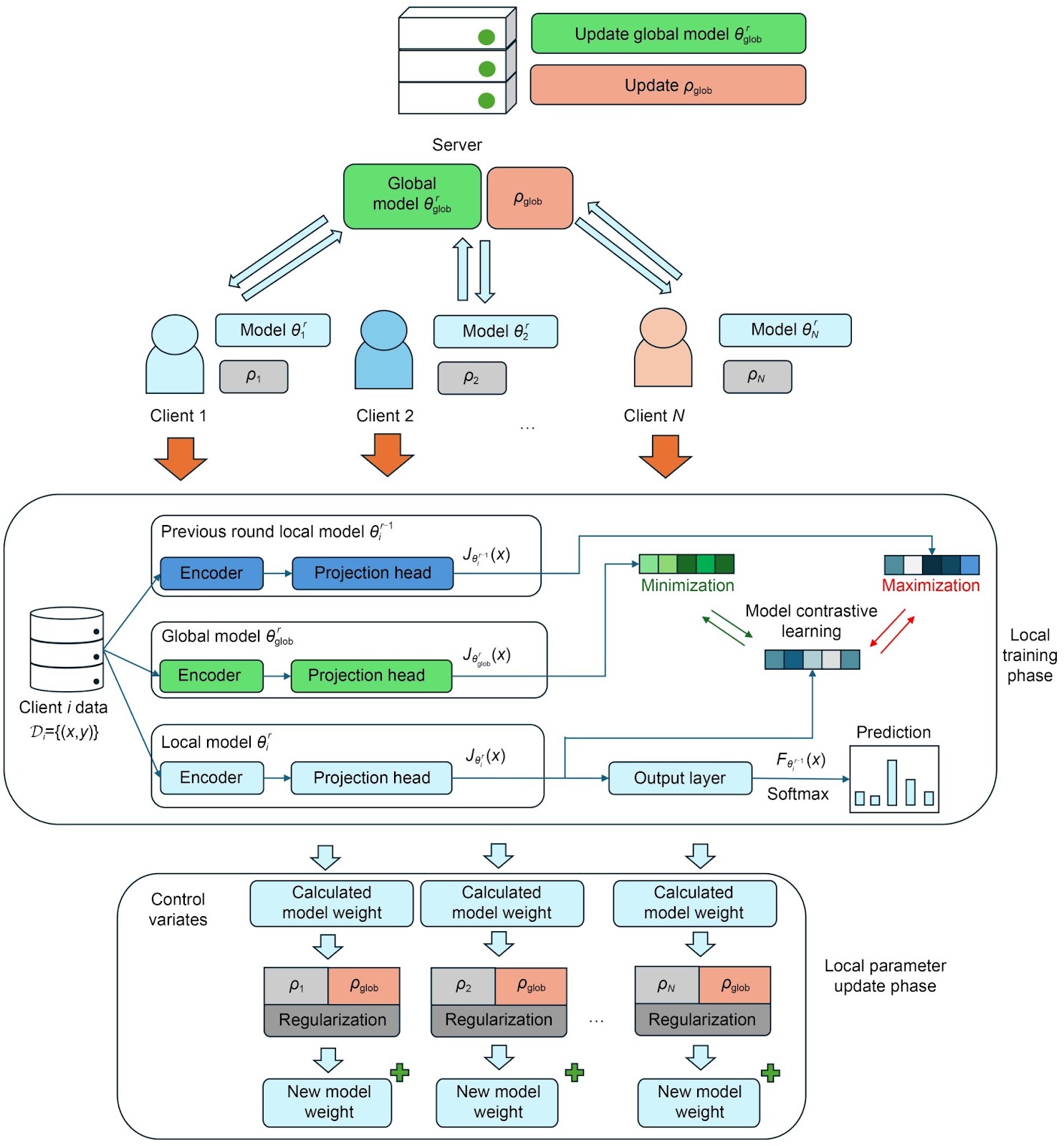
Recent attention to privacy issues demands a communication-safe method for training human activity recognition (HAR) models on client activity data. Federated learning (FL) has become a compelling technique to facilitate model training between the server and clients while preserving data privacy. However, classical FL methods often assume independent and identically distributed (IID) data among clients. This assumption does not hold true in practical scenarios. Human activity in real-world scena