Key Takeaways & Executive Findings
- •• The first wetting-drying cycle induces a substantial increase in pore volume and pore connectivity in mudstone, as revealed by micro-CT. • Porosity and fractal dimension across individual mudstone slices increase both in magnitude and fluctuation amplitude after the initial WD cycle. • Pore and pore-throat size distributions conform to Gaussian curves, with the smallest pores and throats showing the greatest relative increase. • WD transforms angular, flat pores into rounder and more regular shapes; sphericity is positively correlated with pore radius, providing insight into mudstone deterioration and failure mechanisms.
Abstract
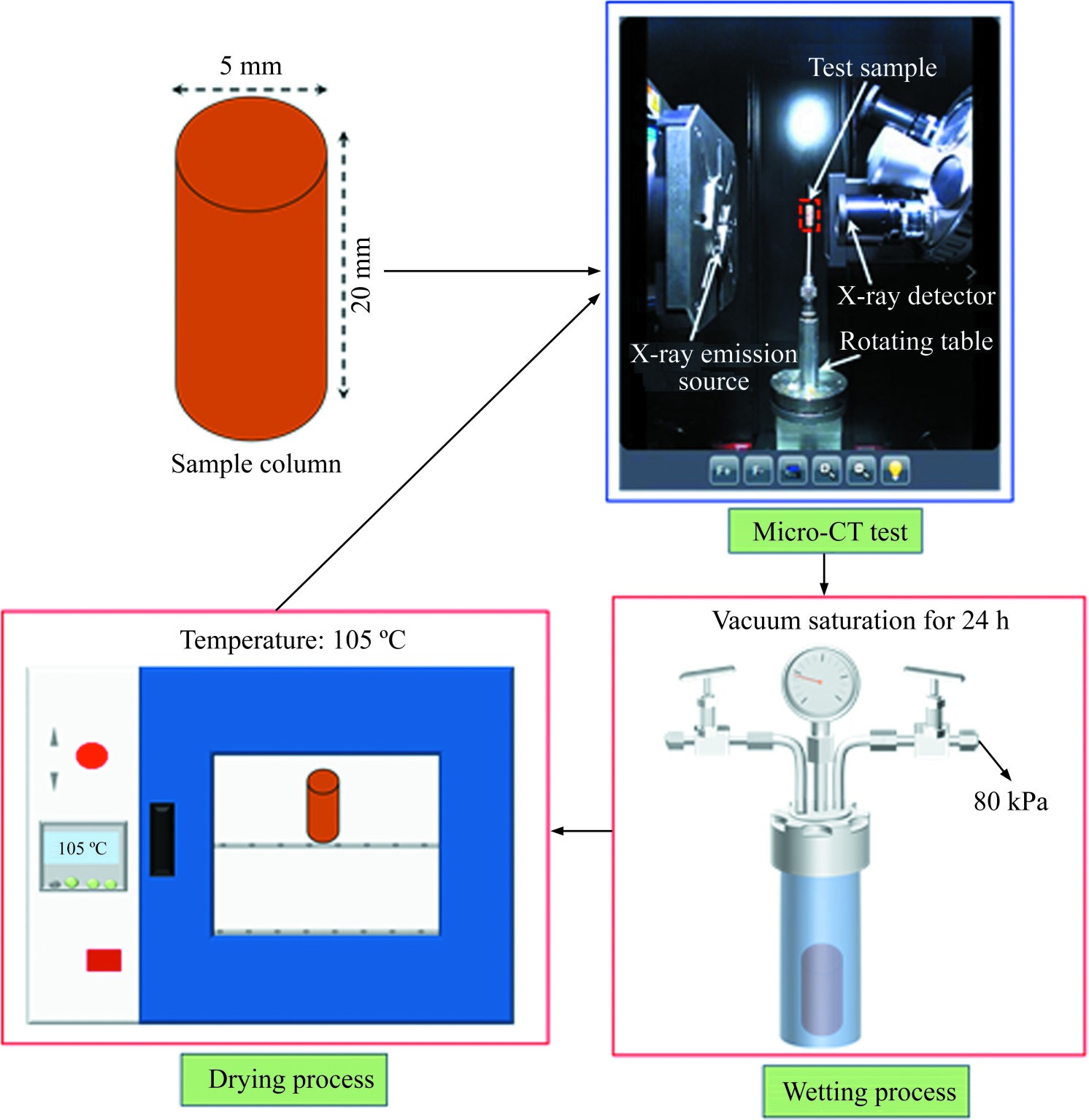
As a typical sedimentary soft rock, mudstone has the characteristics of being easily softened and disintegrated under the effect of wetting and drying (WD). The first cycle of WD plays an important role in the entire WD cycles. X-ray micro-computed tomography (micro-CT) was used as a non-destructive tool to quantitatively analyze microstructural changes of the mudstone due to the first cycle of WD. The test results show that WD leads to an increase of pore volume and pore connectivity in the mudstone. The porosity and fractal dimension of each slice of mudstone not only increase in value, but also in fluctuation amplitude. The pattern of variation in the frequency distribution of the equivalent radii of connected, isolated pores and pore throats in mudstone under WD effect satisfies the Gaussian distribution. Under the effect of WD, pores and pore throats with relatively small sizes increase the most. The sphericity of the pores in mudstones is positively correlated with the pore radius. The WD effect transforms the originally angular and flat pores into round and regular pores. This paper can provide a reference for the study of the deterioration and catastrophic mechanisms of mudstone under wetting and drying cycles.
1. Introduction
As a special sedimentary rock, mudstone is different from other rocks in its internal structure and mechanical properties. Because mudstone is rich in clay minerals, its strength is low. Especially when water enters into or escapes from mudstone, the strength will reduce greatly due to its swelling and disintegration [1]. Regionally distributed mudstone has already adverse effects on existing railways, roadbeds, slopes, tunnels, and engineering buildings [2, 3]. For mudstone slopes after excavation, the lack of vegetation cover makes them highly susceptible to WD effects. This leads to a cumulative deterioration of the physical and mechanical properties and ultimately to the occurrence of geological hazards such as landslides [4, 5].
It is well known that microstructure of rocks controls their macro-mechanical properties to a large extent. The study of the changes in the microstructure of typical mudstone under WD effect is therefore the basis of research for an in-depth analysis of the mechanism of landslide and catastrophic processes in mudstone slopes at the macroscopic scale. The WD cycle has been proven to have a significant impact on the pore structure and cracking behavior of granite residual soil and clay [6, 7]. The influence of WD on the macroscopic structure and mechanical properties of mudstone has been widely studied, but the understanding of microscopic pore changes still needs to be further deepened. As a typical soft rock, mudstone has poor resistance to wetting and drying. The proportion of changes in physical parameters of the mudstone in this process to the entire WD cycles can even reach 60%. Numerous studies have also shown that mudstone undergoes rapid deterioration and damage during the initial wet and dry cycles, and then the deterioration trend tends to stabilize [8]. ZHANG et al [9] found that mudstones tend to have a large amount of water-sensitive material in them, and that when the mudstones become saturated, the bonding between the clay particles is broken, leading to a rapid decrease in cohesion. Therefore, a systematic analysis of the microstructure of mudstone under the first WD cycle is of great significance in describing the entire deterioration process and mechanism of mudstone. It can be concluded that the degradation of mudstone under wet and dry cycles mainly occurred in the first WD cycle [8−13].
To date, a range of methods has been used to analyze the internal pore characteristics of non-homogeneous, easily hydrated materials such as mudstones or soils, including scanning electron microscopy (SEM), polarized light microscopy, and mercury intrusion porosimetry (MIP) [14, 15]. However, the process of visually analyzing the water-softening process of mudstone from a mesoscopic perspective needs to be further explored.
Loading authentic research manuscript (Pages 1–5)...
Zhang Qing-song, Liu Zhi-bin, Tang Ya-sen, Deng Yong-feng, Luo Ting-yi, Meng Fan-xing (2025). Pore structure variation characteristics of a Chinese local mudstone before and after the first cycle of wetting and drying. Journal of Central South University. https://doi.org/10.1007/s11771-025-5873-y
Research & Educational Purpose Only:The translations, structured abstracts, analytical annotations, and data reports provided by SinoTechIntel are intended exclusively for academic research, internal corporate R&D, and educational benchmarking. They do not constitute formal engineering, chemical safety, legal, or professional advice.
Copyright & Intellectual Property Notice: Original copyright of the underlying source articles and experimental data remains with the respective authors, institutions, and original publishing journals. SinoTechIntel claims intellectual property only over its proprietary translations, analytical syntheses, and AEO structured enhancements in accordance with international fair use and academic citation principles.
Frequently Asked Questions
What is the main purpose of this study?
The main purpose is to quantitatively analyze the microstructural changes of Chinese local mudstone before and after the first wetting-drying cycle using X-ray micro-computed tomography (micro-CT), focusing on pore structure and pore morphology.
Why is the first wetting-drying cycle particularly important for mudstone?
The first wetting-drying cycle accounts for a large proportion of the physical parameter changes and can reach up to 60% of the total deterioration. Mudstone undergoes rapid damage during the initial cycle, after which the deterioration trend tends to stabilize.
What methods were used to characterize the pore structure?
The study used X-ray micro-computed tomography (micro-CT), a non-destructive technique, to analyze pore volume, connectivity, porosity, fractal dimension, equivalent pore radius distributions, and pore sphericity before and after the first wetting-drying cycle.
How does wetting-drying affect the pore size distribution in mudstone?
Wetting-drying increases pore volume and connectivity. The frequency distributions of equivalent radii for connected pores, isolated pores, and pore throats follow a Gaussian distribution, with relatively small pores and pore throats showing the greatest increase. The pores also become rounder and more regular.
What is the engineering significance of this research?
Understanding the microstructural deterioration of mudstone under the first wetting-drying cycle provides a scientific basis for evaluating the long-term stability of mudstone slopes, roadbeds, and other engineering structures, and supports the analysis of landslide and catastrophic mechanisms.
Related Technical Papers & Translations
Design and optimization of a high-efficiency distillation process for cellulosic fuel ethanol integrated with thermal coupling and molecular sieve adsorption
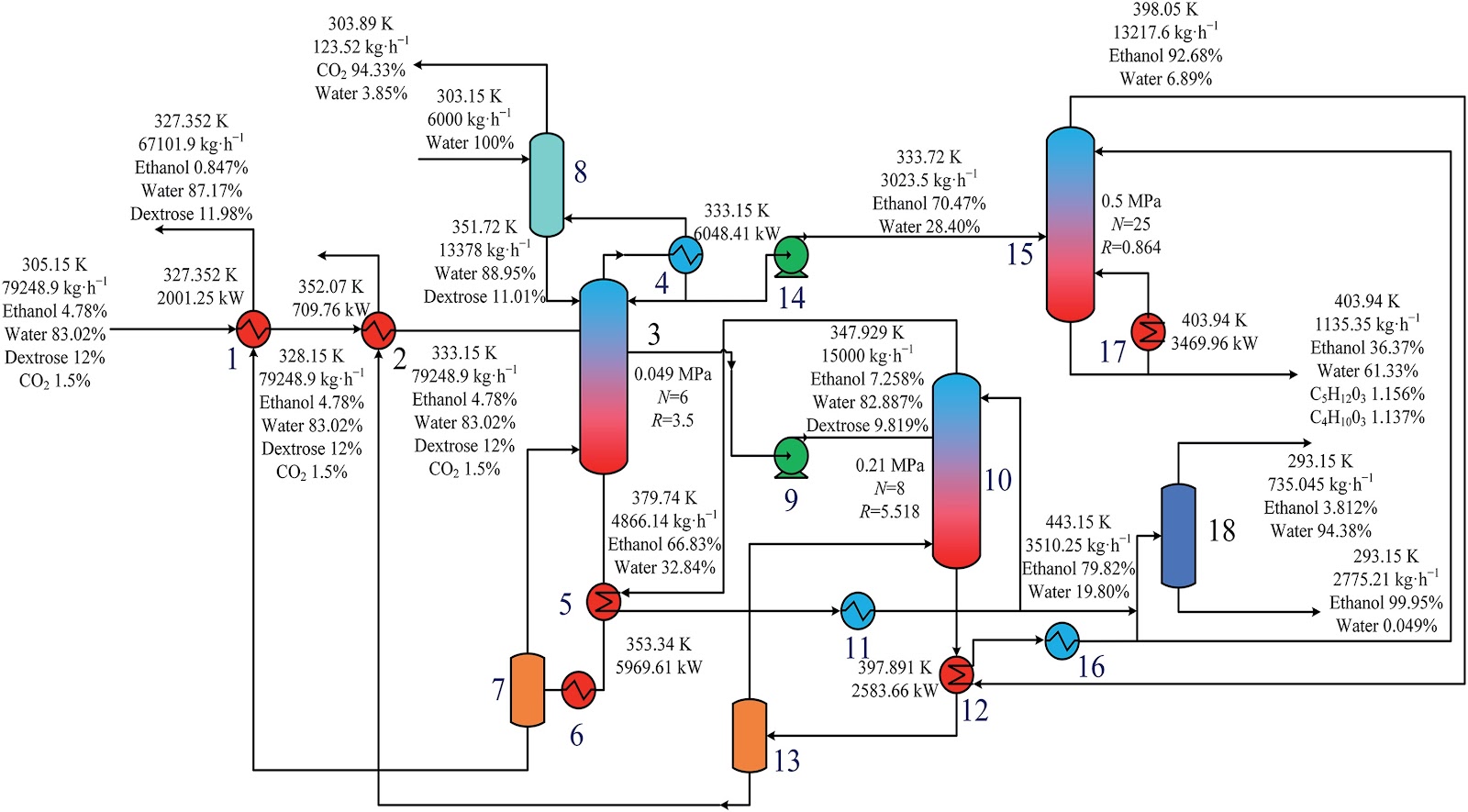
To address the challenges of high energy consumption and prominent costs in the traditional three-columns distillation process for cellulosic fuel ethanol, a distillation—molecular sieve coupling separation process is proposed. This process integrates a three-column (crude distillation column, first distillation column, second distillation column) system with a 3A molecular sieve adsorption deep dehydration unit. A thermal coupling network is constructed via differential pressure design (steam from medium/high-pressure columns as mutual heat sources, reboiler liquid waste heat for feed preheating), and molecular sieve adsorption conditions are optimized. The study first performs a thermodynamic consistency test on the ethanol—water system, determines optimal non-random two-liquid (NRTL) model binary interaction parameters via experimental data regression for Aspen Plus simulation. Aiming at minimum total annual cost (TAC), Aspen Plus is used to optimize process parameters (theoretical tray number, feed location, reflux ratio, side-draw position, etc.). Economic analysis shows this process reduces CO2 emission costs by 27.56%, TAC by 15.58% (to 5.123 × 10⁶ USD·a-1), and increases ethanol purity to >99.6%, providing an effective solution for green, efficient separation.
A cohesion loss model for determining residual strength of deep bedded sandstone
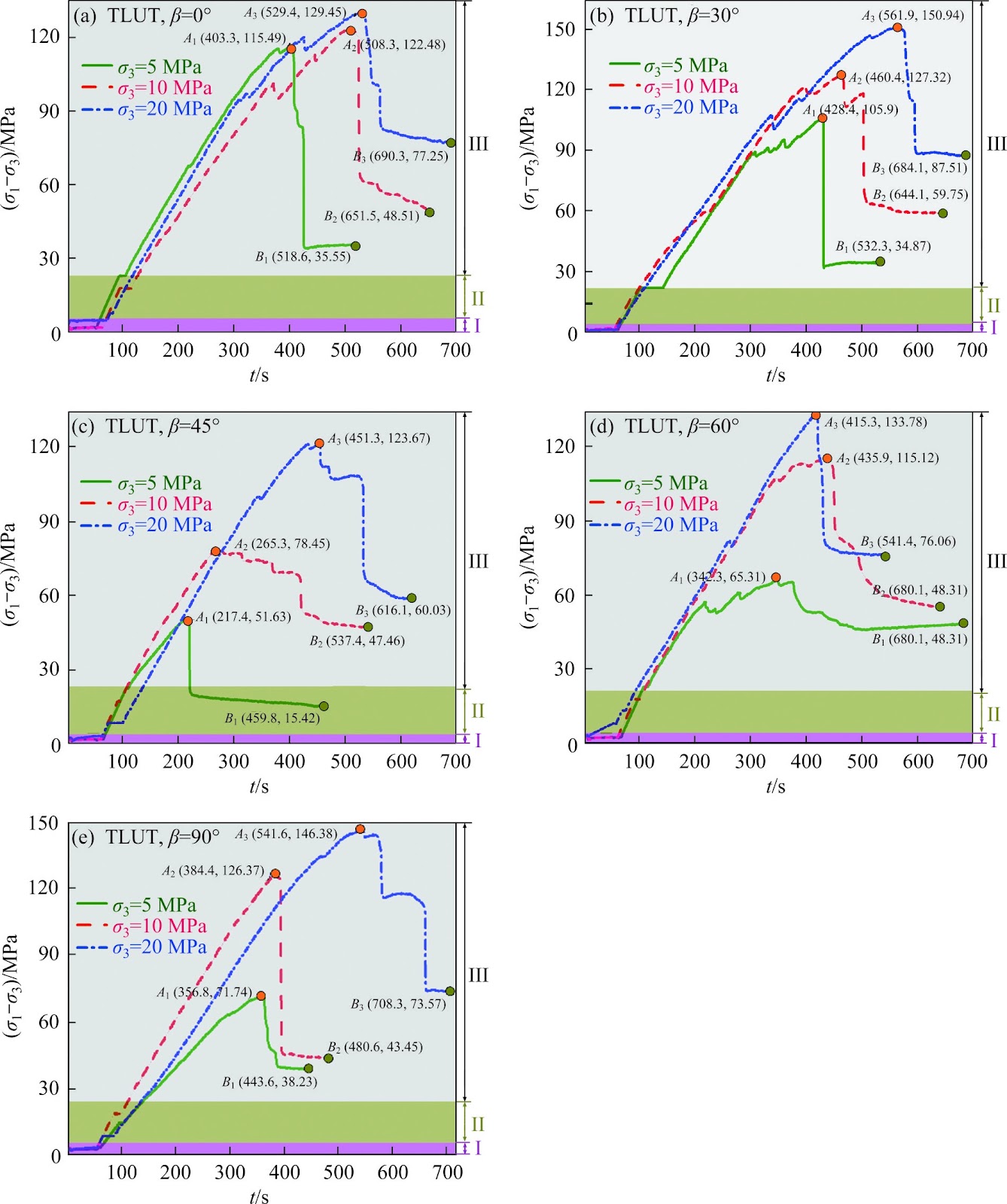
Rock residual strength, as an important input parameter, plays an indispensable role in proposing the reasonable and scientific scheme about stope design, underground tunnel excavation and stability evaluation of deep chambers. Therefore, previous residual strength models of rocks established were reviewed. And corresponding related problems were stated. Subsequently, starting from the effects of bedding and whole life-cycle evolution process, series of triaxial mechanical tests of deep bedded s
Federated model with contrastive learning and adaptive control variates for human activity recognition
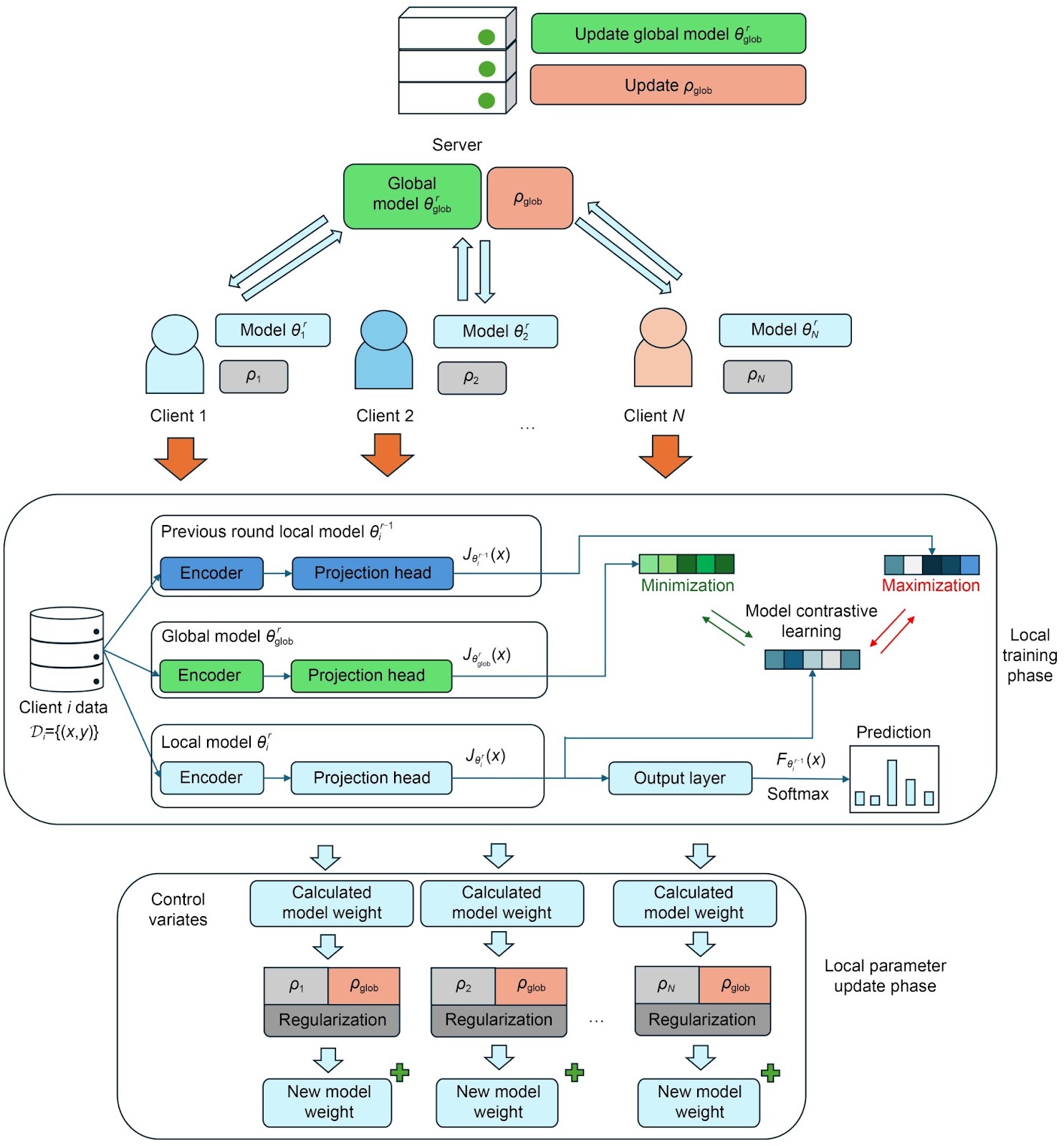
Recent attention to privacy issues demands a communication-safe method for training human activity recognition (HAR) models on client activity data. Federated learning (FL) has become a compelling technique to facilitate model training between the server and clients while preserving data privacy. However, classical FL methods often assume independent and identically distributed (IID) data among clients. This assumption does not hold true in practical scenarios. Human activity in real-world scena