Key Takeaways & Executive Findings
- •• FeOOH/Fe3O4/MOF polygonal mesopores microflower catalyst synthesized via room-temperature templating from MIL-88B(Fe) exhibits high catalytic activity for NMST oxidation to NMSBA using oxygen as a clean oxidant. • The continuous-flow microreactor system significantly accelerates reaction rate, shortens reaction time, and enhances selectivity compared to traditional batch reactors. • The sustainable protocol uses an inexpensive and environmentally friendly NaOH/methanol mixture, enabling gram-scale preparation of carboxylic acid and benzyl alcohol derivatives with high chemoselectivities. • The approach offers a green alternative to conventional strong oxidants, reducing environmental pollution and holding potential for industrial applications.
Abstract
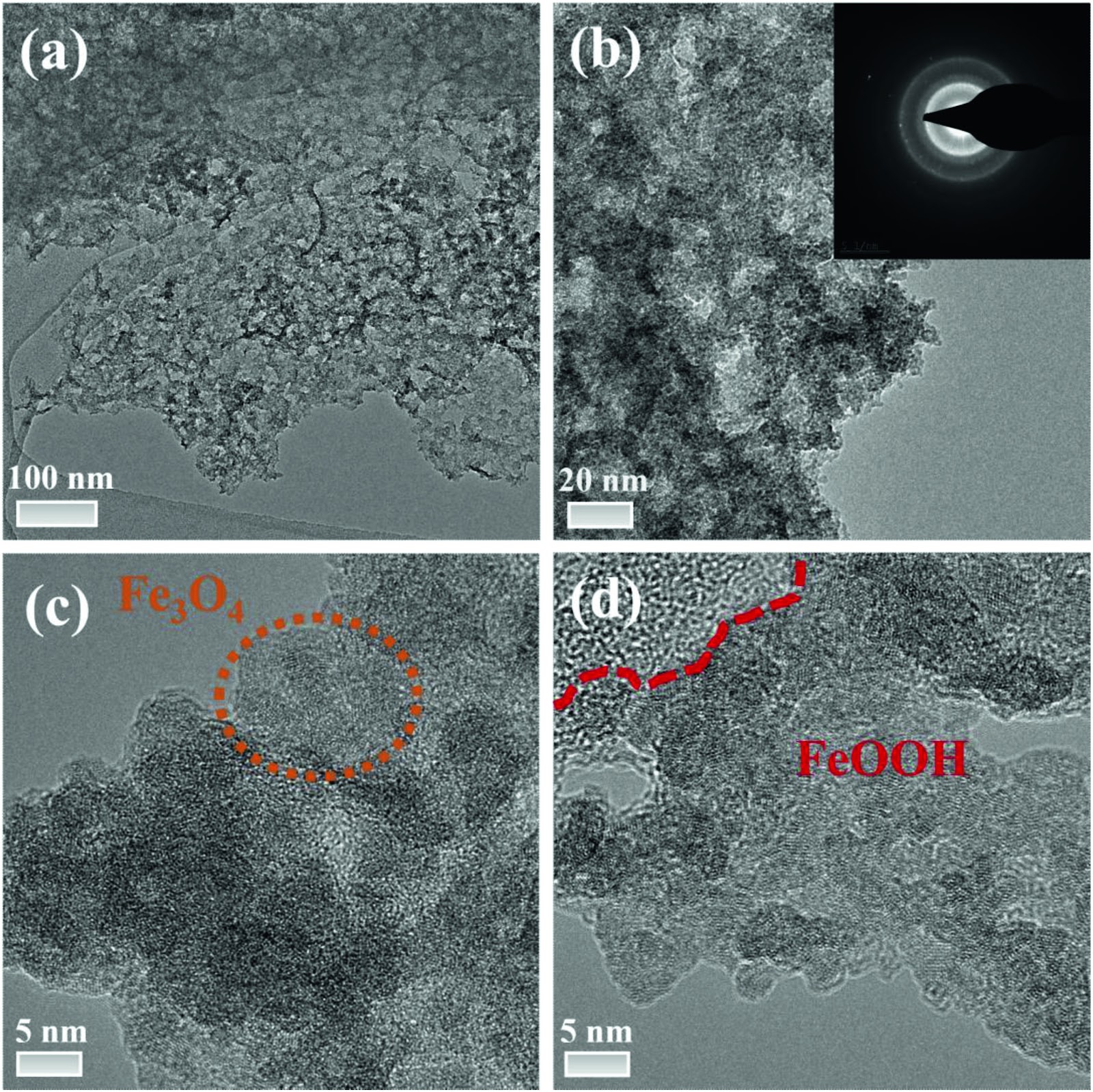
The development of efficient systems for the catalytic oxidation of 2-nitro-4-methylsulfonyltoluene (NMST) to 2-nitro-4-methylsulfonyl benzoic acid (NMSBA) with atmospheric air or molecular oxygen in alkaline medium presents a significant challenge for the chemical industry. Here, we report the synthesis of FeOOH/Fe3O4/metaleorganic framework (MOF) polygonal mesopores microflower templated from a MIL-88B(Fe) at room temperature, which exposes polygonal mesopores with atomistic edge steps and lattice defects. The obtained FeOOH/Fe3O4/MOF catalyst was adsorbed onto glass beads and then introduced into the microchannel reactor. In the alkaline environment, oxygen was used as oxidant to catalyze the oxidation of NMST to NMSBA, showing impressive performance. This sustainable system utilizes oxygen as a clean oxidant in an inexpensive and environmentally friendly NaOH/methanol mixture. The position and type of substituent critically affect the products. Additionally, this sustainable protocol enabled gram-scale preparation of carboxylic acid and benzyl alcohol derivatives with high chemoselectivities. Finally, the reactions can be conducted in a pressure reactor, which can conserve oxygen and prevent solvent loss. Moreover, compared with the traditional batch reactor, the self-built microchannel reactor can accelerate the reaction rate, shorten the reaction time, and enhance the selectivity of catalytic oxidation reactions. This approach contributes to environmental protection and holds potential for industrial applications.
1. Introduction
With the expansion of the global corn planting area, the market demand for herbicides in corn fields has increased rapidly. Mesotrione, also known as 2-(4-mesyl-2-nitrobenzoyl)-1,3-cyclohexanedione (NTBC), is recognized as a broad-spectrum, high-efficiency, low-toxicity, and environmentally friendly herbicide for corn fields, developed through the modification of sulcotrione [1]. Notably, NTBC has demonstrated outstanding biological activity, approximately 10 times higher than sulcotrione [2]. 2-Nitro-4-methylsulfonyl benzoic acid (NMSBA) serves as a crucial intermediate in the synthesis of dyes, medicines, and pesticides, particularly NTBC [3]. Conventionally, NMSBA is derived from the oxidation of 2-nitro-4-methylsulfonyltoluene (NMST) [4]. However, due to the presence of two potent electron-withdrawing substituents (NO2 and SO2CH3) on the benzene ring of NMST, the methyl on the aromatic ring is rather difficult to oxidize NMST to NMSBA except by strong oxidants. Previous studies reported that concentrated nitric acid and concentrated sulfuric acid were used as oxidants for the reaction [5]. This method will produce a large amount of NOx or sulfide and has the characteristics of a violent reaction and many by-products [6]. Notably, nitric acid and sulfuric acid not only corrode equipment but also pollute the environment [7]. Therefore, it is urgent to develop a green technology to replace the strong oxidation technology for the transformation of NMST to NMSBA under a mild environment.
Traditionally, various oxidants such as H2O2 [8], potassium permanganate [9], sodium hypochlorite [10], or organic peroxides [11] are necessary for effective conversion. However, these oxidants are relatively costly and generate significant waste. Compared with those oxidants, the oxidation of NMST to NMSBA with oxygen as the oxidant is a promising and green process and provides environmental protection, with the only byproduct of H2O. Nonetheless, the reported activity of the catalyst in this process remains relatively low, underscoring the critical importance of developing an efficient catalyst system [5,12]. Metal–organic frameworks (MOFs) are a new type of hybrid inorganic–organic microporous crystalline material composed of metal ions and organic ligands. Due to its unique characteristics and functions, it has been widely used in many fields such as catalytic o
Loading authentic research manuscript (Pages 1–5)...
Jianzhi Wang, Xugen Li, Cheng Zhang, Yuan Pu, Jiawu Liu, Jie Liu, Yanping Liu, Xiao Lin, Faquan Yu (2024). Polygonal mesopores microflower catalysts for the catalytic oxidation of 2-nitro-4-methylsulfonyltoluene to 2-nitro-4-methylsulfonylbenzoic acid in a continuous-flow microreactor. Chinese Journal of Chemical Engineering. https://doi.org/10.1016/j_cjche_1448
Research & Educational Purpose Only:The translations, structured abstracts, analytical annotations, and data reports provided by SinoTechIntel are intended exclusively for academic research, internal corporate R&D, and educational benchmarking. They do not constitute formal engineering, chemical safety, legal, or professional advice.
Copyright & Intellectual Property Notice: Original copyright of the underlying source articles and experimental data remains with the respective authors, institutions, and original publishing journals. SinoTechIntel claims intellectual property only over its proprietary translations, analytical syntheses, and AEO structured enhancements in accordance with international fair use and academic citation principles.
Frequently Asked Questions
What is the main contribution of this paper?
The paper presents a novel FeOOH/Fe3O4/MOF polygonal mesopores microflower catalyst for the efficient catalytic oxidation of 2-nitro-4-methylsulfonyltoluene to 2-nitro-4-methylsulfonylbenzoic acid using oxygen as a clean oxidant in a continuous-flow microreactor, offering a green and sustainable alternative to traditional strong oxidants.
How does the continuous-flow microreactor improve the reaction compared to batch reactors?
The self-built microchannel reactor accelerates the reaction rate, shortens the reaction time, and enhances the selectivity of catalytic oxidation reactions compared to traditional batch reactors, as demonstrated in the study.
What is the significance of using oxygen as an oxidant?
Using oxygen as an oxidant is environmentally friendly because it produces only water as a byproduct, avoiding the hazardous waste and corrosion issues associated with strong oxidants like nitric acid and sulfuric acid.
What are the key features of the FeOOH/Fe3O4/MOF catalyst?
The catalyst is synthesized at room temperature via templating from MIL-88B(Fe) and features polygonal mesopores with atomistic edge steps and lattice defects, which contribute to its high catalytic activity.
What are the potential industrial applications of this work?
The sustainable protocol enables gram-scale preparation of carboxylic acid and benzyl alcohol derivatives with high chemoselectivities, and the use of a pressure reactor conserves oxygen and prevents solvent loss, making it promising for industrial applications in the synthesis of herbicides and pharmaceuticals.
Related Technical Papers & Translations

Design and optimization of a high-efficiency distillation process for cellulosic fuel ethanol integrated with thermal coupling and molecular sieve adsorption
To address the challenges of high energy consumption and prominent costs in the traditional three-columns distillation process for cellulosic fuel ethanol, a distillation—molecular sieve coupling separation process is proposed. This process integrates a three-column (crude distillation column, first distillation column, second distillation column) system with a 3A molecular sieve adsorption deep dehydration unit. A thermal coupling network is constructed via differential pressure design (steam from medium/high-pressure columns as mutual heat sources, reboiler liquid waste heat for feed preheating), and molecular sieve adsorption conditions are optimized. The study first performs a thermodynamic consistency test on the ethanol—water system, determines optimal non-random two-liquid (NRTL) model binary interaction parameters via experimental data regression for Aspen Plus simulation. Aiming at minimum total annual cost (TAC), Aspen Plus is used to optimize process parameters (theoretical tray number, feed location, reflux ratio, side-draw position, etc.). Economic analysis shows this process reduces CO2 emission costs by 27.56%, TAC by 15.58% (to 5.123 × 10⁶ USD·a-1), and increases ethanol purity to >99.6%, providing an effective solution for green, efficient separation.

A cohesion loss model for determining residual strength of deep bedded sandstone
Rock residual strength, as an important input parameter, plays an indispensable role in proposing the reasonable and scientific scheme about stope design, underground tunnel excavation and stability evaluation of deep chambers. Therefore, previous residual strength models of rocks established were reviewed. And corresponding related problems were stated. Subsequently, starting from the effects of bedding and whole life-cycle evolution process, series of triaxial mechanical tests of deep bedded s

Federated model with contrastive learning and adaptive control variates for human activity recognition
Recent attention to privacy issues demands a communication-safe method for training human activity recognition (HAR) models on client activity data. Federated learning (FL) has become a compelling technique to facilitate model training between the server and clients while preserving data privacy. However, classical FL methods often assume independent and identically distributed (IID) data among clients. This assumption does not hold true in practical scenarios. Human activity in real-world scena