Key Takeaways & Executive Findings
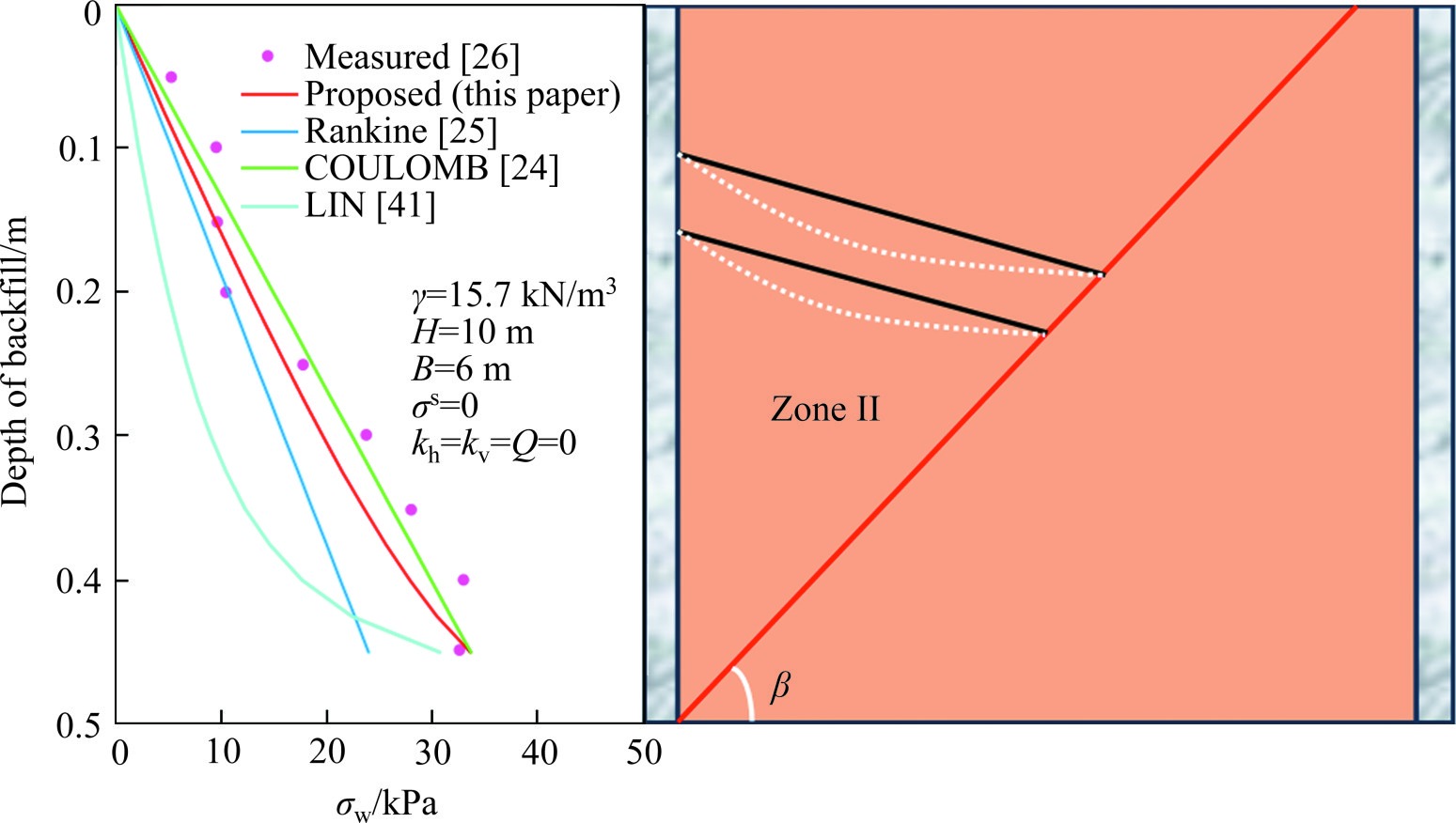
- •• A novel calculation method is proposed for seismic passive earth pressure in unsaturated narrow backfill, integrating inclined thin-layer units, interlayer shear stress, arching effect, and multi-field coupling. • Increasing the aspect ratio, seismic acceleration coefficient, or unsaturation parameter α significantly reduces the earthquake passive ground pressure of narrow backfill. • Decreasing the effective internal friction angle, soil cohesion, wall-earth friction angle, or vertical discharge also reduces the passive pressure. • Parametric sensitivity analysis identifies key factors controlling the passive thrust action point, aiding seismic design of retaining structures near existing buildings.
Abstract
Narrow backfill earth pressure estimation is applied to study the stability of supporting structures in the vicinity of existing buildings. Previous narrow backfill earth pressure studies have neglected seismic-unsaturated seepage multi-field coupling, resulting in inaccurate estimates. To address these deficiencies, this paper proposed a calculation method for seismic passive earth pressure in unsaturated narrow backfill, based on inclined thin-layer units. It considers the interlayer shear stress, arching effect, and the multi-field coupling of seismic-unsaturated seepage. Additionally, this paper includes a parametric sensitivity analysis. The outcomes indicate that the earthquake passive ground pressure of unsaturated narrow backfill can be reduced by increasing the aspect ratio, seismic acceleration coefficient, and unsaturation parameter α. It can also be reduced by decreasing the effective interior friction angle, soil cohesion, wall-earth friction angle, and vertical discharge. Furthermore, for any width soil, lowering the elevation of the action point of passive thrust can be attained by raising the effective interior friction angle, wall-earth friction angle, and unsaturation parameter α. Reducing soil cohesion, seismic acceleration coefficient, and vertical discharge can also lower the height of the application point of passive thrust.
1. Introduction
Unsaturated seepage caused by rainfall will increase the matrix suction of soil mass, leading to slope instability [1, 2]. Presently, there are two major theories to discuss the implication of matric suction on the shearing strength of unsaturated soil. One is the Mohr-Coulomb modification form proposed by FREDLUND et al [3] based on the two stress state variables of effective normal stress and matrix suction. The Mohr-Coulomb strength criterion for three-dimensional damage surfaces can be plotted based on the above two stress variables. Another model is the generalized form of the efficient pressure equations proposed by BISHOP et al [4, 5]. The distinction between the two lies in their treatment of matrix suction when assessing shear strength. The former method incorporates the efficient stress parameter χ to quantify the influence of suction stress, while the latter method incorporates the suction angle φb to account for the effect of substrate suction. However, the use of the efficient pressure factor χ only corrects for the magnitude of substrate suction without clear physical meaning [6]. To address the aforementioned theoretical shortcomings, LU et al [7] directly introduced suction stress into effective stress and proposed an efficient pressure approach built on stress-absorption. This approach does not need to draw shearing strength standards and additional factors, thereby simplifying the calculations. In addition, LU et al [8] also introduced apparent cohesion to represent the variation of absorption stress. The aforementioned studies on unsaturated earth pressure described the effect of matrix suction systematically, but most of them ignored the effect of earthquakes [9−11].
Seismic hazards seriously threaten the safety of structures and cause destabilizing damage [12]. Ensuring the normal functionality of bridges, retaining walls, and other structures under seismic conditions is a complex challenge that needs to be addressed. Until now, the most popular and simple analysis framework for assessing the earthquake passive soil pressure has seemed to be the Mononobe-Okabe method [13]. In the past few years, researchers have proposed limit equilibrium solutions for soil resistance under seismic conditions [14, 15]. The above static assumptions are easier to implement, but they do not consider arching effects and dynamic time history properties and have limited applicability to rough wall backs [16]. Therefore, the pseudo-dynamic solution has been proposed to solve the simplified seismic force problem, taking into account the characteristics of the time history, vibration period, and amplification effects [17, 18]. This method assumes that the horizontal and vertical earthquake accelerations satisfy certain functional relationships with time and depth, which is applicable to the earthquake resistant design of retaining walls [19, 20]. However, the pseudo-dynamic approach also has shortcomings. For instance, seismic waves cannot meet the requirements of zero shear stress on the surface; the influence of material damping on seismic force is neglected [21, 22].
Loading authentic research manuscript (Pages 1–5)...
WANG Ze-yue, LIN Hang (2025). Passive earth pressure of narrow backfill considering seismic-unsaturated seepage multi-field coupling effect. Journal of Central South University. https://doi.org/10.1007/s11771-025-5867-9
Research & Educational Purpose Only:The translations, structured abstracts, analytical annotations, and data reports provided by SinoTechIntel are intended exclusively for academic research, internal corporate R&D, and educational benchmarking. They do not constitute formal engineering, chemical safety, legal, or professional advice.
Copyright & Intellectual Property Notice: Original copyright of the underlying source articles and experimental data remains with the respective authors, institutions, and original publishing journals. SinoTechIntel claims intellectual property only over its proprietary translations, analytical syntheses, and AEO structured enhancements in accordance with international fair use and academic citation principles.
Frequently Asked Questions
What is the main contribution of this study?
The paper proposes a calculation method for seismic passive earth pressure in unsaturated narrow backfill, incorporating interlayer shear stress, arching effect, and multi-field coupling of seismic and unsaturated seepage, along with a parametric sensitivity analysis.
How does the aspect ratio affect passive earth pressure in narrow backfill?
Increasing the aspect ratio reduces the earthquake passive ground pressure of unsaturated narrow backfill, as well as lowering the height of the passive thrust application point.
Which parameters can lower the action point of passive thrust?
Raising the effective internal friction angle, wall-earth friction angle, or unsaturation parameter α, or reducing soil cohesion, seismic acceleration coefficient, and vertical discharge can lower the height of the passive thrust action point.
Why is the seismic-unsaturated seepage multi-field coupling important?
Previous studies neglected the coupled effects of seismic loads and unsaturated seepage, leading to inaccurate earth pressure estimates. Considering this multi-field coupling improves the stability assessment of supporting structures near existing buildings.
Related Technical Papers & Translations
Design and optimization of a high-efficiency distillation process for cellulosic fuel ethanol integrated with thermal coupling and molecular sieve adsorption
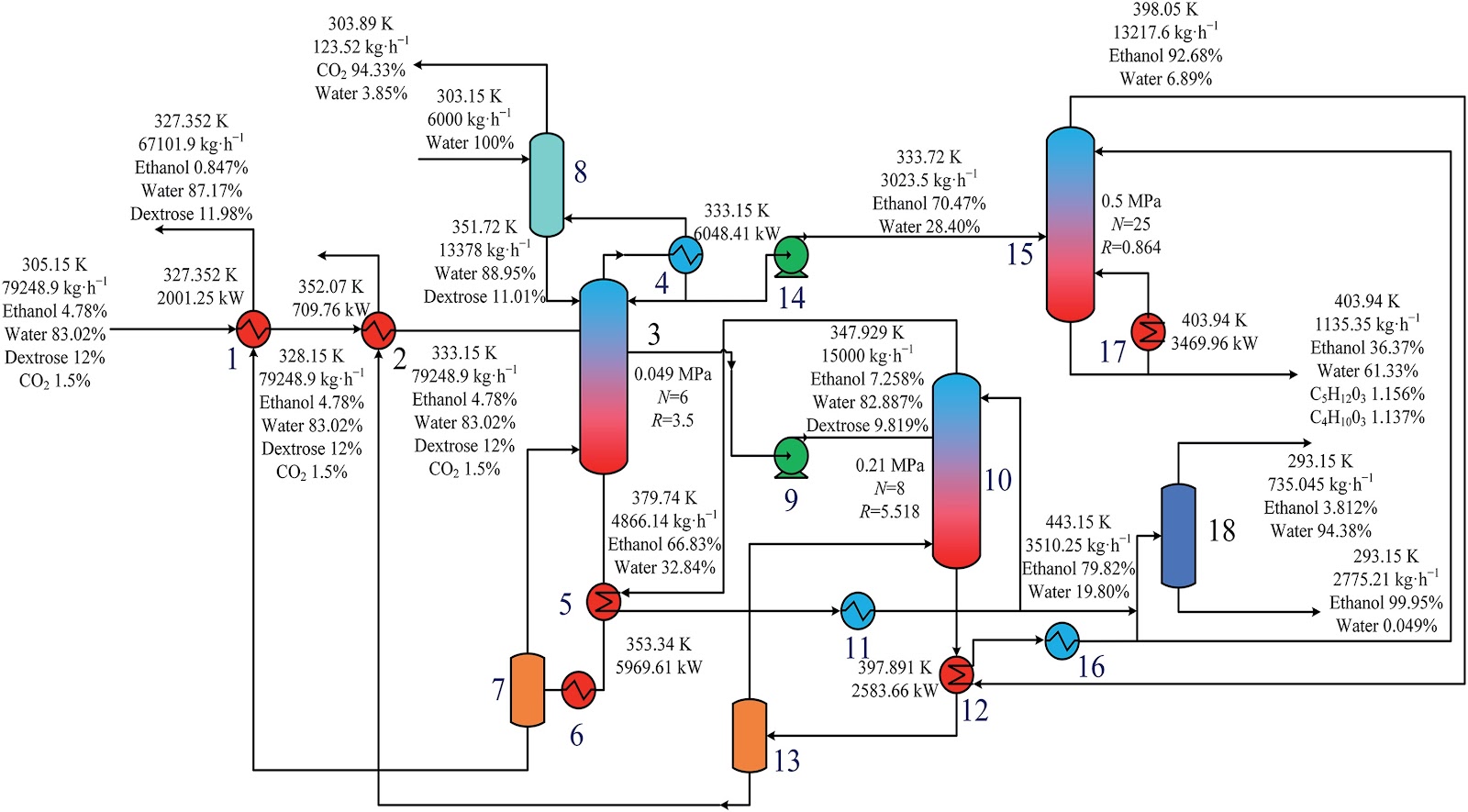
To address the challenges of high energy consumption and prominent costs in the traditional three-columns distillation process for cellulosic fuel ethanol, a distillation—molecular sieve coupling separation process is proposed. This process integrates a three-column (crude distillation column, first distillation column, second distillation column) system with a 3A molecular sieve adsorption deep dehydration unit. A thermal coupling network is constructed via differential pressure design (steam from medium/high-pressure columns as mutual heat sources, reboiler liquid waste heat for feed preheating), and molecular sieve adsorption conditions are optimized. The study first performs a thermodynamic consistency test on the ethanol—water system, determines optimal non-random two-liquid (NRTL) model binary interaction parameters via experimental data regression for Aspen Plus simulation. Aiming at minimum total annual cost (TAC), Aspen Plus is used to optimize process parameters (theoretical tray number, feed location, reflux ratio, side-draw position, etc.). Economic analysis shows this process reduces CO2 emission costs by 27.56%, TAC by 15.58% (to 5.123 × 10⁶ USD·a-1), and increases ethanol purity to >99.6%, providing an effective solution for green, efficient separation.
A cohesion loss model for determining residual strength of deep bedded sandstone
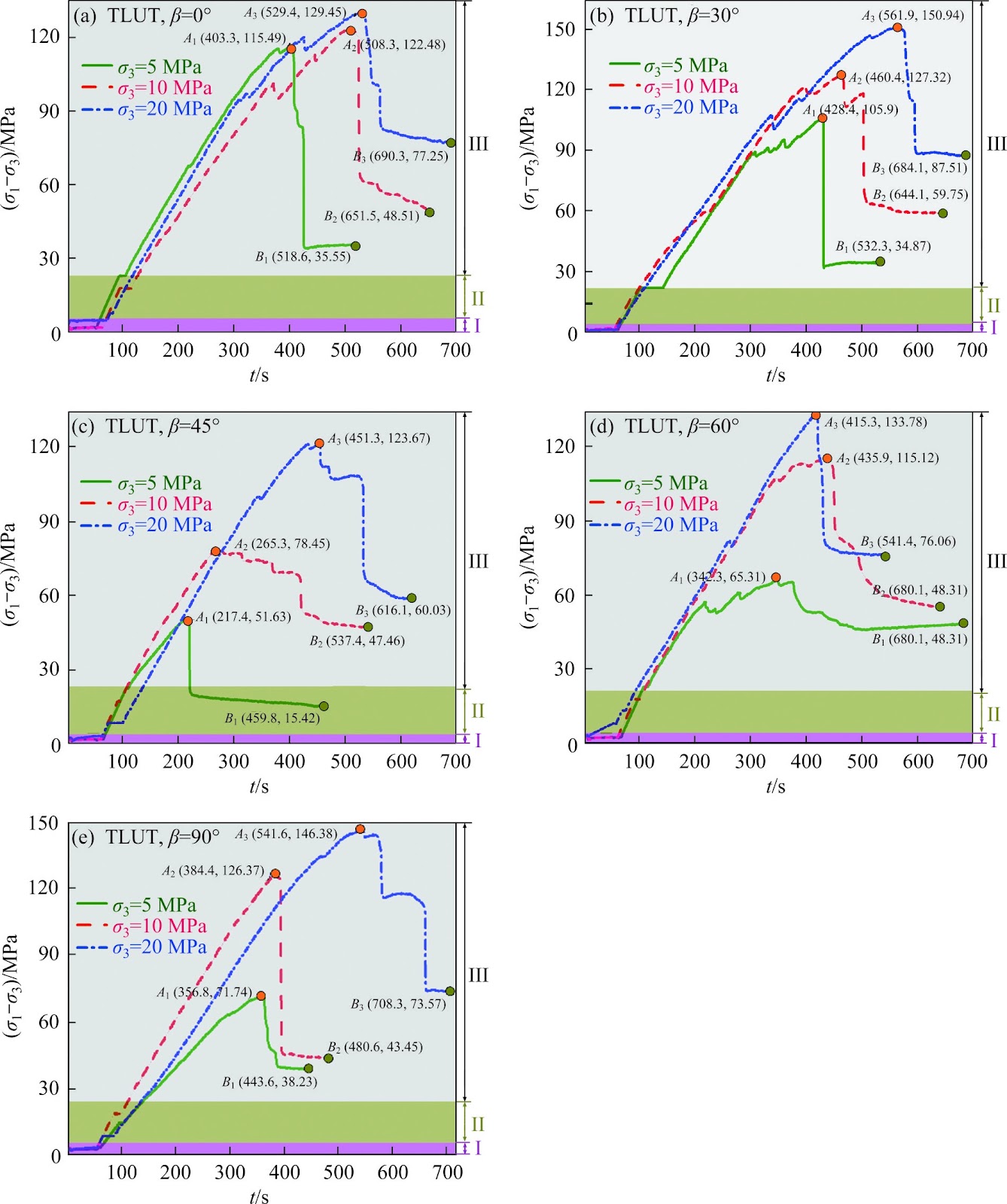
Rock residual strength, as an important input parameter, plays an indispensable role in proposing the reasonable and scientific scheme about stope design, underground tunnel excavation and stability evaluation of deep chambers. Therefore, previous residual strength models of rocks established were reviewed. And corresponding related problems were stated. Subsequently, starting from the effects of bedding and whole life-cycle evolution process, series of triaxial mechanical tests of deep bedded s
Federated model with contrastive learning and adaptive control variates for human activity recognition
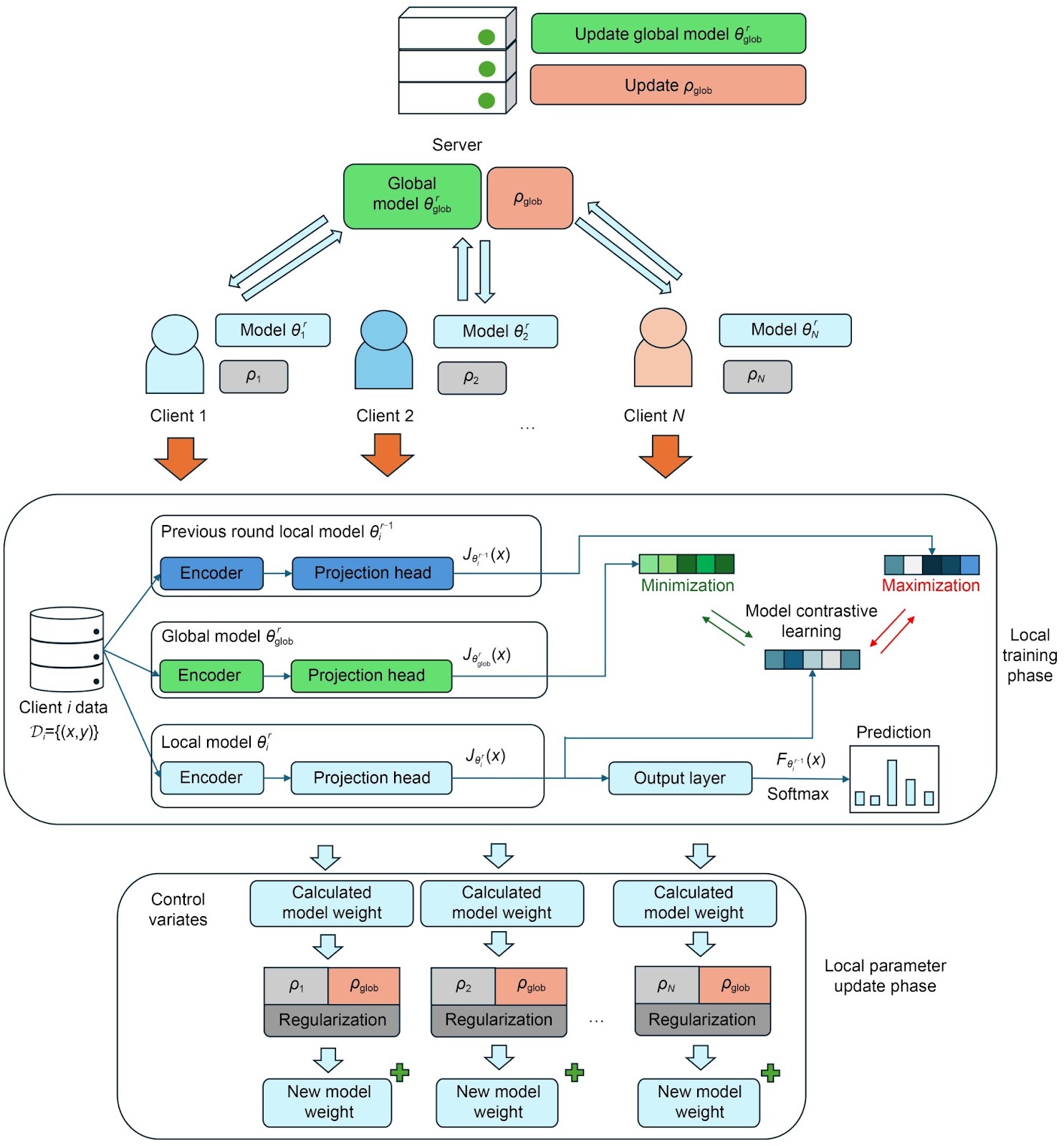
Recent attention to privacy issues demands a communication-safe method for training human activity recognition (HAR) models on client activity data. Federated learning (FL) has become a compelling technique to facilitate model training between the server and clients while preserving data privacy. However, classical FL methods often assume independent and identically distributed (IID) data among clients. This assumption does not hold true in practical scenarios. Human activity in real-world scena