Key Takeaways & Executive Findings
- •• An improved 3D-LTCA method was developed to account for gear tooth modification and coupling assembly errors, with mesh stiffness verified against MASTA software. • A neural network-based surrogate model accurately maps the relationship between modification parameters and mesh mechanical parameters, drastically reducing computational cost. • The optimization framework minimizing mesh stiffness variation and improving load distribution reduced mesh stiffness fluctuation by 34.10% under assembly errors. • The difference in average contact stresses between left and right mesh surface regions was reduced by 62.84%, demonstrating enhanced mesh uniformity and stability.
Abstract
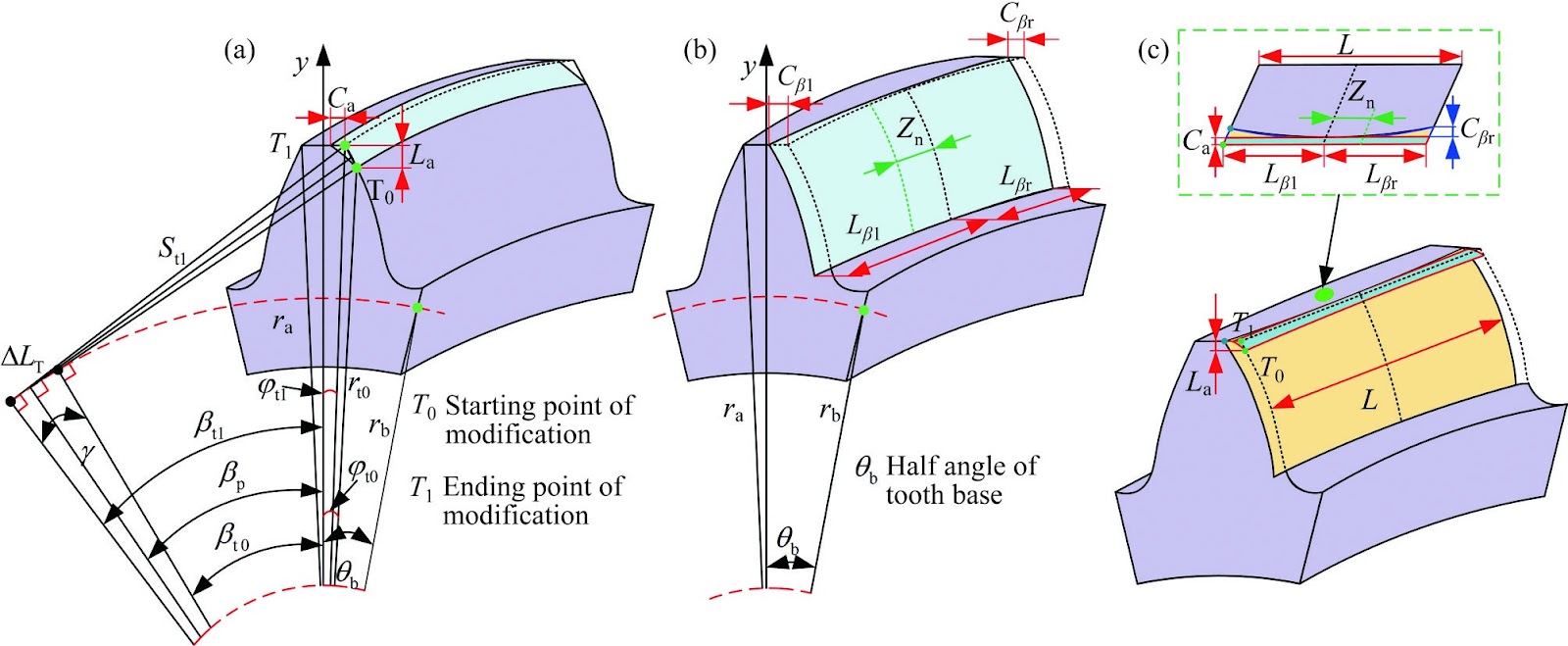
Gear assembly errors can lead to the increase of vibration and noise of the system, which affect the stability of system. The influence can be compensated by tooth modification. Firstly, an improved three-dimensional loaded tooth contact analysis (3D-LTCA) method which can consider tooth modification and coupling assembly errors is proposed, and mesh stiffness calculated by proposed method is verified by MASTA software. Secondly, based on neural network, the surrogate model (SM) that maps the relationship between modification parameters and mesh mechanical parameters is established, and its accuracy is verified. Finally, SM is introduced to establish an optimization model with the target of minimizing mesh stiffness variations and obtaining more even load distribution on mesh surface. The results show that even considering training time, the efficiency of gear pair optimization by surrogate model is still much higher than that by LTCA method. After optimization, the mesh stiffness fluctuation of gear pair with coupling assembly error is reduced by 34.10%, and difference in average contact stresses between left and right regions of the mesh surface is reduced by 62.84%.
1. Introduction
Gear systems play an important role in many industries such as automotive, marine and aviation [1 −4]. However, the existence of assembly errors affects the vibration characteristics of the gear system. Since the mesh stiffness and transfer error are important excitation sources that affect the vibration response of the system, the periodic change of mesh stiffness will change the vibration characteristics of the system. In this case, the gear mesh performance can be improved by adjusting the micro-correction parameters.
Tooth modification refers to the micro-geometric design method of gear by adding or removing certain materials in a specific area of the tooth profile, which has crucial effects on the mesh characteristics of gear, and is widely used in vibration and noise reduction in gear system [5−8]. TESFAHUNEGN et al [9] investigated the distinction between linear and nonlinear modification. Finally, it is found that there is a certain relationship between modification amount and modification curve. SUN et al [10] established a time-varying mesh stiffness (TVMS) model considering tooth modification and obtained the correction coefficient of TVMS by comparing with the finite element software ANSYS, which improved the calculation accuracy of TVMS. WANG et al [11] obtained the contact line changes and TVMS based on slice method which is proposed earlier by SMITH [12]. The results show that the modification improves the meshing performance, especially reduces the fluctuation of mesh stiffness. GOŁĘBSKI et al [13] carried out a study on the conditions of tooth modification for spur gears, and proposed a step processing method for gear machining that can be used under any tooth modification requirements. SHI et al [14] discussed about contact characteristics of gears in locomotive drivelines. Through tooth lead modification, the edge load is reduced and the phenomenon of load concentration is eliminated. LI et al [15] respectively studied the implications of three modification methods of gear on tooth root bending stress and load distribution ratio. XU et al [16] innovatively introduced modification into planetary gear systems and found that abrupt changes in mesh stiffness could be improved by tooth profile modification. Moreover, modification can substantially minimize transmission error volatility. PLEGUEZUELOS et al [17] studied the change of static transmission error (STE) when profile modification of spur gear with high transmission ratio was carried out, and proposed a long tooth profile modification method that could decrease the peak value of STE. PEDRERO et al [18] found that the effect of symmetrical modification was better than that of asymmetric modification in mesh characteristics. WANG et al [19] found that positive shift would cause stronger vibration of the system, while negative shift could improve the stiffness.
Loading authentic research manuscript (Pages 1–5)...
ZHAO Xiao-jian, MA Hui, MA Ze-yu, LIU Jia-qi, CAO Peng, WU Yu-ping, DING Xiang-fu, ZHAO Tian-yu (2025). Optimization of mesh characteristics of gear pair considering influence of assembly errors. Journal of Central South University. https://doi.org/10.1007/s11771-025-5935-1
Research & Educational Purpose Only:The translations, structured abstracts, analytical annotations, and data reports provided by SinoTechIntel are intended exclusively for academic research, internal corporate R&D, and educational benchmarking. They do not constitute formal engineering, chemical safety, legal, or professional advice.
Copyright & Intellectual Property Notice: Original copyright of the underlying source articles and experimental data remains with the respective authors, institutions, and original publishing journals. SinoTechIntel claims intellectual property only over its proprietary translations, analytical syntheses, and AEO structured enhancements in accordance with international fair use and academic citation principles.
Frequently Asked Questions
What problem does this paper address?
The paper addresses the negative impact of gear assembly errors on mesh performance, which increases vibration and noise, and proposes a tooth modification optimization method to compensate for these effects.
How was the surrogate model developed for gear optimization?
A neural network-based surrogate model was trained using data from an improved three-dimensional loaded tooth contact analysis (3D-LTCA) that incorporates tooth modification and assembly errors, mapping modification parameters to mesh mechanical parameters.
What are the key results of the proposed optimization approach?
The optimization reduced mesh stiffness fluctuation by 34.10% and decreased the difference in average contact stresses between left and right mesh surface regions by 62.84%, leading to more stable and uniform load distribution.
Why is the surrogate model more efficient than direct LTCA?
The surrogate model significantly reduces computational time, even when including training time, while maintaining high accuracy, making it far more efficient for multi-objective gear optimization compared to repeated LTCA simulations.
What types of gears are considered in this study?
The study focuses on helical gears, as indicated by the key words, and the proposed methods are applicable to gear pairs experiencing assembly errors.
Related Technical Papers & Translations
Design and optimization of a high-efficiency distillation process for cellulosic fuel ethanol integrated with thermal coupling and molecular sieve adsorption
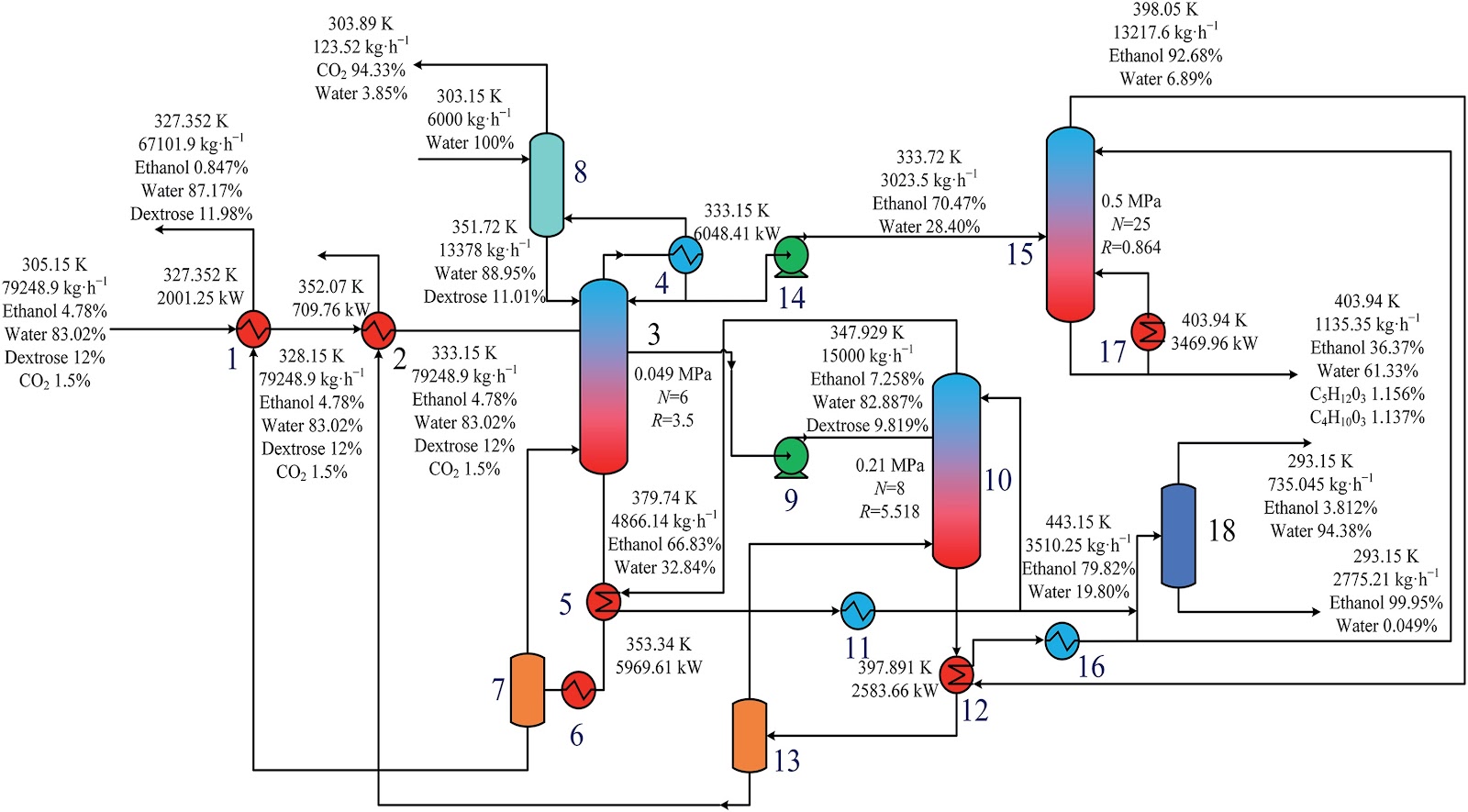
To address the challenges of high energy consumption and prominent costs in the traditional three-columns distillation process for cellulosic fuel ethanol, a distillation—molecular sieve coupling separation process is proposed. This process integrates a three-column (crude distillation column, first distillation column, second distillation column) system with a 3A molecular sieve adsorption deep dehydration unit. A thermal coupling network is constructed via differential pressure design (steam from medium/high-pressure columns as mutual heat sources, reboiler liquid waste heat for feed preheating), and molecular sieve adsorption conditions are optimized. The study first performs a thermodynamic consistency test on the ethanol—water system, determines optimal non-random two-liquid (NRTL) model binary interaction parameters via experimental data regression for Aspen Plus simulation. Aiming at minimum total annual cost (TAC), Aspen Plus is used to optimize process parameters (theoretical tray number, feed location, reflux ratio, side-draw position, etc.). Economic analysis shows this process reduces CO2 emission costs by 27.56%, TAC by 15.58% (to 5.123 × 10⁶ USD·a-1), and increases ethanol purity to >99.6%, providing an effective solution for green, efficient separation.
A cohesion loss model for determining residual strength of deep bedded sandstone
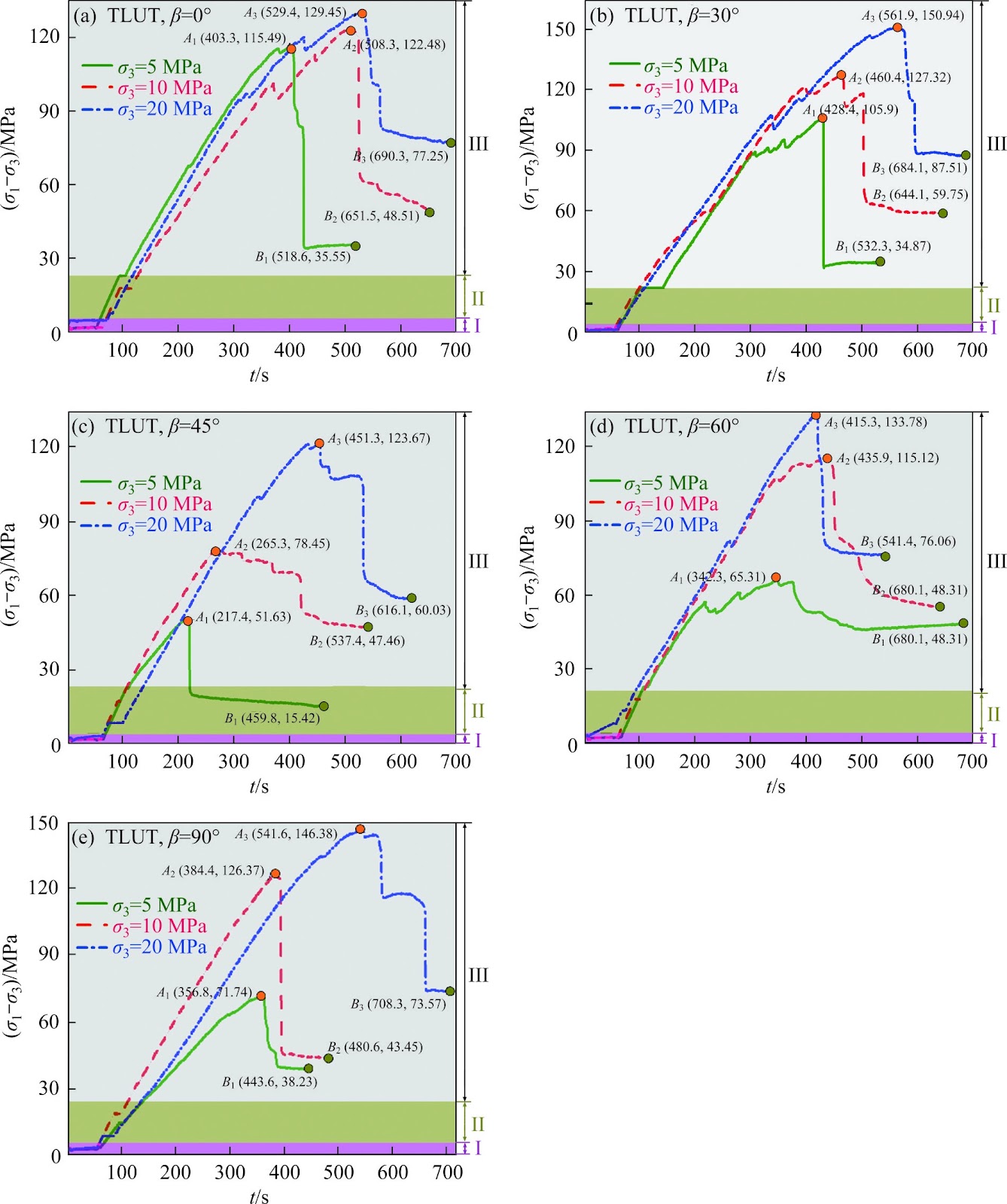
Rock residual strength, as an important input parameter, plays an indispensable role in proposing the reasonable and scientific scheme about stope design, underground tunnel excavation and stability evaluation of deep chambers. Therefore, previous residual strength models of rocks established were reviewed. And corresponding related problems were stated. Subsequently, starting from the effects of bedding and whole life-cycle evolution process, series of triaxial mechanical tests of deep bedded s
Federated model with contrastive learning and adaptive control variates for human activity recognition
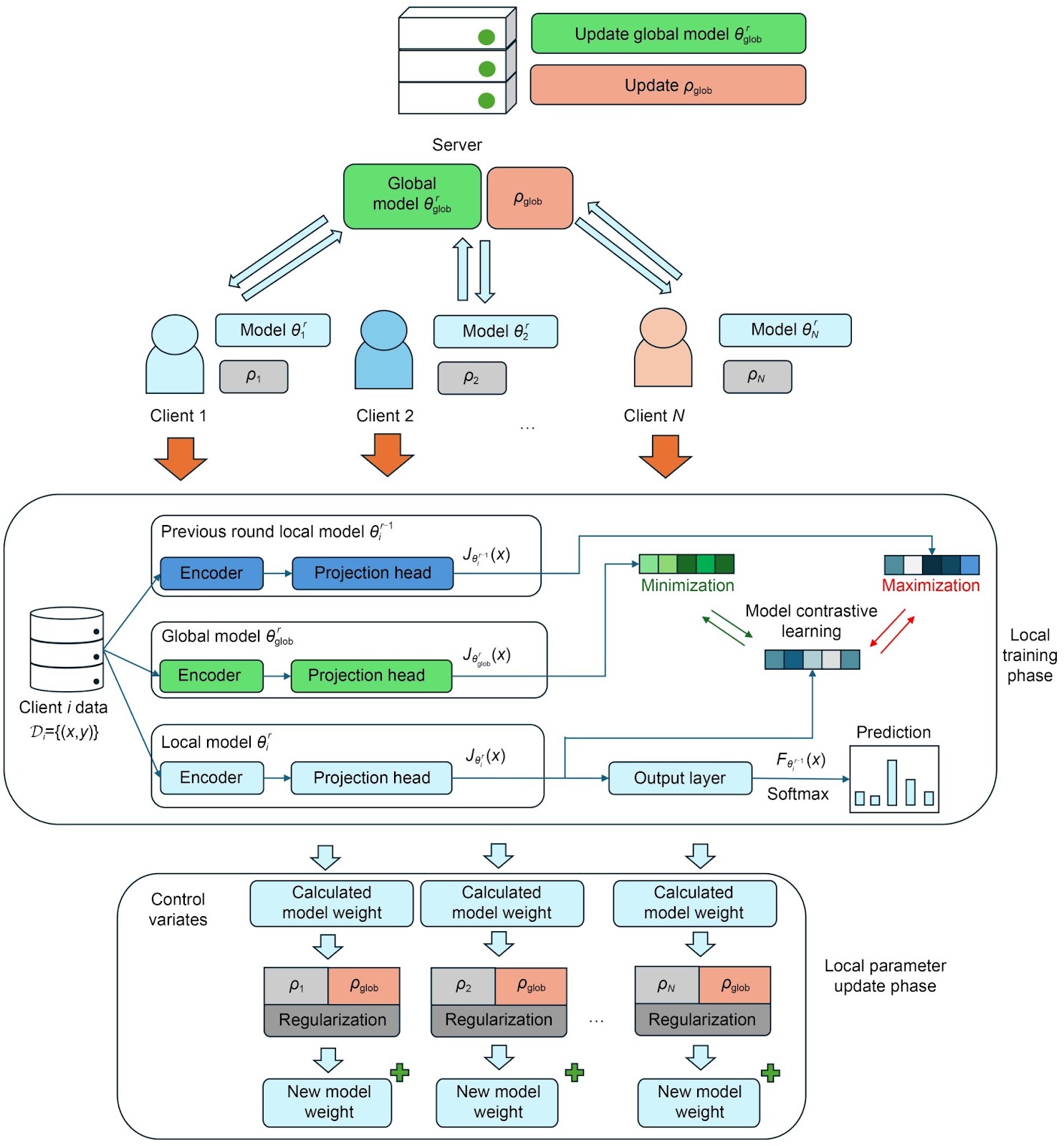
Recent attention to privacy issues demands a communication-safe method for training human activity recognition (HAR) models on client activity data. Federated learning (FL) has become a compelling technique to facilitate model training between the server and clients while preserving data privacy. However, classical FL methods often assume independent and identically distributed (IID) data among clients. This assumption does not hold true in practical scenarios. Human activity in real-world scena