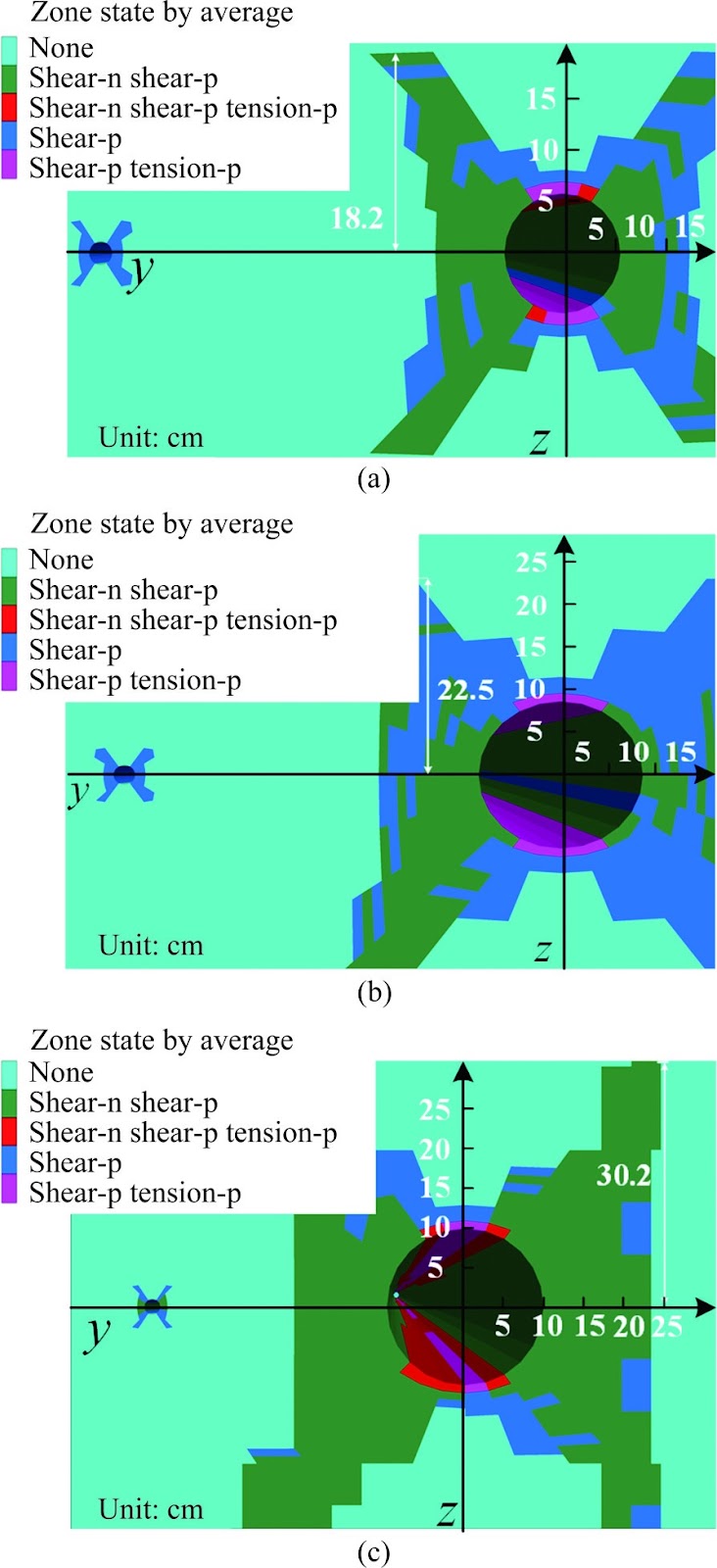
Key Takeaways & Executive Findings
- •• The optimal spacing between large-diameter drilling holes and anchoring holes increases linearly with the drilling hole diameter, achieving a synergistic effect within a specific range. • Both excessively small and large hole spacings impair the pressure relief effect, as vertical stress between holes increases nonlinearly with spacing changes. • Field practice at the 1208 working face reduced coal body drilling cuttings by 33% and roadway moving quantity by 19.2% after optimizing hole spacing from 0.55 m to 0.45 m. • The combined pressure relief-support reinforcement effect is critical for ensuring roadway stability and preventing rock burst in deep mining environments.
Abstract
Large-diameter drilling method is a prevalent method for preventing and controlling rock burst, and the spacing between the large-diameter drilling hole and anchoring hole is a critical factor influencing the roadway stability and relief effectiveness. In this study, a mechanical model for optimal matching between the large-diameter drilling hole and anchoring hole was established following the principle of synergistic control. The influence of large-diameter drilling hole diameter on the optimal spacing under the synergistic relief effect was investigated by integrating theoretical analysis, numerical simulation, and field practice. The results suggest that the hole spacing achieved a synergistic effect in a certain range when the optimal hole spacing increased linearly with the hole diameter. For instance, when the anchoring hole diameter was 20 mm, an increase in the aperture ratio from 5 to 10 brought about an increase in the optimal spacing from 0.25 m to 0.45 m. Additionally, the vertical stress between the large-diameter drilling hole and anchor hole increased nonlinearly under the condition of constant pore ratio but varying hole spacing. Both excessively small and excessively large hole spacings were detrimental to the pressure relief effect. In the engineering practice, optimizing the hole spacing from 0.55 m to 0.45 m in the 1208 working face contributed to reducing coal body drilling cuttings and the roadway moving quantity by 33% and 19.2%, respectively. This demonstrates that the pressure relief-support reinforcement synergistic effect should be fully considered in optimization design.
1. Introduction
With the increasing coal mining depth year by year in China, there are about 60 ultra-kilometer deep wells at present. However, the complex conditions, such as high ground stress and high mining disturbance faced by deep mining, have induced frequent rock burst, considerably restricting the safe and efficient mining in China [1 −3]. Pressure relief in large-diameter drilling holes and anchoring support technology are crucial means to prevent and control rock burst in roadways.
Pressure relief in a large-diameter drilling hole lowers the bearing capacity of the coal body in the pressure relief area by destroying its integrity while transferring the high-energy accumulation area deep into the surrounding rock. Anchoring anti-impact support improves the stress state of the surrounding rock by applying radial constraint force to the coal body within the anchoring range, allowing for a certain bearing capacity of the roadway’s shallow surrounding rock.
Large-diameter drilling holes and anchoring support are widely applied in the field of rock burst prevention and control, attributed to their synergistic effects of pressure relief and support [4−7]. Excessive studies have been performed on the pressure relief of the large-diameter drilling method and anchoring support principles [8, 9].
Loading authentic research manuscript (Pages 1–5)...
GUO Wei-yao, WANG Xiang-yu, YIN Li-ming, ZHENG Yong-sheng, JI Xin-bo, LIU Guang-zhao, WU Zhen (2025). Optimization and engineering practice of large-diameter drilling hole-anchoring hole spacing based on stress relief-support reinforcement cooperative effect. Journal of Central South University. https://doi.org/10.1007/s11771-025-6032-1
Research & Educational Purpose Only:The translations, structured abstracts, analytical annotations, and data reports provided by SinoTechIntel are intended exclusively for academic research, internal corporate R&D, and educational benchmarking. They do not constitute formal engineering, chemical safety, legal, or professional advice.
Copyright & Intellectual Property Notice: Original copyright of the underlying source articles and experimental data remains with the respective authors, institutions, and original publishing journals. SinoTechIntel claims intellectual property only over its proprietary translations, analytical syntheses, and AEO structured enhancements in accordance with international fair use and academic citation principles.
Frequently Asked Questions
What is the optimal spacing between large-diameter drilling holes and anchoring holes?
The optimal spacing increases linearly with the drilling hole diameter. For a 20 mm anchoring hole diameter, increasing the aperture ratio from 5 to 10 increases the optimal spacing from 0.25 m to 0.45 m, achieving a synergistic effect between pressure relief and support.
Why is hole spacing critical in rock burst prevention?
Both excessively small and excessively large hole spacings are detrimental to the pressure relief effect. Correct spacing ensures a synergistic interaction between the pressure-relief holes and anchoring support, enhancing roadway stability.
What were the field practice results at the 1208 working face?
Optimizing the hole spacing from 0.55 m to 0.45 m reduced coal body drilling cuttings by 33% and the roadway moving quantity by 19.2%, demonstrating practical benefits of the optimized design.
What methods were used in this study?
The study integrated theoretical analysis, numerical simulation, and field practice to investigate the effect of large-diameter drilling hole diameter on optimal spacing under the synergistic relief effect.
What is the synergistic effect of pressure relief and support reinforcement?
Pressure relief in large-diameter drilling holes reduces the bearing capacity of coal while transferring high-energy zones deeper, while anchoring support applies radial constraint to enhance shallow rock bearing capacity. Their coordinated design improves overall roadway stability and prevents rock burst.
Related Technical Papers & Translations
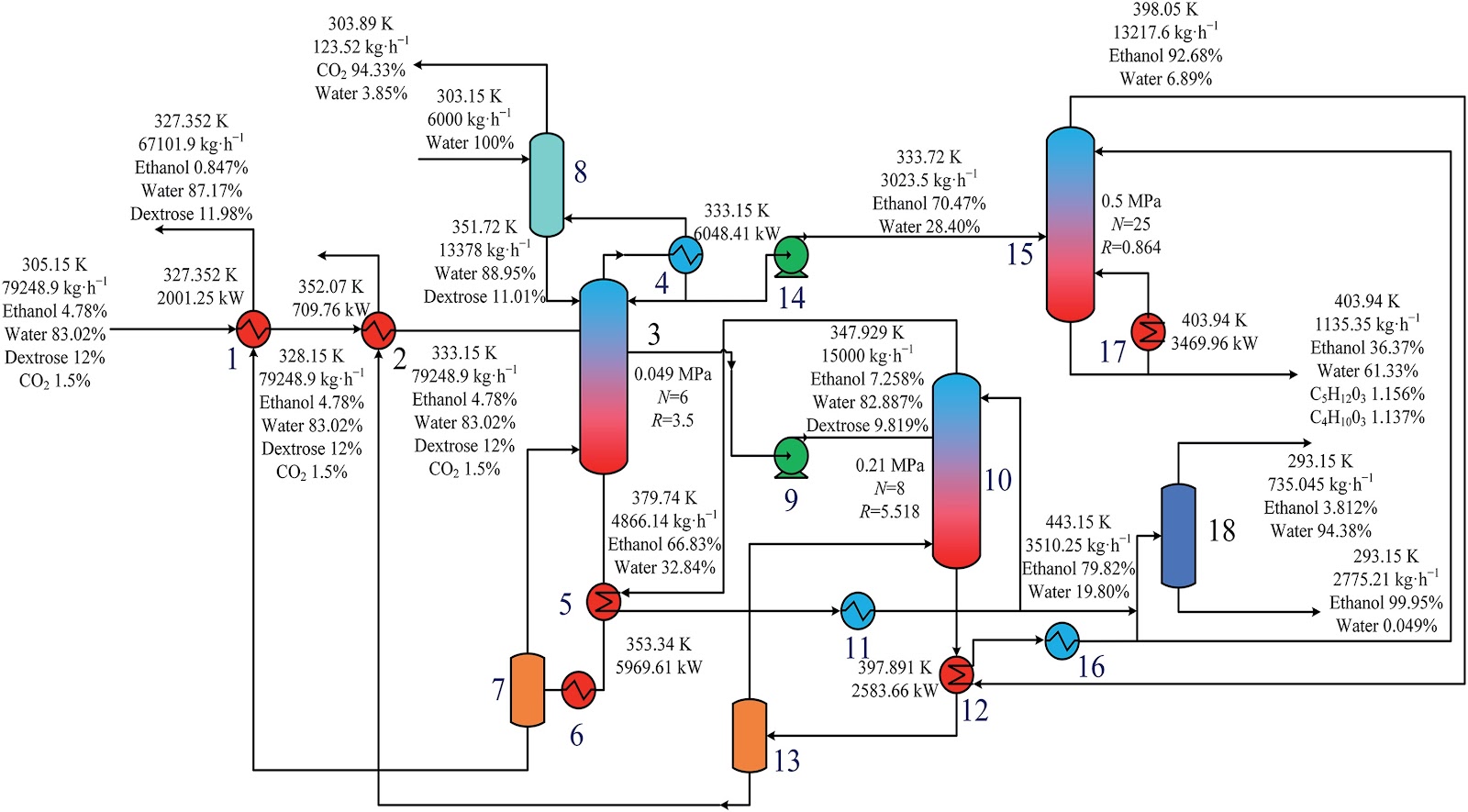
Design and optimization of a high-efficiency distillation process for cellulosic fuel ethanol integrated with thermal coupling and molecular sieve adsorption
To address the challenges of high energy consumption and prominent costs in the traditional three-columns distillation process for cellulosic fuel ethanol, a distillation—molecular sieve coupling separation process is proposed. This process integrates a three-column (crude distillation column, first distillation column, second distillation column) system with a 3A molecular sieve adsorption deep dehydration unit. A thermal coupling network is constructed via differential pressure design (steam from medium/high-pressure columns as mutual heat sources, reboiler liquid waste heat for feed preheating), and molecular sieve adsorption conditions are optimized. The study first performs a thermodynamic consistency test on the ethanol—water system, determines optimal non-random two-liquid (NRTL) model binary interaction parameters via experimental data regression for Aspen Plus simulation. Aiming at minimum total annual cost (TAC), Aspen Plus is used to optimize process parameters (theoretical tray number, feed location, reflux ratio, side-draw position, etc.). Economic analysis shows this process reduces CO2 emission costs by 27.56%, TAC by 15.58% (to 5.123 × 10⁶ USD·a-1), and increases ethanol purity to >99.6%, providing an effective solution for green, efficient separation.
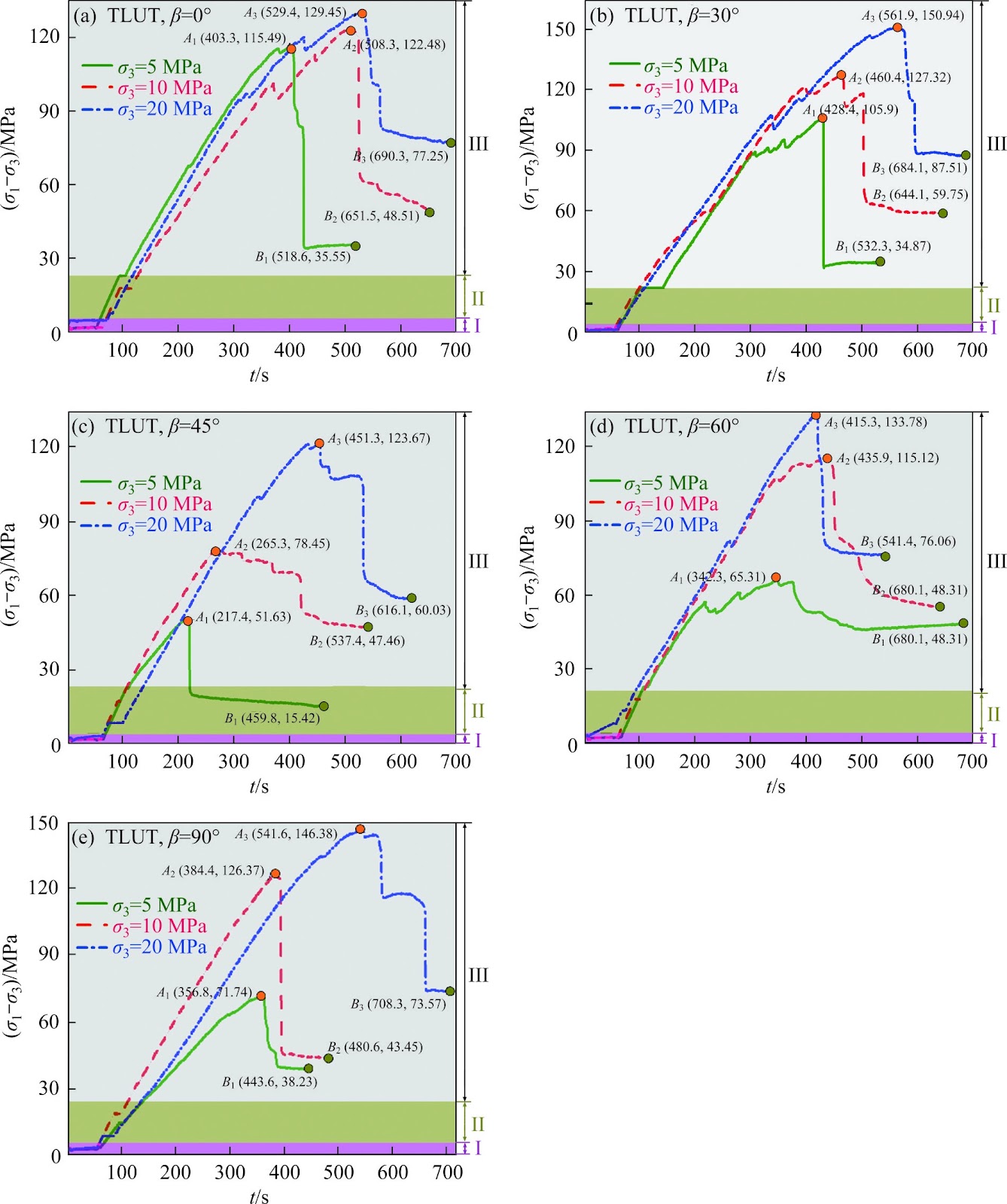
A cohesion loss model for determining residual strength of deep bedded sandstone
Rock residual strength, as an important input parameter, plays an indispensable role in proposing the reasonable and scientific scheme about stope design, underground tunnel excavation and stability evaluation of deep chambers. Therefore, previous residual strength models of rocks established were reviewed. And corresponding related problems were stated. Subsequently, starting from the effects of bedding and whole life-cycle evolution process, series of triaxial mechanical tests of deep bedded s
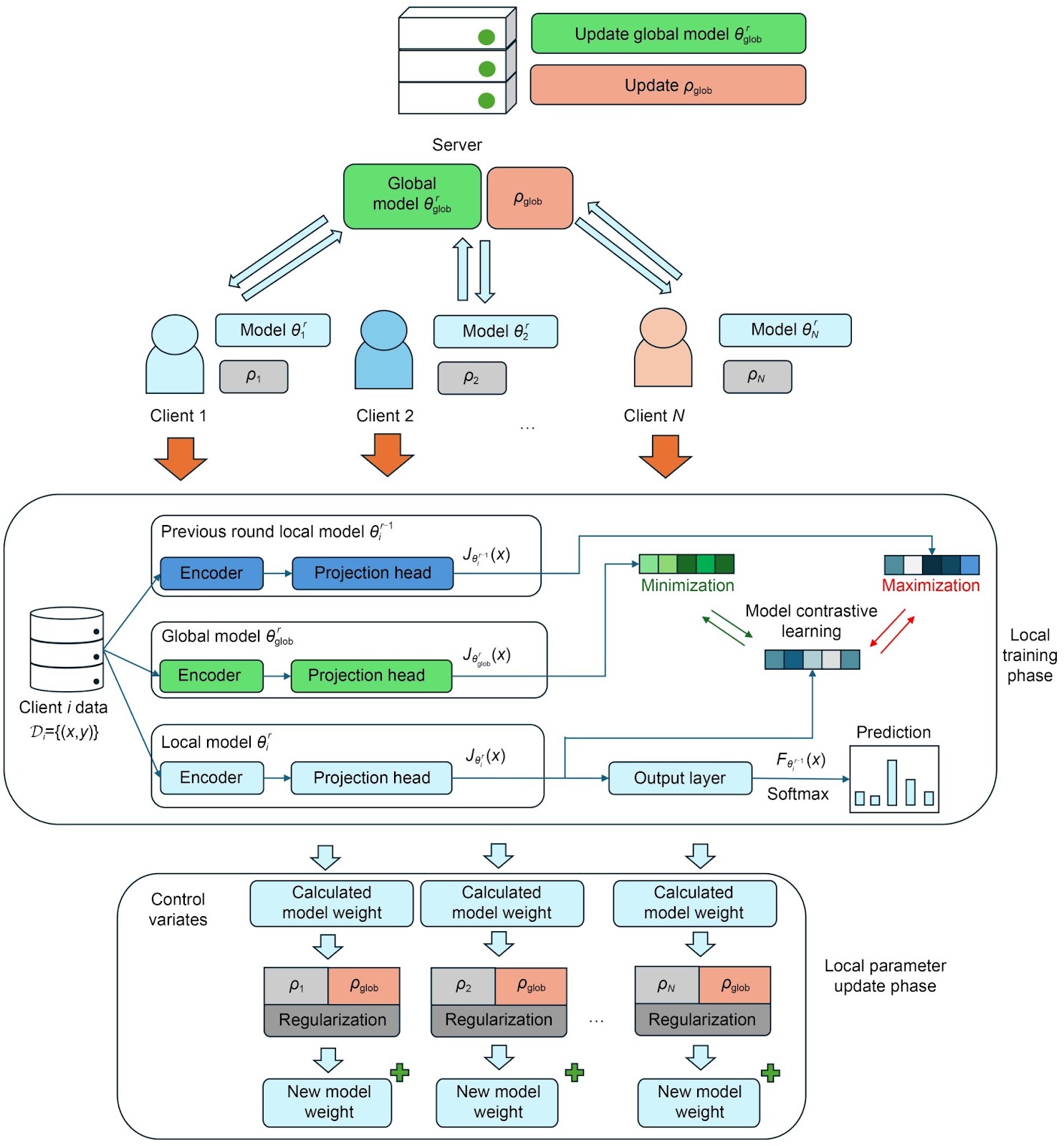
Federated model with contrastive learning and adaptive control variates for human activity recognition
Recent attention to privacy issues demands a communication-safe method for training human activity recognition (HAR) models on client activity data. Federated learning (FL) has become a compelling technique to facilitate model training between the server and clients while preserving data privacy. However, classical FL methods often assume independent and identically distributed (IID) data among clients. This assumption does not hold true in practical scenarios. Human activity in real-world scena