Key Takeaways & Executive Findings
- •• Surface modification of calcium sulfate whiskers with stearic acid and titanate coupling agent enhances compatibility with asphalt, improving dispersion and mechanical properties. • Optimal MCSW loading of 4% increases the performance grade (PG) of SBR-modified asphalt from 64 to 70, significantly boosting high-temperature performance. • MCSW-SBRMA exhibits excellent low-temperature ductility (>100 cm at 5°C), addressing cold-weather cracking issues. • Microscopic and spectroscopic analyses confirm uniform dispersion of MCSW in asphalt, facilitating shear stress dispersion and enhancing durability.
Abstract
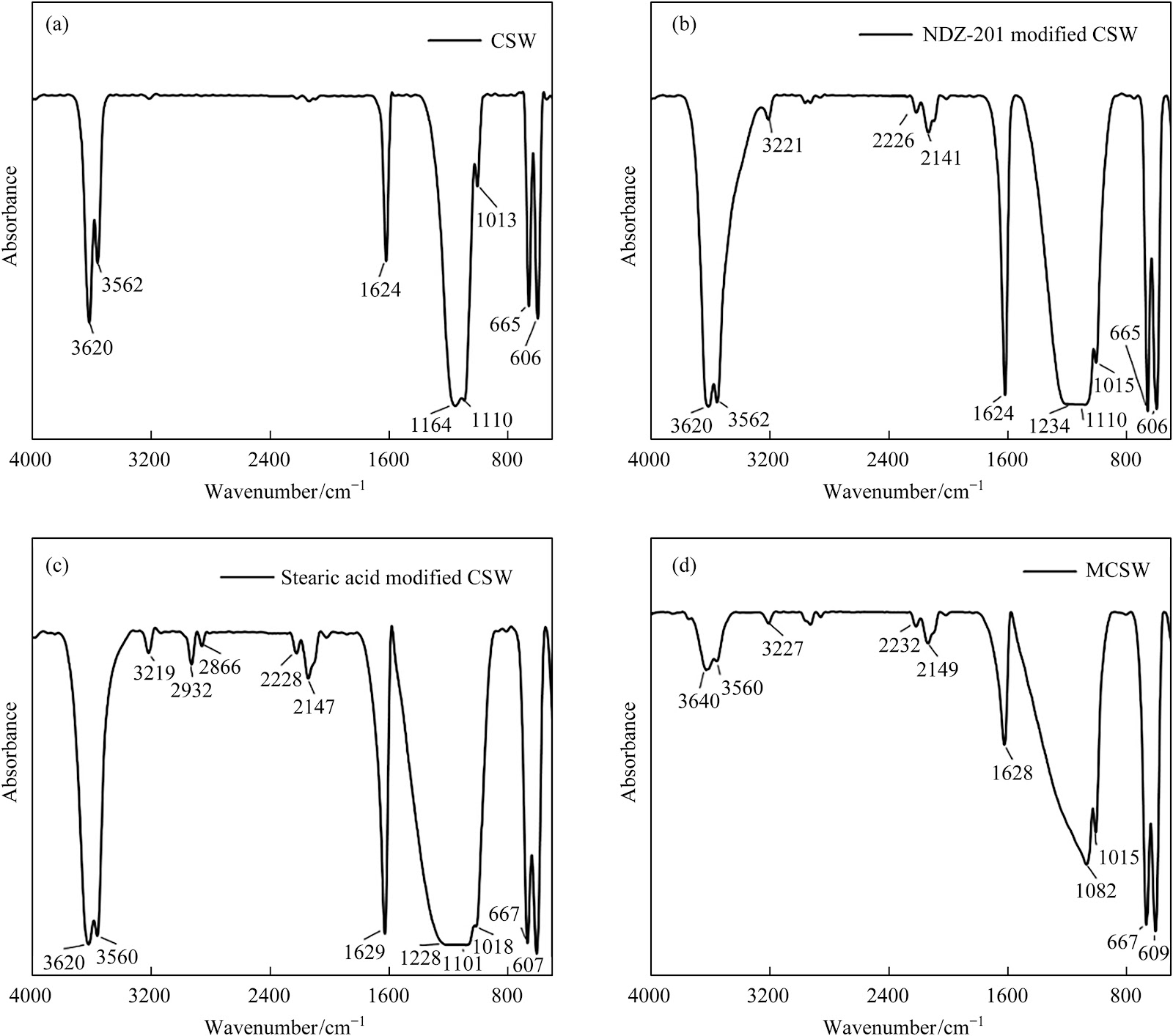
With the aim of improving the durability and safety, erosion time, and cost-effective of asphalt road, a composite of modified calcium sulfate whisker-styrene butadiene rubber modified asphalt (MCSW-SBRMA) was prepared via thermal doping. Firstly, stearic acid and titanate coupling agent (NDZ-201) were used as a modifier to transform calcium sulfate whisker (CSW) into MCSW via wet modification method at 60 °C and anhydrous ethanol as a dispersant. What is more, the optimum loading of modifier (a mixture of 25% stearic acid + 75% NDZ-201) was found to be at 2% to prepare MCSW. Subsequently, a composite of MCSW-SBRMA was prepared with different loading of MCSW (i.e. 2% to 8%) to enhance the softening point of asphalt. In this study, it was found that 4% of modifiers was the best composition to improve the MCSW-SBRMA properties as elucidated in the orthogonal experiment table L16(42). The effects of MCSW and SBR addition on several properties of asphalt were studied by multiple routine tests including penetration, segregation test, and so on. The results show that: 2% to 8% MCSW can increase the softening point of SBR modified asphalt (SBRMA) by 7% to 8%. 4% MCSW increased the PG of SBRMA from 64 to 70, which greatly improved the high temperature characteristics of asphalt. The 5 °C ductility of MCSW-SBRMA is greater than 100 cm, which greatly improves the low temperature performance of asphalt. Through the application of fluorescence microscopy (FM), Fourier transform infrared spectroscopy (FTIR), Scanning electron microscopy (SEM), and energy dispersive spectroscopy (SEM-EDS), it has been demonstrated that MCSW-SBR effectively alters asphalt in a highly uniform manner, with some MCSW still retaining large cross sections, thereby facilitating the dispersion of shear stress and enhancing the durability of asphalt.
1. Introduction
Asphalt has been widely recognized as the standard binder in road paving applications, relying on its favorable properties such as stiffness, adhesion, and elasticity [1]. However, when exposed to high temperature, asphalt pavement can undergo softening and become more prone to deformation, causing the formation of ruts. Contrarily, the principal issue emerged in asphalt pavements constructed in cold weather climates is low-temperature cracking [2e5]. To date, the addition of modifiers has been one of the promising routes to overcome the shortcomings of pristine asphalt [6].
Calcium sulfate whisker (CSW) is a novel type of inorganic sub-micron material with needle-like fibrous structures [7]. It is prepared from waste phosphonyls or flue gas desulfurization gypsum with uniform cross-sections, a complete shape, perfect internal structure, and excellent mechanical properties [8]. CSW is known as a common modifier in asphalt owing to its advantages, including resistance to high temperatures and chemical corrosion, high toughness, strength, and cost effective [7,9e11]. Unfortunately, CSW lose moisture and shrink during high temperature preparation of asphalt, making the modification process inefficient [7]. To overcome this problem, it is necessary to carry out surface modification on CSW [8e14]. Fini [15] et al. found that CaCO3 aggregate is more resistant to water peeling than Al2O3 aggregate. CaCO3 itself is an alkaline substance. Under the action of water, Ca+ dissociated from CaCO3 chelates with HAD (accumulation of palmitic acid), thus effectively reducing the accumulation of HDA on the asphalt silica interface. In this paper, CSW containing calcium mineral powder is selected to improve the durability of asphalt.
Styrene butadiene rubber (SBR) is one of the traditional polymer asphalt modifiers, which can effectively improve the adhesion and cohesion of asphalt [16]. Zhang et al. [16] found that the low-temperature performance and behavior of SBR modified asphalt (SBRMA) are better than that of SBS modified asphalt binder (SBSMA) at cold and low temperature areas. Zhou et al. [17,18] reported that around 4% of SBR rubber powder can improve the elongation and storage stability of asphalt. However, after high temperature of aging the ductility of SBRMA will decrease rapidly, t
Loading authentic research manuscript (Pages 1–5)...
Aoqi Cui, Emmerson Hondo, Nur Fatihah Tajul Ariffin, Yanpeng Pei, Xuan Su, Zhonghe Chen (2024). On the enhanced properties of composite asphalt via adding surface modified calcium sulfate whisker-SBR. Chinese Journal of Chemical Engineering. https://doi.org/10.1016/j_cjche_1448
Research & Educational Purpose Only:The translations, structured abstracts, analytical annotations, and data reports provided by SinoTechIntel are intended exclusively for academic research, internal corporate R&D, and educational benchmarking. They do not constitute formal engineering, chemical safety, legal, or professional advice.
Copyright & Intellectual Property Notice: Original copyright of the underlying source articles and experimental data remains with the respective authors, institutions, and original publishing journals. SinoTechIntel claims intellectual property only over its proprietary translations, analytical syntheses, and AEO structured enhancements in accordance with international fair use and academic citation principles.
Frequently Asked Questions
What is the optimal loading of modified calcium sulfate whisker (MCSW) in SBR-modified asphalt?
The optimal loading is 4% MCSW, which increases the performance grade (PG) of SBRMA from 64 to 70, significantly improving high-temperature performance.
How does MCSW-SBRMA improve low-temperature performance?
The 5°C ductility of MCSW-SBRMA is greater than 100 cm, indicating excellent flexibility and resistance to low-temperature cracking.
What surface modifiers are used for calcium sulfate whisker?
Stearic acid and titanate coupling agent (NDZ-201) are used as modifiers, with an optimal mixture of 25% stearic acid and 75% NDZ-201 at 2% loading.
What characterization techniques were used to analyze MCSW-SBRMA?
Fluorescence microscopy (FM), Fourier transform infrared spectroscopy (FTIR), scanning electron microscopy (SEM), and energy dispersive spectroscopy (SEM-EDS) were used to confirm uniform dispersion and structural properties.
What is the significance of using calcium sulfate whisker in asphalt?
Calcium sulfate whisker enhances high-temperature resistance, toughness, and cost-effectiveness, while surface modification improves its compatibility and dispersion in asphalt, leading to improved durability.
Related Technical Papers & Translations

Design and optimization of a high-efficiency distillation process for cellulosic fuel ethanol integrated with thermal coupling and molecular sieve adsorption
To address the challenges of high energy consumption and prominent costs in the traditional three-columns distillation process for cellulosic fuel ethanol, a distillation—molecular sieve coupling separation process is proposed. This process integrates a three-column (crude distillation column, first distillation column, second distillation column) system with a 3A molecular sieve adsorption deep dehydration unit. A thermal coupling network is constructed via differential pressure design (steam from medium/high-pressure columns as mutual heat sources, reboiler liquid waste heat for feed preheating), and molecular sieve adsorption conditions are optimized. The study first performs a thermodynamic consistency test on the ethanol—water system, determines optimal non-random two-liquid (NRTL) model binary interaction parameters via experimental data regression for Aspen Plus simulation. Aiming at minimum total annual cost (TAC), Aspen Plus is used to optimize process parameters (theoretical tray number, feed location, reflux ratio, side-draw position, etc.). Economic analysis shows this process reduces CO2 emission costs by 27.56%, TAC by 15.58% (to 5.123 × 10⁶ USD·a-1), and increases ethanol purity to >99.6%, providing an effective solution for green, efficient separation.

A cohesion loss model for determining residual strength of deep bedded sandstone
Rock residual strength, as an important input parameter, plays an indispensable role in proposing the reasonable and scientific scheme about stope design, underground tunnel excavation and stability evaluation of deep chambers. Therefore, previous residual strength models of rocks established were reviewed. And corresponding related problems were stated. Subsequently, starting from the effects of bedding and whole life-cycle evolution process, series of triaxial mechanical tests of deep bedded s

Federated model with contrastive learning and adaptive control variates for human activity recognition
Recent attention to privacy issues demands a communication-safe method for training human activity recognition (HAR) models on client activity data. Federated learning (FL) has become a compelling technique to facilitate model training between the server and clients while preserving data privacy. However, classical FL methods often assume independent and identically distributed (IID) data among clients. This assumption does not hold true in practical scenarios. Human activity in real-world scena