Key Takeaways & Executive Findings
- •• A two-equation turbulent (TET) model is introduced to describe turbulent mass diffusion in turbulent fluidized beds, providing rigorous closure for mass transfer equations. • The simulation using the TET model, EMMS drag, and KTGF accurately predicts ozone concentration with an average absolute relative deviation of 9.67%. • The transition velocity from bubbling to turbulent fluidization for FCC particles is determined to be about 0.5 m·s−1, matching experimental observations. • The proposed computational mass transfer approach offers a reliable tool for designing and optimizing turbulent fluidized bed reactors.
Abstract
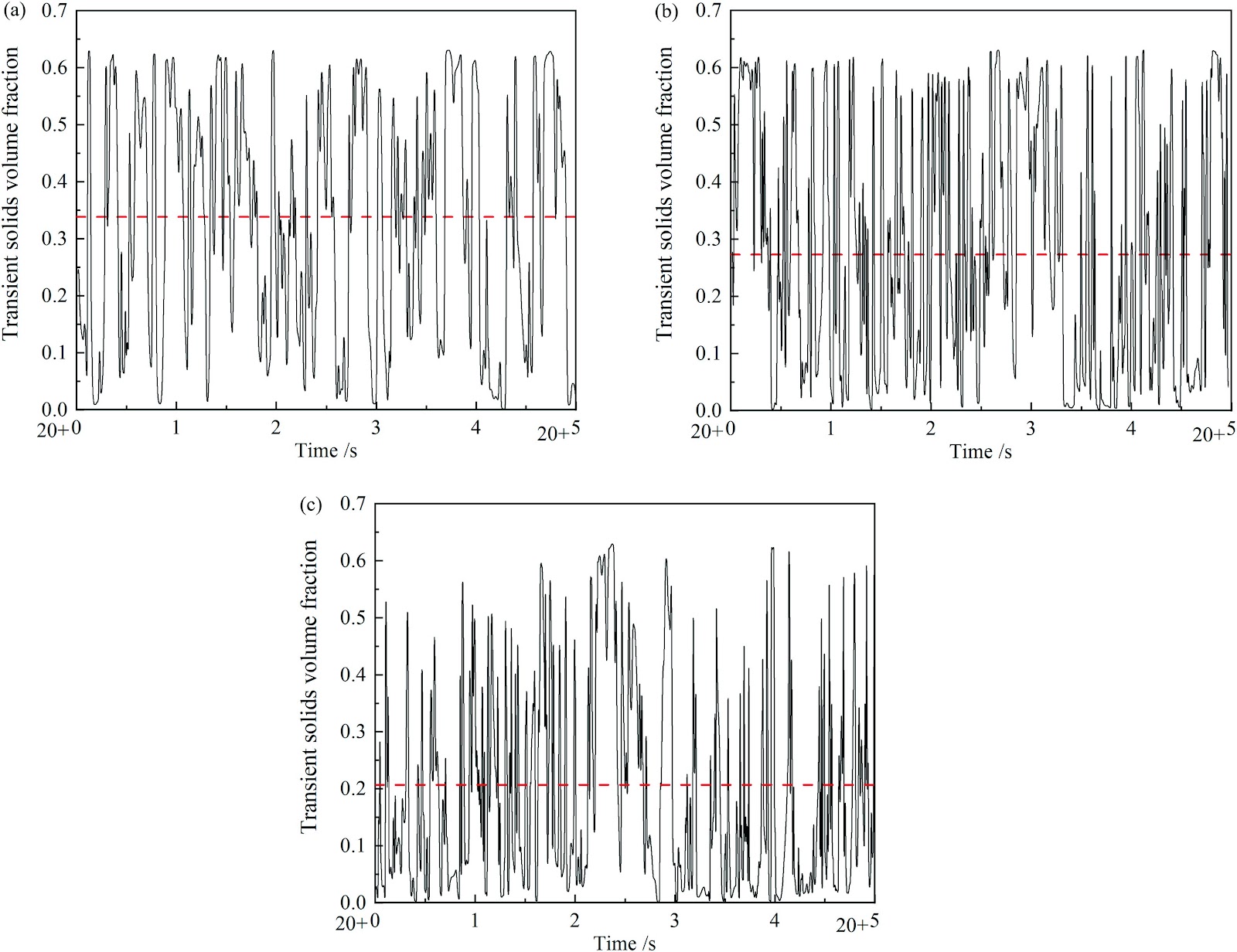
Turbulent fluidized bed possesses a distinct advantage over bubbling fluidized bed in high solids contact efficiency and thus exerts great potential in applications to many industrial processes. Simulation for fluidization of fluid catalytic cracking (FCC) particles and the catalytic reaction of ozone decomposition in turbulent fluidized bed is conducted using the Eulerian–Eulerian approach, where the recently developed two-equation turbulent (TET) model is introduced to describe the turbulent mass diffusion. The energy minimization multi-scale (EMMS) drag model and the kinetic theory of granular flow (KTGF) are adopted to describe gas–particles interaction and particle–particle interaction respectively. The TET model features the rigorous closure for the turbulent mass transfer equations and thus enables more reliable simulation. With this model, distributions of ozone concentration and gas–particles two-phase velocity as well as volume fraction are obtained and compared against experimental data. The average absolute relative deviation for the simulated ozone concentration is 9.67% which confirms the validity of the proposed model. Moreover, it is found that the transition velocity from bubbling fluidization to turbulent fluidization for FCC particles is about 0.5 m·s−1 which is consistent with experimental observation.
1. Introduction
Compared with bubbling fluidization and fast fluidization, turbulent fluidization has a lot of advantages such as higher gas–solid contact efficiency, higher solid volume fraction and lower axial dispersion of gas. By virtue of these advantages make the turbulent fluidized bed become a promising multiphase reactor for the catalyst cracking, gasification, methanol-to-olefins (MTO) and combustion that involves strong exothermic reaction [1]. However, vigorous gas–solid interaction results in complex flow hydrodynamics including dramatic movement of particles and turbulence of both phases, which leads to great difficulty in experimental and theoretical analysis on turbulent fluidization, thereby hindering the design and optimization of turbulent fluidized bed [2].
Nevertheless, thanks to the substantial development of computer technology, numerical simulation (i.e., computational fluid dynamics) can make complements to experimental and theoretical analysis while overcoming their limitations and is adopted as an effective way to investigate the gas–solid two-phase flow in turbulent fluidization process [3]. Generally, the gas phase is deemed as continuous phase and is treated under the Eulerian framework, whereas the solid phase is either regarded as continuous phase by Eulerian approach [4] or regarded as dispersed phase by Lagrangian approach [5]. Since trajectory of each particle should be tracked under Lagrangian framework, it requires large amount of computer resources. Therefore, the treatment of solid phase as continuous by Eulerian approach is often used for fast simulation of numerous particles fluidization [3,6–8].
Loading authentic research manuscript (Pages 1–5)...
Hailun Ren, Liang Zeng, Wenbin Li, Shuyong Chen, Zhongli Tang, Donghui Zhang (2024). Numerical investigation of turbulent mass transfer processes in turbulent fluidized bed by computational mass transfer. Chinese Journal of Chemical Engineering. https://doi.org/10.1016/j_cjche_1448
Research & Educational Purpose Only:The translations, structured abstracts, analytical annotations, and data reports provided by SinoTechIntel are intended exclusively for academic research, internal corporate R&D, and educational benchmarking. They do not constitute formal engineering, chemical safety, legal, or professional advice.
Copyright & Intellectual Property Notice: Original copyright of the underlying source articles and experimental data remains with the respective authors, institutions, and original publishing journals. SinoTechIntel claims intellectual property only over its proprietary translations, analytical syntheses, and AEO structured enhancements in accordance with international fair use and academic citation principles.
Frequently Asked Questions
What is the main contribution of this paper?
The paper introduces a two-equation turbulent (TET) model for computational mass transfer in turbulent fluidized beds, providing rigorous closure for turbulent mass transfer equations and enabling more reliable simulation of gas-solid two-phase flow and reaction.
How accurate is the proposed model?
The model predicts ozone concentration with an average absolute relative deviation of 9.67% compared to experimental data, confirming its validity.
What is the transition velocity from bubbling to turbulent fluidization for FCC particles?
The transition velocity is found to be about 0.5 m·s−1, which is consistent with experimental observations.
Which drag model and particle interaction model are used?
The energy minimization multi-scale (EMMS) drag model is used for gas-particle interaction, and the kinetic theory of granular flow (KTGF) is used for particle-particle interaction.
What are the advantages of turbulent fluidized beds over bubbling fluidized beds?
Turbulent fluidized beds offer higher gas-solid contact efficiency, higher solid volume fraction, and lower axial dispersion of gas, making them promising for industrial processes.
Related Technical Papers & Translations
Design and optimization of a high-efficiency distillation process for cellulosic fuel ethanol integrated with thermal coupling and molecular sieve adsorption
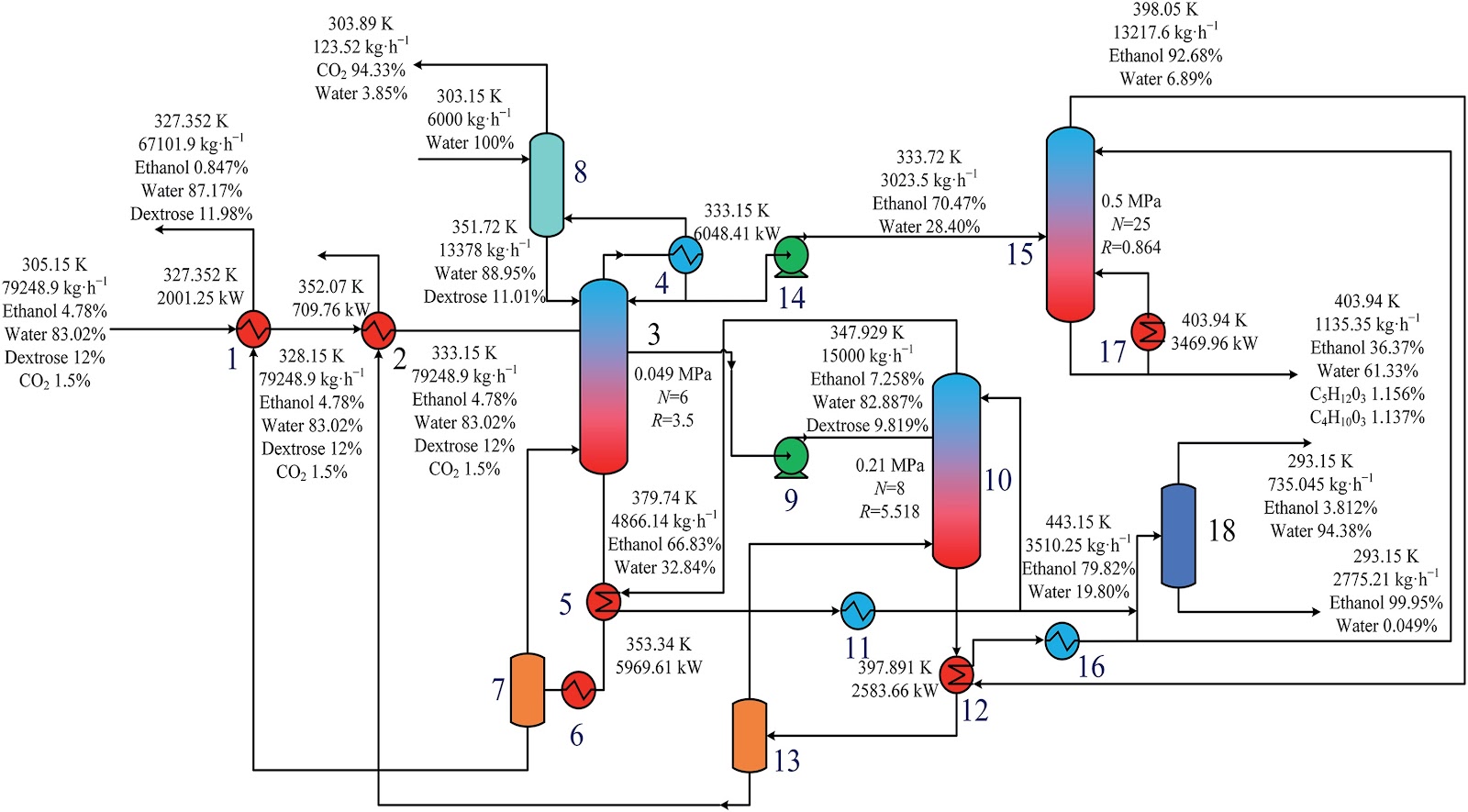
To address the challenges of high energy consumption and prominent costs in the traditional three-columns distillation process for cellulosic fuel ethanol, a distillation—molecular sieve coupling separation process is proposed. This process integrates a three-column (crude distillation column, first distillation column, second distillation column) system with a 3A molecular sieve adsorption deep dehydration unit. A thermal coupling network is constructed via differential pressure design (steam from medium/high-pressure columns as mutual heat sources, reboiler liquid waste heat for feed preheating), and molecular sieve adsorption conditions are optimized. The study first performs a thermodynamic consistency test on the ethanol—water system, determines optimal non-random two-liquid (NRTL) model binary interaction parameters via experimental data regression for Aspen Plus simulation. Aiming at minimum total annual cost (TAC), Aspen Plus is used to optimize process parameters (theoretical tray number, feed location, reflux ratio, side-draw position, etc.). Economic analysis shows this process reduces CO2 emission costs by 27.56%, TAC by 15.58% (to 5.123 × 10⁶ USD·a-1), and increases ethanol purity to >99.6%, providing an effective solution for green, efficient separation.
A cohesion loss model for determining residual strength of deep bedded sandstone
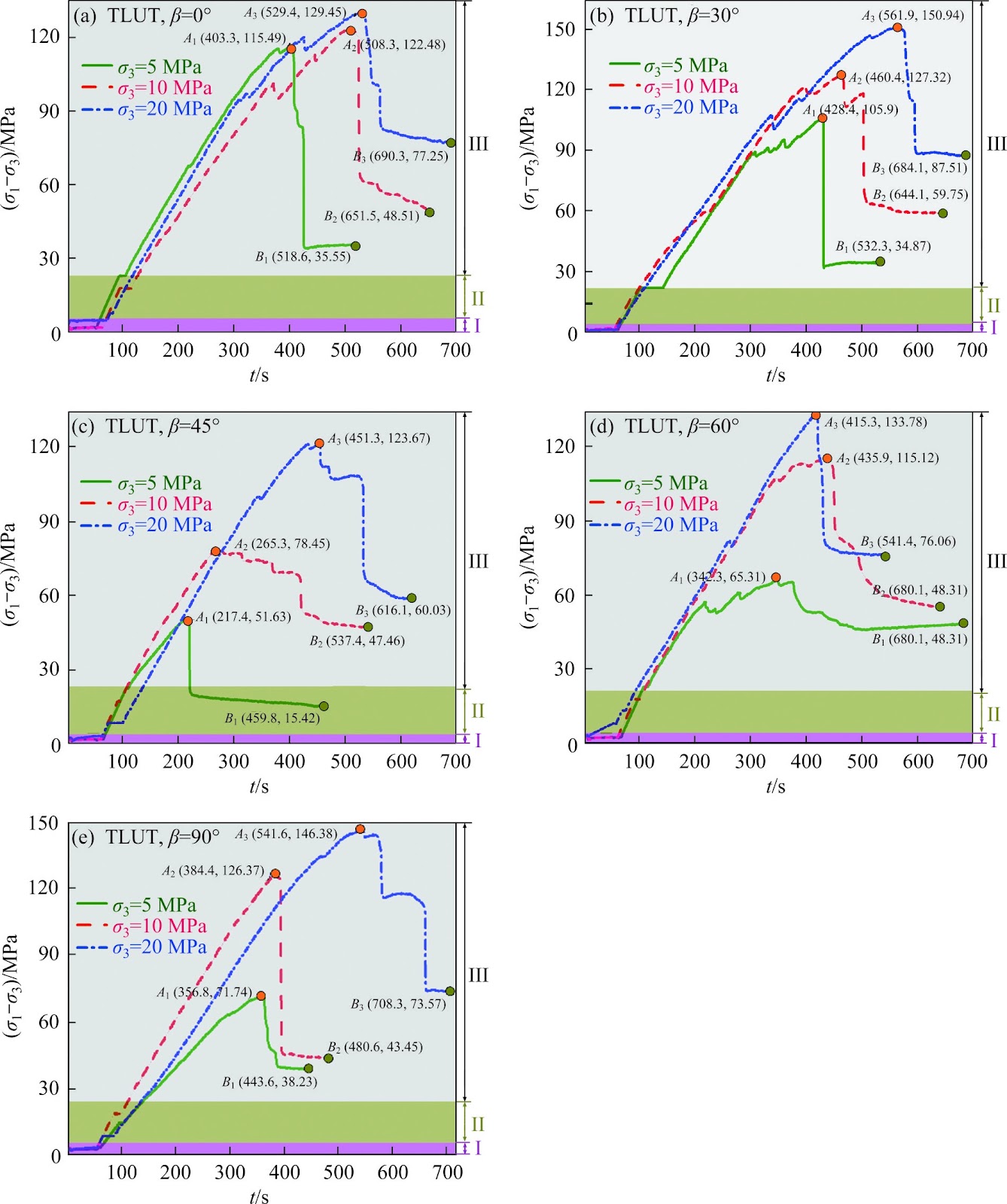
Rock residual strength, as an important input parameter, plays an indispensable role in proposing the reasonable and scientific scheme about stope design, underground tunnel excavation and stability evaluation of deep chambers. Therefore, previous residual strength models of rocks established were reviewed. And corresponding related problems were stated. Subsequently, starting from the effects of bedding and whole life-cycle evolution process, series of triaxial mechanical tests of deep bedded s
Federated model with contrastive learning and adaptive control variates for human activity recognition
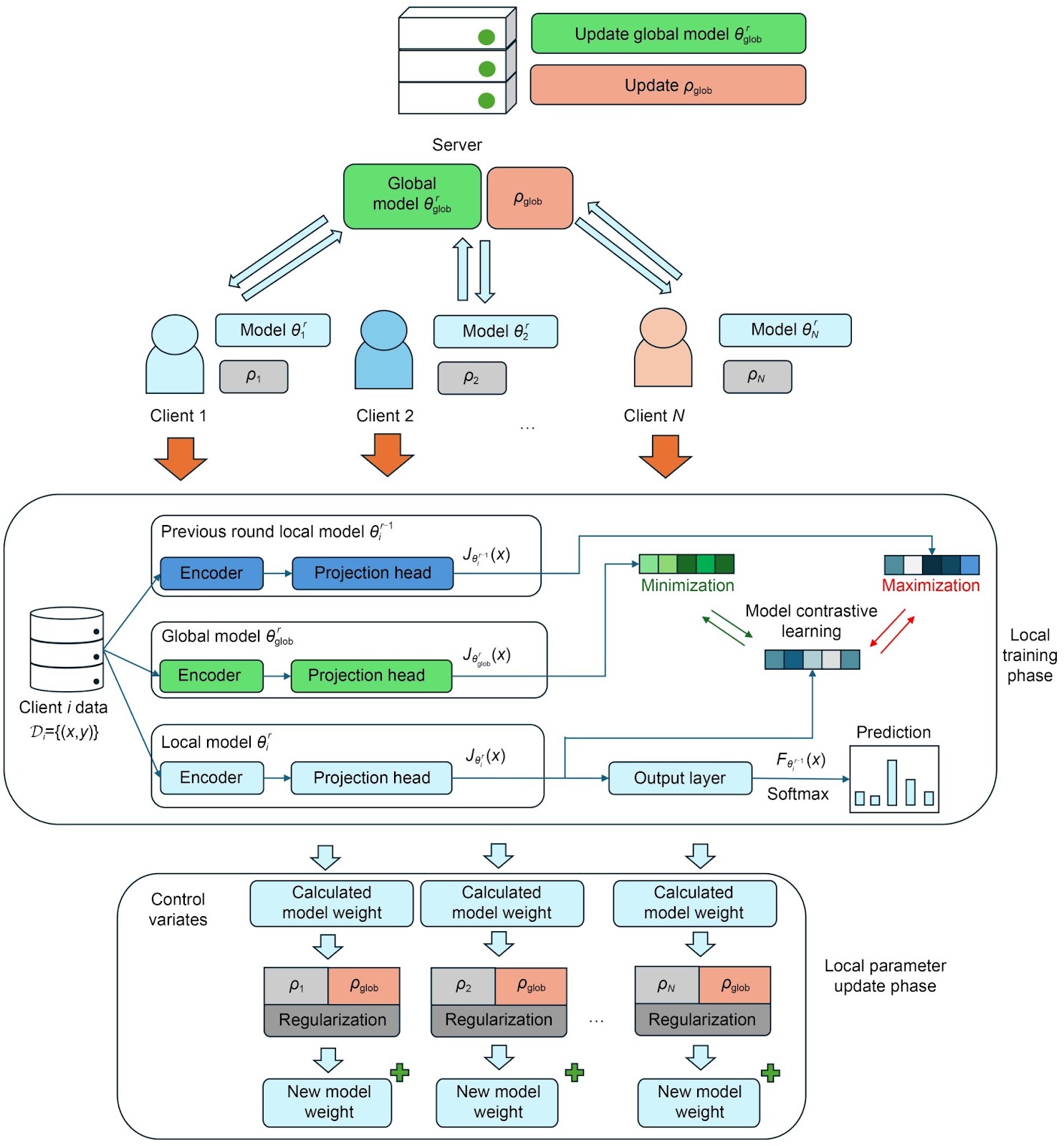
Recent attention to privacy issues demands a communication-safe method for training human activity recognition (HAR) models on client activity data. Federated learning (FL) has become a compelling technique to facilitate model training between the server and clients while preserving data privacy. However, classical FL methods often assume independent and identically distributed (IID) data among clients. This assumption does not hold true in practical scenarios. Human activity in real-world scena