Key Takeaways & Executive Findings
- •• NiMo-MMO catalyst derived from LDHs achieves ~95% pyrene conversion and 90.12% selectivity for deep hydrogenation products. • Structural topological transformation from LDHs precursors enhances metal dispersion and catalyst stability. • Synergistic effects between Ni and Mo, along with metal-support interactions, are crucial for deep hydrogenation activity. • The catalyst provides a theoretical basis for designing non-noble metal catalysts for PAHs hydrogenation.
Abstract
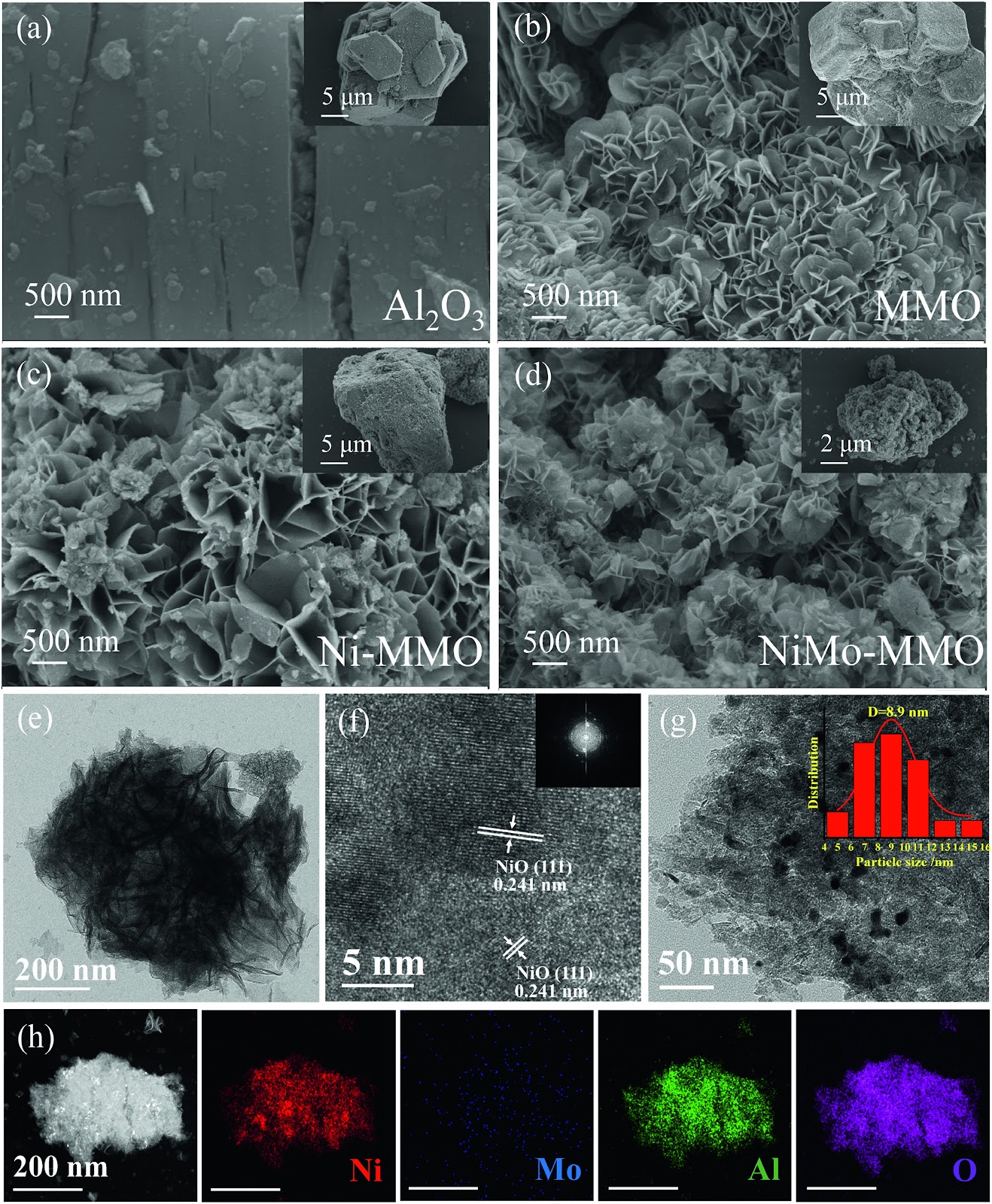
A series of Ni-based catalysts were prepared via structural topological transformation from the Ni@Al2O3 layered double hydroxides (LDHs) precursors, and applied for the deep catalytic hydrogenation saturation of pyrene in a high-pressure reactor. The pore structures, active species dispersion, surface morphology, amount and type of acid of the prepared catalysts were characterized by BET, XRD, SEM, TEM, XPS, SEM, NH3-TPD and Py-IR. We studied the influence of physicochemical properties of Ni-based catalysts on the regularity and mechanism of deep hydrogenation of pyrene. Meanwhile, the synergy between Ni and Mo, and the interaction between active metals and support were discussed to further reveal the constitutive relationship during the hydrogenation reaction of pyrene. The results of the evaluation of the catalytic hydrogenation of pyrene show that the as-prepared NiMo mixed metal oxide (MMO) catalyst showed excellent catalytic activity: ~95% pyrene conversion, 90.12% for the selectivity of deep hydrogenation products (hexahydropyrene, decahydropyrene and hexadecahydropyrene). It was expected that the successfully preparation and utilization of NiMo-MMO catalyst could provide a theoretical basis for the design of this kind of catalysts for deep catalytic hydrogenation of polycyclic aromatic hydrocarbons (PAHs).
1. Introduction
Coal is an important energy resource in the world, particularly in China, where coal production and consumption exceed 50% of the world's total [1]. As a by-product of coal carbonization, high-temperature coal tar (HTCT) has a high annual output. In recent years, China's annual off-take potential of HTCT has reached approximately 26 Mt, which consists of 95% PAHs [2]. PAHs are important raw materials for preparing medicines, hydrogen donors, dyes, and pesticides [3]. Therefore, the processing and utilization of PAHs has received increasing attention in the past few years, particularly the hydrogenation of PAHs [4]. The deep hydrogenation of PAHs is a clean and efficient process that is important for the value-added application of HTCT [5].
In reactions of hydrogenation and dehydrogenation, low molecular weight PAHs (mainly naphthalene, anthracene, and phenanthrene) have been extensively investigated [6,7]. However, the intrinsic properties of highly condensed PAHs make their hydrogenation susceptible to thermodynamic and kinetic constraints, as well as strong effects of resonance, steric hindrance, and competitive adsorption [8]. Thus, choosing suitable high molecular weight dense ring aromatic hydrocarbons as a model compound allows for a better understanding of the hydrogenation mechanism of PAHs. Pyrene (PY) is a complex tetracyclic aromatic hydrocarbon, and the hydrogenation products of PY are high value-added materials in the petroleum and pharmaceutical industry [9], which could be regarded as a model for studying the hydrogenation of PAHs.
Loading authentic research manuscript (Pages 1–5)...
Yongliang Jia, Boyang Bai, Jing Wang, Yueyi Wang, Zheng Wang, Xiaoxun Ma (2024). NiMo-MMO catalyst derived from LDHs precursors toward the deep hydrogenation of pyrene. Chinese Journal of Chemical Engineering. https://doi.org/10.1016/j_cjche_1448
Research & Educational Purpose Only:The translations, structured abstracts, analytical annotations, and data reports provided by SinoTechIntel are intended exclusively for academic research, internal corporate R&D, and educational benchmarking. They do not constitute formal engineering, chemical safety, legal, or professional advice.
Copyright & Intellectual Property Notice: Original copyright of the underlying source articles and experimental data remains with the respective authors, institutions, and original publishing journals. SinoTechIntel claims intellectual property only over its proprietary translations, analytical syntheses, and AEO structured enhancements in accordance with international fair use and academic citation principles.
Frequently Asked Questions
What is the main achievement of this study?
The study successfully prepared a NiMo-MMO catalyst derived from LDHs precursors that achieved ~95% pyrene conversion and 90.12% selectivity for deep hydrogenation products, demonstrating excellent catalytic activity for deep hydrogenation of polycyclic aromatic hydrocarbons.
Why is pyrene used as a model compound?
Pyrene is a complex tetracyclic aromatic hydrocarbon, and its hydrogenation products are high value-added materials in the petroleum and pharmaceutical industry. It serves as a representative model for studying the hydrogenation of high molecular weight PAHs due to its structural complexity and industrial relevance.
What are the key factors influencing the catalytic performance?
The catalytic performance is influenced by the synergy between Ni and Mo, the interaction between active metals and support, and the physicochemical properties of the catalysts such as pore structure, active species dispersion, surface morphology, and acidity.
What is the significance of using LDHs precursors?
Using LDHs precursors allows for structural topological transformation, which enhances the dispersion of active species and improves the stability and activity of the resulting NiMo-MMO catalyst.
What are the potential applications of this catalyst?
The NiMo-MMO catalyst can be applied in the deep hydrogenation of polycyclic aromatic hydrocarbons, which is important for the value-added utilization of high-temperature coal tar and the production of high-value chemicals.
Related Technical Papers & Translations
Design and optimization of a high-efficiency distillation process for cellulosic fuel ethanol integrated with thermal coupling and molecular sieve adsorption
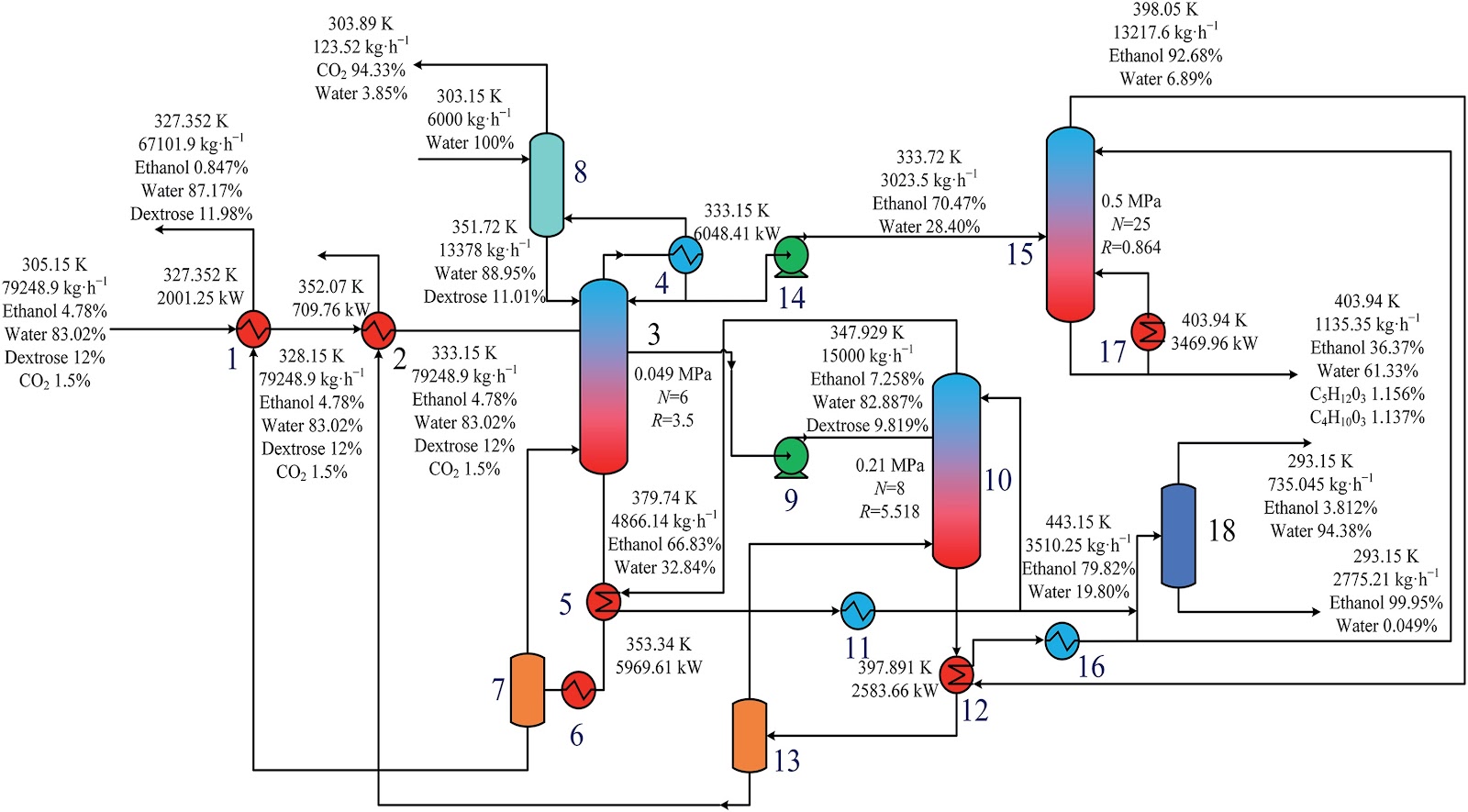
To address the challenges of high energy consumption and prominent costs in the traditional three-columns distillation process for cellulosic fuel ethanol, a distillation—molecular sieve coupling separation process is proposed. This process integrates a three-column (crude distillation column, first distillation column, second distillation column) system with a 3A molecular sieve adsorption deep dehydration unit. A thermal coupling network is constructed via differential pressure design (steam from medium/high-pressure columns as mutual heat sources, reboiler liquid waste heat for feed preheating), and molecular sieve adsorption conditions are optimized. The study first performs a thermodynamic consistency test on the ethanol—water system, determines optimal non-random two-liquid (NRTL) model binary interaction parameters via experimental data regression for Aspen Plus simulation. Aiming at minimum total annual cost (TAC), Aspen Plus is used to optimize process parameters (theoretical tray number, feed location, reflux ratio, side-draw position, etc.). Economic analysis shows this process reduces CO2 emission costs by 27.56%, TAC by 15.58% (to 5.123 × 10⁶ USD·a-1), and increases ethanol purity to >99.6%, providing an effective solution for green, efficient separation.
A cohesion loss model for determining residual strength of deep bedded sandstone
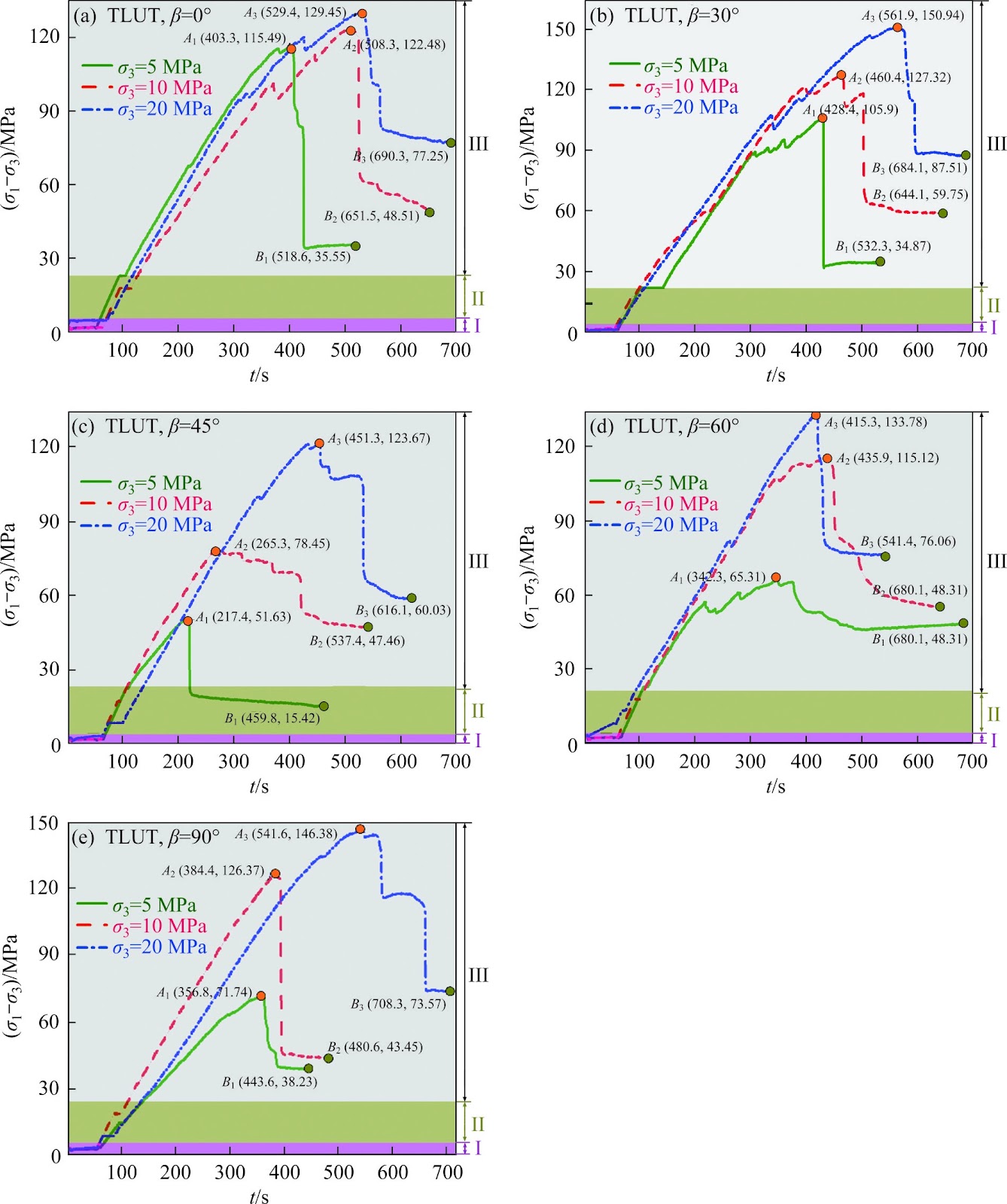
Rock residual strength, as an important input parameter, plays an indispensable role in proposing the reasonable and scientific scheme about stope design, underground tunnel excavation and stability evaluation of deep chambers. Therefore, previous residual strength models of rocks established were reviewed. And corresponding related problems were stated. Subsequently, starting from the effects of bedding and whole life-cycle evolution process, series of triaxial mechanical tests of deep bedded s
Federated model with contrastive learning and adaptive control variates for human activity recognition
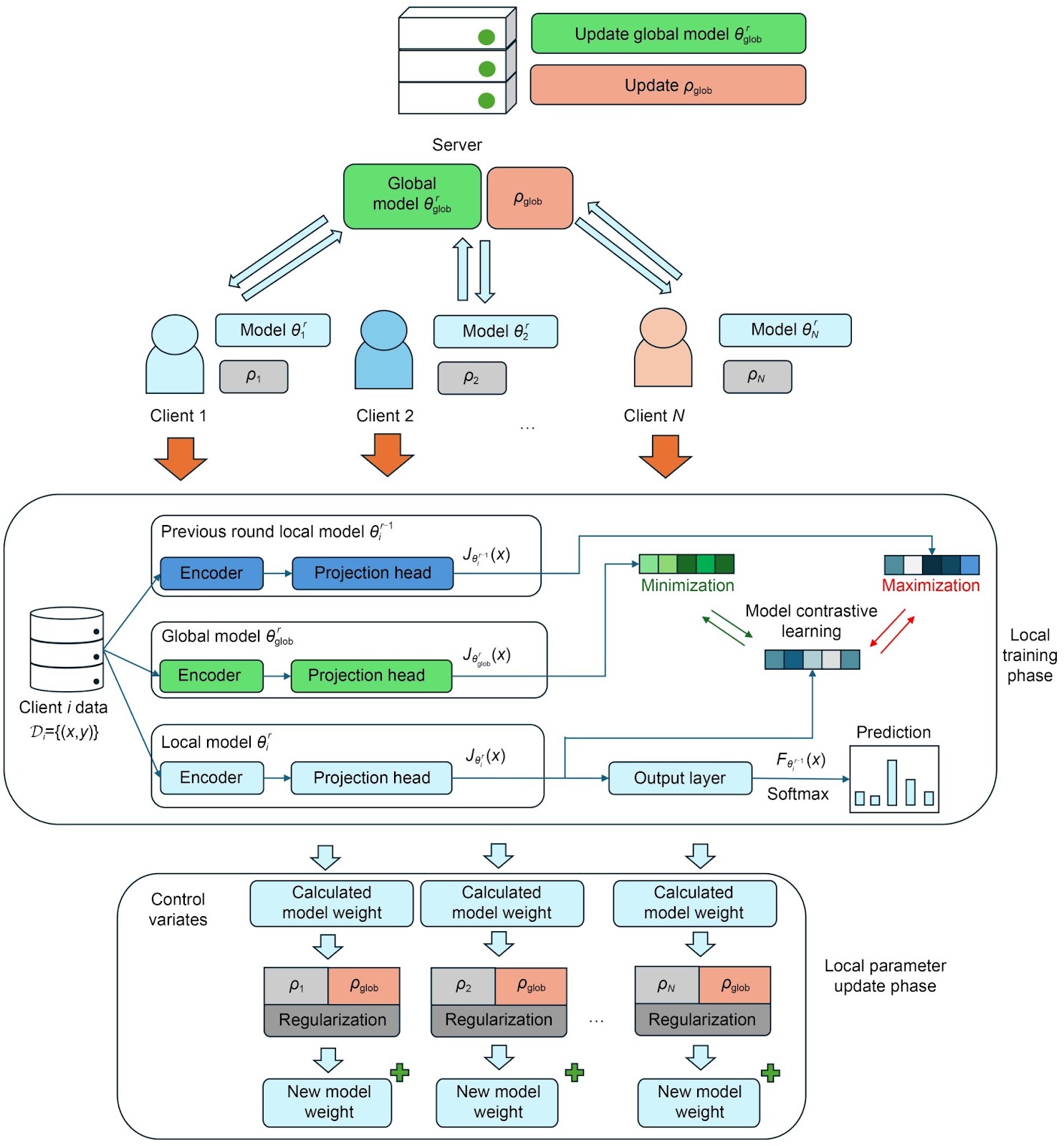
Recent attention to privacy issues demands a communication-safe method for training human activity recognition (HAR) models on client activity data. Federated learning (FL) has become a compelling technique to facilitate model training between the server and clients while preserving data privacy. However, classical FL methods often assume independent and identically distributed (IID) data among clients. This assumption does not hold true in practical scenarios. Human activity in real-world scena