Key Takeaways & Executive Findings
- •• A novel 3D shear strength criterion for discontinuities with different joint wall compressive strengths (DDJCS) is proposed, extending the JRC-JCS model to account for 3D surface morphology. • The Grasselli and Develi directional roughness method accurately predicts shear-induced potential contact zones in DDJCS, validated by experimental contact area measurements. • The proposed criterion reliably predicts peak shear strength for both DDJCS and DIJCS within 16% error, validated against 240 direct shear tests. • The criterion captures the anisotropy of DDJCS peak shear strength, which decreases with increasing normal stress, though further experimental verification is needed.
Abstract
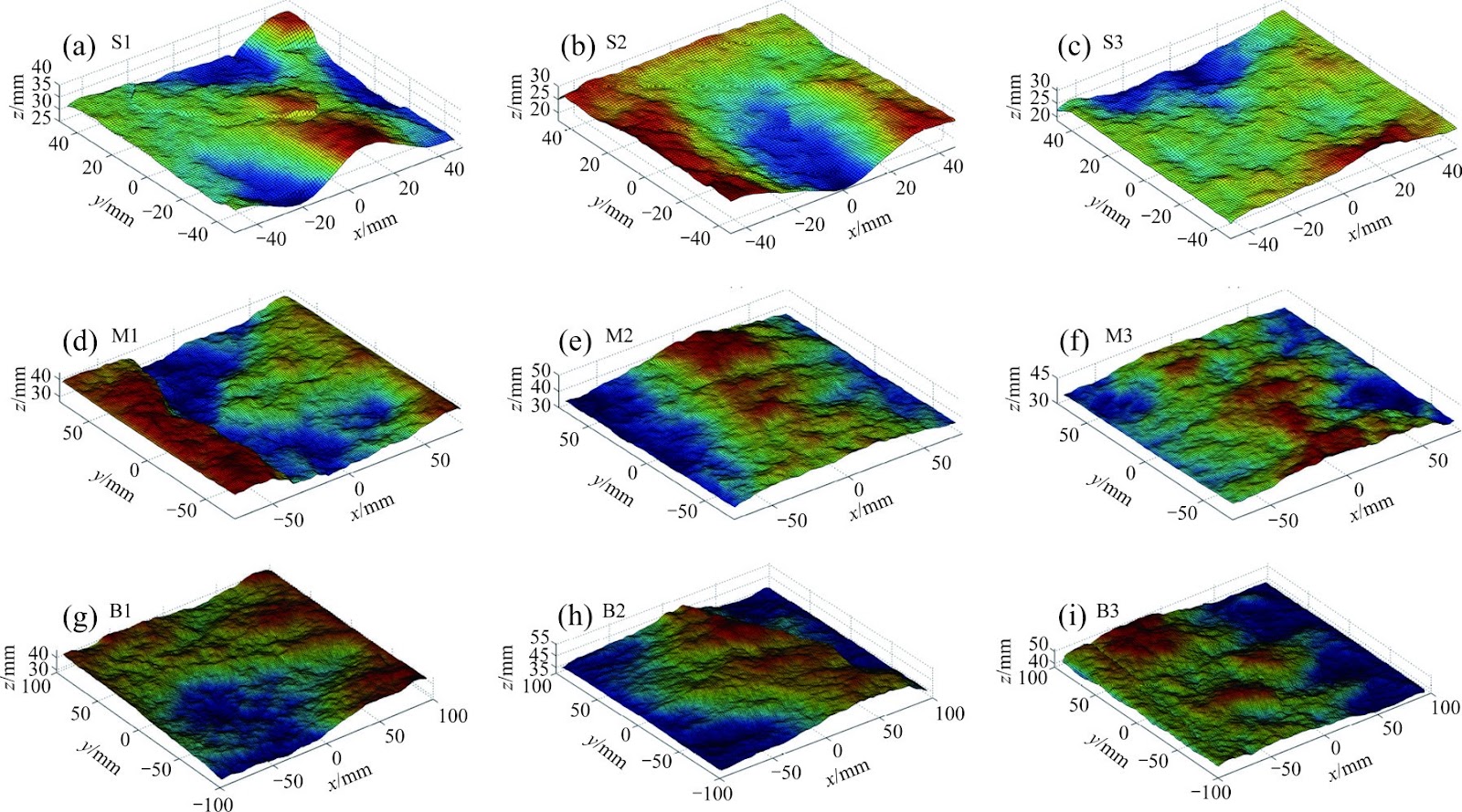
The determination of discontinuity shear strength is an important concern in rock engineering. Previous research mainly focused on the shear behavior of discontinuities with identical joint wall compressive strengths (DIJCS). However, the shear behavior of discontinuities with different joint wall compressive strengths (DDJCS) and 3D surface morphology had been rarely reported. In this study, matched mortar DDJCSs were prepared using 3D printed photosensitive resin molds. Direct shear tests were carried out under three kinds of normal stress (ranging from 0.5 to 3.0 MPa) to analyze the shear strength and contact zones of DDJCS during shearing. The results show that the contact zones of DDJCS during shearing are scattered in the steep zones facing the shear direction. It is verified that Grasselli and Develi’s directional surface roughness characterization method can be used to predict the shear-induced potential contact zones of DDJCS. When the critical apparent dip angle is equal to the peak dilation angle, the predicted contact area agrees well with the actual contact area. A 3D directional roughness parameter with clear physical meaning was introduced to characterize discontinuity surface roughness. A 3D modified joint roughness coefficient-joint wall compressive strength (JRC-JCS) criterion that can both predict the shear strength of DDJCS and DIJCS was proposed based on the newly defined roughness parameter. The proposed criterion was validated by 77 direct shear tests presented by this study and 163 direct shear tests presented by other investigators. The results show that the proposed criterion was generally reliable for the peak shear strength prediction of DDJCS and DIJCS (within 16%). It is also found that the new criterion can capture the anisotropy of the peak shear strength of DDJCS. The anisotropy of DDJCS decreases with increasing normal stress. It should be noted that the anisotropy of the shear strength of DDJCS was not investigated experimentally, and further experiments should be conducted to verify it.
1. Introduction
Discontinuities can reduce the mechanical strength of intact rock, which controls the deformative and mechanical properties of the rock mass in the shallow depth [1–4]. Rock discontinuities can be classified into two distinct types, namely discontinuities with identical joint wall compressive strengths (DIJCS) and discontinuities with different joint wall compressive strengths (DDJCS) [5]. Numerous investigations regarding the shear behavior of DIJCS had been reported in the past five decades. For instance, many researchers had investigated the shear behavior of DIJCS with different kinds of shapes, e.g. regular tooth-shape [6], sinusoidal shape [7] and rectangular shape [8]. A great deal of research was conducted on the shear behavior of DIJCS with the three-dimensional surface [9–21]. The shear behavior and peak shear strength of DIJCS had been fully understood. As regards the shear behavior and peak shear strength criterion of DDJCS, however, limited research is available in the literature.
DDJCS can be widely found in sedimentary sequences, where interfaces between different layered rocks or formations are encountered. GHAZVINIAN et al [5] took the lead in investigating the shear behavior of regular and irregular tooth-shaped DDJCS. By conducting direct shear tests on a series of concrete/soft rock DDJCS, an empirical criterion was developed to predict the peak shear strength of DDJCS. In the comprehensive research given by GHAZVINIAN et al [5], the compressive strength of the two walls of DDJCS is considerably different. As thus, asperity degradation was only observed on the soft side. Consequently, the compressive strength of the soft side was regarded as the joint wall compressive strength (JCS). However, it is found that when the strength difference between the two sides of the walls is not large enough, both sides were damaged during shearing [22]. As noted by ZHANG et al [23], when the strength difference between the two sides of the walls is not large enough, the strength ratio of the
Loading authentic research manuscript (Pages 1–5)...
REN Shu-lin, CHEN Xi, HE Man-chao, YIN Qian, YUAN Yong, TAO Zhi-gang (2025). New three-dimensional shear strength criterion of discontinuities with different joint wall compressive strengths. Journal of Central South University. https://doi.org/10.1007/s11771-025-6117-x
Research & Educational Purpose Only:The translations, structured abstracts, analytical annotations, and data reports provided by SinoTechIntel are intended exclusively for academic research, internal corporate R&D, and educational benchmarking. They do not constitute formal engineering, chemical safety, legal, or professional advice.
Copyright & Intellectual Property Notice: Original copyright of the underlying source articles and experimental data remains with the respective authors, institutions, and original publishing journals. SinoTechIntel claims intellectual property only over its proprietary translations, analytical syntheses, and AEO structured enhancements in accordance with international fair use and academic citation principles.
Frequently Asked Questions
What are discontinuities with different joint wall compressive strengths (DDJCS)?
DDJCS are rock discontinuities where the two opposing joint walls have different compressive strengths, commonly found in sedimentary sequences with layered rock interfaces.
How was the 3D shear strength criterion developed?
The criterion was developed by introducing a 3D directional roughness parameter and modifying the JRC-JCS model, validated against 240 direct shear tests on 3D-printed mortar specimens.
What is the significance of the Grasselli and Develi method in this study?
The method accurately predicts shear-induced potential contact zones in DDJCS, which is crucial for understanding shear behavior and validating the proposed criterion.
How accurate is the proposed criterion?
The criterion predicts peak shear strength within 16% error for both DDJCS and DIJCS, demonstrating high reliability across a wide range of test conditions.
Does the criterion capture anisotropy of shear strength?
Yes, the criterion captures the anisotropy of DDJCS peak shear strength, which decreases with increasing normal stress, though further experimental verification is recommended.
Related Technical Papers & Translations
Direct Repair of the Crystal Structure and Coating Surface of Spent LiFePO4 Materials Enables Superfast Li-Ion Migration
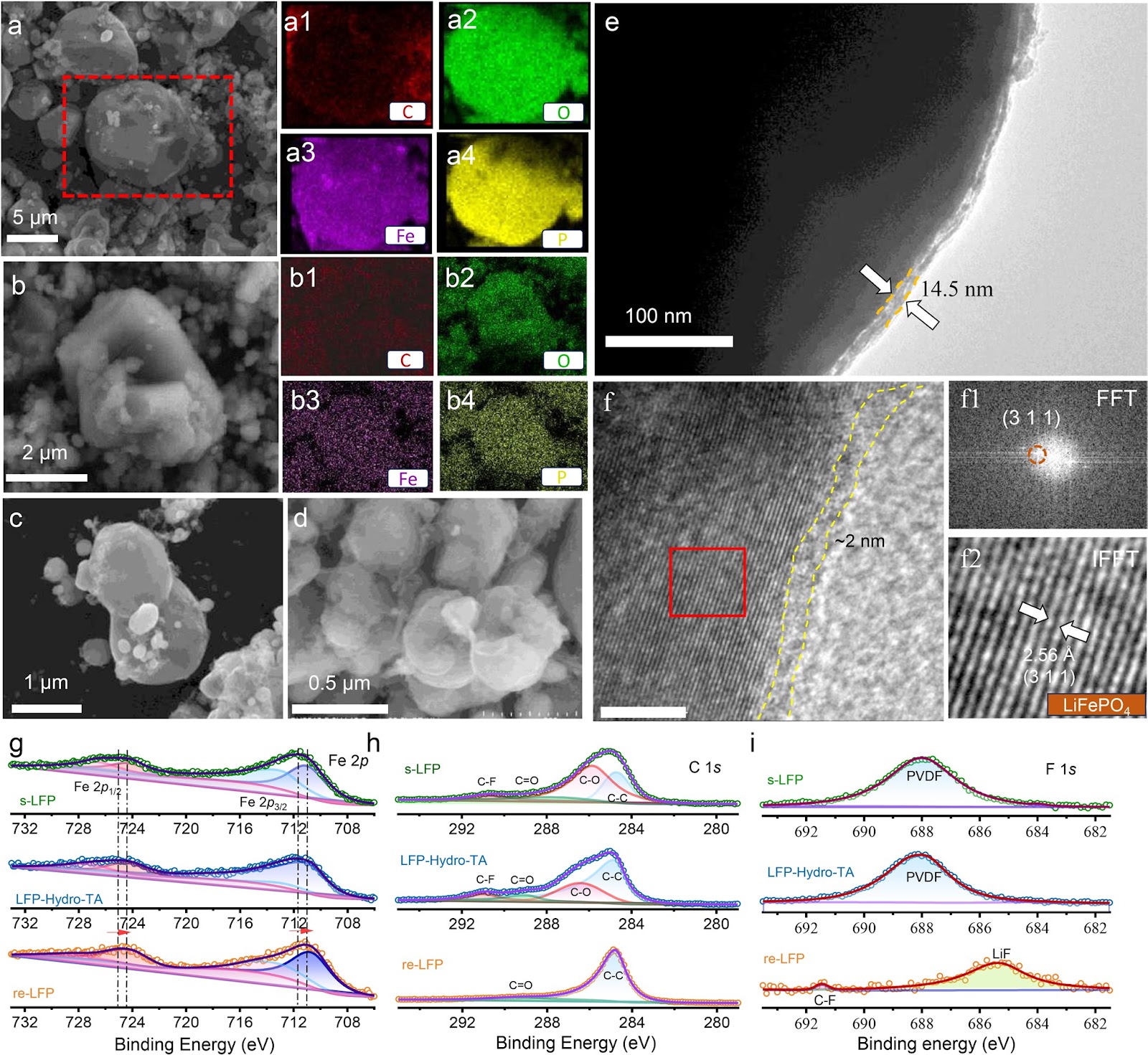
The rapid accumulation of spent LiFePO4 (LFP) cathodes from retired lithium-ion batteries necessitates the development of effective and environmental-friendly recycling strategies. In this context, direct regeneration has emerged as a promising approach for reclaiming LFP cathode materials, offering a streamlined pathway to restore their electrochemical functionality. We report an integrated regeneration protocol that simultaneously repairs the degraded crystal structure and reconstructs the damaged carbon coating in spent LFP. The regenerated cathode material had superfast lithium-ion diffusion kinetics and a stable cathode–electrolyte interface, giving a remarkable rate capability with specific capacities of 122 mAh g−1 at 5C and 106 mAh g−1 at 10C (1C = 170 mA g−1). It also maintained capacities of 110.7 mAh g−1 (5C) and 84.1 mAh g−1 (10C) after 400 cycles. It could be used in harsh environments and could be stably cycled at subzero temperatures (−10 and −20 °C) and in solid-state electrolyte batteries. Life cycle assessment combined with economic evaluation using the EverBatt model reveals that this direct regeneration approach has high economic and environmental benefits.
Oxide Semiconductor for Advanced Memory Architectures: Atomic Layer Deposition, Key Requirement and Challenges
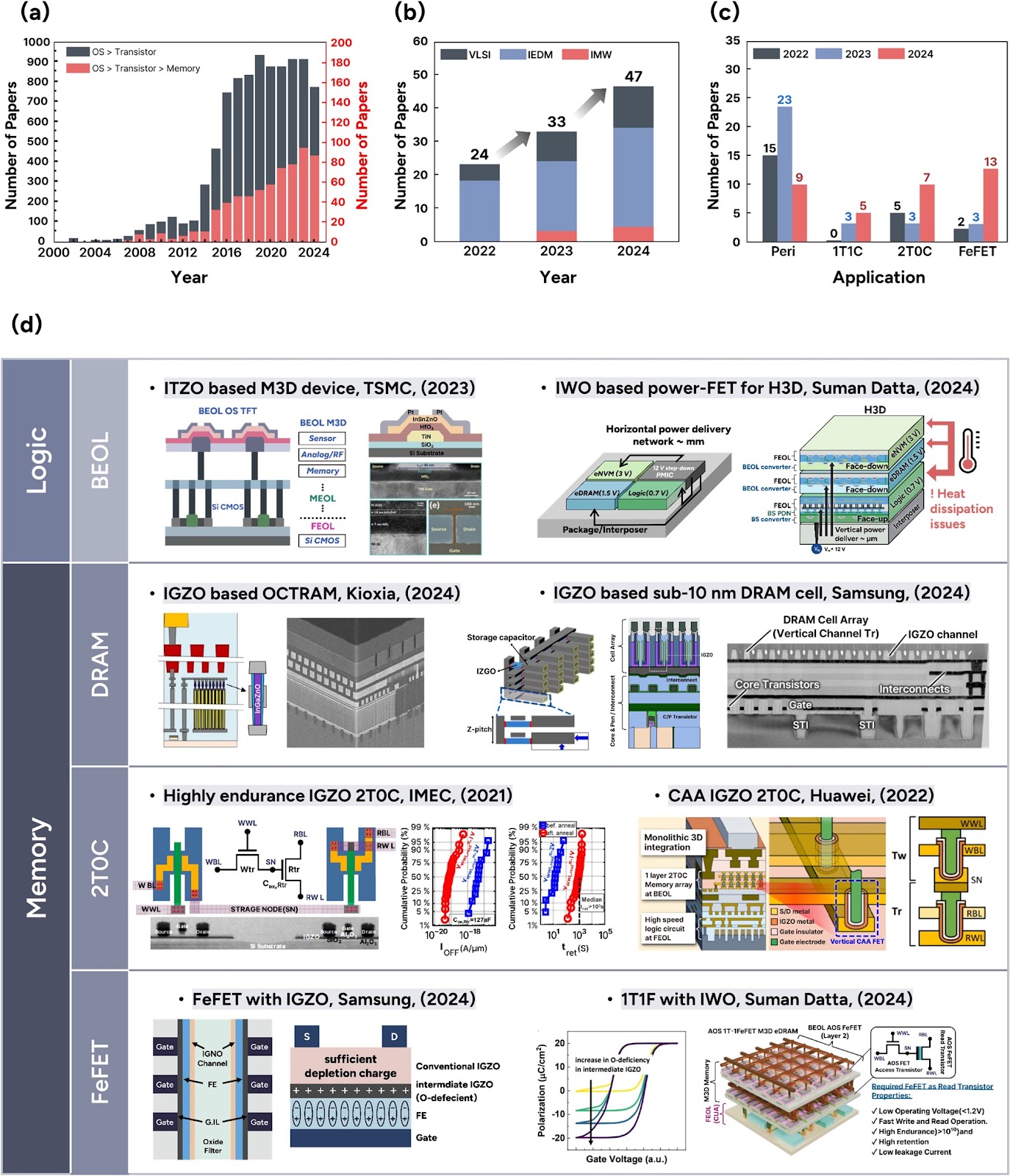
Oxide semiconductors (OSs), introduced by the Hosono group in the early 2000s, have evolved from display backplane materials to promising candidates for advanced memory and logic devices. The exceptionally low leakage current of OSs and compatibility with three-dimensional (3D) architectures have recently sparked renewed interest in their use in semiconductor applications. This review begins by exploring the unique material properties of OSs, which fundamentally originate from their distinct electronic band structure. Subsequently, we focus on atomic layer deposition (ALD), a core technique for growing excellent OS films, covering both basic and advanced processes compatible with 3D scaling. The basic surface reaction mechanisms—adsorption and reaction—and their roles in film growth are introduced. Furthermore, material design strategies, such as cation selection, crystallinity control, anion doping, and heterostructure engineering, are discussed. We also highlight challenges in memory applications, including contact resistance, hydrogen instability, and lack of p-type materials, and discuss the feasibility of ALD-grown OSs as potential solutions. Lastly, we provide an outlook on the role of ALD-grown OSs in memory technologies. This review bridges material fundamentals and device-level requirements, offering a comprehensive perspective on the potential of ALD-driven OSs for next-generation semiconductor memory devices.
Laser powder bed fusion of biodegradable Zn-4Cu alloy: Processing, microstructure and properties
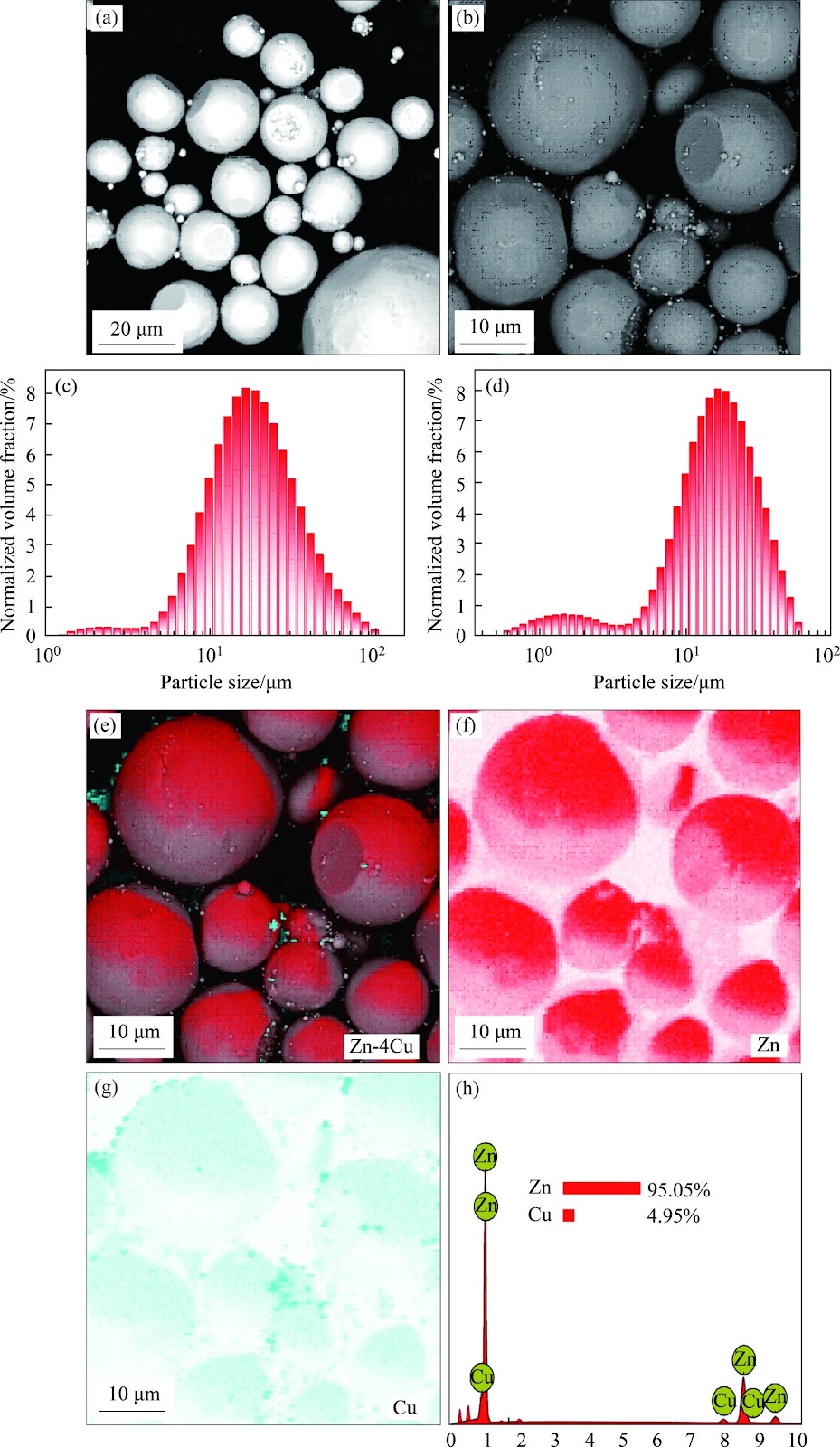
Zn's natural degradability and biocompatibility make it a promising candidate for implants, however, its mechanical properties remain insufficient for bone applications. In this study, the performance of Zn was enhanced by developing Zn-Cu alloys via laser powder bed fusion (LPBF). Optimal LPBF parameters for forming stable tracks were achieved by adjusting laser power and scanning speed. Under optimized conditions of 100 W and 100 mm/s, high-density (99.58%) Zn-Cu alloys with improved hardness (68.2HV) and yield strength (160 MPa) were achieved. These improvements are attributed to solid solution strengthening, segregation strengthening, and grain refinement. The Zn-Cu alloys also demonstrated favorable degradation behavior, with a rate of 0.16 mm/year. This degradation is primarily driven by micro-galvanic corrosion between the CuZn5 phase and Zn matrix, along with refined grains and increased grain boundary density. This work demonstrates a viable strategy for fabricating Zn-based implants with enhanced structural integrity and mechanical performance via LPBF.