Key Takeaways & Executive Findings
- •• A multi-scale modeling framework integrating crystal plasticity finite element (CPFE) with the evolutionary Yld2000-2d yield function accurately predicts plastic anisotropy and distortional strain hardening in 0.1-mm-thick CP-Ti sheets. • The virtual modeling approach overcomes the lack of standardized mechanical testing methods for ultra-thin sheets, enabling reliable characterization under multiaxial stress states. • Validation against limiting dome height tests confirms the framework's predictive capability for sheet forming simulations. • The model supports precise manufacturing of metallic bipolar plates, contributing to lightweight fuel cell systems with improved efficiency.
Abstract
This study presents a multi-scale modeling framework to describe the mechanical behavior of a 0.1 mm-thick commercially pure titanium (CP-Ti) sheet developed for fuel cell bipolar plates. Since standardized methods for characterizing ultra-thin sheets under complex stress states are lacking, a virtual modeling approach was employed. At the grain scale, a crystal plasticity finite element (CPFE) model was constructed to incorporate the relevant slip and twinning systems, enabling prediction of responses under diverse loading conditions. Extending to the continuum scale, the CPFE results, combined with tensile data, were used to calibrate an advanced constitutive model based on the evolutionary Yld2000-2d yield function, capable of capturing anisotropic behavior. Validation against independent limiting dome height tests confirmed the predictive accuracy of the framework. The proposed approach provides a basis for simulating the forming behavior of ultra-thin CP-Ti sheets and supports precise manufacturing of bipolar plates in fuel cell systems.
1. Introduction
Titanium and titanium alloys have gained renewed attention as candidate materials for metallic bipolar plates in fuel cells, which are essential components in hydrogen-powered vehicles, drones, and urban air mobility systems [1–2]. These applications demand improved fuel cell efficiency and reduced system weight. Traditionally, bipolar plates have been fabricated using graphite due to its chemical stability and electrical conductivity [3]. However, the inherent brittleness and hydrogen permeability of graphite limit its ability to be manufactured at reduced thicknesses, thereby restricting weight minimization of the fuel cell stack. To address these limitations, researchers have increasingly focused on metallic bipolar plates [4–6]. These alternatives offer superior mechanical strength and can be fabricated to thicknesses below 0.1 mm, contributing to significant weight reduction. Among various candidate metals, titanium and its alloys are particularly promising due to their excellent corrosion resistance and mechanical robustness [7–9]. In addition, titanium has a density approximately 60% lower than that of stainless steel, which is the most widely used metal in current bipolar plate applications [10–11].
Commercially pure titanium (CP-Ti) sheets are especially attractive as next-generation materials for metallic bipolar plates. Their benefits include high ductility, sufficient mechanical strength, and relatively low production costs enabled by the absence of alloying elements and simplified processing routes [12–13].
Bipolar plates require the fabrication of micro-scale flow channels to guide reactant gases and coolant. In metallic bipolar plates, these channels are typically formed through stamping using mechanical presses. During this process, the sheet is subjected to multiaxial stress conditions, necessitating an accurate understanding of its mechanical response. However, standardized methods for evaluating the mechanical properties of ultra-thin sheets are not yet established. For example, ISO 12004-2, which defines forming limit measurement procedures, applies only to sheet thicknesses between 0.3 and 4 mm [14], making it unsuitable for sheets thinner than 0.1 mm.
Loading authentic research manuscript (Pages 1–5)...
Kyung Mun Min, Seonghwan Choi, Xiaohua Hu, Jinwoo Lee, Hyuk Jong Bong (2025). Multi-scale modeling of ultra-thin commercially pure titanium sheet for fuel cell bipolar plates: Plastic anisotropy and distortional strain hardening. Journal of Mineral Metallurgy and Materials Science. https://doi.org/10.1007/s12613-025-3288-2
Research & Educational Purpose Only:The translations, structured abstracts, analytical annotations, and data reports provided by SinoTechIntel are intended exclusively for academic research, internal corporate R&D, and educational benchmarking. They do not constitute formal engineering, chemical safety, legal, or professional advice.
Copyright & Intellectual Property Notice: Original copyright of the underlying source articles and experimental data remains with the respective authors, institutions, and original publishing journals. SinoTechIntel claims intellectual property only over its proprietary translations, analytical syntheses, and AEO structured enhancements in accordance with international fair use and academic citation principles.
Frequently Asked Questions
What is the purpose of the multi-scale modeling approach in this study?
The study develops a multi-scale modeling framework to accurately describe the mechanical behavior of ultra-thin (0.1 mm) commercially pure titanium sheets used for fuel cell bipolar plates, capturing plastic anisotropy and distortional strain hardening.
Why is crystal plasticity finite element (CPFE) modeling used for CP-Ti sheets?
CPFE modeling incorporates crystallographic texture and grain-level deformation mechanisms (slip and twinning) to predict anisotropic mechanical behavior, which conventional continuum models fail to capture due to the pronounced plastic anisotropy in CP-Ti.
What are the challenges in characterizing ultra-thin sheets for fuel cell bipolar plates?
Standardized testing methods, such as ISO 12004-2 for forming limits, are limited to sheet thicknesses of 0.3–4 mm, making them unsuitable for sheets thinner than 0.1 mm. This necessitates virtual modeling approaches to evaluate mechanical properties.
How was the multi-scale modeling framework validated?
The framework was validated against independent limiting dome height tests, confirming its predictive accuracy for forming behavior in ultra-thin CP-Ti sheets.
What is the significance of the Yld2000-2d yield function in this study?
The evolutionary Yld2000-2d yield function is used to calibrate an advanced constitutive model that captures the anisotropic behavior of CP-Ti sheets, enabling accurate continuum-scale simulations.
Related Technical Papers & Translations
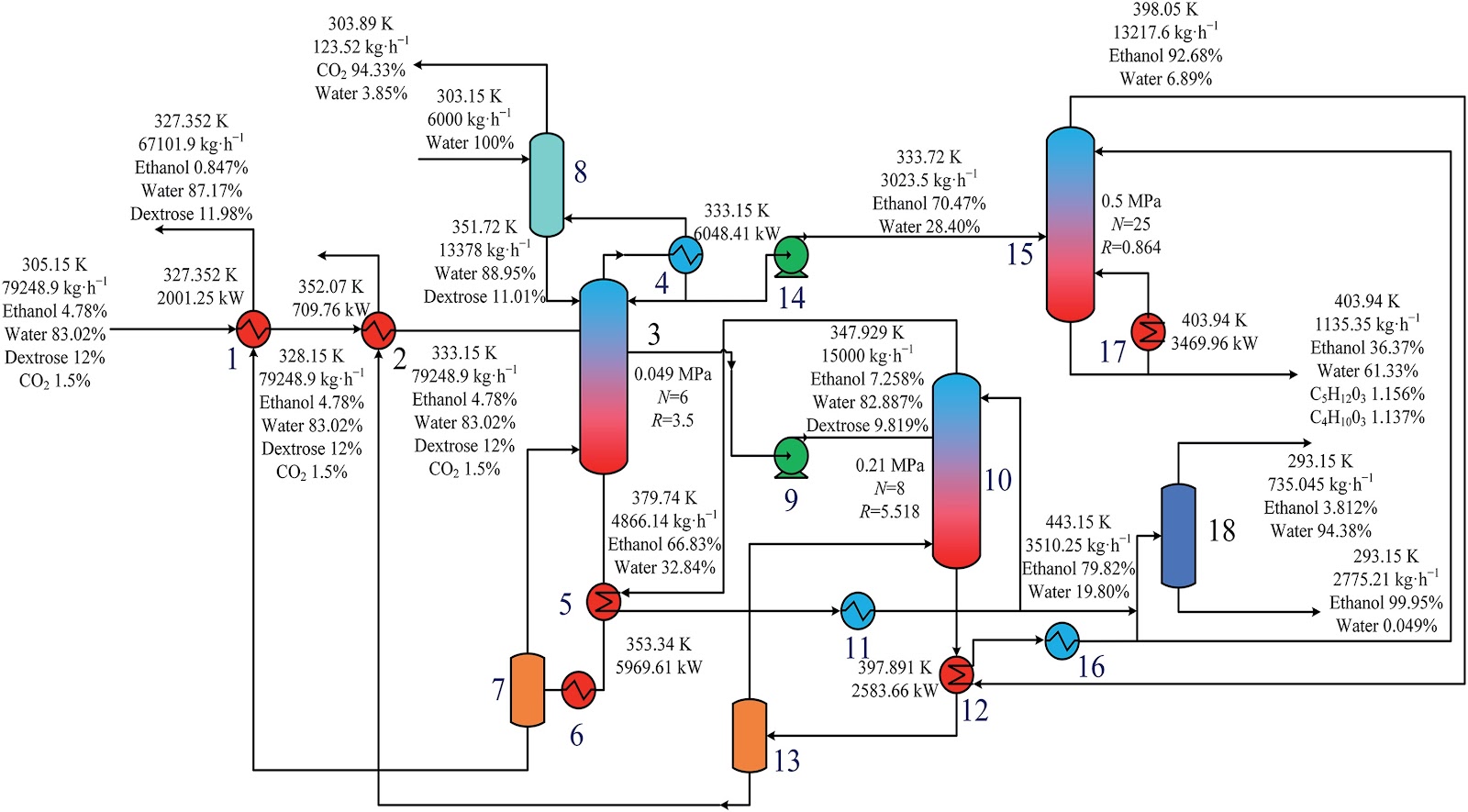
Design and optimization of a high-efficiency distillation process for cellulosic fuel ethanol integrated with thermal coupling and molecular sieve adsorption
To address the challenges of high energy consumption and prominent costs in the traditional three-columns distillation process for cellulosic fuel ethanol, a distillation—molecular sieve coupling separation process is proposed. This process integrates a three-column (crude distillation column, first distillation column, second distillation column) system with a 3A molecular sieve adsorption deep dehydration unit. A thermal coupling network is constructed via differential pressure design (steam from medium/high-pressure columns as mutual heat sources, reboiler liquid waste heat for feed preheating), and molecular sieve adsorption conditions are optimized. The study first performs a thermodynamic consistency test on the ethanol—water system, determines optimal non-random two-liquid (NRTL) model binary interaction parameters via experimental data regression for Aspen Plus simulation. Aiming at minimum total annual cost (TAC), Aspen Plus is used to optimize process parameters (theoretical tray number, feed location, reflux ratio, side-draw position, etc.). Economic analysis shows this process reduces CO2 emission costs by 27.56%, TAC by 15.58% (to 5.123 × 10⁶ USD·a-1), and increases ethanol purity to >99.6%, providing an effective solution for green, efficient separation.
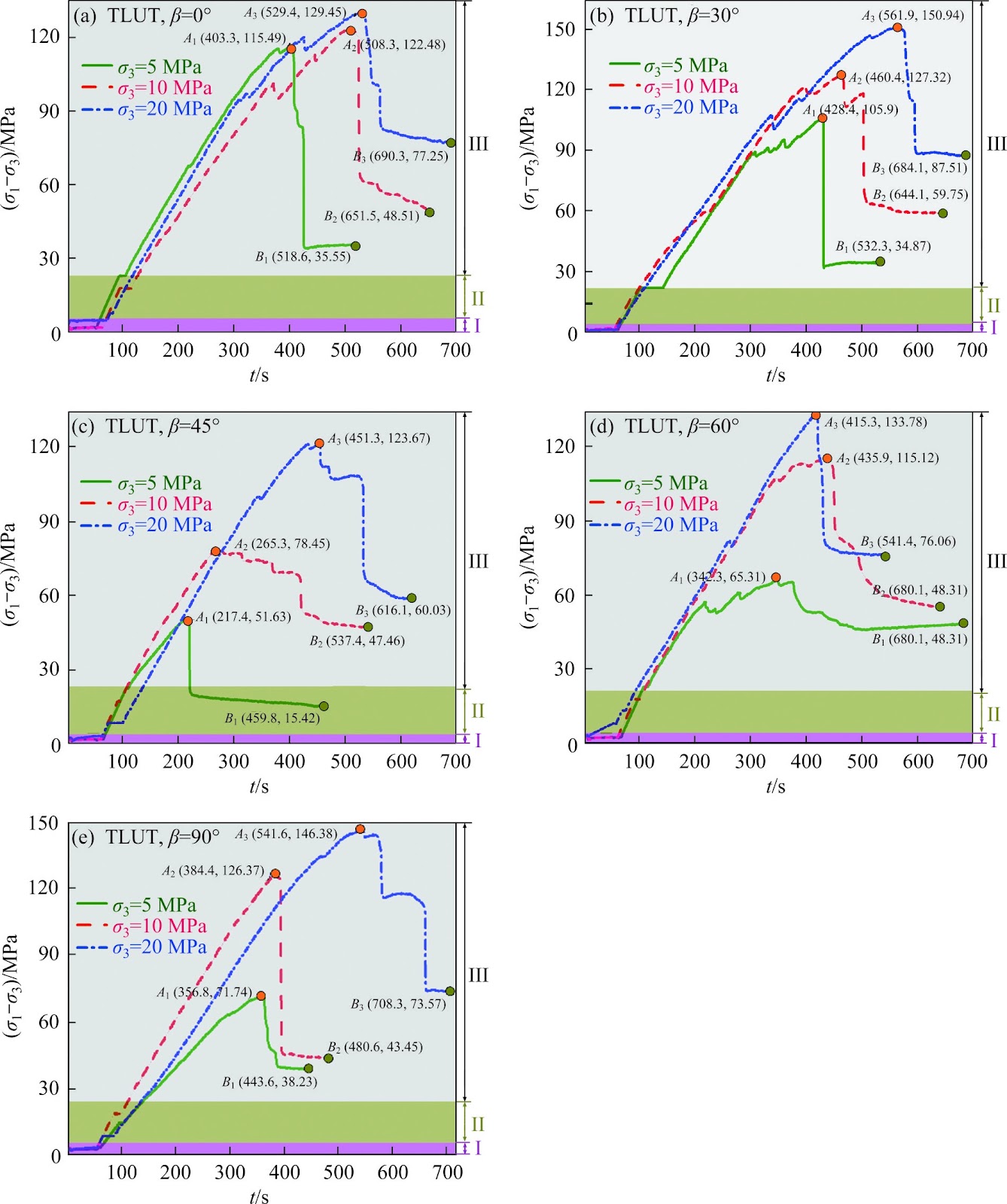
A cohesion loss model for determining residual strength of deep bedded sandstone
Rock residual strength, as an important input parameter, plays an indispensable role in proposing the reasonable and scientific scheme about stope design, underground tunnel excavation and stability evaluation of deep chambers. Therefore, previous residual strength models of rocks established were reviewed. And corresponding related problems were stated. Subsequently, starting from the effects of bedding and whole life-cycle evolution process, series of triaxial mechanical tests of deep bedded s
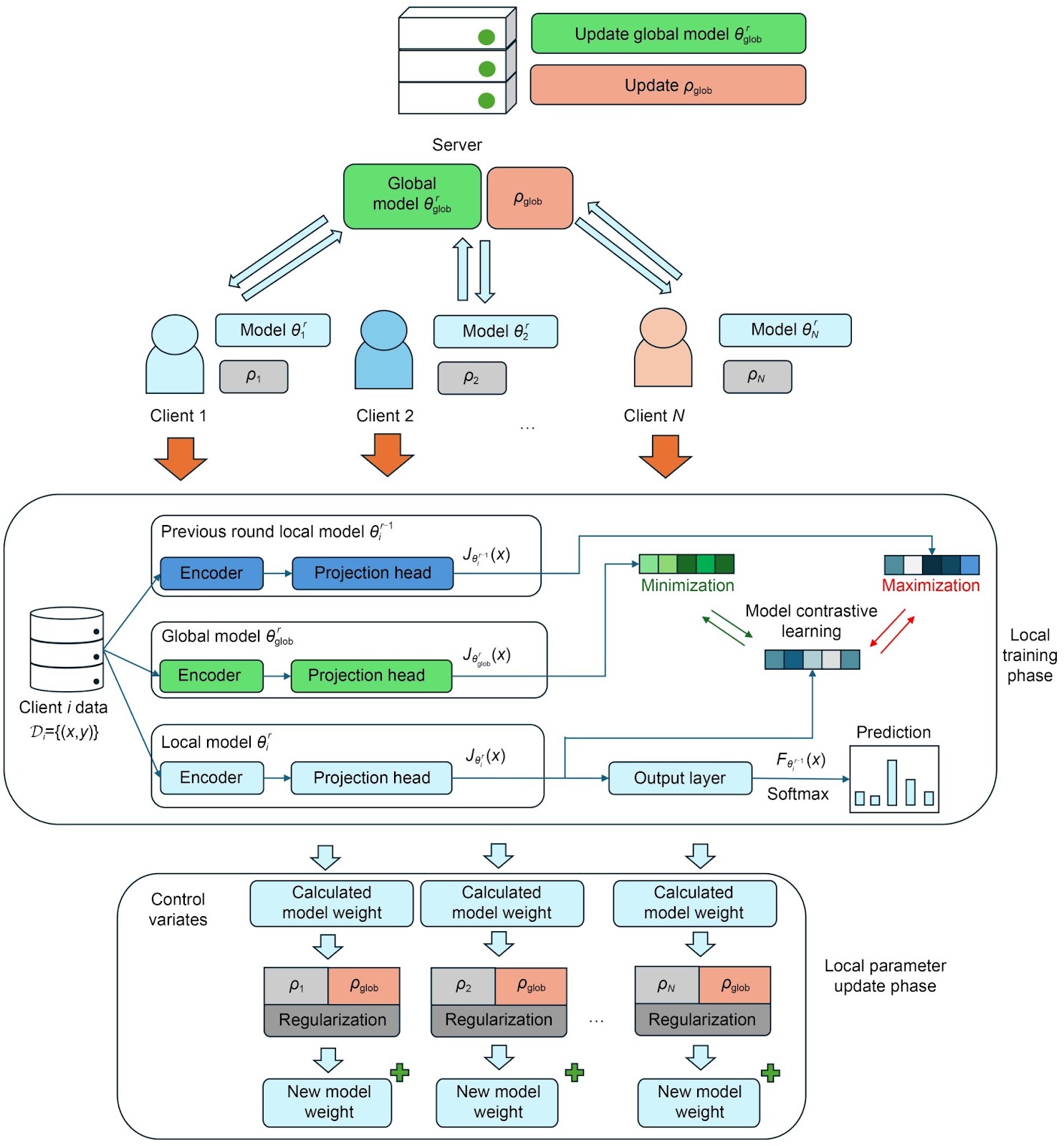
Federated model with contrastive learning and adaptive control variates for human activity recognition
Recent attention to privacy issues demands a communication-safe method for training human activity recognition (HAR) models on client activity data. Federated learning (FL) has become a compelling technique to facilitate model training between the server and clients while preserving data privacy. However, classical FL methods often assume independent and identically distributed (IID) data among clients. This assumption does not hold true in practical scenarios. Human activity in real-world scena