Key Takeaways & Executive Findings
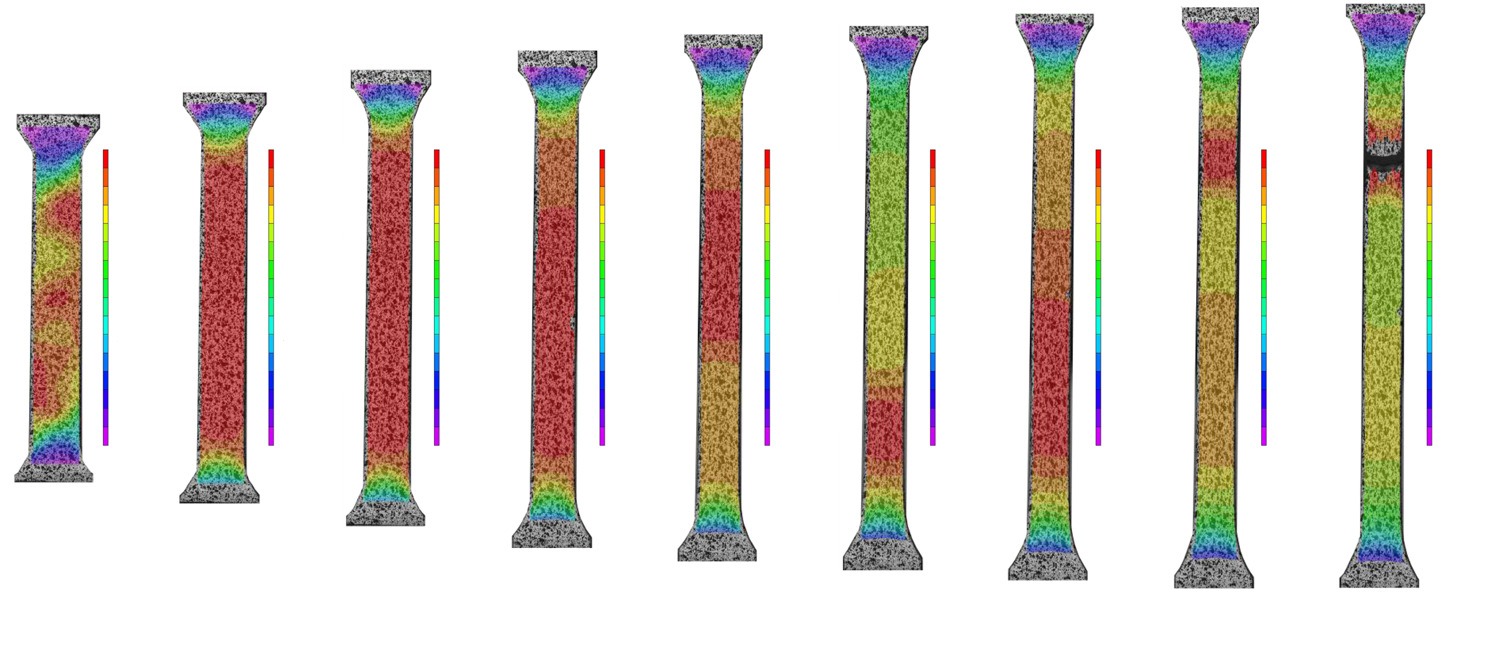
- •• EFSW refined the stir zone grain size from 3.67 μm to 1.39 μm, while the heat-affected zone coarsened to 4.19 μm. • The EFSW joint achieved 1055 MPa ultimate tensile strength (103.3% of BM) and 561 MPa yield strength (111.1% of BM), with 60.8% elongation (92.4% of BM). • Plastic deformation concentrated in the base material, with notable deformation in both SZ and HAZ, and fracture occurred in the BM, indicating superior weld integrity. • EFSW is a promising solid-state welding technique for TWIP steel, mitigating fusion-welding defects while enhancing strength.
Abstract
Twinning-induced plasticity (TWIP) steel was processed using electrically assisted friction stir welding (EFSW). The microstructure, mechanical properties, and deformation behavior of the welded joints were systematically investigated. The results show that the average grain size was refined from 3.67 μm in the base material (BM) to 1.39 μm in the stir zone (SZ), while it increased to 4.19 μm in the heat-affected zone (HAZ). The fraction of twin boundaries (TBs) decreased from 20.7% in the BM to 6.9% in the SZ and increased to 24.5% in the HAZ. The ultimate tensile strength, yield strength, and elongation of the BM were 1021 MPa, 505 MPa, and 65.8%, respectively. In comparison, the EFSW joint exhibited values of 1055 MPa, 561 MPa, and 60.8%, corresponding to 103.3%, 111.1%, and 92.4% of those of the BM, respectively. During tensile testing, plastic deformation was primarily concentrated in the BM, although both the SZ and HAZ also exhibited notable plastic deformation. Fracture ultimately occurred in the BM.
1. Introduction
Twinning-induced plasticity (TWIP) steel, an advanced austenitic ultrahigh-strength steel, has significant application potential in the automotive, aerospace, and energy industries due to its excellent ductility and energy-absorption properties [1–2]. During plastic deformation, the original grains are subdivided and refined through the formation of deformation twins (DTs), resulting in a dynamic Hall–Petch effect. Consequently, the strain-hardening rate of TWIP steel is significantly enhanced [3–5]. The product of strength and ductility (i.e., the product of ultimate tensile strength and elongation) of TWIP steel typically exceeds 50000 MPa·% [1]. Therefore, welding TWIP steels is necessary for practical applications. To date, various fusion welding techniques, such as laser welding [6–7], gas tungsten arc welding [8], and resistance spot welding [9–11], have been employed to join TWIP steel. However, these conventional methods are associated with solidification defects, carbide precipitation [6], and element volatilization [12], all of which can degrade the mechanical properties of the welded joints.
Friction stir welding (FSW) is an advanced solid-state joining technique [13–15] known for its high efficiency and low welding temperature. It effectively avoids the shortcomings of fusion welding while refining, densifying, and homogenizing the microstructure, thereby significantly improving the mechanical properties of the joint [16–17].
Loading authentic research manuscript (Pages 1–5)...
Kaiwei Wang, Ke Qiao, Kuaishe Wang, Wen Wang, Hongduo Wang, Jiangyun Zhang, Yi Liu, Xu Guo, Kai Zhou, Fengming Qiang (2025). Microstructure, mechanical properties and deformation of electrically assisted friction stir welded twinning-induced plasticity steel joint. Journal of Mineral Metallurgy and Materials Science. https://doi.org/10.1007/s12613-025-3203-x
Research & Educational Purpose Only:The translations, structured abstracts, analytical annotations, and data reports provided by SinoTechIntel are intended exclusively for academic research, internal corporate R&D, and educational benchmarking. They do not constitute formal engineering, chemical safety, legal, or professional advice.
Copyright & Intellectual Property Notice: Original copyright of the underlying source articles and experimental data remains with the respective authors, institutions, and original publishing journals. SinoTechIntel claims intellectual property only over its proprietary translations, analytical syntheses, and AEO structured enhancements in accordance with international fair use and academic citation principles.
Frequently Asked Questions
What is electrically assisted friction stir welding (EFSW)?
EFSW is an advanced solid-state welding technique that integrates an electric current with conventional friction stir welding. The electric current induces an electroplastic effect, which, combined with frictional heat, enhances the material flow and joint properties while minimizing thermal damage.
How does EFSW affect the microstructure of TWIP steel joints?
EFSW refines the grain structure in the stir zone (from 3.67 μm to 1.39 μm) and reduces twin boundaries, while the heat-affected zone experiences slight grain coarsening. This leads to improved strength while maintaining good ductility.
What are the mechanical properties of EFSW-welded TWIP steel joints?
The EFSW joint exhibits ultimate tensile strength of 1055 MPa, yield strength of 561 MPa, and elongation of 60.8%, corresponding to 103.3%, 111.1%, and 92.4% of the base material, respectively. This indicates superior strength with only a slight reduction in ductility.
Why did fracture occur in the base material rather than the weld zone?
Fracture occurred in the base material because the weld zones (stir zone and heat-affected zone) exhibited higher strength and adequate ductility, allowing plastic deformation to concentrate in the softer base material, which ultimately failed.
What are the advantages of EFSW compared to fusion welding for TWIP steel?
EFSW avoids common fusion welding defects such as solidification cracking, carbide precipitation, and element volatilization. It also provides grain refinement and improved mechanical properties, making it a more reliable joining method for TWIP steel.
Related Technical Papers & Translations
Design and optimization of a high-efficiency distillation process for cellulosic fuel ethanol integrated with thermal coupling and molecular sieve adsorption
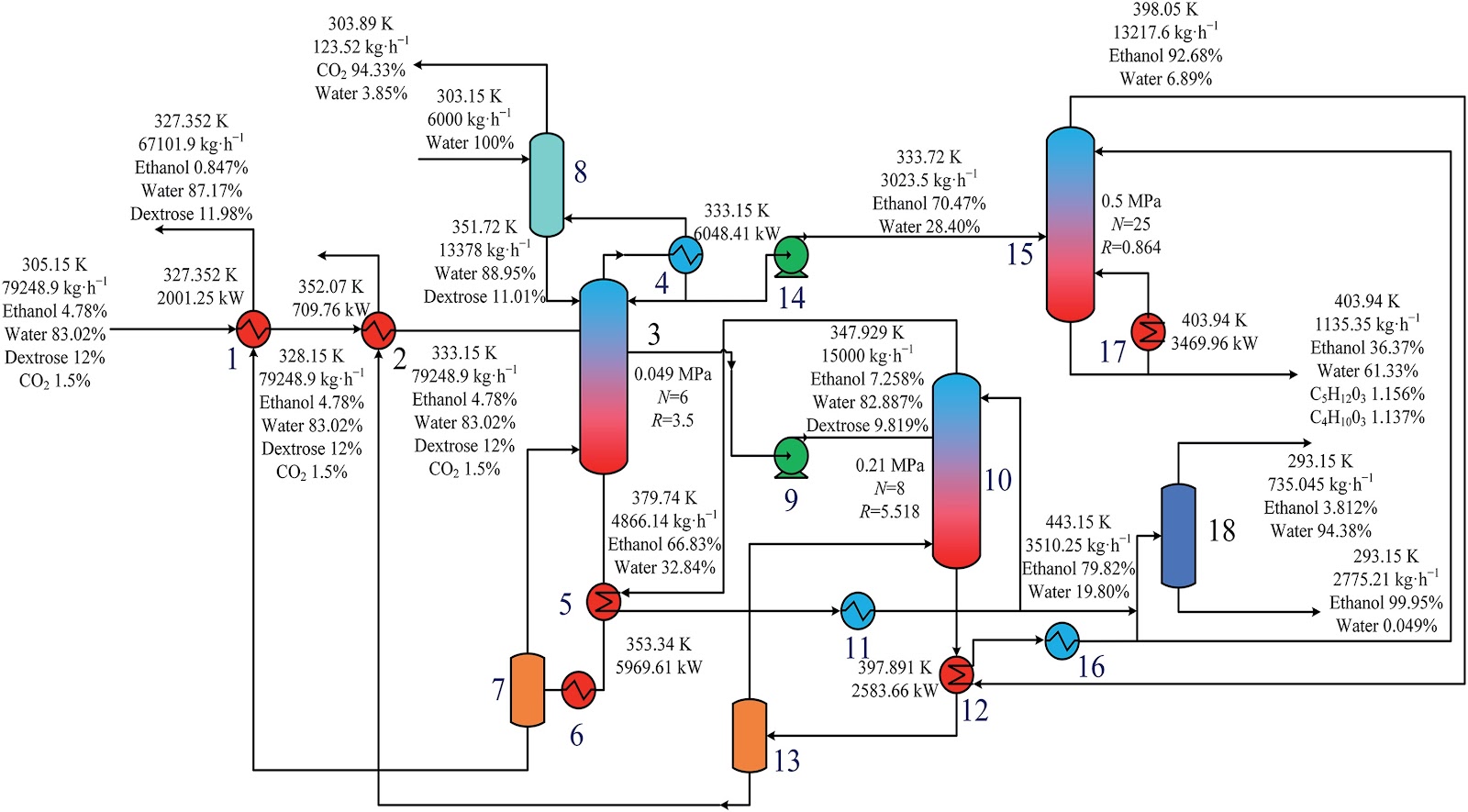
To address the challenges of high energy consumption and prominent costs in the traditional three-columns distillation process for cellulosic fuel ethanol, a distillation—molecular sieve coupling separation process is proposed. This process integrates a three-column (crude distillation column, first distillation column, second distillation column) system with a 3A molecular sieve adsorption deep dehydration unit. A thermal coupling network is constructed via differential pressure design (steam from medium/high-pressure columns as mutual heat sources, reboiler liquid waste heat for feed preheating), and molecular sieve adsorption conditions are optimized. The study first performs a thermodynamic consistency test on the ethanol—water system, determines optimal non-random two-liquid (NRTL) model binary interaction parameters via experimental data regression for Aspen Plus simulation. Aiming at minimum total annual cost (TAC), Aspen Plus is used to optimize process parameters (theoretical tray number, feed location, reflux ratio, side-draw position, etc.). Economic analysis shows this process reduces CO2 emission costs by 27.56%, TAC by 15.58% (to 5.123 × 10⁶ USD·a-1), and increases ethanol purity to >99.6%, providing an effective solution for green, efficient separation.
A cohesion loss model for determining residual strength of deep bedded sandstone
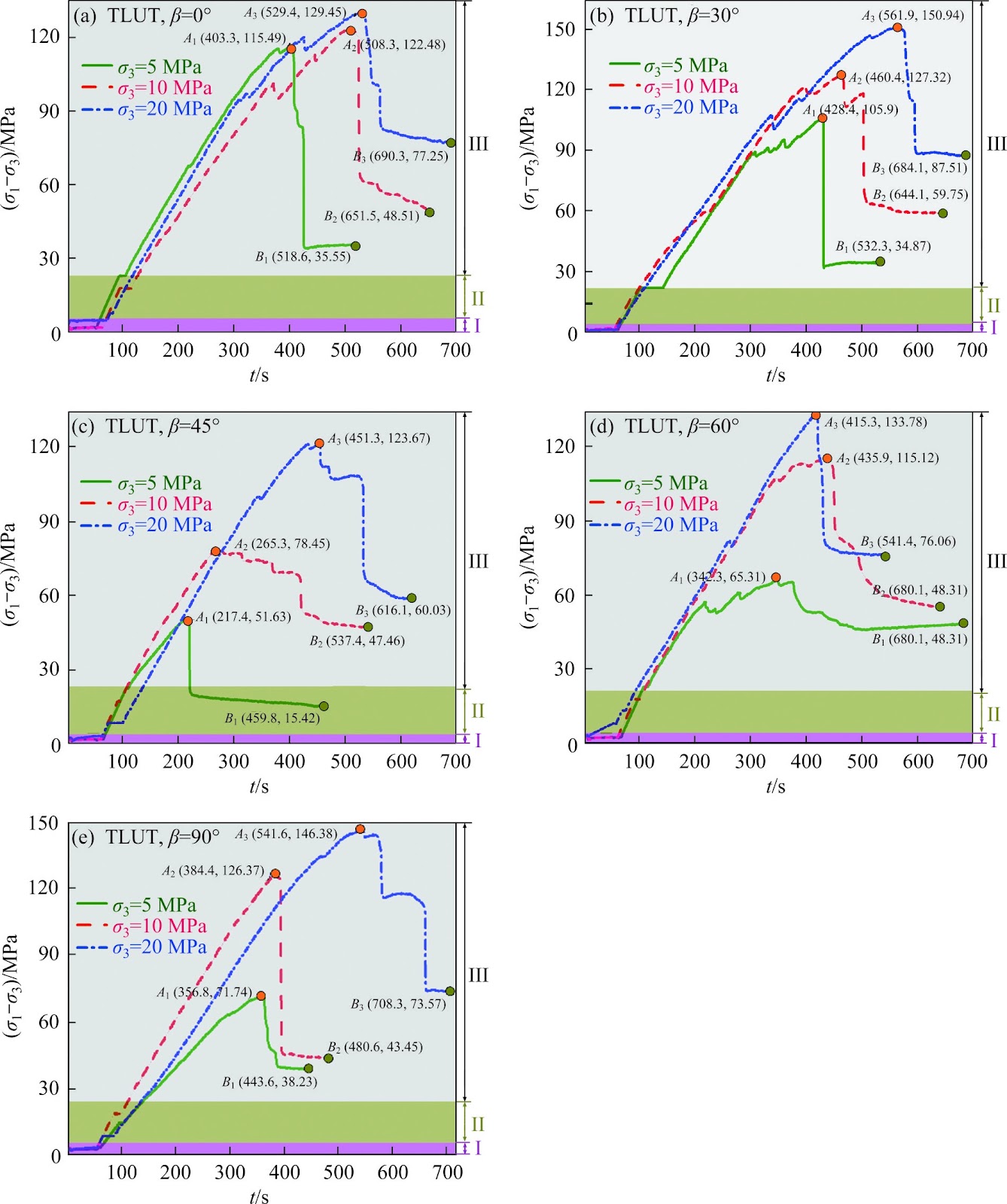
Rock residual strength, as an important input parameter, plays an indispensable role in proposing the reasonable and scientific scheme about stope design, underground tunnel excavation and stability evaluation of deep chambers. Therefore, previous residual strength models of rocks established were reviewed. And corresponding related problems were stated. Subsequently, starting from the effects of bedding and whole life-cycle evolution process, series of triaxial mechanical tests of deep bedded s
Federated model with contrastive learning and adaptive control variates for human activity recognition
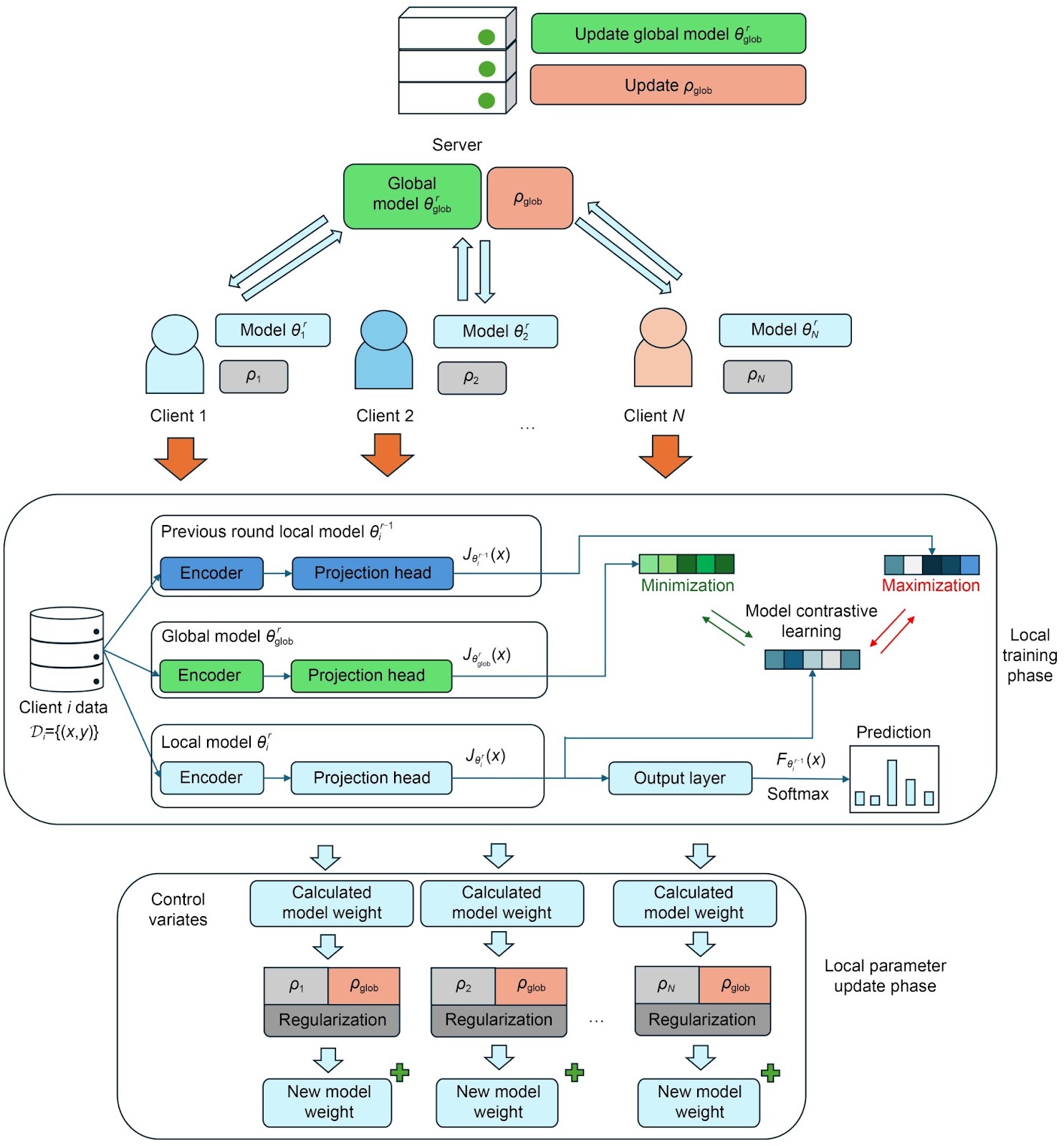
Recent attention to privacy issues demands a communication-safe method for training human activity recognition (HAR) models on client activity data. Federated learning (FL) has become a compelling technique to facilitate model training between the server and clients while preserving data privacy. However, classical FL methods often assume independent and identically distributed (IID) data among clients. This assumption does not hold true in practical scenarios. Human activity in real-world scena