Key Takeaways & Executive Findings
- •• Successfully fabricated WC particle reinforced CoCrFeNiMo high-entropy alloy composite coatings on Cr12MoV steel using laser cladding. • Four distinct carbide types were identified, including primary carbides, eutectic structures, peripheral massive crystals, and incompletely fused WC particles. • Increasing WC content enhanced microhardness while decreasing the friction coefficient; optimal performance at 30 wt.% WC (HV0.2 689.7, friction coefficient 0.72). • Wear resistance of the substrate was significantly improved, with spalling and abrasive wear as the dominant mechanisms.
Abstract
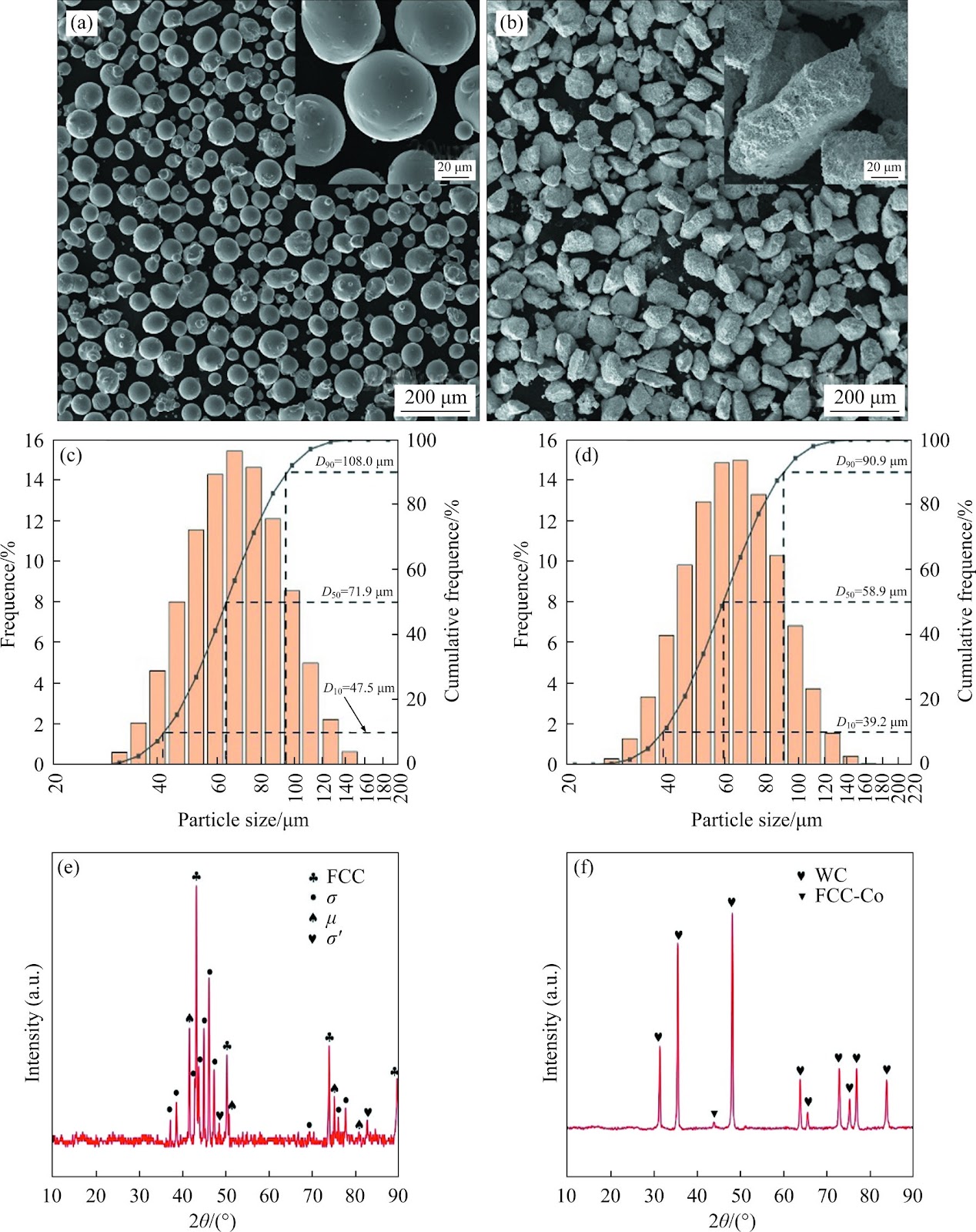
WC particles reinforced CoCrFeNiMo high-entropy alloy (HEA) composite coatings were prepared on Cr12MoV steel successfully by laser cladding technology to improve the wear resistance of substrates. Effect of WC content on microstructure and wear property of the composite coatings was studied in detail. Large numbers of carbides with four main types: primary carbide crystals, eutectic structures, massive crystals growing along the periphery of the remaining WC particles and incompletely fused WC particles, were found to exist in the WC/CoCrFeNiMo composite coatings. With increasing WC content, the microhardness of coatings is gradually improved while the average friction coefficients follow the opposite trend due to solid solution strengthening and second phase strengthening effect. The maximum microhardness and minimum friction coefficient are HV0.2 689.7 and 0.72, respectively, for the composite coating with 30 wt.% WC, the wear resistance of the substrate is improved significantly, the wear mechanisms are spalling wear and abrasive wear due to their high microhardness.
1. Introduction
As a traditional high-carbon high-chromium steel, Cr12MoV steel is widely used in industrial fields such as cold-extruded feelers, wear-resistant parts, punching dies, cold heading dies [1, 2]. In order to bear harsh working conditions, surface modification is need to conduct on Cr12MoV steel to obtain excellent surface properties such as high hardness, high wear resistance and micro-deformation [3]. Presently, the traditional methods, carburizing, nitriding, and other heat treatment, are widely applied to treat steels surface, which are expensive, inefficient, and high requirements for thermal processing technology and heat treatment process, and even premature failure of the mold occurs when improper processing technology is conducted [4, 5].
Laser cladding, as an emerging surface modification technology, can obtain unique surface properties, such as wear property, by cladding a thin coating on substrate [6 −8]. The coating on substrate fabricated by laser cladding has some advantages, such as low heat input and dilution rate, high design freedom and excellent metallurgical bonding between the cladding layer and the substrate, as well as reduced production cost and improved production efficiency [9−11].
High-entropy alloys (HEAs), an emerging alloy composed of five or more elements as principal components, are proposed firstly by YEH et al [12]. Due to the advantages of high entropy alloys such as high hardness, high strength, excellent wear resistance and thermal stability, HEAs have attracted great attention and have been extensively applied in many fields [13 −15]. Numerous studies indicated that HEAs containing Mo usually possess excellent hardness, wear resistance and oxidation resistance [16 −18], compared to conventional HEAs such as FeCoCrNi. Due to the large atomic size (1.363 Å) in Mo atoms, solid solution and precipitation strengthening easily occur in Mo-contained HEAs, which can improves the properties of the coatings [19]. Among them, the CoCrFeNiMo system, owing to the generation tendency of high hard intermetallic compounds reacted between Mo with Co, Cr and Fe, is presented as a eutectic high-entropy alloy with excellent physical and mechanical properties [20, 21].
Loading authentic research manuscript (Pages 1–5)...
LIU Xing-yi, YANG Xiao, CHEN Zu-bin, GUO Chun-huan, LI Hai-xin, YANG Zhen-lin, DONG Tao, JIANG Feng-chun, QIAO Zhu-hui (2025). Microstructure and wear property of laser cladded WC particles reinforced CoCrFeNiMo composite coatings on Cr12MoV steel. Journal of Central South University. https://doi.org/10.1007/s11771-025-5850-5
Research & Educational Purpose Only:The translations, structured abstracts, analytical annotations, and data reports provided by SinoTechIntel are intended exclusively for academic research, internal corporate R&D, and educational benchmarking. They do not constitute formal engineering, chemical safety, legal, or professional advice.
Copyright & Intellectual Property Notice: Original copyright of the underlying source articles and experimental data remains with the respective authors, institutions, and original publishing journals. SinoTechIntel claims intellectual property only over its proprietary translations, analytical syntheses, and AEO structured enhancements in accordance with international fair use and academic citation principles.
Frequently Asked Questions
What is the effect of WC content on the microhardness and friction coefficient of CoCrFeNiMo composite coatings?
According to the study, increasing WC content gradually improves the microhardness of the coatings, while the average friction coefficients follow the opposite trend. At 30 wt.% WC, the composite coating achieves a maximum microhardness of HV0.2 689.7 and a minimum friction coefficient of 0.72.
How were WC particle reinforced CoCrFeNiMo composite coatings prepared?
The coatings were fabricated on Cr12MoV steel substrates using laser cladding technology, successfully producing WC-reinforced CoCrFeNiMo high-entropy alloy composite coatings.
What are the main carbide types found in the composite coatings?
Four main types of carbides were identified: primary carbide crystals, eutectic structures, massive crystals growing along the periphery of remaining WC particles, and incompletely fused WC particles.
What are the dominant wear mechanisms of the WC/CoCrFeNiMo composite coatings?
The wear mechanisms are spalling wear and abrasive wear, resulting from the high microhardness of the coatings, which significantly improves the wear resistance of the substrate.
Why is laser cladding used to modify Cr12MoV steel?
Laser cladding is an emerging surface modification technology that offers advantages such as low heat input, high design freedom, excellent metallurgical bonding, and reduced production cost, making it suitable for improving the surface wear resistance of Cr12MoV steel used in demanding industrial applications.
Related Technical Papers & Translations
Design and optimization of a high-efficiency distillation process for cellulosic fuel ethanol integrated with thermal coupling and molecular sieve adsorption
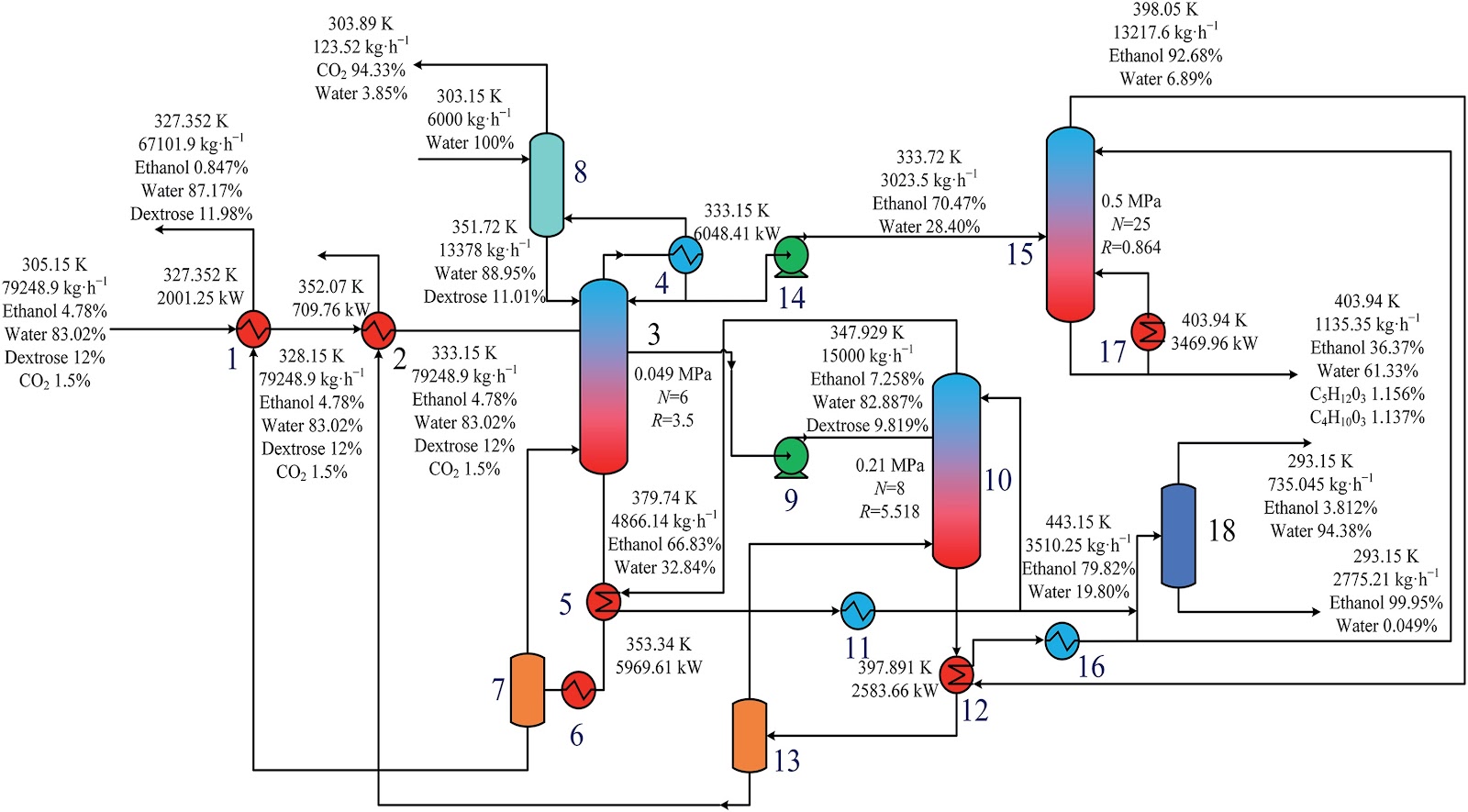
To address the challenges of high energy consumption and prominent costs in the traditional three-columns distillation process for cellulosic fuel ethanol, a distillation—molecular sieve coupling separation process is proposed. This process integrates a three-column (crude distillation column, first distillation column, second distillation column) system with a 3A molecular sieve adsorption deep dehydration unit. A thermal coupling network is constructed via differential pressure design (steam from medium/high-pressure columns as mutual heat sources, reboiler liquid waste heat for feed preheating), and molecular sieve adsorption conditions are optimized. The study first performs a thermodynamic consistency test on the ethanol—water system, determines optimal non-random two-liquid (NRTL) model binary interaction parameters via experimental data regression for Aspen Plus simulation. Aiming at minimum total annual cost (TAC), Aspen Plus is used to optimize process parameters (theoretical tray number, feed location, reflux ratio, side-draw position, etc.). Economic analysis shows this process reduces CO2 emission costs by 27.56%, TAC by 15.58% (to 5.123 × 10⁶ USD·a-1), and increases ethanol purity to >99.6%, providing an effective solution for green, efficient separation.
A cohesion loss model for determining residual strength of deep bedded sandstone
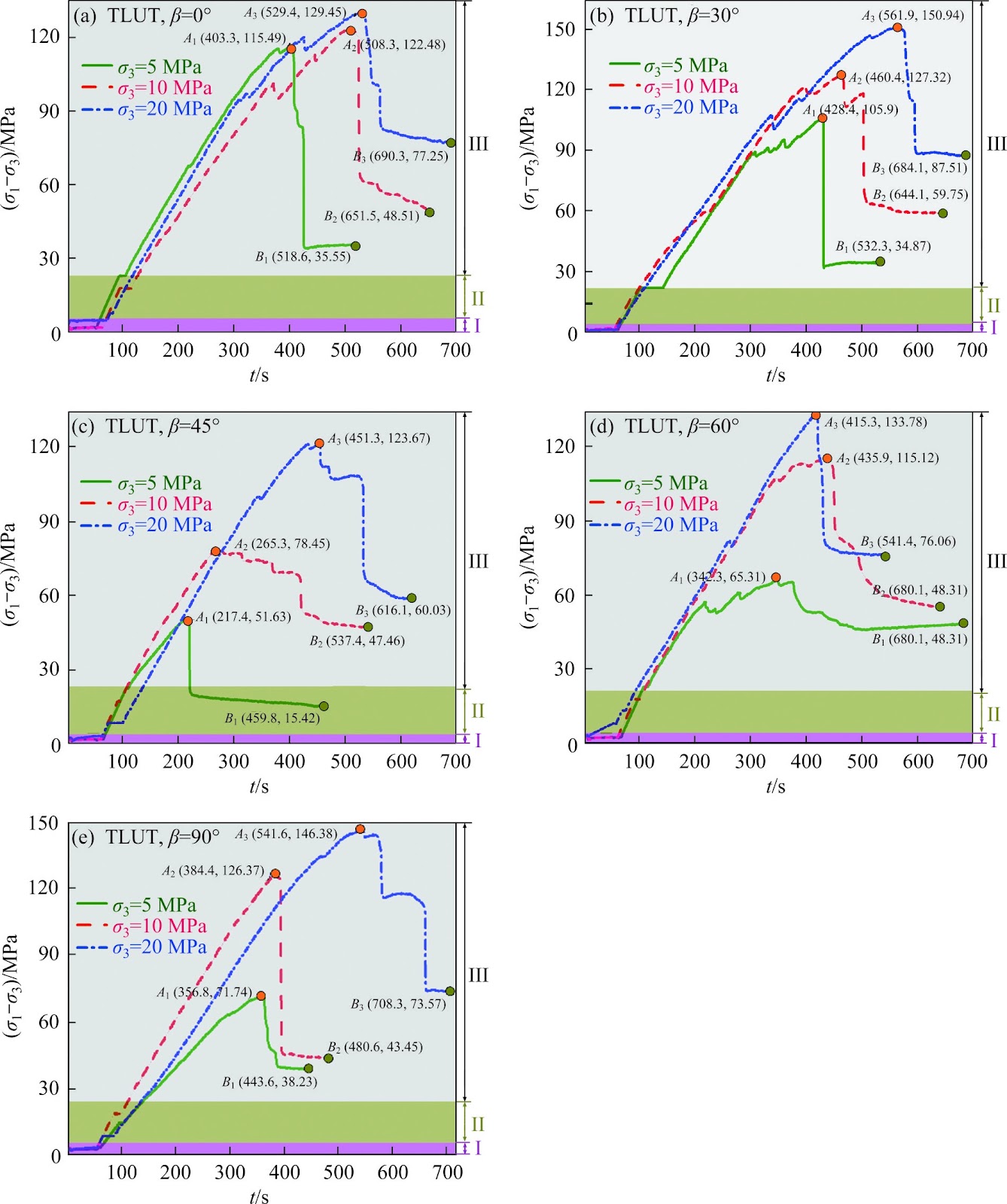
Rock residual strength, as an important input parameter, plays an indispensable role in proposing the reasonable and scientific scheme about stope design, underground tunnel excavation and stability evaluation of deep chambers. Therefore, previous residual strength models of rocks established were reviewed. And corresponding related problems were stated. Subsequently, starting from the effects of bedding and whole life-cycle evolution process, series of triaxial mechanical tests of deep bedded s
Federated model with contrastive learning and adaptive control variates for human activity recognition
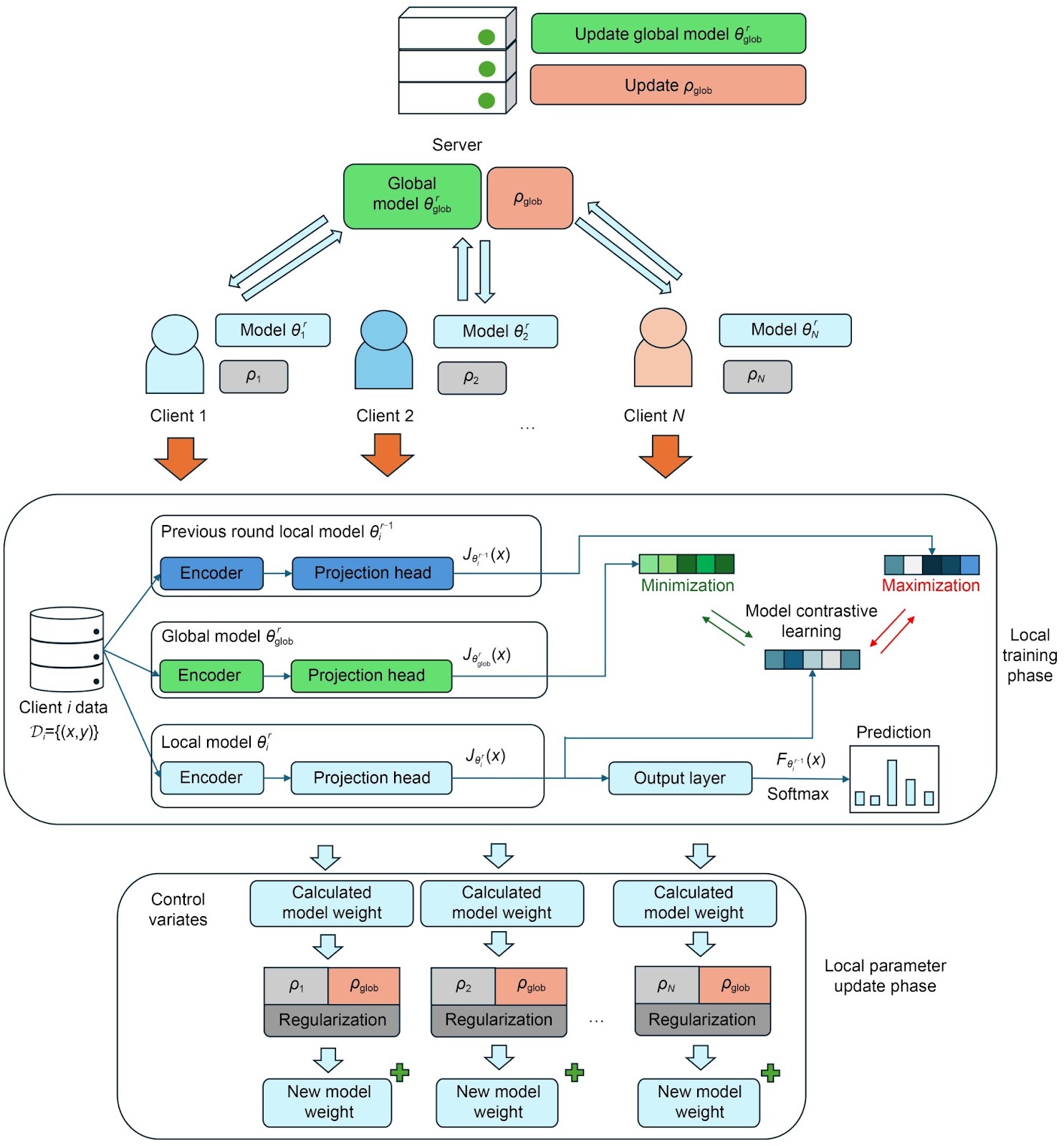
Recent attention to privacy issues demands a communication-safe method for training human activity recognition (HAR) models on client activity data. Federated learning (FL) has become a compelling technique to facilitate model training between the server and clients while preserving data privacy. However, classical FL methods often assume independent and identically distributed (IID) data among clients. This assumption does not hold true in practical scenarios. Human activity in real-world scena