Key Takeaways & Executive Findings
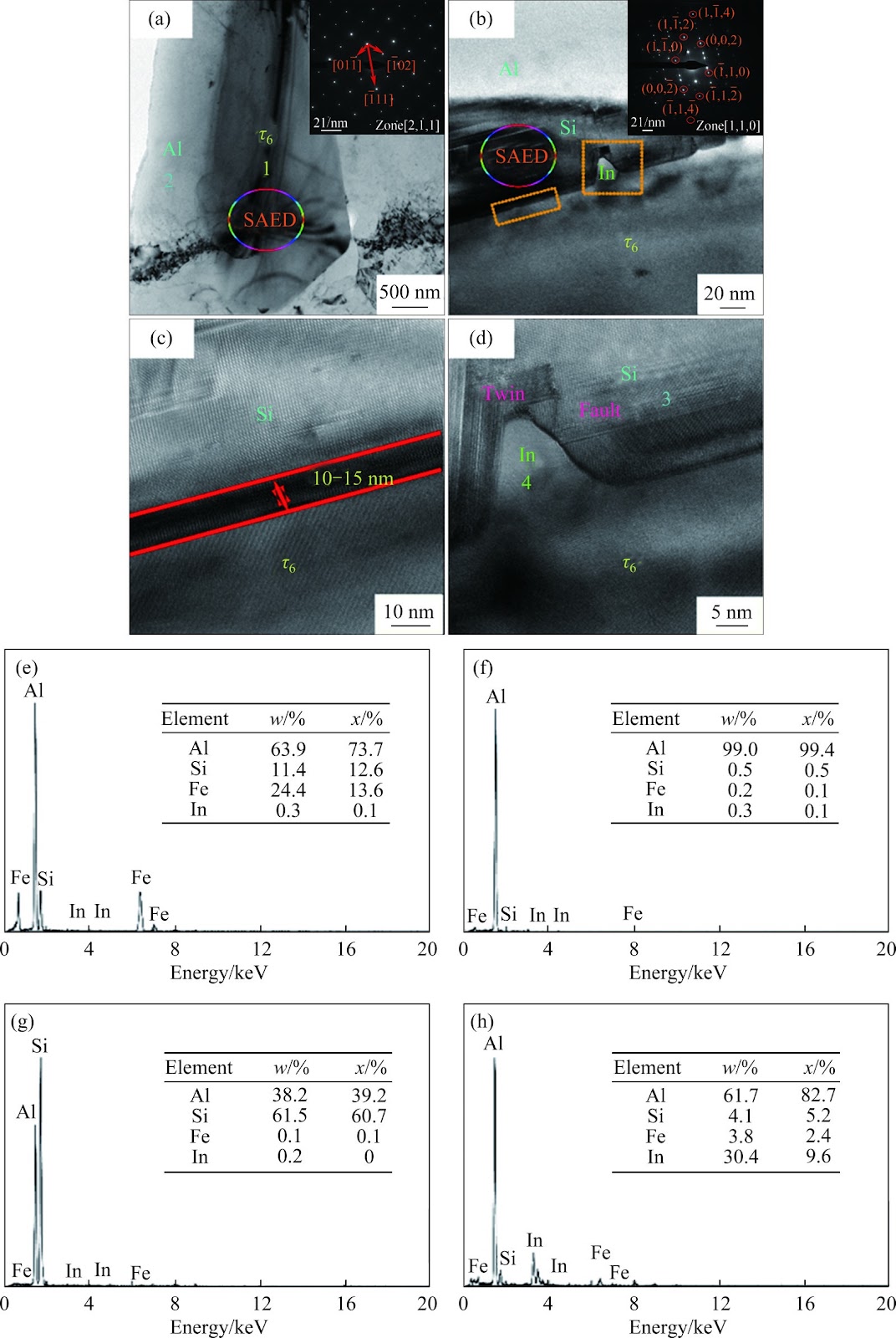
- •• Indium addition promotes reverse plating and creates passivation film defects, enhancing the sacrificial anode performance of the coating. • High indium content induces segregated In as cathode phase, activating τ6 phase and improving resistance to non-uniform corrosion. • The optimal indium content of 0.1% shifts Ecorr to −0.932 V and lowers Jcorr to 4.699 μA/cm², providing best sacrificial anode effect. • In-containing corrosion products at phase boundaries block Cl− diffusion, contributing to improved electrochemical stability.
Abstract
In the process of protecting ferrous materials, aluminum coating usually forms a dense oxide film on the surface of the iron-based alloy. However, the capacity of the sacrificial anode is rather insufficient. In order to solve this problem, the microstructure and electrochemical corrosion properties of Al-8Si-3Fe-xIn alloy under low chlorine conditions were studied. The results show that indium (In) dissolves to form In3+ and In+ reverse plating on the surface of the bare substrate to form a passivation film defect. When the In content is high, the segregated In forms an activation point in the form of a cathode phase. In activates τ6 phase to form a micro-couple, which improves the non-uniform corrosion. The In-containing corrosion products at the phase boundary hinder the diffusion of Cl−. With an increase of In content, the self-corrosion potential (Ecorr) of the alloy shifts negatively, and the self-corrosion current density (Jcorr) decreases from 6.477 μA/cm2 to 1.352 μA/cm2, and then increases gradually. However, when the In content is 0.1%, the Ecorr of the alloy changes from −0.824 V to −0.932 V, and the Jcorr decreases from 6.477 μA/cm2 to 4.699 μA/cm2, suggesting that the use of sacrificial anode will give the best effect.
1. Introduction
Steel products are prone to corrosion during long-term work in a humid environment, causing huge economic losses [1]. It is internationally recognized that the annual global loss caused as a result of corrosion of steel is as high as 3%−5% of the global GDP. At present, hot-dip galvanizing, a process that involves coating the steel surface with molten zinc, is the main anti-corrosion method [2]. However, the content of zinc in the earth crust is only 0.004% (Clark value), while the consumption of zinc continues to increase with scientific development [3 −7]. Unfortunately, the available amount still cannot meet the needs of technological use.
Aluminum, on the other hand is more abundant in the earth crust. In addition, hot-dip aluminized layer not only possesses a metallic luster surface, it also has excellent high temperature oxidation resistance, good corrosion resistance, wear resistance, with impressive light and heat reflection properties [8 −10]. Therefore, hot-dip aluminizing has a good application prospect and has attracted more attention from researchers globally. Consequently, developing suitable coatings is an extremely important step in the application of hot-dip aluminizing.
The Fe-Al intermetallic compound layer is formed by mutual diffusion and reaction between iron atoms and aluminum atoms in a continuous hot-dip aluminizing process, which is mainly composed of inner Fe2Al5 and outer FeAl3 compounds. In the process, the thickness of the Fe-Al intermetallic compound layer in the coating increases rapidly, with attendant brittleness and lower fracture strength, which invariably reduces the processing performance of hot-dip aluminized steel [11]. Usually, a certain amount of silicon is added to the aluminum alloy molten pool to improve the fluidity, inhibit the thickness of the Fe-Al intermetallic compound layer, and improve the forming performance of the coating. WANG et al [12] found that, the segregation of Si atoms at the Fe/Al interface in the aluminized layer leads to the obstruction of structural vacancies. When the Si content exceeds 6 at. %, the continuous τ5-Al8Fe2Si layer reduces the growth rate of the Fe2Al5. Thus, in the process of hot dip galvanizing, Fe element is inevitably dissolved in the molten pool, and many Fe-containing intermetallic compounds (IMCs), α-Al8Fe2Si and β -Al5FeSi are formed in the free layer during the solidification process [13]. It has also been reported that the iron-containing intermetallic compounds are prone to local pitting [14], especially the needle-like β-Al5FeSi [15] iron-containing phase.
Loading authentic research manuscript (Pages 1–5)...
SHEN Ying, ZHANG Jing, KOLAWOLE Sharafadeen Kunle, LIU Ya, ZHU Xiang-ying, CHEN Jun-xiu, SU Xu-ping (2025). Microstructure and electrochemical behavior of Al-8Si-3Fe-xIn coating alloy in a low chlorine environment. Journal of Central South University. https://doi.org/10.1007/s11771-025-5938-y
Research & Educational Purpose Only:The translations, structured abstracts, analytical annotations, and data reports provided by SinoTechIntel are intended exclusively for academic research, internal corporate R&D, and educational benchmarking. They do not constitute formal engineering, chemical safety, legal, or professional advice.
Copyright & Intellectual Property Notice: Original copyright of the underlying source articles and experimental data remains with the respective authors, institutions, and original publishing journals. SinoTechIntel claims intellectual property only over its proprietary translations, analytical syntheses, and AEO structured enhancements in accordance with international fair use and academic citation principles.
Frequently Asked Questions
What is the role of indium in Al-8Si-3Fe-xIn coating alloy?
Indium dissolves to form In3+ and In+ that reverse-plate on the substrate surface, creating passivation film defects and activation points that boost the sacrificial anode effect.
How does indium content affect electrochemical corrosion properties?
As indium content increases, the self-corrosion potential shifts negatively and the self-corrosion current density first decreases then increases. The optimal content is 0.1% In, where corrosion protection is maximized.
Why is 0.1% indium considered optimal?
At 0.1% In, the alloy achieves a low self-corrosion current density of 4.699 μA/cm² and a more negative potential (−0.932 V), indicating enhanced sacrificial protection without excessive corrosion.
What are the advantages of hot-dip aluminizing over zinc galvanizing?
Aluminum is abundant, and the coating provides excellent high-temperature oxidation resistance, corrosion resistance, wear resistance, and good processing performance, making it a sustainable anti-corrosion method.
How do iron-containing intermetallic compounds influence corrosion?
Iron-containing phases like β-Al5FeSi are prone to local pitting. Indium modifies the microstructure, activates the τ6 phase, and hinders chloride diffusion, thereby improving resistance to non-uniform corrosion.
Related Technical Papers & Translations
Design and optimization of a high-efficiency distillation process for cellulosic fuel ethanol integrated with thermal coupling and molecular sieve adsorption
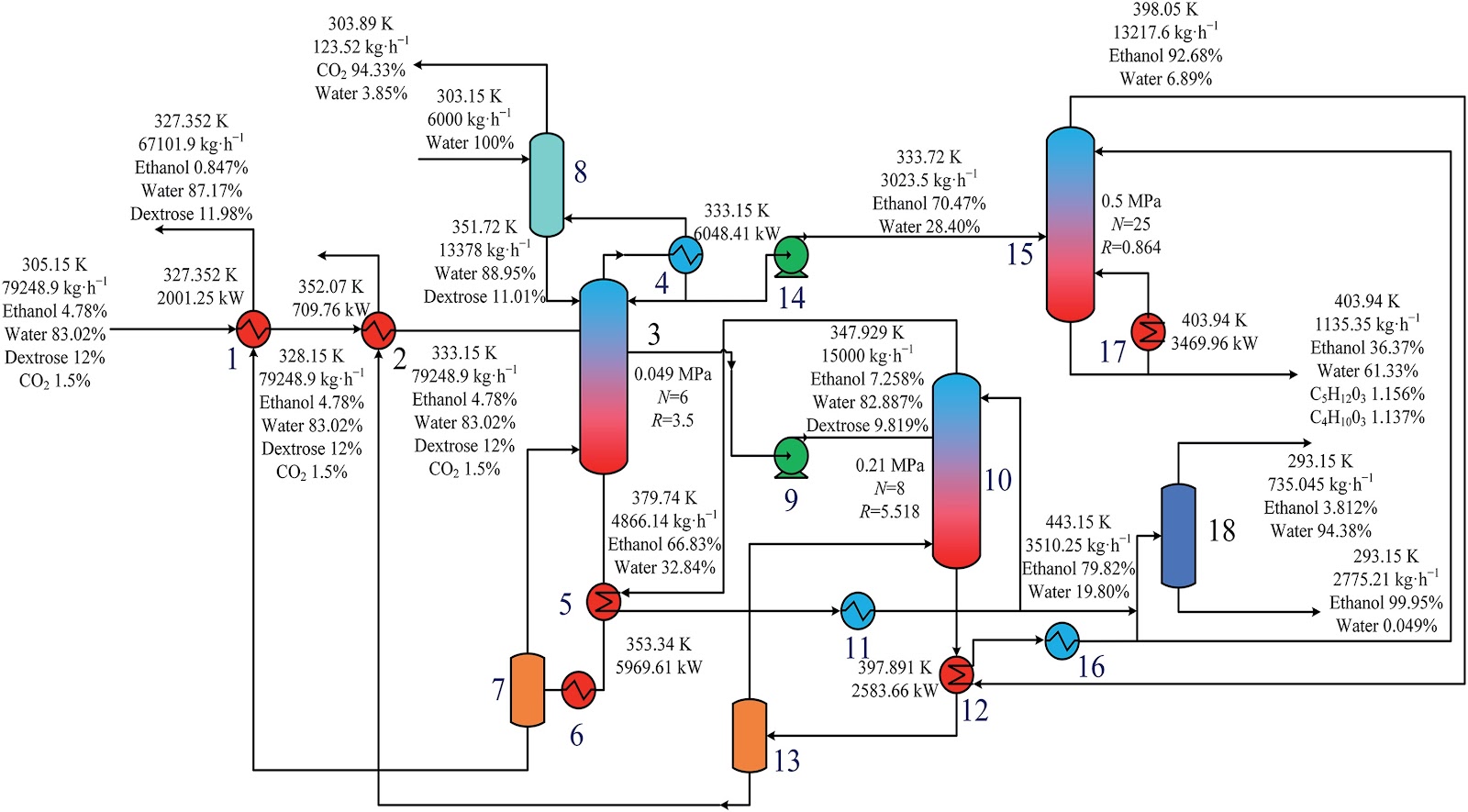
To address the challenges of high energy consumption and prominent costs in the traditional three-columns distillation process for cellulosic fuel ethanol, a distillation—molecular sieve coupling separation process is proposed. This process integrates a three-column (crude distillation column, first distillation column, second distillation column) system with a 3A molecular sieve adsorption deep dehydration unit. A thermal coupling network is constructed via differential pressure design (steam from medium/high-pressure columns as mutual heat sources, reboiler liquid waste heat for feed preheating), and molecular sieve adsorption conditions are optimized. The study first performs a thermodynamic consistency test on the ethanol—water system, determines optimal non-random two-liquid (NRTL) model binary interaction parameters via experimental data regression for Aspen Plus simulation. Aiming at minimum total annual cost (TAC), Aspen Plus is used to optimize process parameters (theoretical tray number, feed location, reflux ratio, side-draw position, etc.). Economic analysis shows this process reduces CO2 emission costs by 27.56%, TAC by 15.58% (to 5.123 × 10⁶ USD·a-1), and increases ethanol purity to >99.6%, providing an effective solution for green, efficient separation.
A cohesion loss model for determining residual strength of deep bedded sandstone
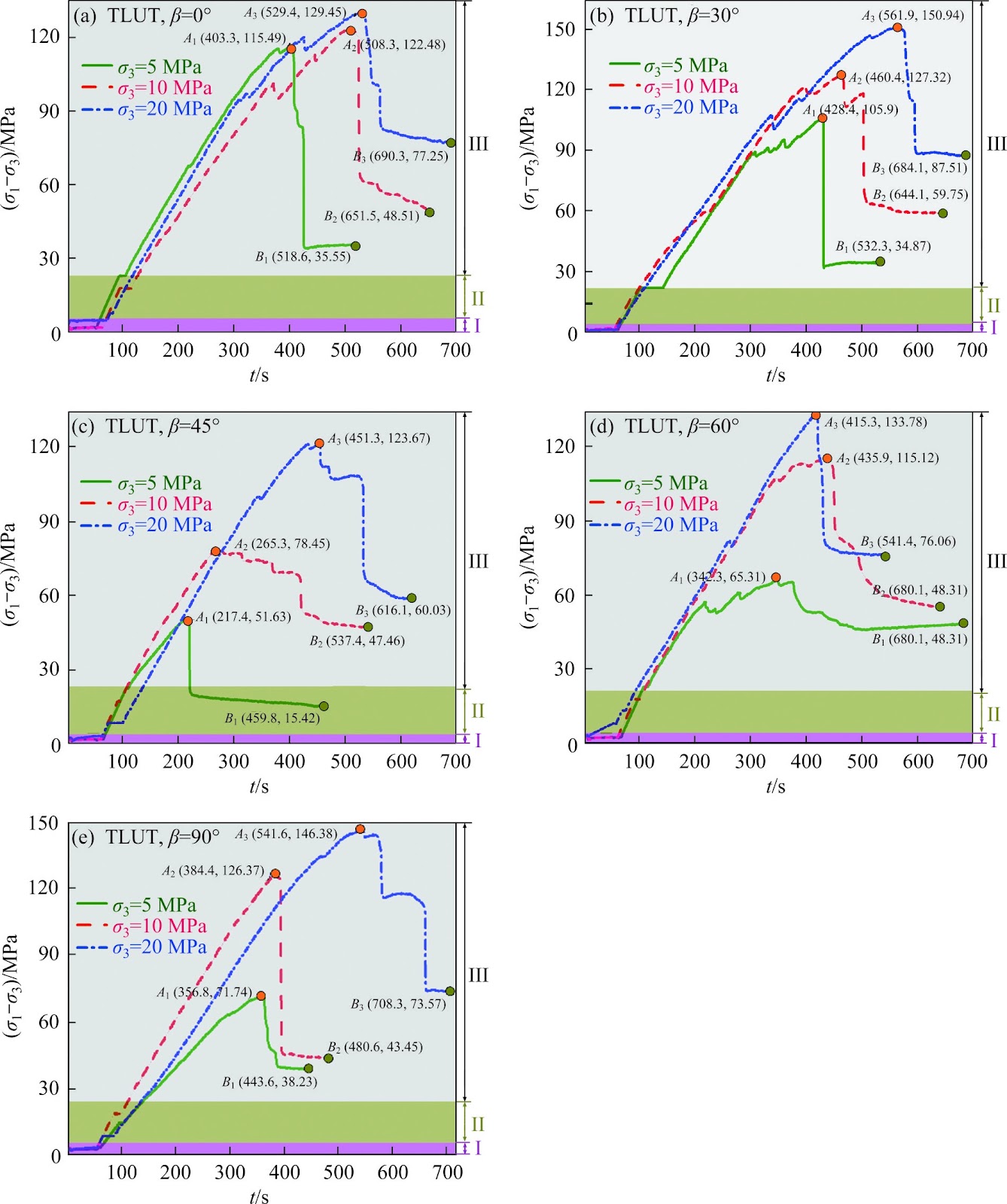
Rock residual strength, as an important input parameter, plays an indispensable role in proposing the reasonable and scientific scheme about stope design, underground tunnel excavation and stability evaluation of deep chambers. Therefore, previous residual strength models of rocks established were reviewed. And corresponding related problems were stated. Subsequently, starting from the effects of bedding and whole life-cycle evolution process, series of triaxial mechanical tests of deep bedded s
Federated model with contrastive learning and adaptive control variates for human activity recognition
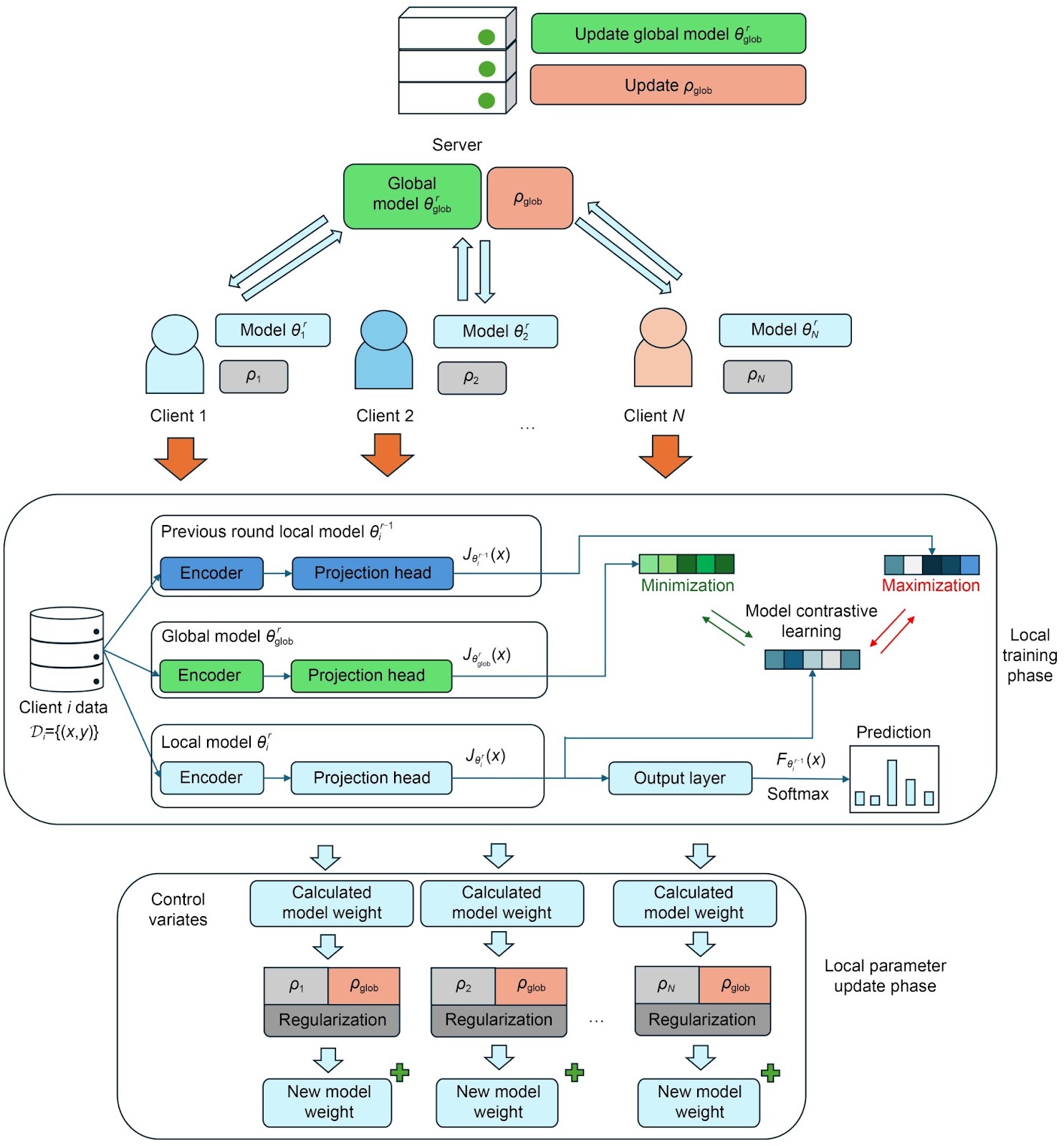
Recent attention to privacy issues demands a communication-safe method for training human activity recognition (HAR) models on client activity data. Federated learning (FL) has become a compelling technique to facilitate model training between the server and clients while preserving data privacy. However, classical FL methods often assume independent and identically distributed (IID) data among clients. This assumption does not hold true in practical scenarios. Human activity in real-world scena