Key Takeaways & Executive Findings
- •• Adding recycled steel fibers (RSF) to cemented-gangue–fly-ash backfill (CGFB) reduces uniaxial compressive strength by 3.86%–15.59% but significantly increases toughness by 69%–123%. • Acoustic emission and energy evolution analyses revealed that RSF addition reduces post-peak stress energy release and requires higher external energy for failure, improving crack resistance. • An optimal RSF content of 0.5% is recommended for engineering applications due to its excellent damage resistance and overall mechanical performance. • SEM analysis showed that hydration products embed in RSF damaged areas, increasing interfacial friction and interlocking, which strengthens the bridging effect and enhances durability.
Abstract
The cemented-gangue −fly-ash backfill (CGFB) prepared from coal-based solid waste materials commonly exhibits high brittleness, leading to an increased susceptibility to cracking. Uniaxial compressive strength (UCS), acoustic emission (AE), and scanning electron microscopy tests were conducted on CGFB samples with recycled steel fiber (RSF) contents of 0, 0.5%, 1.0% and 1.5% to assess the mechanical properties and damage evolution law of the CGFB. The research findings indicate that: 1) When RSF contents were 0.5%, 1%, and 1.5%, respectively, compared to samples without RSF, the UCS decreased by 3.86%, 6.76%, and 15.59%, while toughness increased by 69%, 98%, and 123%; 2) The addition of RSFs reduced the post-peak stress energy activity and increased the fluctuations in the b-value; 3) As the RSF dosage increased from 0 to 1.5%, the per unit dissipated strain energy increased from 5.84 to 21.51, and the post-peak released energy increased from 15.07 to 33.76, indicating that the external energy required for the CGFB sample to fail increased; 4) The hydration products, such as C-S-H gel, ettringite, and micro-particle materials, were embedded in the damaged areas of the RSFs, increasing the frictional force at the interface between the RSF and CGFB matrix. The shape variability of the RSFs caused interlocking between the RSFs and the matrix. Both mechanisms strengthened the bridging effect of the RSFs in the CGFB, thereby improving the damage resistance capability of CGFB. The excellent damage resistance occurred at an RSF content of 0.5%; thus, this content is recommended for engineering applications.
1. Introduction
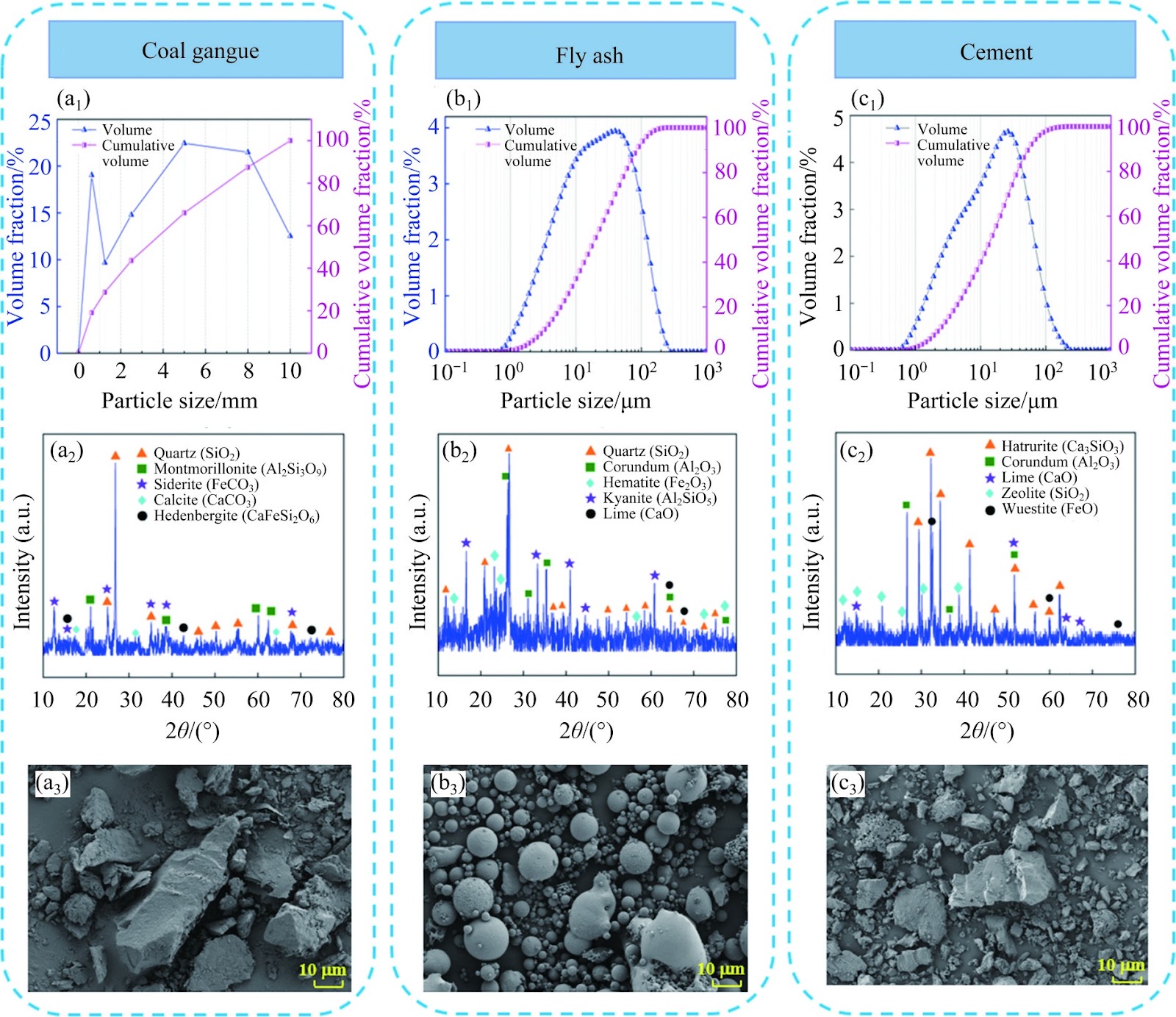
Using coal gangue (CG), fly ash (FA), and other coal-based solid waste to prepare underground cemented-gangue−fly-ash backfill (CGFB) for backfilling goaf is an important approach to address the ecological environmental problems such as surface subsidence and underground water resource loss faced by coal mining, as well as the rapid consumption of solid wastes [1, 2]. To improve backfilling efficiency and enable long-term utilization of underground space, a constructional backfill technique employing CGFB-made point columns and strip columns to control the roof structure is proposed, as illustrated in Figure 1 [3]. However, CGFB generally exhibits unfavorable mechanical properties [4], such as high brittleness and susceptibility to cracking. These properties cause sudden fractures and instability of CGFB in the goaf under the pressure of the overlying strata, posing a safety threat in underground mines [5, 6]. Therefore, reducing the brittleness of CGFB and improving its damage resistance are required to ensure the CGFB’s stability.
Currently, research on improving the brittleness of backfill is mostly focused on cemented tailings backfill (CTB), with the primary measure being the addition of fibers. ZHAO et al [7] utilized uniaxial compressive strength (UCS) tests and acoustic emission (AE) monitoring to investigate the mechanical properties, AE characteristics, and the precursor damage effects of polypropylene fiber-reinforced CTB with different ash-sand ratios. YIN et al [8] conducted UCS tests to study the mechanical properties, failure modes, and damage evolution of sulfur-containing CTB reinforced with polypropylene fibers. SUN et al [9] characterized and optimized the mechanical properties of fiber-reinforced slag CTB using response surface analysis. XUE et al [10] ex...
Loading authentic research manuscript (Pages 1–5)...
CHE Chi-yuan, CAO Sheng-gen, ZHANG Yun, LIU Yang, ZHAO Chang-zheng, DU Shu-yu, LI Jiang, SHAN Chang-hao (2025). Mechanical properties and damage evolution law of cemented-gangue−fly-ash backfill modified with different contents of recycled steel fibers. Journal of Central South University. https://doi.org/10.1007/s11771-025-6017-0
Research & Educational Purpose Only:The translations, structured abstracts, analytical annotations, and data reports provided by SinoTechIntel are intended exclusively for academic research, internal corporate R&D, and educational benchmarking. They do not constitute formal engineering, chemical safety, legal, or professional advice.
Copyright & Intellectual Property Notice: Original copyright of the underlying source articles and experimental data remains with the respective authors, institutions, and original publishing journals. SinoTechIntel claims intellectual property only over its proprietary translations, analytical syntheses, and AEO structured enhancements in accordance with international fair use and academic citation principles.
Frequently Asked Questions
What is cemented-gangue−fly-ash backfill (CGFB)?
CGFB is a backfill material prepared from coal-based solid waste (coal gangue and fly ash) and is used for underground backfilling in coal mines to address environmental issues like surface subsidence.
How does recycled steel fiber (RSF) affect the mechanical properties of CGFB?
Adding RSF to CGFB decreases uniaxial compressive strength by 3.86%–15.59% but increases toughness by 69%–123%, improving the material's ability to resist cracking and damage.
What is the optimal RSF content for engineering applications?
The optimal RSF content is 0.5%, which provides excellent damage resistance while maintaining acceptable mechanical properties, making it recommended for engineering use.
What mechanisms improve the damage resistance of RSF-modified CGFB?
Hydration products embed in damaged areas of RSFs, increasing interfacial friction and interlocking with the matrix. The shape variability of RSFs also promotes mechanical interlocking, both strengthening the bridging effect and enhancing damage resistance.
How was damage evolution studied in this research?
Damage evolution was assessed through uniaxial compressive strength (UCS) tests, acoustic emission (AE) monitoring, scanning electron microscopy (SEM), and analysis of energy dissipation and release during loading.
Related Technical Papers & Translations
Design and optimization of a high-efficiency distillation process for cellulosic fuel ethanol integrated with thermal coupling and molecular sieve adsorption
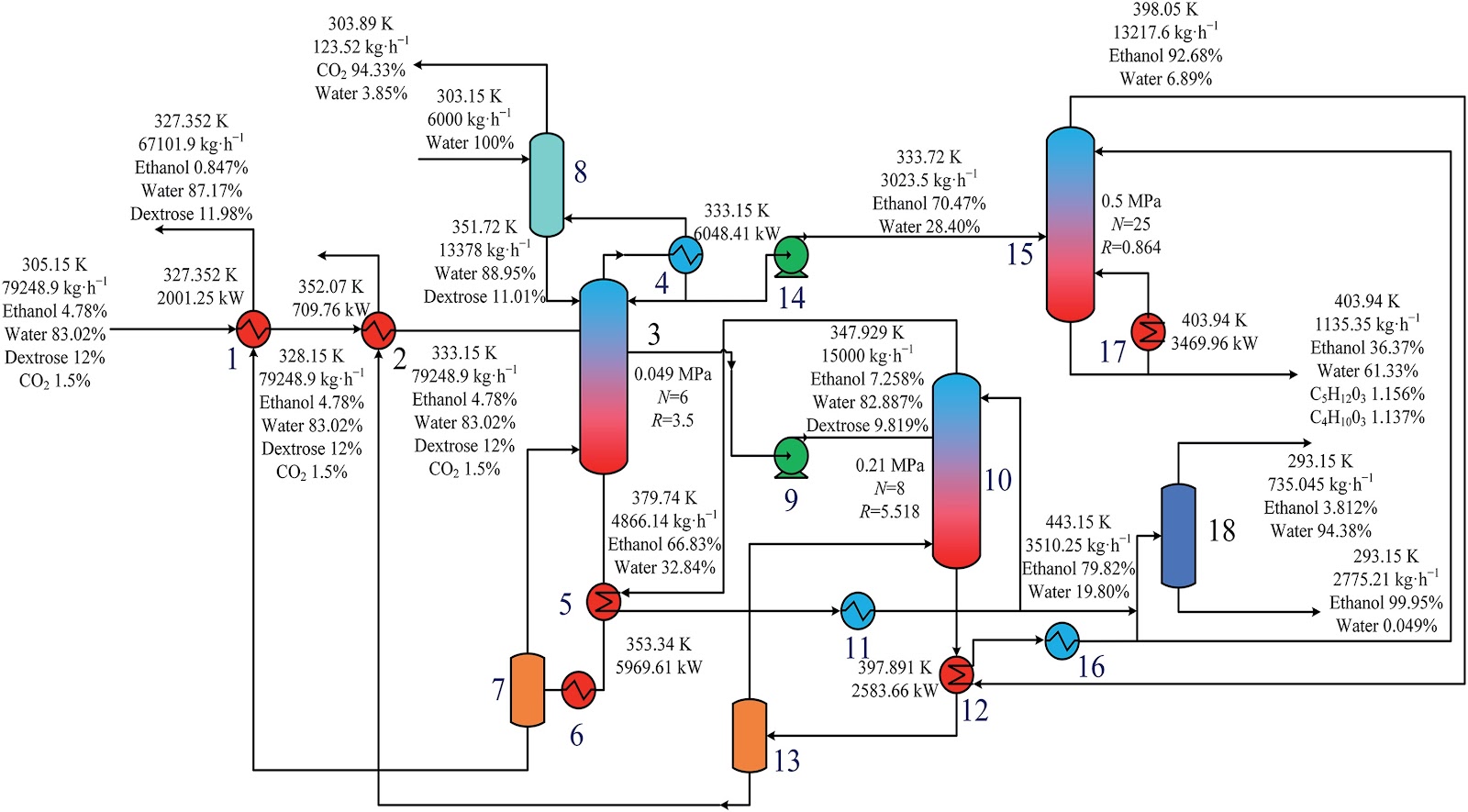
To address the challenges of high energy consumption and prominent costs in the traditional three-columns distillation process for cellulosic fuel ethanol, a distillation—molecular sieve coupling separation process is proposed. This process integrates a three-column (crude distillation column, first distillation column, second distillation column) system with a 3A molecular sieve adsorption deep dehydration unit. A thermal coupling network is constructed via differential pressure design (steam from medium/high-pressure columns as mutual heat sources, reboiler liquid waste heat for feed preheating), and molecular sieve adsorption conditions are optimized. The study first performs a thermodynamic consistency test on the ethanol—water system, determines optimal non-random two-liquid (NRTL) model binary interaction parameters via experimental data regression for Aspen Plus simulation. Aiming at minimum total annual cost (TAC), Aspen Plus is used to optimize process parameters (theoretical tray number, feed location, reflux ratio, side-draw position, etc.). Economic analysis shows this process reduces CO2 emission costs by 27.56%, TAC by 15.58% (to 5.123 × 10⁶ USD·a-1), and increases ethanol purity to >99.6%, providing an effective solution for green, efficient separation.
A cohesion loss model for determining residual strength of deep bedded sandstone
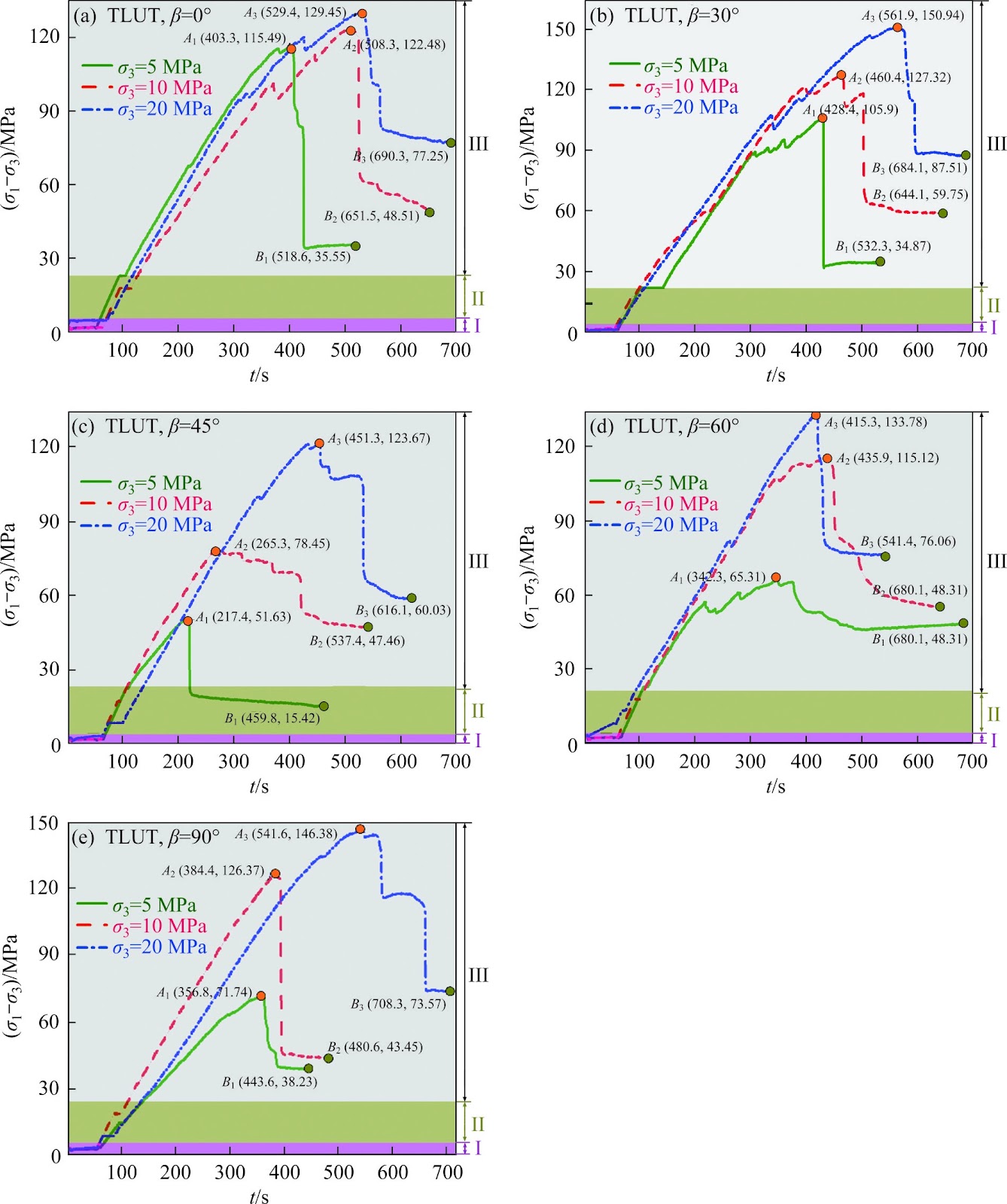
Rock residual strength, as an important input parameter, plays an indispensable role in proposing the reasonable and scientific scheme about stope design, underground tunnel excavation and stability evaluation of deep chambers. Therefore, previous residual strength models of rocks established were reviewed. And corresponding related problems were stated. Subsequently, starting from the effects of bedding and whole life-cycle evolution process, series of triaxial mechanical tests of deep bedded s
Federated model with contrastive learning and adaptive control variates for human activity recognition
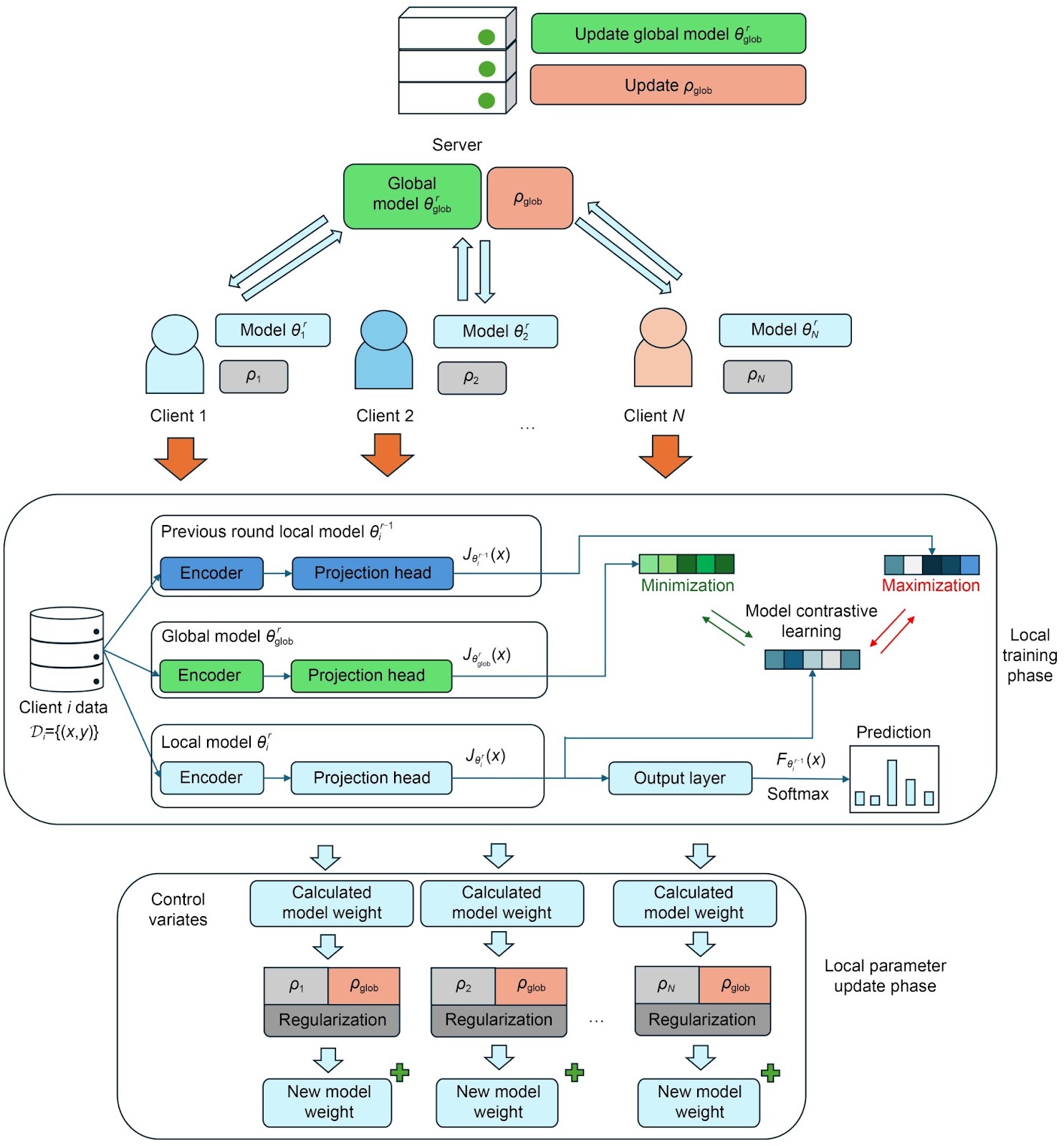
Recent attention to privacy issues demands a communication-safe method for training human activity recognition (HAR) models on client activity data. Federated learning (FL) has become a compelling technique to facilitate model training between the server and clients while preserving data privacy. However, classical FL methods often assume independent and identically distributed (IID) data among clients. This assumption does not hold true in practical scenarios. Human activity in real-world scena