Key Takeaways & Executive Findings
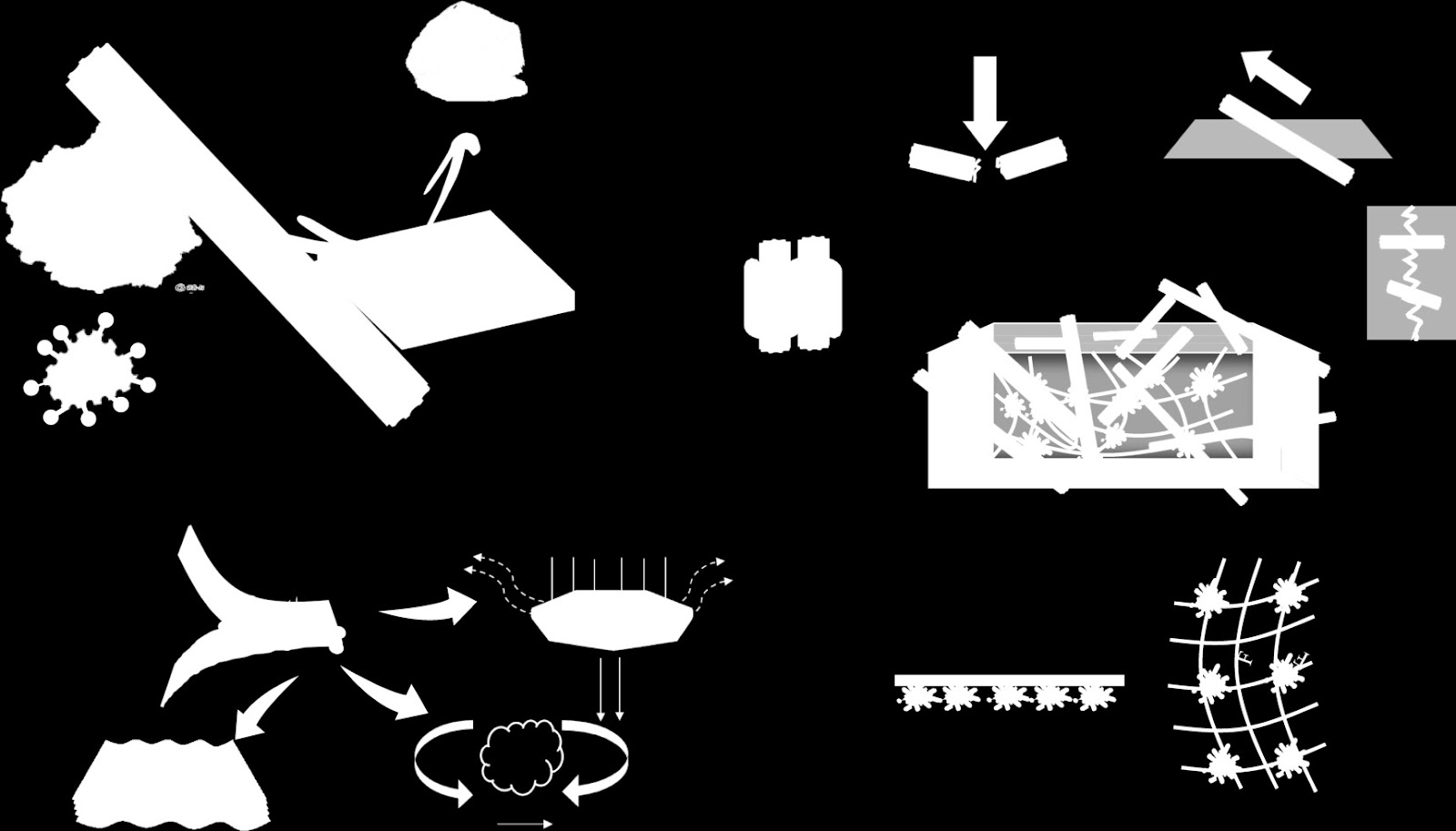
- •• Incorporation of calcium sulfate whisker (CSW) into steel slag/stone-wood plastic composites increased tensile, flexural, and impact strengths by 28.13%, 25.02%, and 45.55%, respectively, outperforming pure talc powder (TP)-based composites. • Steel slag powder (SSP) combined with CSW can effectively replace part of the talc powder filler, reducing raw material costs and promoting sustainable utilization of industrial waste. • CSW reinforcement is achieved through bridging, micro-filling, and synergistic interactions with SSP, while SSP’s metal oxides (MgO, Al2O3, Fe2O3) crosslink with the carbonaceous skeleton to form a stable protective layer, improving thermal stability. • The findings provide a low-cost, high-performance alternative for the stone-wood plastic industry, mitigating environmental issues associated with steel slag stockpiling and talc mining.
Abstract
The development of steel slag/stone-wood plastic composites reinforced with calcium sulfate whisker is beneficial for reducing costs in the stone-wood plastic industry and promoting the resource utilization of industrial waste. Steel slag powder (SSP) composited with calcium sulfate whisker (CSW) was investigated as a replacement for a portion of talc powder (TP) in the creation of calcium sulfate whisker-reinforced steel slag/stone-wood plastic composites (CSW-SSP/SPCs). The reinforcement effect and thermal stability mechanism of CSW within these composites were examined by assessing their mechanical properties, mineral composition, structural composition, thermal stability, crystallinity, and microstructure. The results showed that the tensile strength, flexural strength, and impact strength of CSW-SSP/SPCs were increased by 28.13%, 25.02%, and 45.55%, respectively, which were significantly better than those of the pure TP sample. The SSP composited with CSW effectively replaced part of the TP, where CSW significantly reinforced the composites through its bridging, micro-filling, and synergistic effects with the SSP. Meanwhile, the MgO, Al2O3, and Fe2O3 in the SSP crosslinked with the carbon layer skeleton and residual materials to form a more stable carbon layer, which inhibited the combustion reaction and further enhanced the thermal stability and retarded the thermal degradation process.
1. Introduction
The growing resource shortage has driven the search for alternative sources and solutions for resource conservation and emission reduction. As a major by-product of the iron and steel industry, the annual output of steel slag reaches hundreds of millions of tons, but its comprehensive utilization rate has long been lower than 30%, and the large amount of stockpiling triggers environmental problems such as land encroachment and heavy metal leaching [1]. Under the dual-carbon goal, it becomes particularly important to explore and optimize new technologies and resource utilization paths for steel slag treatment. By replacing traditional raw materials, steel slag not only significantly reduces natural resource extraction, energy consumption, and carbon emissions throughout the life cycle, but also promotes the efficient use of resources, minimizes waste, and facilitates the development of a circular economy model. Steel slag is rich in various metal oxides (e.g., CaO, Fe2O3, MgO, and Al2O3) and has unique advantages such as abrasion resistance and heat resistance, which holds great potential for resource utilization [2]. Although there have been studies exploring the application of steel slag in cementitious materials [3], road base layers [4] and ceramic aggregates [5], after the implementation of the GB 175—2023, the dosage of steel slag in traditional building materials has been strictly limited, forcing researchers to turn to the field of polymer composites to seek breakthroughs.
Stone-wood plastic composites (SPCs), a popular modern building material, are typically produced by mixing and extruding talc powder (TP), wood powder, and polymer resin through a specialized process. These composites combine the benefits of stone, wood, and plastic, offering the easy moldability of thermoplastics, the hardness of stone, and the secondary processability of wood. They also possess advantages such as insect resistance, aging resistance, corrosion resistance, abrasion resistance, low water absorption, and reusability, making them widely applicable in construction and home decoration. Traditionally, TP is used as a filler in SPCs due to its excellent lubricating properties, which facilitate smooth processing [6]. However, the mining process of the natural resource TP produces a large number of tailings, and the average annual price increase of 18%, seriously restricts the sustainable development of the industry [7]. Previous studies have shown that when steel slag powder (SSP) is directly used to replace TP, it can reduce the production cost, but the enhancement of the tensile strength and impact toughness of the composite material is not obvious, and the reinforcing properties of steel slag are not fully reflected. This is mainly attributed to the high surface energy of SSP and the significant interfacial energy barriers between SSP and nonpolar matrices such as polyethylene, resulting in inefficient stress transfer [8].
Loading authentic research manuscript (Pages 1–5)...
Hao Zhang, Qian Wang, Ling Zhao, Liangjun Chen, Xiaojian Ren, Zhifang Zong, Xiaoyan Du (2025). Mechanical and thermal properties of steel slag/stone-wood plastic composites reinforced with calcium sulfate whisker. Journal of Mineral Metallurgy and Materials Science. https://doi.org/10.1007/s12613-025-3199-2
Research & Educational Purpose Only:The translations, structured abstracts, analytical annotations, and data reports provided by SinoTechIntel are intended exclusively for academic research, internal corporate R&D, and educational benchmarking. They do not constitute formal engineering, chemical safety, legal, or professional advice.
Copyright & Intellectual Property Notice: Original copyright of the underlying source articles and experimental data remains with the respective authors, institutions, and original publishing journals. SinoTechIntel claims intellectual property only over its proprietary translations, analytical syntheses, and AEO structured enhancements in accordance with international fair use and academic citation principles.
Frequently Asked Questions
What is the main objective of this study?
This study aims to develop steel slag/stone-wood plastic composites (SPCs) reinforced with calcium sulfate whisker (CSW), using steel slag powder (SSP) combined with CSW to partially replace talc powder (TP). The goal is to reduce production costs and enhance the mechanical and thermal properties of SPCs while promoting the resource utilization of industrial waste.
How does calcium sulfate whisker improve the mechanical properties of the composites?
Calcium sulfate whisker (CSW) enhances mechanical properties through bridging effects, micro-filling of voids, and synergistic interactions with steel slag powder (SSP). These mechanisms improve stress transfer and interfacial bonding, leading to significant increases in tensile, flexural, and impact strengths.
Why is replacing talc powder with steel slag and CSW beneficial?
Replacing talc powder (TP) with steel slag powder (SSP) and calcium sulfate whisker (CSW) lowers production costs, reduces reliance on mined talc, and provides a valuable use for industrial steel slag. It also maintains or improves the composite's mechanical and thermal performance, supporting a circular economy.
What are the environmental benefits of using steel slag in stone-wood plastic composites?
Using steel slag in stone-wood plastic composites reduces landfilling of steel slag waste, lowers the environmental impact of talc mining, and decreases carbon emissions by replacing virgin raw materials. This aligns with dual-carbon goals and promotes sustainable resource management.
Related Technical Papers & Translations

Design and optimization of a high-efficiency distillation process for cellulosic fuel ethanol integrated with thermal coupling and molecular sieve adsorption
To address the challenges of high energy consumption and prominent costs in the traditional three-columns distillation process for cellulosic fuel ethanol, a distillation—molecular sieve coupling separation process is proposed. This process integrates a three-column (crude distillation column, first distillation column, second distillation column) system with a 3A molecular sieve adsorption deep dehydration unit. A thermal coupling network is constructed via differential pressure design (steam from medium/high-pressure columns as mutual heat sources, reboiler liquid waste heat for feed preheating), and molecular sieve adsorption conditions are optimized. The study first performs a thermodynamic consistency test on the ethanol—water system, determines optimal non-random two-liquid (NRTL) model binary interaction parameters via experimental data regression for Aspen Plus simulation. Aiming at minimum total annual cost (TAC), Aspen Plus is used to optimize process parameters (theoretical tray number, feed location, reflux ratio, side-draw position, etc.). Economic analysis shows this process reduces CO2 emission costs by 27.56%, TAC by 15.58% (to 5.123 × 10⁶ USD·a-1), and increases ethanol purity to >99.6%, providing an effective solution for green, efficient separation.

A cohesion loss model for determining residual strength of deep bedded sandstone
Rock residual strength, as an important input parameter, plays an indispensable role in proposing the reasonable and scientific scheme about stope design, underground tunnel excavation and stability evaluation of deep chambers. Therefore, previous residual strength models of rocks established were reviewed. And corresponding related problems were stated. Subsequently, starting from the effects of bedding and whole life-cycle evolution process, series of triaxial mechanical tests of deep bedded s

Federated model with contrastive learning and adaptive control variates for human activity recognition
Recent attention to privacy issues demands a communication-safe method for training human activity recognition (HAR) models on client activity data. Federated learning (FL) has become a compelling technique to facilitate model training between the server and clients while preserving data privacy. However, classical FL methods often assume independent and identically distributed (IID) data among clients. This assumption does not hold true in practical scenarios. Human activity in real-world scena