Key Takeaways & Executive Findings
- •• Combined desulfurization gypsum and maize straw-P. oxalicum effectively reduced saline-alkalinity and altered aggregate-associated chemical binding agents in bauxite residue. • Maize straw-P. oxalicum specifically stimulated the formation of water-stable macroaggregates with enhanced erosion resistance. • Exchangeable polyvalent metal ions, pyrophosphate extractable Fe oxide, and organic carbon were positively correlated with long-term aggregate stability. • The results provide practical data support for ecological restoration and soil formation in bauxite residue disposal areas.
Abstract
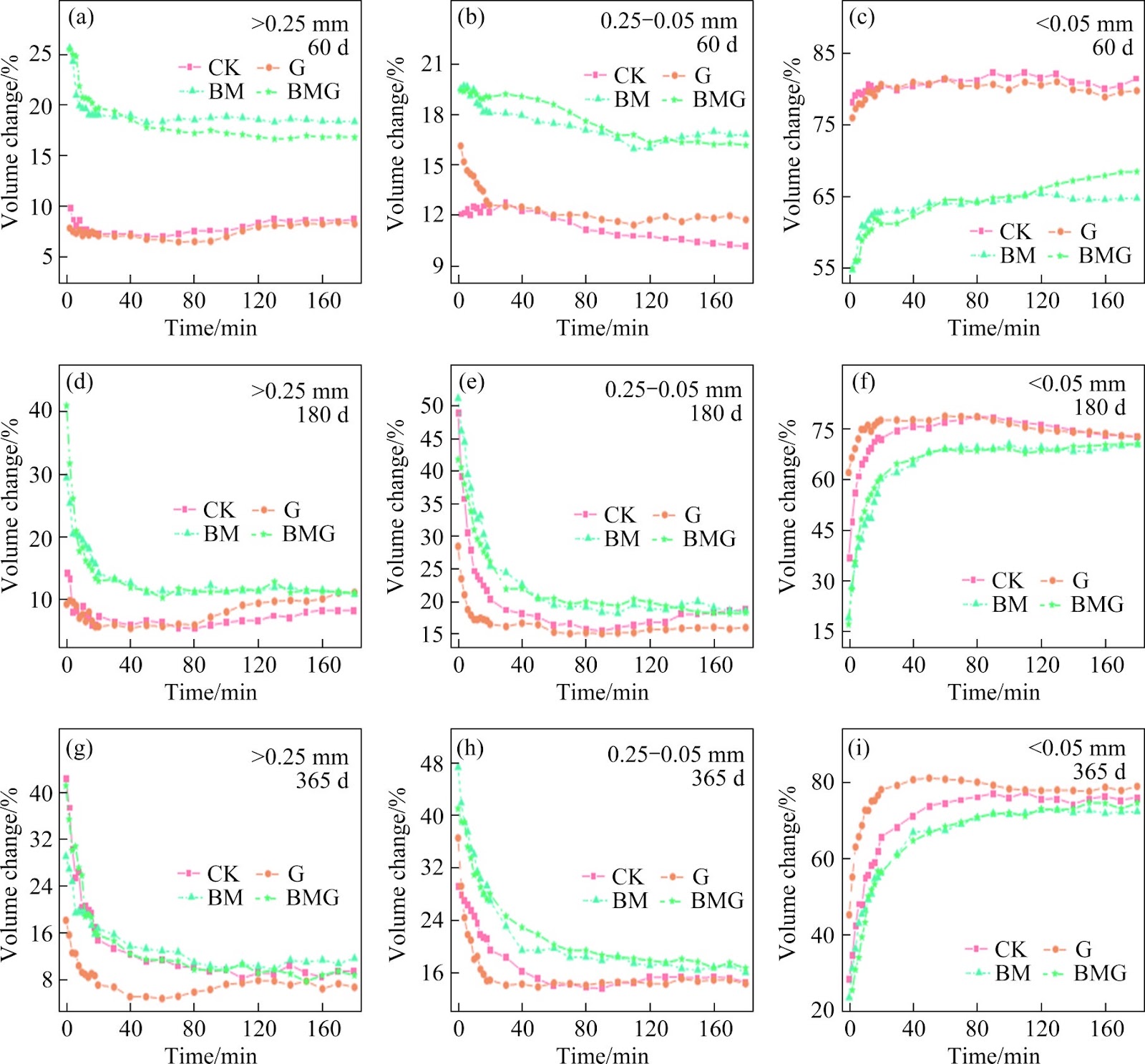
To accurately identify the factors affecting the formation of stable aggregates in bauxite residue during the soil-formation process, the comprehensive effects of a combined chemical-biological amelioration strategy including solid wastes and a functional microorganism on aggregate size distribution and its stability in bauxite residue were investigated during a 365-d simulation experiment. The results showed that the combined amelioration effectively reduced the saline-alkalinity of bauxite residue, and markedly changed the contents of aggregate-associated chemical binding agents. Desulfurization gypsum and maize straw-Penicillium oxalicum (P. oxalicum) differentiated the formation of aggregates within different sizes. Maize straw-P. oxalicum stimulated the formation of water-stable macroaggregates with more durable erosion resistance by the wet-sieving and laser dynamic diffraction analysis. The Pearson correlation analysis showed that exchangeable polyvalent metal ions, pyrophosphate extractable Fe oxide, and organic carbon exhibited positive correlations with aggregate stability during the 365-d incubation. The findings in this study may provide data support and engineering practical reference for ecological restoration in the disposal areas.
1. Introduction
Bauxite residue is a highly alkaline solid waste discharged by alumina production [1−3]. Due to its low utilization rate, large amounts of bauxite residue are stacked in the disposal areas, which may cause a series of ecological and environmental issues and hinder the sustainable development of the alumina industry [4]. Ecological restoration is an effective strategy to control the environmental risks of the bauxite residue disposal areas [5].
Reconstructing the physical structure of bauxite residue and converting the bauxite residue into a soil-like growth substrate can effectively and continuously support vegetation establishment [6, 7]. However, bauxite residue produced by the Bayer process has extremely fine particles and poor physical structure. For instance, the diameter of about 50% of total particles is less than 5 μm, resulting in a high bulk density (generally 1.8 − 3.2 g/cm3), low porosity, and poor water transmissibility [8], which limit the growth of plant roots and ecological restoration.
As the basic component of soil physical structure, aggregates are complex structures of organic-inorganic-microbial composition [9], consisting of pores and solid matter produced by particle rearrangement, agglomeration, and cementation, which play important roles in the balance of water, fertilizer, gas, and heat, whilst providing an appropriate living environment for microorganisms and plants. Soil particle aggregation is affected by many factors including soil organic matter, iron-aluminum oxides, and exchangeable cations [10, 11]. Among them, organic matter is the major binding agent for the formation of the improved aggregate structure as organic matter can bind the multivalent metal cations (e.g. Al3+ and Fe3+) and clay minerals to form organic-mineral complex [12].
Loading authentic research manuscript (Pages 1–5)...
ZHU Feng, LIU Xing, JIANG Jun, CHEN Li, ZHONG Xiao-lin, ZHANG Zi-ying, GUO Lin, XUE Sheng-guo (2025). Maize straw-Penicillium oxalicum enhanced long-term aggregate stability in bauxite residue ameliorated with desulfurization gypsum. Journal of Central South University. https://doi.org/10.1007/s11771-024-5807-0
Research & Educational Purpose Only:The translations, structured abstracts, analytical annotations, and data reports provided by SinoTechIntel are intended exclusively for academic research, internal corporate R&D, and educational benchmarking. They do not constitute formal engineering, chemical safety, legal, or professional advice.
Copyright & Intellectual Property Notice: Original copyright of the underlying source articles and experimental data remains with the respective authors, institutions, and original publishing journals. SinoTechIntel claims intellectual property only over its proprietary translations, analytical syntheses, and AEO structured enhancements in accordance with international fair use and academic citation principles.
Frequently Asked Questions
What is the main objective of this study?
The main objective is to accurately identify the factors affecting the formation of stable aggregates in bauxite residue during soil formation, by investigating the comprehensive effects of a combined chemical-biological amelioration strategy involving desulfurization gypsum and maize straw-Penicillium oxalicum over a 365-day experiment.
How does maize straw-Penicillium oxalicum affect aggregate stability?
Maize straw-P. oxalicum stimulates the formation of water-stable macroaggregates with more durable erosion resistance, as confirmed by wet-sieving and laser dynamic diffraction analysis.
What factors are positively correlated with aggregate stability?
Exchangeable polyvalent metal ions, pyrophosphate extractable Fe oxide, and organic carbon exhibited positive correlations with aggregate stability during the 365-day incubation.
What is the significance of this research?
The findings provide data support and engineering practical reference for ecological restoration in bauxite residue disposal areas.
How long was the simulation experiment?
The simulation experiment lasted 365 days.
Related Technical Papers & Translations
Design and optimization of a high-efficiency distillation process for cellulosic fuel ethanol integrated with thermal coupling and molecular sieve adsorption
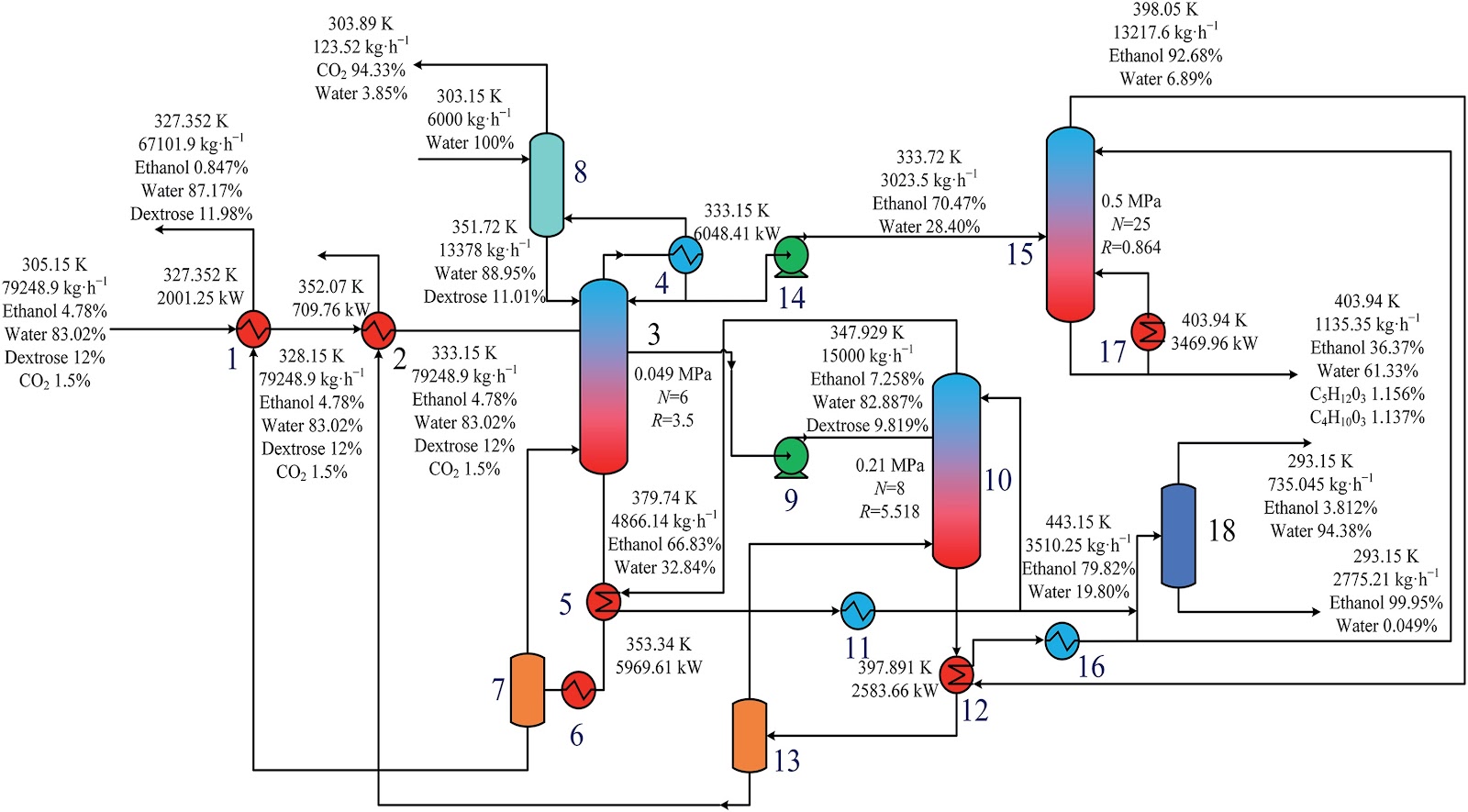
To address the challenges of high energy consumption and prominent costs in the traditional three-columns distillation process for cellulosic fuel ethanol, a distillation—molecular sieve coupling separation process is proposed. This process integrates a three-column (crude distillation column, first distillation column, second distillation column) system with a 3A molecular sieve adsorption deep dehydration unit. A thermal coupling network is constructed via differential pressure design (steam from medium/high-pressure columns as mutual heat sources, reboiler liquid waste heat for feed preheating), and molecular sieve adsorption conditions are optimized. The study first performs a thermodynamic consistency test on the ethanol—water system, determines optimal non-random two-liquid (NRTL) model binary interaction parameters via experimental data regression for Aspen Plus simulation. Aiming at minimum total annual cost (TAC), Aspen Plus is used to optimize process parameters (theoretical tray number, feed location, reflux ratio, side-draw position, etc.). Economic analysis shows this process reduces CO2 emission costs by 27.56%, TAC by 15.58% (to 5.123 × 10⁶ USD·a-1), and increases ethanol purity to >99.6%, providing an effective solution for green, efficient separation.
A cohesion loss model for determining residual strength of deep bedded sandstone
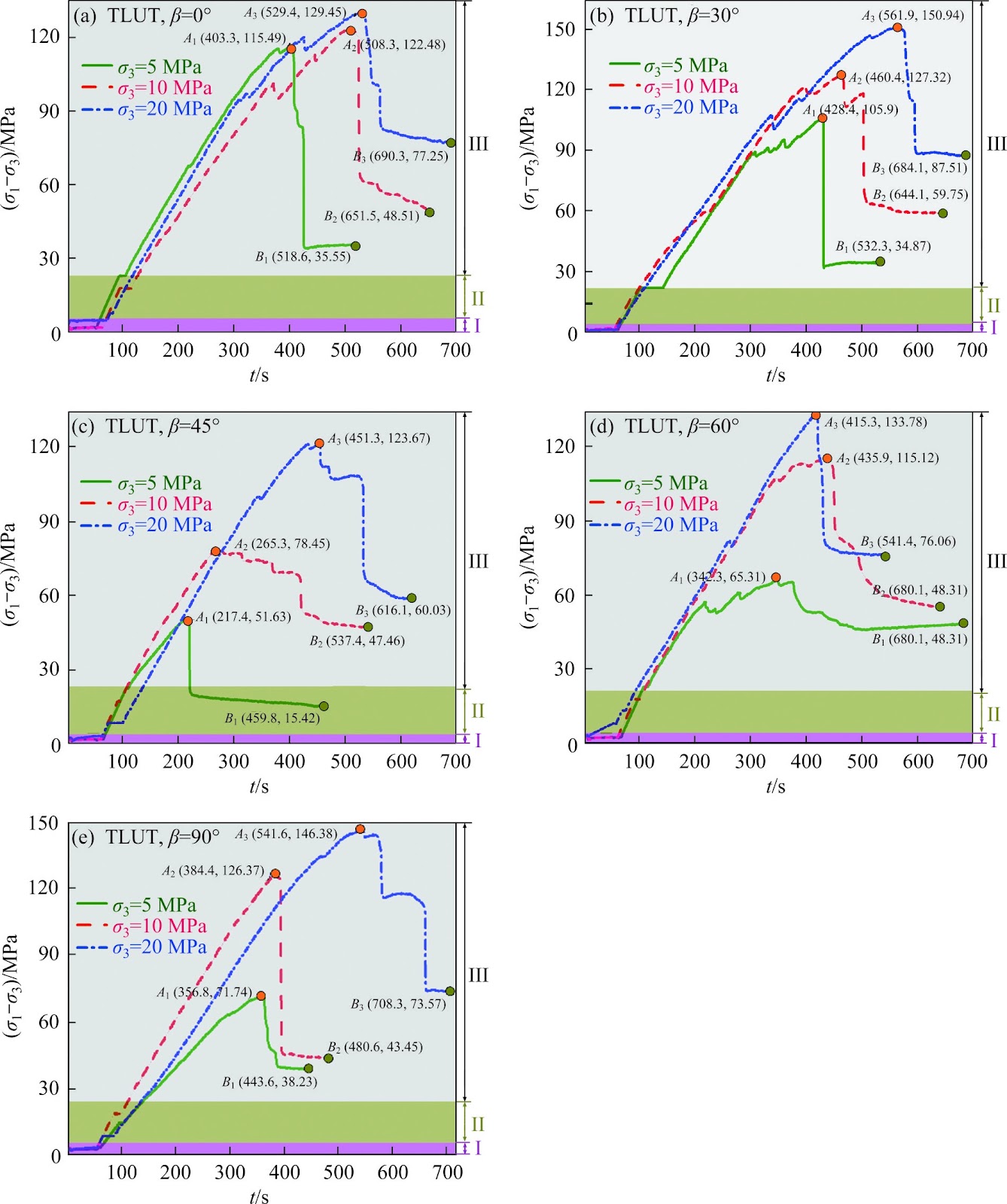
Rock residual strength, as an important input parameter, plays an indispensable role in proposing the reasonable and scientific scheme about stope design, underground tunnel excavation and stability evaluation of deep chambers. Therefore, previous residual strength models of rocks established were reviewed. And corresponding related problems were stated. Subsequently, starting from the effects of bedding and whole life-cycle evolution process, series of triaxial mechanical tests of deep bedded s
Federated model with contrastive learning and adaptive control variates for human activity recognition
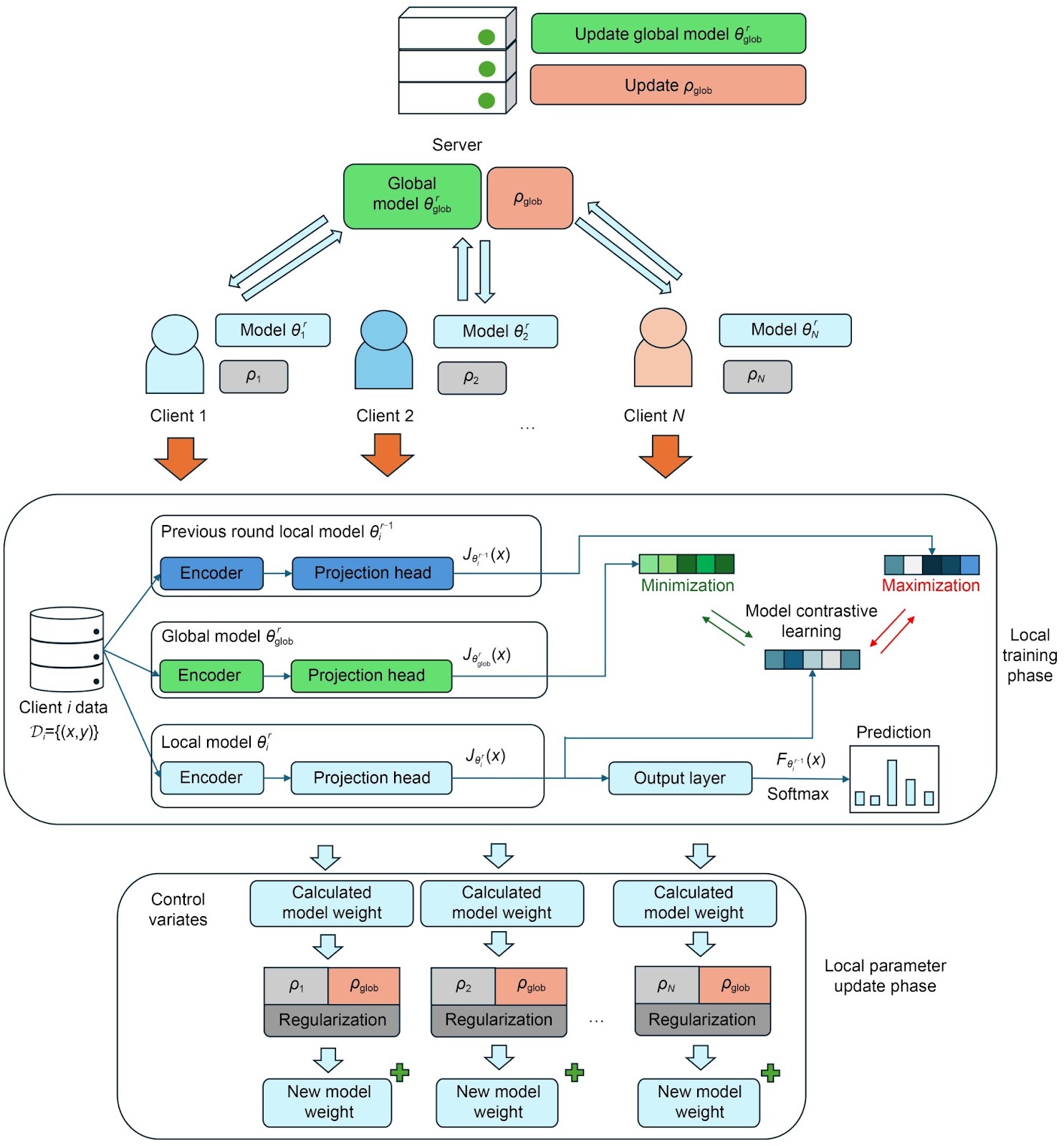
Recent attention to privacy issues demands a communication-safe method for training human activity recognition (HAR) models on client activity data. Federated learning (FL) has become a compelling technique to facilitate model training between the server and clients while preserving data privacy. However, classical FL methods often assume independent and identically distributed (IID) data among clients. This assumption does not hold true in practical scenarios. Human activity in real-world scena