Key Takeaways & Executive Findings
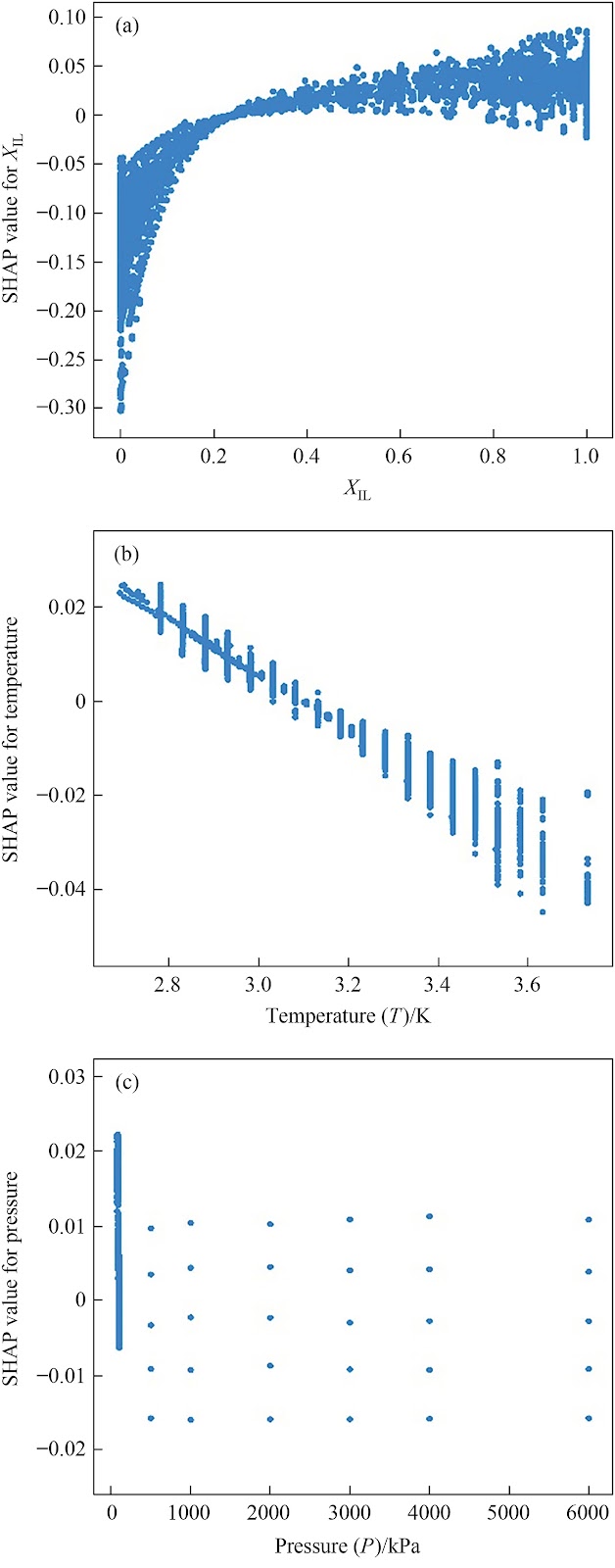
- •• Developed ANN-GC model outperforms XGBoost and LightGBM for predicting density and heat capacity of IL-water binary mixtures. • SHAP analysis identifies mole fraction of IL as the most influential factor for density, while cation substituents dominate heat capacity predictions. • The proposed models enable accurate estimation of thermophysical properties, reducing need for extensive experimental measurements. • The study provides a robust framework for designing IL-water systems with desired properties for industrial applications.
Abstract
Ionic liquids (ILs), because of the advantages of low volatility, good thermal stability, high gas solubility and easy recovery, can be regarded as the green substitute for traditional solvent. However, the high viscosity and synthesis cost limits their application, the hybrid solvent which combining ILs together with others especially water can solve this problem. Compared with the pure IL systems, the study of the ILs–H2O binary system is rare, and the experimental data of corresponding thermodynamic properties (such as density, heat capacity, etc.) are less. Moreover, it is also difficult to obtain all the data through experiments. Therefore, this work establishes a predicted model on ILs-water binary systems based on the group contribution (GC) method. Three different machine learning algorithms (ANN, XGBoost, LightBGM) are applied to fit the density and heat capacity of ILs–water binary systems. And then the three models are compared by two index of MAE and R2. The results show that the ANN-GC model has the best prediction effect on the density and heat capacity of ionic liquid-water mixed system. Furthermore, the Shapley additive explanations (SHAP) method is harnessed to scrutinize the significance of each structure and parameter within the ANN-GC model in relation to prediction outcomes. The results reveal that system components (XIL) within the ILs–H2O binary system exert the most substantial influence on density, while for the heat capacity, the substituents on the cation exhibit the greatest impact. This study not only introduces a robust prediction model for the density and heat capacity properties of IL-H2O binary mixtures but also provides insight into the influence of mixture features on its density and heat capacity.
1. Introduction
Ionic liquids (ILs) refer to a special class of solvents composed of organic cations and anions with melting points below 100 °C [1,2]. Due to their tunable structure and excellent chemical and thermal stability, ILs have emerged as potential substitutes for traditional solvents in chemical engineering applications [3,4]. Currently, ILs find uses in catalytic processes [5], organic biphasic reactions [6], separation reactions [7], extractive fractionation [3,8], energy storage [9], membrane [10] and gas absorption [11], etc. The thermophysical properties of ILs offer a wide range of values that can be tailored to meet specific engineering requirements by designing the molecular structure of ILs [12]. But ILs have a high viscosity and are usually expensive because of the difficult synthesis, the combination of ILs and water can effectively solve those problems. In recent years, IL mixtures have gained prominence, surpassing pure IL systems due to their advanced performance. However, the understanding of IL mixture behavior is still limited compared to individual constituents. Additional thermophysical data is crucial to fulfill the requirements of industrial production [13,14]. Therefore, accurate predictions of thermophysical properties of IL mixtures are essential for practical industrial applications.
Density is the most fundamental thermophysical property of ILs. On one hand, density plays a crucial role in actual industrial production as it influences the selection of raw materials, equipment parameters, equilibrium conditions [15], and price ranges. On the other hand, density is frequently used in scientific studies for deriving and predicting various other thermophysical properties [16], such as surface tension, viscosity, phase equilibria, heat capacity, etc. [17]. Therefore, the development and application of a reliable density prediction model are crucial for the development and application of a relevant thermophysical model for ILs. So far, several studies have been conducted to develop models for predicting the density of ILs [18–20], The common model categories include equation of state (EoS), quantitative structure-property relationship (QSPR), molecular dynamics simulation, and group contribution methods (GCM), among others. Alavianmehr et al. [21] established an ion contribution EoS for ...
Loading authentic research manuscript (Pages 1–5)...
Yingxue Fu, Xinyan Liu, Jingzi Gao, Yang Lei, Yuqiu Chen, Xiangping Zhang (2024). Machine learning models for the density and heat capacity of ionic liquid–water binary mixtures. Chinese Journal of Chemical Engineering. https://doi.org/10.1016/j_cjche_1448
Research & Educational Purpose Only:The translations, structured abstracts, analytical annotations, and data reports provided by SinoTechIntel are intended exclusively for academic research, internal corporate R&D, and educational benchmarking. They do not constitute formal engineering, chemical safety, legal, or professional advice.
Copyright & Intellectual Property Notice: Original copyright of the underlying source articles and experimental data remains with the respective authors, institutions, and original publishing journals. SinoTechIntel claims intellectual property only over its proprietary translations, analytical syntheses, and AEO structured enhancements in accordance with international fair use and academic citation principles.
Frequently Asked Questions
What is the main objective of this study?
The study aims to develop accurate machine learning models based on group contribution method to predict the density and heat capacity of ionic liquid-water binary mixtures, and to interpret the models using SHAP analysis.
Which machine learning algorithm performed best?
The ANN-GC model (Artificial Neural Network with Group Contribution) showed the best prediction performance for both density and heat capacity compared to XGBoost and LightGBM.
What factors most influence the density and heat capacity of IL-water mixtures?
According to SHAP analysis, the mole fraction of ionic liquid (XIL) has the most significant influence on density, while the substituents on the cation have the greatest impact on heat capacity.
Why is it important to predict the properties of IL-water mixtures?
Accurate prediction of thermophysical properties like density and heat capacity is essential for designing and optimizing industrial processes involving IL-water mixtures, reducing the need for costly and time-consuming experiments.
What is the significance of using SHAP method in this study?
SHAP (Shapley additive explanations) provides interpretability to the black-box ANN model, revealing the contribution of each input feature to the predictions, thus offering insights into the structure-property relationships.
Related Technical Papers & Translations
Design and optimization of a high-efficiency distillation process for cellulosic fuel ethanol integrated with thermal coupling and molecular sieve adsorption
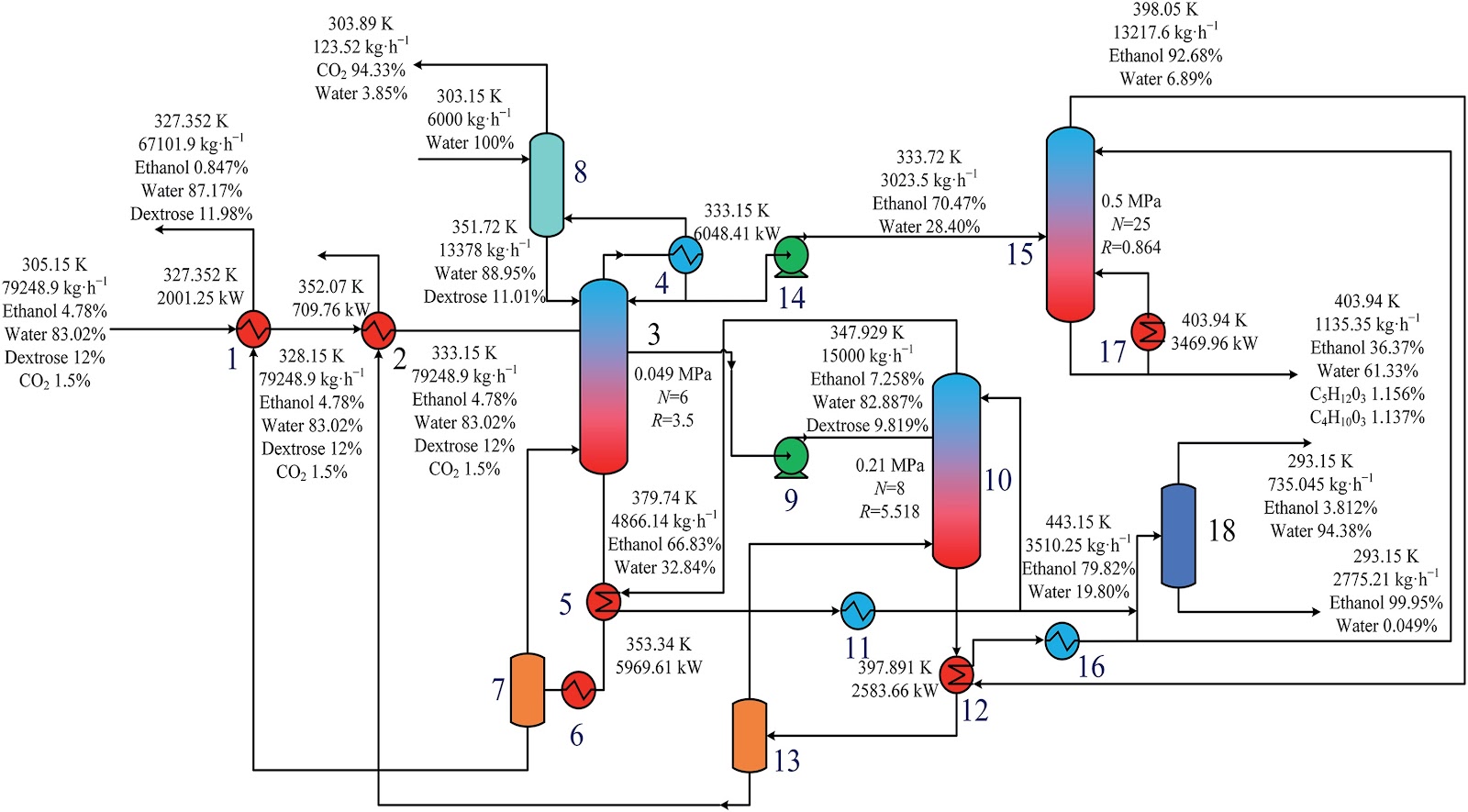
To address the challenges of high energy consumption and prominent costs in the traditional three-columns distillation process for cellulosic fuel ethanol, a distillation—molecular sieve coupling separation process is proposed. This process integrates a three-column (crude distillation column, first distillation column, second distillation column) system with a 3A molecular sieve adsorption deep dehydration unit. A thermal coupling network is constructed via differential pressure design (steam from medium/high-pressure columns as mutual heat sources, reboiler liquid waste heat for feed preheating), and molecular sieve adsorption conditions are optimized. The study first performs a thermodynamic consistency test on the ethanol—water system, determines optimal non-random two-liquid (NRTL) model binary interaction parameters via experimental data regression for Aspen Plus simulation. Aiming at minimum total annual cost (TAC), Aspen Plus is used to optimize process parameters (theoretical tray number, feed location, reflux ratio, side-draw position, etc.). Economic analysis shows this process reduces CO2 emission costs by 27.56%, TAC by 15.58% (to 5.123 × 10⁶ USD·a-1), and increases ethanol purity to >99.6%, providing an effective solution for green, efficient separation.
A cohesion loss model for determining residual strength of deep bedded sandstone
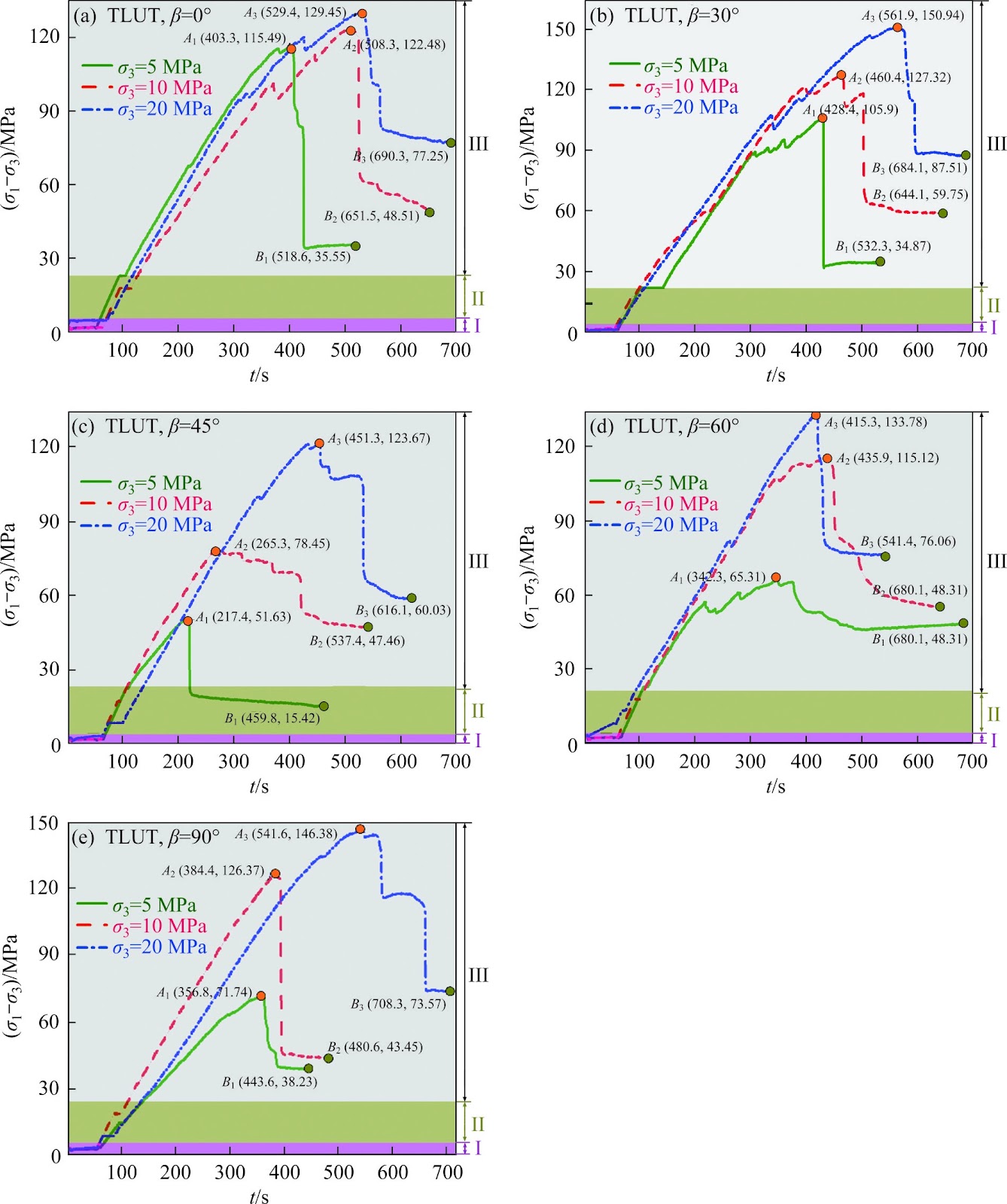
Rock residual strength, as an important input parameter, plays an indispensable role in proposing the reasonable and scientific scheme about stope design, underground tunnel excavation and stability evaluation of deep chambers. Therefore, previous residual strength models of rocks established were reviewed. And corresponding related problems were stated. Subsequently, starting from the effects of bedding and whole life-cycle evolution process, series of triaxial mechanical tests of deep bedded s
Federated model with contrastive learning and adaptive control variates for human activity recognition
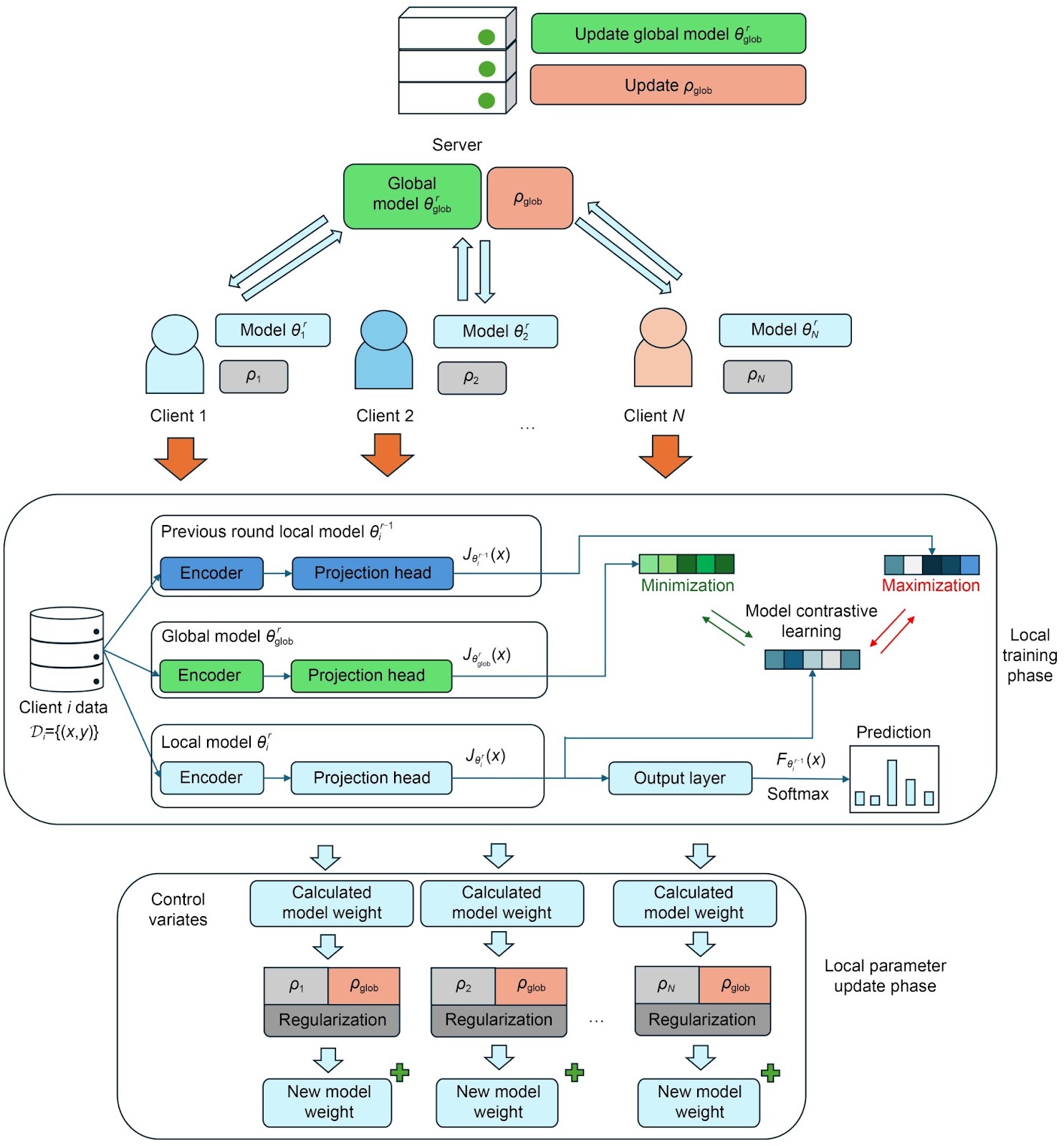
Recent attention to privacy issues demands a communication-safe method for training human activity recognition (HAR) models on client activity data. Federated learning (FL) has become a compelling technique to facilitate model training between the server and clients while preserving data privacy. However, classical FL methods often assume independent and identically distributed (IID) data among clients. This assumption does not hold true in practical scenarios. Human activity in real-world scena