Key Takeaways & Executive Findings
- •• A bi-ligand strategy using terephthalic acid as a second ligand enhances the reconstruction of coordination compounds into active metal oxyhydroxides for OER. • The optimized catalyst achieves a low overpotential of 220 mV at 10 mA·cm−2 in 1 mol·L−1 KOH, outperforming many reported OER catalysts. • Zinc-air batteries assembled with this catalyst deliver a high specific capacity of 718 mA·h·g−1 and excellent cycling stability over 100 hours, surpassing Pt/C+RuO2. • The work provides a cost-effective and high-performance catalyst for water electrolysis and zinc-air batteries, advancing green hydrogen production.
Abstract
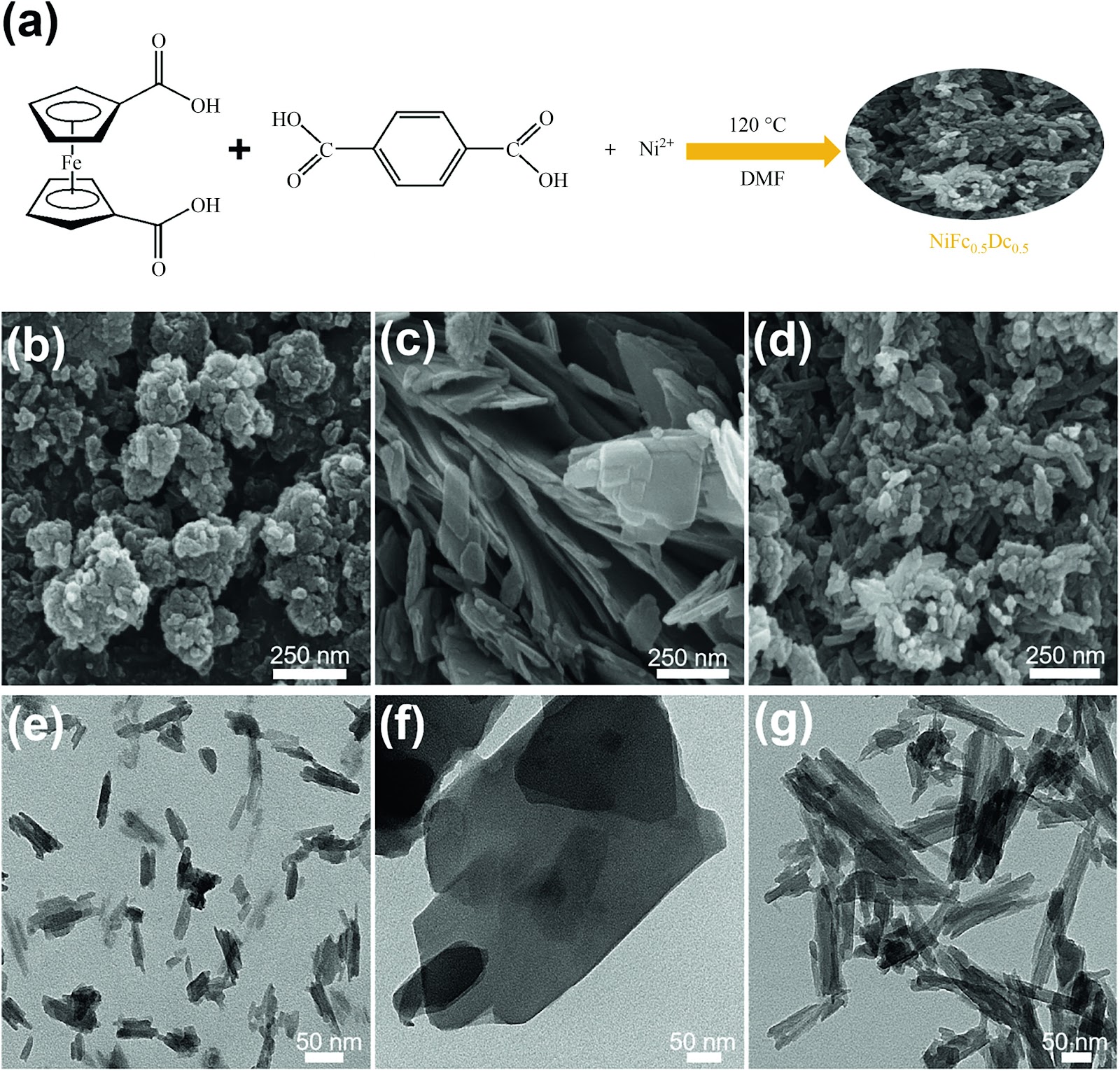
Controllable regulation of the reconstruction process for the pre-catalysts towards oxygen evolution remains as a great challenge. In this study, we report a bi-ligand strategy to facilitate the structural transformation of coordination compounds to metal oxyhydroxides during oxygen evolution with enhanced activity. A coordination compound consisting of 1,10-ferrocene acid (Fc) and Ni2+ was synthesized, in which terephthalic acid was introduced. The second ligand of terephthalic acid facilitates the reconstruction process, inducing an enhanced catalytic activity. In 1 mol·L−1 KOH aqueous solution, the optimized catalyst can drive a current density of 10 mA·cm−2 under a lower overpotential of 220 mV. Using this catalyst, zinc-air batteries can be prepared. The obtained zinc-air battery presents a large specific capacity of 718 mA·h·g−1 with excellent cycling stability for over 100 h far exceeding that of Pt/C+RuO2 battery fabricated with commercial catalysts. The excellent performance and low cost of this catalyst will open up broad prospects for the development of advanced systems for water electrolysis and zinc air batteries.
1. Introduction
In the context of green and sustainable new energy of hydrogen, extensive research has been conducted on hydrogen production and applications. Water-electrolysis is one of the potential routes for green hydrogen production due to the richness of electric energy, especially that generated from intermittent energy [1,2]. Oxygen evolution reaction (OER) occurs on the anode end, which shows higher overpotential because of the proton-coupled four-electron transfer process [3,4]. It is worth noting that there is currently a lack of anode-side electrocatalysts that can meet the comprehensive performance requirements. The well-known OER catalysts, RuO2 and IrO2, show exceptional catalytic activity in acidic solution [5]. However, its high cost raw materials and the poor stability caused by spontaneous oxidation dissolution under OER conditions have suppressed their large-scale utilization. To develop OER catalysts with high performance and low cost is still needed [6,7].
In the search of advanced OER catalysts, transition metal oxides/hydroxides, sulfides, molybdates, and phosphates are widely investigated [8,9]. Coordination compounds, especially the metal-organic-frameworks (MOFs), often own high surface area and porous structure that can provide sufficient active sites [10,11]. This feature is favorable for the catalytic process. Previous investigation has confirmed that under the high overpotential and the strong alkaline environment, surface reconstruction usually occurs on the coordination compound surface during the catalytic process. It is widely believed that the in situ formed oxides/hydroxides/oxyhydroxides act as the actual catalytic active centers for oxygen evolution [12e14].
Loading authentic research manuscript (Pages 1–5)...
Kunpeng Yang, Yuanjun Liu, Yuyu Liu, Xingmei Guo, Xiangjun Zheng, Junhao Zhang, Guoxing Zhu (2024). Ligand-tuning of coordination compound for improved oxygen evolution. Chinese Journal of Chemical Engineering. https://doi.org/10.1016/j_cjche_1448
Research & Educational Purpose Only:The translations, structured abstracts, analytical annotations, and data reports provided by SinoTechIntel are intended exclusively for academic research, internal corporate R&D, and educational benchmarking. They do not constitute formal engineering, chemical safety, legal, or professional advice.
Copyright & Intellectual Property Notice: Original copyright of the underlying source articles and experimental data remains with the respective authors, institutions, and original publishing journals. SinoTechIntel claims intellectual property only over its proprietary translations, analytical syntheses, and AEO structured enhancements in accordance with international fair use and academic citation principles.
Frequently Asked Questions
What is the main challenge addressed in this study?
The main challenge is the controllable regulation of the reconstruction process of pre-catalysts for oxygen evolution, which is crucial for enhancing catalytic activity.
How does the bi-ligand strategy improve oxygen evolution?
The introduction of terephthalic acid as a second ligand facilitates the structural transformation of the coordination compound into metal oxyhydroxides, which are the active species for OER, thereby enhancing catalytic activity.
What performance does the optimized catalyst achieve?
The optimized catalyst achieves a current density of 10 mA·cm−2 at an overpotential of 220 mV in 1 mol·L−1 KOH, and zinc-air batteries using this catalyst show a specific capacity of 718 mA·h·g−1 with cycling stability over 100 hours.
How does this catalyst compare to commercial Pt/C+RuO2?
The zinc-air battery with this catalyst outperforms the Pt/C+RuO2 battery in terms of specific capacity and cycling stability, while being more cost-effective.
What are the potential applications of this catalyst?
This catalyst has promising applications in water electrolysis for green hydrogen production and in zinc-air batteries, offering a low-cost and high-performance alternative to precious metal catalysts.
Related Technical Papers & Translations
Design and optimization of a high-efficiency distillation process for cellulosic fuel ethanol integrated with thermal coupling and molecular sieve adsorption
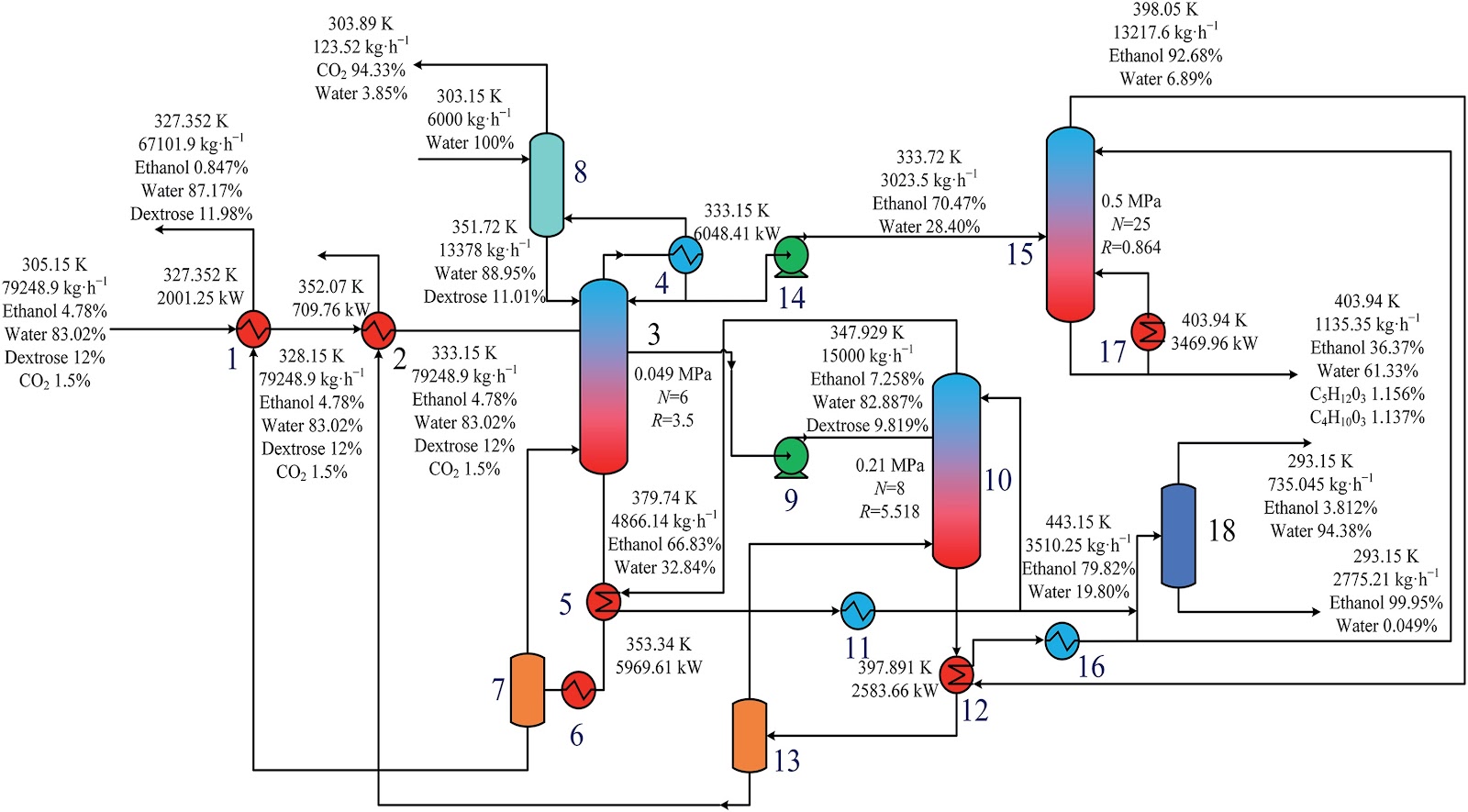
To address the challenges of high energy consumption and prominent costs in the traditional three-columns distillation process for cellulosic fuel ethanol, a distillation—molecular sieve coupling separation process is proposed. This process integrates a three-column (crude distillation column, first distillation column, second distillation column) system with a 3A molecular sieve adsorption deep dehydration unit. A thermal coupling network is constructed via differential pressure design (steam from medium/high-pressure columns as mutual heat sources, reboiler liquid waste heat for feed preheating), and molecular sieve adsorption conditions are optimized. The study first performs a thermodynamic consistency test on the ethanol—water system, determines optimal non-random two-liquid (NRTL) model binary interaction parameters via experimental data regression for Aspen Plus simulation. Aiming at minimum total annual cost (TAC), Aspen Plus is used to optimize process parameters (theoretical tray number, feed location, reflux ratio, side-draw position, etc.). Economic analysis shows this process reduces CO2 emission costs by 27.56%, TAC by 15.58% (to 5.123 × 10⁶ USD·a-1), and increases ethanol purity to >99.6%, providing an effective solution for green, efficient separation.
A cohesion loss model for determining residual strength of deep bedded sandstone
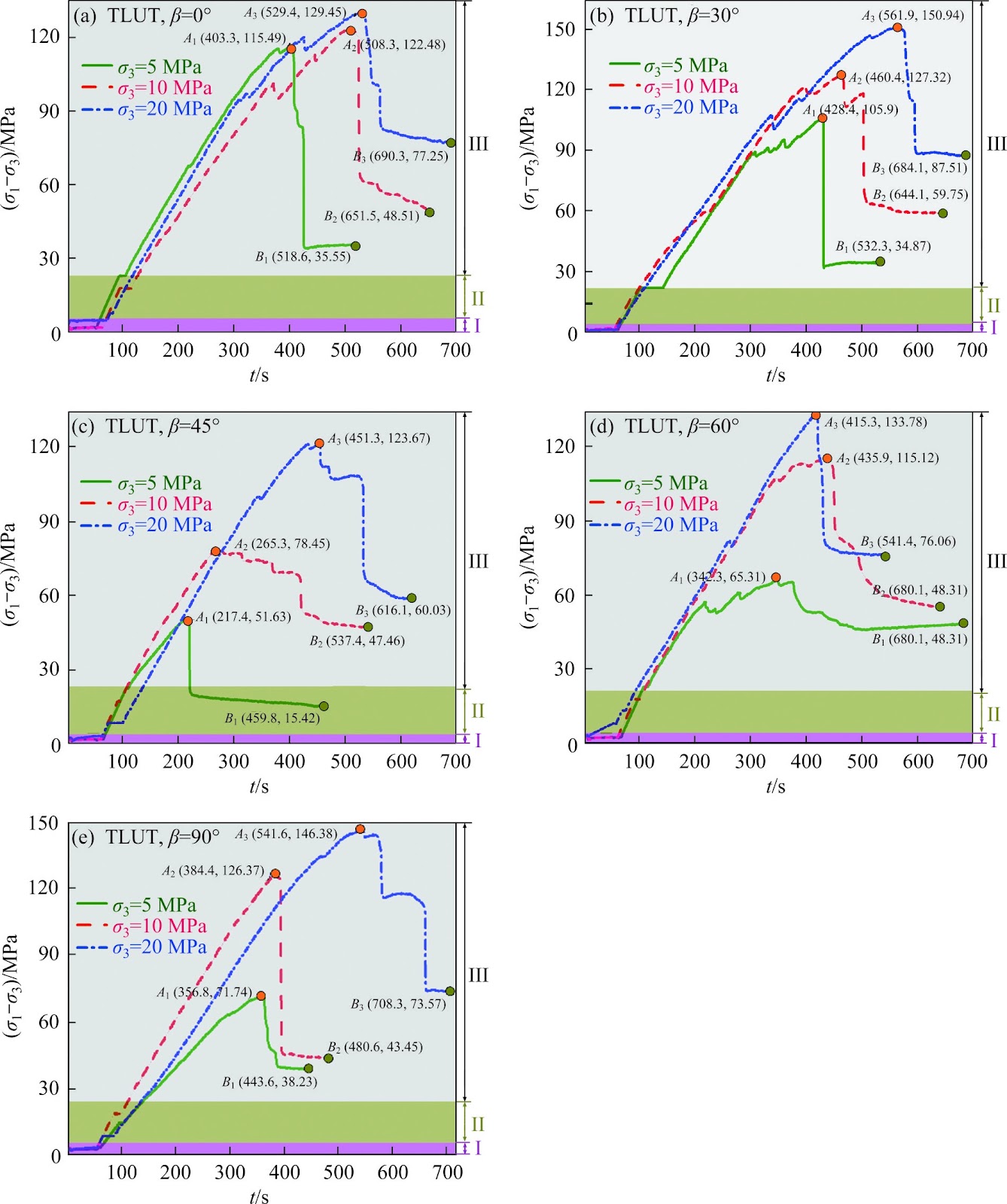
Rock residual strength, as an important input parameter, plays an indispensable role in proposing the reasonable and scientific scheme about stope design, underground tunnel excavation and stability evaluation of deep chambers. Therefore, previous residual strength models of rocks established were reviewed. And corresponding related problems were stated. Subsequently, starting from the effects of bedding and whole life-cycle evolution process, series of triaxial mechanical tests of deep bedded s
Federated model with contrastive learning and adaptive control variates for human activity recognition
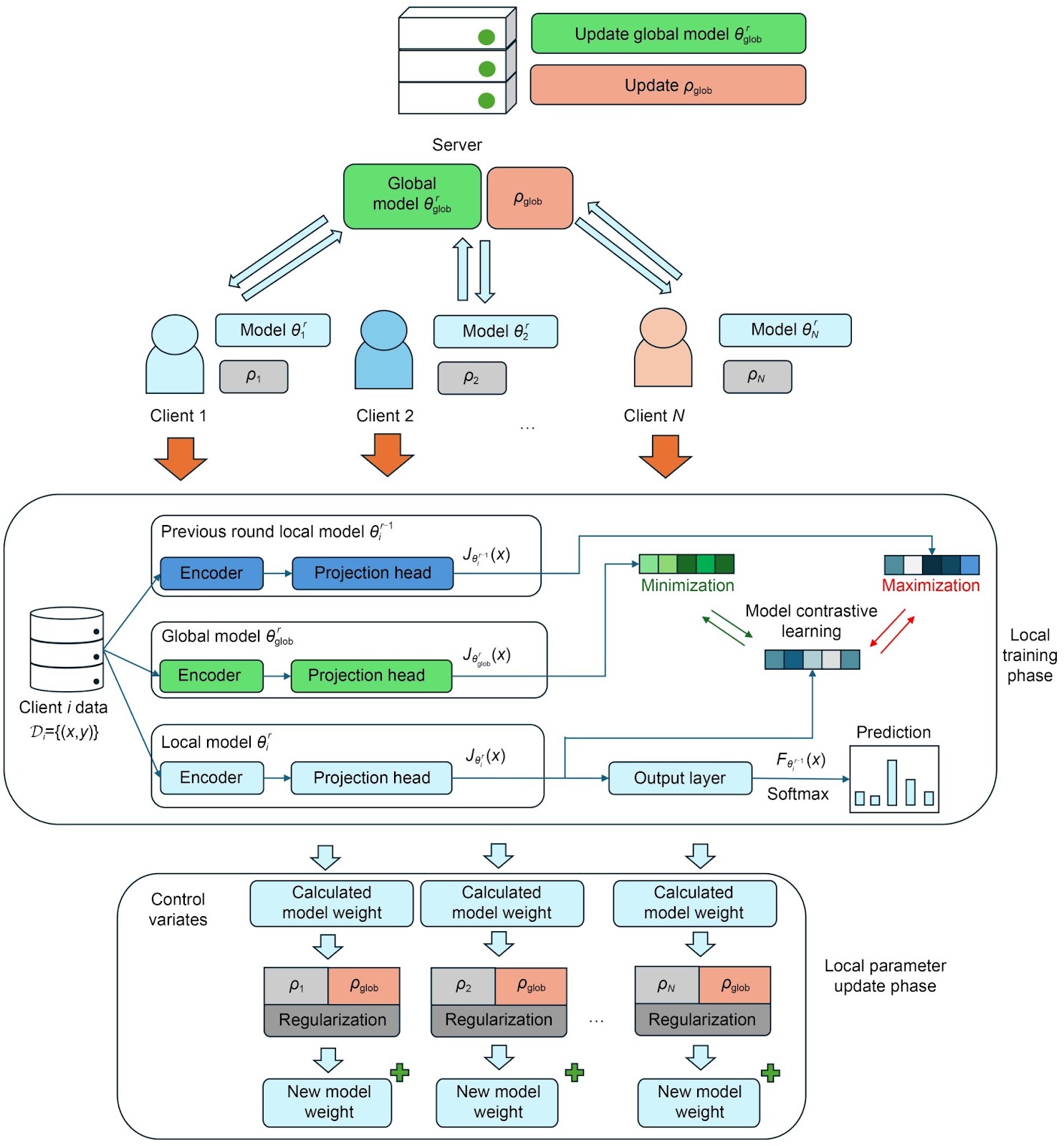
Recent attention to privacy issues demands a communication-safe method for training human activity recognition (HAR) models on client activity data. Federated learning (FL) has become a compelling technique to facilitate model training between the server and clients while preserving data privacy. However, classical FL methods often assume independent and identically distributed (IID) data among clients. This assumption does not hold true in practical scenarios. Human activity in real-world scena