Key Takeaways & Executive Findings
- •• Bacteria-loaded biochar significantly immobilizes Pb and Zn in contaminated soil, reducing exchangeable fractions by up to 98–99% and increasing residual fractions substantially. • The amendments enhance Brassica rapa growth by improving chlorophyll content and antioxidant enzyme activities (SOD, POD), mitigating oxidative stress. • Bacteria-loaded biochar treatment optimizes photosynthetic parameters, including stomatal conductance and intercellular CO2 concentration. • Malondialdehyde (MDA) content, a stress biomarker, is reduced by up to 41.6% under high Pb/Zn stress, indicating effective alleviation of metal-induced stress.
Abstract
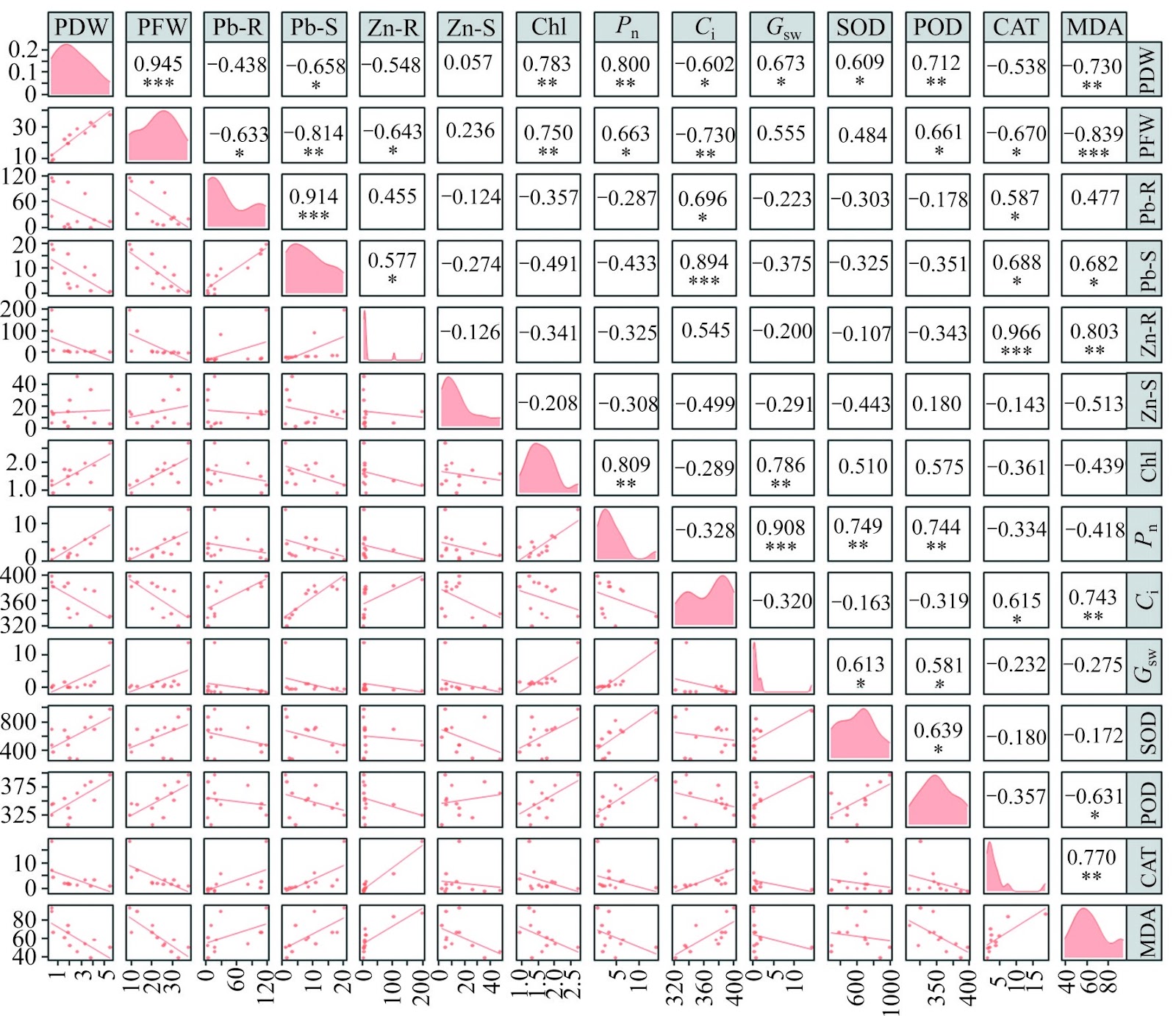
Lead (Pb) and zinc (Zn) are widely recognized as common environmental contaminants, contributing to soil degradation and posing risks to environmental health. Combining functional carbon-based materials with microorganisms has been considered as an effective and environmentally friendly strategy for remediating Pb/Zn-contaminated soil. However, there is still a lack of understanding the connection between heavy metal immobilization and plant responses, which hampers practical applications. Here, a 90-day pot experiment was conducted to investigate the integrated effects of biochar (WS700) and microorganisms including inorganic phosphate-solubilizing bacteria (IPSB) and sulfate reducing bacteria (SRB) on Pb and Zn synchronous immobilization and the physiological responses of Brassica rapa var. chinensis (Brassica). Compared with CK, bacteria-loaded biochar treatment declined the exchangeable Pb and Zn fraction by 94.69%−98.37% and 94.55%−99.52%, while increasing the residual state Pb and Zn by 75.50%−208.58% and 96.71%−110.85%, respectively. Three amendments enhanced Brassica growth by improving total chlorophyll content and superoxide dismutase (SOD) and peroxidase (POD) activities. The bacteria-loaded biochar treatment effectively regulated stomatal conductance and reduced intercellular CO2 concentration. Moreover, compared with CK, three amendments reduced MDA content by 28.84%, 28.30% and 41.60%, respectively, under the high concentration of Pb and Zn. The findings demonstrated the significant role of bacterial-biochar consortia in immobilizing Pb and Zn and mitigating Pb and Zn-induced stress in plants by regulating photosynthetic characteristics and antioxidant enzyme activities.
1. Introduction
Lead (Pb) and zinc (Zn) are prevalent main contaminants in soil, due to intensive cultivation and industrial activities, such as high input of Zn-containing chemical fertilizers and pesticides, wastewater irrigation, uses of Pb-containing paints and gasoline, chemical manufacturing, mining, and smelting [1 −3]. Although Zn is plant essential micronutrient, acting as structural and enzymatic activation, oversupply of it could cause toxicity. Pb and Zn result in soil degradation by altering the normal ecosystem structure and functioning and inducing toxicity in vegetation and microbial community [1, 4, 5]. Pb and Zn could result in oxidative stress, toxicity and surplus accumulation of reactive oxygen species (ROS) in plants, which can damage DNA and RNA, inhibit synthesis and activities of enzyme and protein, and destroy antioxidant enzymes system in plant cells [6]. Green vegetables grown in Pb and Zn contaminated soils are eaten by humans through the food chain, resulting in threats to human health, such as lung cancer, abdominal pain, kidney failure and stomach trouble [7]. Thus, effective, economical and eco-friendly immobilization strategies are urgently required for Pb and Zn contamination.
Biochar has been considered as a promising inoculant carrier for beneficial microorganisms, due to its large surface aera, highly porous structure, and abundant nutrients and surface functional groups [8, 9]. Our previous work presented that inorganic phosphate-solubilizing bacteria (IPSB) immobilized on biochar could successfully transform labile Pb to stable state, reducing Pb toxicity in soil [10]. In addition, immobilized sulfate reducing bacteria (SRB) on biochar had the largest passivate performance, reducing the bioavailable Zn fraction by 22.2% in the Zn concentration of 1500 mg/kg in soil [11]. It was reported that IPSB encapsulated by sodium alginate containing Ca3(PO4)2 could reinforce Pb passivation effects in sediments by ZHANG et al [12], and the removal efficiencies for 100 mg/L initial concentration of Cu2+ and Zn2+ were 98.17% and 99.67%, respectively, in SRB loaded on Cu and Fe particles after 48 h by ZHOU et al [13]. However, how amendments of complex bacteria loaded biochar alleviated Pb and Zn stress on plants still remains not clear. Moreover, little is known about interactive effects of bacteria cons...
Loading authentic research manuscript (Pages 1–5)...
LI Xue, ZHU Xiao-li, ZHU Feng, LI Xing, ZHANG Zi-ye, XUE Sheng-guo (2025). Interactive effects of bacteria-loaded biochar on the physiological responses of Brassica rapa var. chinensis in the Pb and Zn contaminated soil. Journal of Central South University. https://doi.org/10.1007/s11771-025-5848-z
Research & Educational Purpose Only:The translations, structured abstracts, analytical annotations, and data reports provided by SinoTechIntel are intended exclusively for academic research, internal corporate R&D, and educational benchmarking. They do not constitute formal engineering, chemical safety, legal, or professional advice.
Copyright & Intellectual Property Notice: Original copyright of the underlying source articles and experimental data remains with the respective authors, institutions, and original publishing journals. SinoTechIntel claims intellectual property only over its proprietary translations, analytical syntheses, and AEO structured enhancements in accordance with international fair use and academic citation principles.
Frequently Asked Questions
What is the effect of bacteria-loaded biochar on Pb and Zn immobilization in soil?
Bacteria-loaded biochar significantly reduced exchangeable Pb and Zn fractions by 94.69%–98.37% and 94.55%–99.52%, respectively, while increasing residual fractions, indicating effective immobilization.
How does bacteria-loaded biochar affect the physiological responses of Brassica rapa?
It enhanced plant growth by improving total chlorophyll content, superoxide dismutase (SOD) and peroxidase (POD) activities, and reduced MDA content, mitigating oxidative stress.
What are the mechanisms of Pb and Zn stress mitigation in plants?
The amendments regulate photosynthetic characteristics (stomatal conductance, intercellular CO2 concentration) and boost antioxidant enzyme activities to reduce heavy metal-induced stress.
Which microorganisms were used in the study?
Inorganic phosphate-solubilizing bacteria (IPSB) and sulfate reducing bacteria (SRB) were loaded onto biochar for the immobilization study.
What is the significance of this research for soil remediation?
It demonstrates that bacterial-biochar consortia are an effective and eco-friendly strategy for immobilizing Pb and Zn, reducing their bioavailability and toxicity to plants, which is crucial for safe vegetable production in contaminated soils.
Related Technical Papers & Translations

Design and optimization of a high-efficiency distillation process for cellulosic fuel ethanol integrated with thermal coupling and molecular sieve adsorption
To address the challenges of high energy consumption and prominent costs in the traditional three-columns distillation process for cellulosic fuel ethanol, a distillation—molecular sieve coupling separation process is proposed. This process integrates a three-column (crude distillation column, first distillation column, second distillation column) system with a 3A molecular sieve adsorption deep dehydration unit. A thermal coupling network is constructed via differential pressure design (steam from medium/high-pressure columns as mutual heat sources, reboiler liquid waste heat for feed preheating), and molecular sieve adsorption conditions are optimized. The study first performs a thermodynamic consistency test on the ethanol—water system, determines optimal non-random two-liquid (NRTL) model binary interaction parameters via experimental data regression for Aspen Plus simulation. Aiming at minimum total annual cost (TAC), Aspen Plus is used to optimize process parameters (theoretical tray number, feed location, reflux ratio, side-draw position, etc.). Economic analysis shows this process reduces CO2 emission costs by 27.56%, TAC by 15.58% (to 5.123 × 10⁶ USD·a-1), and increases ethanol purity to >99.6%, providing an effective solution for green, efficient separation.

A cohesion loss model for determining residual strength of deep bedded sandstone
Rock residual strength, as an important input parameter, plays an indispensable role in proposing the reasonable and scientific scheme about stope design, underground tunnel excavation and stability evaluation of deep chambers. Therefore, previous residual strength models of rocks established were reviewed. And corresponding related problems were stated. Subsequently, starting from the effects of bedding and whole life-cycle evolution process, series of triaxial mechanical tests of deep bedded s

Federated model with contrastive learning and adaptive control variates for human activity recognition
Recent attention to privacy issues demands a communication-safe method for training human activity recognition (HAR) models on client activity data. Federated learning (FL) has become a compelling technique to facilitate model training between the server and clients while preserving data privacy. However, classical FL methods often assume independent and identically distributed (IID) data among clients. This assumption does not hold true in practical scenarios. Human activity in real-world scena