Key Takeaways & Executive Findings
- •• Increasing Y and decreasing Nd contents enlarge grain size from 17.2 to 29.2 μm while promoting the formation of 14H and 18R LPSO phases, which dominate mechanical properties over grain size effects. • Higher Y and lower Nd additions enhance tensile strength, yield strength, and elongation, with further improvements after solid solution treatment. • Fracture patterns shift from ductile to brittle to mixed with changes in Y/Nd content, and solid solution treatment transitions fracture from intergranular to a combination of ductile and deconvolutional modes. • Deformation mode analysis shows that increased LPSO phases and twins activate pyramidal slip while suppressing prismatic slip, revealing key mechanisms for alloy design.
Abstract
The microstructure, fracture mechanisms, deformation modes, and their correlation with the mechanical properties of Mg-Zn-Gd alloys were analyzed, considering the influence of Y and Nd additions. Increasing Y content and decreasing Nd content resulted in an increase in grain size from 17.2 to 29.2 μm, and two types of LPSO phases, 14H and 18R, formed in the alloy. The mechanical properties of the alloys were predominantly influenced by the LPSO phase, with the grain size effect being relatively minor. Based on this analysis, higher Y and lower Nd contents enhanced the tensile strength, yield strength, and elongation of the alloys, with additional improvements observed following solid solution treatment. Changes in Y and Nd content caused a shift in fracture patterns, transitioning from ductile fracture to brittle fracture and then to mixed fracture. Following solid solution treatment, the alloy progressively transitions from intergranular to a combination of ductile and deconvolutional fracture. The deformation modes observed at each stage are as follows: an increase in LPSO phases and twins activates pyramidal slip and suppresses prismatic slip.
1. Introduction
Magnesium, as a lightweight material, has applications in various engineering fields. Comprising 2.7 wt% of the Earth’s crust, it is the eighth most abundant element available [1]. However, the limited strength and plasticity of Mg alloys restrict their broader utilization [2−4]. Thus, improving the mechanical properties of Mg alloys remains a critical challenge for expanding their applications. To achieve high strength and satisfactory ductility, significant research efforts have been directed toward developing high-performance Mg alloys, with several high-strength variants being reported [5, 6]. Typically, the mechanical properties of Mg alloys are enhanced through a combination of alloying, heat treatment, grain refinement, and similar methodologies [2, 7−9]. Among these strategies, the strategic use of alloying elements plays a crucial role. Rare earth (RE) elements have proven to be highly effective in enhancing the properties of Mg alloys and are widely utilized in both steel and non-ferrous alloys [10]. In the context of high-strength Mg alloys, the beneficial impact of RE elements has been increasingly recognized and harnessed [11−16].
ZHANG et al [17] examined the impact of cooling rates on the tensile properties and fracture mechanisms of as-cast Mg-Nd-Zn-Zr alloys, providing insights into how cooling influences mechanical performance. CHEN et al [18] investigated the role of stacking faults in the tensile properties of Mg-4.05Y-2.47Nd-1.17Gd-0.52Zr alloys subjected to ultrasonic surface rolling processing, highlighting the influence of microstructural features on mechanical behavior. HARJO et al [19] explored the effects of low-ratio hot extrusion on Mg-Zn-Y alloys, emphasizing the roles of α-Mg and long-period stacking ordered (LPSO) phases in mechanical strengthening. WANG et al [20] studied Nd content in Mg-7Gd-0.5Zr alloys, discovering that Nd reacts with Mg to form Mg41Nd5 particles which enhance grain refinement through heterogeneous nucleation and improve thermal stability. ZHONG et al [21] investigated combined additions of Y and Ce in as-rolled Mg-8Li-1Al alloys (LA81), finding improvements in mechanical properties and isotropy. XIE et al [22] analyzed isothermal aging effects at ...
Loading authentic research manuscript (Pages 1–5)...
LI Zhi-qiang, GUO He, HU Wen-xin, LU Yu-ming, WANG Xin-yuan, LIU Feng, ZHANG Li-wei, WANG Wei-li (2025). Influence of Y and Nd on deformation mechanisms and tensile properties at room temperature of Mg-Zn-Gd alloy. Journal of Central South University. https://doi.org/10.1007/s11771-025-6035-y
Research & Educational Purpose Only:The translations, structured abstracts, analytical annotations, and data reports provided by SinoTechIntel are intended exclusively for academic research, internal corporate R&D, and educational benchmarking. They do not constitute formal engineering, chemical safety, legal, or professional advice.
Copyright & Intellectual Property Notice: Original copyright of the underlying source articles and experimental data remains with the respective authors, institutions, and original publishing journals. SinoTechIntel claims intellectual property only over its proprietary translations, analytical syntheses, and AEO structured enhancements in accordance with international fair use and academic citation principles.
Frequently Asked Questions
What is the effect of Y and Nd additions on the grain size of Mg-Zn-Gd alloys?
Increasing Y content and decreasing Nd content resulted in an increase in grain size from 17.2 to 29.2 μm.
How do LPSO phases influence the mechanical properties of Mg-Zn-Gd alloys?
The mechanical properties of the alloys were predominantly influenced by the LPSO phase, with the grain size effect being relatively minor. Higher Y and lower Nd contents enhanced tensile strength, yield strength, and elongation.
What fracture mechanisms are observed in Mg-Zn-Gd alloys with varying Y/Nd content?
Changes in Y and Nd content caused a shift in fracture patterns, transitioning from ductile fracture to brittle fracture and then to mixed fracture. Following solid solution treatment, the alloy progressively transitions from intergranular to a combination of ductile and deconvolutional fracture.
How does solid solution treatment affect the tensile properties and fracture behavior?
Solid solution treatment provided additional improvements in tensile strength, yield strength, and elongation, and altered the fracture mode from intergranular to a combination of ductile and deconvolutional fracture.
What deformation modes are activated in these alloys?
The deformation modes observed include an increase in LPSO phases and twins, which activate pyramidal slip and suppress prismatic slip.
Related Technical Papers & Translations
Design and optimization of a high-efficiency distillation process for cellulosic fuel ethanol integrated with thermal coupling and molecular sieve adsorption
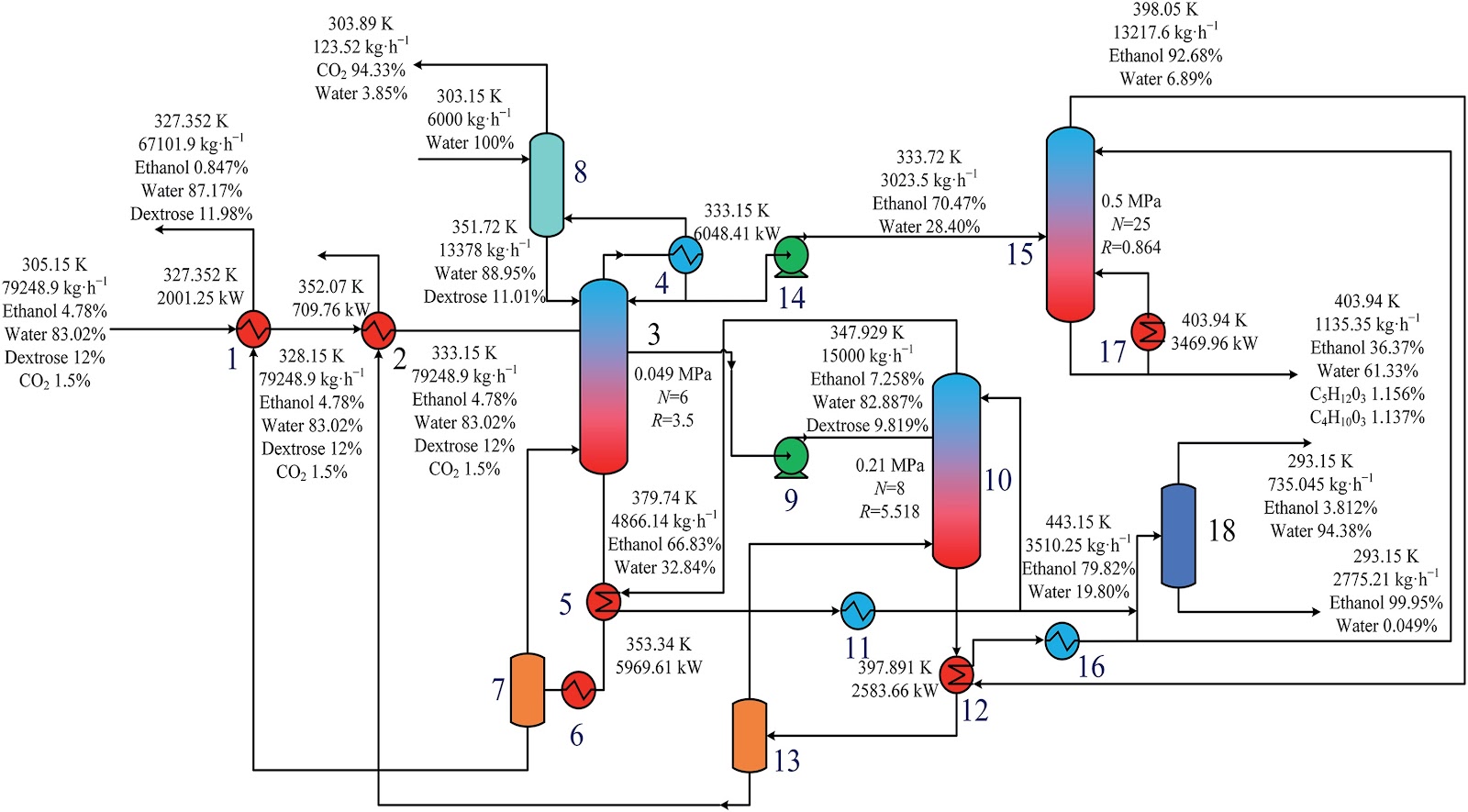
To address the challenges of high energy consumption and prominent costs in the traditional three-columns distillation process for cellulosic fuel ethanol, a distillation—molecular sieve coupling separation process is proposed. This process integrates a three-column (crude distillation column, first distillation column, second distillation column) system with a 3A molecular sieve adsorption deep dehydration unit. A thermal coupling network is constructed via differential pressure design (steam from medium/high-pressure columns as mutual heat sources, reboiler liquid waste heat for feed preheating), and molecular sieve adsorption conditions are optimized. The study first performs a thermodynamic consistency test on the ethanol—water system, determines optimal non-random two-liquid (NRTL) model binary interaction parameters via experimental data regression for Aspen Plus simulation. Aiming at minimum total annual cost (TAC), Aspen Plus is used to optimize process parameters (theoretical tray number, feed location, reflux ratio, side-draw position, etc.). Economic analysis shows this process reduces CO2 emission costs by 27.56%, TAC by 15.58% (to 5.123 × 10⁶ USD·a-1), and increases ethanol purity to >99.6%, providing an effective solution for green, efficient separation.
A cohesion loss model for determining residual strength of deep bedded sandstone
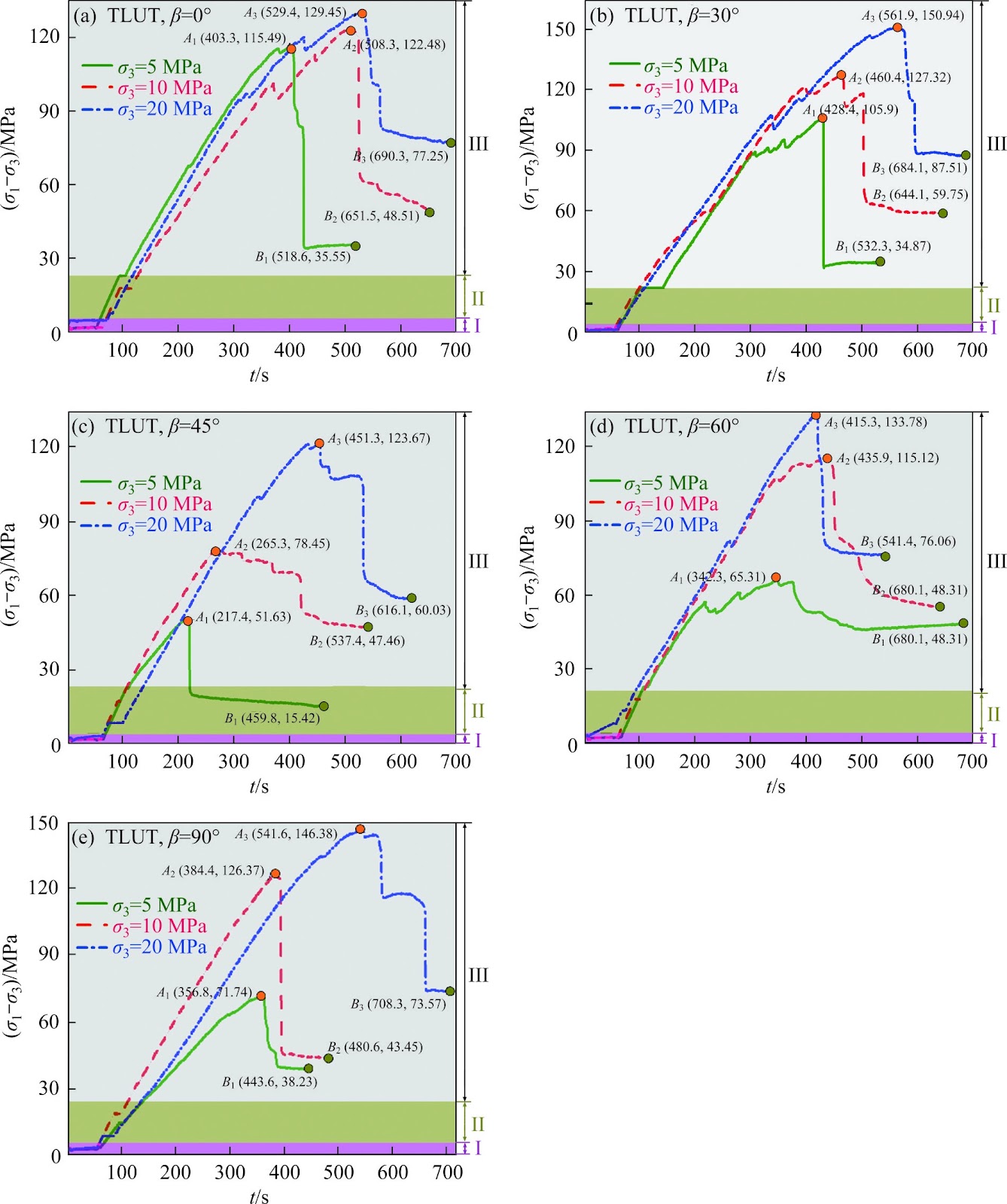
Rock residual strength, as an important input parameter, plays an indispensable role in proposing the reasonable and scientific scheme about stope design, underground tunnel excavation and stability evaluation of deep chambers. Therefore, previous residual strength models of rocks established were reviewed. And corresponding related problems were stated. Subsequently, starting from the effects of bedding and whole life-cycle evolution process, series of triaxial mechanical tests of deep bedded s
Federated model with contrastive learning and adaptive control variates for human activity recognition
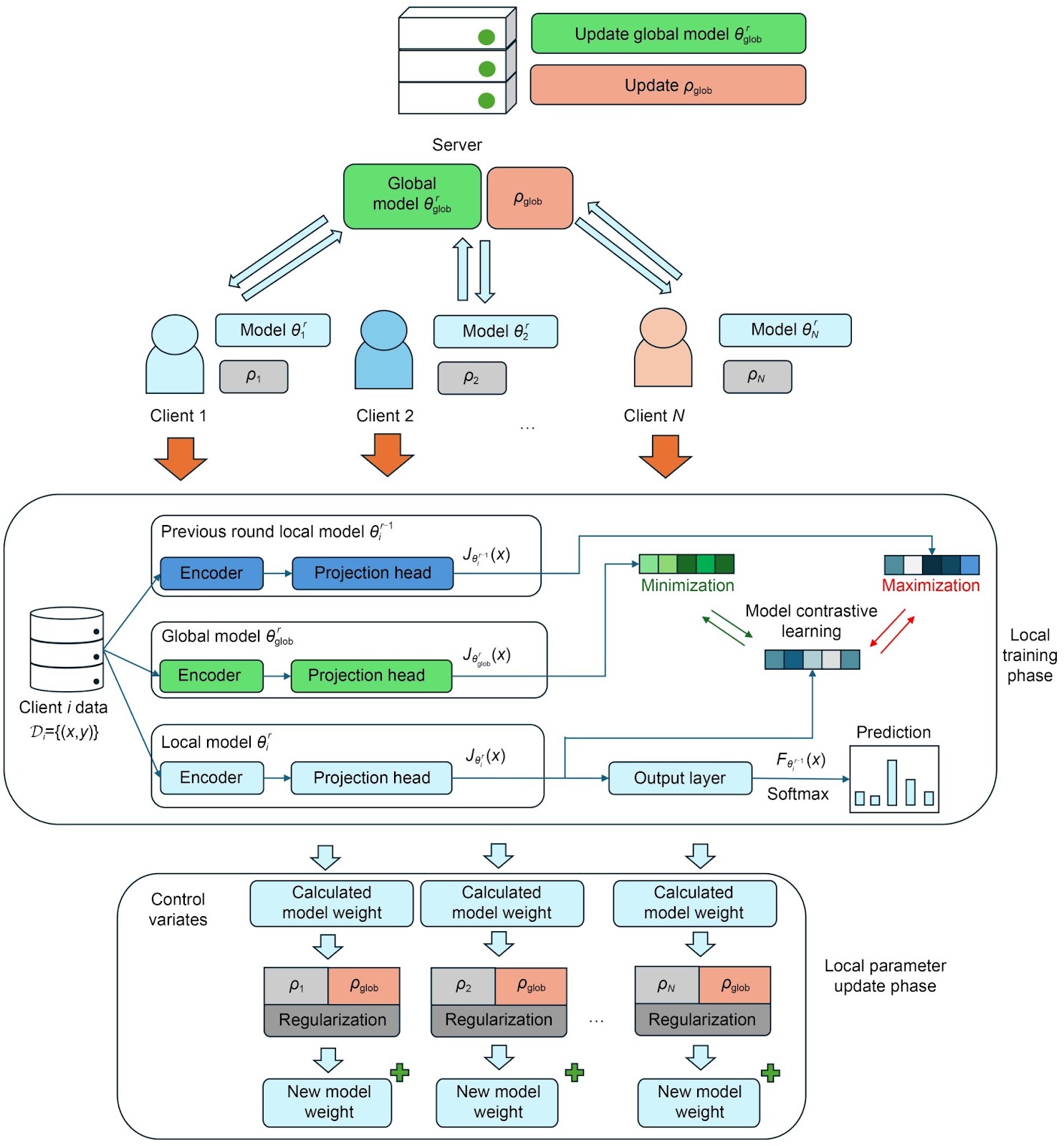
Recent attention to privacy issues demands a communication-safe method for training human activity recognition (HAR) models on client activity data. Federated learning (FL) has become a compelling technique to facilitate model training between the server and clients while preserving data privacy. However, classical FL methods often assume independent and identically distributed (IID) data among clients. This assumption does not hold true in practical scenarios. Human activity in real-world scena