Key Takeaways & Executive Findings
- •• Increasing pH during hydrolysis precipitation mitigates the negative effect of manganese, although higher Mn concentrations (5.69–15.38 g/L) ultimately lower the vanadium precipitation rate at elevated temperatures and longer times. • Elevated manganese concentration leads to denser precipitates, reduced V2O5 grain size, enhanced agglomeration, and a 2.55% decrease in product purity. • In acidic ammonium salt precipitation, raising pH counteracts the negative influence of manganese and reduces the required ammonium sulfate dosage, while Mn is unevenly adsorbed on precipitates. • Despite grain shrinkage and densification during ammonium salt precipitation, final V2O5 purity remains above 99.3%, indicating manganese roasting mainly affects hydrolysis rather than acidic ammonium salt precipitation.
Abstract
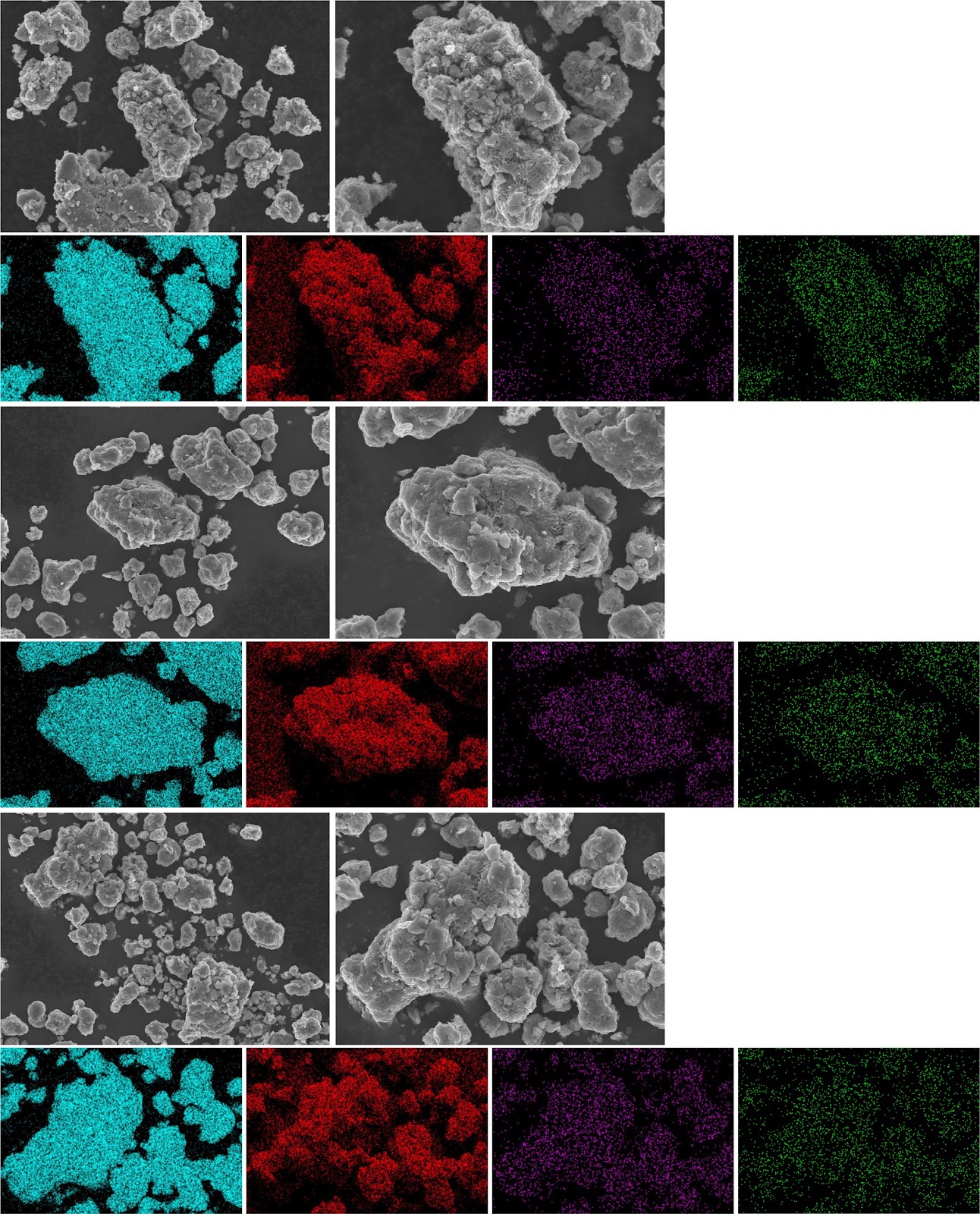
Manganese is a major impurity in acidic vanadium-bearing leaching solutions, but its effects on vanadium precipitation via hydrolysis and acidic ammonium salts remain unclear. In this study, vanadium-bearing leachates with varying manganese concentrations (VL-cMn) were prepared through calcium, a calcium–manganese composite, and manganese-based roasting of vanadium slag (VS) to investigate the influence of manganese on vanadium precipitation behavior during hydrolysis precipitation (HP) and ammonium salt precipitation (AP), as well as the microscopic characteristics and purity of the resulting V2O5 products. The results showed that increasing the pH mitigated the negative effects of Mn on the V precipitation rate during HP. However, as the manganese concentration increased from 5.69 to 15.38 g/L, the V precipitation rate gradually declined at higher temperatures and longer reaction times. The precipitates exhibited increased microstructural density, which might had contributed to the formation of Mn-bearing phases. Additionally, the average grain size of V2O5 was reduced and the particles were increasingly agglomerated, leading to a 2.55% decrease in product purity. For AP, as manganese concentration increased, raising the pH counteracted the negative impact of Mn on the V precipitation rate and reduced the required amount of ammonium sulfate. Moreover, Mn was unevenly adsorbed on the surface of the precipitates. Although V2O5 grains gradually shrank and became denser, there was no significant effect on the final product purity, which remained above 99.3%. In conclusion, roasting with added manganese salts influenced the hydrolysis of vanadium but had no significant effect on acidic ammonium salt precipitation.
1. Introduction
Vanadium is often referred to as the "vitamin of modern industry" owing to its distinctive and significant physical and chemical properties, which make it vital for applications in the steel, aerospace, and battery industries. The primary vanadium product, vanadium pentoxide (V2O5), is widely used as a raw material for producing energy storage materials, alloys, and photosensitive compounds. Approximately 88% of the global annual vanadium production originates from vanadium titanomagnetite (VTM). In China, the prevailing method for vanadium extraction from VTM is indirect, where vanadium is enriched in vanadium slag (VS) through blast furnace ironmaking–vanadium converter oxidation. Consequently, the extraction of vanadium from VS has consistently been the focus of research in the field of vanadium production.
As roasting is the most cost-effective pretreatment method, oxidation roasting is usually performed before the leaching of VS. The purpose of roasting is to decompose and oxidize vanadium–iron spinel in VS at high temperatures and finally convert V3+ into pentavalent vanadate. A number of roasting methods have been developed to aid the leaching of VS. Calcium salt brings significant advantages compared with conventional sodium vanadium extraction, for example, lower additives and wastewater treatment costs and easier tailing recovery. In addition, acid-soluble manganese vanadate has been identified in the calcified roasting of VS. Inspired by this, new technologies for manganese and calcium–manganese composite roasting have been proposed, in which manganese vanadate is generated as the target product and the acidic leaching solution contains a large amount of Mn2+. The introduction of manganese salt not only enabled effective vanadium extraction but also recovered most of the additives. Therefore, clean and efficient pretreatment with calcium and manganese is more suitable for the resource utilization of VS.
Precipitation is indispensable for obtaining vanadium-containing products from acid leaching solutions. The earliest application of hydrolysis precipitation (HP) in industrial production was the addition of inorganic acid to adjust the pH, and the vanadium-containing liquid was gradually hydrolyzed to produce hydrated vanadium pentoxide with increasing acidity. HP is simple and inexpensive but suffers from lower product purity. As a result, an acidic precipitation process using ammonium salt as precipitant was proposed, after which the V2O5 purity obtained by calcining the precipitated ammonium polyvanadate is as high as 99%, but the ammonia–nitrogen wastewater is difficult to treat. Owing to the advantages of both methods, many scholars have adopted them for preparing V2O5 products. According to previous studies, the V precipitation efficiency and purity of the V2O5 product are closely related to the types and concentrations of impurities in the vanadium-containing solutions.
Loading authentic research manuscript (Pages 1–5)...
Lan Zhang, Tao Jiang, Jing Wen, Tangxia Yu, Changqing Li, Xinyu An (2025). Influence of manganese on vanadium precipitation and V2O5 purity based on different roasting methods of vanadium slag. Journal of Mineral Metallurgy and Materials Science. https://doi.org/10.1007/s12613-025-3192-9
Research & Educational Purpose Only:The translations, structured abstracts, analytical annotations, and data reports provided by SinoTechIntel are intended exclusively for academic research, internal corporate R&D, and educational benchmarking. They do not constitute formal engineering, chemical safety, legal, or professional advice.
Copyright & Intellectual Property Notice: Original copyright of the underlying source articles and experimental data remains with the respective authors, institutions, and original publishing journals. SinoTechIntel claims intellectual property only over its proprietary translations, analytical syntheses, and AEO structured enhancements in accordance with international fair use and academic citation principles.
Frequently Asked Questions
How does manganese concentration affect vanadium precipitation during hydrolysis precipitation?
Increasing pH mitigates the negative effects, but as manganese concentration increases from 5.69 to 15.38 g/L, the vanadium precipitation rate gradually declines at higher temperatures and longer reaction times, leading to a 2.55% decrease in product purity.
What is the effect of manganese on acidic ammonium salt precipitation of vanadium?
Raising pH counteracts the negative impact of manganese on the vanadium precipitation rate and reduces the required amount of ammonium sulfate. Although V2O5 grains shrink and become denser, final product purity remains above 99.3%.
What roasting methods were used to prepare vanadium-bearing leachates in this study?
The study used calcium roasting, calcium–manganese composite roasting, and manganese-based roasting of vanadium slag to prepare vanadium-bearing leachates with varying manganese concentrations.
Why is manganese considered a major impurity in acidic vanadium-bearing solutions?
Manganese is introduced through manganese or calcium–manganese composite roasting, and its concentration in the leaching solution can influence both vanadium precipitation efficiency and the final purity of V2O5.
What is the practical significance of this study for vanadium production?
The findings help optimize control of manganese impurities during hydrolysis or acidic ammonium salt precipitation, enabling high-purity V2O5 production while promoting cleaner resource utilization of vanadium slag.
Related Technical Papers & Translations
Design and optimization of a high-efficiency distillation process for cellulosic fuel ethanol integrated with thermal coupling and molecular sieve adsorption
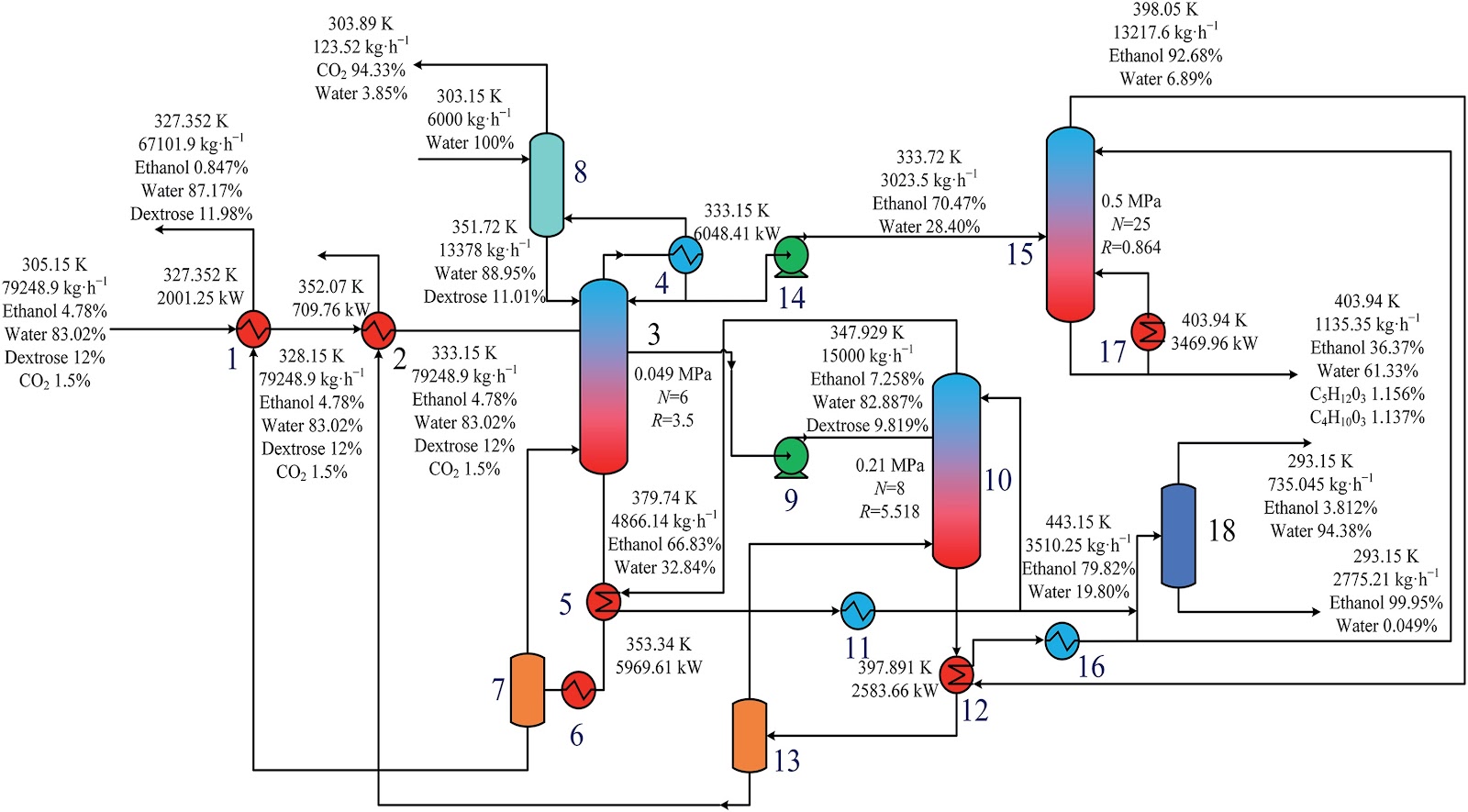
To address the challenges of high energy consumption and prominent costs in the traditional three-columns distillation process for cellulosic fuel ethanol, a distillation—molecular sieve coupling separation process is proposed. This process integrates a three-column (crude distillation column, first distillation column, second distillation column) system with a 3A molecular sieve adsorption deep dehydration unit. A thermal coupling network is constructed via differential pressure design (steam from medium/high-pressure columns as mutual heat sources, reboiler liquid waste heat for feed preheating), and molecular sieve adsorption conditions are optimized. The study first performs a thermodynamic consistency test on the ethanol—water system, determines optimal non-random two-liquid (NRTL) model binary interaction parameters via experimental data regression for Aspen Plus simulation. Aiming at minimum total annual cost (TAC), Aspen Plus is used to optimize process parameters (theoretical tray number, feed location, reflux ratio, side-draw position, etc.). Economic analysis shows this process reduces CO2 emission costs by 27.56%, TAC by 15.58% (to 5.123 × 10⁶ USD·a-1), and increases ethanol purity to >99.6%, providing an effective solution for green, efficient separation.
A cohesion loss model for determining residual strength of deep bedded sandstone
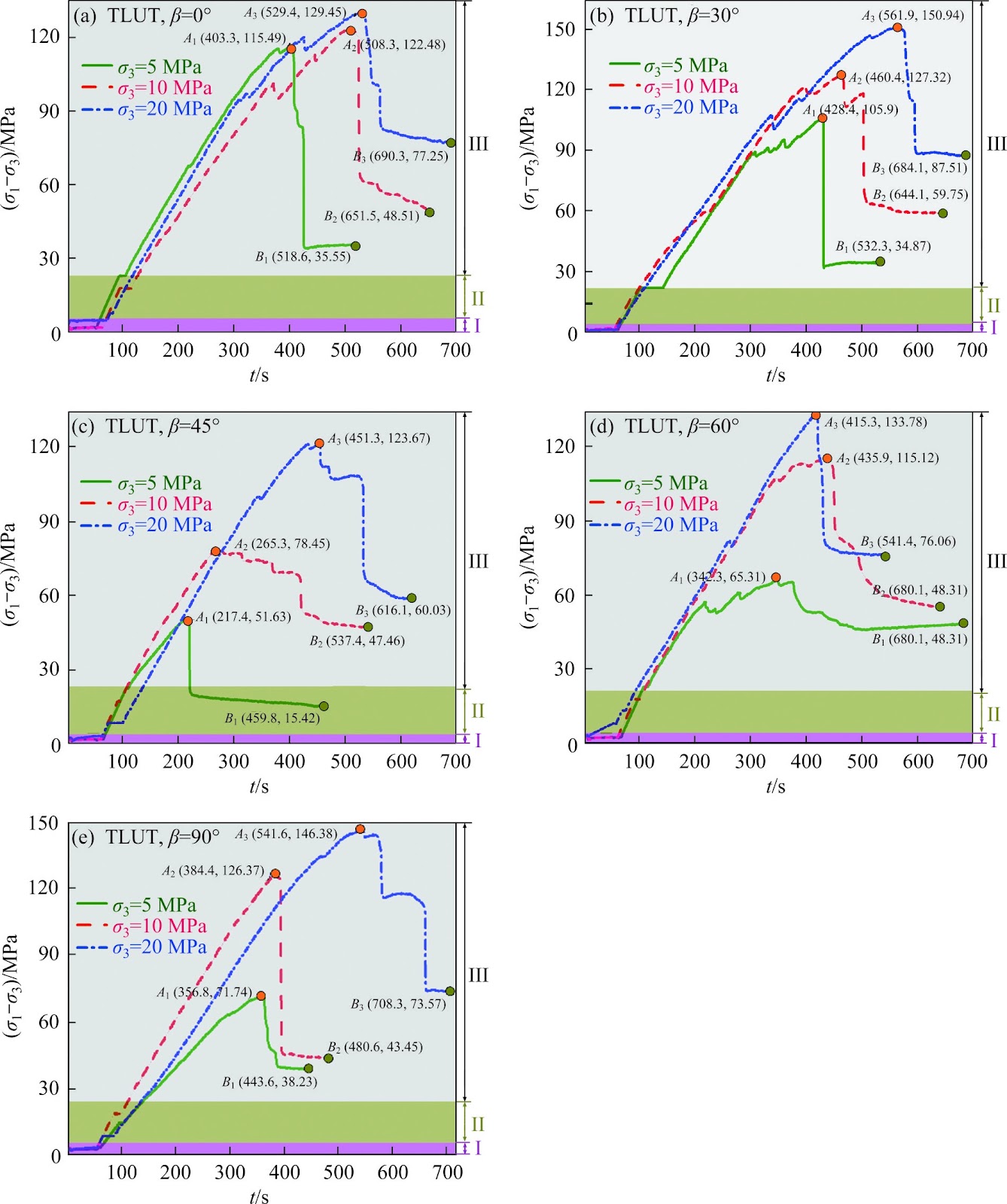
Rock residual strength, as an important input parameter, plays an indispensable role in proposing the reasonable and scientific scheme about stope design, underground tunnel excavation and stability evaluation of deep chambers. Therefore, previous residual strength models of rocks established were reviewed. And corresponding related problems were stated. Subsequently, starting from the effects of bedding and whole life-cycle evolution process, series of triaxial mechanical tests of deep bedded s
Federated model with contrastive learning and adaptive control variates for human activity recognition
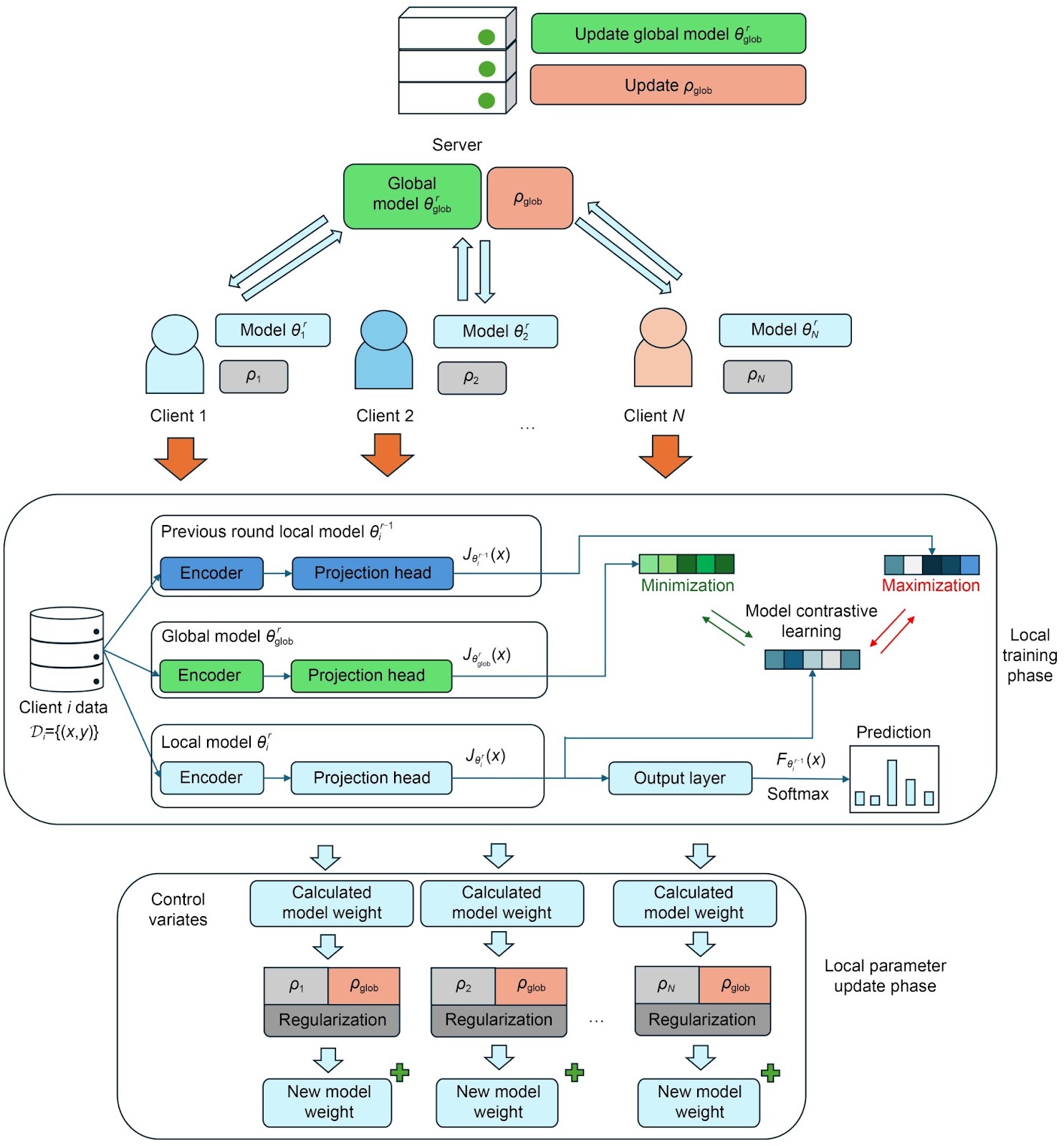
Recent attention to privacy issues demands a communication-safe method for training human activity recognition (HAR) models on client activity data. Federated learning (FL) has become a compelling technique to facilitate model training between the server and clients while preserving data privacy. However, classical FL methods often assume independent and identically distributed (IID) data among clients. This assumption does not hold true in practical scenarios. Human activity in real-world scena