Key Takeaways & Executive Findings
- •• Xanthan gum serves as a non-toxic and biodegradable depressant for talc, olivine, and serpentine in copper-nickel sulfide flotation. • XG shifts the aggregation among the three gangue minerals from talc-serpentine to olivine-serpentine, selectively depressing talc. • Hydroxyl groups of XG chemically bond with Mg sites on olivine, causing a significant negative surface charge shift. • Enhanced electrostatic attraction between serpentine and olivine promotes their aggregation, improving separation efficiency.
Abstract
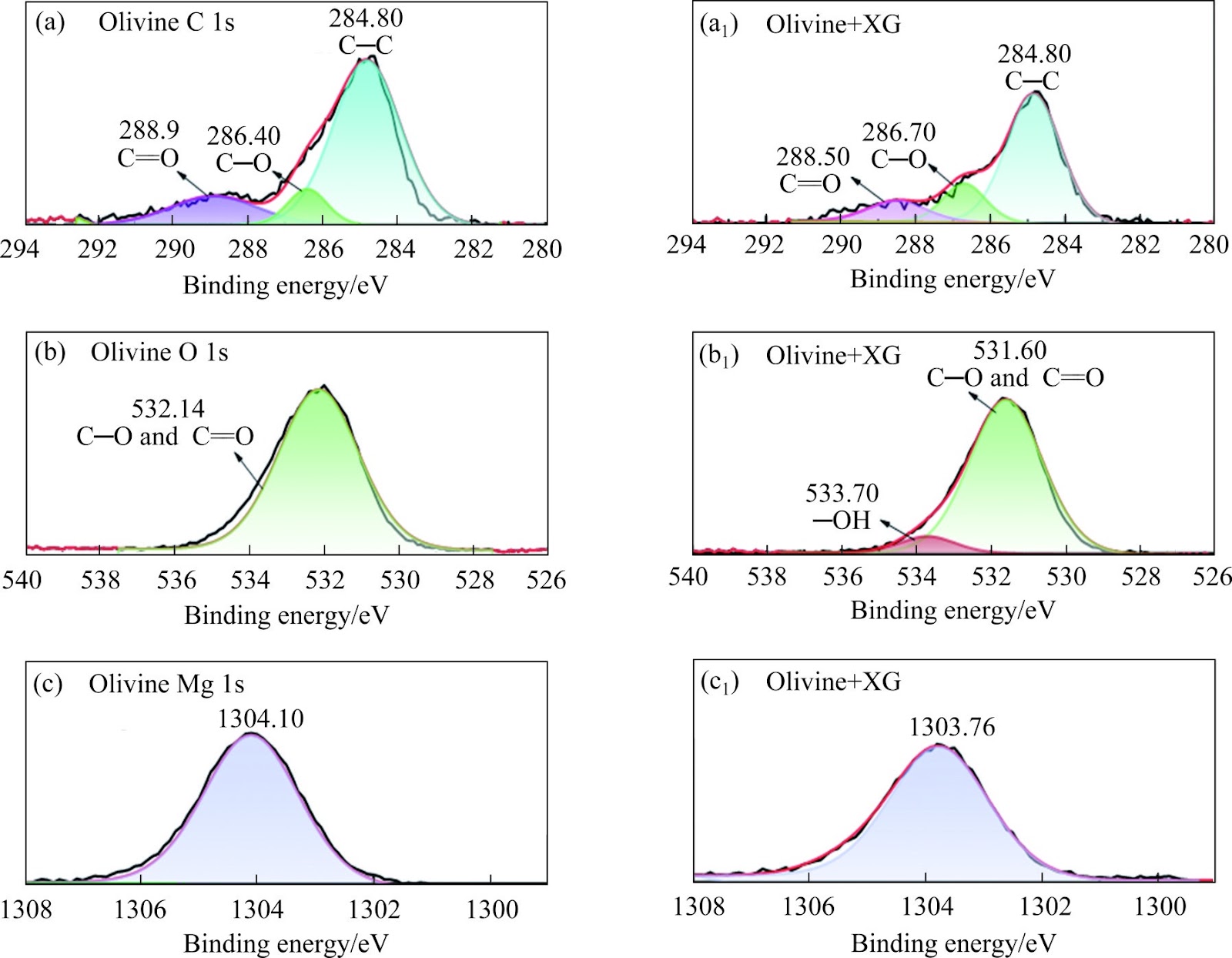
Finding appropriate flotation reagents to separate copper-nickel sulfide ores from various magnesium silicate gangue minerals has always been a challenge in the mineral processing industry. This study introduced xanthan gum (XG) as a non-toxic and environmentally friendly depressant of talc, olivine, and serpentine. The effects and mechanisms of XG on the aggregation and flotation behavior of talc, olivine and serpentine were investigated by flotation tests, sedimentation tests, IC-FBRM particle size analysis tests, adsorption quantity tests, Fourier transform infrared spectroscopy (FTIR) tests, X-ray photoelectron spectroscopy (XPS) analysis tests and Zeta potential tests. The flotation results indicated that when the three minerals were mixed, XG caused the talc-serpentine aggregation in the solution to shift to olivine-serpentine aggregation, with the remaining XG adsorbing on talc to depress its flotation. In addition, combining XPS and zeta potential tests, the —OH (hydroxyl) groups in XG molecules preferentially adsorbed on Mg sites on the surface of olivine through chemical bonding. The surface potential of olivine significantly shifted to a more negative value, with the negative charge on the olivine surface far exceeding that on the talc surface. This resulted in an increased aggregation effect between positively charged serpentine and negatively charged olivine due to enhanced electrostatic forces.
1. Introduction
Nickel and copper, as strategic metal resources, hold indispensable positions in modern industrial systems [1, 2]. Nickel has a wide range of applications across several industrial sectors, including stainless steel production, catalytic manufacturing, battery technology, electronic components, and aerospace engineering [3 −6]. Copper, known for its exceptional electrical conductivity, serves as a fundamental material in electrical engineering, power transmission infrastructure, electronic devices, architectural applications, and medical equipment [7 −10]. At present, copper-nickel minerals are mainly derived from sulfide deposits, which are usually accompanied by magnesium silicate minerals (MgO), posing a great challenge to the mineral separation process [11 −13]. Therefore, achieving efficient separation between target minerals and magnesium silicate minerals has become a key focus of mineral processing research. Currently, flotation process is the main technology to realize mineral separation.
In contrast to the research on collectors for target minerals, greater emphasis has been placed on the development and application of depressants. For instance, polysaccharide-based polymers, such as sodium alginate and sodium phytate, have demonstrated effectiveness in separating talc from copper-nickel sulfide ores [14, 15]. Additionally, novel phosphate-based reagents have been employed for the separation of serpentine from copper-nickel sulfide ores. Furthermore, the combination of acidified water glass and acacia gum has shown promise in separating magnesium silicate gangue minerals from refractory copper sulfide ores [16]. Previous studies have primarily focused on the separation of target minerals from single MgO-bearing gangue minerals, with limited research addressing the separation from multiple MgO-bearing gangue species. However, talc, serpentine, and olivine often coexist with copper-nickel sulfide ores and adversely affect the grade of target minerals through different mechanisms [17 −20]. Consequently, achieving efficient separation of copper-nickel sulfide ores from MgO-bearing minerals without the addition of flotation reagents remains a significant challenge.
Xanthan gum (XG) is a high molecular weight anionic polysaccharide with excellent biocompatibility, water solubility, cost-effectiveness and biodegradability [21]. Therefore, it has been widely used in the food industry, cosmetics and pharmaceutical industries [22, 23]. As shown in Figure 1, XG contains a large number of hydrophilic hydroxyl and carboxyl groups [24]. These groups can chelate with certain metals on the mineral surface, depressing the flotation process.
Loading authentic research manuscript (Pages 1–5)...
Yang Xu-sheng, Feng Bo, Wang Zi-ming, Jiang Long-xia (2025). Influence and mechanism of xanthan gum on the aggregation and flotation behavior of talc, olivine, and serpentine. Journal of Central South University. https://doi.org/10.1007/s11771-025-6008-1
Research & Educational Purpose Only:The translations, structured abstracts, analytical annotations, and data reports provided by SinoTechIntel are intended exclusively for academic research, internal corporate R&D, and educational benchmarking. They do not constitute formal engineering, chemical safety, legal, or professional advice.
Copyright & Intellectual Property Notice: Original copyright of the underlying source articles and experimental data remains with the respective authors, institutions, and original publishing journals. SinoTechIntel claims intellectual property only over its proprietary translations, analytical syntheses, and AEO structured enhancements in accordance with international fair use and academic citation principles.
Frequently Asked Questions
What is the role of xanthan gum in mineral flotation?
Xanthan gum acts as a non-toxic and environmentally friendly depressant for talc, olivine, and serpentine in copper-nickel sulfide ore flotation, adsorbing on mineral surfaces to selectively depress their flotation.
How does xanthan gum affect the aggregation of talc, olivine, and serpentine?
XG shifts the aggregation behavior from talc-serpentine to olivine-serpentine by preferentially adsorbing on olivine via chemical bonding, altering surface charges and enhancing electrostatic attraction with serpentine.
What is the mechanism of XG adsorption on olivine?
The hydroxyl groups (-OH) in XG molecules preferentially adsorb on Mg sites on the olivine surface through chemical bonding, causing a significant negative shift in surface potential.
Why is it challenging to separate copper-nickel sulfide ores from magnesium silicate gangue minerals?
Magnesium silicate minerals like talc, serpentine, and olivine often coexist with copper-nickel sulfide ores and adversely affect the grade through different mechanisms, making efficient separation difficult without reagents.
Is xanthan gum beneficial for the environment?
Yes, XG is a non-toxic, biodegradable polysaccharide with excellent biocompatibility and water solubility, making it an environmentally friendly alternative to conventional depressants.
Related Technical Papers & Translations
Design and optimization of a high-efficiency distillation process for cellulosic fuel ethanol integrated with thermal coupling and molecular sieve adsorption
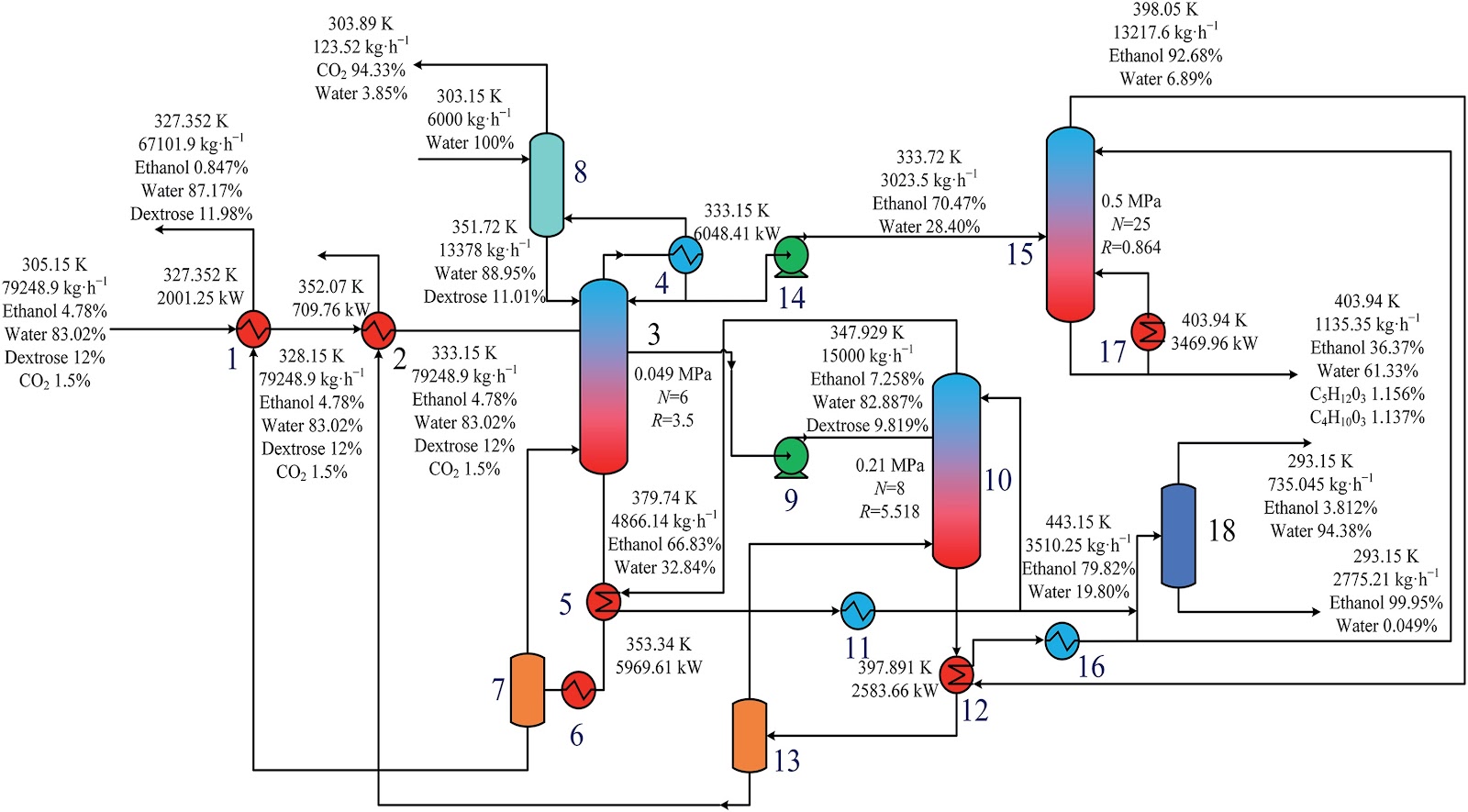
To address the challenges of high energy consumption and prominent costs in the traditional three-columns distillation process for cellulosic fuel ethanol, a distillation—molecular sieve coupling separation process is proposed. This process integrates a three-column (crude distillation column, first distillation column, second distillation column) system with a 3A molecular sieve adsorption deep dehydration unit. A thermal coupling network is constructed via differential pressure design (steam from medium/high-pressure columns as mutual heat sources, reboiler liquid waste heat for feed preheating), and molecular sieve adsorption conditions are optimized. The study first performs a thermodynamic consistency test on the ethanol—water system, determines optimal non-random two-liquid (NRTL) model binary interaction parameters via experimental data regression for Aspen Plus simulation. Aiming at minimum total annual cost (TAC), Aspen Plus is used to optimize process parameters (theoretical tray number, feed location, reflux ratio, side-draw position, etc.). Economic analysis shows this process reduces CO2 emission costs by 27.56%, TAC by 15.58% (to 5.123 × 10⁶ USD·a-1), and increases ethanol purity to >99.6%, providing an effective solution for green, efficient separation.
A cohesion loss model for determining residual strength of deep bedded sandstone
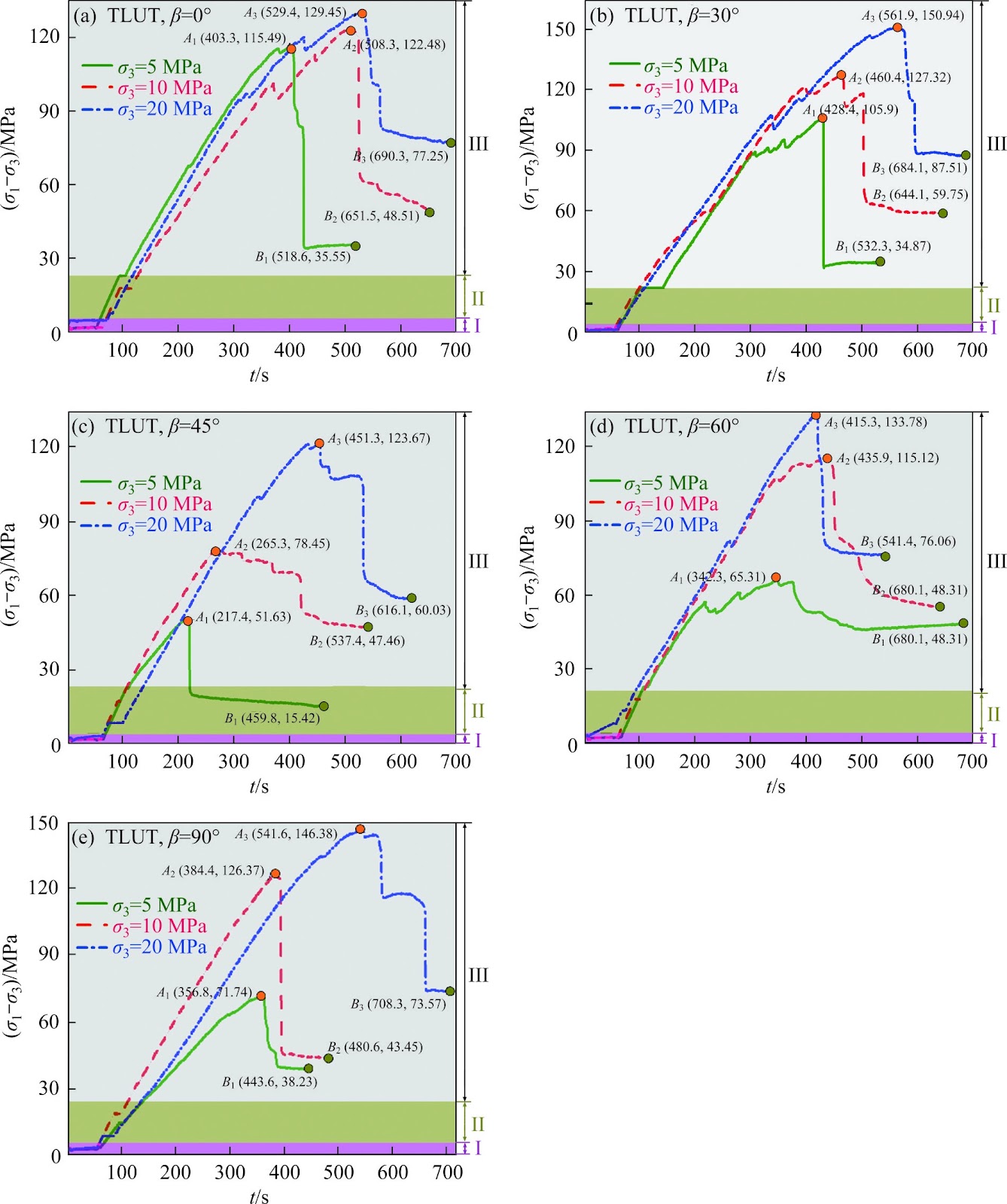
Rock residual strength, as an important input parameter, plays an indispensable role in proposing the reasonable and scientific scheme about stope design, underground tunnel excavation and stability evaluation of deep chambers. Therefore, previous residual strength models of rocks established were reviewed. And corresponding related problems were stated. Subsequently, starting from the effects of bedding and whole life-cycle evolution process, series of triaxial mechanical tests of deep bedded s
Federated model with contrastive learning and adaptive control variates for human activity recognition
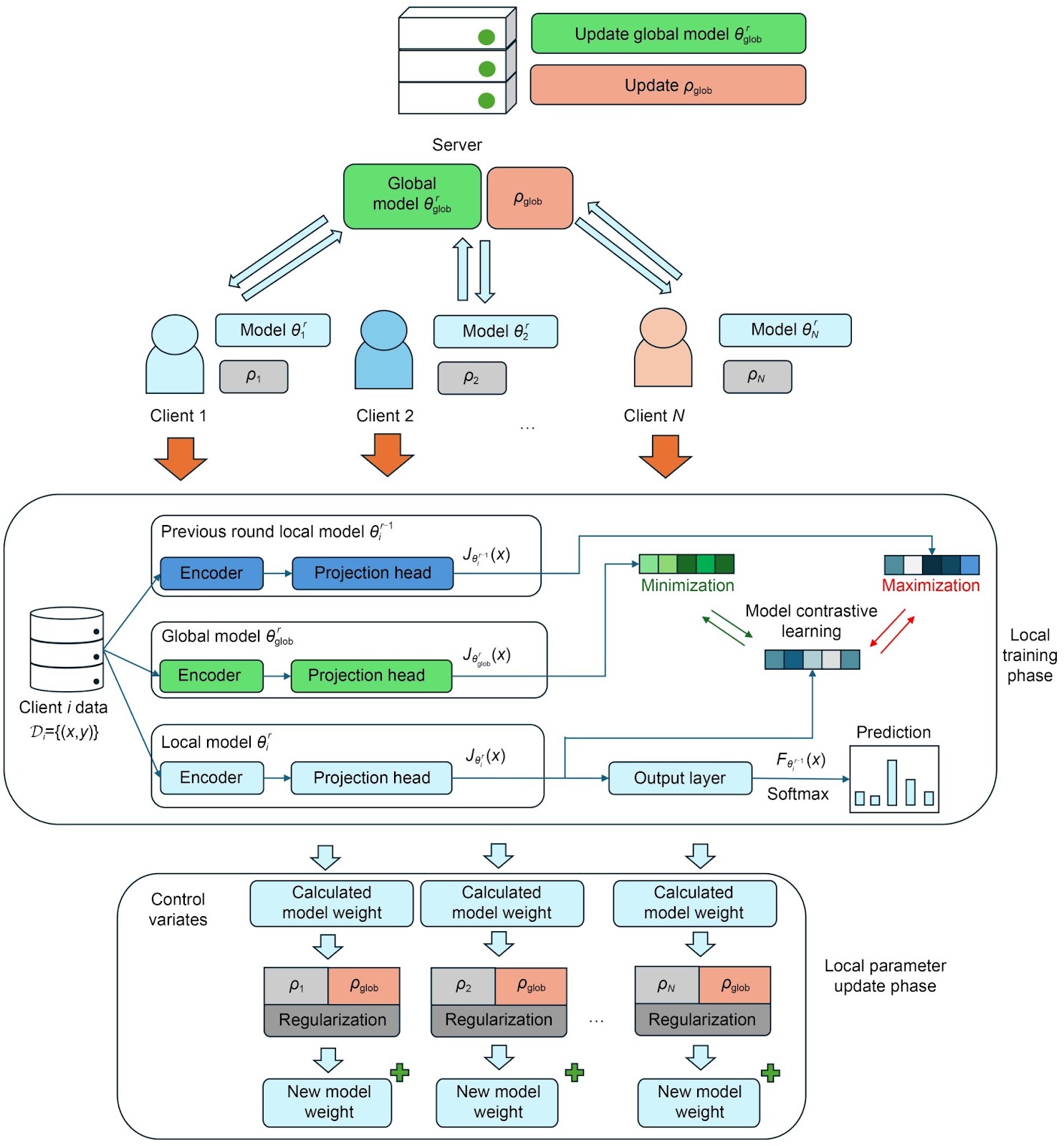
Recent attention to privacy issues demands a communication-safe method for training human activity recognition (HAR) models on client activity data. Federated learning (FL) has become a compelling technique to facilitate model training between the server and clients while preserving data privacy. However, classical FL methods often assume independent and identically distributed (IID) data among clients. This assumption does not hold true in practical scenarios. Human activity in real-world scena