Key Takeaways & Executive Findings
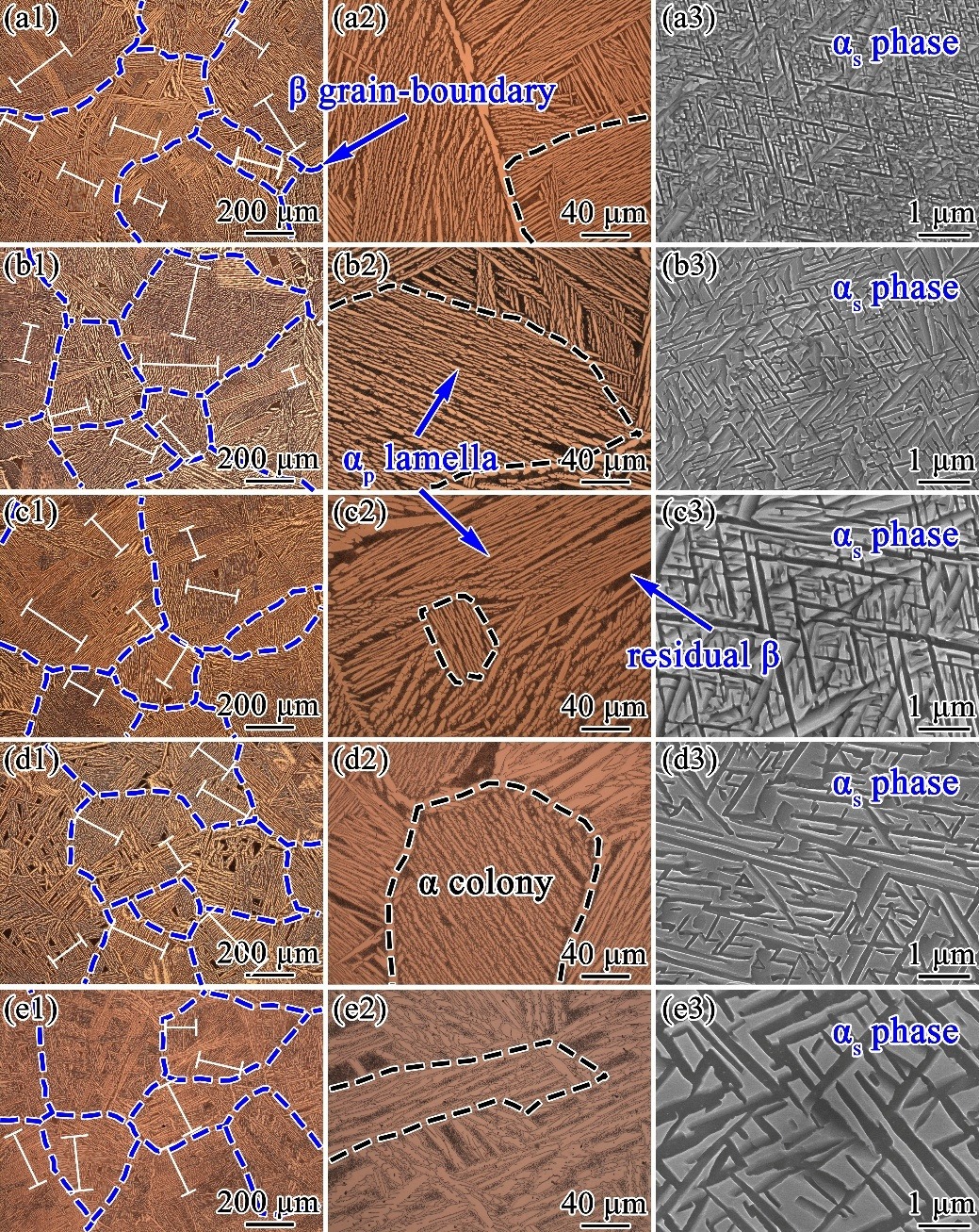
- •• Extending furnace cooling time after solution treatment from 240 to 540 min increased impact toughness from 22.7 to 53.8 J/cm² by modifying αp lamella content and αs phase. • Raising aging temperature from 500 to 700°C reduced αs phase content and increased αp lamella/αs thickness, significantly improving impact toughness. • High αp lamellae content or large αs phase size leads to higher crack initiation and propagation energies. • Severe kinking of αp lamellae and multidirectional arrangement of α colonies deflect crack propagation, enhancing plastic deformation coordination and uniformity.
Abstract
The influence of different solution and aging conditions on the microstructure, impact toughness, and crack initiation and propagation mechanisms of the novel α + β titanium alloy Ti6422 was systematically investigated. By adjusting the furnace cooling time after solution treatment and the aging temperature, Ti6422 alloy samples were developed with a multi-level lamellar microstructure, including microscale α colonies and αp lamellae, as well as nanoscale αs phases. Extending the furnace cooling time after solution treatment at 920°C for 1 h from 240 to 540 min, followed by aging at 600°C for 6 h, increased the αp lamella content, reduced the αs phase content, expanded the α colonies and αp lamellae size, and improved the impact toughness from 22.7 to 53.8 J/cm2. Additionally, under the same solution treatment, raising the aging temperature from 500 to 700°C resulted in a decrease in the αs phase content and a growth in the thickness of the αp lamella and αs phase. The impact toughness increased significantly with these changes. Samples with high αp lamellae content or large αs phase size exhibited high crack initiation and propagation energies. Impact deformation caused severe kinking of the αp lamellae in crack initiation and propagation areas, leading to a uniform and high-density kernel average misorientation (KAM) distribution, enhancing plastic deformation coordination and uniformity. Moreover, the multidirectional arrangement of coarser α colonies and αp lamellae continuously deflect the crack propagation direction, inhibiting crack propagation.
1. Introduction
Titanium alloys, known for their low density, high specific strength, excellent corrosion resistance, and low-temperature resistance, are essential materials in aerospace, marine engineering, and biomedical fields [1–3]. Impact toughness serves as a crucial performance metric for evaluating material serviceability under dynamic impact loads. Strength and toughness are two vital properties of metallic materials, but they often display a trade-off, with higher-strength metals typically demonstrating lower ductility and toughness [4–6]. For example, the TC4 alloy with equiaxed microstructures exhibited a yield strength of 813 MPa and an impact toughness of 50 J/cm2. Controlled heat treatment increased the impact toughness to 63 J/cm2 but reduced the yield strength to 743 MPa [7]. The TC21 alloy, when solution-treated in the dual-phase region, achieved a yield strength of 1248 MPa and an impact toughness of 12.3 J/cm2. Transitioning to solution treatment in the single-phase region doubled toughness while reducing the strength by over 300 MPa [8]. In practical applications of titanium alloys, the demand for strength and toughness varies depending on the service conditions. In high-load static structures such as aeroengine compressor disks, high strength is often prioritized to ensure adequate structure stability, but some toughness may be sacrificed. In impact-resistant dynamic structures such as landing gear connectors, the focus is on increasing toughness to enhance damage resistance, which can also result in a partial loss of strength. Therefore, achieving a reasonable balance between impact toughness and strength remains a significant challenge in the development and engineering application of titanium alloy structural materials [9].
The crack propagation path under impact loads is a primary factor affecting the impact toughness of alloys [10]. The lamellar structure of titanium alloys, with high-density α/β phase interfaces, can deflect cracks and prolong the propagation path, thereby enhancing impact toughness [11]. For example, Wu et al. [12] compared the strength and toughness of Ti5321 alloy with bimodal and lamellar structures. The lamellar structure exhibited a superior strength–toughness match (yield strength (σy) = 915 MPa, impact toughness (akv) = 37.5 J/cm2), whereas the bimodal structure had the lowest impact toughness (11.3 J/cm2). Zhang et al. [13] found that increasing the thickness of the lamellar α phase and the content of equiaxed α phase in bimodal TC21G alloy facilitated the formation of the zigzag crack propagation path, which is conducive to the increase of impact toughness. In addition, energy dissipation during crack propagation in titanium alloys is primarily used to overcome plastic deformation at the crack tip [14]. Thus, increasing the plasticity of titanium alloys helps enlarge the plastic zone at the crack tip, improving coordinated deformation ability and blunting cracks [15]. Research by Huang et al. [16] and Zheng et al. [17] indicated that increased dislocation mobility and deformation twinning can relieve stress concentration at the crack tip, thereby
Loading authentic research manuscript (Pages 1–5)...
Jie Shen, Zhihao Zhang, Jianxin Xie (2025). Impact toughness, crack initiation and propagation mechanism of Ti6422 alloy with multi-level lamellar microstructure. Journal of Mineral Metallurgy and Materials Science. https://doi.org/10.1007/s12613-025-3162-2
Research & Educational Purpose Only:The translations, structured abstracts, analytical annotations, and data reports provided by SinoTechIntel are intended exclusively for academic research, internal corporate R&D, and educational benchmarking. They do not constitute formal engineering, chemical safety, legal, or professional advice.
Copyright & Intellectual Property Notice: Original copyright of the underlying source articles and experimental data remains with the respective authors, institutions, and original publishing journals. SinoTechIntel claims intellectual property only over its proprietary translations, analytical syntheses, and AEO structured enhancements in accordance with international fair use and academic citation principles.
Frequently Asked Questions
What is the impact toughness range of Ti6422 alloy with multi-level lamellar microstructure?
The impact toughness improved from 22.7 to 53.8 J/cm² by extending furnace cooling time after solution treatment from 240 to 540 minutes and adjusting aging conditions.
How does aging temperature affect the microstructure and impact toughness of Ti6422 alloy?
Raising the aging temperature from 500 to 700°C decreases the αs phase content and increases the thickness of αp lamella and αs phase, leading to a significant improvement in impact toughness.
What role do αp lamellae play in crack propagation?
Severe kinking of αp lamellae under impact deformation enhances plastic deformation coordination and uniformity, while the multidirectional arrangement of coarser α colonies and αp lamellae deflects crack propagation direction, inhibiting crack growth.
What is the relationship between lamellar microstructure and impact toughness in titanium alloys?
Lamellar structures with high-density α/β phase interfaces can deflect cracks and prolong propagation paths, enhancing impact toughness by increasing crack initiation and propagation energies.
How was the multi-level lamellar microstructure developed in Ti6422 alloy?
By adjusting the furnace cooling time after solution treatment and the aging temperature, samples with microscale α colonies, αp lamellae, and nanoscale αs phases were developed.
Related Technical Papers & Translations
Design and optimization of a high-efficiency distillation process for cellulosic fuel ethanol integrated with thermal coupling and molecular sieve adsorption
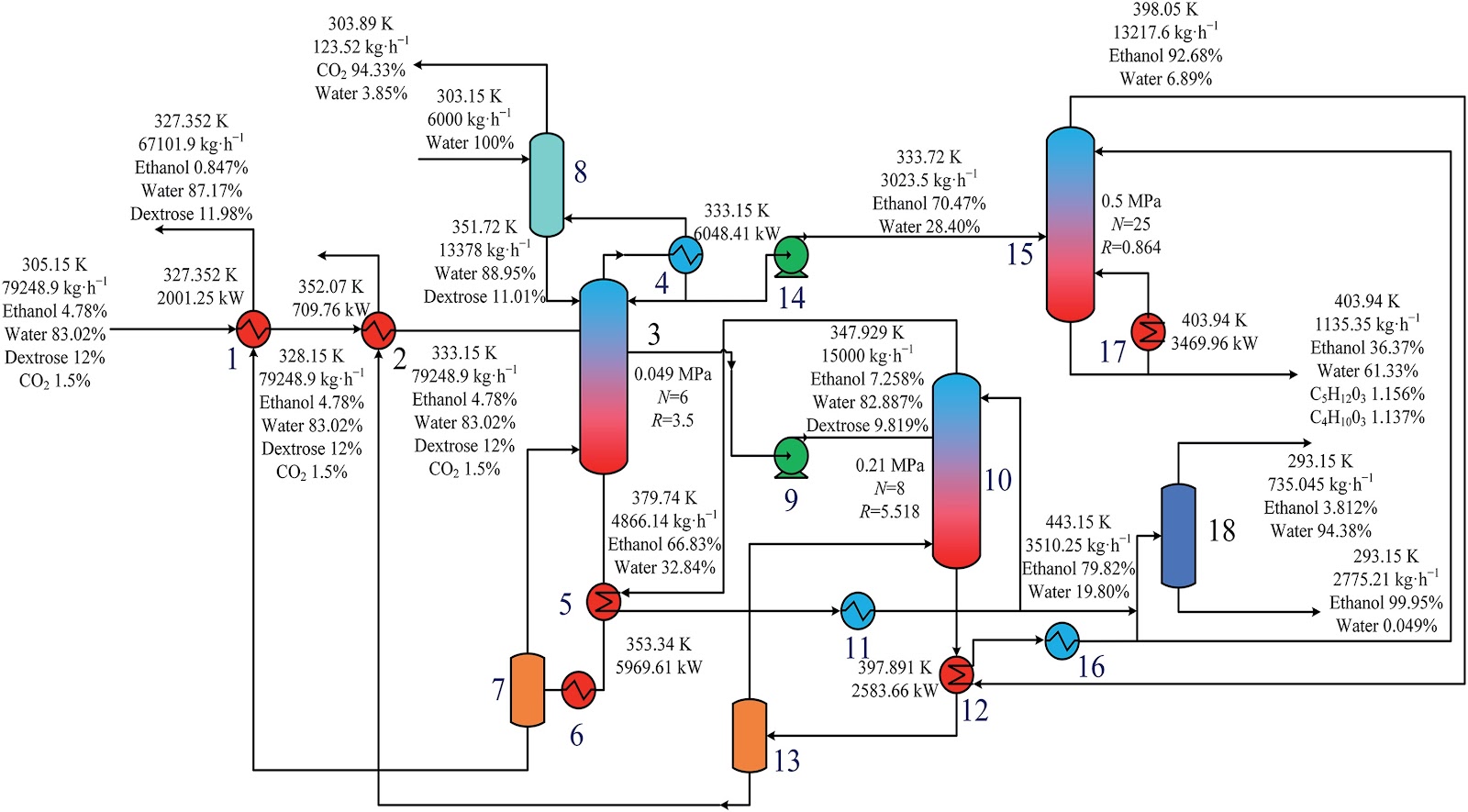
To address the challenges of high energy consumption and prominent costs in the traditional three-columns distillation process for cellulosic fuel ethanol, a distillation—molecular sieve coupling separation process is proposed. This process integrates a three-column (crude distillation column, first distillation column, second distillation column) system with a 3A molecular sieve adsorption deep dehydration unit. A thermal coupling network is constructed via differential pressure design (steam from medium/high-pressure columns as mutual heat sources, reboiler liquid waste heat for feed preheating), and molecular sieve adsorption conditions are optimized. The study first performs a thermodynamic consistency test on the ethanol—water system, determines optimal non-random two-liquid (NRTL) model binary interaction parameters via experimental data regression for Aspen Plus simulation. Aiming at minimum total annual cost (TAC), Aspen Plus is used to optimize process parameters (theoretical tray number, feed location, reflux ratio, side-draw position, etc.). Economic analysis shows this process reduces CO2 emission costs by 27.56%, TAC by 15.58% (to 5.123 × 10⁶ USD·a-1), and increases ethanol purity to >99.6%, providing an effective solution for green, efficient separation.
A cohesion loss model for determining residual strength of deep bedded sandstone
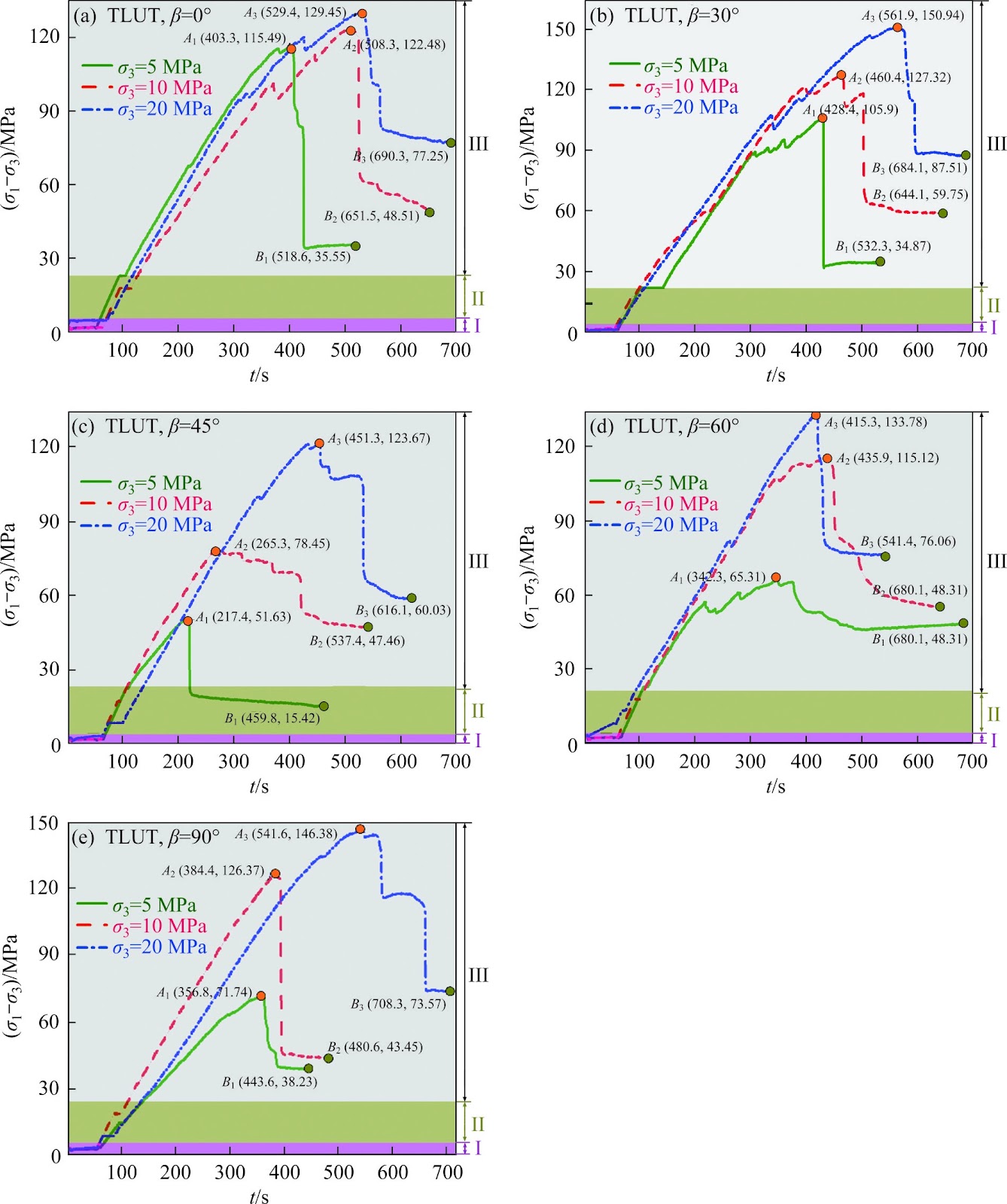
Rock residual strength, as an important input parameter, plays an indispensable role in proposing the reasonable and scientific scheme about stope design, underground tunnel excavation and stability evaluation of deep chambers. Therefore, previous residual strength models of rocks established were reviewed. And corresponding related problems were stated. Subsequently, starting from the effects of bedding and whole life-cycle evolution process, series of triaxial mechanical tests of deep bedded s
Federated model with contrastive learning and adaptive control variates for human activity recognition
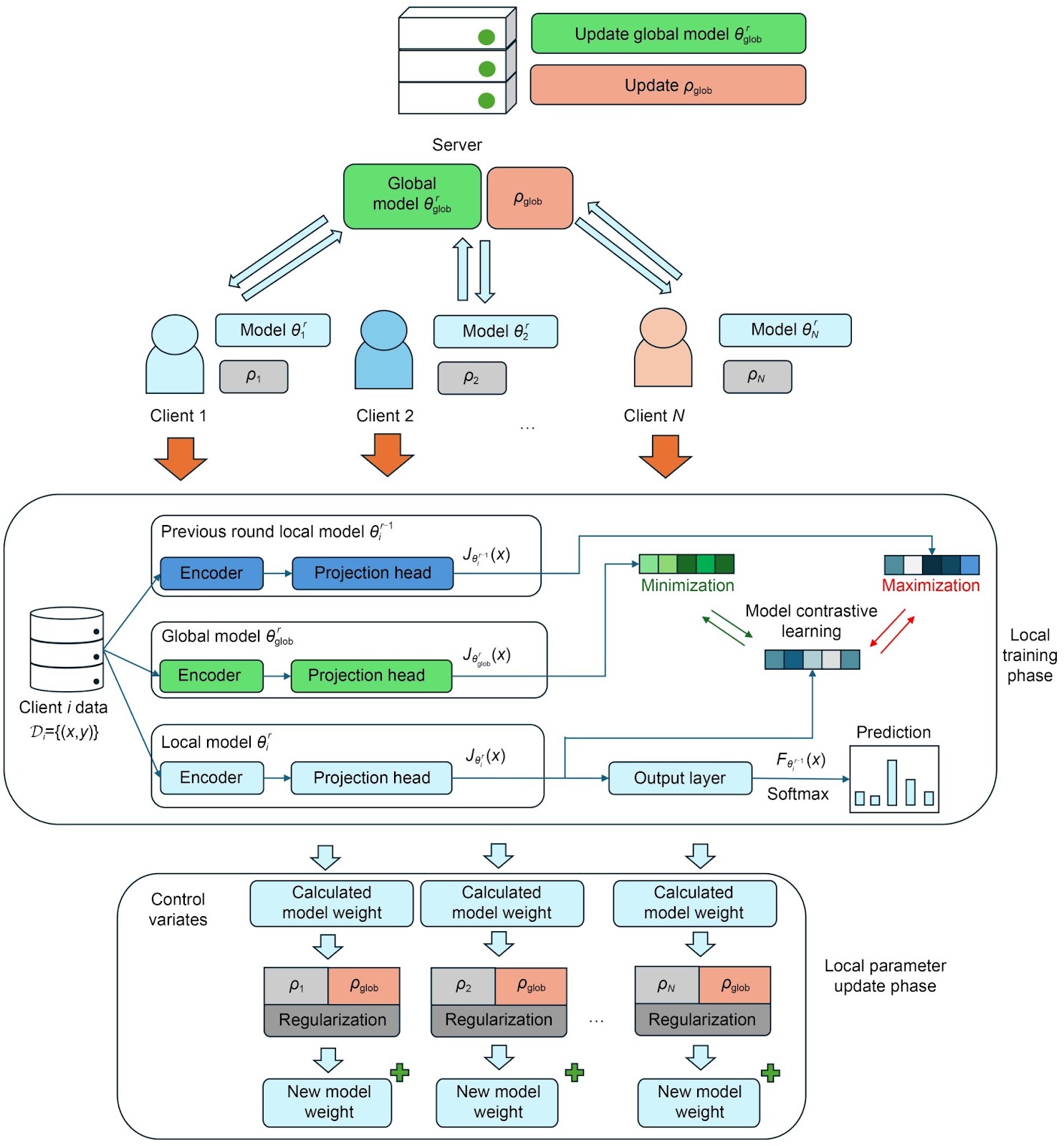
Recent attention to privacy issues demands a communication-safe method for training human activity recognition (HAR) models on client activity data. Federated learning (FL) has become a compelling technique to facilitate model training between the server and clients while preserving data privacy. However, classical FL methods often assume independent and identically distributed (IID) data among clients. This assumption does not hold true in practical scenarios. Human activity in real-world scena