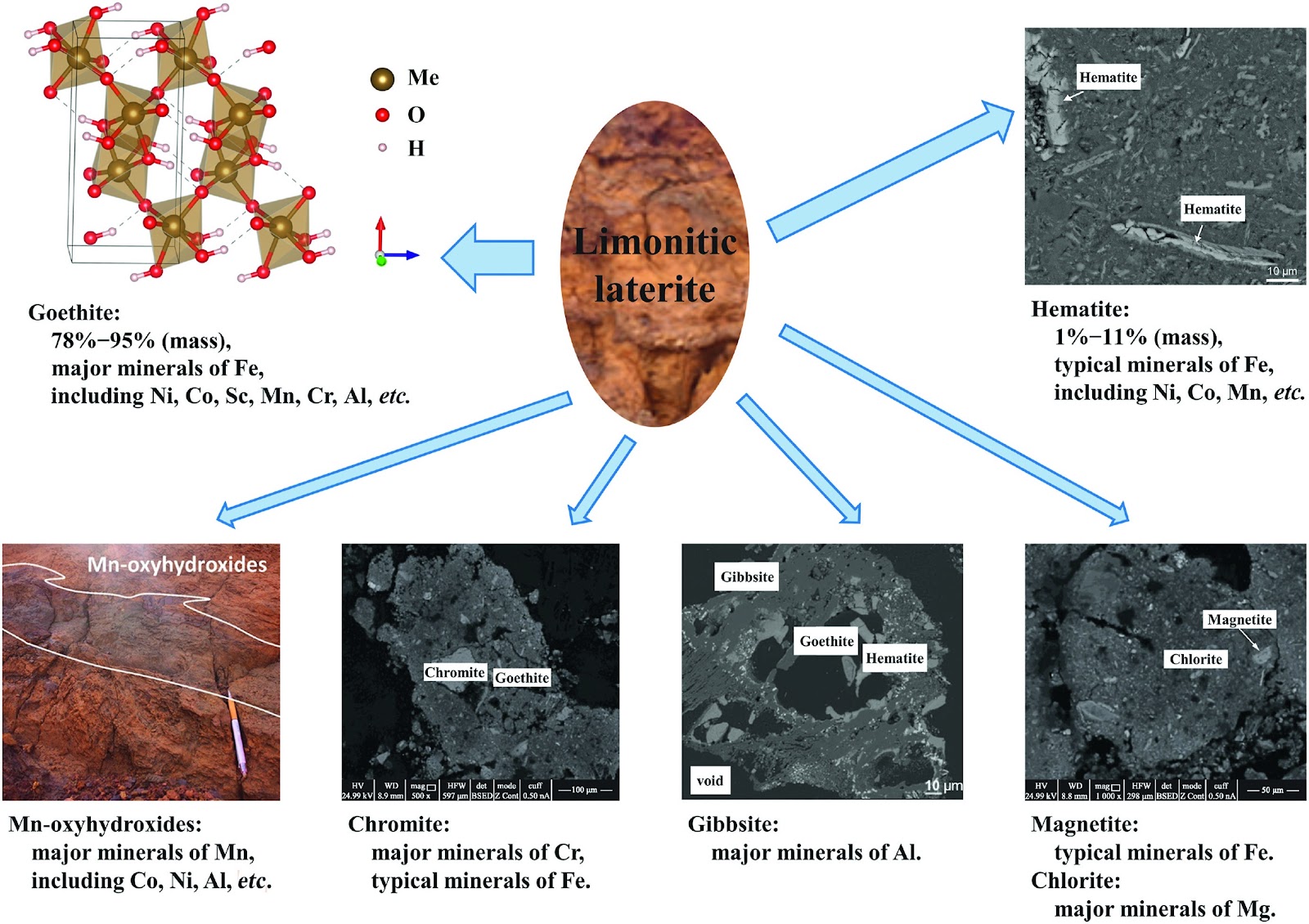
Key Takeaways & Executive Findings
- •• Comprehensive review of hydrometallurgical processes for limonitic laterite, including reduction roasting-ammonia leaching, sulfuric acid pressure leaching, nitric acid pressure leaching, and the DNi process. • Detailed analysis of mineralogical characteristics and typical mineral compositions of limonitic laterite ores. • Emphasis on recovery methods for nickel, cobalt, scandium, and iron, highlighting the potential for comprehensive utilization. • Provides strategic recommendations for industrial development and diversification, addressing the growing demand for nickel and the decline of sulfide ores.
Abstract
Nickel is a strategic resource in social life and defense technology, playing an essential role in many fields, such as alloys and batteries. With the decrease in nickel sulfide, it is of great significance to extract nickel from laterite. The limonitic laterite is a kind of rich nickel-cobalt-scandium resource. At present, there are few reviews on the extraction of limonitic laterite. This study reviews the hydrometallurgical processes for limonitic laterite ores and the methods of recovering valuable elements. The mineralogical characteristics are analyzed, and the typical mineral compositions are summarized. The main hydrometallurgical processes are compared and discussed, including reduction roasting-ammonia leaching, sulfuric acid pressure leaching, nitric acid pressure leaching, and the atmospheric nitric acid leaching (DNi process). The methods of recovering nickel, cobalt, scandium, and iron are emphatically outlined. Finally, reasonable suggestions are proposed for comprehensive utilization. This study can provide a reference for industrial development and diversified applications.
1. Introduction
Nickel is a strategic metal element with excellent physical and chemical properties that applies in aerospace, military, battery, industrial catalysis, petroleum industry, medicine, and other fields [1-4]. Nickel is mainly used in the production of stainless steel (69%) and the manufacture of batteries (11%) [5]. The emerging electric vehicle and battery industry has developed rapidly in recent years. In particular, lithium-ion batteries (LIBs) with high energy density and long lifetimes have been widely used. Its nickel-rich ternary cathode materials (such as NCM and NCA) have more advantages in terms of cycle life and thermal stability, and the proportion of nickel in the battery field is continuously increasing [6]. Moreover, there is a wide variety of nickel-bearing alloys, including superalloys, corrosion-resistant alloys, shape-memory alloys, etc. [7]. The chain of nickel products and nickel industry is shown in Fig. 1. The wide use of nickel puts forward higher requirements for nickel supply. Reasonable and efficient extraction of nickel is of great significance to the balance of global nickel supply and demand.
Nickel resources in nature mainly occur in land-based resources, manganese crusts on the bottom of the ocean, and very small amounts of nickel arsenide [9-11]. Global nickel resources are abundant, with more than 130 million tons currently available, but the distribution is uneven [12]. The proportion of nickel reserves in major countries is shown in Fig. 2(a). Land-based nickel resources mainly exist in the form of nickel laterite and sulfide ores, the proportion of which is shown in Fig. 2(b). Nickel laterite is mainly distributed in countries near the equator (such as Indonesia), while nickel sulfide is mainly distributed in countries at higher latitudes in the Northern Hemisphere (such as China). The mine production of major countries in the last ten years is shown in Fig. 3. China is the largest consumer of nickel, but nickel resources show the characteristics of supply crunch and resource scarcity, which need to import large quantities of nickel raw materials to make up for this shortage [15,16]. Indonesia is rich in nickel laterite resources and has high ores production. Due to the export ban on unprocessed minerals in 2014, mine production decreased until the export of low-grade nickel ores was allowed in 2017 [17-19]. The Philippines is also a major exporter of nickel ores, consistently ranking among the world's top two suppliers. Mine production declined sharply between 2016 and 2017 due to the ban on open-pit mining [20]. Many factors, such as regional policies, affect the stable supply of global nickel resources.
With the increasing consumption of nickel sulfide and the growing demand for nickel in human society, the proportion of development and the smelting of nickel laterite has gradually increased.
Loading authentic research manuscript (Pages 1–5)...
Xinglong Xiong, Baozhong Ma, Xiang Li, Jiancheng Yu, Longfei Shi, Chengyan Wang, Yongqiang Chen (2024). Hydrometallurgical process and recovery of valuable elements for limonitic laterite: A review. Chinese Journal of Chemical Engineering. https://doi.org/10.1016/j_cjche_1448
Research & Educational Purpose Only:The translations, structured abstracts, analytical annotations, and data reports provided by SinoTechIntel are intended exclusively for academic research, internal corporate R&D, and educational benchmarking. They do not constitute formal engineering, chemical safety, legal, or professional advice.
Copyright & Intellectual Property Notice: Original copyright of the underlying source articles and experimental data remains with the respective authors, institutions, and original publishing journals. SinoTechIntel claims intellectual property only over its proprietary translations, analytical syntheses, and AEO structured enhancements in accordance with international fair use and academic citation principles.
Frequently Asked Questions
What are the main hydrometallurgical processes for limonitic laterite?
The main hydrometallurgical processes include reduction roasting-ammonia leaching, sulfuric acid pressure leaching, nitric acid pressure leaching, and the atmospheric nitric acid leaching (DNi process).
Why is limonitic laterite important for nickel extraction?
Limonitic laterite is a rich source of nickel, cobalt, and scandium, and with the decline of nickel sulfide ores, it has become increasingly important for meeting global nickel demand.
What valuable elements can be recovered from limonitic laterite?
The valuable elements recoverable from limonitic laterite include nickel, cobalt, scandium, and iron.
What are the challenges in processing limonitic laterite?
Challenges include the complex mineralogy, low nickel grades, high energy consumption, and the need for efficient recovery of multiple valuable elements.
What is the significance of this review?
This review provides a comprehensive comparison of hydrometallurgical processes and recovery methods, offering insights for industrial development and comprehensive utilization of limonitic laterite resources.
Related Technical Papers & Translations
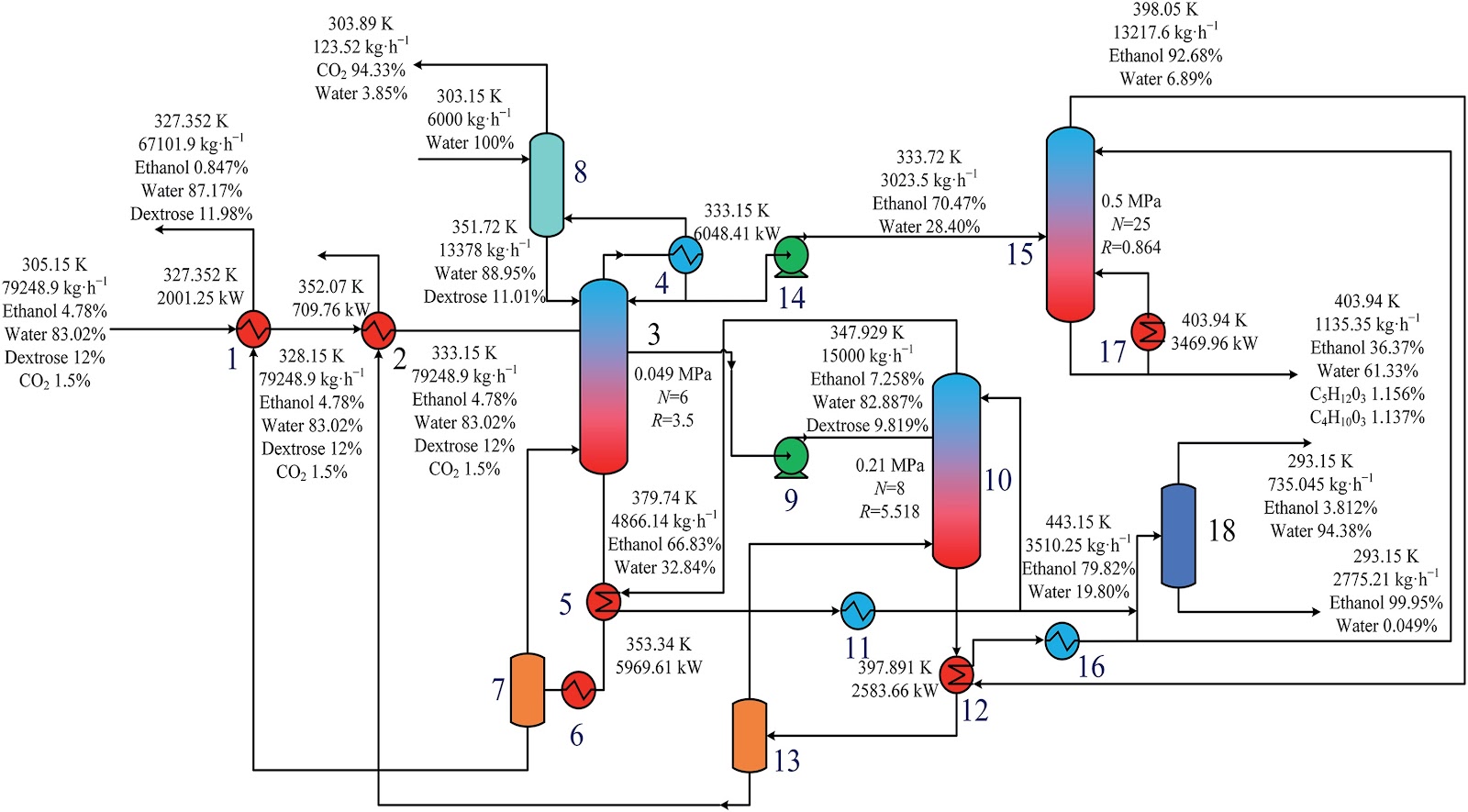
Design and optimization of a high-efficiency distillation process for cellulosic fuel ethanol integrated with thermal coupling and molecular sieve adsorption
To address the challenges of high energy consumption and prominent costs in the traditional three-columns distillation process for cellulosic fuel ethanol, a distillation—molecular sieve coupling separation process is proposed. This process integrates a three-column (crude distillation column, first distillation column, second distillation column) system with a 3A molecular sieve adsorption deep dehydration unit. A thermal coupling network is constructed via differential pressure design (steam from medium/high-pressure columns as mutual heat sources, reboiler liquid waste heat for feed preheating), and molecular sieve adsorption conditions are optimized. The study first performs a thermodynamic consistency test on the ethanol—water system, determines optimal non-random two-liquid (NRTL) model binary interaction parameters via experimental data regression for Aspen Plus simulation. Aiming at minimum total annual cost (TAC), Aspen Plus is used to optimize process parameters (theoretical tray number, feed location, reflux ratio, side-draw position, etc.). Economic analysis shows this process reduces CO2 emission costs by 27.56%, TAC by 15.58% (to 5.123 × 10⁶ USD·a-1), and increases ethanol purity to >99.6%, providing an effective solution for green, efficient separation.
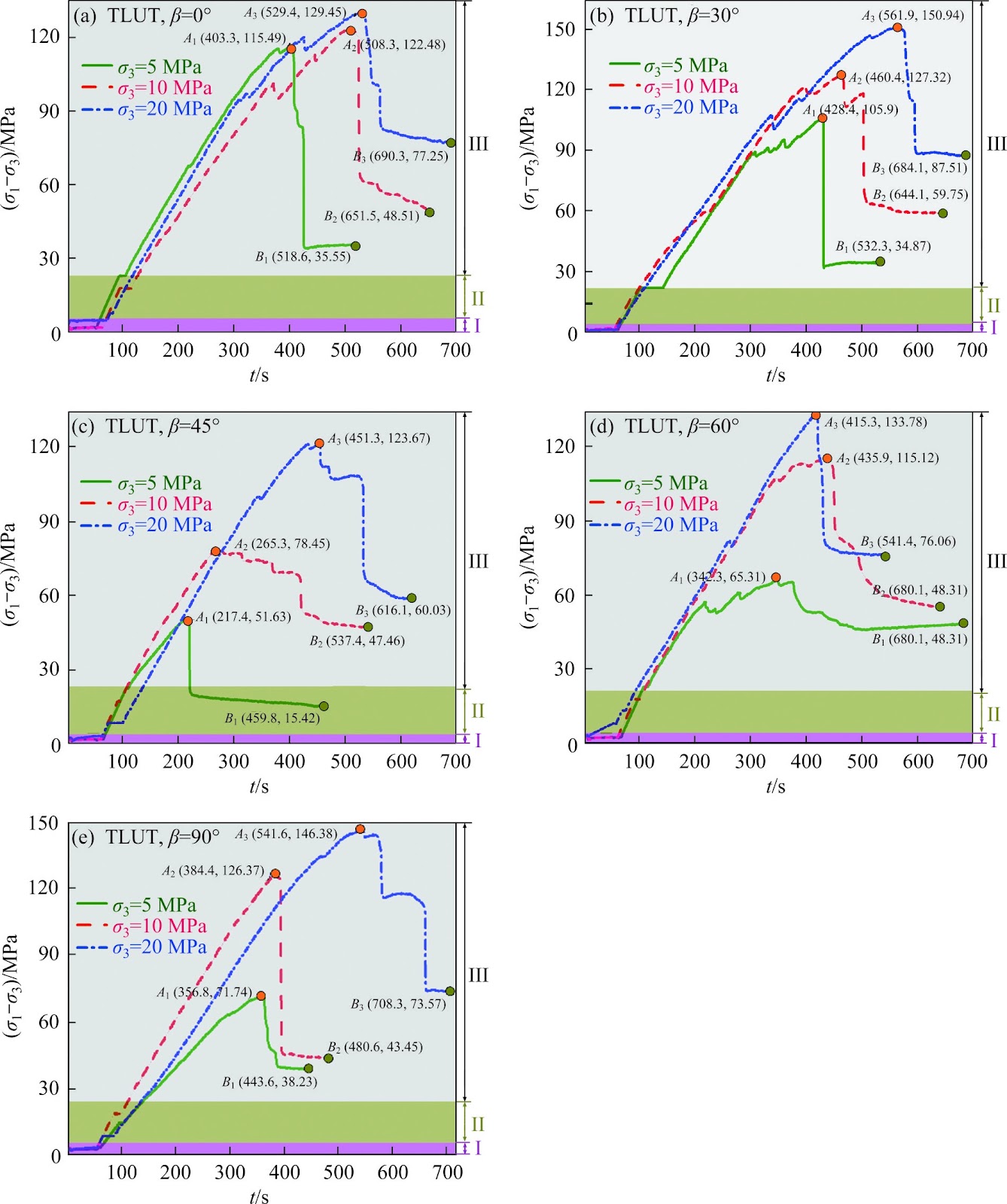
A cohesion loss model for determining residual strength of deep bedded sandstone
Rock residual strength, as an important input parameter, plays an indispensable role in proposing the reasonable and scientific scheme about stope design, underground tunnel excavation and stability evaluation of deep chambers. Therefore, previous residual strength models of rocks established were reviewed. And corresponding related problems were stated. Subsequently, starting from the effects of bedding and whole life-cycle evolution process, series of triaxial mechanical tests of deep bedded s
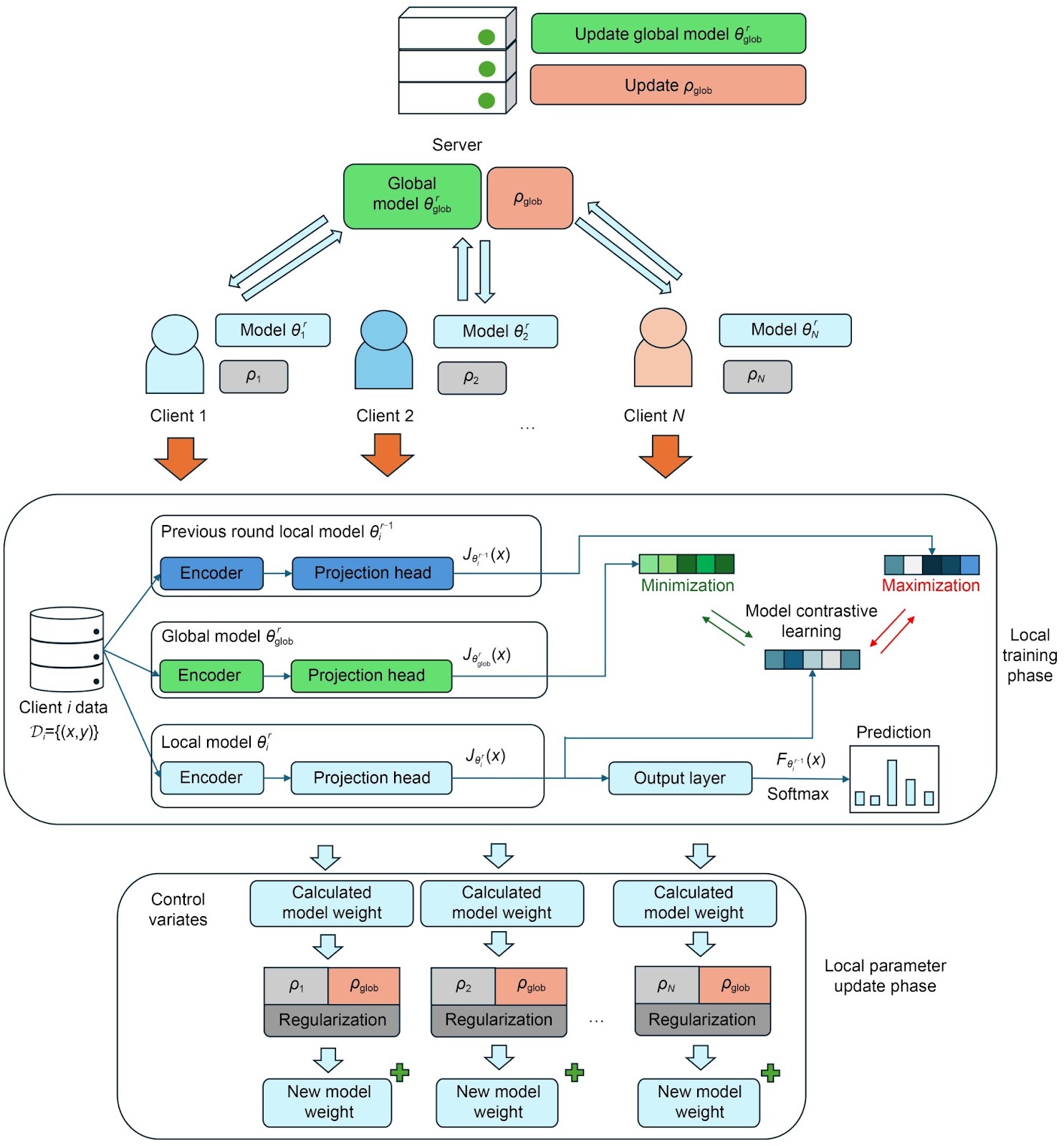
Federated model with contrastive learning and adaptive control variates for human activity recognition
Recent attention to privacy issues demands a communication-safe method for training human activity recognition (HAR) models on client activity data. Federated learning (FL) has become a compelling technique to facilitate model training between the server and clients while preserving data privacy. However, classical FL methods often assume independent and identically distributed (IID) data among clients. This assumption does not hold true in practical scenarios. Human activity in real-world scena