Key Takeaways & Executive Findings
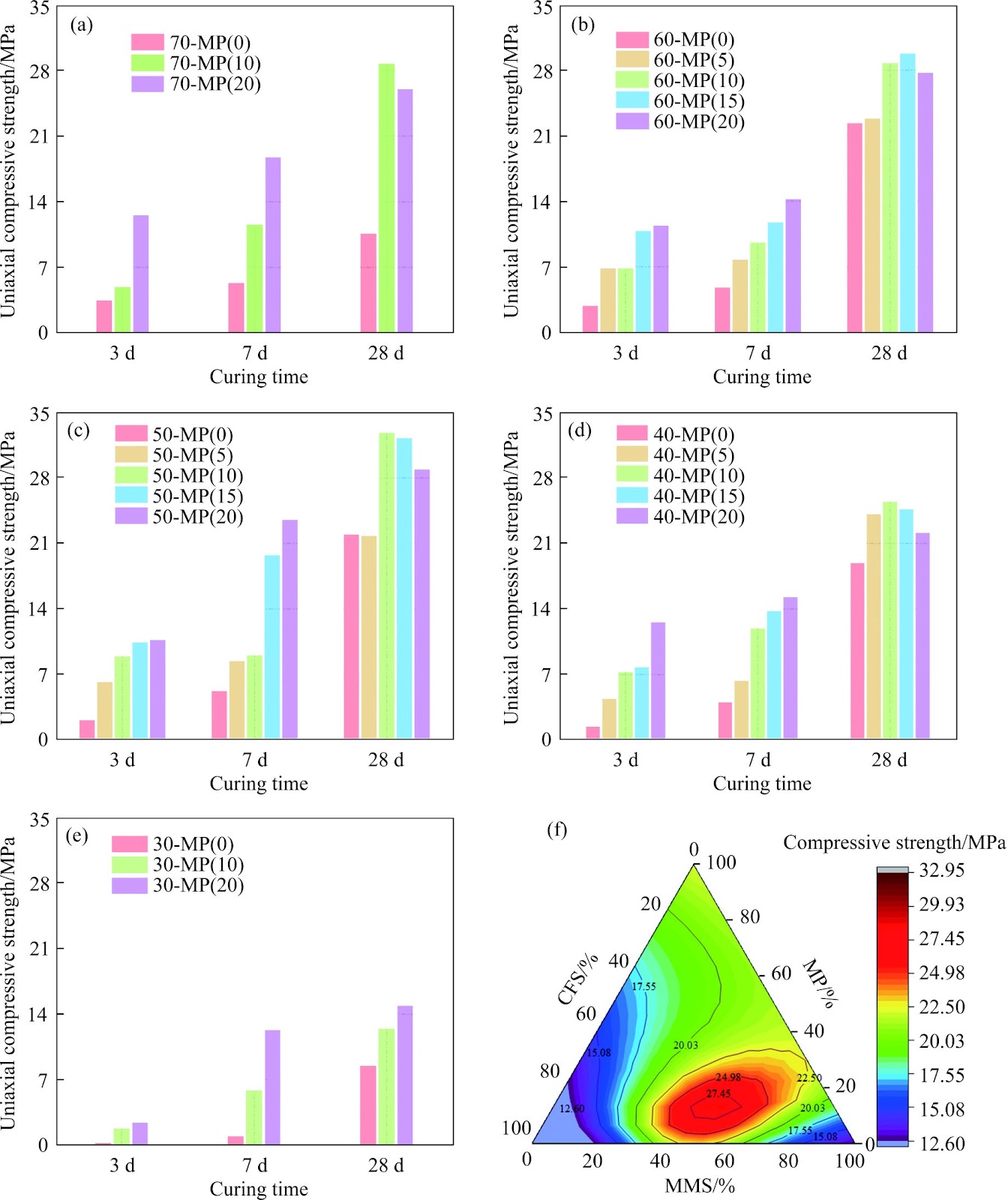
- •• A 28-day compressive strength of 32.804 MPa was achieved using 50 wt% MMS, 40 wt% CFS, and 10 wt% MP. • The alkali-activated system produces abundant C-S(A)-H gels and AFt phases that refine the pore structure and boost mechanical performance. • A synergistic reaction between CFS-MP and MMS occurs in high-alkalinity environments, accelerating MMS hydrolysis. • Controlling MMS dosage is critical to avoid incomplete depolymerization-repolymerization of active silica-aluminum wastes, which can reduce late strength.
Abstract
As the second most important solid waste produced by coal-fired power plants, the improper management of coal-fired slag has the potential to result in environmental pollution. It is therefore imperative that high-value utilization pathways for coal-fired slag should be developed. In this study, modified magnesium slag (MMS), produced by a magnesium smelter, was selected as the alkali activator. The activated silica-aluminum solid wastes, namely coal-fired slag (CFS) and mineral powder (MP), were employed as pozzolanic materials in the preparation of alkali-activated cementitious materials. The alkali-activated cementitious materials prepared with 50 wt% MMS, 40 wt% CFS and 10 wt% MP exhibited favorable mechanical properties, with a compressive strength of 32.804 MPa in the paste sample cured for 28 d. Then, the activated silica-aluminum solid waste consisting of CFS-MP generated a significant amount of C-S(A)-H gels, AFt, and other products, which were observed to occupy the pore structure of the specimen. In addition, the secondary hydration reaction of CFS-MP occurs in high alkalinity environments, resulting in the formation of a mutually stimulated and promoted reaction system between CFS-MP and MMS, this will subsequently accelerate the hydrolysis reaction of MMS. It is important to emphasize that the amount of MMS in alkali-activated cementitious materials must be strictly regulated to avert the potential issue of incomplete depolymerization-repolymerization of active silica-aluminum solid waste containing CFS-MP. This in turn could have a deleterious impact on the late strength of the cementitious materials. The aim of this work is to improve the joint disposal of MMS, CFS and MP and thereby provide a scientific basis for the development of environmentally friendly and low-carbon modified magnesium slag alkali-activated coal-fired slag based cementitious materials for mine backfilling.
1. Introduction
Portland cement is the most widely used cementing material utilized in mine filling [1, 2], and its production process necessitates the consumption of substantial quantities of limestone and clay raw materials, while simultaneously releasing considerable quantities of greenhouse gases into the atmosphere. The production of 1 t Portland cement is estimated to release approximately 1 t of CO2 into the atmosphere [3, 4]. The carbon released during the production process, which involves two grinding and one burning stages, is estimated to account for 5% −8% of the total global carbon emissions. This represents a significant contributor to the overall carbon footprint and has the potential to exacerbate climate change and its associated environmental challenges, including extreme weather patterns. It is not conducive to the development of energy conservation and emission reduction in China [5]. At the same time, Portland cement is the most widely used cementing agent in the field of mine filling, and its cost is about 75% of the total filling cost, which has become a key factor restricting the development of mining filling technology [6]. Therefore, researchers commenced the search for low-cost filling cementitious materials as alternatives to Portland cement in order to achieve long-term resource utilization [7, 8].
The term “coal-fired slag” is used to describe the residue discharged from the bottom of the boiler after the high-temperature combustion of coal in a variety of contexts, including coal-fired power plants, industrial boilers and domestic boilers. The residue is mainly composed of coarse particles and pulverized fine ash [9, 10]. As the main component of non-renewable energy, coal burning is responsible for the production of up to 600×10^8 t fly ash and coal-fired slag each year. The proportion of coal-fired slag among these is estimated to be between 10% and 20% of the total fly ash, which represents the second most prevalent form of solid waste in coal-fired power plants after fly ash [11].
Loading authentic research manuscript (Pages 1–5)...
SUN Wei-ji, LIU Lang, ZHAO Yuan-yuan, FANG Zhi-yu, LYU Yong-zhe, XIE Geng, SHAO Cheng-cheng (2025). Hydration mechanism and microstructure characteristics of modified magnesium slag alkali-activated coal-fired slag based cementitious materials. Journal of Central South University. https://doi.org/10.1007/s11771-025-5973-8
Research & Educational Purpose Only:The translations, structured abstracts, analytical annotations, and data reports provided by SinoTechIntel are intended exclusively for academic research, internal corporate R&D, and educational benchmarking. They do not constitute formal engineering, chemical safety, legal, or professional advice.
Copyright & Intellectual Property Notice: Original copyright of the underlying source articles and experimental data remains with the respective authors, institutions, and original publishing journals. SinoTechIntel claims intellectual property only over its proprietary translations, analytical syntheses, and AEO structured enhancements in accordance with international fair use and academic citation principles.
Frequently Asked Questions
What is the optimal mix ratio for the new cementitious material?
The best mechanical performance was achieved with a mix of 50 wt% modified magnesium slag (MMS), 40 wt% coal-fired slag (CFS), and 10 wt% mineral powder (MP), yielding a compressive strength of 32.804 MPa after 28 days of curing.
How does modified magnesium slag act as an alkali activator?
Modified magnesium slag provides a high-alkalinity environment that triggers the secondary hydration of coal-fired slag and mineral powder, leading to the formation of C-S(A)-H gels and AFt phases that densify the microstructure.
Why is the amount of MMS critical in the mix?
Excessive MMS can lead to incomplete depolymerization-repolymerization of active silica-aluminum solid wastes like CFS-MP, which may negatively affect the late strength of the cementitious materials.
What are the environmental benefits of this approach?
This method enables the joint disposal of multiple solid wastes (MMS, CFS, and MP), reduces reliance on Portland cement, and lowers CO2 emissions, contributing to more sustainable mine backfilling practices.
What is the intended application of this composite cementitious material?
The developed material is designed for mine backfilling, offering a low-carbon and environmentally friendly alternative to conventional Portland cement-based fillers.
Related Technical Papers & Translations
Design and optimization of a high-efficiency distillation process for cellulosic fuel ethanol integrated with thermal coupling and molecular sieve adsorption
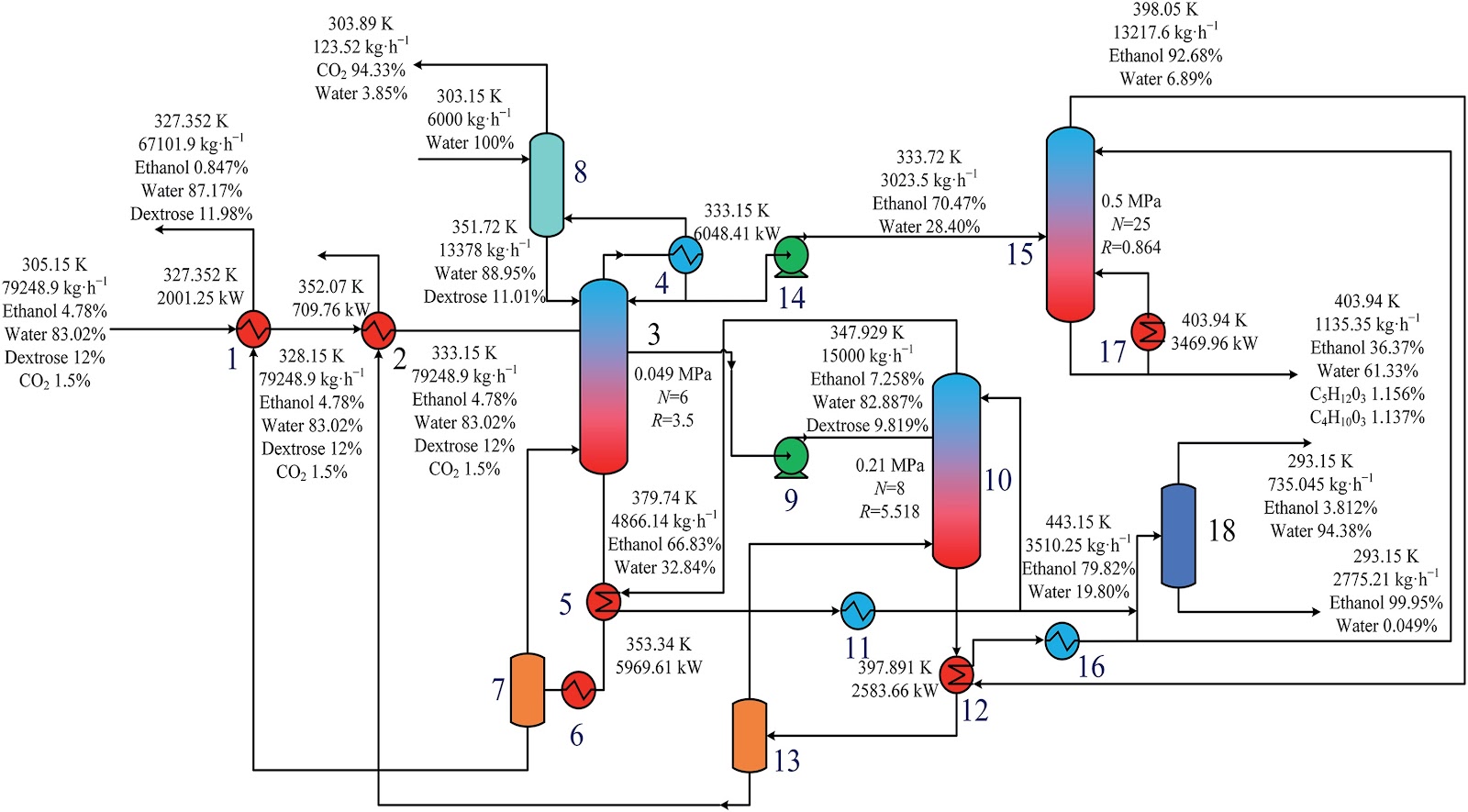
To address the challenges of high energy consumption and prominent costs in the traditional three-columns distillation process for cellulosic fuel ethanol, a distillation—molecular sieve coupling separation process is proposed. This process integrates a three-column (crude distillation column, first distillation column, second distillation column) system with a 3A molecular sieve adsorption deep dehydration unit. A thermal coupling network is constructed via differential pressure design (steam from medium/high-pressure columns as mutual heat sources, reboiler liquid waste heat for feed preheating), and molecular sieve adsorption conditions are optimized. The study first performs a thermodynamic consistency test on the ethanol—water system, determines optimal non-random two-liquid (NRTL) model binary interaction parameters via experimental data regression for Aspen Plus simulation. Aiming at minimum total annual cost (TAC), Aspen Plus is used to optimize process parameters (theoretical tray number, feed location, reflux ratio, side-draw position, etc.). Economic analysis shows this process reduces CO2 emission costs by 27.56%, TAC by 15.58% (to 5.123 × 10⁶ USD·a-1), and increases ethanol purity to >99.6%, providing an effective solution for green, efficient separation.
A cohesion loss model for determining residual strength of deep bedded sandstone
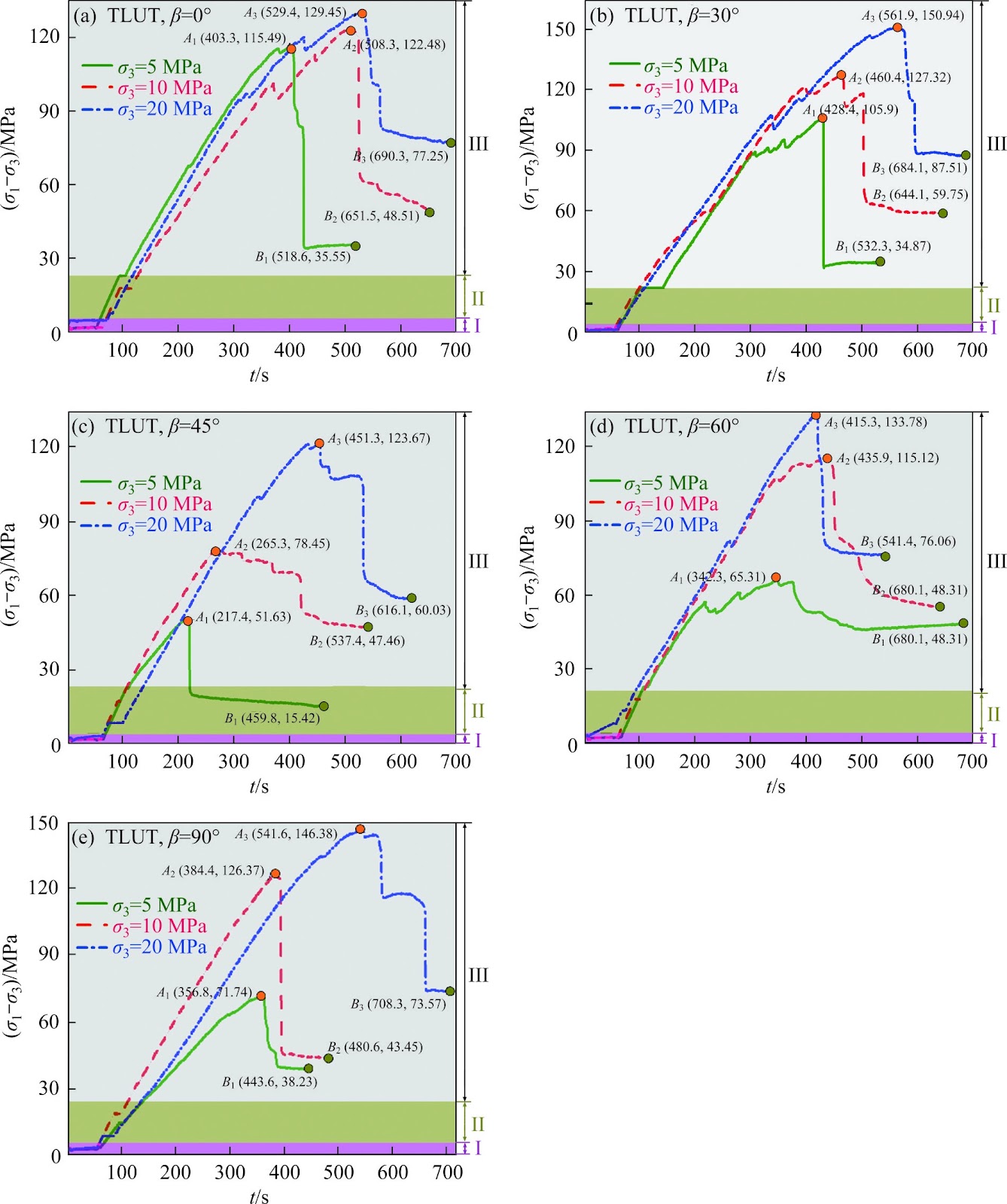
Rock residual strength, as an important input parameter, plays an indispensable role in proposing the reasonable and scientific scheme about stope design, underground tunnel excavation and stability evaluation of deep chambers. Therefore, previous residual strength models of rocks established were reviewed. And corresponding related problems were stated. Subsequently, starting from the effects of bedding and whole life-cycle evolution process, series of triaxial mechanical tests of deep bedded s
Federated model with contrastive learning and adaptive control variates for human activity recognition
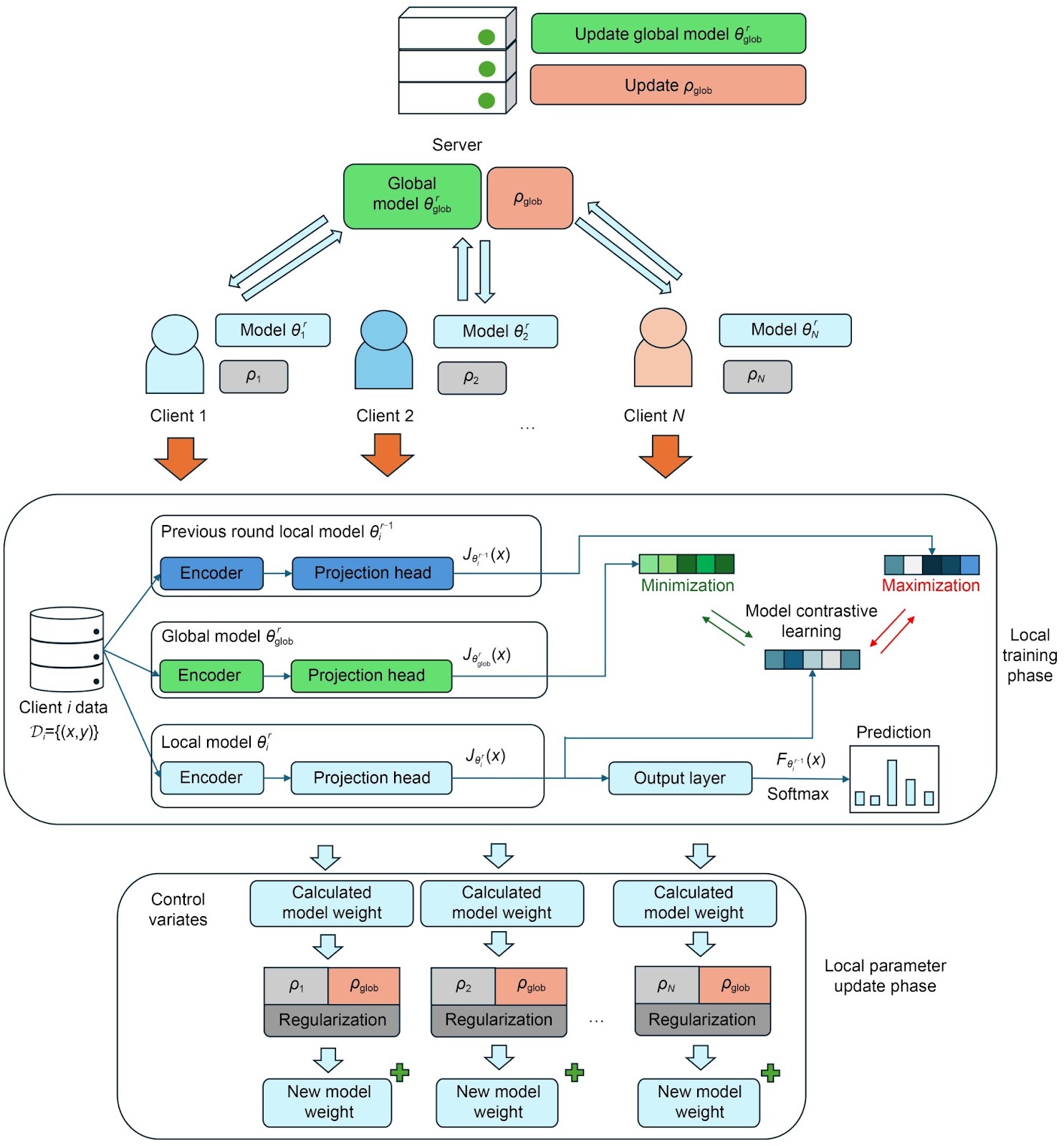
Recent attention to privacy issues demands a communication-safe method for training human activity recognition (HAR) models on client activity data. Federated learning (FL) has become a compelling technique to facilitate model training between the server and clients while preserving data privacy. However, classical FL methods often assume independent and identically distributed (IID) data among clients. This assumption does not hold true in practical scenarios. Human activity in real-world scena