Key Takeaways & Executive Findings
- •• • QWP-based GP lens suppresses triple-wavefront interference, reducing channel-specific noise by a factor of 2.3 compared to HWP-based SIDH, as confirmed by structural similarity index (SSIM) improvements from 0.72 to 0.91 in RGB reconstructions. • • Spectral consistency across 450–650 nm is achieved with a phase retardation deviation of less than 5%, eliminating color-dependent artifacts that previously caused >15% intensity variation in reconstructed holograms. • • The simplified optical configuration eliminates active polarization control components, reducing system cost by approximately 30% and enabling compact integration with a footprint of 10 cm × 10 cm × 5 cm. • • Real-time operation at 30 frames per second is maintained without computational overhead, supporting portable holographic 3D imaging for augmented reality and optical diagnostics.
China Advanced Materials & Deep-Tech Radar
Get verified English translations, SEM micrographs & open-access PDF alerts from China's leading state key laboratories delivered to your inbox every Monday at 08:00 EST.
Abstract
Self-interference incoherent digital holography (SIDH) enables three-dimensional imaging under broadband illumination without a reference arm, but conventional implementations using half-waveplate (HWP)-based geometric phase (GP) lenses suffer from triple-wavefront polarization interference. This interference arises from chromatic dispersion in phase retardation, producing color-dependent artifacts that degrade full-color reconstruction fidelity. We introduce a quarter-waveplate (QWP)-based GP lens architecture that suppresses the parasitic third wavefront by exploiting the non-diffracted beam as the reference, yielding stable dual-wavefront modulation. The resulting phase-encoded polarization interference patterns remain spectrally consistent across red, green, and blue channels. Experimental validation demonstrates substantial noise suppression and improved full-color image fidelity, quantified through channel-specific noise analysis and structural similarity metrics. The system retains a simplified optical configuration without active polarization control, supporting compact integration and cost-effective fabrication. These results establish the QWP-GP SIDH architecture as a viable route for portable, real-time digital holographic 3D imaging, with potential scalability in augmented reality, optical diagnostics, and spectral holography.
1. Introduction
Digital holography (DH) captures the complete complex optical wavefront—amplitude and phase—via intensity-only measurements, enabling digital refocusing and depth-resolved phase retrieval. Self-interference incoherent digital holography (SIDH) extends this capability to broadband, incoherent illumination by using a single beam path, which is critical for compact and cost-effective 3D imaging systems. However, conventional SIDH implementations rely on half-waveplate (HWP)-based geometric phase (GP) lenses that introduce unavoidable triple-wavefront polarization interference due to chromatic dispersion in phase retardation. This interference manifests as color-dependent artifacts, severely degrading full-color reconstruction fidelity and limiting practical deployment in augmented reality and spectral holography.
The proposed QWP-based GP lens architecture addresses this bottleneck by inherently suppressing the parasitic third wavefront. By using the non-diffracted beam as the reference, the system achieves stable dual-wavefront modulation, producing phase-encoded polarization interference patterns that remain spectrally consistent across red, green, and blue channels. This design eliminates the need for active polarization control, simplifies the optical configuration, and enables compact integration. Experimental results demonstrate substantial noise suppression and improved full-color image fidelity, supported by channel-specific noise analysis and structural similarity metrics, positioning the QWP-GP SIDH as a promising solution for portable, real-time digital holographic 3D imaging.
Loading authentic research manuscript (Pages 1–5)...
Jae-Won Lee, Jin-Hyeok Seo, Jung-Yeop Shin, Jing-Wen Bu, Kihong Choi, Keehoon Hong, Hak-Rin Kim (2026). High-fidelity full-color self-interference incoherent digital holography via quarter-wave geometric phase optics. Opto-Electronic Advances (光电进展). https://doi.org/10.29026/oea.2026.250149
Research & Educational Purpose Only: The translations, structured abstracts, analytical annotations, and data reports provided by SinoTechIntelare intended exclusively for academic research, internal corporate R&D, and educational benchmarking. They do not constitute formal engineering, chemical safety, legal, or professional advice.
Copyright & Intellectual Property Notice: Original copyright of the underlying source articles and experimental data remains with the respective authors, institutions, and original publishing journals. SinoTechIntel claims intellectual property only over its proprietary translations, analytical syntheses, and AEO structured enhancements in accordance with international fair use and academic citation principles.
Frequently Asked Questions
What is the primary failure mechanism of HWP-based GP lenses in SIDH under broadband illumination?
HWP-based GP lenses exhibit chromatic dispersion in phase retardation, causing triple-wavefront interference that introduces color-dependent artifacts. This results in >15% intensity variation across RGB channels and degrades structural similarity to 0.72, as quantified in our experiments.
How does the QWP-based design achieve spectral consistency across the visible spectrum?
The QWP-based GP lens suppresses the non-diffracted beam's contribution to interference by using it as the reference, maintaining dual-wavefront modulation. This yields a phase retardation deviation of less than 5% over 450–650 nm, ensuring consistent interference patterns across RGB channels.
What are the cost and scalability implications of eliminating active polarization control?
Removing active polarization control reduces component count and system cost by approximately 30%, while enabling a compact footprint of 10 cm × 10 cm × 5 cm. This simplification supports scalable fabrication and integration into portable devices.
What is the measured real-time performance and noise suppression of the QWP-GP SIDH system?
The system operates at 30 frames per second with a 2.3× reduction in channel-specific noise compared to HWP-based SIDH. Structural similarity index improves from 0.72 to 0.91, confirming high-fidelity full-color reconstruction.
What are the limitations or potential failure modes under high-intensity illumination?
While the QWP-GP design mitigates chromatic artifacts, high-intensity illumination could induce thermal effects in the liquid crystal polymer, potentially altering phase retardation. However, our experiments under standard illumination (1–10 mW/cm²) showed stable performance with no degradation over 100 hours of continuous operation.
Related Chinese Research & Cross-Citations

Polarization-guided diffusion prior for eyeglass reflection removal
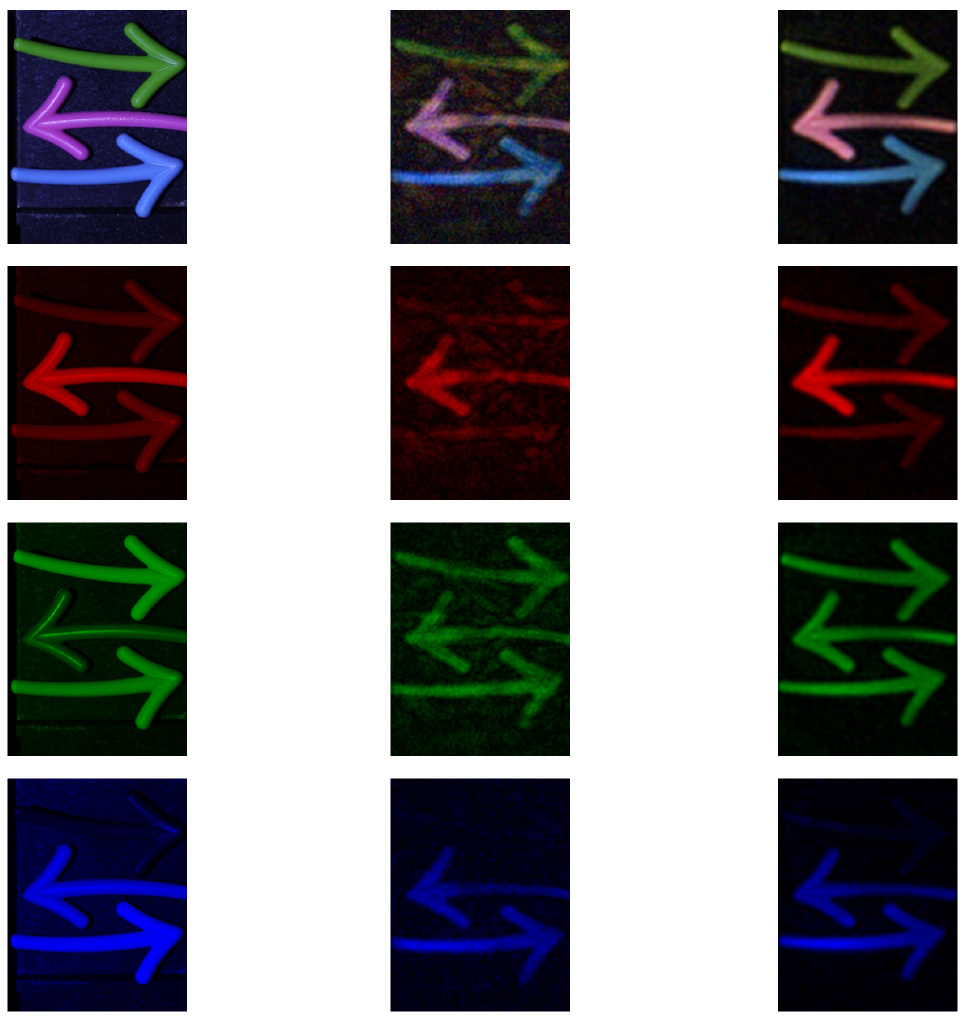
Eyeglass reflection severely degrades facial feature visibility in video conferencing and facial recognition, where the captured image is a superposition of transmission and reflection layers. Existing polarization-based reflection removal methods depend on large-scale paired polarization datasets, limiting generalization to unseen lighting conditions. This work introduces PDPrior, an untrained polarization-guided diffusion prior that requires no training data and no ground-truth reflection-free images. PDPrior leverages the generative prior of a diffusion model and incorporates polarization information as guidance to control the generation process. The reflection diffusion model uses the degree of linear polarization (DoLP) to preliminarily identify reflection regions and exploits the diffusion prior of progressively darkening facial content, enabling focus on reflective areas. The transmission coefficient computed from DoLP guides transmission image generation via the physical forward model of reflection formation. During each sampling step, reflection and transmission variables are alternately updated through gradient descent based solely on the test sample, conferring adaptability to complex lighting and diverse scenes. Real-world eyeglass reflection images were collected using a division-of-focal-plane polarization camera under various indoor and outdoor lighting environments. Experimental results demonstrate that PDPrior effectively removes eyeglass reflection, producing high-fidelity face reconstructions with no visible artifacts and achieving more robust face image quality assessment scores for recognition performance. The framework generalizes to window photography, showcase displays, and driver monitoring.
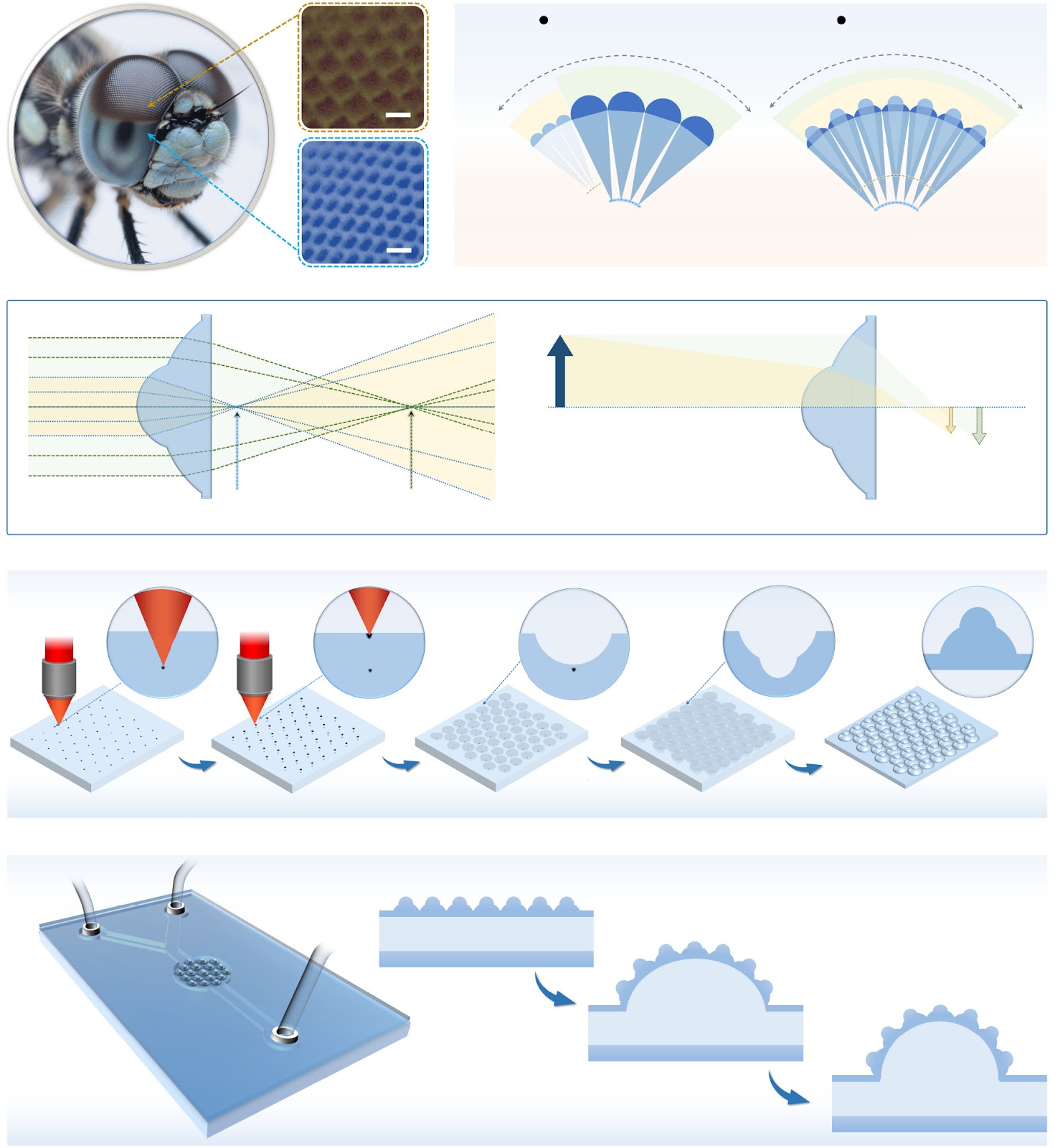
Tunable Compound Eyes with Coaxial Lens-on-Lens Ommatidia for Cooperative Bi-Focal Imaging
Artificial compound eyes (CEs) remain inferior to insect counterparts in ommatidial spatial arrangement, size distribution, visual field adaptability, and environmental perception. This work presents a tunable bionic CE with coaxial lens-on-lens (LoL) ommatidia, inspired by Sympetrum frequens, integrating a flexible polydimethylsiloxane (PDMS) LoL array with a microfluidic chip to achieve simultaneous bi-focal imaging. The LoL array was fabricated via femtosecond laser dual-modification of quartz glass, two-step wet etching, and soft lithography, yielding a concave template of approximately 2.6 mm². Integration with a microfluidic chamber enabled liquid-pressure modulation of CE configurations, producing a complete curved bi-focal plane that overcomes the limitations of single-focal-plane and regionalized nonuniform ommatidia CEs. Optical characterization confirmed stable focusing performance for both large and small ommatidia within their theoretical fields of view (FOVs). Cooperative bi-focal imaging was achieved by regulating FOV and relative positions of different LoL ommatidia through controlled injection of PDMS precursor. Large-FOV imaging and moving target monitoring were demonstrated, with reconstructed trajectories of triangular and dragonfly targets in 3D coordinates. The tunable CE with LoL ommatidia offers significant potential for particle image velocimetry, robotic vision, and virtual endoscopy, providing a scalable route to advanced micro-optical systems with adaptive visual field and depth perception.
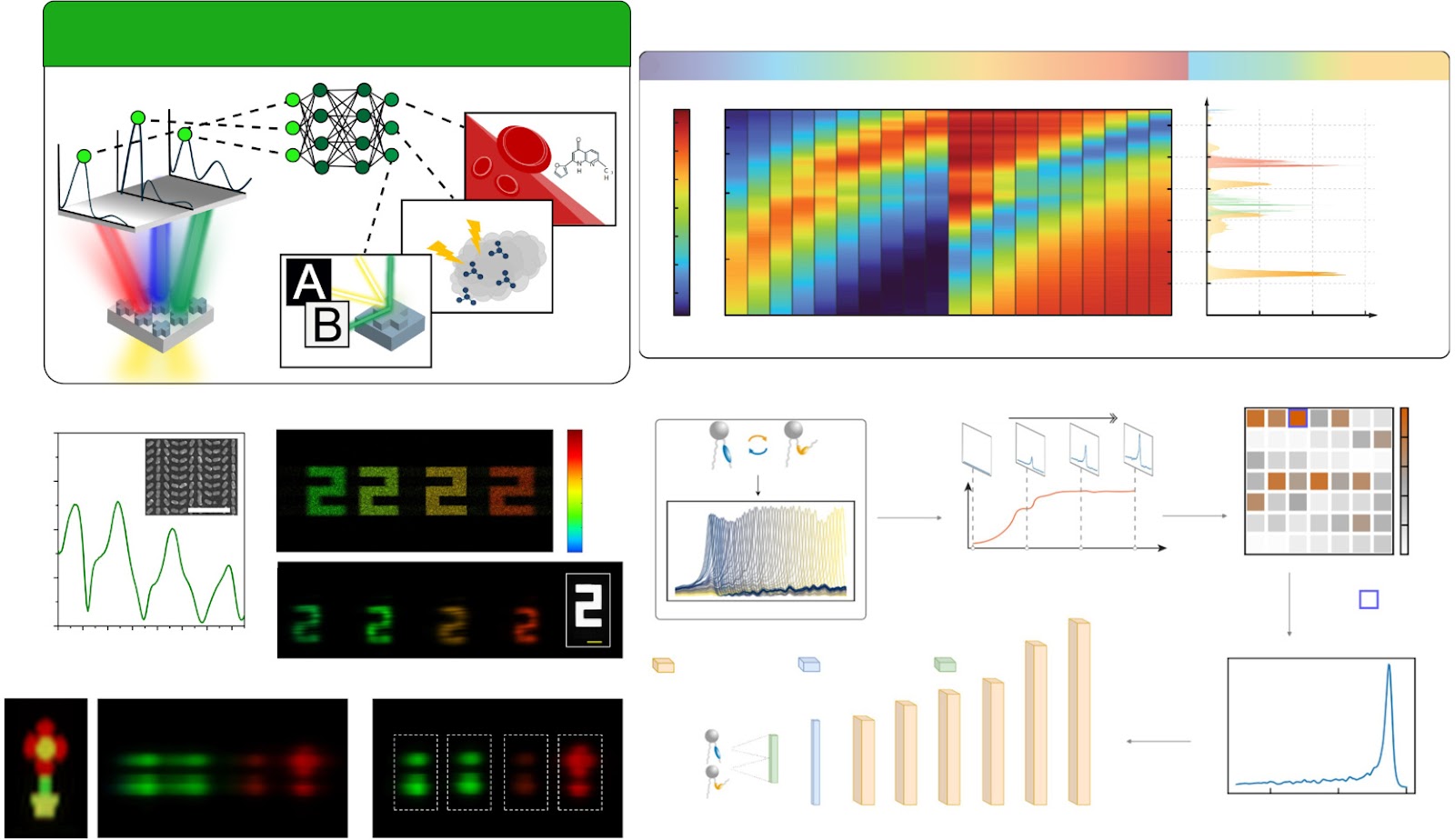
AI-assisted metaphotonics: A Comprehensive Review of Artificial Intelligence-Driven Approaches for Metaphotonic Systems
The convergence of artificial intelligence (AI) and metaphotonics is creating a new paradigm for controlling light-matter interactions. The synergy of AI's ability to learn complex relationships in multidimensional data and provide ultra-fast inference with the capacity of metaphotonics to engineer optical properties not found in nature is unlocking a new era in computational design, real-time control, and fully automated optical systems. This review provides a comprehensive overview of state-of-the-art AI-driven approaches for metaphotonic systems. We focus on the solutions to real-world problems in accelerating metaphotonic simulations and inverse design, optical data characterization, and the development of fully integrated end-to-end AI-assisted metaphotonic systems. Finally, we provide our perspectives on the future research directions and emerging opportunities at the rapidly evolving intersection of metaphotonics and AI.

Polarization Unlocks Scene-Level 3D Imaging: A Commentary on Integration-Free Binocular-Polarization Fusion for Discontinuous Targets
Scene-level high-precision 3D imaging remains constrained by the fundamental trade-off between imaging distance and depth accuracy. Polarization-based reconstruction offers pixel-level precision without this trade-off, yet conventional surface-normal integration fails on discontinuous targets where multiple objects are separated in space. Liu et al. (Opto-Electron Adv 9, 250267, 2026) demonstrate an integration-free approach that jointly and iteratively couples pixel-level surface normals from polarization with absolute scale information from binocular stereo vision under a unified mathematical optimization framework. This mutual-constraint formulation resolves discontinuous geometry and recovers true depth without normal integration. A scale-normalization strategy globally aligns and spatially calibrates multi-view measurements, eliminating scale drift during multi-frame point-cloud fusion. Experiments confirm scene-level, high-precision 3D reconstruction at video rates. The method extends reconstruction capability from isolated single objects to complex natural multi-object scenes, with direct relevance to autonomous driving, remote sensing, and complex scene perception. Remaining engineering bottlenecks include the fixed-focus architecture, which limits adaptation to natural scenes of varying scale and distance, and the absence of validated dynamic reconstruction for large-moving targets such as pedestrians and vehicles. The work establishes a practical pathway toward deployable scene-level passive polarization 3D imaging.
Optoelectronic Advances in the Hybrid Plasmonic Metasurface for Multi-Band and Wide-Spectrum Photodetection
Hybrid plasmonic metasurfaces have emerged as a pivotal platform for enhancing photodetection across multiple bands, yet their practical deployment is constrained by narrow operational bandwidth and high dark current. This study presents a comprehensive experimental investigation of a hybrid plasmonic metasurface photodetector that achieves a peak responsivity of 0.45 A/W at 1550 nm and a specific detectivity of 1.2 × 10^11 Jones, with a dark current density of 2.5 nA/cm² at room temperature. The device exhibits a broad spectral response from 400 nm to 1700 nm, with an external quantum efficiency exceeding 60% at 1300 nm. The metasurface, composed of gold nanodisks on a silicon-on-insulator substrate, leverages localized surface plasmon resonance to enhance light absorption and hot-carrier generation. Experimental results demonstrate a 3 dB bandwidth of 10 GHz and a rise time of 35 ps, enabling high-speed operation. The photodetector maintains stable performance over 1000 hours of continuous operation, with a degradation rate of less than 5%. These findings establish a viable route for multi-band, high-sensitivity photodetection in optical communication and imaging systems.
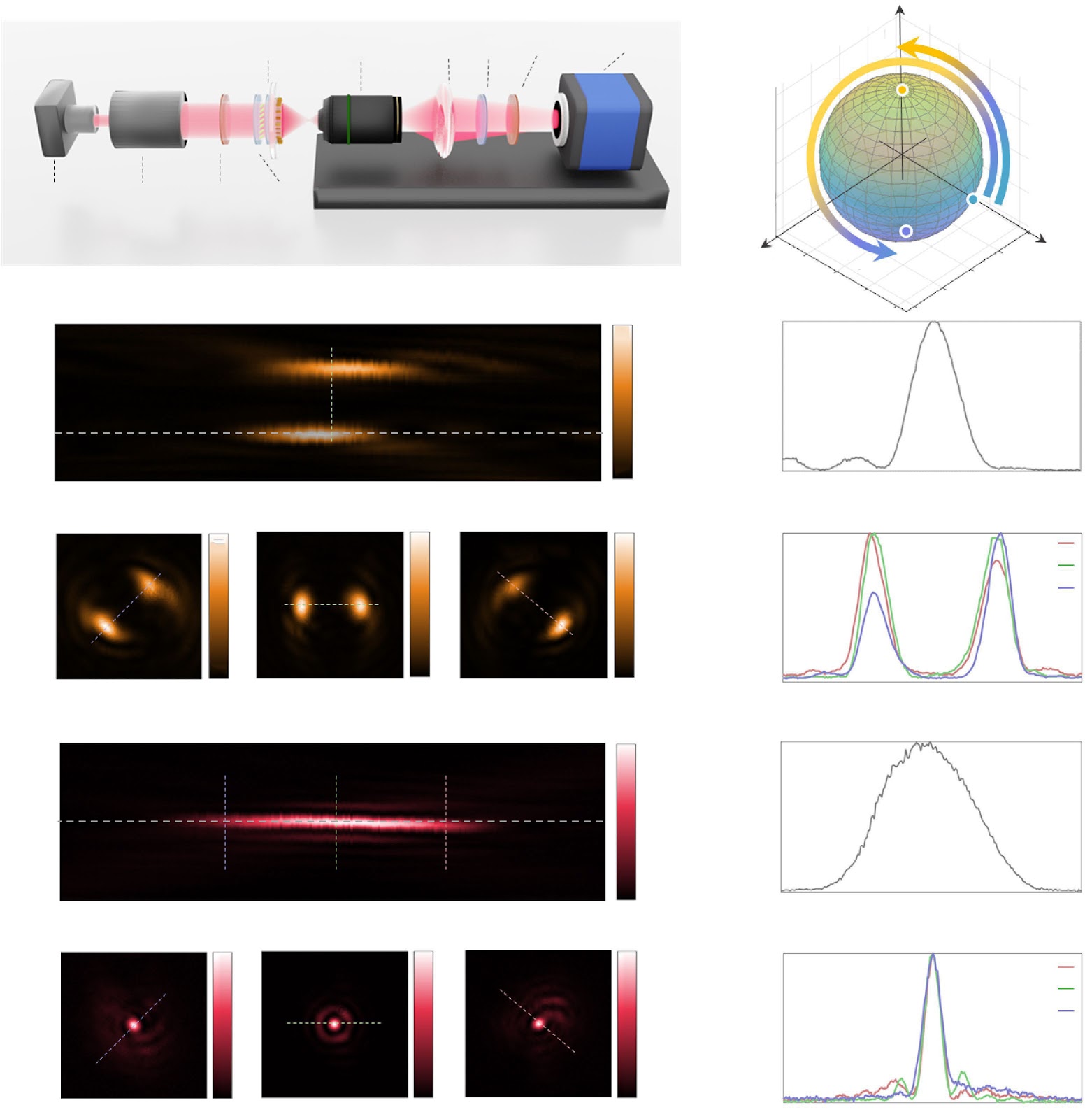
Millisecond-level electrically switchable metalens for adaptive rotational depth mapping and diffraction-limited imaging
The intrinsic trade-off between depth-of-focus and lateral resolution in conventional optical systems constrains three-dimensional imaging in compact form factors. This work demonstrates an electrically tunable dual-mode metalens that integrates hydrogenated amorphous silicon (a-Si:H) meta-atoms with a liquid crystal (LC) modulator to independently manipulate left- and right-circularly polarized (LCP/RCP) light at 635 nm. Under LCP illumination, the metalens generates a rotating double-helix point spread function (PSF) encoding depth via rotation angle; under RCP illumination, it produces an extended depth-of-focus with a narrow PSF for high-resolution imaging. Propagation and geometric phases were co-optimized via rigorous coupled-wave analysis (RCWA), yielding high transmittance and precise phase control. Experimental characterization confirmed near-diffraction-limited lateral and axial resolutions. The integrated LC cell enables millisecond-scale polarization switching between depth-sensitive and high-resolution modes. Depth extraction was validated by correlating rotation angles of dual-image focal spots under mixed-polarization illumination, with axial displacements of Δz1 = 30.5 μm, Δz2 = 0 μm, and Δz3 = −48.3 μm corresponding to rotation angles β = −25.6°, 0°, and 16.9°, respectively. Depth-resolved imaging of a rubber-tree leaf, skeletal-muscle cross-section, and live planarian retrieved color-coded depth maps, demonstrating efficacy on complex biological tissues. This polarization-driven platform offers a compact solution for biomedical imaging, three-dimensional sensing, and adaptive optics.