Key Takeaways & Executive Findings
- •• FeNiCoCuMo HEA electrodes achieve 370 mV overpotential at 10 mA·cm−2 with a Tafel slope of 78 mV·dec−1 in 1.0 M KOH, outperforming monometallic references and rivaling RuO2. • Synergistic 'cocktail effect' confirmed by broadened redox features and Ni/Co-rich (oxy)hydroxide/MoOx surface signatures, linking compositional disorder to enhanced OER kinetics. • DFT calculations reveal broadened electronic states near the Fermi level and improved charge transfer, providing mechanistic insight into the HEA's high activity. • 100-hour chronopotentiometry and post-mortem XRD demonstrate stable operation with a thin reconstructed surface while preserving the FCC-dominant bulk.
Abstract
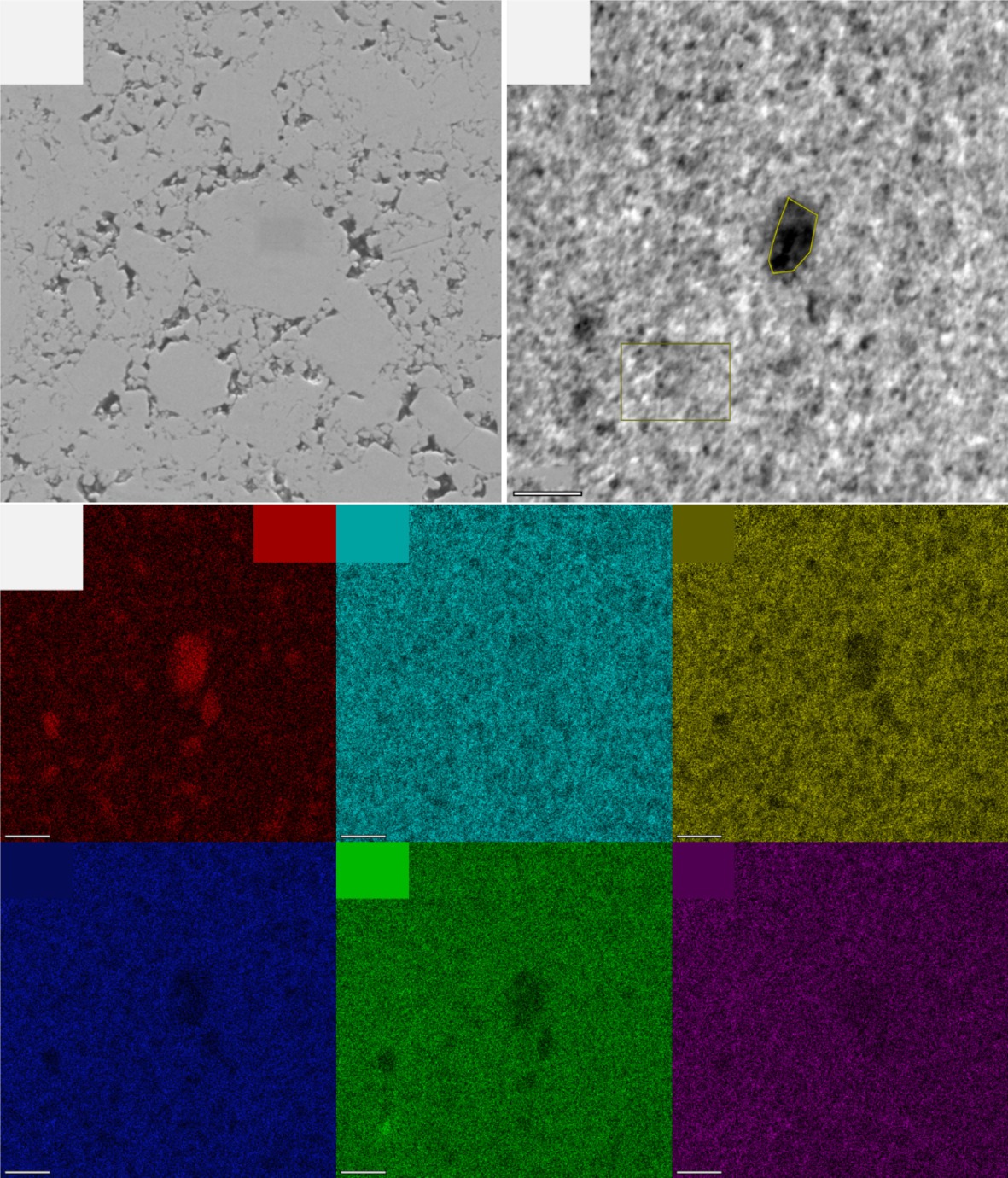
Self-supported, hot-pressed FeNiCoCuMo high-entropy alloy (HEA) electrodes were fabricated and characterized by X-ray diffraction (XRD), high-resolution transmission electron microscopy (HR-TEM), and energy dispersive spectroscopy (EDS), confirming a face-centered cubic (FCC) matrix with minor body-centered cubic (BCC) phase (~1wt%). We map the redox behavior of the individual constituents (Fe, Ni, Co, Cu, and Mo) and compare it with HEA to reveal solid-solution synergy (“cocktail effect”). Electrochemistry (cyclic voltammetry (CV)/linear sweep voltammetry (LSV)/Tafel in 1.0 M KOH) and X-ray photoelectron spectroscopy (XPS) show broadened redox features for HEA and Ni/Co-rich (oxy)hydroxide signatures with MoOx contributions. Triplicate electrodes (M1–M3) deliver an average overpotential of 370 mV at 10 mA·cm−2 and a Tafel slope of 78 mV·dec−1, outperforming monometallic references and remaining competitive with the literature-reported RuO2. Chronopotentiometry 100 h evidence stable operation; post-mortem XRD indicates a thin reconstructed surface while the bulk remains FCC-dominated. Density functional theory (DFT) supports broadened electronic states near the Fermi level and enhanced charge transfer. Overall, structure and computation link compositional disorder, surface reconstruction, and oxygen evolution reaction (OER) kinetics in a robust anode for alkaline oxygen evolution.
1. Introduction
The rising global demand for sustainable energy has intensified interest in hydrogen production via electrochemical water splitting. Among the two half-reactions involved, the oxygen evolution reaction (OER) remains the major bottleneck due to its sluggish 4e− mechanism and high overpotential [1]. In alkaline and neutral media, the reaction is described as [1]: 4OH− → O2 + 2H2O + 4e– (E0 = 1.23 V vs. reversible hydrogen electrode (RHE), where E0 corresponds to the standard potential).
To date, the most efficient OER catalysts have been based on noble metal oxides, such as RuO2 and IrO2, known for their favorable kinetics and stability. However, their scarcity and cost hinder large-scale deployment [2]. As a result, there is growing interest in earth-abundant alternatives that offer comparable performance and long-term durability in alkaline environments [2].
High-entropy alloys (HEAs), composed of five or more principal elements in near-equiatomic ratios, have emerged as promising candidates for electrocatalysis. Their high configurational entropy stabilizes single-phase solid solutions, typically face-centered cubic (FCC) or body-centered cubic (BCC), with abundant catalytically active sites. Moreover, their compositional complexity enables tunable electronic structures and synergistic surface chemistries [3]. This catalytic enhancement is often attributed to the “cocktail effect”, where interactions between different metals give rise to new electronic configurations capable of stabilizing OER intermediates such as *OH, *O, and *OOH. However, excessive stabilization may be detrimental, as the Sabatier principle dictates that intermediate binding should be neither too strong nor too weak. Interestingly, the diversity of active sites in HEAs may break linear scaling relations, offering further performance benefits [4–5]. Additionally, lattice distortions from atomic size mismatch increase defect densities and grain boundaries, boosting mass transport and charge transfer. Engineering the d-band center through compositional design provides another powerful lever for enhancing electrocatalytic activity [6]. Despite these advantages, many HEA studies have focused on structural analysis via X-ray diffraction (XRD), scanning electron microscopy (SEM), or energy-dispersive spectroscopy (EDS), while their electrochemical identity as true solid solutions remains underexplored. There is limited understanding of how HEAs behave under potential cycling in alkaline media compared to their individual metal constituents. The multielement synergy is not just the coexistence of discrete metal phases. For example, while metals like Ni and Co exhibit distinct redox transitions, HEAs often present broadened and overlapping features in cyclic voltammetry (CV), suggesting the emergence of new hybrid states.
Loading authentic research manuscript (Pages 1–5)...
Víctor M. Jiménez-Arévalo, Pablo Martin, Pedro Zamora, Xiaorong Zhou, Yi Wang, Gino Ramirez, José H. Zagal, Felipe M. Galleguillos Madrid, Maritza Paez (2025). From elemental metals to synergistic electrocatalysis: Comparative theoretical and experimental insights into FeNiCoCuMo high-entropy alloy for alkaline oxygen evolution reaction. Journal of Mineral Metallurgy and Materials Science. https://doi.org/10.1007/s12613-025-3311-7
Research & Educational Purpose Only:The translations, structured abstracts, analytical annotations, and data reports provided by SinoTechIntel are intended exclusively for academic research, internal corporate R&D, and educational benchmarking. They do not constitute formal engineering, chemical safety, legal, or professional advice.
Copyright & Intellectual Property Notice: Original copyright of the underlying source articles and experimental data remains with the respective authors, institutions, and original publishing journals. SinoTechIntel claims intellectual property only over its proprietary translations, analytical syntheses, and AEO structured enhancements in accordance with international fair use and academic citation principles.
Frequently Asked Questions
What is the FeNiCoCuMo high-entropy alloy and how is it prepared?
The FeNiCoCuMo high-entropy alloy (HEA) is a solid-solution electrocatalyst comprising five principal metals in near-equiatomic ratios. In this study, self-supported electrodes were fabricated using hot pressing after mechanical alloying, resulting in a face-centered cubic (FCC)-dominant matrix with a minor body-centered cubic (BCC) phase (~1 wt%).
How does the HEA perform as an OER catalyst in alkaline media?
In 1.0 M KOH, triplicate HEA electrodes (M1–M3) exhibited an average overpotential of 370 mV at 10 mA·cm−2 and a Tafel slope of 78 mV·dec−1, outperforming monometallic references and remaining competitive with RuO2. Chronopotentiometry for 100 h confirmed stable operation.
What is the 'cocktail effect' in high-entropy alloys?
The 'cocktail effect' refers to synergistic electronic interactions among the constituent metals, leading to new electronic configurations that stabilize OER intermediates such as *OH, *O, and *OOH. This effect is evident from broadened redox features observed in cyclic voltammetry and enhanced catalytic activity.
What characterization techniques were used to study the HEA?
The HEA was characterized using X-ray diffraction (XRD), high-resolution transmission electron microscopy (HR-TEM), energy dispersive spectroscopy (EDS), cyclic voltammetry (CV), linear sweep voltammetry (LSV), Tafel analysis, and X-ray photoelectron spectroscopy (XPS). Post-mortem XRD was also performed after long-term operation.
How does DFT contribute to understanding the HEA's catalytic activity?
Density functional theory (DFT) calculations revealed broadened electronic states near the Fermi level and enhanced charge transfer, linking the compositional disorder and surface reconstruction to improved oxygen evolution reaction (OER) kinetics.
Related Technical Papers & Translations
Design and optimization of a high-efficiency distillation process for cellulosic fuel ethanol integrated with thermal coupling and molecular sieve adsorption
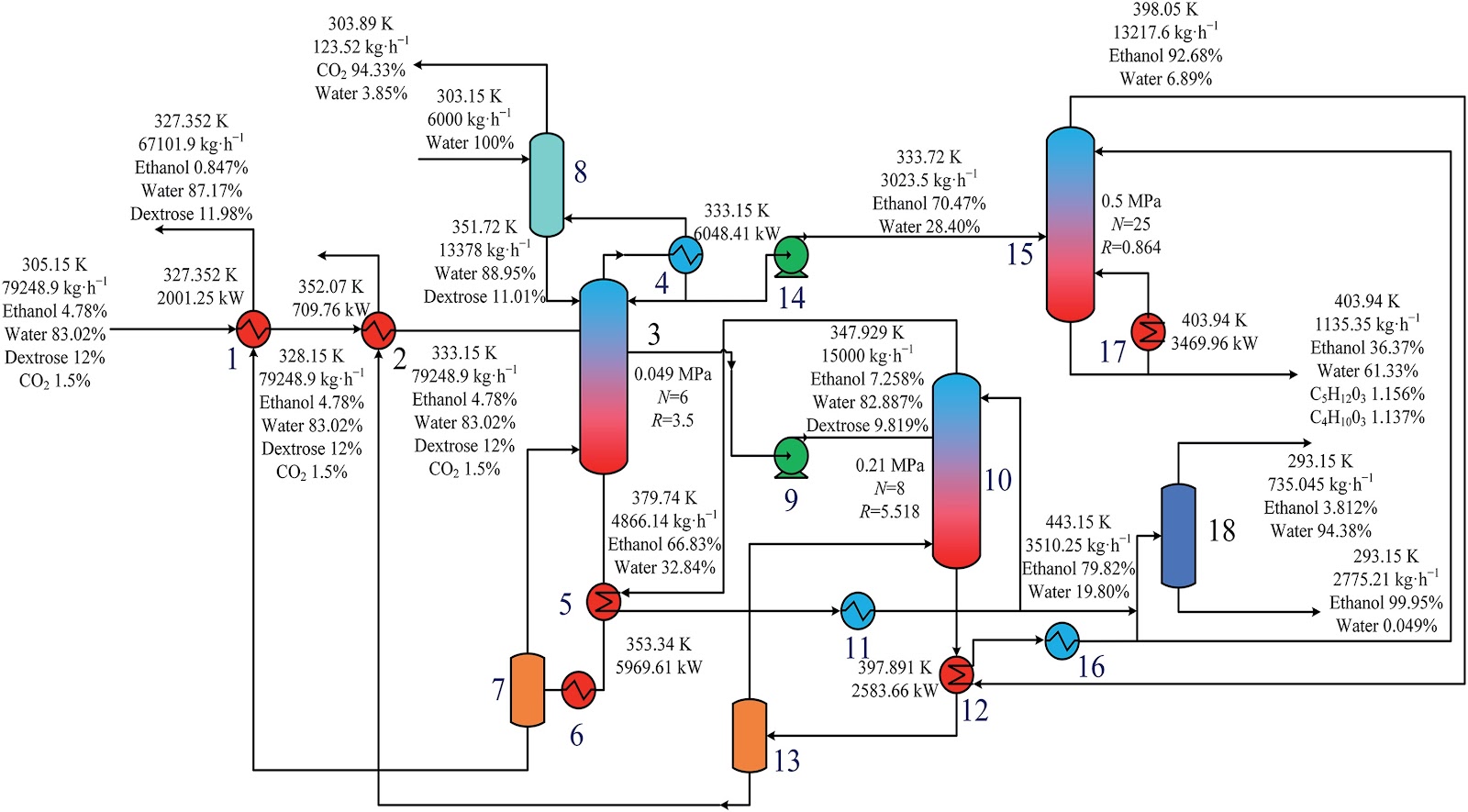
To address the challenges of high energy consumption and prominent costs in the traditional three-columns distillation process for cellulosic fuel ethanol, a distillation—molecular sieve coupling separation process is proposed. This process integrates a three-column (crude distillation column, first distillation column, second distillation column) system with a 3A molecular sieve adsorption deep dehydration unit. A thermal coupling network is constructed via differential pressure design (steam from medium/high-pressure columns as mutual heat sources, reboiler liquid waste heat for feed preheating), and molecular sieve adsorption conditions are optimized. The study first performs a thermodynamic consistency test on the ethanol—water system, determines optimal non-random two-liquid (NRTL) model binary interaction parameters via experimental data regression for Aspen Plus simulation. Aiming at minimum total annual cost (TAC), Aspen Plus is used to optimize process parameters (theoretical tray number, feed location, reflux ratio, side-draw position, etc.). Economic analysis shows this process reduces CO2 emission costs by 27.56%, TAC by 15.58% (to 5.123 × 10⁶ USD·a-1), and increases ethanol purity to >99.6%, providing an effective solution for green, efficient separation.
A cohesion loss model for determining residual strength of deep bedded sandstone
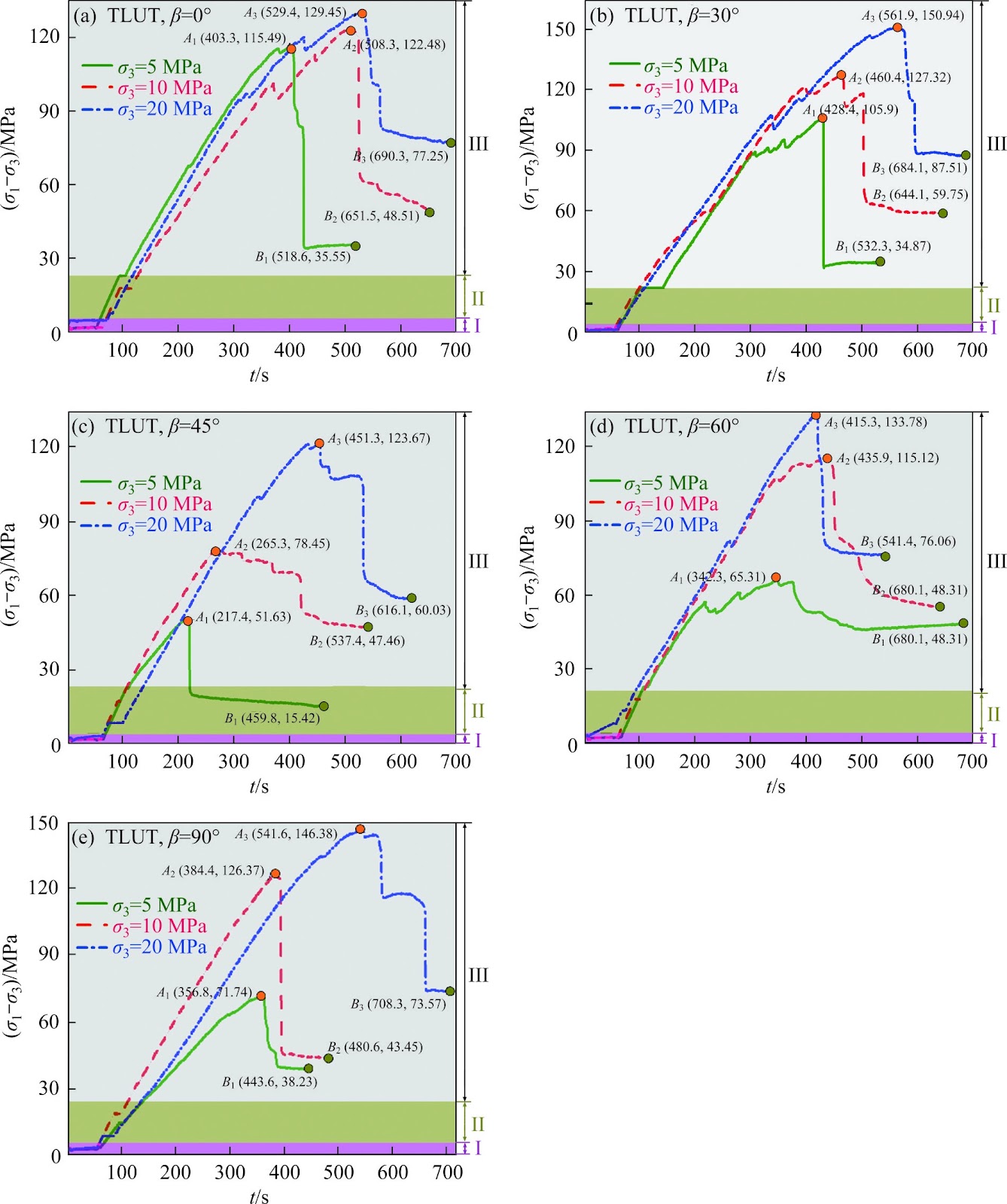
Rock residual strength, as an important input parameter, plays an indispensable role in proposing the reasonable and scientific scheme about stope design, underground tunnel excavation and stability evaluation of deep chambers. Therefore, previous residual strength models of rocks established were reviewed. And corresponding related problems were stated. Subsequently, starting from the effects of bedding and whole life-cycle evolution process, series of triaxial mechanical tests of deep bedded s
Federated model with contrastive learning and adaptive control variates for human activity recognition
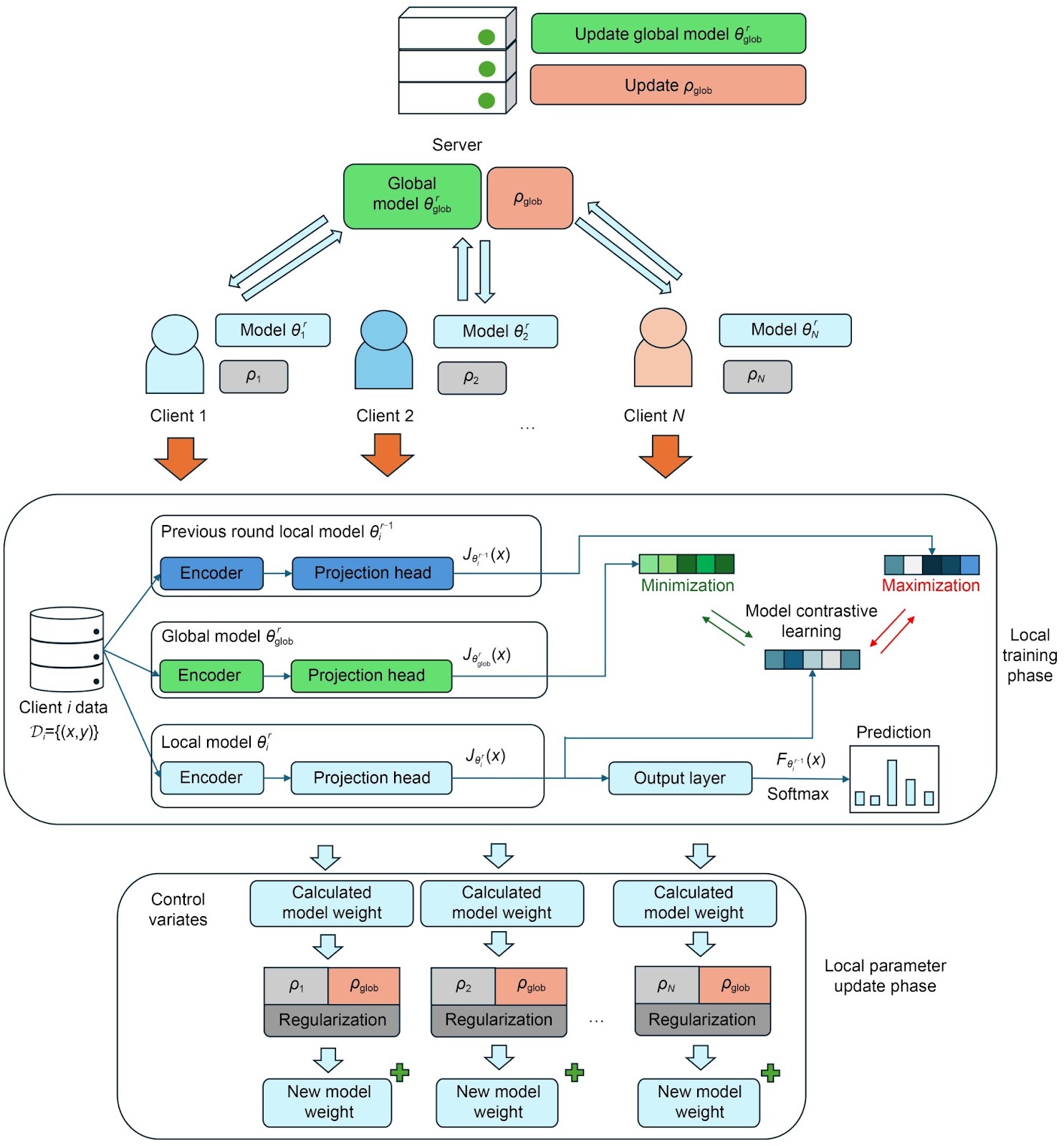
Recent attention to privacy issues demands a communication-safe method for training human activity recognition (HAR) models on client activity data. Federated learning (FL) has become a compelling technique to facilitate model training between the server and clients while preserving data privacy. However, classical FL methods often assume independent and identically distributed (IID) data among clients. This assumption does not hold true in practical scenarios. Human activity in real-world scena