Key Takeaways & Executive Findings
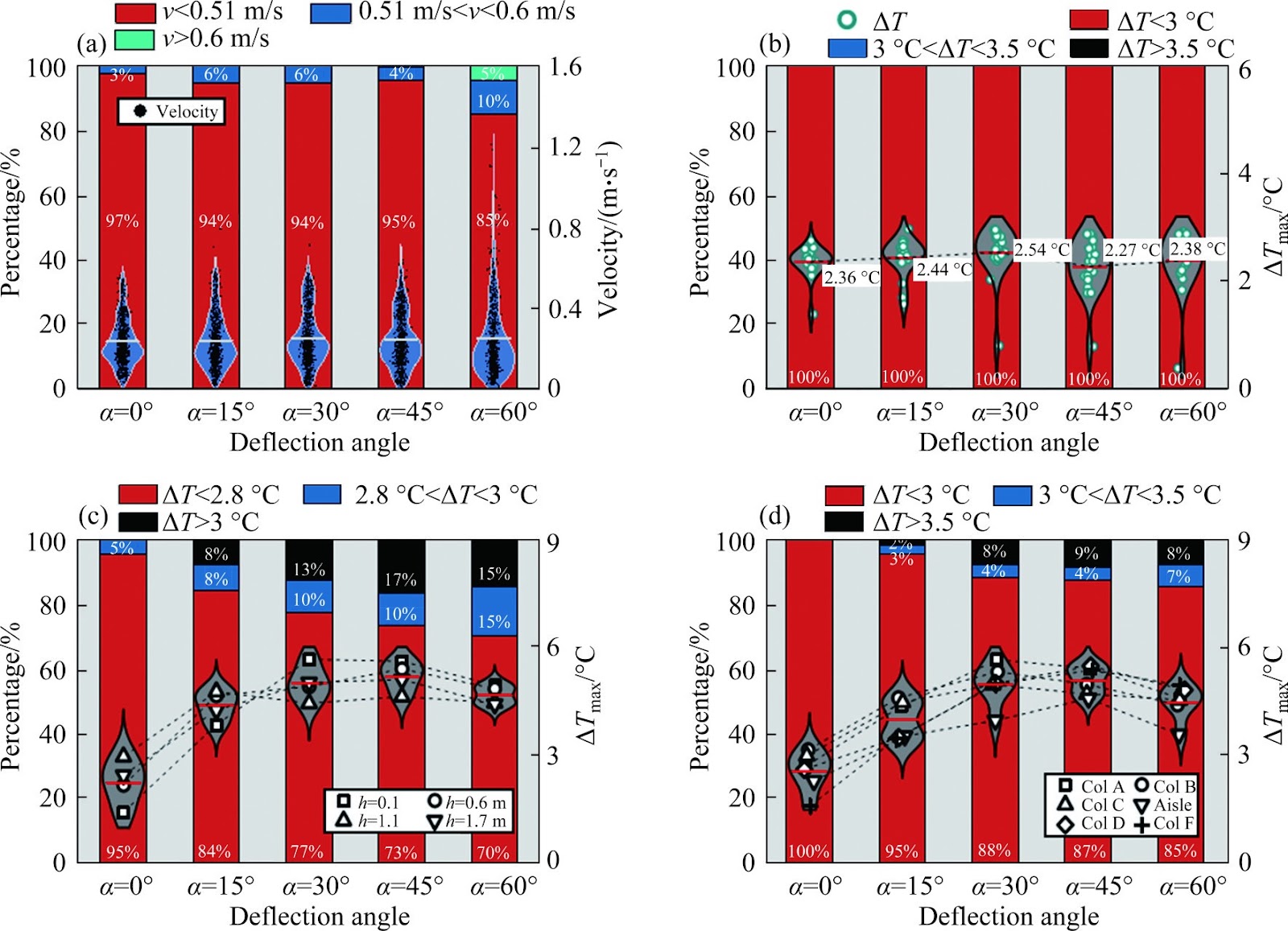
- •• Non-vertical air supply slightly reduces cabin temperature and pollutant concentration but significantly worsens thermal comfort and air quality. • Draught rate and non-uniformity coefficient increase, with about 5% and 15% more measurement points violating micro-wind speed and temperature difference requirements. • Longitudinal pollutant penetration increases by a factor of about 5, and pollutant 'locking regions' appear at the cabin ends. • Changing the deflection pattern only shifts the deterioration region; it does not fundamentally improve the cabin air environment.
Abstract
Ventilation systems are critical for improving the cabin environment in high-speed trains, and their interest has increased significantly. However, whether air supply non-verticality deteriorates the cabin air environment, and the flow mechanism behind it and the degree of deterioration are not known. This study first analyzes the interaction between deflection angle and cabin flow field characteristics and ventilation performance. The results revealed that the interior temperature and pollutant concentration decreased slightly with increasing deflection angle, but resulted in significant deterioration of thermal comfort and air quality. This is evidenced by an increase in both draught rate and non-uniformity coefficient, an increase in the number of measurement points that do not satisfy the micro-wind speed and temperature difference requirements by about 5% and 15%, respectively, and an increase in longitudinal penetration of pollutants by a factor of about 5 and the appearance of locking regions at the ends of cabin. The results also show that changing the deflection pattern only affects the region of deterioration and does not essentially improve this deterioration. This study can provide reference and help for the ventilation design of high-speed trains.
1. Introduction
Due to the breakthroughs in various key technologies and the improvement of equipment and facilities, the importance of high-speed trains is gradually increasing [1]. A positive cabin environment is the key to ensure the green operation of the railroad and the comfort and health of passengers, and people's concern and demand for this is gradually increasing. As early as about a hundred years ago, people carried out a lot of researches for the good environment of the airplane cabin. With the development of science and technology, many related advanced scientific concepts, techniques and methods have been applied to the optimization of cabin design. To improve the indoor air environment, scholars have conducted many scientific studies from various aspects. These include, but are not limited to: research on the mechanism of flow field action [2, 3]; research on the mechanism of virus diffusion [4−6]; air vent layout [7, 8]; personalized ventilation [9, 10]; air supply uniformity [11]; diffuser optimization [12]; ventilation parameter optimization [13]; and multi-objective optimization [14]. These researches have made great contributions to create good air quality.
Relevant studies have shown that good ventilation can directly improve the indoor air environment, enhance thermal comfort and reduce airborne propagation. LU et al [15] utilized an improved proper orthogonal decomposition reconstruction method for the ventilation performance of high-speed trains to optimize design. By optimizing the three design variables of air supply speed, air supply temperature and air supply angle, the cabin air quality is ultimately improved. XU et al [16] investigated the effects of four ventilation methods on the diffusion characteristics of cough droplets in the passenger compartment of a high-speed train. The results showed that the potential infection risk in the passenger cabin was smaller when top air supply was used, and the longitudinal transport capacity of the disease could be suppressed more effectively. SCHMELING et al [17] used experimental means to investigate the effects of five ventilation methods on thermal comfort in the cabin of a high-speed train, and proposed a novel low-momentum ventilation concept, which was shown to have a great potential for improving thermal comfort. WU et al [18] investigated the formaldehyde distribution characteristics in the cabin of a high-speed train using numerical simulation. The resu
Loading authentic research manuscript (Pages 1–5)...
WU Song-bo, LI Tian, ZHANG Ji-ye (2025). Flow field characteristics in high-speed train cabin: Negative effect of non-vertical air supply. Journal of Central South University. https://doi.org/10.1007/s11771-025-6019-y
Research & Educational Purpose Only:The translations, structured abstracts, analytical annotations, and data reports provided by SinoTechIntel are intended exclusively for academic research, internal corporate R&D, and educational benchmarking. They do not constitute formal engineering, chemical safety, legal, or professional advice.
Copyright & Intellectual Property Notice: Original copyright of the underlying source articles and experimental data remains with the respective authors, institutions, and original publishing journals. SinoTechIntel claims intellectual property only over its proprietary translations, analytical syntheses, and AEO structured enhancements in accordance with international fair use and academic citation principles.
Frequently Asked Questions
What effect does non-vertical air supply have on high-speed train cabin environment?
Non-vertical air supply slightly reduces cabin temperature and pollutant concentration, but significantly deteriorates thermal comfort and air quality, increasing draught rate and non-uniformity.
How does deflection angle affect pollutant concentration?
Increasing deflection angle leads to a slight decrease in pollutant concentration, but increases longitudinal penetration by about 5 times and creates locking regions at cabin ends.
Does changing the deflection pattern improve the cabin environment?
No, changing the deflection pattern only shifts the region of deterioration and does not essentially improve the overall cabin air environment.
What methods were used in this study?
The study used CFD simulation to analyze the interaction between deflection angle and cabin flow field characteristics and ventilation performance.
What is the significance of this study for high-speed train design?
The findings provide a reference for ventilation design, highlighting the negative effects of non-vertical air supply on thermal comfort and air quality.
Related Technical Papers & Translations
Design and optimization of a high-efficiency distillation process for cellulosic fuel ethanol integrated with thermal coupling and molecular sieve adsorption
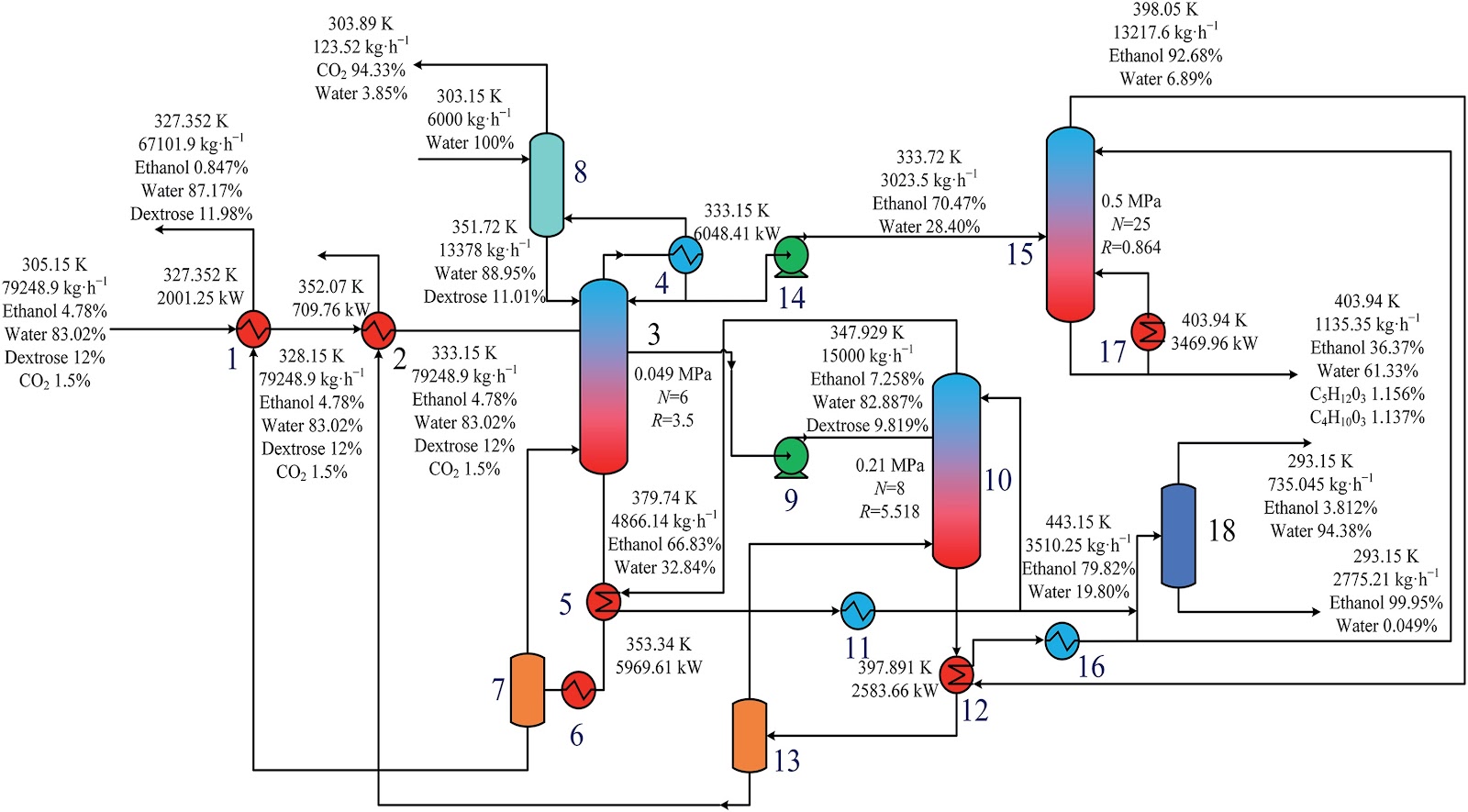
To address the challenges of high energy consumption and prominent costs in the traditional three-columns distillation process for cellulosic fuel ethanol, a distillation—molecular sieve coupling separation process is proposed. This process integrates a three-column (crude distillation column, first distillation column, second distillation column) system with a 3A molecular sieve adsorption deep dehydration unit. A thermal coupling network is constructed via differential pressure design (steam from medium/high-pressure columns as mutual heat sources, reboiler liquid waste heat for feed preheating), and molecular sieve adsorption conditions are optimized. The study first performs a thermodynamic consistency test on the ethanol—water system, determines optimal non-random two-liquid (NRTL) model binary interaction parameters via experimental data regression for Aspen Plus simulation. Aiming at minimum total annual cost (TAC), Aspen Plus is used to optimize process parameters (theoretical tray number, feed location, reflux ratio, side-draw position, etc.). Economic analysis shows this process reduces CO2 emission costs by 27.56%, TAC by 15.58% (to 5.123 × 10⁶ USD·a-1), and increases ethanol purity to >99.6%, providing an effective solution for green, efficient separation.
A cohesion loss model for determining residual strength of deep bedded sandstone
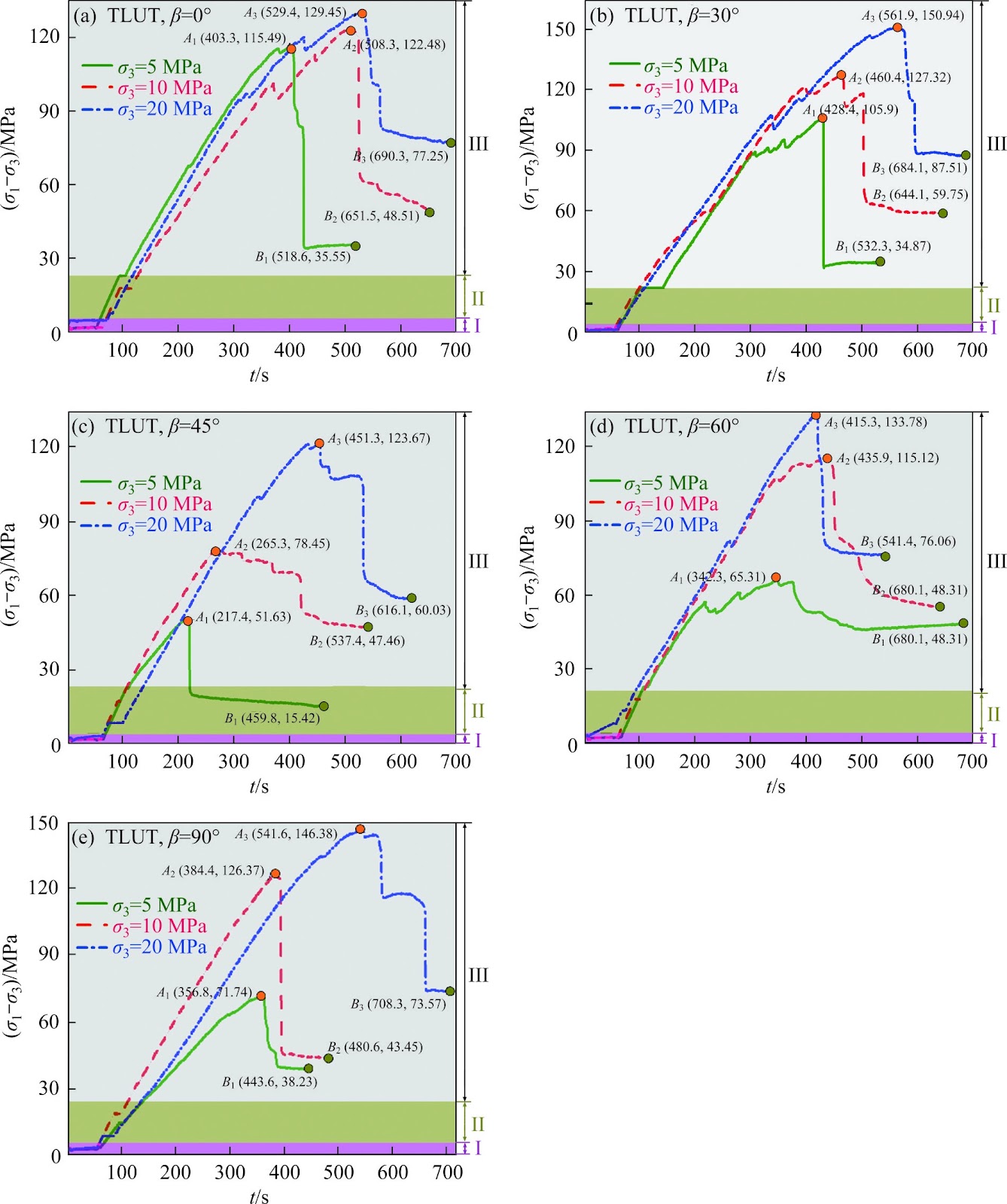
Rock residual strength, as an important input parameter, plays an indispensable role in proposing the reasonable and scientific scheme about stope design, underground tunnel excavation and stability evaluation of deep chambers. Therefore, previous residual strength models of rocks established were reviewed. And corresponding related problems were stated. Subsequently, starting from the effects of bedding and whole life-cycle evolution process, series of triaxial mechanical tests of deep bedded s
Federated model with contrastive learning and adaptive control variates for human activity recognition
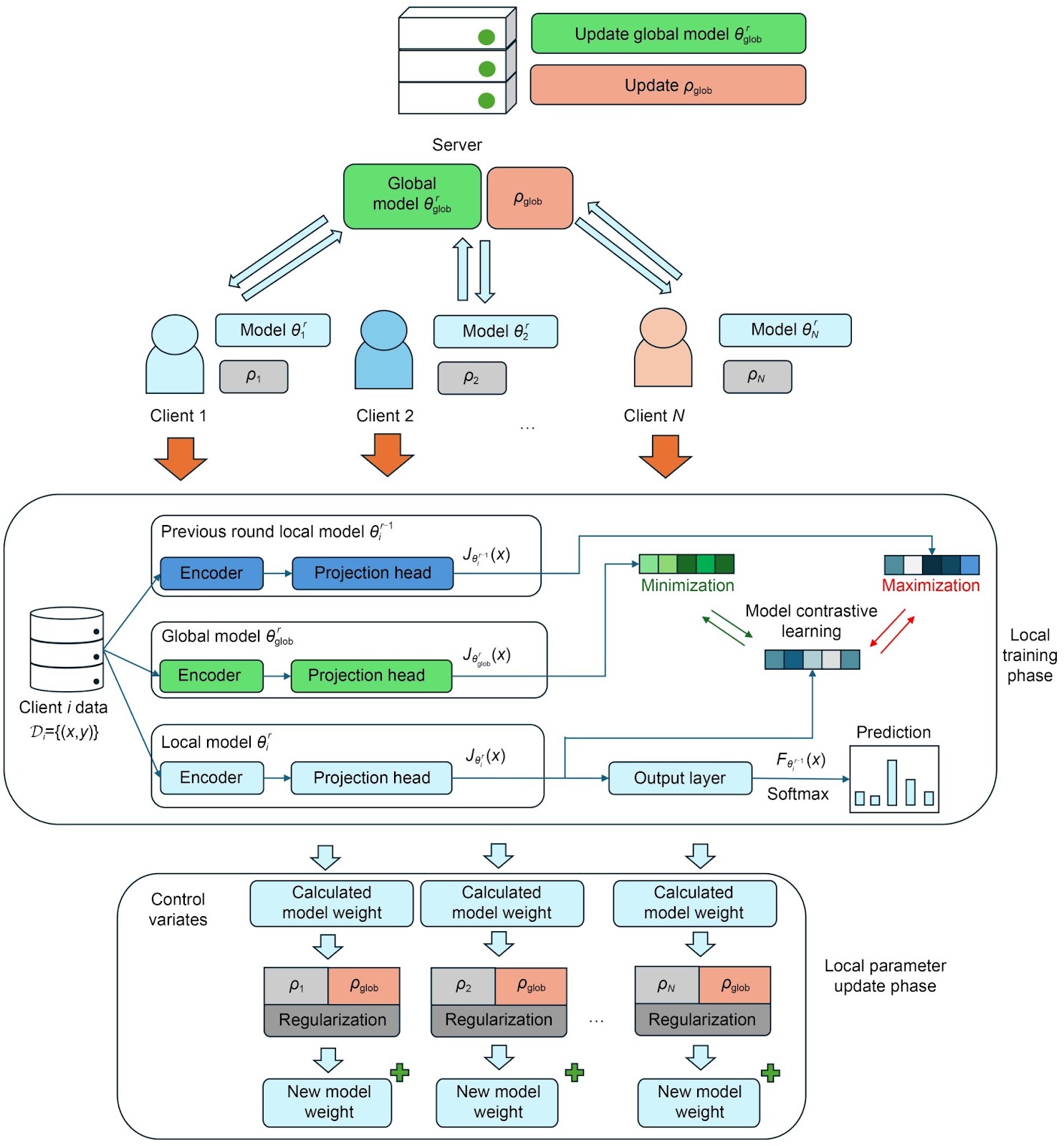
Recent attention to privacy issues demands a communication-safe method for training human activity recognition (HAR) models on client activity data. Federated learning (FL) has become a compelling technique to facilitate model training between the server and clients while preserving data privacy. However, classical FL methods often assume independent and identically distributed (IID) data among clients. This assumption does not hold true in practical scenarios. Human activity in real-world scena