Key Takeaways & Executive Findings
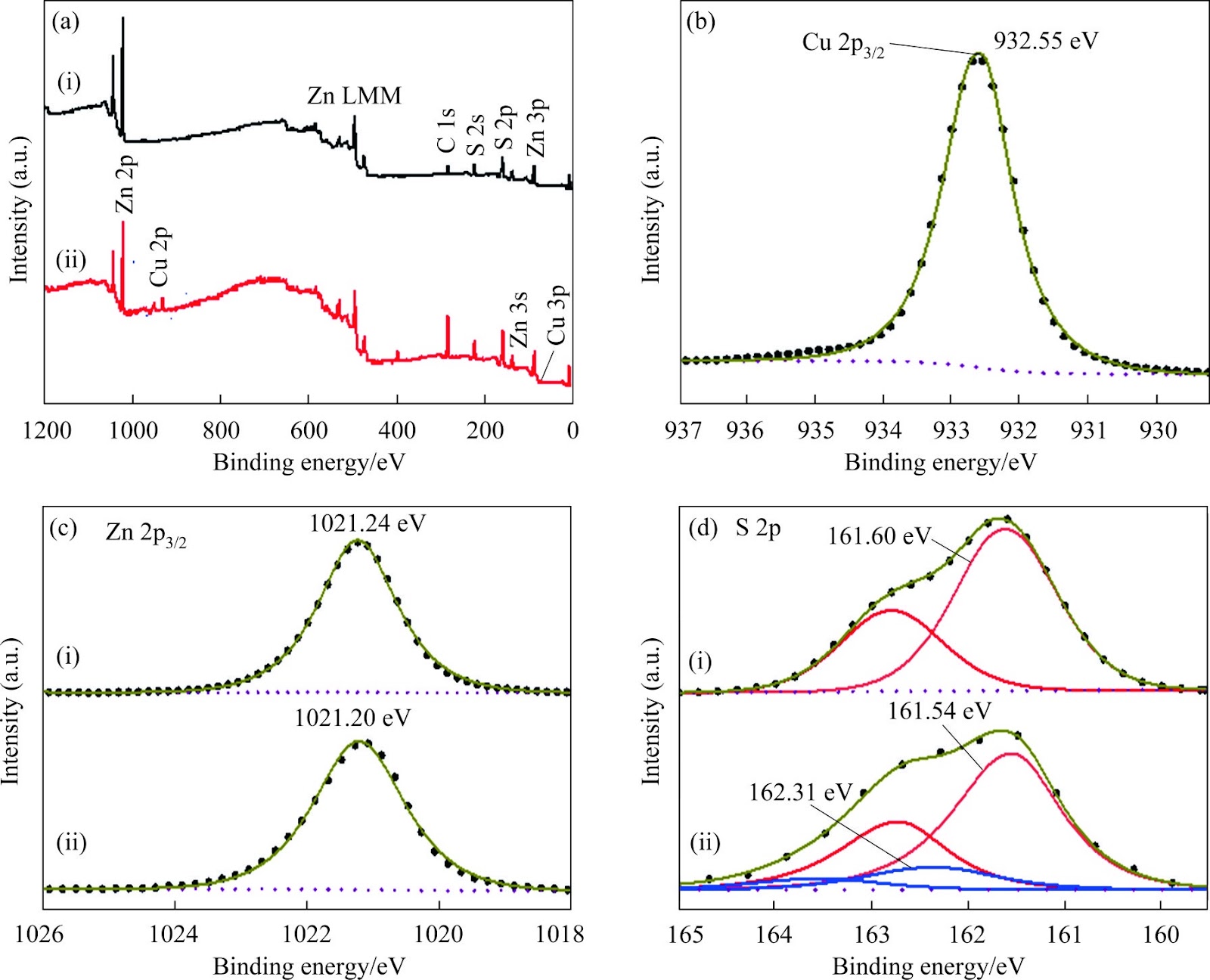
- •• The Fe³⁺-Cu²⁺-BX process effectively separates sphalerite from pyrite without lime, achieving pyrite recovery below 16% and sphalerite recovery above 47% at pH 5.0-10.0. • Zeta potential and wettability analyses reveal that ferric ions selectively adsorb on pyrite, while copper ions activate sphalerite, enhancing its hydrophobicity. • XPS analysis confirms the formation of Cu—S bonds on sphalerite and hydrophilic ferric hydroxide on pyrite, facilitating selective flotation. • This lime-free process offers an environmentally friendly alternative to the conventional lime-Cu²⁺-xanthate method, reducing pipeline scaling and improving recovery of associated precious metals.
Abstract
The lime-Cu²⁺-xanthate process is commonly used for the flotation separation of sphalerite from pyrite. In this process, lime is added to the pulp to inhibit the floatability of pyrite. However, the excessive use of lime can result in pipeline blockage and inadequate recovery of associated precious metals. Therefore, it is necessary to develop new flotation process that minimizes or eliminates the use of lime. In this paper, a novel Fe³⁺-Cu²⁺-butyl xanthate process was developed as an alternative to lime for separating of sphalerite from pyrite. The flotation results indicated that with the artificially-mixed minerals, the flotation recovery of pyrite was lower than 16% and that of sphalerite was higher than 47% at pH 5.0−10.0. The zeta potential measurements revealed that ferric ion preferred to adsorb on pyrite, and copper ion displaced with zinc ion from the lattice at the interface of sphalerite. The wettability analyses indicated that the hydrophobicity of sphalerite surface increased apparently after being treated with Fe³⁺-Cu²⁺-BX, while the hydrophobicity of pyrite surface remained nearly unchanged. With XPS analysis, Cu—S bond and hydrophilic ferric hydroxide were detected separately on the surface of sphalerite and pyrite after conditioning with Fe³⁺-Cu²⁺-BX, which facilitated the flotation separation of sphalerite from pyrite with butyl xanthate collector.
1. Introduction
With the rapid development of science and technology, there has been a significant increase in the demand for zinc in machinery and national defense industries. Sphalerite, which is commonly accompanied by sulfide minerals, particularly pyrite [1, 2], serves as the main source of zinc. Forth flotation is the most common method for separating of sphalerite from sulfide minerals. In industry, the lime-Cu²⁺-xanthate process is commonly used in flotation separation of sphalerite from pyrite [3−6]. In this process, an excess amount of lime is poured into the pulp to inhibit the floatability of pyrite [7, 8]. However, the excessive consumption of lime has many shortcomings. Firstly, it adversely affects the recovery of associated precious metals, such as silver and gold. Secondly, lime acts as a coagulant, causing the fine particles in the pulp to agglomerate and resulting in sticky foam formation, which is harmful to the normal flotation and easy to cause scaling in the pipelines [9]. Thirdly, lime production contributes to the generation of carbon dioxide, posing a threaten to the environment.
Many organic inhibitors are used to replace lime for inhibiting the floatability of pyrite [10−13], and some organic inhibitors show excellent inhibition effects [14, 15], but the poor separation effect of sphalerite from pyrite limited their application. Cyanide can effectively reduce the floatability of pyrite [10, 11, 13], but its shortcoming is highly toxic, which would cause seriously environmental problems. With people’s attention to environmental protection, cyanide is no longer suitable for use. Therefore, it is necessary to find a new lime-free method for separation of sphalerite from pyrite.
In practical flotation process, metal ions inevitably enter into the flotation pulp, mainly by electrochemical corrosion of the grinder, flotation water, addition of reagent and dissolved minerals [16−19], which has a significant effect on flotation performance. YANG et al [20] reported that the floatability of molybdenite was depressed by ferric ion due to the adsorption of hydrophilic Fe(OH)₃ on its surface. DONG et al [21] indicated that the adsorption of ferric ion caused a deeper oxidation of arsenopyrite surface, and the oxidation surface more tends to be hydrophilic, which inhibited its floatability. JIANG et al [22] demonstrated that xanthate acted with ferric ions and formed poorly hydrophobic ferric dihydroxy xanthate on the pyrite surface, which decreased the floatability of pyrite. It is well known that ferric ion depresses the floatability of pyrite and copper ion activates sphalerite.
Loading authentic research manuscript (Pages 1–5)...
LIU Jun, ZHANG Zhi-yong, SHI Jun-yang, LIU Sheng, HU Fang, LIU Guang-yi (2025). Flotation separation performance and mechanism of sphalerite from pyrite by Fe³⁺-Cu²⁺-BX process. Journal of Central South University. https://doi.org/10.1007/s11771-025-5980-9
Research & Educational Purpose Only:The translations, structured abstracts, analytical annotations, and data reports provided by SinoTechIntel are intended exclusively for academic research, internal corporate R&D, and educational benchmarking. They do not constitute formal engineering, chemical safety, legal, or professional advice.
Copyright & Intellectual Property Notice: Original copyright of the underlying source articles and experimental data remains with the respective authors, institutions, and original publishing journals. SinoTechIntel claims intellectual property only over its proprietary translations, analytical syntheses, and AEO structured enhancements in accordance with international fair use and academic citation principles.
Frequently Asked Questions
What is the Fe³⁺-Cu²⁺-BX process in sphalerite flotation?
The Fe³⁺-Cu²⁺-BX process is a novel lime-free method for separating sphalerite from pyrite using ferric ions (Fe³⁺), copper ions (Cu²⁺), and butyl xanthate (BX) as a collector. It replaces the traditional lime-based activation/suppression system, offering a more environmentally friendly alternative.
How does the Fe³⁺-Cu²⁺-BX process compare to the traditional lime-Cu²⁺-xanthate method?
Unlike the conventional lime-Cu²⁺-xanthate process, which requires excessive lime to depress pyrite and can cause scaling and loss of precious metals, the Fe³⁺-Cu²⁺-BX process avoids lime entirely. At pH 5.0–10.0, it keeps pyrite recovery below 16% while achieving over 47% sphalerite recovery in mixed-mineral tests.
What are the advantages of using Fe³⁺ and Cu²⁺ in sphalerite-pyrite separation?
Ferric ions selectively adsorb on pyrite, forming hydrophilic ferric hydroxide that depresses its floatability. Copper ions activate sphalerite by displacing zinc ions from the lattice, increasing its hydrophobicity. This dual action enhances selective flotation without lime, improving recovery of associated precious metals and reducing environmental impact.
What analytical techniques were used to study the separation mechanism?
The study employed zeta potential measurements, wettability analysis, and X-ray photoelectron spectroscopy (XPS). These techniques confirmed selective ion adsorption, surface hydrophobicity changes, and the formation of Cu—S bonds on sphalerite and hydrophilic ferric hydroxide on pyrite.
What are the environmental benefits of this new flotation process?
The Fe³⁺-Cu²⁺-BX process eliminates the need for lime, reducing CO₂ emissions from lime production, preventing pipeline scaling, and minimizing the loss of precious metals like silver and gold. It also avoids the use of toxic cyanide, making it a more sustainable and eco-friendly alternative.
Related Technical Papers & Translations

Design and optimization of a high-efficiency distillation process for cellulosic fuel ethanol integrated with thermal coupling and molecular sieve adsorption
To address the challenges of high energy consumption and prominent costs in the traditional three-columns distillation process for cellulosic fuel ethanol, a distillation—molecular sieve coupling separation process is proposed. This process integrates a three-column (crude distillation column, first distillation column, second distillation column) system with a 3A molecular sieve adsorption deep dehydration unit. A thermal coupling network is constructed via differential pressure design (steam from medium/high-pressure columns as mutual heat sources, reboiler liquid waste heat for feed preheating), and molecular sieve adsorption conditions are optimized. The study first performs a thermodynamic consistency test on the ethanol—water system, determines optimal non-random two-liquid (NRTL) model binary interaction parameters via experimental data regression for Aspen Plus simulation. Aiming at minimum total annual cost (TAC), Aspen Plus is used to optimize process parameters (theoretical tray number, feed location, reflux ratio, side-draw position, etc.). Economic analysis shows this process reduces CO2 emission costs by 27.56%, TAC by 15.58% (to 5.123 × 10⁶ USD·a-1), and increases ethanol purity to >99.6%, providing an effective solution for green, efficient separation.

A cohesion loss model for determining residual strength of deep bedded sandstone
Rock residual strength, as an important input parameter, plays an indispensable role in proposing the reasonable and scientific scheme about stope design, underground tunnel excavation and stability evaluation of deep chambers. Therefore, previous residual strength models of rocks established were reviewed. And corresponding related problems were stated. Subsequently, starting from the effects of bedding and whole life-cycle evolution process, series of triaxial mechanical tests of deep bedded s

Federated model with contrastive learning and adaptive control variates for human activity recognition
Recent attention to privacy issues demands a communication-safe method for training human activity recognition (HAR) models on client activity data. Federated learning (FL) has become a compelling technique to facilitate model training between the server and clients while preserving data privacy. However, classical FL methods often assume independent and identically distributed (IID) data among clients. This assumption does not hold true in practical scenarios. Human activity in real-world scena