Key Takeaways & Executive Findings
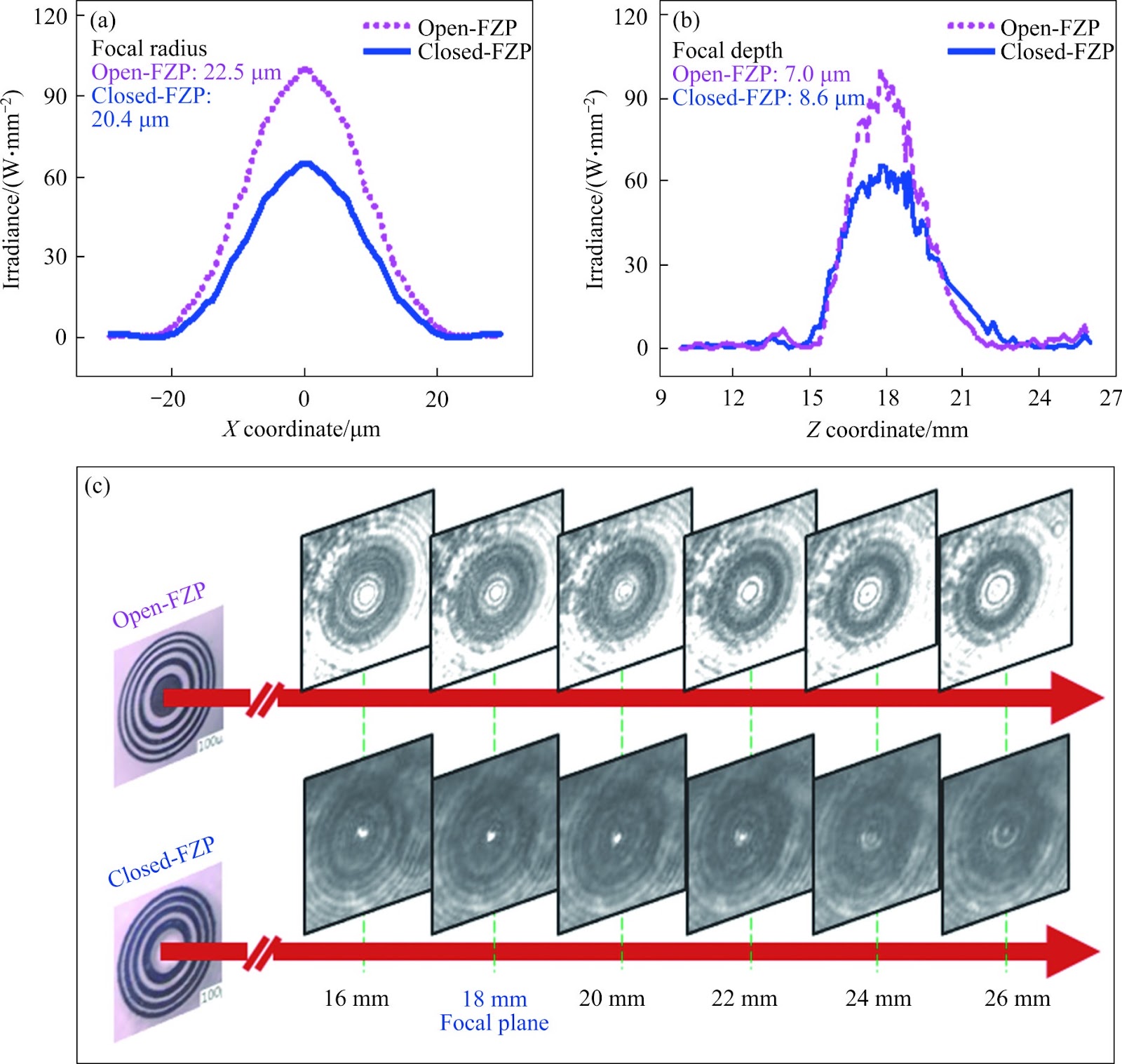
- •• A femtosecond laser Bessel beam modulated by an SLM enables fabrication of micro-Fresnel zone plates with dramatically reduced processing time. • Processing time for a 60 μm FZP on GaAs is cut from 30 min to 1.5 min, a 20-fold improvement in efficiency. • The adverse central ablation hole caused by Bessel modulation is eliminated by superimposing blazed grating holograms. • SLM-machined FZPs exhibit superior morphology and higher diffraction efficiency, supporting applications in computed tomography and solar photovoltaic cells.
Abstract
Femtosecond laser processing is an important machining method for micro-optical components such as Fresnel zone plate (FZP). However, the low processing efficiency of the femtosecond laser restricts its application. Here, a femtosecond laser Bessel beam is proposed to process micro-FZP, which is modulated from a Gaussian beam to a Bessel annular beam. The processing time for FZP with an outer diameter of 60 μm is reduced from 30 min to 1.5 min on an important semiconductor material gallium arsenide (GaAs), which significantly improves the processing efficiency. In the modulation process, a central ablation hole that has an adverse effect on the diffraction performance is produced, and the adverse effect is eliminated by superimposing the blazed grating hologram. Meanwhile, the FZP machined by spatial light modulator (SLM) has good morphology and higher diffraction efficiency, which provides a strong guarantee for the application of micro-FZP in computed tomography and solar photovoltaic cells.
1. Introduction
Fresnel zone plate (FZP) is a critical diffraction optical element, which has been widely used in aircraft carrier optical landing aid, space telescope flexible lens, computed tomography, solar photovoltaic and other aspects [1−3]. With the development of the integration of opto-electro-mechanical systems, the size of FZPs have reached the level of micron and nanometer [4−6].
Femtosecond laser machining has become a vital machining method for micro FZPs due to its high transient energy density, ultra-short pulse width, wide controllable pulse repetition rate and non-contact processing. Femtosecond laser processing adopts point-by-point scanning mode without a mask and can realize the processing of arbitrary three-dimensional complex structures. The processing precision is high, and the component topography is compatible with most structures [7, 8]. However, compared to other methods, such as nanoimprint copying and lithography, point-by-point scanning processing has low efficiency, which limits the industrial application of femtosecond laser machining for FZP [9−11]. Therefore, improving the processing efficiency will broaden its application in the field of micro FZPs processing.
The methods of multi-point machining to improve the machining efficiency are put forward, among which micro-lens array is more widely used. MATSUO et al [12] applied micro-lens array for femtosecond laser microfabrication, and two-dimensional periodic patterns were recorded by ablation on a glass surface. KATO et al [13] utilized a micro-lens array to produce multiple spots, and more than 200 spots were simultaneously fabricated by optimizing the exposure condition for the photopolymerizable resin. In addition to the micro-lens array, the researchers are also investigating other methods. DONG et al [14] designed configuration and geometry of multiple beams by changing the set parameters of the lens and aperture masks. STANKEVICIUS et al [15] demonstrated femtosecond laser fabrication using direct laser writing, optical vortex beam and holographic lithography. The processing time for a single micro-tube was 1/400 for the holographic lithography technique and 1/500 for the optical vortex method compared to the direct laser writing. However, the number and distribution of focal points in these processing methods are fixed and cannot be adjusted.
Spatial light modulator (SLM) can flexibly shape the laser beam, which is a prospective method to improve the processing efficiency. SLM consists of several independent units arranged spatially into two-dimensional arrays. Each unit can receive optical or electrical signals independently and change its optical properties according to the signals, to modulate the light waves irradiated on it. For example, through the rotation of the polarization plane, the polarization state and amplitude are modulated, or the conversion of incoherent light to coherent light is achieved [16−20].
Loading authentic research manuscript (Pages 1–5)...
DUAN Lian, ZHOU Fang, KONG De-jian, ZHANG Fan, SUN Xiao-yan, DUAN Ji-an (2025). Femtosecond laser modulated into Bessel beam by spatial light modulator for Fresnel zone plate processing. Journal of Central South University. https://doi.org/10.1007/s11771-025-5889-3
Research & Educational Purpose Only:The translations, structured abstracts, analytical annotations, and data reports provided by SinoTechIntel are intended exclusively for academic research, internal corporate R&D, and educational benchmarking. They do not constitute formal engineering, chemical safety, legal, or professional advice.
Copyright & Intellectual Property Notice: Original copyright of the underlying source articles and experimental data remains with the respective authors, institutions, and original publishing journals. SinoTechIntel claims intellectual property only over its proprietary translations, analytical syntheses, and AEO structured enhancements in accordance with international fair use and academic citation principles.
Frequently Asked Questions
What is the main contribution of this paper?
The paper proposes a femtosecond laser Bessel beam modulated by a spatial light modulator (SLM) for fabricating micro-Fresnel zone plates. This approach greatly reduces processing time while maintaining good morphology and higher diffraction efficiency.
How much faster is the femtosecond laser processing using a Bessel beam?
For a Fresnel zone plate with an outer diameter of 60 μm on gallium arsenide (GaAs), the processing time is reduced from 30 minutes to 1.5 minutes, a 20-fold improvement in efficiency.
How is the central ablation hole eliminated in SLM-based Bessel beam processing?
The central ablation hole, which adversely affects diffraction performance, is eliminated by superimposing blazed grating holograms during the spatial light modulation process.
What are the potential applications of the fabricated micro-FZPs?
The micro-Fresnel zone plates fabricated by this method are promising for applications in computed tomography and solar photovoltaic cells.
Why is spatial light modulator (SLM) advantageous for laser beam shaping?
An SLM can flexibly modulate the laser beam by independently controlling each pixel unit's optical properties, allowing adjustable multi-point or Bessel beam generation, unlike fixed focal-point methods based on microlens arrays.
Related Technical Papers & Translations
Design and optimization of a high-efficiency distillation process for cellulosic fuel ethanol integrated with thermal coupling and molecular sieve adsorption
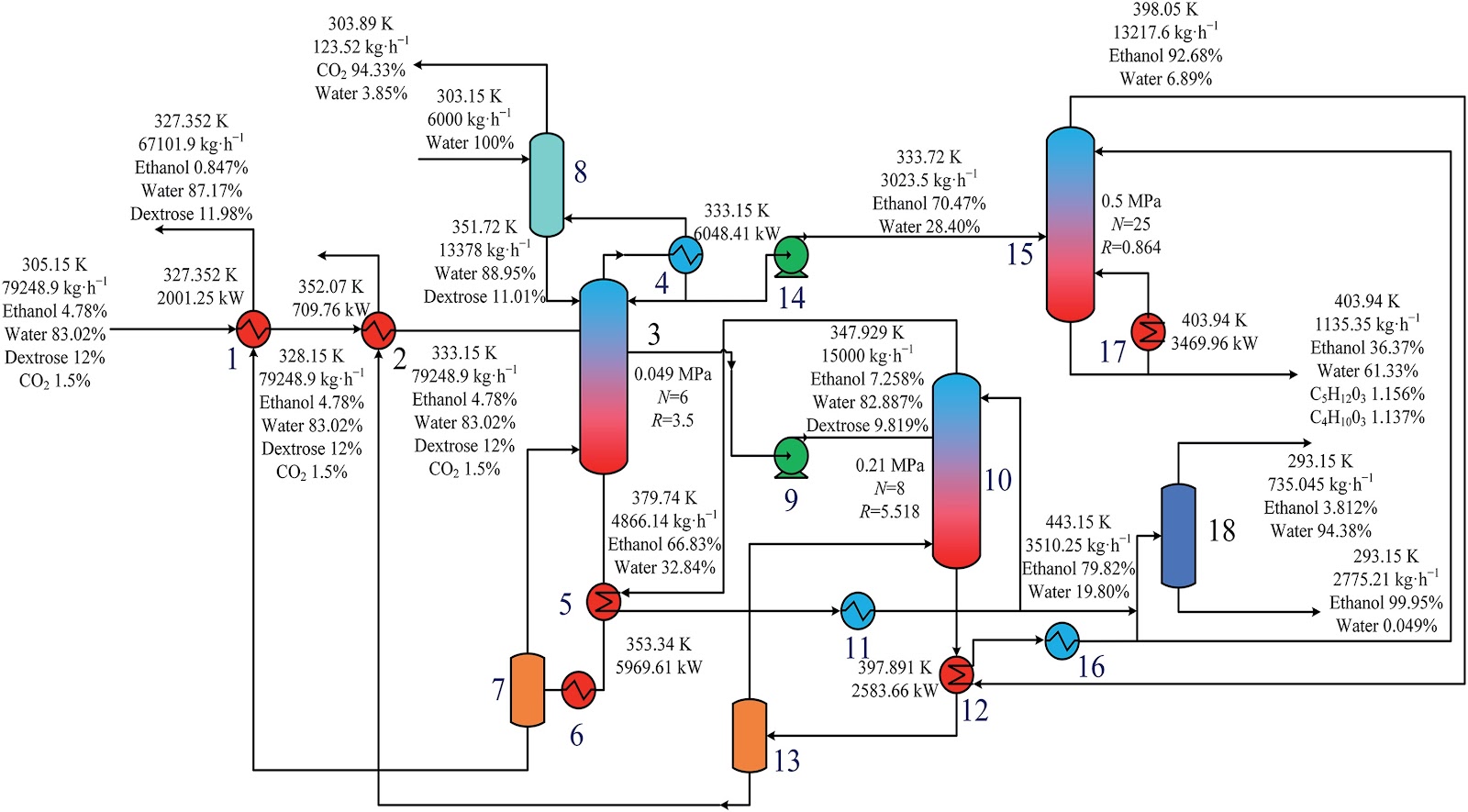
To address the challenges of high energy consumption and prominent costs in the traditional three-columns distillation process for cellulosic fuel ethanol, a distillation—molecular sieve coupling separation process is proposed. This process integrates a three-column (crude distillation column, first distillation column, second distillation column) system with a 3A molecular sieve adsorption deep dehydration unit. A thermal coupling network is constructed via differential pressure design (steam from medium/high-pressure columns as mutual heat sources, reboiler liquid waste heat for feed preheating), and molecular sieve adsorption conditions are optimized. The study first performs a thermodynamic consistency test on the ethanol—water system, determines optimal non-random two-liquid (NRTL) model binary interaction parameters via experimental data regression for Aspen Plus simulation. Aiming at minimum total annual cost (TAC), Aspen Plus is used to optimize process parameters (theoretical tray number, feed location, reflux ratio, side-draw position, etc.). Economic analysis shows this process reduces CO2 emission costs by 27.56%, TAC by 15.58% (to 5.123 × 10⁶ USD·a-1), and increases ethanol purity to >99.6%, providing an effective solution for green, efficient separation.
A cohesion loss model for determining residual strength of deep bedded sandstone
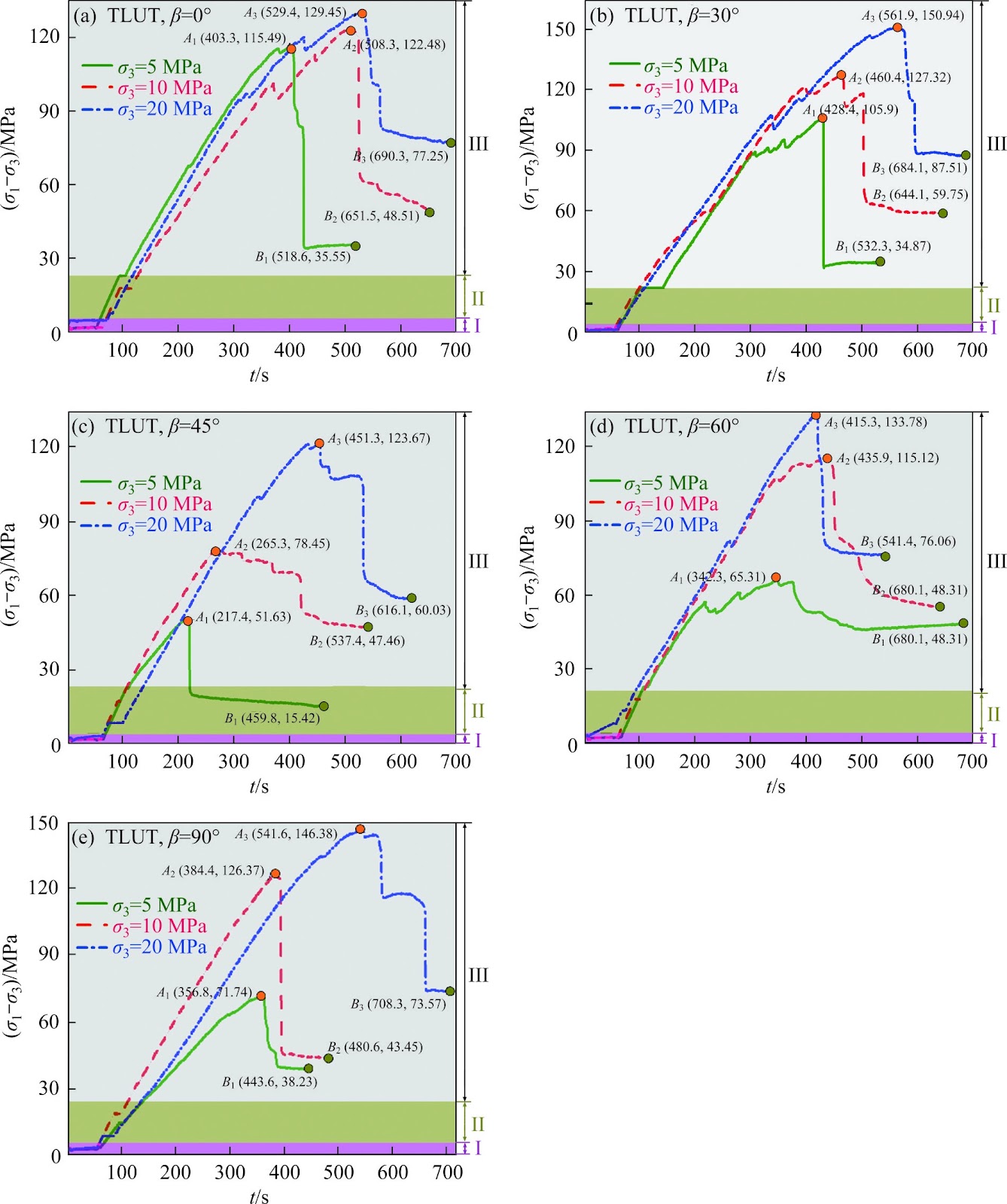
Rock residual strength, as an important input parameter, plays an indispensable role in proposing the reasonable and scientific scheme about stope design, underground tunnel excavation and stability evaluation of deep chambers. Therefore, previous residual strength models of rocks established were reviewed. And corresponding related problems were stated. Subsequently, starting from the effects of bedding and whole life-cycle evolution process, series of triaxial mechanical tests of deep bedded s
Federated model with contrastive learning and adaptive control variates for human activity recognition
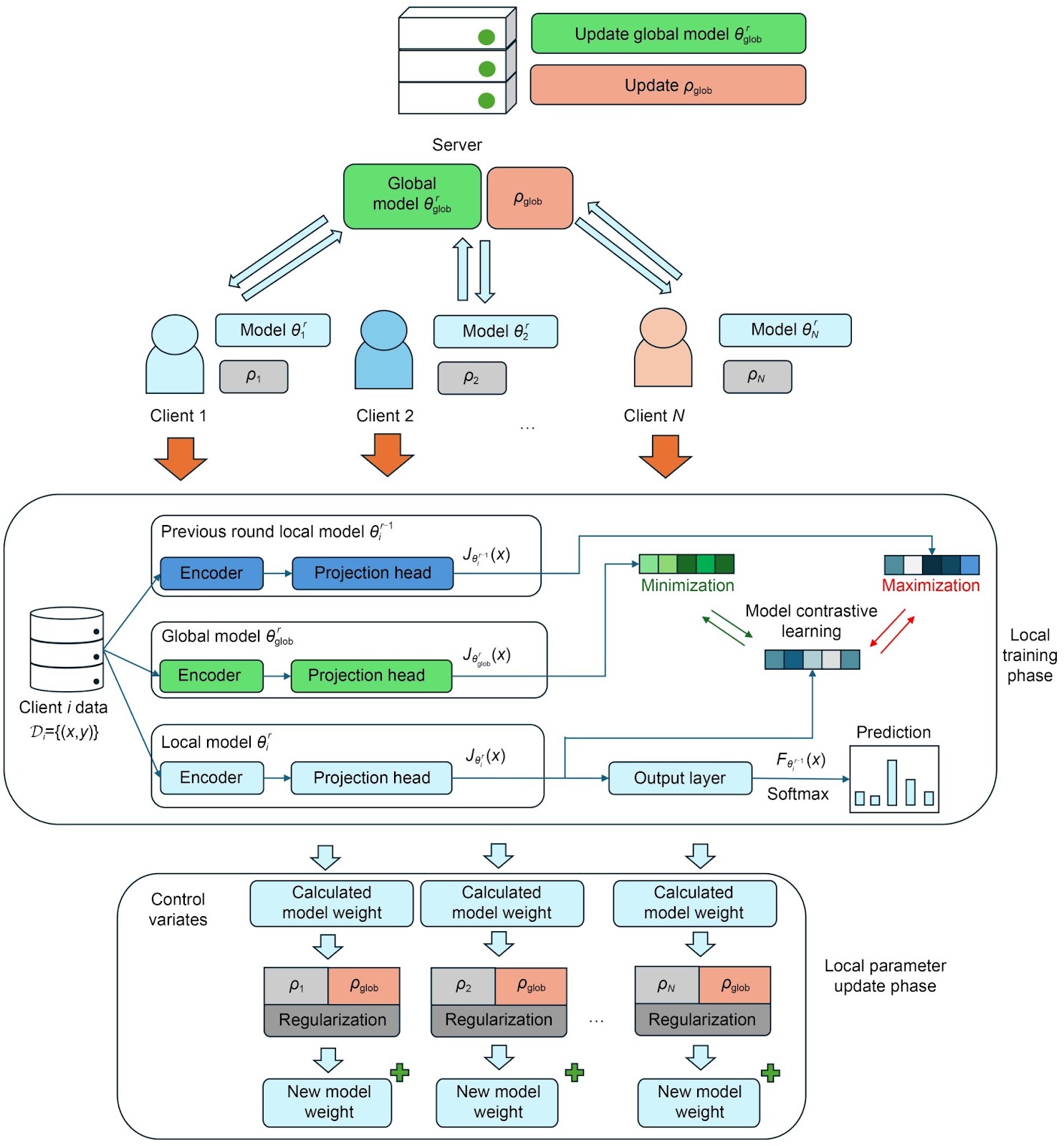
Recent attention to privacy issues demands a communication-safe method for training human activity recognition (HAR) models on client activity data. Federated learning (FL) has become a compelling technique to facilitate model training between the server and clients while preserving data privacy. However, classical FL methods often assume independent and identically distributed (IID) data among clients. This assumption does not hold true in practical scenarios. Human activity in real-world scena