Key Takeaways & Executive Findings
- •• Water absorption in dolomite progresses through accelerated, decelerated, and stabilized stages, with pore count increasing and pore diameter initially decreasing then fluctuating. • Microstructural evolution during water absorption shows mesopores first increase then decrease, micropores follow the opposite trend, and macropores remain near 0%. • Dolomite strength softening under water influence occurs in three stages: a relatively stable stage, accelerated mesopore-dominated softening, and decelerated micropore-dominated softening. • A uniaxial damage constitutive model based on Weibull distribution and Mohr-Coulomb criterion accurately captures water-affected dolomite behavior and is validated experimentally.
Abstract
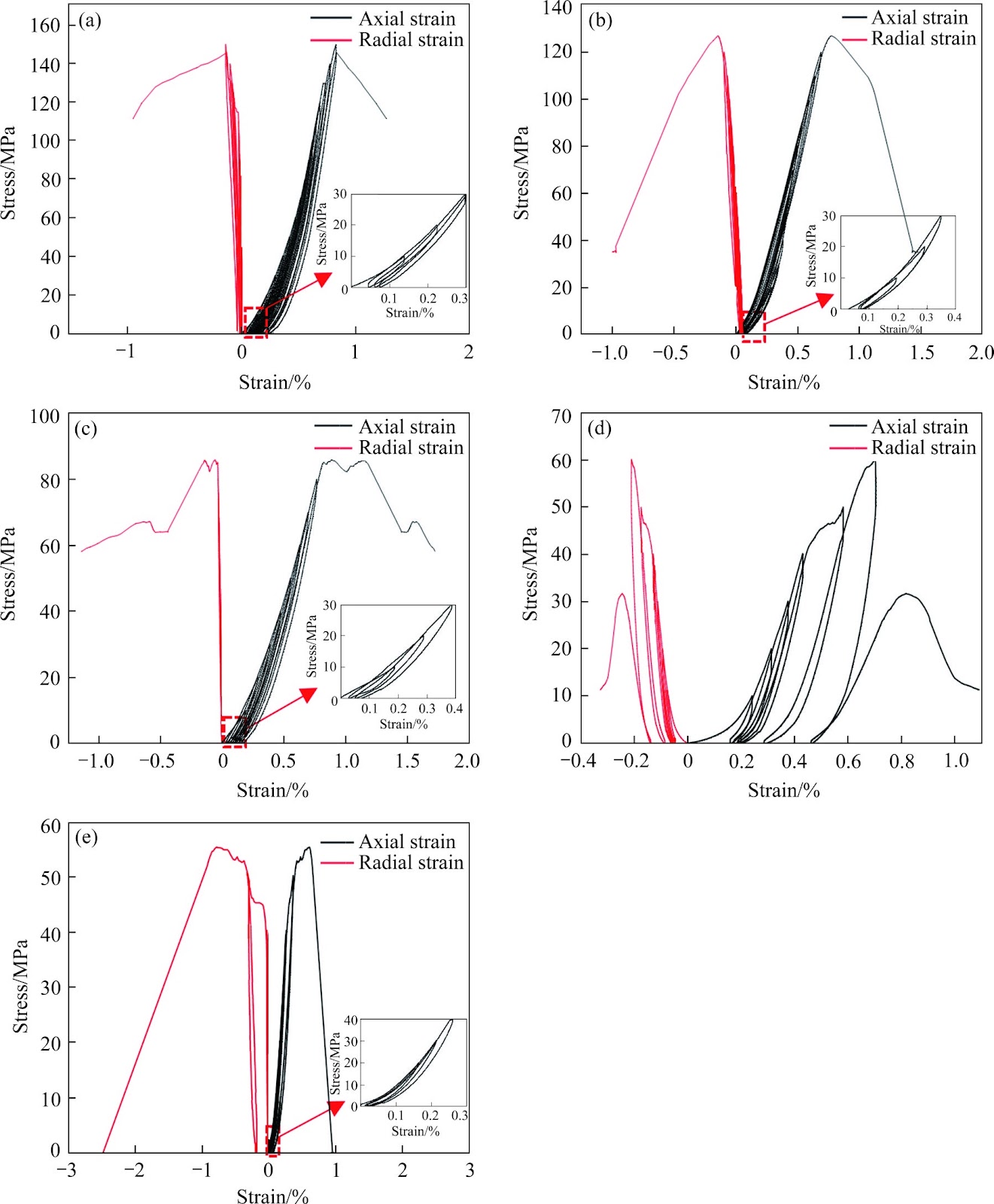
To investigate the effects of water and cyclic loading on dolomite’s mechanical properties during deep mining, mechanical experiments on non-pressure water absorption and cyclic loading were conducted. The findings reveal that the elastic modulus and Poisson ratio of dolomite fluctuate with increasing water content. The mass of water absorption is positively correlated with time and the water absorption stage can be divided into three stages: accelerated, decelerated, and stabilized stages. During this process, the number of pores in dolomite increases, while the pore diameter initially decreases and then fluctuates. Microscopic analysis shows that the proportion of mesopores first increases and then decreases, while micropores exhibit the opposite trend, and the proportion of macropores fluctuates around 0%. A model diagram of structural evolution during water absorption has been developed. Additionally, the softening process of dolomite’s water absorption strength is categorized into three stages: a relatively stable stage, an accelerated softening stage dominated by mesopore water absorption, and a decelerated softening stage characterized by micropore water absorption. A uniaxial damage constitutive model for dolomite under water influence was established based on the Weibull distribution and Mohr-Coulomb strength criterion, and experimental validation indicates its strong applicability.
1. Introduction
As shallow earth resources are depleted, tunnel excavation and resource extraction in China are advancing into deeper regions [1], where deep mineral layers are often rich in water. During excavation, water from rock fractures accumulates at the tunnel face, softening the surrounding rock and significantly affecting its deformation and stability. At the same time, the surrounding rock in areas with developed groundwater often experiences significant deformation, collapses, and lining cracks, which severely affects tunnel construction. While many studies have focused on the mechanical properties and failure mechanisms of rocks under complex geological conditions, there has been less focus on rock stability under groundwater influence, making it difficult to solve real-world engineering problems.
Research on the microstructure, mechanical properties, and damage constitutive models of rocks under water-rock coupling is essential for preventing large-scale deformation and failure, ensuring the safety and success of tunnel construction.
Numerous researchers have explored the micro-mechanisms of rock under water-rock coupling. MEI et al [2] used low-field nuclear magnetic resonance (NMR) to assess the porosity of cement-mortar rock-like specimens, quantifying the distribution, evolution, and penetration of internal crack structures. YU et al [3] analyzed carbonaceous mudstone using electron microscopy, identifying tensile and shear cracks as the primary types of both macroscopic and mesoscopic fractures. TAO et al [4] examined fracture aperture evolution in fractured rock under different conditions by using X-ray micro-computed tomography, revealing complex relationships among temperature, triaxial stress, and flow properties in a coupled thermo-hydro-mechanical (THM) environment. LIU et al [5] developed a coupled stress-seepage damage model to describe the micro- and macro-hydraulic behavior of mudstone. SONG et al [6] used X-ray diffraction, scanning electron microscopy, and micro-CT to study the compositional and structural changes before and after thermo-hydro-mechanical-chemical (THMC) treatment, showing that the degradation of mechanical properties in softened zones is largely due to crack propagation caused by carbonate dissolution, pyrite oxidation, and clay swelling. HAN et al [7] observed that mineral dissolution and expansion increased pore connectivity in coal samples. SUN et al [8] developed a model for sandstone microstructure changes during water absorption, while BIAN et al [9] linked decreased strength and microstructural degradation.
Loading authentic research manuscript (Pages 1–5)...
SUN Xiao-ming, ZHANG Jing, SHI Fu-kun, HE Lin-sen, ZHANG Yong, MIAO Cheng-yu, DING Jia-xu, MA Li-sha, ZHAO Hao-ze (2025). Failure microscopic mechanism and damage constitutive model of dolomite under water-rock coupling interaction. Journal of Central South University. https://doi.org/10.1007/s11771-025-5939-x
Research & Educational Purpose Only:The translations, structured abstracts, analytical annotations, and data reports provided by SinoTechIntel are intended exclusively for academic research, internal corporate R&D, and educational benchmarking. They do not constitute formal engineering, chemical safety, legal, or professional advice.
Copyright & Intellectual Property Notice: Original copyright of the underlying source articles and experimental data remains with the respective authors, institutions, and original publishing journals. SinoTechIntel claims intellectual property only over its proprietary translations, analytical syntheses, and AEO structured enhancements in accordance with international fair use and academic citation principles.
Frequently Asked Questions
What is the focus of this study?
The study investigates the failure microscopic mechanism and damage constitutive model of dolomite under water-rock coupling interaction, combining non-pressure water absorption and cyclic loading experiments with microscopic analysis and theoretical modeling.
What are the three stages of water absorption in dolomite?
The water absorption process is divided into accelerated, decelerated, and stabilized stages, with the mass of absorbed water positively correlated with time.
How does water content affect dolomite's mechanical properties?
The elastic modulus and Poisson ratio of dolomite fluctuate with increasing water content, while the softening of strength occurs in three stages: a relatively stable stage, an accelerated softening stage dominated by mesopore water absorption, and a decelerated softening stage characterized by micropore water absorption.
What constitutive model was established for water-affected dolomite?
A uniaxial damage constitutive model based on the Weibull distribution and Mohr-Coulomb strength criterion was developed, and experimental validation indicates its strong applicability.
Why is this research important for deep mining and tunnel engineering?
Deep mineral layers are often water-rich, and water accumulation can soften surrounding rock, leading to deformation, collapse, and lining cracks. Understanding water-rock coupling helps prevent large-scale failure and ensures safe tunnel construction.
Related Technical Papers & Translations
Design and optimization of a high-efficiency distillation process for cellulosic fuel ethanol integrated with thermal coupling and molecular sieve adsorption
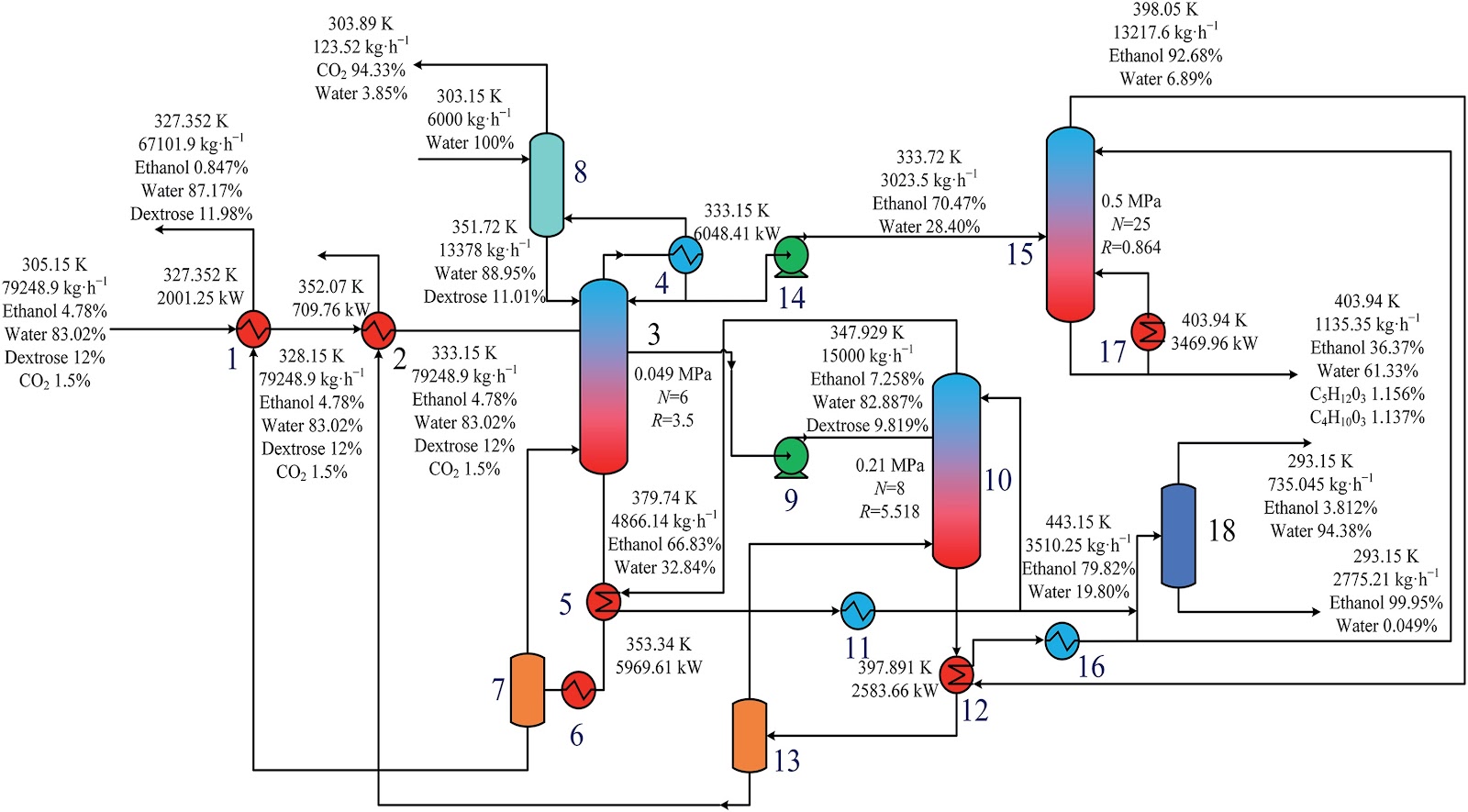
To address the challenges of high energy consumption and prominent costs in the traditional three-columns distillation process for cellulosic fuel ethanol, a distillation—molecular sieve coupling separation process is proposed. This process integrates a three-column (crude distillation column, first distillation column, second distillation column) system with a 3A molecular sieve adsorption deep dehydration unit. A thermal coupling network is constructed via differential pressure design (steam from medium/high-pressure columns as mutual heat sources, reboiler liquid waste heat for feed preheating), and molecular sieve adsorption conditions are optimized. The study first performs a thermodynamic consistency test on the ethanol—water system, determines optimal non-random two-liquid (NRTL) model binary interaction parameters via experimental data regression for Aspen Plus simulation. Aiming at minimum total annual cost (TAC), Aspen Plus is used to optimize process parameters (theoretical tray number, feed location, reflux ratio, side-draw position, etc.). Economic analysis shows this process reduces CO2 emission costs by 27.56%, TAC by 15.58% (to 5.123 × 10⁶ USD·a-1), and increases ethanol purity to >99.6%, providing an effective solution for green, efficient separation.
A cohesion loss model for determining residual strength of deep bedded sandstone
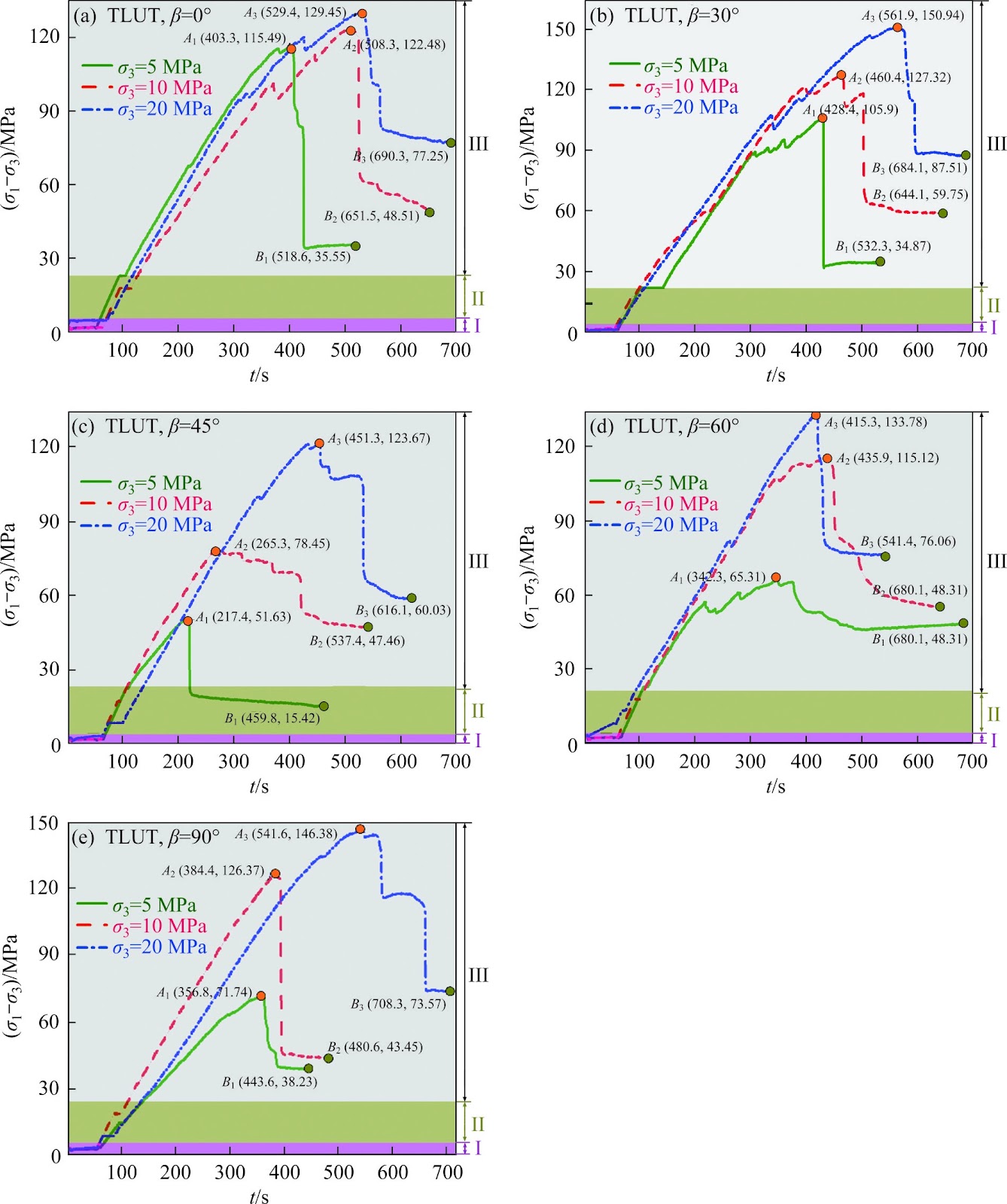
Rock residual strength, as an important input parameter, plays an indispensable role in proposing the reasonable and scientific scheme about stope design, underground tunnel excavation and stability evaluation of deep chambers. Therefore, previous residual strength models of rocks established were reviewed. And corresponding related problems were stated. Subsequently, starting from the effects of bedding and whole life-cycle evolution process, series of triaxial mechanical tests of deep bedded s
Federated model with contrastive learning and adaptive control variates for human activity recognition
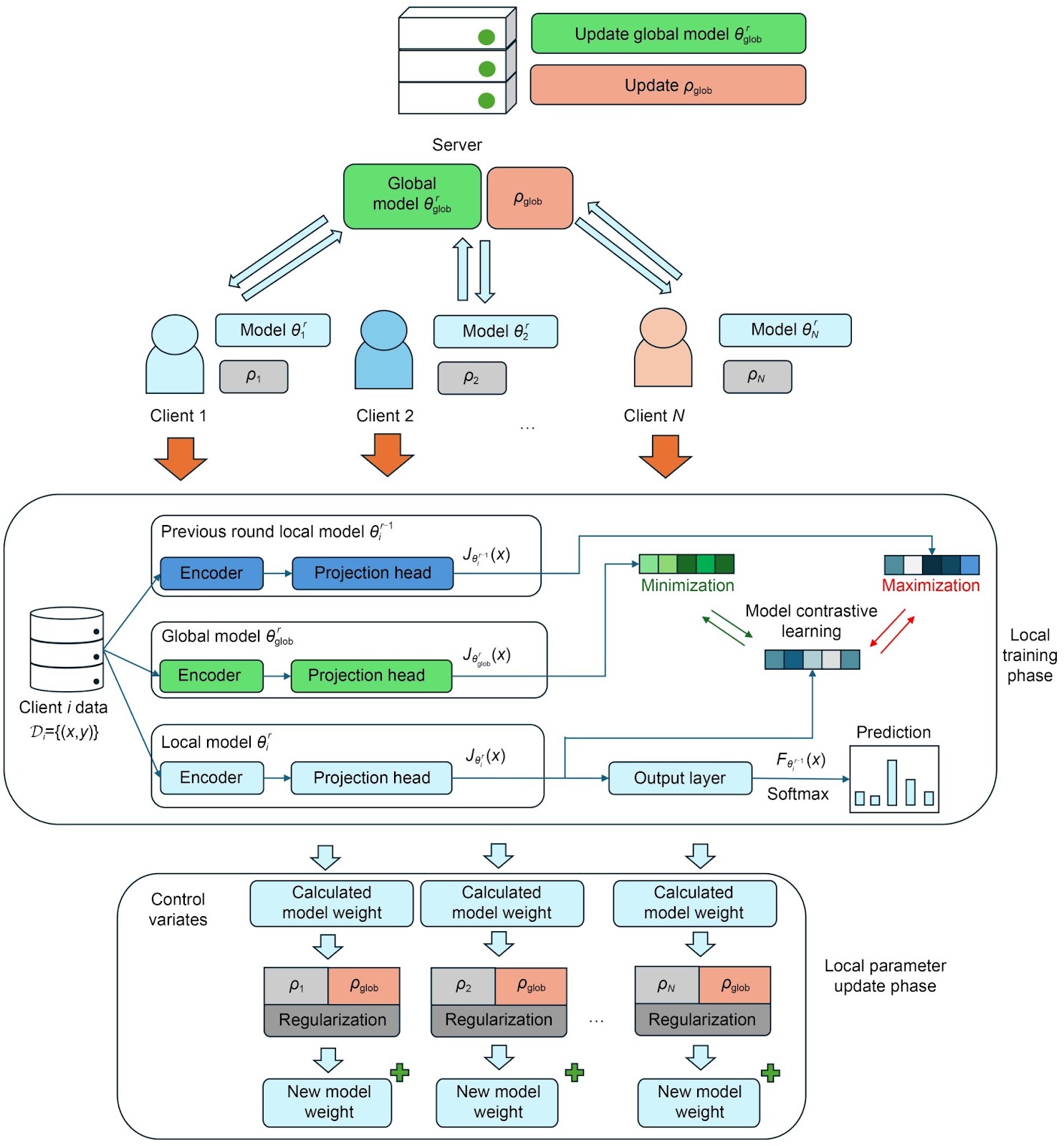
Recent attention to privacy issues demands a communication-safe method for training human activity recognition (HAR) models on client activity data. Federated learning (FL) has become a compelling technique to facilitate model training between the server and clients while preserving data privacy. However, classical FL methods often assume independent and identically distributed (IID) data among clients. This assumption does not hold true in practical scenarios. Human activity in real-world scena