Key Takeaways & Executive Findings
- •• The study addresses the face stability of longitudinally inclined shield tunnels, a critical issue not well covered by previous research that mainly focused on horizontal tunnels. • A novel failure mechanism is constructed using the spatial discretization technique and modified by the tensile strength cut-off criterion, enabling more accurate stability analysis. • Pore water pressure is integrated as an external force in the virtual work equation, allowing computation of the critical chamber pressure for shield machines. • The proposed approach was validated against FLAC3D numerical simulations, confirming its effectiveness and practical relevance for engineering design.
Abstract
Because of actual requirement, shield machine always excavates with an inclined angle in longitudinal direction. Since many previous studies mainly focus on the face stability of the horizontal shield tunnel, the effects of tensile strength cut-off and pore water pressure on the face stability of the longitudinally inclined shield tunnel are not well investigated. A failure mechanism of a longitudinally inclined shield tunnel face is constructed based on the spatial discretization technique and the tensile strength cut-off criterion is introduced to modify the constructed failure mechanism. The pore water pressure is introduced as an external force into the equation of virtual work and the objective function of the chamber pressure of the shield machine is obtained. Moreover, the critical chamber pressure of the longitudinally inclined shield tunnel is computed by optimal calculation. Parametric analysis indicates that both tensile strength cut-off and pore water pressure have a significant impact on the chamber pressure and the range of the collapse block. Finally, the theoretical results are compared with the numerical results calculated by FLAC3D software which proves that the proposed approach is effective.
1. Introduction
With the vigorous development of urban underground infrastructure construction in China, shield tunnels have become an important way to alleviate urban traffic pressure and improve comprehensive urban transportation hubs. To reduce the energy consumption of subway vehicle in operation stage, subway stations are usually located at the top of the running tunnel. Considering this engineering requirement, the shield machines have to excavate with an inclined angle in longitudinal direction to construct running tunnels with longitudinal slope. Therefore, the face stability of a shield tunnel excavated with an inclined angle in longitudinal direction has drawn the attention of many scholars.
Because theoretical methods have the advantages of rigorous logic and high computational efficiency, some scholars used various theoretical methods to study the face stability of shield tunnels. Among these methods, limit equilibrium method and limit analysis method are effective methods to estimate the face stability of longitudinally inclined tunnels. Since the traditional silo-wedge model can accurately describe the failure pattern in front of tunnel face, some scholars [1, 2] used this model to investigate the face stability of a longitudinally inclined tunnel. To describe the failure characteristic of the tunnel face in a kinematically admissible velocity field, MOLLON et al [3] proposed a new failure mechanism to investigate the stability analysis of tunnel face in purely cohesive soil. Based on the failure mechanism of tunnel face proposed by MOLLON et al [3], HUANG et al [4] constructed an improved 3D failure mechanism and studied the effect of soil anisotropy on the face stability of inclined shield tunnels. Furthermore, ZHAO et al [5] constructed a 3D multiple-slider failure mechanism which composed of several rigid cones with circular cross sections based on the upper bound theorem of limit analysis. Using this failure mechanism, they investigated the influence of the inclined angle and tunnel length on the critical pressure and failure range. Later, CHENG et al [6] further studied the influence of inclined strata on the face stability of the longitudinally inclined tunnel. Furthermore, YE et al [7] constructed a rotation-translation failure mechanism to investigate the partial failure of the inclined tunnel face. However, these failure mechanisms of the tunnel face mentioned above are composed of rigid wedges, they cannot reflect the failure characteristic of the tunnel face under complex conditions. Thus, MOLLON et al [8] proposed a spatial discretization technique to generate the failure mechanisms of the tunnel face "points by points".
Because this failure mechanism is consistent with the failure characteristic of the tunnel face observed in the experimental tests, some scholars began to use this mechanism to study the stability of tunnel face [9, 10].
Loading authentic research manuscript (Pages 1–5)...
Huang Fu, Wang Yong-tao, Zhang Min, Yang Zi-han (2025). Face stability analysis of longitudinally inclined shield tunnel considering the effect of tensile strength cut-off and pore water pressure. Journal of Central South University. https://doi.org/10.1007/s11771-025-5883-9
Research & Educational Purpose Only:The translations, structured abstracts, analytical annotations, and data reports provided by SinoTechIntel are intended exclusively for academic research, internal corporate R&D, and educational benchmarking. They do not constitute formal engineering, chemical safety, legal, or professional advice.
Copyright & Intellectual Property Notice: Original copyright of the underlying source articles and experimental data remains with the respective authors, institutions, and original publishing journals. SinoTechIntel claims intellectual property only over its proprietary translations, analytical syntheses, and AEO structured enhancements in accordance with international fair use and academic citation principles.
Frequently Asked Questions
What is the primary objective of this research?
The research aims to analyze the face stability of longitudinally inclined shield tunnels by considering the effects of tensile strength cut-off and pore water pressure, using a spatial discretization technique within a limit analysis framework.
How does the proposed method differ from previous stability analyses?
Unlike previous studies that often used rigid wedge mechanisms and focused on horizontal tunnels, this method constructs a failure mechanism using spatial discretization and incorporates tensile strength cut-off and pore water pressure, providing a more realistic assessment for inclined tunnels.
What role does pore water pressure play in the analysis?
Pore water pressure is treated as an external force in the virtual work equation, significantly affecting the critical chamber pressure required to maintain face stability. The parametric analysis shows its impact on both the chamber pressure and the collapse block range.
How was the effectiveness of the method validated?
The theoretical results were compared with numerical results from FLAC3D software, demonstrating that the proposed approach is effective in predicting face stability.
What are the practical engineering implications of this study?
The findings provide a more accurate basis for determining the appropriate chamber pressure in shield tunneling through longitudinally inclined and water-rich strata, helping to prevent face collapse and ensure construction safety.
Related Technical Papers & Translations
Design and optimization of a high-efficiency distillation process for cellulosic fuel ethanol integrated with thermal coupling and molecular sieve adsorption
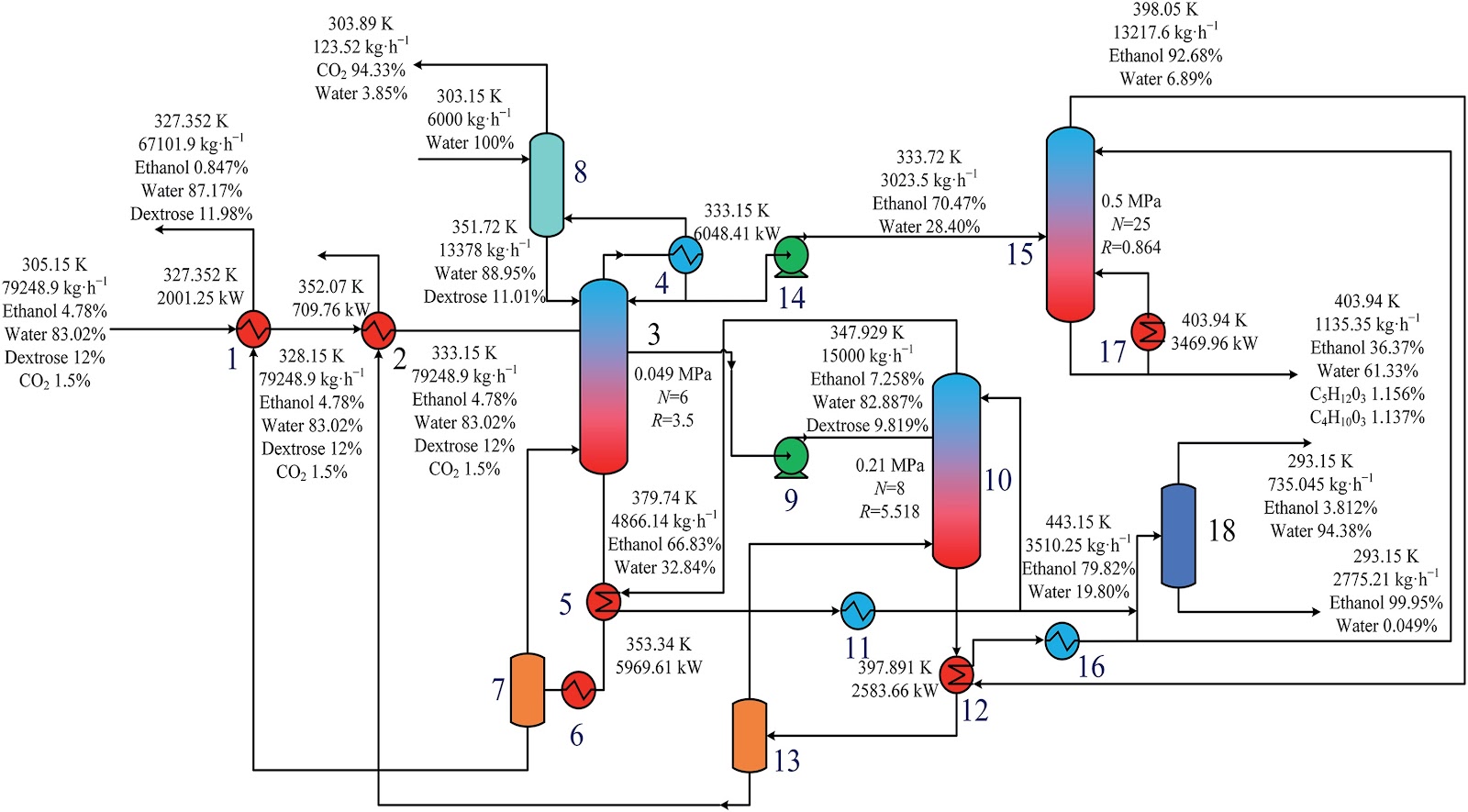
To address the challenges of high energy consumption and prominent costs in the traditional three-columns distillation process for cellulosic fuel ethanol, a distillation—molecular sieve coupling separation process is proposed. This process integrates a three-column (crude distillation column, first distillation column, second distillation column) system with a 3A molecular sieve adsorption deep dehydration unit. A thermal coupling network is constructed via differential pressure design (steam from medium/high-pressure columns as mutual heat sources, reboiler liquid waste heat for feed preheating), and molecular sieve adsorption conditions are optimized. The study first performs a thermodynamic consistency test on the ethanol—water system, determines optimal non-random two-liquid (NRTL) model binary interaction parameters via experimental data regression for Aspen Plus simulation. Aiming at minimum total annual cost (TAC), Aspen Plus is used to optimize process parameters (theoretical tray number, feed location, reflux ratio, side-draw position, etc.). Economic analysis shows this process reduces CO2 emission costs by 27.56%, TAC by 15.58% (to 5.123 × 10⁶ USD·a-1), and increases ethanol purity to >99.6%, providing an effective solution for green, efficient separation.
A cohesion loss model for determining residual strength of deep bedded sandstone
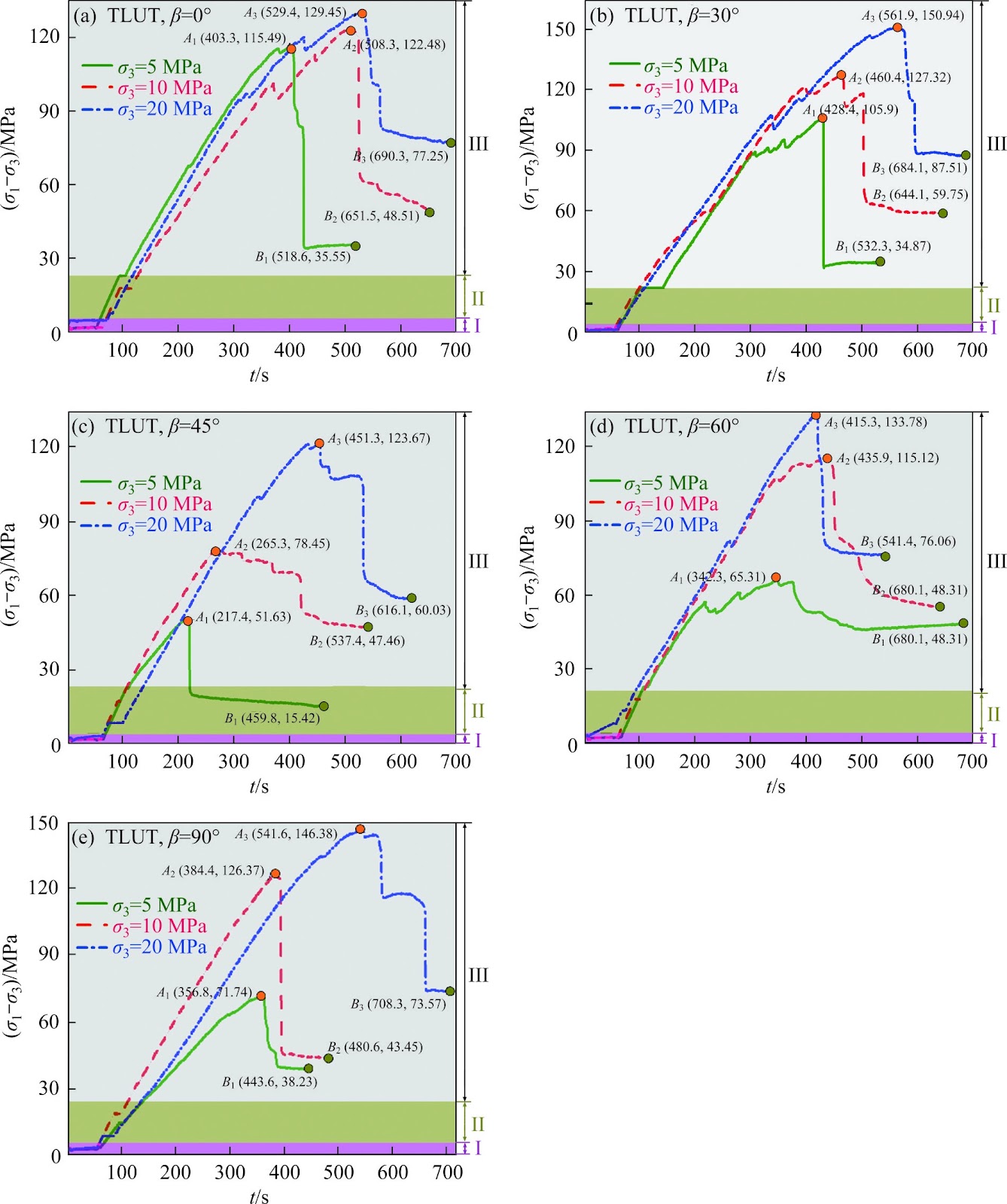
Rock residual strength, as an important input parameter, plays an indispensable role in proposing the reasonable and scientific scheme about stope design, underground tunnel excavation and stability evaluation of deep chambers. Therefore, previous residual strength models of rocks established were reviewed. And corresponding related problems were stated. Subsequently, starting from the effects of bedding and whole life-cycle evolution process, series of triaxial mechanical tests of deep bedded s
Federated model with contrastive learning and adaptive control variates for human activity recognition
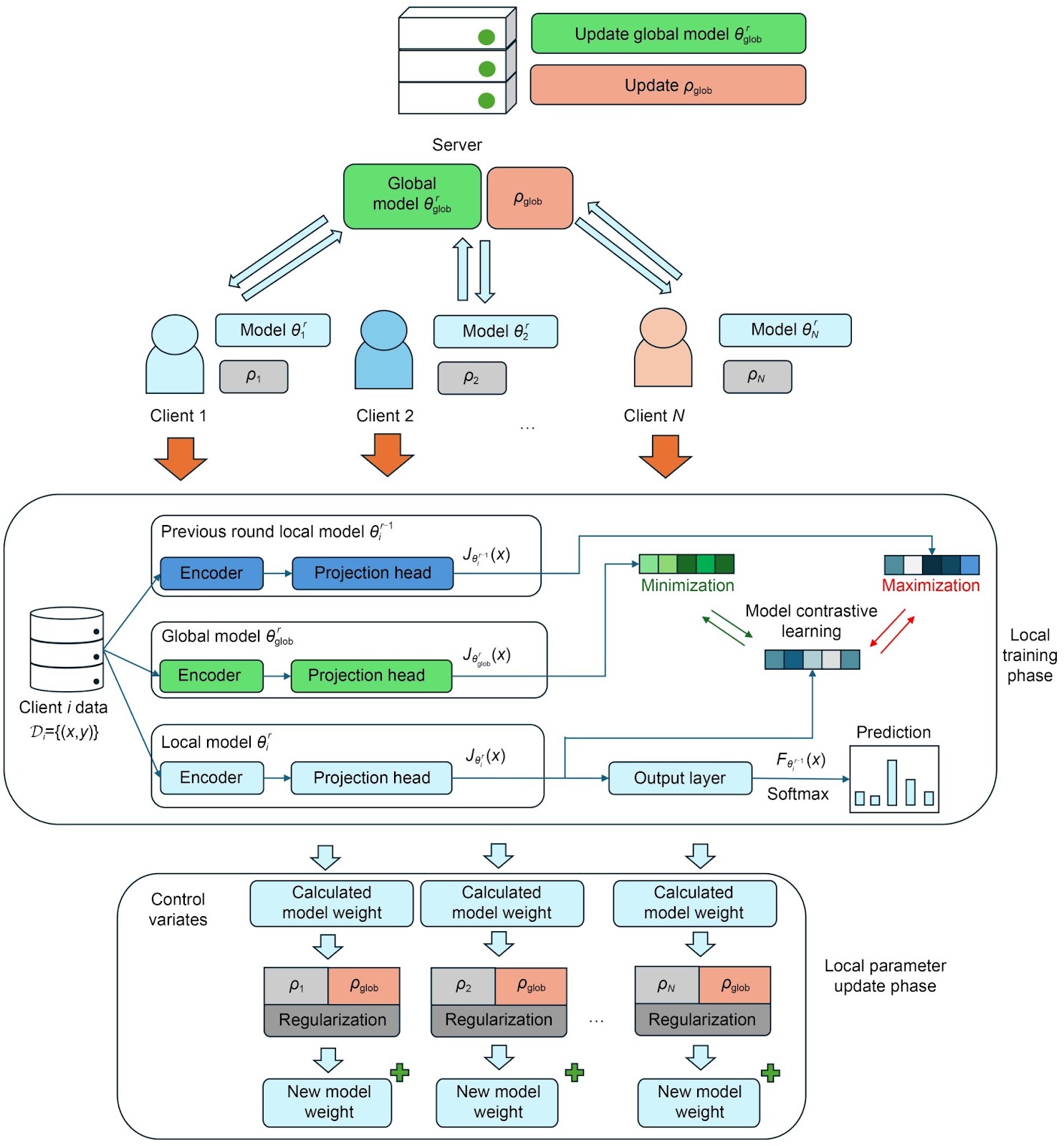
Recent attention to privacy issues demands a communication-safe method for training human activity recognition (HAR) models on client activity data. Federated learning (FL) has become a compelling technique to facilitate model training between the server and clients while preserving data privacy. However, classical FL methods often assume independent and identically distributed (IID) data among clients. This assumption does not hold true in practical scenarios. Human activity in real-world scena