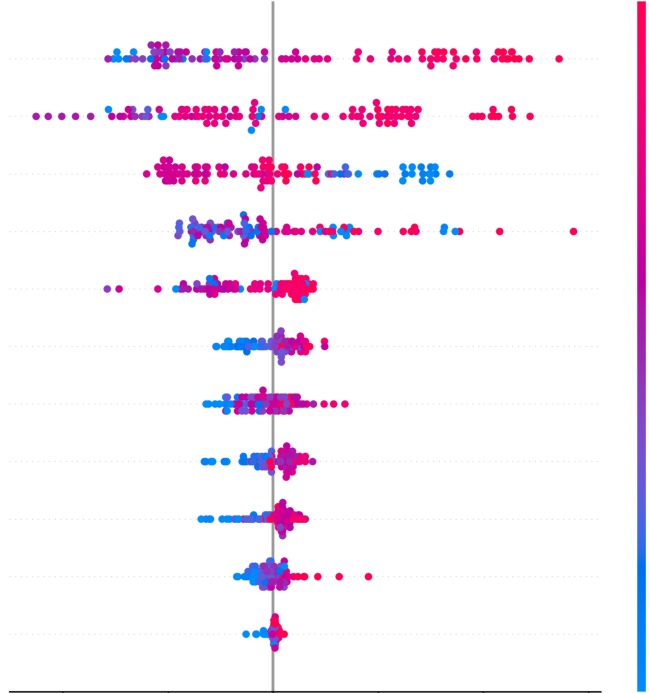
Key Takeaways & Executive Findings
- •• Proposes the MRF-BBAPM model integrating metallurgical mechanisms, random forest feature selection, Bayesian optimization, BiGRU, and attention mechanism for accurate compressive strength prediction. • Achieves high prediction accuracy with a mean absolute error of 80.58 N (2.77% of the mean) and root mean square error of 95.75 N (3.29% of the mean). • Incorporates SHAP explainability to quantify feature contributions, enhancing model interpretability and reliability for industrial adoption. • Features a self-learning mechanism that updates based on weekly prediction errors, ensuring sustained performance in real-world production environments.
Abstract
The compressive strength of oxidized pellets is a key indicator for evaluating pellet quality and stability. Accurate prediction of its variation trend is essential for improving production efficiency and optimizing process parameters. However, due to the high dimensionality and strong nonlinearity of compressive strength prediction, existing models still face limitations in terms of reliability, applicability, and generalization. This study proposes the metallurgical-random forest-based Bayesian optimized bidirectional gated recurrent unit (BiGRU) attention prediction model (MRF-BBAPM) model, which employs feature selection guided by metallurgical mechanisms and random forest to enhance model efficiency and relevance. The BiGRU network parameters are optimized using Bayesian optimization, and an attention mechanism is incorporated to focus on critical features, further improving model performance. The SHapley Additive exPlanations (SHAP) method is introduced to quantify the contribution of each feature to the prediction results, revealing the model’s decision-making process and enhancing its interpretability and reliability. The model also incorporates a self-learning mechanism that automatically updates and optimizes itself based on weekly prediction errors. Experimental results show that the proposed model achieves a mean absolute error of 80.58 N (2.77% of the mean) and a root mean square error of 95.75 N (3.29% of the mean) in predicting pellet compressive strength, demonstrating strong stability and reliability in real-world applications. This method provides effective data support for accurate prediction of pellet compressive strength and informed decision-making in production.
1. Introduction
As a key raw material in blast furnace ironmaking, the quality of oxidized pellets directly impacts the stability and production efficiency of the blast furnace. Compressive strength is an important indicator that evaluates pellet quality, reflecting the ability to resist external damage during transportation and smelting. It affects gas flow distribution in the blast furnace, fuel utilization efficiency, and overall smelting stability. Traditional evaluation methods rely on laboratory testing, which has long cycle times and fails to provide real-time feedback, making it difficult to adjust furnace conditions promptly. Therefore, accurately predicting the compressive strength of oxidized pellets is essential for optimizing production processes and improving resource utilization efficiency.
With the continuous development of information technology, especially the application of big data and machine learning, predicting oxidized pellet compressive strength is becoming increasingly feasible. By establishing data-driven prediction models, more precise and real-time quality assessments can be achieved. Liu et al. used a fuzzy system to classify spatiotemporal data and generate multi-layer fuzzy rules, constructing a particle swarm optimization-based deep fuzzy neural network to predict strength during pellet roasting and drying. Xu et al. conducted experimental studies on the impact of alkalinity and SiO2/MgO content, using these factors as inputs for a firefly algorithm-improved generalized regression neural network. Dwarapudi et al. developed an artificial neural network model to predict cold crushing strength in a straight grate sintering machine, achieving errors below 3%. Yan et al. used artificial neural networks to predict compressive strength of humic acid and bentonite pellets, establishing relationships between binder content, pellet diameter, weight, and strength. Yang et al. developed an Internet of Things (IoT) system for pellet raw material proportioning based on mature pellet compressive strength, enabling automatic raw material detection, quantitative processing of indicator data, automatic initiation of prediction models, and visualization of mixing results.
Loading authentic research manuscript (Pages 1–5)...
Zezheng Li, Jue Tang, Mansheng Chu, Quan Shi (2025). Explainable MRF-BBAPM with self-learning for predicting compressive strength of oxidized pellet. Journal of Mineral Metallurgy and Materials Science. https://doi.org/10.1007/s12613-025-3193-8
Research & Educational Purpose Only:The translations, structured abstracts, analytical annotations, and data reports provided by SinoTechIntel are intended exclusively for academic research, internal corporate R&D, and educational benchmarking. They do not constitute formal engineering, chemical safety, legal, or professional advice.
Copyright & Intellectual Property Notice: Original copyright of the underlying source articles and experimental data remains with the respective authors, institutions, and original publishing journals. SinoTechIntel claims intellectual property only over its proprietary translations, analytical syntheses, and AEO structured enhancements in accordance with international fair use and academic citation principles.
Frequently Asked Questions
What is the proposed model for predicting compressive strength of oxidized pellets?
The proposed model is MRF-BBAPM, which integrates metallurgical mechanisms, random forest feature selection, Bayesian optimization, bidirectional gated recurrent unit (BiGRU), and attention mechanism to accurately predict the compressive strength of oxidized pellets.
How does the model achieve explainability?
The model uses SHAP (SHapley Additive exPlanations) to quantify the contribution of each feature to the prediction results, revealing the decision-making process and enhancing interpretability and reliability.
What are the key performance metrics of the model?
The model achieves a mean absolute error (MAE) of 80.58 N (2.77% of the mean) and a root mean square error (RMSE) of 95.75 N (3.29% of the mean) in predicting pellet compressive strength.
What is the self-learning mechanism?
The model includes a self-learning mechanism that automatically updates and optimizes itself based on weekly prediction errors, ensuring sustained accuracy and adaptability in real-world production.
Why is accurate prediction of pellet compressive strength important?
Accurate prediction helps optimize blast furnace production processes, improve operational stability, enable real-time quality feedback, and enhance resource utilization efficiency in ironmaking.
Related Technical Papers & Translations
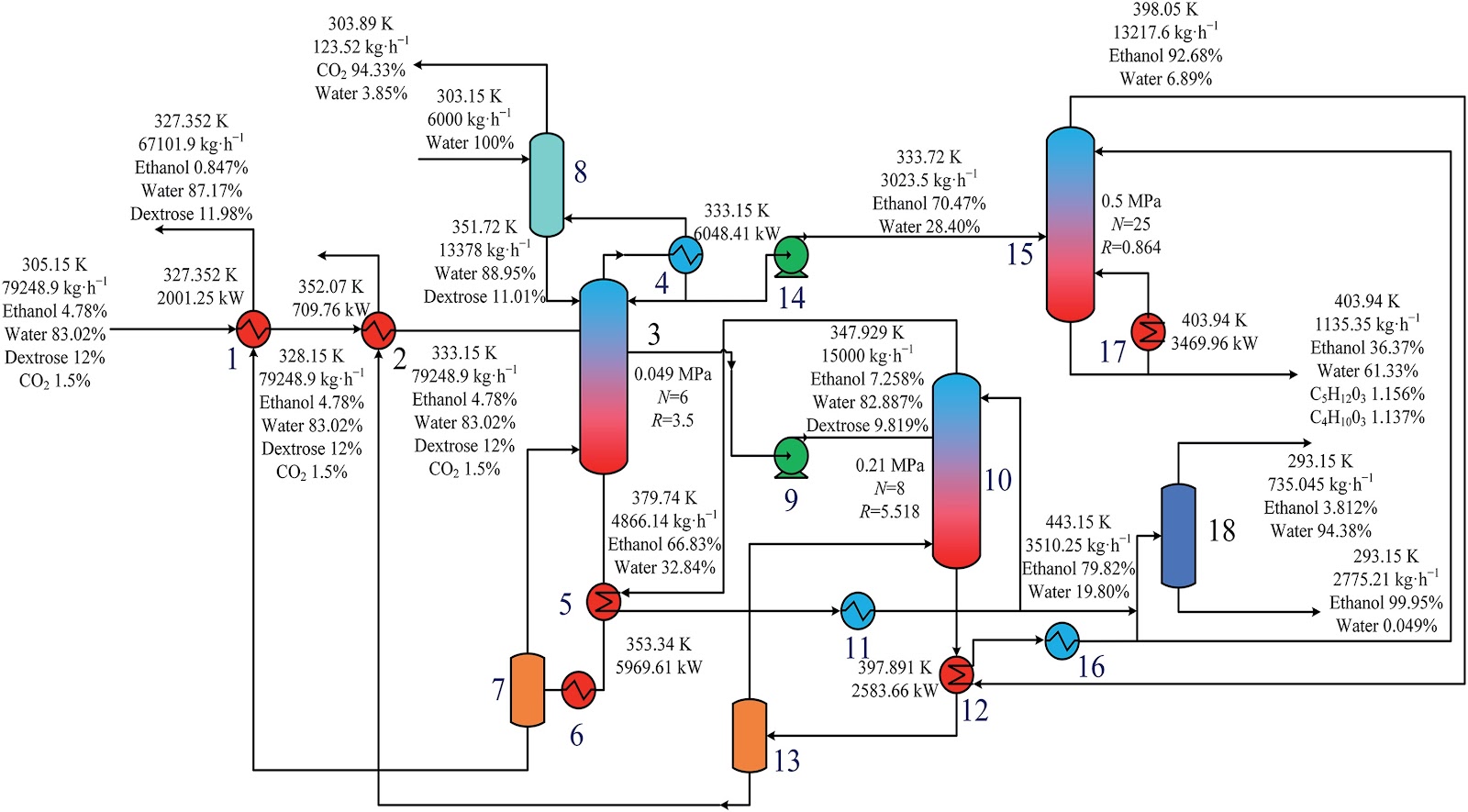
Design and optimization of a high-efficiency distillation process for cellulosic fuel ethanol integrated with thermal coupling and molecular sieve adsorption
To address the challenges of high energy consumption and prominent costs in the traditional three-columns distillation process for cellulosic fuel ethanol, a distillation—molecular sieve coupling separation process is proposed. This process integrates a three-column (crude distillation column, first distillation column, second distillation column) system with a 3A molecular sieve adsorption deep dehydration unit. A thermal coupling network is constructed via differential pressure design (steam from medium/high-pressure columns as mutual heat sources, reboiler liquid waste heat for feed preheating), and molecular sieve adsorption conditions are optimized. The study first performs a thermodynamic consistency test on the ethanol—water system, determines optimal non-random two-liquid (NRTL) model binary interaction parameters via experimental data regression for Aspen Plus simulation. Aiming at minimum total annual cost (TAC), Aspen Plus is used to optimize process parameters (theoretical tray number, feed location, reflux ratio, side-draw position, etc.). Economic analysis shows this process reduces CO2 emission costs by 27.56%, TAC by 15.58% (to 5.123 × 10⁶ USD·a-1), and increases ethanol purity to >99.6%, providing an effective solution for green, efficient separation.
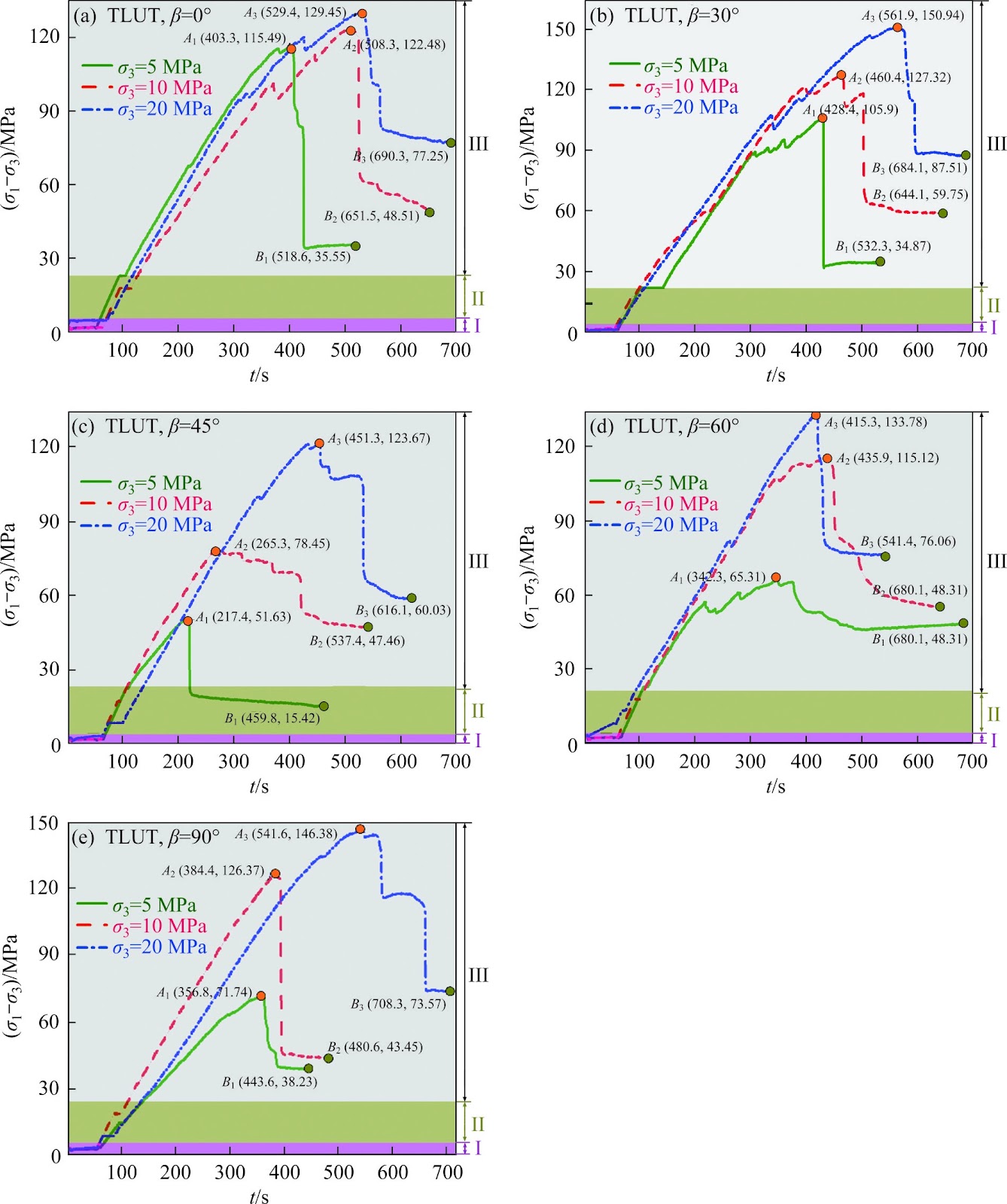
A cohesion loss model for determining residual strength of deep bedded sandstone
Rock residual strength, as an important input parameter, plays an indispensable role in proposing the reasonable and scientific scheme about stope design, underground tunnel excavation and stability evaluation of deep chambers. Therefore, previous residual strength models of rocks established were reviewed. And corresponding related problems were stated. Subsequently, starting from the effects of bedding and whole life-cycle evolution process, series of triaxial mechanical tests of deep bedded s
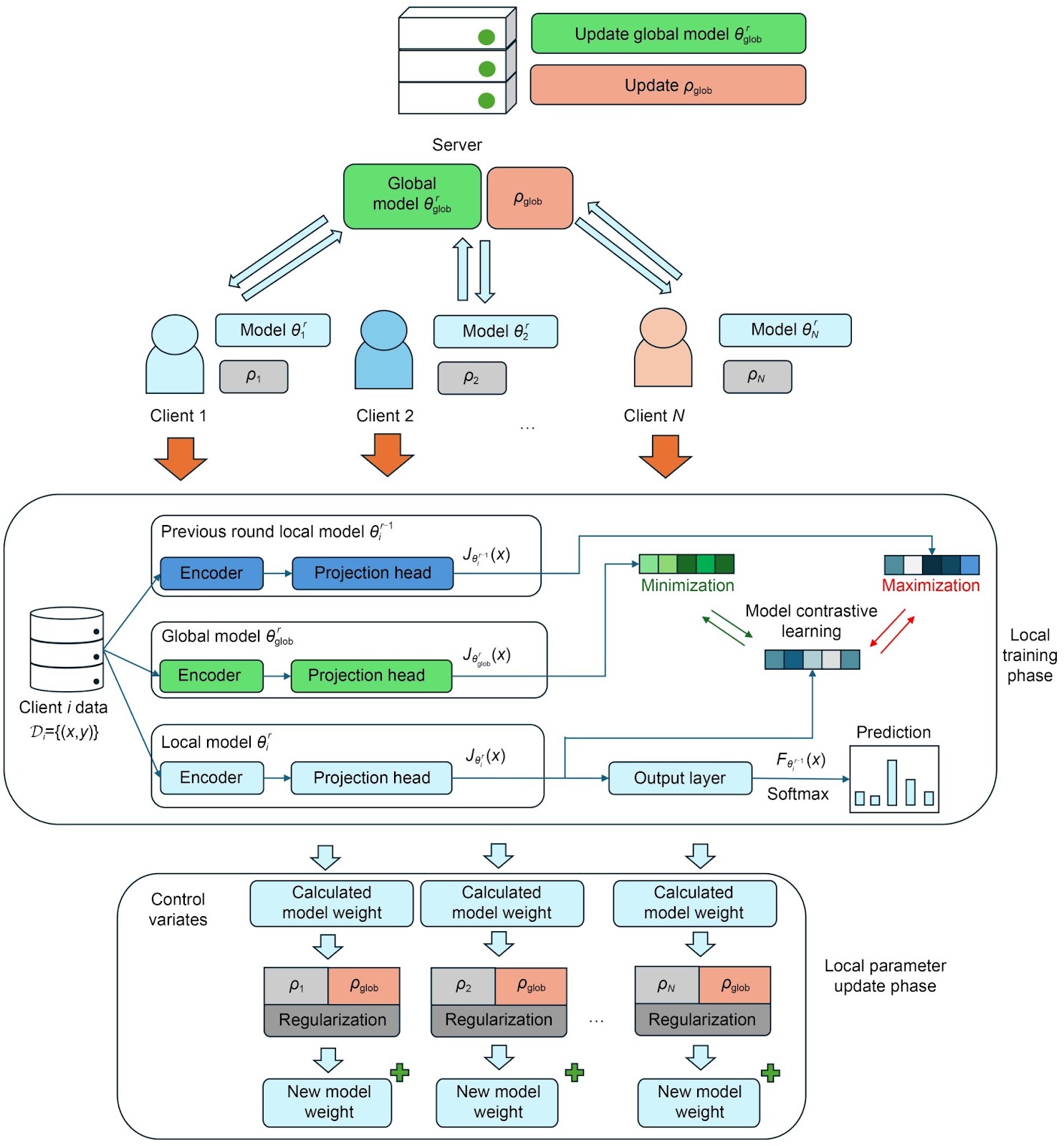
Federated model with contrastive learning and adaptive control variates for human activity recognition
Recent attention to privacy issues demands a communication-safe method for training human activity recognition (HAR) models on client activity data. Federated learning (FL) has become a compelling technique to facilitate model training between the server and clients while preserving data privacy. However, classical FL methods often assume independent and identically distributed (IID) data among clients. This assumption does not hold true in practical scenarios. Human activity in real-world scena