Key Takeaways & Executive Findings
- •• Efficient iron recovery from high-iron red mud achieved via multi-physical field coupling (microwave, gas-solid flow, temperature) using biomass as a reducing agent. • Optimal conditions yielded an iron concentrate with 78.4% yield, 59.23% iron grade, and 86.65% recovery rate. • XRD, XPS, TEM, and SEM-EDS confirmed complete conversion of hematite to magnetite during roasting, with biomass-derived reductant driving magnetization. • Formation of cracks and pores on particle surfaces enhances mineral phase transformation and subsequent magnetic separation efficiency.
Abstract
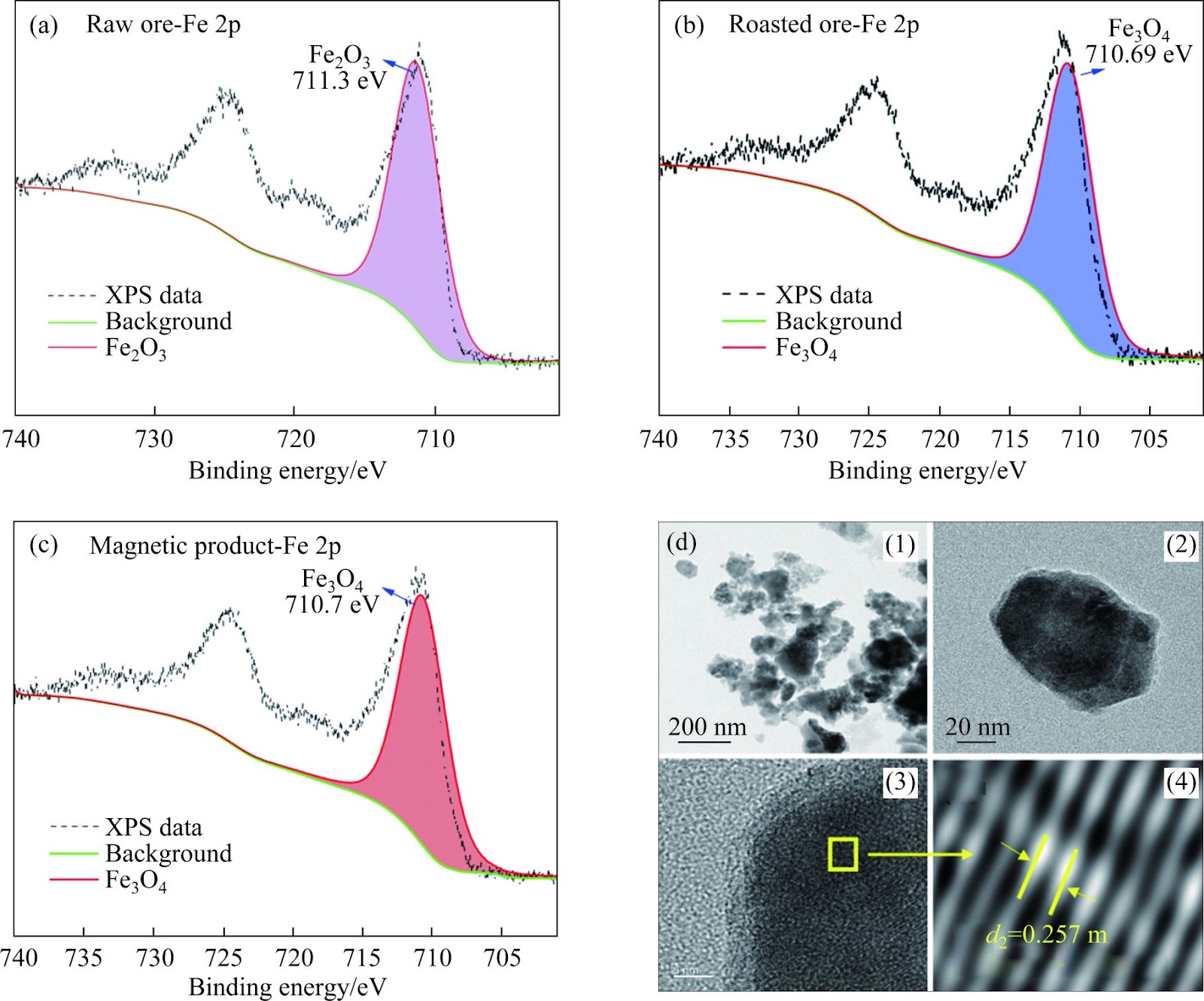
Red mud is a solid waste discharged in the process of alumina production, and how to realize the efficient recovery of its iron is an urgent problem to be solved. In this study, the iron extraction test and mechanism study of high-iron red mud were carried out under the coupling conditions of multiple physical field (microwave field, gas-solid flow field and temperature field) with biomass as the reducing agent. The test results showed that under the optimal conditions, an iron concentrate with a yield of 78.4%, an iron grade of 59.23%, and a recovery rate of 86.65% was obtained. The analyses of XRD, XPS, TEM, and SEM-EDS showed that during the roasting process, the hematite in the high-iron red mud was completely converted to magnetite, and the biomass produced the reductant that provided the magnetization reaction; A large number of cracks and pores appeared in the surface of the hematite reduction product particles, which helped to induce iron minerals to undergo effective mineral phase transformation. The above study provides ideas for the phase transformation and efficient recovery of iron minerals in red mud.
1. Introduction
Red mud is the main waste residue discharged in the process of alumina production, which is generally reddish-brown in colour, extremely fine in particle size, complex in mineral composition, and strongly alkaline and corrosive. Currently, the global stockpile of red mud has exceeded 4 billion tons, and is growing at a rate of up to 175.5 million tons per year [1−3]. The global production of alumina continues to run at a high level, the emission of red mud is increasing, and the environmental pollution, land resources occupation, ecosystem damage and other problems brought about by common stockpile disposal methods are becoming more and more prominent.
Red mud contains a large number of valuable metal elements, such as iron, aluminium, titanium, vanadium and rare earth metals. These useful components are not recycled, resulting in a serious waste of resources. Especially, high-iron red mud can be regarded as a kind of iron resource with complex composition and difficult selection due to its high iron grade. Usually, high-iron red mud is mainly used to recover iron. Comprehensively speaking, the methods of iron recovery from high-iron red mud can be mainly summarized as physical separation, pyrometallurgy, wet acid leaching and combined process [4−12]. In summary, although the physical method has a simple process and low cost, the obtained product has low iron grade and recovery rate, and high impurity content. The pyrometallurgical method can obtain high-quality iron concentrate, but it has high cost and energy consumption. The acid leaching method has the advantages of high dissolution rate and simultaneous leaching of multiple metals. However, due to the high alkalinity of red mud, acid leaching requires a large amount of acid to neutralize the alkali in the red mud, which makes this method suffer from the problems of high acid consumption and high acidity of leaching residue. The fluidization roasting technology utilizes a fluidized bed reactor to convert weakly magnetic refractory iron ores (such as hematite, siderite, and limonite) into strongly magnetic iron oxides through chemical reactions, followed by magnetic separation to obtain high-grade iron concentrates [13−17].
Loading authentic research manuscript (Pages 1–5)...
DONG Hai-pei, YANG Jin-lin, ZHOU Wen-tao, YU Xu-yang, MA Shao-jian, WANG Ding-zheng (2025). Experimental and mechanistic study on iron extraction from high-iron red mud under multiple physical field coupling conditions. Journal of Central South University. https://doi.org/10.1007/s11771-025-6015-2
Research & Educational Purpose Only:The translations, structured abstracts, analytical annotations, and data reports provided by SinoTechIntel are intended exclusively for academic research, internal corporate R&D, and educational benchmarking. They do not constitute formal engineering, chemical safety, legal, or professional advice.
Copyright & Intellectual Property Notice: Original copyright of the underlying source articles and experimental data remains with the respective authors, institutions, and original publishing journals. SinoTechIntel claims intellectual property only over its proprietary translations, analytical syntheses, and AEO structured enhancements in accordance with international fair use and academic citation principles.
Frequently Asked Questions
What is high-iron red mud?
High-iron red mud is a solid waste discharged during alumina production, characterized by high iron content and fine particle size. It is considered a secondary iron resource with complex composition and difficult processing.
How is iron extracted from red mud in this study?
The study employs multiple physical field coupling (microwave field, gas-solid flow field, and temperature field) with biomass as a reducing agent to convert hematite to magnetite via magnetization roasting, followed by magnetic separation to recover iron.
What were the optimal extraction results achieved?
Under optimal conditions, the process yielded an iron concentrate with a yield of 78.4%, an iron grade of 59.23%, and a recovery rate of 86.65%.
What is the role of biomass in the process?
Biomass acts as a reducing agent during roasting, producing reducing gases that facilitate the conversion of hematite (Fe2O3) to strongly magnetic magnetite (Fe3O4), enabling efficient magnetic separation.
Which characterization techniques were used to analyze the mechanism?
The study used X-ray diffraction (XRD), X-ray photoelectron spectroscopy (XPS), transmission electron microscopy (TEM), and scanning electron microscopy with energy-dispersive spectroscopy (SEM-EDS) to confirm the mineral phase transformation and surface morphology.
Related Technical Papers & Translations
Design and optimization of a high-efficiency distillation process for cellulosic fuel ethanol integrated with thermal coupling and molecular sieve adsorption
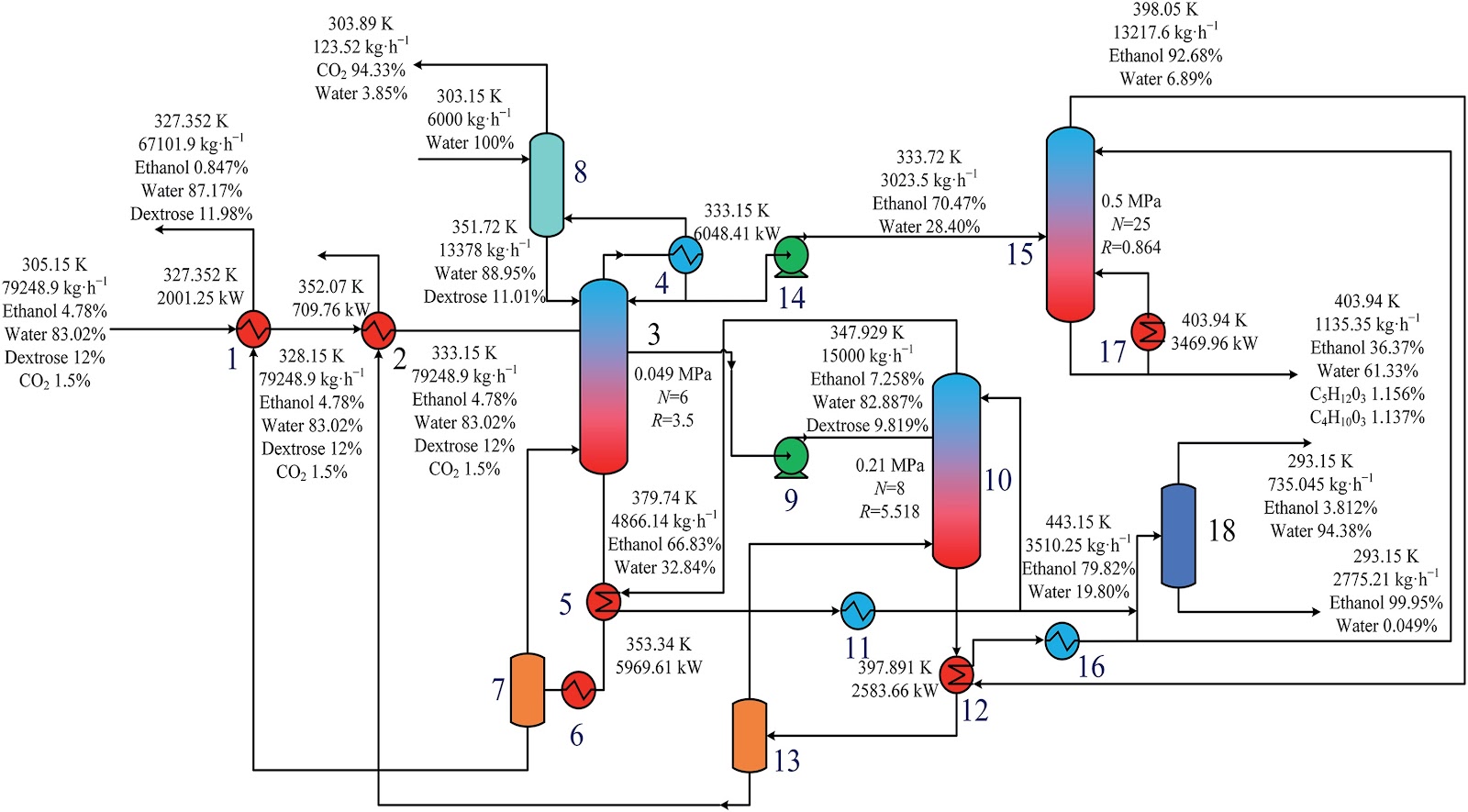
To address the challenges of high energy consumption and prominent costs in the traditional three-columns distillation process for cellulosic fuel ethanol, a distillation—molecular sieve coupling separation process is proposed. This process integrates a three-column (crude distillation column, first distillation column, second distillation column) system with a 3A molecular sieve adsorption deep dehydration unit. A thermal coupling network is constructed via differential pressure design (steam from medium/high-pressure columns as mutual heat sources, reboiler liquid waste heat for feed preheating), and molecular sieve adsorption conditions are optimized. The study first performs a thermodynamic consistency test on the ethanol—water system, determines optimal non-random two-liquid (NRTL) model binary interaction parameters via experimental data regression for Aspen Plus simulation. Aiming at minimum total annual cost (TAC), Aspen Plus is used to optimize process parameters (theoretical tray number, feed location, reflux ratio, side-draw position, etc.). Economic analysis shows this process reduces CO2 emission costs by 27.56%, TAC by 15.58% (to 5.123 × 10⁶ USD·a-1), and increases ethanol purity to >99.6%, providing an effective solution for green, efficient separation.
A cohesion loss model for determining residual strength of deep bedded sandstone
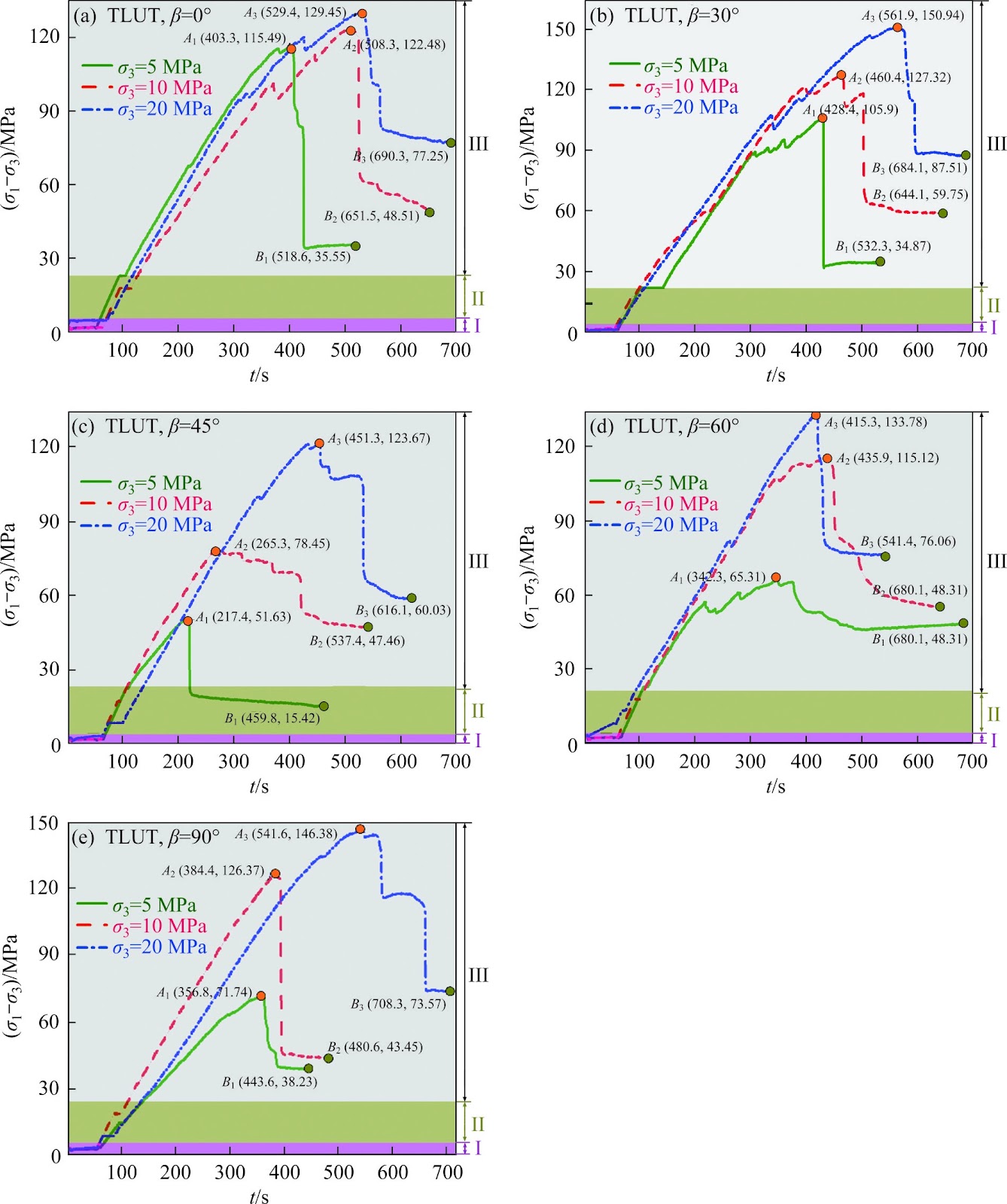
Rock residual strength, as an important input parameter, plays an indispensable role in proposing the reasonable and scientific scheme about stope design, underground tunnel excavation and stability evaluation of deep chambers. Therefore, previous residual strength models of rocks established were reviewed. And corresponding related problems were stated. Subsequently, starting from the effects of bedding and whole life-cycle evolution process, series of triaxial mechanical tests of deep bedded s
Federated model with contrastive learning and adaptive control variates for human activity recognition
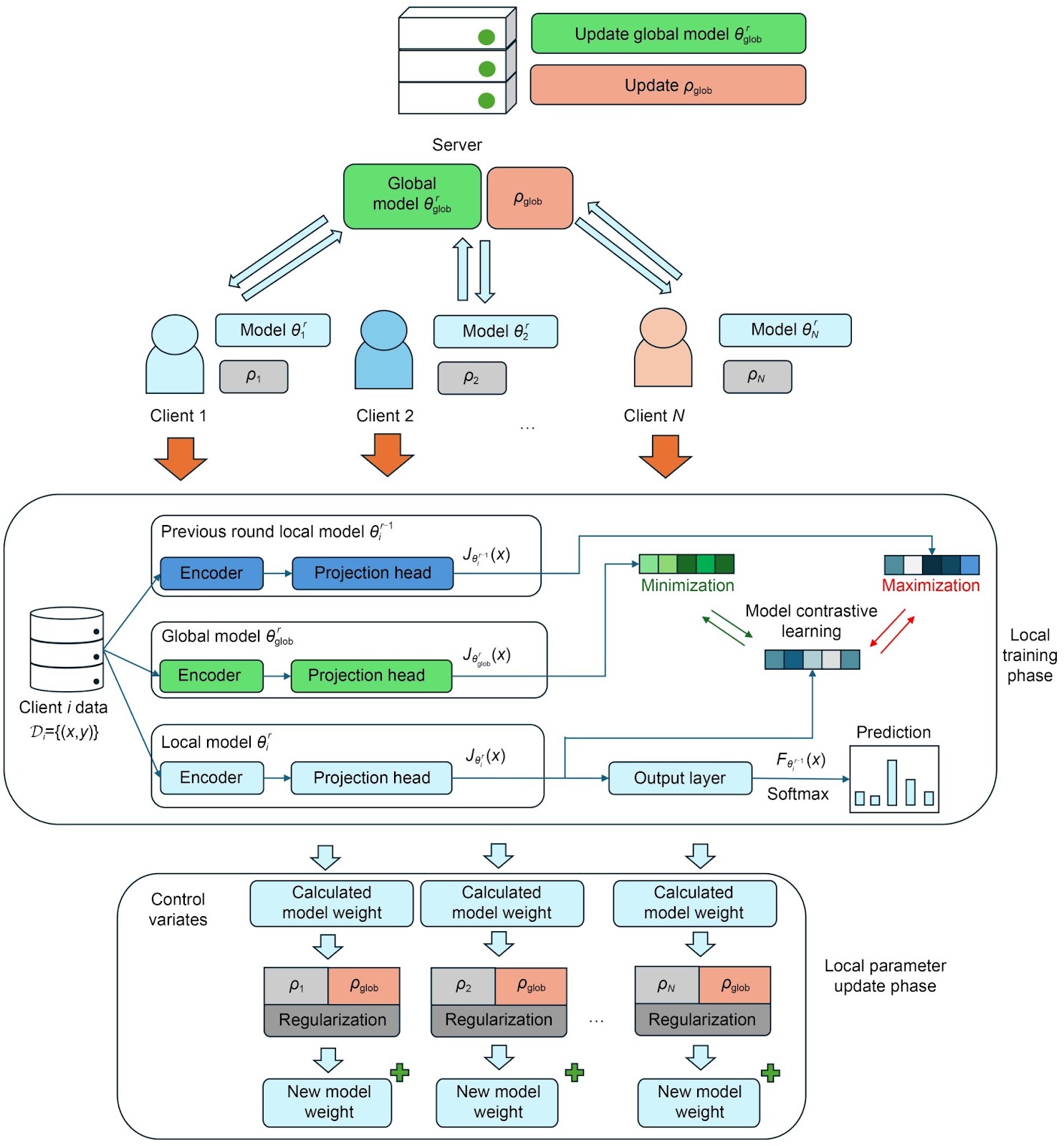
Recent attention to privacy issues demands a communication-safe method for training human activity recognition (HAR) models on client activity data. Federated learning (FL) has become a compelling technique to facilitate model training between the server and clients while preserving data privacy. However, classical FL methods often assume independent and identically distributed (IID) data among clients. This assumption does not hold true in practical scenarios. Human activity in real-world scena